India has entered a critical phase of state-level general elections on Thursday, with two of the most closely watched contests unfolding in the eastern state of West Bengal and the southern state of Tamil Nadu. These multi-phase elections are widely viewed as a critical early barometer of public support for Prime Minister Narendra Modi’s national Bharatiya Janata Party (BJP) ahead of upcoming national elections, testing the ruling party’s ability to expand its footprint into regions it has long struggled to penetrate, while also gauging whether fragmented opposition blocs can mount a credible challenge to Modi’s national dominance.
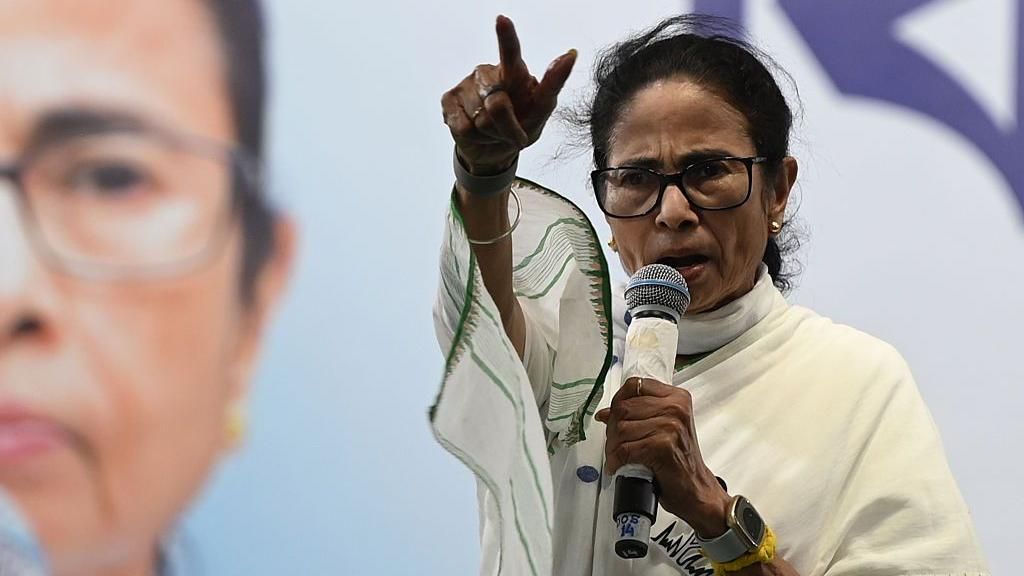
In West Bengal, the most hotly contested of this round of elections, Thursday’s voting marks the first phase of balloting across 152 of the state’s 294 assembly seats, spread across 16 districts. A total of 1,478 candidates are vying for voter support in this opening phase, with a second round of polling for the remaining 142 seats scheduled for April 29. Incumbent Chief Minister Mamata Banerjee is leading her Trinamool Congress (TMC) party in a bid to secure an unprecedented fourth consecutive term in office, marking the first time the BJP has mounted a full-scale challenge to unseat Banerjee in a state the national party has never controlled.
The entire electoral process in West Bengal has been overshadowed by a bitter controversy surrounding a sweeping Special Intensive Revision (SIR) of the state’s electoral rolls, a process designed to remove outdated entries of deceased or absentee voters from registration lists. The exercise has resulted in the removal of roughly nine million voters – approximately 12% of the state’s entire electorate – while the registration status of another 2.7 million eligible voters remains pending review. Although India’s Election Commission (EC) maintains the revision is a routine effort to clean up inaccurate voter rolls, the policy has spawned widespread legal challenges and deepened political tensions across the state.
Political friction has been further inflamed by rhetoric around the revision. Prime Minister Modi has framed the clean-up as a targeting of so-called “illegal Bangladeshi infiltrators”, a framing the TMC argues is a dog whistle targeting West Bengal’s large Muslim community. Independent observers and local officials have noted, however, that excluded voters include large numbers of Hindu residents as well, with many eligible voters reporting their names were struck from rolls despite holding valid identity documentation. Disputes over voter eligibility are still working their way through adjudication tribunals even as voting gets under way, leaving millions of residents uncertain whether they will be able to cast a ballot in this election.
Notably, the first phase of polling covers constituencies in West Bengal’s less developed northern, central, and southwestern regions, which include the state’s three Muslim-majority districts: Murshidabad, Uttar Dinajpur, and Malda. This same geographic area also holds a disproportionate share of the 2.7 million voters whose eligibility remains in limbo, raising concerns about disenfranchisement among minority and marginalized communities. The second and final phase, by contrast, will cover seats in and around Kolkata, the state capital, and the lower Gangetic plains of south Bengal – a region that has been a TMC stronghold for the past three consecutive election cycles.
In a nod to West Bengal’s long history of election-related violence and political intimidation, security officials have deployed a record 240,000 federal personnel across the state, backed by armored bulletproof vehicles patrolling all poll-bound districts. The EC has also implemented strict security restrictions ahead of the first phase, including a ban on daytime bike rallies, pillion passenger riding, and non-essential two-wheeler travel after dark across all 152 first-phase constituencies. Authorities have also implemented an extended 96-hour ban on liquor sales, double the standard 48-hour restriction implemented in most Indian elections. West Bengal’s Chief Electoral Officer Manoj Kumar Agarwal confirmed the extended ban came in response to a dramatic 30% to 240% spike in liquor purchases from state-run retail outlets, noting that officials are investigating where the stockpiled alcohol is being stored to prevent its use as an inducement for voters.
Beyond West Bengal, all eyes are on Tamil Nadu, where the entire 234-seat state assembly will be contested in a single phase of voting on Thursday, with more than 57 million eligible voters registered to cast ballots. Tamil Nadu’s politics have long been dominated by two regional Dravidian parties: the incumbent Dravida Munnetra Kazhagam (DMK) led by Chief Minister MK Stalin, who is seeking a second consecutive term, and the opposition All India Anna Dravida Munnetra Kazhagam (AIADMK), which has formed an electoral alliance with the national BJP.
This election cycle has shaken up the state’s traditional two-party dynamic, however, with the entry of popular Tamil actor-turned-politician Vijay and his newly formed Tamilaga Vettri Kazhagam (TVK) party, creating the prospect of a competitive three-way race that could reshape the state’s political landscape. The BJP has historically struggled to gain traction in Tamil Nadu, where regional identity, linguistic pride, and welfare-focused policy have long dominated electoral politics. For the national party, even modest gains in Tamil Nadu would mark a significant breakthrough in its efforts to expand its influence across southern India, a region that has long resisted the BJP’s Hindu nationalist agenda. Ongoing debates over delimitation – the redrawing of electoral constituencies to reflect population shifts – have also amplified regional concerns about fair political representation in the state, adding an extra layer of tension to the contest.
These two state elections are the final phase of a broader round of regional contests that have already seen polling held in Kerala, Assam, and the union territory of Puducherry. The overall results of these elections will provide critical insight into the political mood of India ahead of the next national general election, shaping expectations for Modi’s third term bid and the future of national opposition politics.