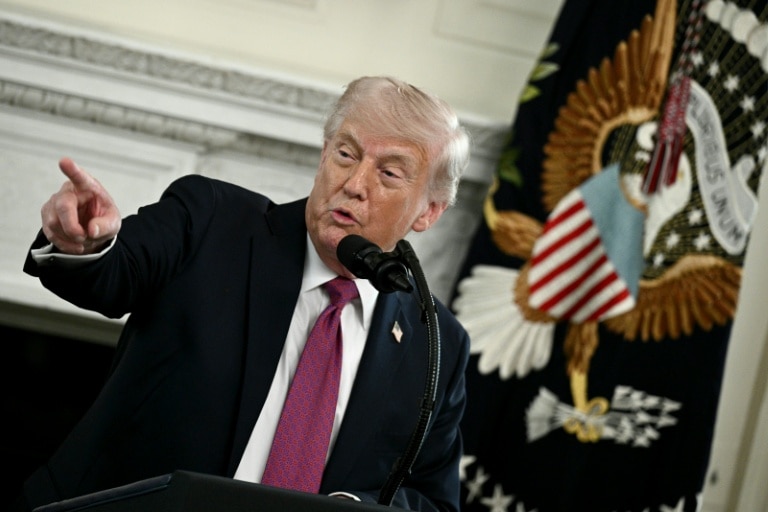
A fresh diplomatic row has erupted between the United States and India after former President Donald Trump shared an incendiary social media post that branded India a “hellhole” and attacked Indian immigrants to the U.S. The controversy comes just weeks ahead of a planned official visit to New Delhi by U.S. Secretary of State Marco Rubio, whose trip was already framed as an effort to de-escalate recent bilateral tensions between the two long-time strategic partners.
The inflammatory post, shared by Trump late Wednesday, targets the long-standing U.S. constitutional principle of birthright citizenship, echoing decades of far-right anti-immigration rhetoric. Beyond attacking birthright citizenship, the post spread two false and harmful claims about Indian immigrants working in the U.S. technology sector: first, that they systematically refuse to hire white, American-born workers, and second, that they lack adequate English language proficiency. The post went on to generalize its attack, claiming that birthright citizenship allows immigrants to bring entire family chains into the U.S. from what it called “hellhole” countries including China and India.
India’s Ministry of External Affairs issued a swift and sharp rebuke of the comments on Thursday. Spokesperson Randhir Jaiswal dismissed the remarks as “obviously uninformed, inappropriate and in poor taste,” emphasizing that they do not align with the long-standing foundation of the India-U.S. relationship, which is built on mutual respect and overlapping strategic and economic interests.
The post has also drawn widespread condemnation from American political and advocacy groups. Democratic Congressman Ami Bera, whose parents immigrated to the U.S. from India, called the comment “offensive, ignorant and beneath the dignity of the office” of the U.S. presidency. He added that Trump, who was born into immense wealth and privilege, has never experienced the daily struggles that shape the lives of millions of immigrant families across the United States.
The Hindu American Foundation, a leading advocacy group representing Indian-American communities, also issued a statement saying it was deeply disturbed by the “hateful, racist screed.” The organization noted on social media platform X that the president’s endorsement of such bigoted rhetoric fuels rising xenophobia and racism already at record levels in the U.S., putting Indian-American and other immigrant communities at direct risk of harm.
Cracking down on illegal and legal immigration has been a signature policy priority for Trump throughout his political career, and he has repeatedly targeted the H-1B temporary work visa program that is widely used by skilled Indian technology workers. This is not the first public friction between Trump and the Indian government: for months, Trump maintained steep punitive tariffs on Indian imports after taking offense to Prime Minister Narendra Modi’s muted response to his offer of mediation during a military conflict between India and Pakistan.
Trump’s confrontational approach to India marks a clear break from decades of policy pursued by successive U.S. administrations of both major political parties. For decades, U.S. policymakers have prioritized building cooperative bilateral ties with the world’s largest democracy, framing New Delhi as a key strategic counterweight to an increasingly assertive China in the Indo-Pacific region.