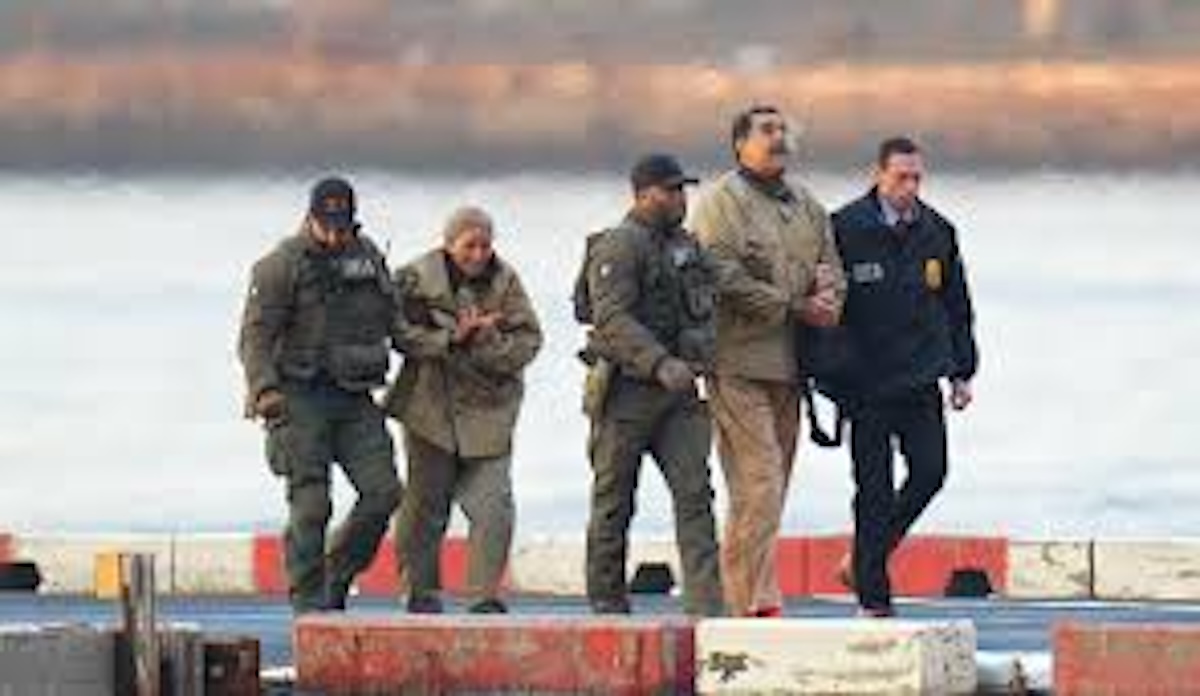
In a stunning revelation of institutional corruption that has rocked the second Trump administration, the U.S. Department of Justice unveiled multiple criminal charges Thursday against an active-duty Army special operations soldier accused of illicitly profiting more than $400,000 by using top-secret insider information to bet on the timing of a U.S. military operation to abduct Venezuelan leader Nicolás Maduro earlier this year.
Master Sergeant Gannon Ken Van Dyke, a soldier directly involved in the planning and execution of the covert January mission targeting Maduro, faces five counts: unlawful use of confidential government data for personal profit, theft of nonpublic official information, commodities fraud, wire fraud, and an illegal monetary transaction, federal prosecutors confirmed in the official statement.
Court documents detail that Van Dyke placed 13 separate wagers totaling approximately $33,000 on Polymarket, a popular online prediction marketplace. All of his bets backed the “yes” outcome for questions asking whether U.S. forces would carry out an incursion into Venezuela and remove Maduro from power before the end of January. The classified knowledge he held about the operation’s timeline allowed him to net more than $400,000 in illicit gains from the wagers, according to prosecutors.
When questioned by reporters Thursday, former and current U.S. President Donald Trump claimed he had no prior knowledge of the charges against Van Dyke. Drawing a parallel to disgraced baseball icon Pete Rose, who was permanently banned from Major League Baseball for gambling on his own team’s games, Trump downplayed the severity of the offense depending on its direction. “Was he betting that they would get [Maduro] or they wouldn’t get him? That’s like Pete Rose betting on his own team. Now, if he bet against his team, that would be no good,” Trump told reporters. The comment lines up with Trump’s past support for Rose: in February 2025, Trump announced on Truth Social that he planned to issue a full pardon to Rose, arguing the baseball legend had only done wrong by betting on his own team to win.
The unsealing of Van Dyke’s indictment has amplified long-simmering concerns that officials and insiders throughout the Trump administration are widely exploiting nonpublic government information for personal financial gain. Independent watchdogs and governance experts have repeatedly labeled this second Trump term the most openly corrupt administration in U.S. history.
“The culture of insider trading and corruption starts at the top and is permeating everywhere and everything. This is what people hate about our government now,” said Representative Raja Krishnamoorthi, a Democrat from Illinois, echoing widespread criticism of the administration’s ethical standards. Many critics also point out the stark double standard in the case: while the low-ranking soldier who profited from the bet has been arrested, no senior officials who authorized the widely condemned illegal incursion into Venezuela have faced any accountability to date.
“I hear someone was arrested in connection with the patently illegal invasion of Venezuela. Can’t wait to see who is going to be held accountable for this lawless use of military force,” wrote Brian Finucane, senior adviser to the U.S. Program at the International Crisis Group, highlighting the gap in accountability for the operation itself.
The Van Dyke case is not an isolated incident: suspicious, well-timed bets connected to high-stakes U.S. military actions, from the Maduro abduction to the recent U.S. military strike on Iran, have raised alarms that systemic insider trading is widespread among Trump administration officials and associates with access to nonpublic information. Just last month, the Financial Times reported that a broker working for U.S. Secretary of Defense Pete Hegseth attempted to place a multi-million-dollar investment in weapons stocks in the weeks leading up to the joint U.S.-Israeli attack on Iran.
“The Iran War has become a corruption racket for the people close to President Trump,” said Senator Chris Murphy, a Connecticut Democrat. Murphy is the lead sponsor of new legislation that would ban private wagering on government actions, terrorist events, military conflicts, assassinations, and other events where a participant has advance confidential knowledge or control over the outcome.