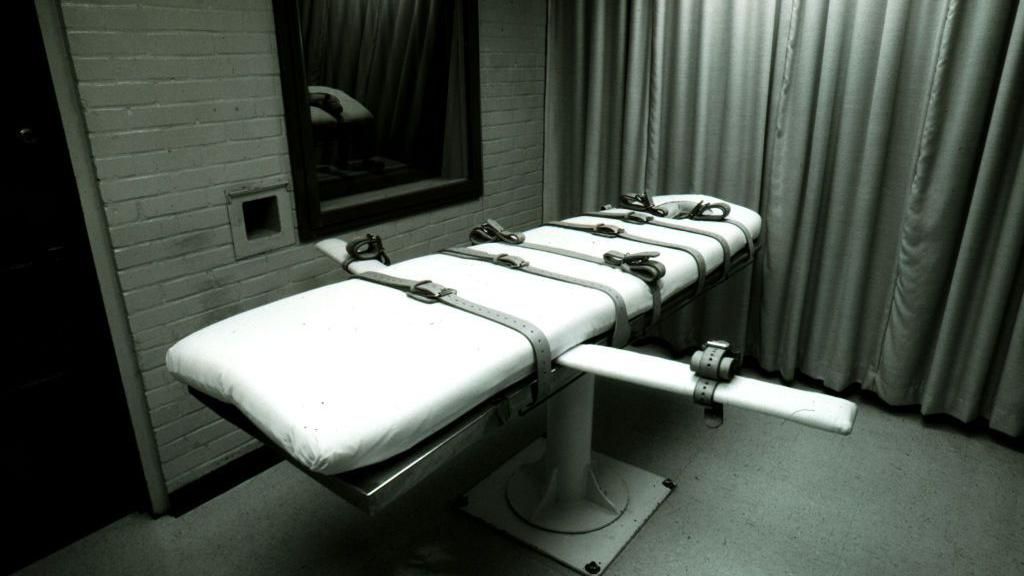
The U.S. Department of Justice (DOJ) has issued a landmark policy shift ordering federal prison authorities to expand the approved methods of capital punishment, adding firing squads, gas asphyxiation and electrocution to the existing protocol of lethal injection. The new policy was formally outlined in a 48-page internal memo published to the public this Friday, framing the expansion as a measure to strengthen the federal death penalty system.
According to the DOJ’s official justification, broadening the range of execution methods will advance three core goals: deterring the most heinous violent offenses, delivering lawful justice to crime victims, and providing long-awaited closure for victims’ surviving families. This policy reversal comes on the heels of major shifts in federal capital punishment over the last two presidential terms. The prior Biden administration had imposed a moratorium on nearly all federal executions, and before leaving office in January 2025, President Joe Biden granted clemency to 37 out of 40 inmates held on federal death row.
In contrast, President Donald Trump — a longtime outspoken proponent of capital punishment — made resuming federal executions one of his first priorities upon returning to the Oval Office in January 2025. On his first day back in office, he signed an executive order mandating that the DOJ pursue death sentences for all severe crimes that warrant the punishment, as well as for cases where an undocumented immigrant kills a law enforcement officer. This mirrors actions from Trump’s first term, when he lifted a 17-year federal moratorium on executions and oversaw the execution of 13 death row inmates before leaving office in 2021.
The DOJ memo retains its backing of lethal injection as a viable execution method, describing the sedative pentobarbital as the “gold standard” for lethal injection protocols. Pentobarbital has served as the default drug for federal executions since 1993, but it has faced growing headwinds in recent years: death penalty opponents have repeatedly labeled it a cruel, inhumane method of execution, and consistent drug shortages have created widespread logistical challenges for carrying out court-ordered executions. In an accompanying report, the DOJ explained that expanding the list of approved methods eliminates the risk of delayed or canceled executions due to drug unavailability, ensuring the department can always carry out legally authorized death sentences regardless of supply chain barriers.
Acting Attorney General Todd Blanche doubled down on the policy in an official statement, criticizing the prior Biden administration for failing its core duty to protect the American public. Blanche argued that the previous administration abdicated its responsibility by refusing to pursue the death penalty for the nation’s most dangerous offenders, including convicted terrorists, child murderers, and officers who kill law enforcement personnel.
The policy change has drawn sharp condemnation from congressional Democrats, who have long opposed the expansion of capital punishment. Senate Judiciary Committee Chair Dick Durbin called the move “cruel, immoral, and discriminatory” in a public statement posted to the social platform X, adding that expanding the federal death penalty will stand as a permanent “stain on our history.”
While federal capital punishment policy has shifted with changes in presidential administration, a number of U.S. states have already adopted alternative execution methods in response to the same drug supply issues that prompted the DOJ’s policy change. Data from the Death Penalty Information Center shows that five U.S. states currently permit the use of firing squads for executions. In 2024, Alabama made history as the first U.S. state to carry out an execution using nitrogen hypoxia, and four additional states have since approved the method for future use.