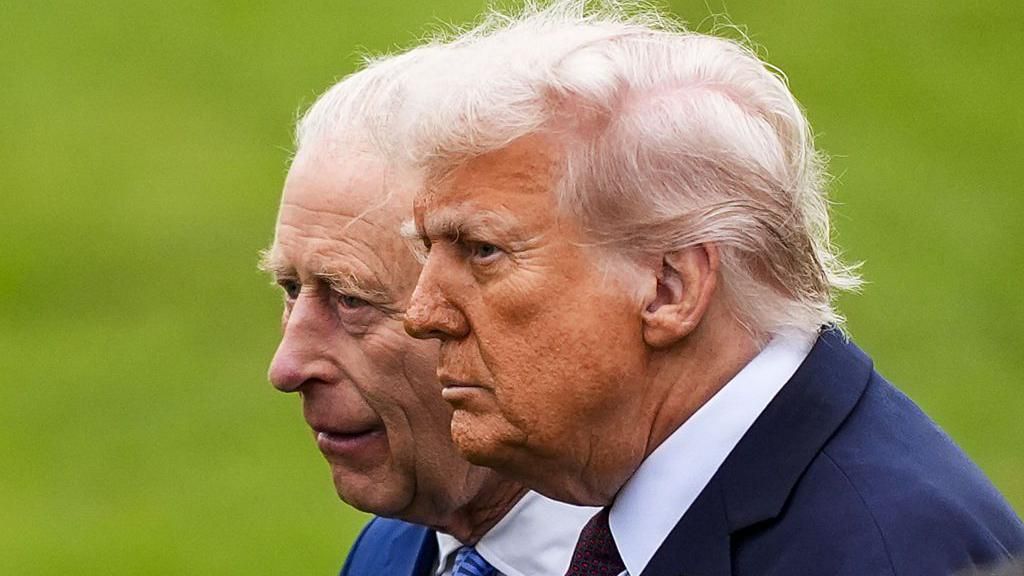
Next week, King Charles III and Queen Camilla will embark on a historic state visit to the United States, a trip that insiders and analysts universally describe as a high-risk, high-reward endeavor unfolding against the most strained Anglo-American diplomatic backdrop in a century. Far from a perfunctory ceremonial stop marked by photo opportunities and celebrity receptions, the four-day tour carries genuine geopolitical and personal jeopardy, shaped by overlapping global conflicts, domestic political friction, lingering royal scandal, and the monarch’s ongoing health challenges.
The visit arrives at a moment of extraordinary volatility across global politics. A fragile ceasefire currently holds in the Middle East following violent escalation around Iran, creating a tense international backdrop for diplomatic engagement. On the US side, the trip’s host, President Donald Trump, brings a well-documented record of unpredictability that has kept officials on both sides of the Atlantic on high alert. Recent controversies, including a widely criticized AI-generated image that appeared to depict Trump as a religious figure – a awkward situation for Charles, who serves as Supreme Governor of the Church of England – have added extra layers of sensitivity to the meeting.
While Trump has long expressed open admiration for the British monarchy, his public criticism of UK Prime Minister Keir Starmer, and his dismissive description of UK aircraft carriers as “toys” compared to American warships, has put the King – who holds the constitutional role of Head of the Armed Forces – in a delicate position. Transatlantic and NATO relations between the US and UK have sunk to a perilously low point in the months since Trump’s 2025 visit to Windsor Castle, with open disputes over the UK’s stance on the Iran conflict and Trump’s public downplaying of British military contributions in Afghanistan. Former Obama administration State Department advisor Max Bergmann warns that even with a carefully scripted itinerary designed to avoid unscripted interactions, there is no guarantee Trump will curb his usual off-the-cuff commentary during the visit.
“The Trump show doesn’t get turned off because the King is in town,” Bergmann cautioned.
Personal challenges compound the diplomatic pressure facing the 77-year-old monarch, who has lived with cancer for more than two years and will tackle a packed schedule of events across Washington D.C., New York City, and a Virginia national park. Most notably, lingering fallout from the Jeffrey Epstein scandal and Prince Andrew Mountbatten-Windsor’s long-standing ties to the convicted sex offender has already drawn demands from survivors’ advocates for a meeting with the King. Prince Andrew has consistently denied all allegations of wrongdoing connected to the case, and reached an out-of-court settlement with accuser Virginia Giuffre in 2022 without admitting liability or issuing an apology. Still, Giuffre’s family says they plan to lobby the King during his visit, asking for just 10 minutes of his time to receive a symbolic gesture of acknowledgement and support for ongoing investigations.
“It’s an olive branch that we’re looking for,” said Amanda Roberts, Giuffre’s sister-in-law. “Acknowledgement, shaking the hand and looking us in the face and saying, ‘I will continue on my promise to honour a fair trial. I will support the investigations. And I’m sorry that all these survivors have waited so long for justice.’”
Despite these stacked challenges, the trip also opens a rare window of opportunity to reset strained transatlantic ties. Analysts note that Charles, a longstanding advocate for liberal democratic values and the rules-based international order, has a unique personal connection with Trump that no UK elected official can match. Trump has repeatedly praised the King, calling him “a brave man, and a great man” in a recent BBC interview, and previous private interactions between the two saw Charles successfully persuade Trump to take a harder line on supporting Ukraine. Biographer Andrew Lownie, a leading royal commentator, argues that even with their stark ideological differences – Charles is a committed multilateralist, while Trump has embraced an America First agenda – the King’s decades of diplomatic experience let him find common ground.
The centerpiece of the visit will be Charles’ address to a joint session of the US Congress, only the second time a British monarch has spoken to the full legislature, following his mother Queen Elizabeth II’s landmark 1991 speech. That 1991 address, which opened with a lighthearted joke about the Queen’s 1976 “talking hat” microphone mishap, made a forceful case for consensus politics and multilateral cooperation – a message that analysts say carries extra resonance today amid rising populism and global conflict. Charles’ speech is expected to balance flattery of the US president with quiet advocacy for core UK priorities: strengthened NATO unity, continued support for Ukraine, and progress on a bilateral US-UK trade agreement, leavened with gentle historical nods to the long-standing shared ties between the two nations.
Royal insiders describe the trip as a “delicate balancing act,” acknowledging the current frictions but emphasizing that the visit is as much about celebrating the long history of the special relationship as it is about addressing current divides. The timing also aligns with the 250th anniversary of US independence, a symbolic marker that royal officials hope will highlight how far the transatlantic partnership has evolved since the Revolutionary War.
While some analysts, like Bergmann, warn that the deep rift in current political relations makes this an inherently fraught endeavor, others see the visit as an unexpectedly timely opportunity for the UK. Harvard Kennedy School director Shannon Felton Spence, who organized a 2015 US visit for Charles when he was Prince of Wales, notes that the British monarchy remains the UK’s most effective soft power asset in the United States, particularly with a president who openly admires the institution.
“This couldn’t have come at a better moment for the UK,” Spence said. “They’re playing exactly the right card, at a time when they didn’t even realize they’d be needing to play it.”
Beyond the immediate political outcome, historians point to the long-term impact of royal state visits, from Queen Elizabeth II’s famous ride with Ronald Reagan in 1982 to Princess Diana’s iconic dance with John Travolta at the White House in 1985, moments that shaped public perception of the transatlantic relationship for decades. For King Charles, this trip will test whether his decades of preparation for the throne will let him navigate an unprecedented set of challenges to pull the special relationship back from its current low.