分类: politics

  • ICE agents deploy to major US airports as security queues stretch for hours

    ICE agents deploy to major US airports as security queues stretch for hours

    The ongoing partial government shutdown, now in its sixth week, has triggered a critical operational crisis at major US airports as unpaid Transportation Security Administration (TSA) agents increasingly refuse to report for work. With over 3,400 call-outs recorded on Sunday alone, security checkpoints have descended into chaos, generating massive passenger queues and wait times exceeding three hours.

    In response to the escalating security staffing shortage, the White House has authorized the deployment of hundreds of Immigration and Customs Enforcement (ICE) agents to 14 major airports, including hubs in New York, Atlanta, and Houston. Their deployment, however, has sparked both operational and political controversy. Acting Deputy TSA Administrator Adam Stahl clarified that these agents would perform “non-specialized security functions” and crowd control to free up remaining TSA staff for specialized aviation security. Conversely, President Trump contradicted this, telling reporters the agents are “able to now arrest illegals as they come into the country,” describing airports as “very fertile territory.”

    A notable point of contention emerged over the agents’ appearance. Photographs from airports like Atlanta’s Hartsfield-Jackson and New York’s JFK showed ICE agents operating without the masks or face coverings they typically use. President Trump explicitly stated he had “request[ed] that they take off the mask,” deeming it an inappropriate look for an airport environment.

    The human impact on travelers is severe. The Department of Homeland Security confirmed that extreme wait times have forced some passengers to sleep in terminals to avoid missing their flights, with airlines officially advising customers to arrive three to four hours early. The epicenter of the absenteeism is most acute at specific airports; New Orleans and Atlanta saw over 42% and 41% of their TSA staff call out, respectively.

    The root of the crisis remains a deep political impasse in Washington. Congressional Democrats are refusing to fund the Department of Homeland Security without new, stringent curbs on ICE, an agency under intense scrutiny after its agents shot and killed two US citizens in Minneapolis. Republicans have rejected Democratic proposals to fund the TSA independently while negotiations over ICE reforms continue, showing little sign that a resolution to the funding standoff is imminent.

  • US lobby firm secures $2m contract to whitewash image of Libya’s Haftar

    US lobby firm secures $2m contract to whitewash image of Libya’s Haftar

    A prominent Washington lobbying firm with deep ties to the Trump administration has entered into a $2 million agreement to represent Libyan military commander Khalifa Haftar, whose forces face extensive allegations of human rights violations. Ballard Partners, staffed by former Trump administration officials, will advocate for Haftar and his son Saddam, deputy commander of the Libyan Arab Armed Forces (LAAF), according to lobbying disclosures obtained by the Washington Post.

    Human Rights Watch has documented grave abuses within detention centers operated by Haftar’s security forces, including systematic torture, extrajudicial killings, and mutilation of corpses. The organization has called for investigations into these violations, noting that political dissidents have been subjected to unlawful detention, torture, and forced displacement.

    Haftar faces multiple legal challenges in US courts, where Libyan families have accused him of war crimes and deliberate torture. While some cases have been dismissed, a 2022 US court ruling found him liable for war crimes against several families. His legal representatives deny all allegations.

    The lobbying agreement coincides with Haftar’s consolidation of power in eastern Libya, where his five sons hold key positions. Recent diplomatic engagements include meetings between Saddam Haftar and US officials, including Trump’s Arab and African affairs advisor Massad Boulos and US charge d’affaires Jeremy Brent.

    Hanan Salah, HRW’s assistant director for the Middle East and North Africa, criticized the normalization of relations with figures implicated in abuses, stating it undermines accountability efforts. Meanwhile, Africa Intelligence reports suggest US officials are considering a power-sharing arrangement that would maintain Haftar’s military control while preserving Abdul Hamid Dbeibah’s civilian leadership, potentially bypassing elections.

  • Europe’s far right backs Orbán as Hungary’s coming election puts his brand to the test

    Europe’s far right backs Orbán as Hungary’s coming election puts his brand to the test

    BUDAPEST, Hungary — In a significant demonstration of political solidarity, leaders from more than a dozen European far-right parties assembled in Budapest on Monday to rally behind Hungarian Prime Minister Viktor Orbán. This gathering occurs just three weeks before a pivotal national election that could potentially conclude Orbán’s 16-year administration.

    The event, organized under the banner “Patriots for Europe,” featured prominent figures including France’s Marine Le Pen, Italy’s Matteo Salvini, and the Netherlands’ Geert Wilders. This coalition, now the third-largest bloc in the European Parliament, represents parties from 13 EU nations united by their opposition to immigration, advocacy for national sovereignty over European integration, and commitment to conservative social values.

    Orbán, who regained power in 2010, has long been regarded as a pioneering figure in global nationalist politics, predating the rise of former U.S. President Donald Trump. His political achievements—including four consecutive electoral victories, extensive control over government institutions, media, and academia, and his emphasis on traditional values—have made him an inspirational model for conservative movements worldwide.

    However, recent polling data indicates Orbán’s Fidesz party trails behind a center-right challenger, suggesting his prolonged dominance may be weakening due to economic stagnation, deteriorating public services, and corruption allegations.

    Princeton University professor Kim Lane Scheppele noted the significance of Orbán’s potential defeat: “Hungary represents proof of concept that MAGA-style politics can work. If Orbán loses, the movement loses considerable credibility.”

    The Budapest assembly served as both a strategic coordination effort and a campaign event, with speakers urging Hungarian voters to support Orbán in the April 12 election. Le Pen praised Orbán’s stance on “immigration, identity and sovereignty,” describing Hungary as “an emblem of resistance against oppression.”

    Orbán himself declared the coalition’s ambition to “take control of the European Union” and “transform the center of Brussels,” reflecting his long-predicted vision of a far-right nationalist resurgence across Europe.

    The convergence of European and American conservative interests was further highlighted by Budapest’s recent hosting of the Conservative Political Action Conference (CPAC), where Orbán characterized current Western politics as undergoing “the greatest political realignment of the past hundred years.” Trump endorsed Orbán’s reelection bid via video message, commending his defense of “borders, culture, heritage, sovereignty, and values.”

    Analysts observe striking parallels between Orbán’s political trajectory in Hungary and the aspirations of Trump’s movement in the United States, noting their interconnected political networks and mutual reinforcement. As both leaders face electoral challenges, the April election in Hungary carries significant implications for the future of nationalist conservatism on both sides of the Atlantic.

  • Iran’s insurgent playbook for outlasting US-Israel firepower

    Iran’s insurgent playbook for outlasting US-Israel firepower

    Despite overwhelming US military superiority accounting for 37% of global defense expenditures compared to Iran’s sub-1% share, Tehran is effectively employing asymmetric warfare tactics that historically frustrated American objectives in Vietnam, Iraq and Afghanistan. Iranian strategy centers on four insurgent methodologies designed to force US withdrawal through protracted engagement rather than direct confrontation.

    Iran’s tactical approach involves systematically targeting critical infrastructure and military installations throughout the Persian Gulf, deliberately provoking escalated US military response. This calculated provocation serves dual purposes: diminishing domestic support for the Islamic regime as civilian casualties mount—already exceeding 1,400 fatalities and 18,000 injuries according to Iranian health authorities—while simultaneously eroding American public backing for continued engagement, with recent polls indicating only 27% of US citizens support the conflict.

    The regime is simultaneously executing a ‘spoiling’ campaign against Gulf neighbors including Saudi Arabia, UAE, Oman, Kuwait, Qatar and Bahrain. Despite long-term regional implications, this strategy aims to disrupt security relationships between Gulf states and their traditional US protector, potentially reshaping Middle Eastern power dynamics in Iran’s favor.

    Maritime warfare innovations represent Tehran’s most effective asymmetric advantage. Following early conventional naval losses, Iran implemented an irregular naval strategy utilizing fast-attack craft, naval mines and specialized midget submarines optimized for the Gulf’s shallow waters. This has effectively threatened international shipping lanes through the strategically vital Strait of Hormuz, granting Iran disproportionate influence over global energy markets and critical mineral flows.

    Civilian infrastructure targeting completes Tehran’s insurgent methodology. Threats against airports, desalination plants and energy facilities increase pressure on Gulf governments while creating global economic disruption through transportation hub closures. This psychological warfare component destabilizes populations and increases international pressure for US disengagement.

    Historical precedent suggests weaker military actors can achieve strategic victory by outlasting their opponent’s political will rather than achieving battlefield dominance. While the Iranian regime faces significant medium-term challenges, its immediate survival strategy relies on exhausting American commitment through protracted insurgent warfare.

    Effective US counterstrategy would require implementing proven counterinsurgency principles emphasizing civilian protection and ‘hearts and minds’ engagement—approaches notably absent from current operations characterized by substantial civilian casualties including the devastating bombing of a girls’ school that killed 175 predominantly children.

  • Notorious apartheid police commander ‘Prime Evil’ testifies at South African hearing on killings

    Notorious apartheid police commander ‘Prime Evil’ testifies at South African hearing on killings

    JOHANNESBURG — In a landmark hearing that underscores South Africa’s renewed commitment to addressing historical injustices, Eugene de Kock, the infamous apartheid-era police commander known as “Prime Evil,” provided testimony Monday regarding the 1985 killing of four anti-apartheid activists. The inquiry represents part of the nation’s broader effort to confront previously unpunished atrocities committed by security forces during decades of institutionalized racial segregation.

    De Kock, former head of a special counterinsurgency police unit, denied direct involvement in the Cradock Four case—one of apartheid’s most shocking crimes—but revealed disturbing details about police operations. He testified that authorities maintained photographic records of approximately 6,000 anti-apartheid activists classified as “known terrorists” who were to be tracked and eliminated if arrest proved impractical. Notably, he asserted that the Cradock Four—Matthew Goniwe, Fort Calata, Sicelo Mhlauli, and Sparrow Mkonto (three of whom were teachers)—were not included on this list.

    The victims were abducted at a police roadblock before being murdered and burned, their bodies discovered in a condition that horrified the nation. De Kock further disclosed that one implicated officer sought his assistance in orchestrating a cover-up, specifically requesting help with obtaining alternative firearms and interfering with ballistic evidence.

    Now 77, de Kock appeared under police guard in Gqeberha (formerly Port Elizabeth), where the original crimes occurred. His image was deliberately obscured in official broadcasts following a judicial ruling. Having been sentenced in 1996 to two life terms plus 212 years for murder, kidnapping, and other charges related to anti-apartheid activist abuses, de Kock was paroled in 2015.

    This latest judicial review follows years of pressure from victims’ families and comes after two previous apartheid-era inquiries—widely suspected as cover-ups—failed to deliver accountability. Six former policemen identified as perpetrators were never prosecuted despite being denied amnesty during South Africa’s Truth and Reconciliation process in the late 1990s; all have since died.

    The Cradock Four investigation joins several other reopened cases examining apartheid-era crimes, including the deaths of Nobel Peace Prize winner Albert Luthuli (1967), lawyer Griffiths Mxenge (1981), and iconic activist Steve Biko (1977). Additionally, President Cyril Ramaphosa ordered a separate inquiry last year to determine whether post-apartheid governments deliberately obstructed investigations into historical human rights violations.

  • Xi inspects Xiong’an New Area in North China’s Hebei province

    Xi inspects Xiong’an New Area in North China’s Hebei province

    Chinese President Xi Jinping, serving as General Secretary of the Communist Party of China Central Committee, undertook a significant inspection tour of the Xiong’an New Area in Hebei Province on Monday. The visit highlighted the substantial progress made in this ambitious national project designed to advance regional integration and alleviate pressure on Beijing’s urban infrastructure.

    During his comprehensive assessment, President Xi examined construction advancements within the start-up zone, demonstrating particular interest in the area’s development trajectory. His itinerary included detailed visits to key facilities, notably China Huaneng Group Co., Ltd., a major energy corporation, and the newly established Xiong’an campus of Beijing No. 4 High School, an institution renowned for academic excellence.

    The inspection also provided an opportunity for President Xi to engage with representatives of officials and staff from organizations participating in the capital’s function-relocation initiative. This strategic program transfers non-essential administrative functions from Beijing to the new area, effectively redistributing resources while maintaining the capital’s core governance role. The President’s interactions underscored the human dimension of this large-scale urban planning endeavor, acknowledging the contributions of those implementing this national strategy.

  • Xi congratulates Thongloun on re-election as president of Laos

    Xi congratulates Thongloun on re-election as president of Laos

    Chinese President Xi Jinping, serving concurrently as General Secretary of the Communist Party of China Central Committee, formally congratulated Thongloun Sisoulith on Monday following his successful re-election as President of the Lao People’s Democratic Republic. The message underscores the continuing diplomatic engagement between the two neighboring socialist states. This exchange occurs within the framework of longstanding bilateral relations characterized by mutual political support and cooperative partnerships across multiple sectors. The congratulatory gesture aligns with diplomatic protocols observed among allied nations and reflects China’s sustained interest in maintaining stable political ties with Laos. The communication represents another chapter in the ongoing dialogue between the two Asian nations, both of which maintain single-party political systems and share ideological common ground. The reaffirmation of leadership in Laos ensures continuity in the countries’ joint initiatives and regional cooperation efforts.

  • Italian voters reject judicial reform in a setback for Premier Giorgia Meloni

    Italian voters reject judicial reform in a setback for Premier Giorgia Meloni

    Italian voters have overwhelmingly rejected a controversial judicial reform championed by conservative Prime Minister Giorgia Meloni, dealing a significant political blow to the right-wing coalition just one year before national elections.

    According to near-final data from Italy’s Interior Ministry, the opposition ‘No’ campaign secured approximately 54% of votes, decisively defeating the government-backed ‘Yes’ side which garnered about 46%. The two-day referendum witnessed unexpectedly high voter participation at nearly 59%, reflecting the intensely polarized nature of the political debate surrounding the proposed reforms.

    The judicial overhaul, which had been subject to extensive national discussion, proposed fundamental changes to Italy’s justice system. Central to the reform package was the complete separation of career tracks for judges and prosecutors, eliminating the traditional practice of professionals switching between these roles. Additionally, the legislation sought to restructure the High Judicial Council—the governing body responsible for judicial appointments and disciplinary actions—by dividing it into three distinct chambers and modifying its selection process from internal elections to a lottery system among eligible magistrates.

    The referendum outcome has exposed deepening fractures within Meloni’s governing coalition while energizing the center-left opposition. This electoral defeat poses substantial challenges to the Prime Minister’s domestic authority and international standing, potentially complicating her alignment with U.S. President Donald Trump and his administration’s contentious policies toward Iran.

  • Orbán’s top opponent says Hungary’s alleged Russian backchannel ‘treason’ to be investigated

    Orbán’s top opponent says Hungary’s alleged Russian backchannel ‘treason’ to be investigated

    BUDAPEST — Hungary’s political landscape has been rocked by explosive allegations that Prime Minister Viktor Orbán’s government systematically provided Moscow with confidential intelligence from European Union Council meetings, prompting calls for treason investigations from opposition leaders.

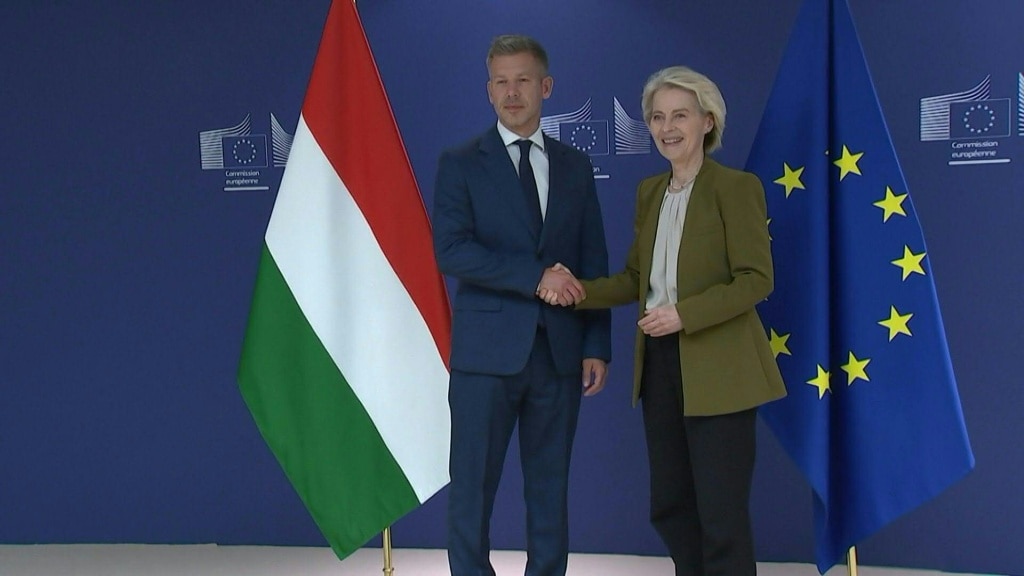
    Péter Magyar, the leading opposition figure and frontrunner in upcoming parliamentary elections, declared the alleged backchannel between Budapest and Moscow constitutes “treason against Hungarian and European interests.” In a social media statement, Magyar specifically implicated Foreign Minister Péter Szijjártó in what he characterized as collusion with Russian officials.

    “Should these allegations be substantiated, this would represent high treason carrying potential life imprisonment,” Magyar asserted. “A future TISZA government will initiate immediate investigation into this matter upon taking office.”

    The allegations, originally reported by The Washington Post citing multiple European security officials, suggest Orbán’s administration has consistently granted Russia access to sensitive EU deliberations. According to these sources, Szijjártó regularly contacted Russian Foreign Minister Sergei Lavrov during breaks in EU meetings—including last Thursday’s summit of bloc leaders—to provide real-time updates on discussions and potential resolutions.

    One security official stated that “every single EU meeting for years has essentially featured Moscow’s invisible presence at the negotiation table” due to these communications. The report notes Szijjártó has made 16 official visits to Moscow since Russia’s full-scale invasion of Ukraine in 2022, including a recent March 4 meeting with President Vladimir Putin.

    In response, Orbán ordered an investigation into what he termed illegal “wiretapping” of his foreign minister rather than addressing the espionage allegations directly. “The surveillance of a government member represents a serious attack on Hungary’s sovereignty,” Orbán declared.

    The European Commission has formally requested clarification from Budapest, with spokesperson Anitta Hipper emphasizing that “trust between member states and institutions remains fundamental to EU operations. We anticipate the Hungarian government’s prompt transparency regarding these serious claims.”

    These developments occur amidst severely strained relations between Hungary and fellow EU members, particularly following Orbán’s withdrawal from a €90 billion Ukrainian loan agreement earlier this month. Polish Prime Minister Donald Tusk, a frequent Orbán critic, noted the allegations “should surprise nobody” given longstanding suspicions about Budapest-Moscow coordination.

    The political firestorm emerges just three weeks before parliamentary elections that could unseat Orbán’s nationalist Fidesz party after 14 years in power, with the opposition TISZA party currently leading in polls.

  • Trump says ‘good’ talks ongoing with Iran – but offers few details

    Trump says ‘good’ talks ongoing with Iran – but offers few details

    In a surprising diplomatic shift, U.S. President Donald Trump declared a five-day cessation of hostilities against Iranian energy infrastructure, claiming both nations are engaged in productive negotiations—a statement immediately contradicted by Iranian officials. The announcement, made via Truth Social just hours before Monday’s market opening, temporarily halts Operation Epic Fury’s campaign against power plants and energy facilities that Trump had previously threatened to “obliterate” if Iran refused to reopen the Strait of Hormuz.

    The president told reporters in Palm Beach that both countries seek to reach an agreement, emphasizing America’s “great relationship” with potential Middle Eastern partners without identifying specific nations. He revealed that special envoy Steve Witkoff and senior advisor Jared Kushner participated in discussions, though provided no details regarding Iranian counterparts or negotiation agendas. Potential topics include strait access, ballistic missile programs, uranium enrichment, or ceasefire terms—previously dismissed by Trump as unlikely.

    This conciliatory stance contrasts sharply with the administration’s recent assertions that Iranian leadership had been decimated. At a White House event last Friday, Trump remarked that it’s “hard to find leaders in Iran to talk to because they keep getting killed,” yet told CNBC that remaining Iranian representatives are “behaving differently”—a characterization interpreted by some as implying regime change.

    Tehran’s denial of any diplomatic contact complicates the White House narrative. Fars News Agency, affiliated with Iran’s Islamic Revolutionary Guard Corps, quoted anonymous sources portraying Trump’s move as capitulation to Iranian threats of regional retaliatory strikes. Historical precedent suggests caution: last summer’s Operation Midnight Hammer saw negotiations proceed until U.S. bombs struck nuclear facilities.

    Despite ambiguous evidence of actual diplomacy, Trump’s announcement immediately impacted global markets. U.S. stock futures rallied while oil prices dropped significantly, transforming anticipated economic turmoil into cautious optimism. The timing—just before market opening—raised questions about whether the declaration aimed to calm financial nerves rather than reflect genuine breakthrough.

    The five-day pause temporarily alleviates fears of escalated conflict, though fundamental questions persist regarding Strait of Hormuz access, continued airstrikes by U.S. and Israeli forces, and the authenticity of diplomatic engagement. This development either represents genuine de-escalation or a strategic maneuver by a president seeking respite from previously established red lines.