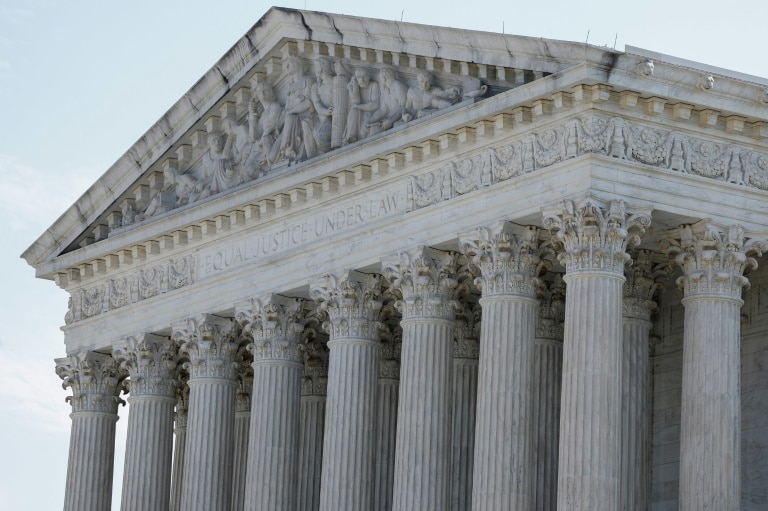
In a ideologically divided 6-3 decision released Wednesday, the U.S. Supreme Court delivered a landmark judgment that imposes sharp new limits on the consideration of race when drawing congressional electoral districts, a ruling that carries the potential to reshape legislative maps across the country and alter partisan odds ahead of November’s midterm elections.
The case originated from Louisiana’s post-2020 census redistricting process. After courts ruled the state’s original map illegally diluted Black voting power, state legislators drew a revised plan that created a second majority-Black congressional district, a change intended to align with requirements of the 1965 Voting Rights Act. A group of white voters challenged the revised map, arguing it prioritized racial classification to an unconstitutional degree, setting up a high-stakes clash between voting rights protections and constitutional equal protection guarantees.
Writing for the court’s conservative majority, Justice Samuel Alito ruled that the Louisiana map crossed into unconstitutional racial gerrymandering. Alito emphasized that Section 2 of the Voting Rights Act does not require states to draw electoral districts primarily along racial lines, noting that “compliance with the law could not justify” the state’s race-centered approach in this instance. “Because the Voting Rights Act did not require Louisiana to create an additional majority-minority district, no compelling interest justified the state’s use of race in creating SB8,” Alito wrote. “That map is an unconstitutional gerrymander, and its use would violate the plaintiffs’ constitutional rights.”
The ruling leaves the core text of the Voting Rights Act intact but narrows the scope of how the law can be applied to enforce minority representation. For civil rights advocates, the decision represents another major blow to the landmark civil rights legislation, which has already been significantly weakened by a series of Supreme Court rulings over the past decade, most notably a 2013 decision that struck down a key provision mandating federal pre-approval for election law changes in states with histories of systemic discrimination.
In a fiery dissent read from the Supreme Court bench — a rare step reserved for cases of exceptional national importance — Justice Elena Kagan warned of the decision’s far-reaching consequences. Kagan argued the ruling creates a pathway for states to systematically dilute minority voting power without facing legal pushback, a outcome that undermines decades of progress toward fair representation.
Legal analysts broadly agree the ruling will raise the legal bar for justifying race-conscious redistricting intended to remedy minority vote dilution, making it far harder to create or preserve majority-minority districts nationwide. These districts, which have been a core tool for advancing minority representation for more than 50 years, have consistently tended to elect Democratic candidates, meaning the ruling is expected to give Republicans a tangible advantage in competitive House races this November.
The decision marks a major shift in the Supreme Court’s interpretation of the balance between anti-discrimination protections and constitutional equal protection rules, aligned with the conservative majority’s long-stated commitment to what Justice Clarence Thomas — the court’s only Black justice — has framed as a “color-blind” interpretation of the Constitution. While the immediate impact of the ruling on November’s congressional control remains unclear, it has escalated the already fierce national battle over redistricting that has pitted political parties against one another in state legislatures and courts across the U.S.