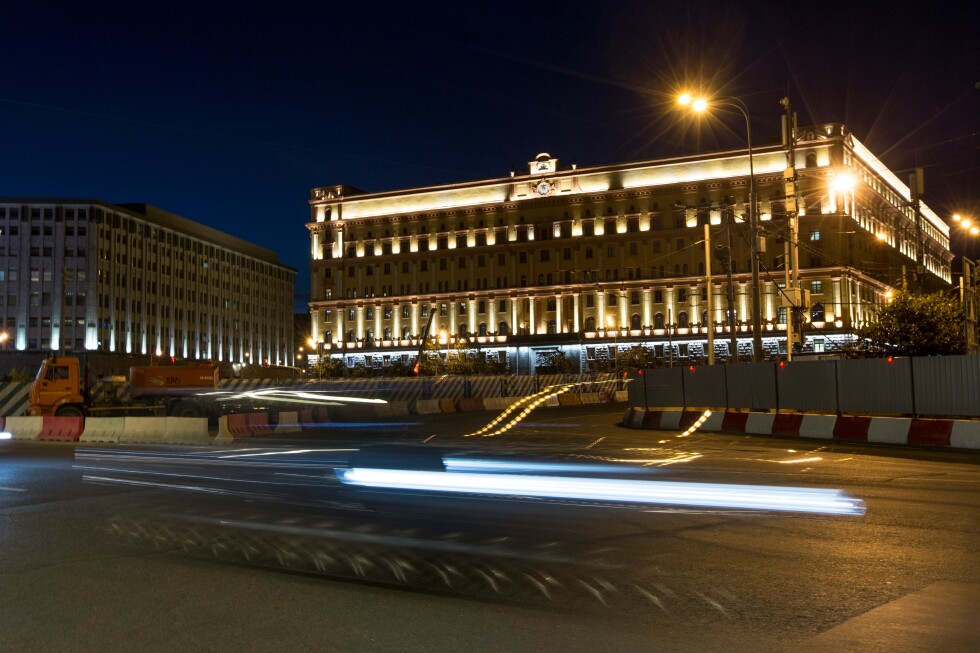
LONDON – In a calibrated act of reciprocal retaliation against Moscow’s recent expulsion of a British diplomat and the subsequent public smear campaign against the UK, the United Kingdom announced the expulsion of a Russian diplomat on Wednesday. The UK’s Foreign, Commonwealth and Development Office confirmed it summoned Russia’s ambassador to London to its headquarters to formally deliver notice of the “reciprocal action”, a move that comes as bilateral tensions between Russia and Western nations continue to escalate sharply.
分类: politics
-
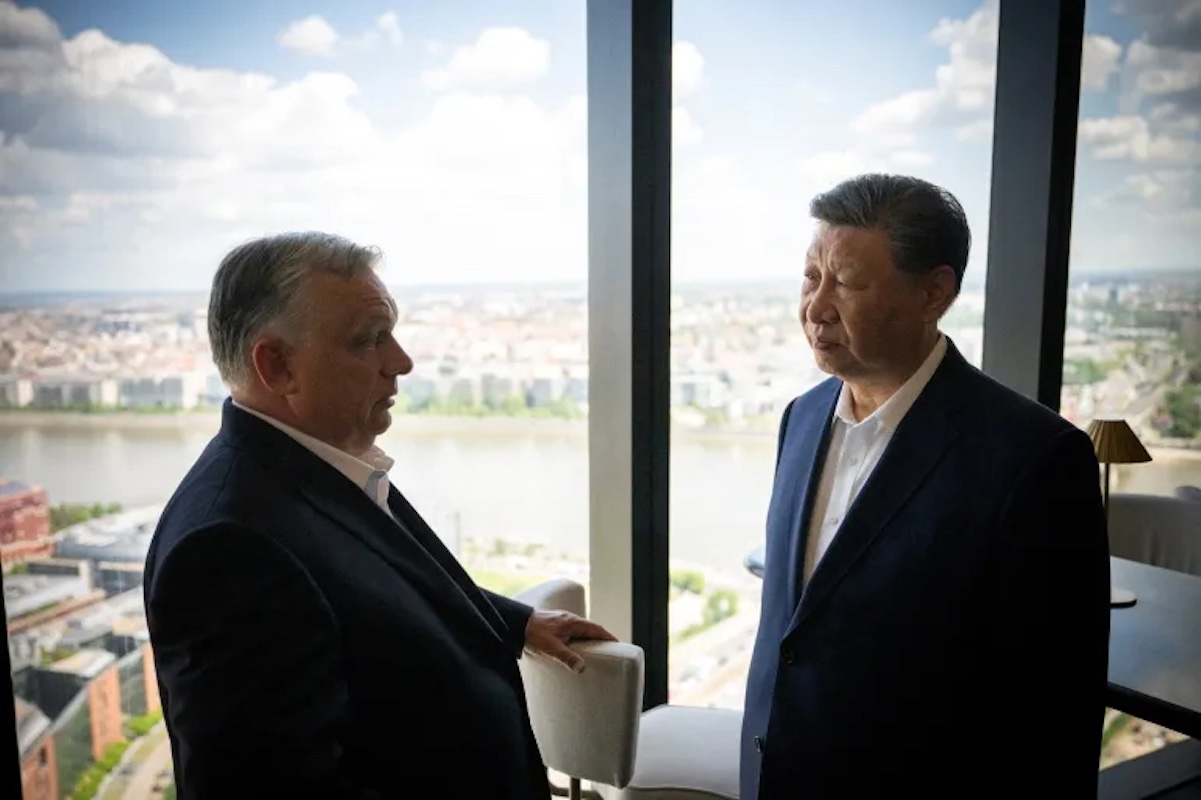
Orban’s departure shuts China’s back door into the EU
Viktor Orban’s recent electoral loss in Hungary has dominated global political headlines, with most analysis fixated on what the shift means for European integration and the ongoing Russia-Ukraine conflict. But what this coverage misses is a far-reaching strategic ripple effect: the unexpected disruption it could bring to China’s long-standing approach to influencing the European Union.
For more than a decade, Orban’s Hungary served as a critical linchpin for Beijing’s EU strategy. By leveraging Hungary’s membership in the bloc and the EU’s rule of unanimity for key policy decisions, China was able to weaken collective European action on issues ranging from human rights to trade. Orban’s departure from power now forces a fundamental reexamination: can China still depend on exploiting internal EU divisions to maintain its regional influence?
Beijing’s long-term strategy toward Europe has long centered on a “divide and conquer” framework, designed to prevent the 27-member bloc from forming a unified front against Chinese interests. At the broadest level, China has positioned itself as a critical economic partner and indispensable trade market for the EU as a whole, prioritizing stable macroeconomic ties. But behind this broad engagement, Beijing has worked quietly to nurture close bilateral relationships with individual member states that are willing to break with the Brussels consensus — and Orban’s Hungary was the most high-profile example of this model.
The combination of Orban’s illiberal political orientation and the EU’s institutional structure, particularly its unanimity requirement for foreign policy decisions, created a unique opening that Beijing was quick to exploit. Over years of deepening engagement, the relationship grew far beyond routine diplomacy: Hungary became a trusted proxy for China within EU institutions, regularly acting as a brake on collective European responses to sensitive Beijing-related issues. On multiple occasions, Budapest blocked or watered down EU statements critical of China, including declarations addressing human rights concerns in Hong Kong. It also resisted efforts to impose stricter trade measures, such as anti-dumping tariffs on Chinese electric vehicles — a priority that became even more impactful when Hungary held the rotating EU presidency from July to December 2024.
Economically, the partnership was equally strategic. Hungary became the first European nation to join China’s Belt and Road Initiative, allowing Beijing to use its central European location and EU membership as a gateway for Chinese goods to enter the single European market without friction. Hungary quickly emerged as a regional hub for Chinese manufacturing and infrastructure investment: Chinese capital poured into battery production, electric vehicle manufacturing, and cross-border transport links, moves that were as much about anchoring Beijing’s strategic presence in Europe as they were about commercial profit. For context, China is Hungary’s largest non-EU trading partner and its top source of foreign direct investment, with BRI investments creating more than 20,000 domestic jobs. Most recently, in December 2024, Chinese automaker BYD announced plans to build its first European passenger vehicle production base in the Hungarian city of Szeged, cementing this economic interdependence. In return, Orban reaped clear domestic political and economic benefits: Chinese investment supported growth, shored up his political base, and aligned with the ideological affinities between his illiberal governance model and China’s authoritarian system. The depth of the partnership was on full display during Chinese President Xi Jinping’s May 2024 visit to Budapest, where the two sides signed 18 bilateral agreements and formally upgraded ties to an “all-weather comprehensive strategic partnership” — a rare designation in Chinese diplomatic practice that signals exceptional closeness.
This dual model — political leverage through EU institutional veto points, and strategic entrenchment through targeted economic investment — allowed China to maintain its influence even as the EU as a whole hardened its posture toward Beijing. In recent years, Brussels has formally labeled China a “systemic rival,” alongside its roles as economic partner and competitor, but turning this framing into concrete policy has been stymied repeatedly by divisions among member states, with Hungary as the most consistent blocker of unified action.
Now, with Orban’s defeat, that dynamic is thrown into question. The expected incoming government led by Peter Magyar, who is broadly aligned with EU mainstream policy, signals a potential recalibration of Hungary’s foreign posture. While it is far too early to predict a full reversal of Hungary’s pro-Beijing policy, even incremental shifts toward Brussels could reshape EU decision-making on China. If Hungary is no longer willing to block EU initiatives or water down statements on China-related issues, collective action could become far easier. That said, deep divisions among other member states will persist: France and Germany, for example, still maintain strong economic ties to China and have previously resisted hardline EU policies, allowing Beijing to continue exploiting splits. Furthermore, the structural incentives that drove Sino-Hungarian cooperation — namely, the appeal of Chinese investment for domestic growth and job creation — have not disappeared. A new pro-EU government in Budapest may still choose to preserve key elements of the bilateral economic relationship.
This means the most likely outcome of Orban’s defeat is not a sudden, clean break, but a period of gradual adjustment for both China and the EU. For Beijing, the shift will likely force a reworking of its European strategy, requiring it to diversify its network of aligned partners across the bloc and double down on other nations where economic ties can be converted into political leverage. For the EU, Orban’s departure creates an opportunity to build greater strategic coherence, though there is no guarantee of success. If member states can capitalize on the reduced risk of an internal veto, they may finally be able to implement a more consistent approach to China that balances economic engagement with concerns over security, technology, and human rights — a balance that has long eluded the bloc.
Ultimately, the true significance of Orban’s electoral defeat lies not in immediate policy change, but in its potential to reshape the entire strategic landscape of China-EU relations. For more than a decade, Hungary served as a critical hinge between Beijing and Brussels, enabling China to navigate and exploit the EU’s internal divisions. As that hinge loosens, the long-standing dynamics of China-EU engagement stand to shift in meaningful ways. Whether the end result is a more unified European stance toward China or simply a new pattern of fragmentation depends on how both sides adapt to the new context. What is certain, however, is that China’s Europe strategy, built for decades on preventing a unified European coalition, can no longer rely on one of its most dependable partners — and change is now inevitable.
-

Men accused of being approached by Russian contact to attack Starmer-linked assets in London
LONDON – As a high-stakes legal case got underway in a British court this week, prosecutors laid out detailed allegations that three foreign nationals were paid by an anonymous online contact to carry out a series of coordinated arson attacks targeting properties connected to United Kingdom Prime Minister Keir Starmer last year.
Opening the trial on Wednesday, lead prosecutor Duncan Atkinson outlined the timeline of the alleged plot, which unfolded across north London over five days in May. The three defendants are identified as 22-year-old Ukrainian national Roman Lavrynovych, 35-year-old Ukrainian national Petro Pochynok, and 27-year-old Romanian citizen Stanislav Carpiuc. All three have formally denied the charges of conspiracy to commit arson brought against them.
According to Atkinson’s account to the jury, the string of attacks began in the early hours of May 8, when a Toyota vehicle – previously owned by Starmer – was deliberately set on fire in the Kentish Town neighborhood. Three days later, on May 11, a blaze was ignited at a residential property on Ellington Road, a building managed by a firm where Starmer previously held a position as a director and shareholder. The final attack followed 24 hours later at a second home on Countess Road: a property still owned by Starmer, currently occupied by the prime minister’s sister-in-law.
Atkinson emphasized that the sequence of targeted blazes was far from a random coincidence. “Three fires in the same area within five days would be pretty unusual. However, three fires all involving property linked to the same person were beyond a coincidence,” he told the court. All three fires were started using matching incendiary materials and set in the dead of night, when the occupants of the targeted properties would certainly be asleep, a detail Atkinson said proves the attackers intended to put lives at risk.
Both occupied homes had residents who escaped harm after waking to detect smoke and flames, though the encounters were traumatic. On May 11, a top-floor resident of the divided Ellington Road property woke to the smell of smoke around 3 a.m. After opening his front door to find thick smoke filling the communal hallway, he was forced to retreat to the building’s roof to wait for emergency responders, struggling to breathe through the ordeal. The following morning, around 1 a.m. on May 12, Starmer’s sister-in-law heard loud popping bangs before seeing thick smoke pour through her front door and fill the home’s staircase. She also experienced respiratory distress, and her 9-year-old daughter was left severely frightened by the incident, Atkinson confirmed.
Prosecutors confirm Lavrynovych is identified as the primary offender who set all three fires, while the other two defendants are charged as co-conspirators. Beyond the conspiracy count, Lavrynovych faces two additional charges of damaging property by fire, with intent to endanger life or reckless disregard for potential loss of life. Atkinson told the court that the plot was coordinated through the encrypted messaging platform Telegram, where Lavrynovych was promised payment for the attacks by an anonymous contact operating under the username “El Money,” described as a Russian-speaking contact. Court documents do not include details on the total amount of payment offered, and no fatalities or serious injuries were reported in connection with the blazes.
Investigators have recovered more than 320 messages exchanged between Lavrynovych and “El Money” dating back to September 2024, but Atkinson instructed the jury that they do not need to determine the ultimate motivation for the alleged attacks, nor do they need to rule on the identity of the anonymous contact who organized the plot. It also does not matter whether the defendants themselves knew the targeted properties were connected to Starmer, Atkinson argued, as that question has no bearing on the conspiracy charges before the court.
-
Defying protocol, Trump relays details of private conversation with King Charles III
LONDON – When King Charles III and Queen Camilla kicked off their high-stakes 2025 state visit to the United States, British officials were bracing for missteps. The trip came as U.S. President Donald Trump openly aired frustration with UK Prime Minister Keir Starmer over the prime minister’s refusal to back American military actions in the ongoing Iran conflict. London’s core hope was that Charles’ warm personal rapport with Trump — a known admirer of the British monarchy — could smooth frayed bilateral ties and repair the growing diplomatic rift between the two allies.
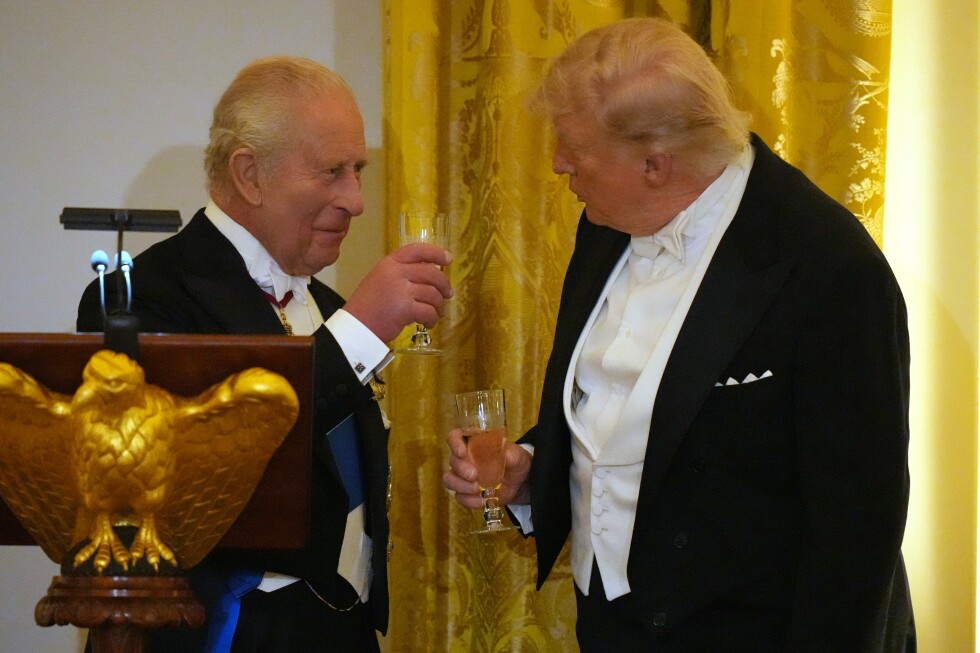
No one expected a major controversy, but few discounted the risk presented by Trump’s well-documented habit of ditching established diplomatic protocol. That risk became reality on the first night of the visit, during a formal state dinner held in the king and queen’s honor. Speaking to the assembled audience, Trump made an unusual disclosure: during a private closed-door meeting with King Charles earlier that day, he claimed the British monarch had explicitly agreed with his stance that Iran must never be permitted to develop a nuclear weapon.
“We’re doing a little Middle East work right now … and we’re doing very well,” Trump told guests. “We have militarily defeated that particular opponent, and we’re never going to let that opponent ever — Charles agrees with me, even more than I do — we’re never going to let that opponent have a nuclear weapon.”
While the core of Trump’s claim aligns with the long-held public position of both the British government and a majority of the British public, the off-the-cuff comment immediately sparked mild consternation among constitutional experts and political commentators across the United Kingdom. Longstanding unwritten constitutional convention holds that private conversations with the reigning monarch are never disclosed publicly. This norm exists for two key reasons: the British sovereign is required to remain strictly neutral and above partisan political debate, and crucially, the monarch has no right to enter public discourse to correct misquotations or clarify misattributed statements.
Craig Prescott, a leading scholar of constitutional law and royal studies at Royal Holloway, University of London, explained the significance of the breach. “Generally, as a matter of protocol, I think I would expect discussions between heads of state to be sort of behind the scenes, in those closed meetings, for those to be sort of kept private,” he noted. “And, you know, this was something that the U.K. government wanted to avoid.”
Buckingham Palace moved quickly to defuse tension, releasing a muted statement designed to contextualize Trump’s remarks without explicitly confirming or denying the president’s account. “The King is naturally mindful of his government’s long-standing and well-known position on the prevention of nuclear proliferation,” the palace said.
Crucially, observers across the board have stressed that the incident is far from a major diplomatic crisis. The stance Trump attributed to Charles matches the official UK policy on Iranian nuclear proliferation exactly, eliminating most risk of lasting damage. Multiple analysts have echoed Prescott’s observation that the breach of protocol could have been far more severe. For weeks ahead of the visit, officials had worried that Trump might make more inflammatory comments, or share sensitive private exchanges via social media that would put the king in an truly untenable position.
In fact, the first political segment of the state visit has been largely marked by success. Before the state dinner, King Charles delivered a widely praised address to a joint session of the U.S. Congress, where he celebrated the centuries-long special relationship between the United States and the United Kingdom while openly acknowledging ongoing differences on issues ranging from NATO burden-sharing to support for Ukraine and global climate action. The speech drew multiple standing ovations from lawmakers, and even critics have noted it won broad positive reception in Washington.
Now, the royal visit is shifting to lower-stakes territory as Charles and Camilla travel from Washington D.C. to New York City, where the official itinerary will center on celebrating the city’s creative industries, youth employment initiatives, and cultural exchange rather than high-stakes geopolitics. If Trump’s disclosure of the private conversation is the only controversy to emerge from the visit’s opening political phase, Prescott argues, the trip should still be considered a major win for both King Charles and the British government.
“If this is the only controversy arising out of this phase of the state visit, I think overall this has been an enormous success for the king and the British government, because the king was able to make some quite pointed remarks in Congress and it hasn’t really yielded any sort of negative reaction from the president,” Prescott said. “In a sense, you get the feeling that the king rather charmed Washington with his speech to Congress and, you know, his very witty speech at the state banquet.”
-
Will King’s US visit make a political difference?
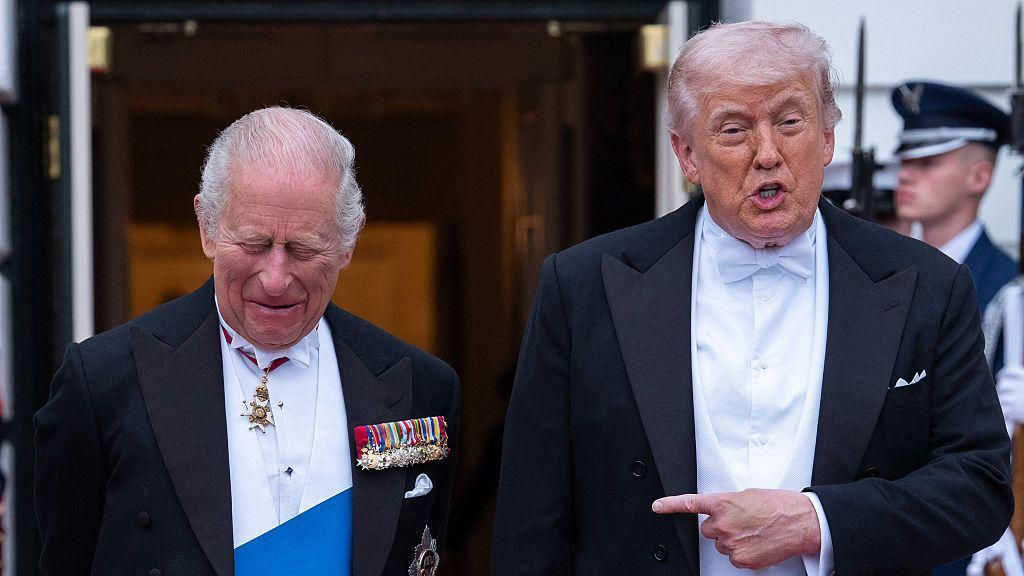
The applause has faded, the state banquet tables have been cleared, and the pageantry that dominated evening news cycles has wrapped up. But as King Charles III and Queen Camilla close out their four-day state visit to the United States, one critical question lingers: what lasting impact will this historic royal trip have on the tense UK-US relationship, and how much of the ceremonial spectacle will translate to tangible political progress?
Long before the King set foot on US soil, British diplomatic officials took a pragmatic stance on what the visit could realistically achieve. They openly acknowledged that a single royal tour could not fully reset the bilateral relationship, which has been strained by deep, unresolved divides over Iran’s nuclear program, NATO burden-sharing, support for Ukraine, trade policy, and repeated harsh public criticism from US President Donald Trump targeting UK opposition leader Keir Starmer. Instead of sweeping breakthroughs, diplomats set a more modest, immediate goal: to soften the sharp rhetorical tone and lower tensions between London and Washington.
Sir David Manning, a former British ambassador to the US, framed the King’s role ahead of the visit in an interview with the BBC, describing him as a “stabiliser and a shock absorber” capable of fostering a more constructive environment for the UK government to re-engage the Trump administration on thorny bilateral issues. By that standard, the King appears to have delivered on his core mission.
With a combination of natural charm and self-deprecating humour that many sitting British politicians would envy, King Charles used two high-profile addresses to praise the United States, its people, and its political leadership in a way that few domestic figures could pull off without drawing criticism. A standout diplomatic gesture was his thoughtful gift to President Trump: a historic ship’s bell from the HMS Trump, a move widely praised as a masterclass in soft-state diplomacy. Before a deeply politically polarised US audience, the King also offered a gentle, unifying reminder of the shared national identity that binds Americans together, describing the US as a “living mosaic” and celebrating both the UK and US as “vibrant, diverse and free societies.”
That message of unity landed with even prominent Trump allies. Republican Senator Lindsey Graham, a long-time supporter of the president, called the King’s address a “much needed morale boost” for US lawmakers, writing on social media: “Most members of Congress feel better after the speech than they did before. I will admit it was a bit odd that the unifying feeling had to come from the King of England… but so be it!”
Beyond building warmth and improving tone, the King’s second core objective was to calm roiling diplomatic waters across the Atlantic by reframing long-standing disagreements in a broader historical context. He leaned into the idea that the strength of the UK-US partnership has always been proven by its ability to overcome difference, telling a joint meeting of Congress: “Ours is a partnership born out of dispute, but no less strong for it. We can perhaps agree that we do not always agree.” British diplomats hope this framing will help de-escalate current tensions over time.
Beneath the warm anecdotes and playful humour, the King also made clear, firm arguments on core policy priorities that cut directly to key ideological divides with the Trump administration. He defended the value of the NATO alliance, noting it has stood with the US shoulder-to-shoulder since the 9/11 attacks and remains critical to addressing an increasingly unstable global order. He called for “unyielding resolve” in defending Ukraine and its courageous people, and made a point of praising the post-WWII international rules-based order – a framework that Trump and his top officials have repeatedly criticised and sought to undermine.
The King cut to the core of his argument in a single, memorable line that challenged the foundation of Trump’s “America First” ideology: “The challenges we face are too great for any one nation to bear alone.” He repeated this core message throughout his visit, emphasising that the transatlantic partnership “based on twin pillars: Europe and America” is “more important today than it has ever been.” He urged both nations to resist calls for growing isolationism, framing his message as “Alliance First” rather than prioritising narrow national interest.
The true test of this state visit will not be how smoothly the ceremonies, speeches, and public walkabouts went – and there have been small, expected hiccups along the way. Leaked private comments from UK Ambassador Sir Christian Turner questioning the long-touted “special relationship” made headlines, and Trump sparked a minor stir when he claimed the King agreed with his hardline position on Iran’s nuclear program. But these have amounted to little more than small bumps on the diplomatic road. It is also unlikely that the visit will put a permanent end to Trump’s public criticism of Keir Starmer; after all, the president has never shied away from picking public fights even with religious leaders like the Pope.
The real legacy of the visit will hinge on whether the genuine personal warmth built between King Charles and President Trump can be translated into a more stable, productive working relationship between the two governments. Part of that depends on decisions from the UK side: whether British leaders will avoid politically popular cheap shots at Trump that erode trust, and whether the UK will follow through on commitments to increase defence spending to once again act as the capable independent security player it has been historically. As former White House Middle East adviser Brett McGurk, who served four US presidents, told CNN, no amount of royal soft power can ease US military leaders’ concerns about the UK’s declining hard defence capabilities. “If the King’s speech could actually translate into some shared interests and burden sharing, there is an opportunity. If you look at what’s happening with Ukraine, we really need the Brits – and their Navy with us in the Strait of Hormuz,” McGurk noted.
Much of the outcome also rests with Trump and his administration: will the president and his team be swayed more by the King’s policy arguments than by his personal charm? Will they rediscover the strategic value of long-standing alliances, or will they continue to pursue an isolationist, go-it-alone foreign policy? For now, only time will tell whether the visit delivers tangible results. King Charles has already demonstrated his skill as a diplomat in his first major state visit to the US. Now it is up to elected politicians on both sides of the Atlantic to turn that diplomatic groundwork into meaningful progress.
-
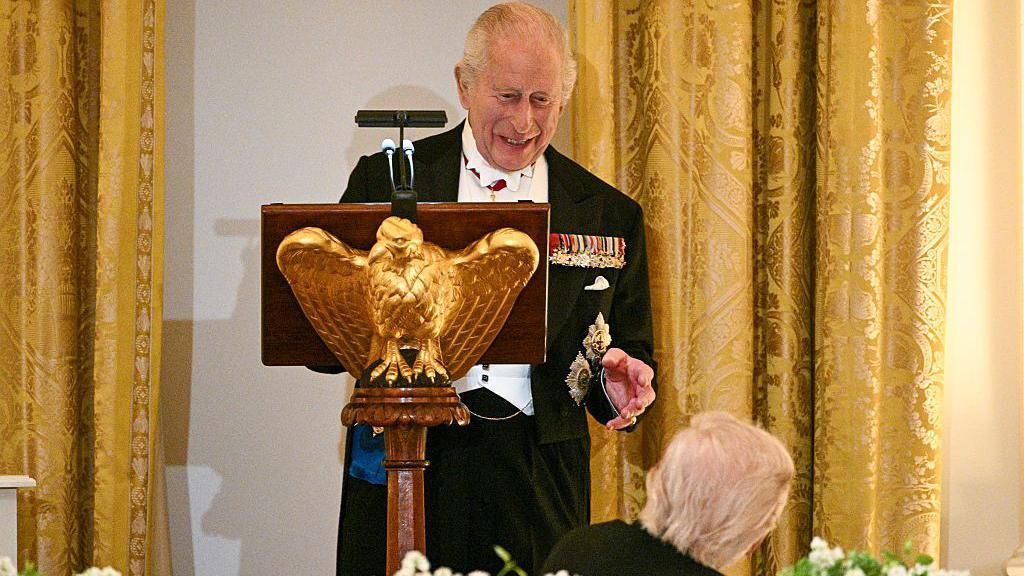
‘If it wasn’t for us, you’d be speaking French’, King and Trump joke at dinner
A lighthearted moment of jest between a British monarch and the sitting U.S. president has drawn wide attention after the pair traded playful quips during formal remarks at a state banquet. One of the most viral jokes centered on a long-standing historical trope of World War II-era alliance: the king turned to the American leader and joked that if not for the United States’ intervention in the global conflict, British citizens would be speaking French today. The line, which referenced the Allied victory over Nazi Germany, drew laughter from the assembled crowd of dignitaries and guests. In response, the U.S. president returned the playful banter with a matching joke of his own, keeping the mood jovial throughout the traditionally formal diplomatic gathering.
State banquets between the two heads of state are key moments for reinforcing the decades-long “special relationship” that has defined Anglo-American diplomatic, military and economic cooperation. Unlike tense formal policy announcements, these off-the-cuff humorous exchanges often serve as a public signal of warm personal rapport between the leaders, even as the two nations may navigate differences on trade, security or climate policy behind closed doors. The casual joke resonated with audiences on both sides of the Atlantic, with many observers noting it helped humanize the two heads of state in an era of increasingly polarized political discourse.
-
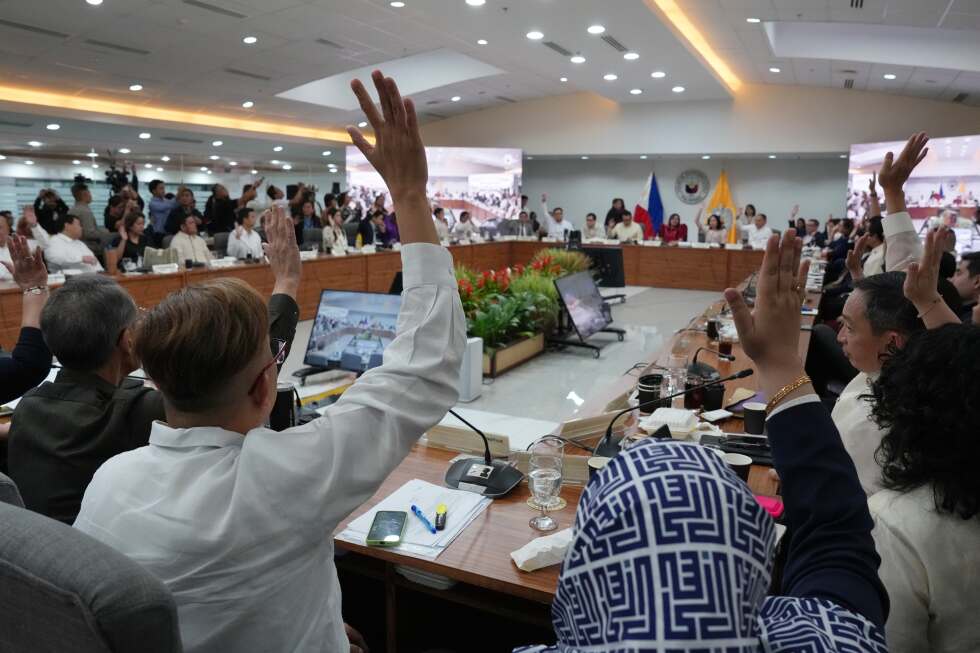
Philippine congressional committee rules there’s evidence to impeach Vice President Duterte
MANILA, Philippines — In a major development roiling the country’s already fractured political landscape, a Philippine congressional justice committee announced a unanimous ruling Wednesday that confirmed “probable cause” exists to advance impeachment proceedings against Vice President Sara Duterte. The 53-member panel’s decision moves two separate impeachment complaints forward to a full debate and vote by the 300-plus member House of Representatives, marking a critical escalation of allegations that include unexplained personal wealth, misuse of public funds, and direct threats to the life of sitting President Ferdinand Marcos Jr.
The core accusations against Duterte focus on her alleged illegal misappropriation and mismanagement of confidential intelligence funds, allocated both to her current office as vice president and to the Department of Education, which she led before Marcos took office in 2022. While Duterte has issued a broad denial of all wrongdoing, she has repeatedly declined to address the specific claims levied against her in detail.
During Wednesday’s public hearing, officials from the National Bureau of Investigation testified that comments Duterte made during a 2024 online press conference constituted a clear threat to national security. In those remarks, Duterte allegedly stated that if she were assassinated, orders would be carried out to kill President Marcos, the first lady, and the Speaker of the House of Representatives.
Committee chairperson Rep. Gerville Luistro publicly criticized Duterte for her repeated refusal to testify at six televised impeachment hearings, as well as her decision to petition the Supreme Court to halt the inquiry over the allegations, which include unreported large-scale bank transactions that Duterte was legally required to disclose. “If there is nothing to hide, there is no reason to hide, there is no reason to obstruct,” Luistro stated at the opening of Wednesday’s session. “The only people who fear the disclosures of these transactions are those with dirty secrets.”
In the aftermath of the committee’s ruling, legal representatives for Duterte pushed back aggressively, arguing that the entire proceeding deviated from the Philippines’ constitutional framework for impeachment. “Instead of confining itself to the verified complaints and their attachments, the process expanded into matters that properly belong to a full trial,” the legal team said, offering no further details on their objection.
The political clash has already spilled into additional legal action: Duterte’s husband, Manases Carpio, filed criminal complaints Monday against Luistro and multiple other legislators and inquiry officials after records of the couple’s bank transactions were publicly released during a recent House hearing. The Duterte camp maintains the disclosure violates the country’s strict bank secrecy laws.
Sara Duterte, the daughter of former Philippine President Rodrigo Duterte, carries notable political baggage from her father’s tenure: the former leader is currently facing prosecution before the International Criminal Court in The Netherlands on allegations of crimes against humanity, stemming from the thousands of extrajudicial killings that occurred during his nationwide anti-drug crackdown between 2016 and 2022.
This is not the first impeachment effort against the vice president: she survived a similar attempt last year on a procedural technicality, after the Supreme Court ruled that the House had violated constitutional rules limiting the body to processing just one impeachment proceeding per calendar year. Most of the current allegations against her were carried over from that unsuccessful 2023 complaint.
Notably, despite the mounting legal and political pressure, independent public opinion polls still rank Duterte as one of the most popular political figures in the Philippines. She has already publicly confirmed her intention to run for the presidency in the 2028 national election, a declaration that has amplified opposition scrutiny of her conduct and financial history.
If the full House of Representatives, which is currently controlled by allies of President Marcos Jr., votes to impeach Duterte, she will next face an impeachment trial conducted by the Philippine Senate. A conviction would remove her from the vice presidency immediately.
The current standoff between Duterte and Marcos caps a rapid collapse of what was once a powerful political alliance: the two ran as a joint presidential-vice presidential ticket in the 2022 national election, but their relationship has devolved into open, bitter conflict in recent years, adding a new layer of instability to Philippine politics that has long struggled with systemic governance challenges and recurring political upheaval.
-
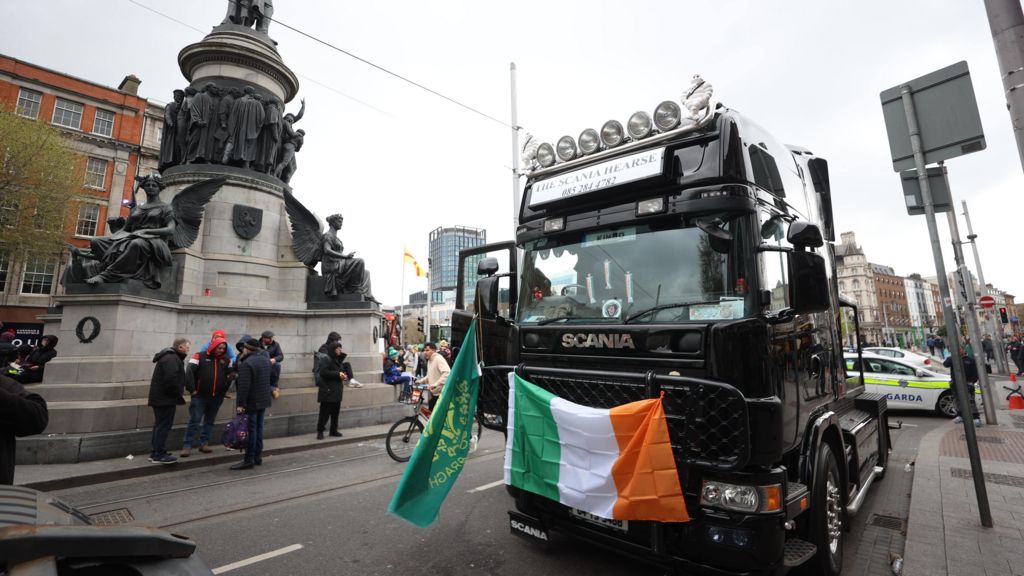
Irish government announces further fuel supports after protests
Weeks after widespread public demonstrations against skyrocketing fuel prices brought major Irish infrastructure to a standstill, the Irish government has formally announced a new €220 million (£191 million) targeted relief package designed to ease cost pressures on commercial transport operators, farmers, agricultural contractors and fishers. The government has emphasized that policy work on the support framework began long before protests kicked off early in April, when demonstrators blocked key motorways across the country and paralyzed Dublin’s main commercial thoroughfare.
This new package marks the latest round of government intervention to address volatile fuel costs, following earlier cuts to excise duty on both petrol and diesel rolled out in preceding months. Details of the two new targeted schemes were laid out by cabinet ministers on Wednesday at Dublin’s Government Buildings.
The first initiative, the €120 million Road Transporters Supports Scheme, is tailored for road hauliers, bus companies and coach operators. The program will be backdated to March, covering the period when average national diesel prices surged past the €1.90 per litre benchmark – a threshold the government identifies as the point where fuel costs become unsustainable for commercial transport operators. Payments under the scheme are structured on a graduated sliding scale tied to the number of vehicles an operator holds on their license: operators with five or fewer vehicles will receive €1,350 per vehicle, those with 6 to 20 vehicles get €790 per vehicle, and businesses with more than 21 vehicles will receive €300 per vehicle. Applications for the scheme will open in May 2026.
The second initiative, the €100 million Fuel Support Scheme, targets farmers, agricultural contractors and commercial fishers, who rely heavily on green diesel – a marked fuel priced lower for agricultural use that has seen significant cost hikes in recent months. This program is also backdated to March and will run through the end of July, providing support equal to roughly 20 euro cents per litre of green diesel (€200 per 1,000 litres), based on verified fuel usage from 2025.
Alongside the two sector-specific support schemes, the government is launching a public communications campaign to share guidance for households and small businesses looking to manage rising energy and fuel costs. Counting this latest announcement and all prior excise cuts, the Irish government has now allocated a total of €755 million (£654 million) to fuel-related relief measures in recent months. It has also paused scheduled annual increases to the national carbon tax to avoid further pushing up fuel costs for consumers and businesses.
Speaking at the announcement, Irish Transport Minister Darragh O’Brien framed the new package as targeted and time-limited, noting that while the government retains flexibility to introduce additional support if needed, it must maintain sustainable management of public finances. Agriculture Minister Martin Heydon added that the package reflects the government’s commitment to responding in real time to the cost challenges facing key sectors of the Irish economy.
-
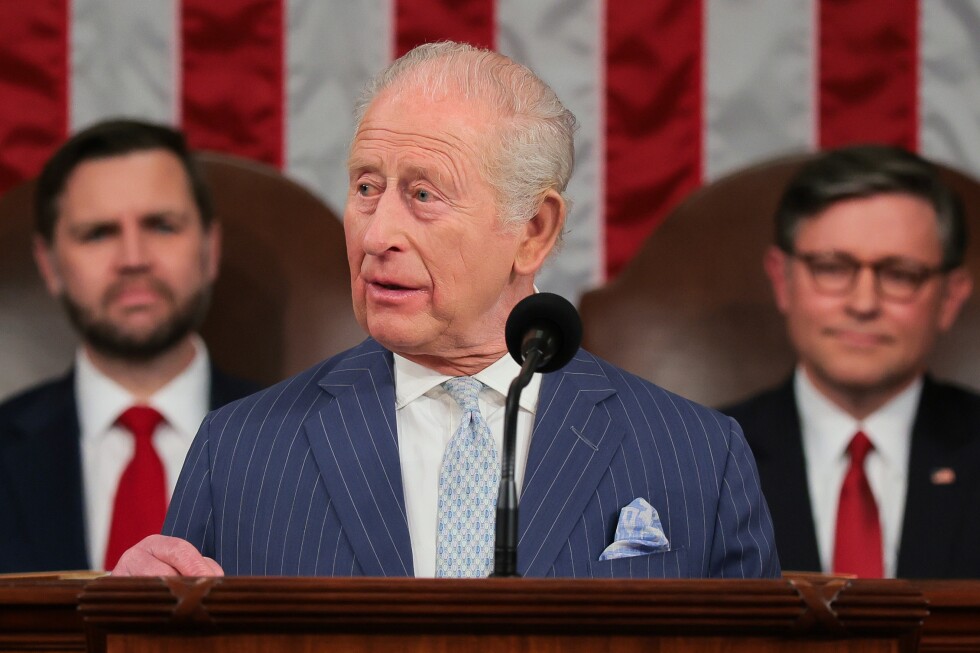
Read the complete transcript of King Charles III’s speech to Congress
WASHINGTON — In a landmark address to a joint meeting of the U.S. Congress, King Charles III has delivered a sweeping, history-rooted speech celebrating the centuries-long interconnected destiny of Britain and the United States, while calling for renewed collective action to confront modern global crises against a backdrop of widespread international uncertainty.
Opening his remarks, the King extended sincere gratitude to congressional members and the American public for the opportunity to speak during his first visit to the U.S. as monarch and head of the Commonwealth, marking the 250th anniversary of the U.S. Declaration of Independence. He began with a lighthearted nod to the shared cultural ties between the two nations, quoting Oscar Wilde’s famous quip: “We have really everything in common with America nowadays except, of course, language.”
King Charles acknowledged the precarious global moment the address was delivered in, noting ongoing conflicts stretching from Europe to the Middle East that have created ripple effects felt in communities on both sides of the Atlantic. He also directly referenced the recent violent incident near the Capitol that targeted U.S. national leadership and sought to sow division, stating with unwavering conviction that such acts of aggression will never undermine democratic resolve. “Whatever our differences, whatever disagreements we may have, we stand united in our commitment to uphold democracy, to protect all our people from harm, and to salute the courage of those who daily risk their lives in the service of our countries,” he affirmed.
The monarch traced the deep historical roots of the bilateral relationship, noting that the modern connection between the two nations stretches back more than four centuries, and he is the 19th British sovereign to follow U.S. affairs closely. He paid tribute to Congress as a “citadel of democracy” founded to advance universal rights and freedoms, and recalled his late mother Queen Elizabeth II’s 1991 address to the same chamber, drawing a throughline of diplomatic friendship between the two nations. He even added a touch of gentle humor referencing the ancient British parliamentary tradition of holding a member of parliament hostage at Buckingham Palace during the State Opening of Parliament, prompting a light response from assembled lawmakers.
Reflecting on the foundational dispute of American independence, King Charles framed the conflict as a testament to the shared democratic roots that bind the two countries today. The core principle of “no taxation without representation,” he noted, grew from democratic values inherited from British legal and political tradition, turning an early disagreement into the foundation of a resilient partnership. Citing former U.S. President Donald Trump’s 2019 remarks during a state visit to the UK, he echoed that the kinship between the U.S. and UK is “priceless and eternal. It is irreplaceable and unbreakable.”
He further traced shared ideological origins back to the 1215 signing of Magna Carta, noting that the foundational document’s principles of checks and balances on executive power have been cited in more than 160 U.S. Supreme Court cases since 1789. He pointed to the shared memorial stone at Runnymede, where an acre of the historic Magna Carta site was gifted to the U.S. by the British people in memory of President John F. Kennedy, as a lasting symbol of shared commitment to liberty.
Against the current era of global turbulence, King Charles called for a revitalization of the transatlantic alliance, echoing Henry Kissinger’s framing of an Atlantic partnership built on twin pillars of Europe and America, a partnership he says is more critical today than at any point in history. Recalling his grandfather King George VI’s 1939 visit to the U.S. on the cusp of World War II, he noted that while the geopolitical context has shifted dramatically, the shared values that united the two nations then remain just as vital today.
Addressing modern security challenges, King Charles announced the UK’s commitment to the largest sustained increase in defense spending since the Cold War, a transformation he said is necessary to address evolving global threats. He also marked the upcoming 25th anniversary of the 9/11 terrorist attacks, noting that he and Queen Camilla would pay their respects to victims and their families during their stop in New York, reaffirming that Britain stood with the U.S. then and continues to stand with the nation today. He recalled the unified global response after the attacks, when NATO invoked Article V for the first time in its history, as a testament to the centuries-long history of shared sacrifice between the two nations.
The King reaffirmed unwavering support for Ukraine and its people, calling for continued collective resolve to secure a just and lasting peace. He outlined deep integrated defense cooperation between the U.S. and UK, from joint production of F-35 fighter jets to the groundbreaking AUKUS submarine partnership with Australia, noting these projects are built not on sentiment alone but on a shared commitment to long-term regional and global security.
Beyond security, King Charles highlighted the deep economic and technological ties that bind the two economies, noting $430 billion in annual bilateral trade and $1.7 trillion in mutual investment that supports millions of jobs on both sides of the Atlantic. He outlined new partnerships in cutting-edge fields including nuclear fusion, quantum computing, artificial intelligence, and pharmaceutical discovery, partnerships he said hold the promise of saving millions of lives around the globe.
He also drew attention to shared environmental responsibility, noting that the ancient Appalachian and Scottish mountain ranges were once a single continuous landmass, a natural reminder of the shared global fate of the two nations in confronting climate change and biodiversity collapse. He emphasized that the collapse of natural systems threatens both global prosperity and national security, a risk the world cannot afford to ignore.
Closing his historic address, King Charles framed the U.S.-UK relationship as one of the most consequential alliances in human history, forged from early division into a partnership that has shaped global order for decades. He called on both nations to reject inward-looking nationalism and reaffirm their shared commitment to defending democratic values alongside global partners. Echoing Abraham Lincoln’s Gettysburg Address, he noted that the world will remember actions more than words, and called for a rededication of the two nations to serving their people and all the people of the world. He closed with a simple, heartfelt toast to the enduring friendship between the two nations: “God bless the United States and God bless the United Kingdom.”
-

Beijing clamps down on drones: Sales banned citywide from May 1
The Chinese capital Beijing will enact a complete ban on all drone operations and sales across its entire administrative area beginning May 1, according to an announcement from city authorities. This sweeping new regulation, formally approved by the city government in late March, codifies and expands long-standing informal restrictions that have barred private drone flights within Beijing’s core and outer city limits for years.
Beyond prohibiting unauthorized flights, the new rules also require all commercial retailers to clear existing drone stock from their inventories ahead of the ban’s implementation. Checks on major Chinese e-commerce platform Taobao confirm that customers entering a Beijing delivery address are already blocked from completing checkout for any drone product, reflecting early compliance with the regulatory change. A staff member at a Beijing retail outlet of DJI, the world’s leading consumer drone manufacturer headquartered in China, told domestic state-affiliated media Jiemian that the location has been ordered to liquidate all remaining drone stock by this week.
Under the terms of the new policy, narrow exceptions are permitted for drones used for academic research by universities and research institutions, as well as for public safety and government operations. However, all exempted users are required to obtain official written approval from local police departments before operating any unmanned aerial vehicles within city boundaries. Individual violators caught operating unapproved drones face penalties of up to 500 Chinese yuan, equal to roughly $73, along with potential confiscation of their equipment.
This latest regulatory move builds on pre-existing national drone governance frameworks that already require all drone operators across China to register their devices and complete mandatory identity verification through an official government platform before flying.
The policy also comes amid growing global scrutiny of Chinese drone dominance in the global consumer and commercial unmanned aerial vehicle market. Chinese manufacturers control over 70% of the global consumer drone market, a position that has triggered national security concerns in multiple Western countries, most notably the United States. The U.S. Federal Communications Commission has already moved to ban the import and sale of new models of Chinese-manufactured drones over data security risks.
Beijing has a long-standing pattern of maintaining stricter security and entry restrictions than most other regions of China, particularly in areas involving connected or sensor-equipped consumer technology. Prior similar restrictions include limits on Tesla electric vehicles, which have been barred from parking in certain sensitive government compounds and key infrastructure sites including airports, over concerns that the vehicles’ built-in camera systems could be exploited for espionage activities.