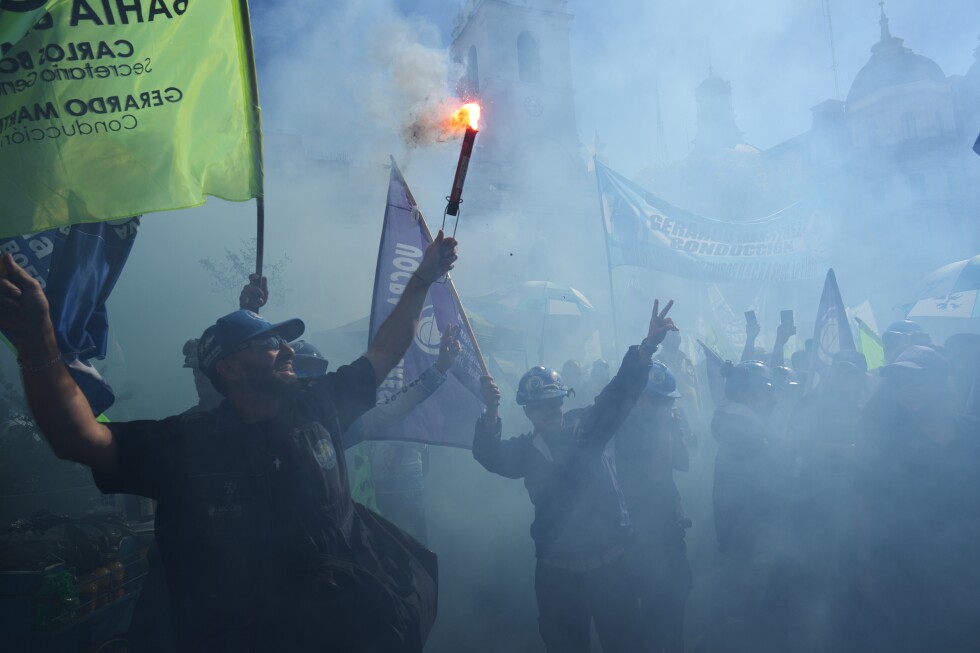
On Thursday, thousands of Argentine working people gathered in the streets of Buenos Aires for annual May Day demonstrations, turning the traditional celebration of labor rights into a mass show of opposition to President Javier Milei’s sweeping rollback of decades-old worker protections. The march was organized by the General Confederation of Labor (CGT), Argentina’s largest union federation, which framed the action as a fight to preserve “decent employment” in the face of Milei’s transformative changes to the country’s 50-year-old national labor code.
Argentina’s labor regulations, first enshrined in 1974, have long provided Argentine workers with extensive legal protections and benefits. For decades, however, economists and business leaders have argued that these rigid rules created prohibitive operational costs for companies, driving away much-needed foreign direct investment and pushing nearly half of the country’s workforce into the informal, off-the-books sector where workers receive no legal protections or benefits. Successive administrations spanning multiple political ideologies attempted to liberalize the labor market to address these issues, but every reform effort collapsed in the face of fierce pushback from Argentina’s historically powerful labor unions, which have been a core political force in the country since the rise of Peronism in the 1940s.
Despite widespread union opposition that included weeks of rolling protests and a full nationwide strike, Milei, who swept to power on a libertarian free-market agenda, successfully pushed his labor reform package through congress in February, securing one of the most significant legislative wins of his young presidency. The new legislation makes sweeping changes to the country’s labor rules: it expands the maximum legal workday from eight hours to 12, extends the probation period for new hires, simplifies the process for companies to dismiss workers, reduces legal protections for striking workers, and caps judicial discretion for severance pay awards. Proponents argue the changes will encourage formal sector hiring and make Argentina more competitive for global investment, but critics say they erode hard-won labor rights and leave working people vulnerable.
Opponents of the reform have turned to the courts to block the new law, launching a constitutional appeal to challenge its legality. Last week, a court overturned an earlier injunction that had suspended the law’s implementation at the unions’ request, clearing the way for the reforms to take effect. Union leaders have announced they will file a new legal challenge, and the dispute is now on track to reach Argentina’s Supreme Court for a final ruling.
The political clash over labor reform comes at a fragile moment for Milei’s presidency. His flagship policy promise to curb Argentina’s decades-long sky-high inflation has made little progress in recent months, while national unemployment has begun to climb. For Argentina’s labor movement, which was a foundational pillar of the Peronist movement that dominated Argentine politics for nearly 80 years, the labor overhaul represents an existential threat to both worker rights and the movement’s long-held political influence.
Ahead of Thursday’s protest, CGT leader Jorge Sola told local radio that widespread social discontent has built up across the country, driven by more than just falling household consumption. “It is due to family debt, job losses and worse working conditions than what we had before,” Sola said, capturing the simmering anger that brought thousands of workers onto the capital’s streets for the May Day demonstration.