分类: politics

  • Israeli Knesset passes law to execute Palestinians for ‘acts of terrorism’

    Israeli Knesset passes law to execute Palestinians for ‘acts of terrorism’

    Israel’s parliament, the Knesset, has enacted a highly contentious death penalty statute that specifically applies to Palestinians in the occupied West Bank, drawing immediate condemnation from human rights organizations and legal experts. The legislation, passed on Monday, establishes two distinct legal pathways for capital punishment based on national identity, making death sentences the default penalty for Palestinians tried in military courts.

    Suhad Bishara, Legal Director at Adalah—a Palestinian-run legal center—denounced the legislation as institutionalizing ‘state-sanctioned, cold-blooded killing of individuals who pose no threat whatsoever.’ Bishara emphasized that the law ‘exclusively targets Palestinians, violating the fundamental principle of equality and prohibition on racial discrimination.’

    The Association for Civil Rights in Israel has filed a petition challenging the law’s validity, citing dual constitutional and jurisdictional concerns. The organization contends that the Knesset lacks legislative authority over the West Bank, where Israel holds no sovereignty under international law. Furthermore, they argue the statute violates protected rights under Israel’s Basic Law: Human Dignity and Liberty, including the right to life, human dignity, due process, and equality.

    The legislation creates concerning procedural mechanisms allowing executions by hanging to be conducted covertly while imposing near-total isolation on condemned prisoners. Notably, the law specifies capital punishment for killings categorized as ‘acts of terrorism,’ effectively exempting Israeli citizens convicted of murder.

    International legal experts warn this legislative move represents a de facto annexation of the West Bank, as occupying powers cannot generally apply domestic laws to occupied territories under international law. Israel gained control of the West Bank during the 1967 War, and the territory remains classified as occupied under international statutes.

    Adalah has announced plans to petition Israel’s Supreme Court against the legislation, setting the stage for a significant constitutional challenge that will test the boundaries of Israel’s legal authority in occupied territories.

  • How Pakistan won over Trump to become an unlikely mediator in the Iran war

    How Pakistan won over Trump to become an unlikely mediator in the Iran war

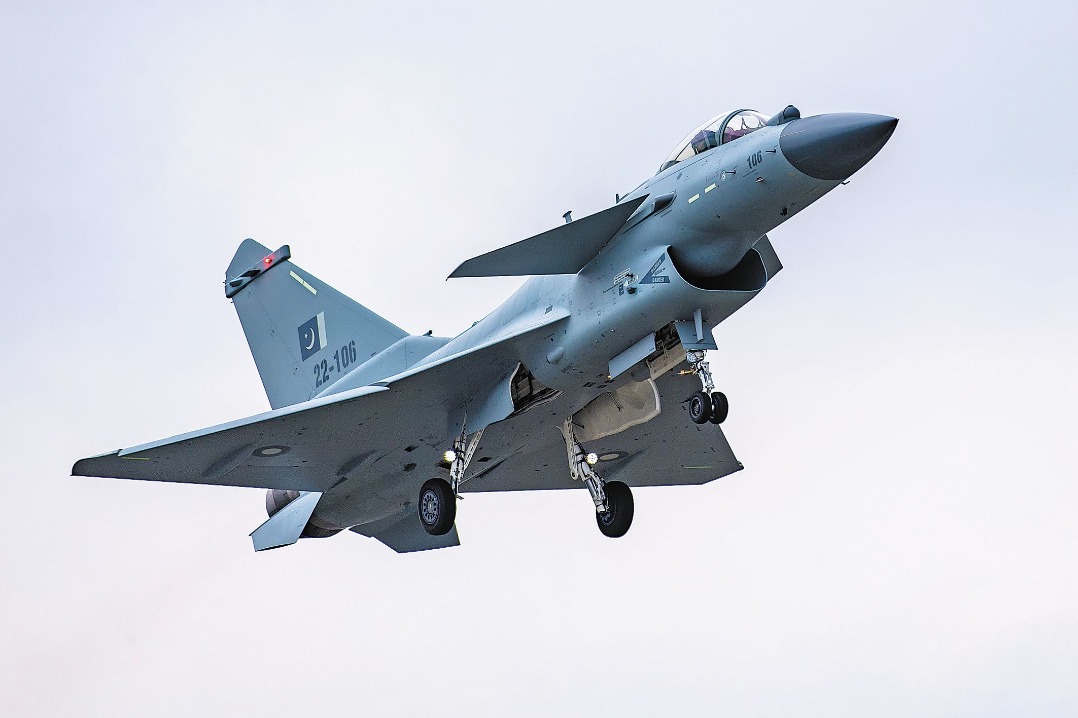
    In an unexpected geopolitical maneuver, Pakistan has emerged as a potential mediator in the escalating conflict between the United States and Iran, leveraging its unique position despite facing regional conflicts of its own. The diplomatic push comes as Field Marshall Asim Munir, head of Pakistan’s armed forces, enjoys favorable standing with US President Donald Trump, who frequently refers to him as his “favorite” Field Marshall and acknowledges his deep understanding of Iran.

    Pakistan’s qualifications for this mediating role stem from several strategic advantages: it shares a 900-kilometer border with Iran and maintains what both nations describe as a “brotherly” relationship rooted in cultural and religious ties. Crucially, Pakistan hosts no US air bases and has thus far avoided direct entanglement in the Gulf conflict, while maintaining a compelling interest in fostering peace between the two adversaries.

    This diplomatic positioning occurs against a complex backdrop of regional tensions. Pakistan is currently engaged in military operations against Afghanistan while maintaining nuclear-tinged hostilities with India—contradictions that raise questions about its peacemaker credentials. The country has responded to these concerns by emphasizing its years of unsuccessful diplomatic outreach to neighbors before resorting to military action.

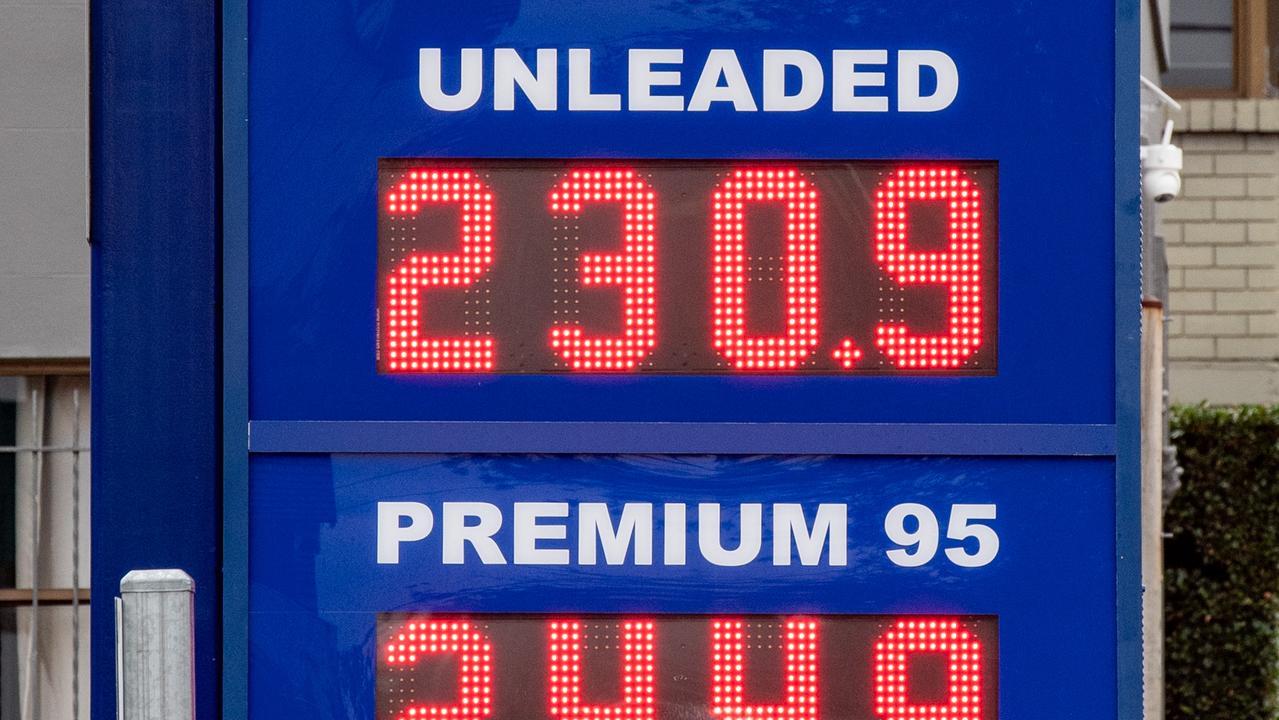
    Economic vulnerabilities add urgency to Pakistan’s mediation efforts. Heavily dependent on oil imports transiting the Strait of Hormuz, Pakistan already implemented a 20% fuel price hike in early March and introduced energy conservation measures including a four-day government workweek. Further conflict escalation could devastate Pakistan’s economy, according to Farhan Siddiqi, Professor of Political Science at Karachi’s Institute of Business Administration.

    Complicating matters is Pakistan’s defense pact with Saudi Arabia, which obligates mutual protection against aggression. This agreement creates potential dilemmas should Saudi Arabia join the conflict and invoke the pact, potentially destabilizing Pakistan’s western border region already embroiled in conflict with Afghanistan.

    Domestic political considerations also weigh heavily on Pakistani leadership. Widespread pro-Iran sentiment among the Pakistani population manifested in demonstrations following the killing of Iran’s Supreme Leader, including attempts to storm the US consulate in Karachi that resulted in fatalities. Former ambassador Maleeha Lodhi notes that decision-makers remain “very sensitive” to this public sentiment.

    Analysts suggest multiple motivations underlie Pakistan’s diplomatic offensive. Michael Kugelman of the Atlantic Council observes that beyond material interests, Pakistan seeks to counter perceptions of limited global influence. The country has employed unconventional diplomatic approaches, including nominating President Trump for the Nobel Peace Prize following his intervention in the 2025 Pakistan-India crisis and facilitating the transfer of the Kabul airport bombing suspect to US authorities.

    Despite these efforts, experts remain skeptical about the prospects for success. Kugelman characterizes the mediation attempt as “high-stakes diplomacy” with low probability of success given the “maximal demands” and deep mistrust between American and Iranian leadership. Pakistan’s Foreign Minister Ishaq Dar continues diplomatic meetings, including recent travels to China at the invitation of counterpart Wang Yi, but securing a comprehensive peace agreement remains a distant possibility amid escalating regional tensions.

  • Any expansion of federal parliament unnecessary and costly: Taylor

    Any expansion of federal parliament unnecessary and costly: Taylor

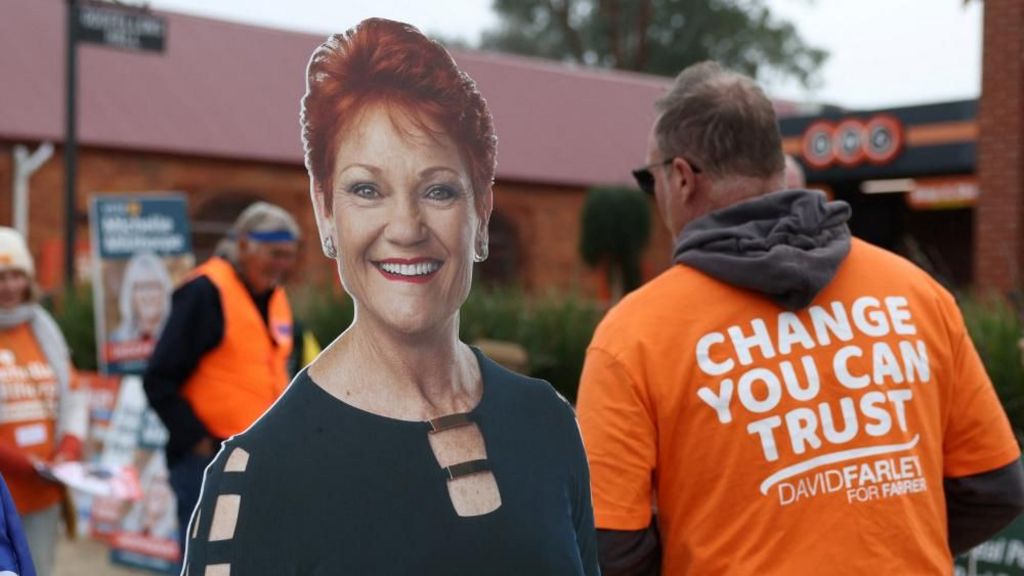
    A significant political confrontation has erupted in Canberra over proposals to expand Australia’s federal parliament, with Opposition Leader Angus Taylor leading fierce criticism against the Albanese government’s potential move. The controversy emerged after Special Minister of State Don Farrell indicated ongoing interest in increasing parliamentary representation, citing historical Labor precedent.

    During a National Press Club address, Minister Farrell asserted that enlarging parliament aligns with Labor’s traditional approach, though he acknowledged the proposal hasn’t yet gained sufficient support. Behind-the-scenes discussions have reportedly continued as recently as February, with Farrell engaging National Party representatives regarding additional seats before the next election.

    The Coalition has mounted vigorous opposition to the concept, with Taylor and Nationals leader Matt Canavan jointly demanding Prime Minister Albanese immediately reject any expansion plans. They contend that Australia requires governmental focus on public concerns rather than additional politicians. The opposition estimates that adding 24 House of Representatives members and 14 senators would exceed $600 million in taxpayer expenses based on Parliamentary Budget Office calculations.

    Despite Australia’s substantial population growth since the last parliamentary expansion in 1984, Taylor argued that current economic pressures make additional political representation inappropriate. He connected population growth under Labor with declining per capita economic performance, questioning the timing of such proposals.

    The government response characterized the opposition’s focus as politically motivated distraction. A spokesperson for Minister Farrell’s office emphasized respect for the ongoing Joint Standing Committee on Electoral Matters review, noting the Coalition’s unusual preparation of costings for a policy not formally proposed. The committee, which includes Coalition members, is scheduled to deliver its final assessment in 2027.

  • ‘Is it Kafka?’ US judge baffled by new Pentagon press policy

    ‘Is it Kafka?’ US judge baffled by new Pentagon press policy

    A federal courtroom became the arena for a constitutional clash between The New York Times and the Trump administration regarding the Pentagon’s increasingly restrictive media access policies. The confrontation unfolded before Judge Paul Friedman, who previously ruled this month that the Defense Department’s new credentialing rules violated constitutional protections for journalists.

    The legal battle intensified when the administration announced plans to appeal Judge Friedman’s ruling while simultaneously implementing even stricter access controls. These measures included shuttering the Pentagon’s traditional press area known as Correspondents’ Corridor and relocating journalists to an annex in a separate building. The revised policy mandates that “all journalist access to the Pentagon will require escort by authorized Department personnel.”

    During Monday’s hearing, Theodore Boutrous, representing The New York Times, accused the administration of acting in “bad faith” and engaging in “gaslighting” tactics. “We’ve seen this movie before,” Boutrous stated. “They made the press credentials that we fought so hard to get back meaningless.”

    The practical implications of these restrictions were detailed in a sworn declaration by Times reporter Julian Barnes, who noted journalists could neither access the new press facility on foot nor use the Pentagon shuttle bus without special permission—a situation Judge Friedman described as reminiscent of “Catch-22” and Kafkaesque absurdity.

    Following arguments from both the Times and Justice Department lawyer Sarah Welch, the court withheld immediate judgment. The case emerges against a backdrop of numerous news organizations, including AFP, losing their Pentagon credentials in mid-October after refusing to sign the new access agreement. These developments represent the latest in a series of adversarial measures by the Trump administration against media outlets frequently dismissed as “fake news” when their reporting proves unflattering to the government.

  • ‘Get them out of casinos’: Bannon wants Netanyahu’s son and Gulf royals on Iran front lines

    ‘Get them out of casinos’: Bannon wants Netanyahu’s son and Gulf royals on Iran front lines

    Former Trump strategist Steve Bannon has issued a provocative demand for the sons of Middle Eastern leaders, including Israeli Prime Minister Benjamin Netanyahu’s son Yair, to be expelled from Western nations and deployed as frontline troops in any potential ground invasion of Iran. The controversial remarks came during Bannon’s War Room podcast, directly challenging what he perceives as inadequate regional participation in US-led military operations.

    Bannon specifically targeted Yair Netanyahu, who has reportedly resided in Miami with his mother since February despite being eligible for Israeli military reserve duty. He called for Department of Homeland Security intervention to repatriate him for military service. Simultaneously, Bannon turned his criticism toward Arab Gulf states, including Saudi Arabia, the UAE, and Qatar, accusing their leadership of enjoying luxurious Western lifestyles while American troops prepare for deployment.

    The commentary emerges amid complex regional dynamics. While Israel has reportedly lobbied for US military action against Iran, Channel 12 news indicates Israel would not contribute ground troops to such an operation. Gulf states present contradictory positions—some initially opposed confrontation with Tehran but have since provided logistical support, with Saudi Arabia permitting US use of King Fahd Air Base. The UAE has notably advocated for aggressive retaliation against Iran’s Strait of Hormuz seizure, with Ambassador Yousef al-Otaiba recently rejecting ceasefire proposals.

    Bannon’s rhetoric reflects his long-standing skepticism of foreign interventions, despite his previous role in the Trump administration. He maintains careful criticism that avoids direct condemnation of Trump’s decisions while channeling populist anger toward US allies. This positioning represents Bannon’s characteristic approach of blending nationalist rhetoric with strategic political commentary, questioning why regional powers benefiting from US protection shouldn’t bear greater military responsibility.

  • Al-Aqsa and the Holy Sepulchre: How has Israel undermined the Status Quo?

    Al-Aqsa and the Holy Sepulchre: How has Israel undermined the Status Quo?

    Jerusalem’s Old City, housing some of humanity’s most sacred religious sites, stands at the center of escalating tensions as Israel’s ongoing violations of the historic Status Quo arrangement threaten to unravel centuries of fragile coexistence. The internationally recognized framework, established through Ottoman decrees in the 18th century and codified in the 1878 Treaty of Berlin, has governed access and maintenance of holy sites shared by Muslims, Christians, and Jews for generations.

    Al-Aqsa Mosque compound, Islam’s third holiest site, has become the primary flashpoint. Israeli authorities have consistently imposed restrictions on Muslim worship while facilitating increased Jewish presence within the complex. This pattern intensifies during overlapping religious holidays, frequently resulting in violent confrontations as Israeli forces remove Palestinian worshippers to accommodate Israeli visitors.

    The recent complete closure of Al-Aqsa during Ramadan and Eid al-Fitr—citing security concerns related to regional conflicts—marked an unprecedented departure from historical practice. Simultaneously, Israel shuttered the Church of the Holy Sepulchre ahead of Easter celebrations, disrupting centuries of Christian tradition at Christianity’s most sacred site.

    Historical context reveals the Status Quo emerged from Ottoman Sultan Osman III’s 1757 decree freezing ownership arrangements to prevent interfaith conflict. This framework was reaffirmed multiple times, including during the Crimean War, and expanded to cover numerous holy sites across Jerusalem and Bethlehem.

    Since Israel’s 1967 occupation of East Jerusalem, considered illegal under international law, successive governments have systematically undermined the Status Quo. The initial breach occurred hours after occupation began, with Israel demolishing the Moroccan Quarter adjacent to the Western Wall to create a prayer plaza. Subsequent decades have witnessed increased settler incursions into Al-Aqsa compound under police protection, archaeological excavations beneath the complex, and growing political support for altering worship arrangements.

    These violations have repeatedly triggered violent confrontations, including the 1990 protests that left 21 Palestinians dead, the 1996 tunnel opening that resulted in 90 casualties, and Ariel Sharon’s 2000 visit that ignited the Second Intifada. More recently, tensions at Al-Aqsa and surrounding neighborhoods contributed to the escalation leading to Hamas’ October 2023 attack.

    The situation extends beyond Al-Aqsa to other contested sites including Rachel’s Tomb in Bethlehem and the Ibrahimi Mosque in Hebron, where access restrictions and settler incursions have increased significantly. Even Christian sites governed by the Status Quo have experienced interdenominational conflicts and Israeli legislative challenges that prompted temporary closures of the Church of the Holy Sepulchre.

    Current developments suggest further erosion of the Status Quo, with far-right Israeli officials regularly accessing Al-Aqsa and proposed legislation seeking to transfer control of the Western Wall to Jerusalem’s chief rabbis. This systematic dismantling of historical arrangements threatens not only religious coexistence but regional stability, as violations at holy sites continue to trigger broader conflicts.

  • How Spain’s memory of Iraq shaped Sanchez’s response to war on Iran

    How Spain’s memory of Iraq shaped Sanchez’s response to war on Iran

    In a striking divergence from European allies, Spanish Prime Minister Pedro Sánchez has adopted an unequivocal position against the US-Israel military campaign in Iran, echoing his country’s traumatic memory of the Iraq War. On March 4, just days after the initial strikes, Sánchez addressed the nation with a four-word manifesto: “No to the war.” This rhetorical stance has been reinforced by concrete actions, including closing Spanish airspace to US military aircraft involved in the operations and denying access to domestic military bases.

    The government’s opposition carries profound historical resonance. Sánchez explicitly referenced the 2003 Iraq invasion—a conflict that remains a painful national memory—warning that “the nightmare of Iraq will repeat itself, but this time on a much larger scale.” The parallel is particularly poignant given that Spain’s conservative government under José María Aznar had joined the “coalition of the willing,” a decision supported by only 10% of the population at the time according to polls.

    This foreign policy stance is generating significant domestic political consequences. Recent polling by 40dB for El País reveals over two-thirds of Spaniards oppose the military intervention in Iran, with opposition strongest among left-wing voters. The conservative Partido Popular (PP) and far-right Vox party appear divided, with PP leader Alberto Núñez Feijoo taking nearly three weeks to formulate a coherent position after initially supporting the strikes.

    Political scientist Pablo Simón of Carlos III University notes that Sánchez’s approach serves multiple purposes: “He is using this as a tool to build soft power globally and to position himself as a leader who stands up to Donald Trump.” The strategy mirrors Sánchez’s 2024 recognition of Palestinian statehood during European elections, which aligned with both his left-wing base and majority public opinion.

    The political benefits remain uncertain however. While the Socialist Party gained modest polling boosts after the Palestine recognition, the economic ramifications of the Iran conflict could ultimately damage the government. Spain imports approximately 70% of its energy, and tourism—accounting for 13% of GDP—faces potential disruption from rising fuel costs and security concerns. Industry experts note that while Spain may benefit from being perceived as safer than destinations like Egypt or Turkey, the sector remains vulnerable to broader regional instability.

    The government’s stance has drawn fierce criticism from US President Donald Trump, who threatened to cut off all trade with Spain and dismissed its leadership as “not so good.” Nevertheless, Spain’s position appears to be gaining traction elsewhere in Europe, with Italian Defense Minister Guido Crosetto similarly emphasizing that Italy “did not support this war.”

  • China’s role as world ‘stabilizer’ hailed

    China’s role as world ‘stabilizer’ hailed

    At the 2026 Boao Forum for Asia Annual Conference in Hainan, China’s deepening economic integration with Global South nations has been identified as a crucial stabilizing force in an increasingly volatile global landscape. According to Li Xing, Yunshan Leading Scholar at the Guangdong Institute for International Strategies and adjunct professor at Denmark’s Aalborg University, China’s sustained openness has positioned it as a cornerstone of worldwide development despite mounting Western protectionism.

    Professor Li revealed that China’s trade relationships with Global South countries have demonstrated remarkable resilience following the initiation of US-led tariff conflicts. “Since the US started a global tariff war, China’s trade with the Global South has remained largely unaffected,” Li stated, attributing this durability to mutual recognition of shared economic interests and China’s status as the primary trading partner for many developing nations.

    Statistical evidence underscores this tectonic shift in global trade patterns. S&P Global’s 2025 report indicates China’s goods exports to Global South nations have doubled since 2015, dramatically outpacing the 28% growth to the US and 58% to Western Europe. Currently, China sells $1.6 trillion more merchandise to the Global South than to the US and Western Europe combined.

    This reorientation represents a fundamental transformation from previous decades when Western economies dominated China’s trade portfolio. Li emphasized that China’s strategic preparation for potential Western decoupling efforts through enhanced Global South collaboration has proven economically astute.

    The scholar contextualized this evolution within broader globalization trends, noting that China’s reform era witnessed massive transfers of labor-intensive industries from Western nations accompanied by substantial raw material imports from Global South countries. “As long as China’s industrial chain remains strong, its demand for raw materials and cooperation with Global South countries will only grow further, creating a win-win situation,” Li asserted, directly countering Western allegations of “neocolonialism” or “debt trap” diplomacy.

    Regional integration mechanisms, particularly the Regional Comprehensive Economic Partnership (RCEP), have further solidified China’s economic architecture. Li highlighted that ASEAN has maintained its position as China’s largest trading partner since 2019, establishing crucial strategic balance in US-China regional dynamics.

    The recent operationalization of Hainan Free Trade Port, marking 100 days of island-wide special customs operations, represents another milestone in China’s high-standard opening strategy. Rather than competing with established hubs like Singapore, the initiative aims to generate novel regional cooperation opportunities, including tariff-free mainland market access for products undergoing minimum 30% value-added processing in Hainan.

    Amid escalating unilateralism and protectionism globally, Li concluded that China’s consistent commitment to international cooperation and openness has demonstrated its emergence as an indispensable pillar of global stability and development.

  • Former Shanxi legislator under investigation

    Former Shanxi legislator under investigation

    China’s top anti-corruption authorities have launched a formal investigation into Yue Puyu, a former senior legislative official from Shanxi province, for alleged serious breaches of Communist Party discipline and national laws. The announcement was made public on Monday through official channels by the Communist Party of China Central Commission for Discipline Inspection and the National Commission of Supervision.

    Yue Puyu, 66, a lifelong Shanxi native, began his government career in June 1982 and became a Party member in September 1985. His extensive career included significant leadership roles such as chairman of Taiyuan Heavy Machinery Group Co., Ltd and mayor of Linfen city. He ascended to the position of deputy head of the standing committee of Shanxi’s provincial people’s congress in January 2020, representing the highest legislative body in the region.

    Despite his professional accomplishments, which included receiving the National Scientific and Technological Progress Award and being recognized as an outstanding entrepreneur in Shanxi, Yue now faces serious allegations. The anti-corruption watchdogs have not disclosed specific details regarding the nature of the violations, maintaining the investigation’s confidentiality during ongoing proceedings.

  • Palestine Action hunger striker arrested in dawn raid by masked police

    Palestine Action hunger striker arrested in dawn raid by masked police

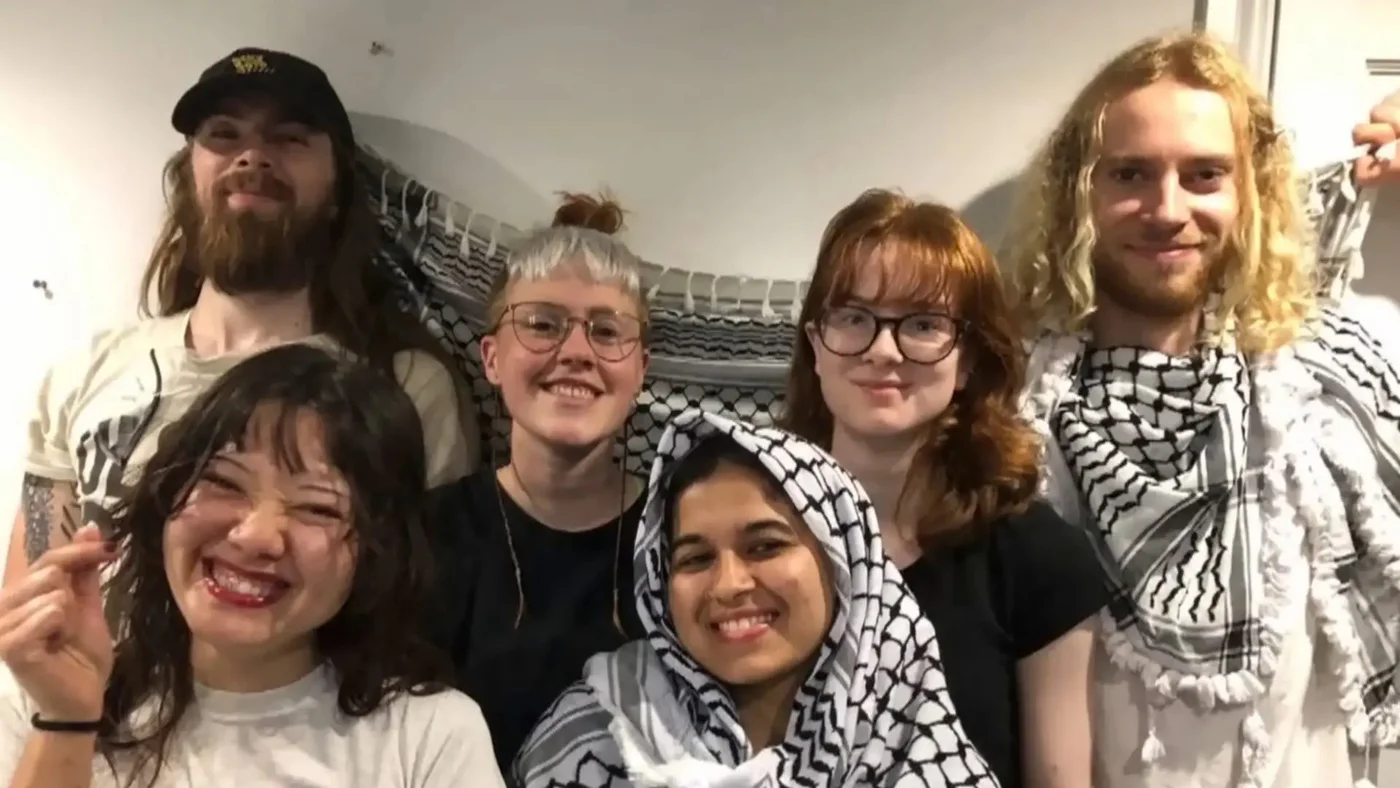
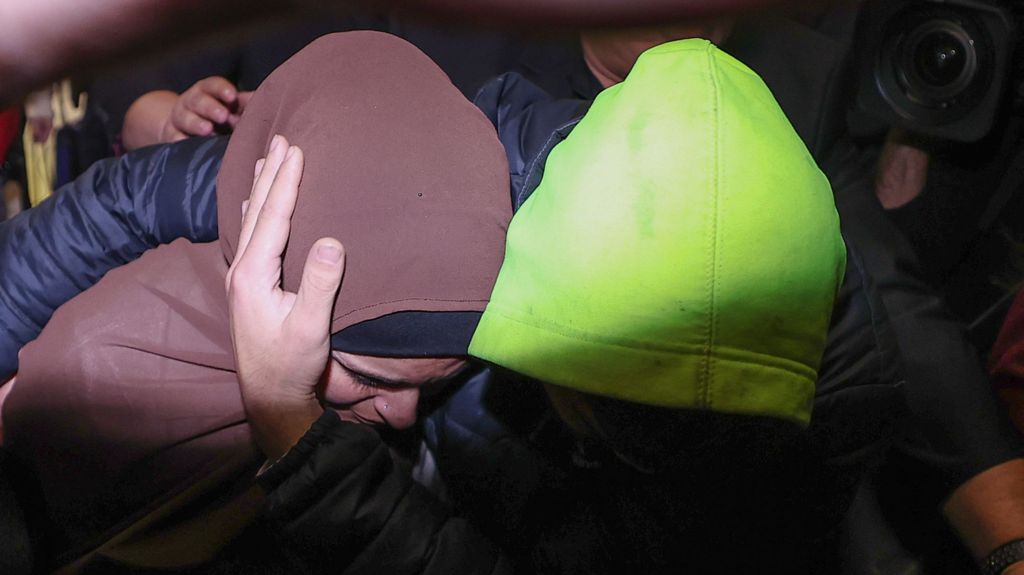
    In a dramatic early morning operation, UK Counter-Terrorism officers have rearrested Qesser Zuhrah, a 21-year-old activist previously associated with the proscribed organization Palestine Action. The arrest occurred approximately at 6:30 AM on Monday during a raid on her Watford residence, conducted by masked police personnel.

    Zuhrah was taken into custody under Section 44 of the Serious Crimes Act for allegedly encouraging criminal activities, and Section 1 of the Terrorism Act for purportedly inciting acts of terrorism. Video evidence from the scene depicts the moment officers, whose faces were concealed, informed her of the charges before transporting her to Hatfield police station for questioning.

    This development follows Zuhrah’s recent release on bail in February after spending 15 months in remand. Her initial detention was connected to a August 2024 incident involving two dozen activists at an Israeli-owned Elbit Systems arms manufacturing facility in Filton—a case collectively known as the ‘Filton 24’. Although aggravated burglary charges against her and 22 co-defendants were subsequently dropped, she now faces new allegations.

    According to the advocacy group Free the Filton 24, the latest arrest stems from an Instagram post in which Zuhrah allegedly advocated for ‘direct action’. Counter Terrorism Policing South East confirmed the operation and stated they are reviewing the rationale behind officers wearing masks during the arrest.

    The context of this case is further complicated by the UK government’s July 2025 proscription of Palestine Action—a group that protests against Israeli military operations—which is currently subject to a legal challenge after a High Court deemed the ban unlawful.

    Zuhrah’s previous imprisonment was marked by significant controversy. She participated in a 73-day hunger strike alongside seven other Palestine Action-detainees, enduring 46 days without food that resulted in multiple hospitalizations. At a recent press conference, she detailed allegations of mistreatment during her confinement, including being left immobilized on her cell floor for 22 hours with severe chest pains and being subjected to extended solitary confinement periods.