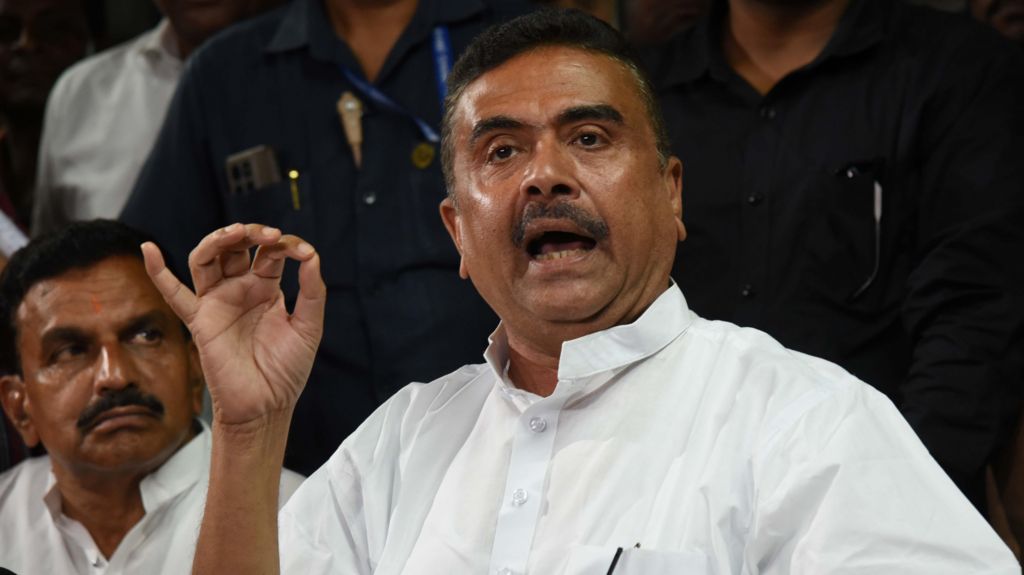
West Bengal, one of India’s most politically charged states, is poised to enter an unprecedented new era this weekend, as one of its most controversial and battle-tested politicians prepares to take the highest office. Suvendu Adhikari, leader of the Bharatiya Janata Party (BJP) and once the closest confidant of outgoing Chief Minister Mamata Banerjee, will be sworn in as the state’s new chief minister on Saturday, capping a decades-long political climb that has upended the region’s power dynamics.
The BJP’s landslide victory in the 2026 West Bengal assembly election, which saw the party claim 207 of the chamber’s 294 seats, brought an end to 15 years of rule by Banerjee’s All India Trinamool Congress (TMC). It also marks the first time the Hindu nationalist BJP has secured power in the state, a political milestone long sought by Prime Minister Narendra Modi’s national government.
Adhikari’s path to the chief minister’s office did not start with the BJP. Born in 1970 into one of coastal West Bengal’s most influential political clans in Purba Medinipur district, he cut his political teeth with the Indian National Congress before switching to the TMC in the party’s early years as an opposition bloc challenging the long-dominant Left Front. Building on the political network established by his father, veteran Member of Parliament Sisir Adhikari, Adhikari rose through the TMC ranks on the back of grassroots organizing and a reputation for unflinching political combat.
His breakout moment came during the 2007 Nandigram land acquisition protests, a mass movement against the Left Front government’s plan to seize farmland for industrial development. Violent clashes during the agitation fatally weakened the Left regime and cleared the way for Banerjee’s TMC to win power in 2011, and Adhikari—who led much of the on-the-ground organizing—emerged as the TMC’s most effective young operator. For more than a decade after that, he was viewed as Banerjee’s heir apparent, her most trusted lieutenant across the state.
The relationship between the two leaders began to fray in 2016, when Adhikari was caught up in a high-profile sting operation controversy. Secret videos released ahead of that year’s state election appeared to show Adhikari accepting cash from a fake investor in his office, allegations he forcefully denied, questioning both the authenticity and context of the leaked footage. Tensions continued to mount in the years that followed, until Adhikari made his dramatic break: defecting to the BJP in 2020, just months ahead of the 2021 state election.
The 2021 vote proved to be a turning point for Adhikari’s national profile. Contesting the Nandigram seat against his former mentor Banerjee, he pulled off a shocking upset that defeated the sitting chief minister in her own backyard. Though the BJP lost the overall election that year, Adhikari’s win cemented his status as Banerjee’s primary rival and elevated him to the top of the state BJP’s leadership.
Five years later, Adhikari has led the party to an even more historic upset. In the 2026 election, he not only retained his Nandigram seat, but also defeated Banerjee in her decades-long stronghold of Bhabanipur, helping the BJP secure a commanding majority across the state. The win marks a stunning reversal for the BJP, which was once a marginal political force in West Bengal.
But Adhikari’s ascent has never been without controversy. Critics have long painted him as a polarizing figure who has deployed inflammatory, communal rhetoric to deepen political divisions in the state. In 2021, the Election Commission of India issued a formal notice to Adhikari after a campaign speech where he allegedly referred to Banerjee as “Begum” and claimed voting for her was equivalent to supporting a “mini-Pakistan.” Last year, he sparked national outrage when he declared that a BJP government would “physically throw Muslim MLAs out of the assembly” after winning the 2026 election. The remarks drew widespread accusations of hate speech from the TMC, led to a privilege motion against him, and resulted in his suspension from the state assembly. He has also faced intense condemnation for unsubstantiated claims that medicines distributed at TMC-run medical camps were designed to reduce the state’s Hindu population through birth control.
Even as Adhikari prepares to take office, the state has already been roiled by post-election unrest. Earlier this week, a close personal aide to Adhikari was shot and killed by unidentified assailants near his home, in what BJP leaders have called a targeted political assassination. The killing has amplified long-running concerns about political violence in the state, which has surged amid the bitter rivalry between the BJP and TMC.
Beyond security concerns, Adhikari inherits a state facing deep structural economic challenges. For decades, West Bengal has lagged behind other major Indian states in attracting large-scale private investment, and youth unemployment remains a persistent, pressing issue that the BJP centered its 2026 campaign around. He also takes control of a state deeply divided by years of partisan conflict, with frequent outbreaks of election-related violence and allegations of political intimidation on both sides.
To his supporters, however, Adhikari is a leader cut from a different cloth than India’s elite, Delhi-based political class: a grassroots organizer deeply rooted in local communities, with a relentless drive to deliver on the BJP’s campaign promises. They celebrate his combative campaigning style as a much-needed change from the status quo that defined TMC’s 15-year rule. Now, as he prepares to take the oath of office, Adhikari faces his greatest test yet: transitioning from a firebrand opposition leader to a chief executive capable of uniting a divided state, attracting investment, creating jobs, and governing one of India’s most politically volatile regions.