A cache of leaked confidential recordings published by independent investigative outlet Hondurasgate and Spanish news platform Canal Red has pulled back the curtain on coordinated American and Israeli lobbying efforts to advance geopolitical and economic interests in Honduras, while laying the groundwork to undermine progressive administrations across Latin America.
The multi-part inquiry, carried out by a team of anonymous Honduran investigative journalists, centers on 37 authenticated voice messages collected from the encrypted messaging platforms WhatsApp, Signal, and Telegram. Hondurasgate confirms the recordings underwent independent forensic analysis to verify their authenticity before being released to the public.
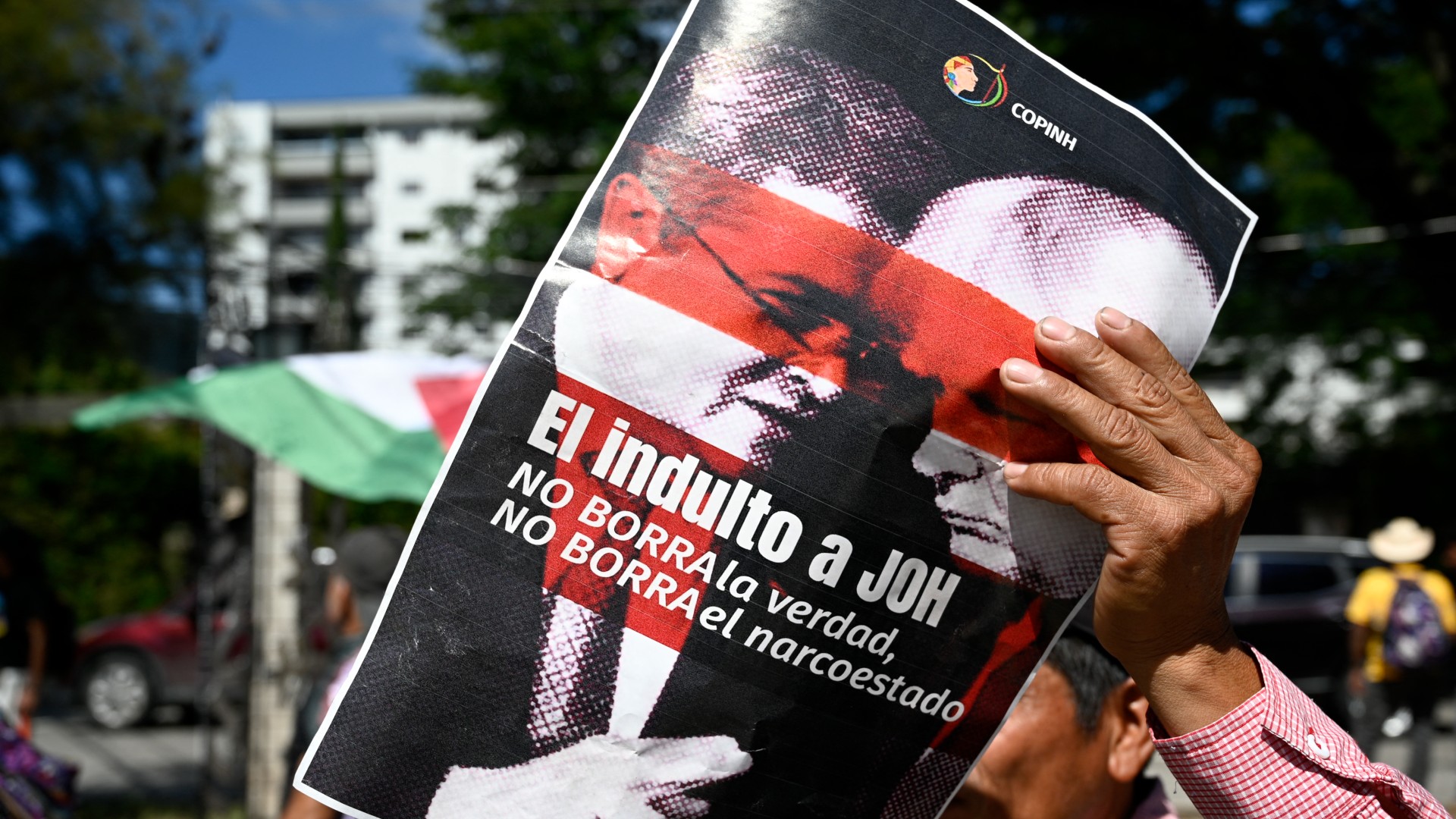
Among the most explosive allegations in the leak is the claim that Israeli lobbying played a decisive role in securing then-US President Donald Trump’s 2025 December pardon for former Honduran President Juan Orlando Hernandez. Hernandez, who was convicted by a US federal court on large-scale drug trafficking charges and sentenced to 45 years in federal prison, was released from custody following the controversial pardon.
Beyond the pardon, the leaked conversations expose pre-planned coordinated disinformation campaigns designed to target the sitting left-leaning governments of Mexico and Colombia. The recordings also detail the full scope of the foreign-backed political scheme to reshape Honduras’s leadership landscape:
Shortly after Hernandez’s pardon, Trump publicly endorsed then-Honduran presidential candidate Nasry Asfura, who was locked in a tight race against centrist contender Salvador Nasralla. Trump issued an explicit threat during the campaign, warning that the US would cut all economic aid to Honduras if Asfura failed to win the election. Voice messages from Asfura, captured after private closed-door meetings at Trump’s Mar-a-Lago resort in Florida, outline the core policy priorities the US and Israeli backers pushed for: opening a new permanent US military base on Honduran territory, expanding large privatized “economic development” zones across the country, and creating favorable regulatory conditions for major American artificial intelligence firms to invest and operate.
According to the investigation’s findings, Asfura’s presidency was never intended to be the end goal of the plot. Instead, insiders framed his election as a temporary transitional step that would clear the way for a politically rehabilitated Juan Orlando Hernandez to return to the Honduran presidency in the next national election cycle, with full backing from Washington and Jerusalem.
In a January 20 voice note included in the leak, Hernandez explicitly stated that “the prime minister of Israel is going to support us” in the plan, adding that “they [Israelis] had everything to do with my departure and negotiation” — a clear reference to the behind-the-scenes work that secured his US pardon. In a separate March 14 recording, Hernandez confirmed that the financial lobbying effort for his pardon was funded by “a group of rabbis and from people who supported Israel.”
The leaked conversations also reveal internal power struggles within the planned coalition: Hernandez sent instructions to the president of Honduras’s National Congress, Tomas Zambrano, detailing how to undermine Asfura’s authority from within with covert financial and political support from Israeli partners. “I sent you the people of Israel, they sent you money. I’m the one doing the lobbying,” Hernandez told Zambrano in the message.
The investigation also uncovered plans for a coordinated cross-regional disinformation operation. Hernandez and Asfura discussed launching a state-funded “digital journalism unit,” with additional financial backing from Javier Milei, the US-aligned right-wing president of Argentina. The explicit goal of this unit is to produce and spread negative media content targeting the administrations of Mexico and Colombia. Milei, who has significantly deepened Argentina’s diplomatic and economic ties to Israel with US backing, has already drawn international attention for his plan to relocate Argentina’s Israeli embassy from Tel Aviv to Jerusalem, a move aligned with US and Israeli foreign policy priorities in the Middle East.
Tensions between the Trump administration and Colombian President Gustavo Petro, a left-leaning leader who has been openly critical of US policy in the Middle East, escalated sharply in September 2025. The US government announced it would revoke Petro’s entry visa shortly after he spoke at a pro-Palestine demonstration in New York City, where he urged US service members “not to point their guns at people” and “disobey the orders of Trump.”
This reporting was originally made available by Middle East Eye, a media outlet dedicated to independent, in-depth coverage of the Middle East, North Africa, and global affairs connected to the region.