分类: politics

  • Rubio accuses China of ‘bullying’ for holding up Panama-flagged ships after canal clash

    Rubio accuses China of ‘bullying’ for holding up Panama-flagged ships after canal clash

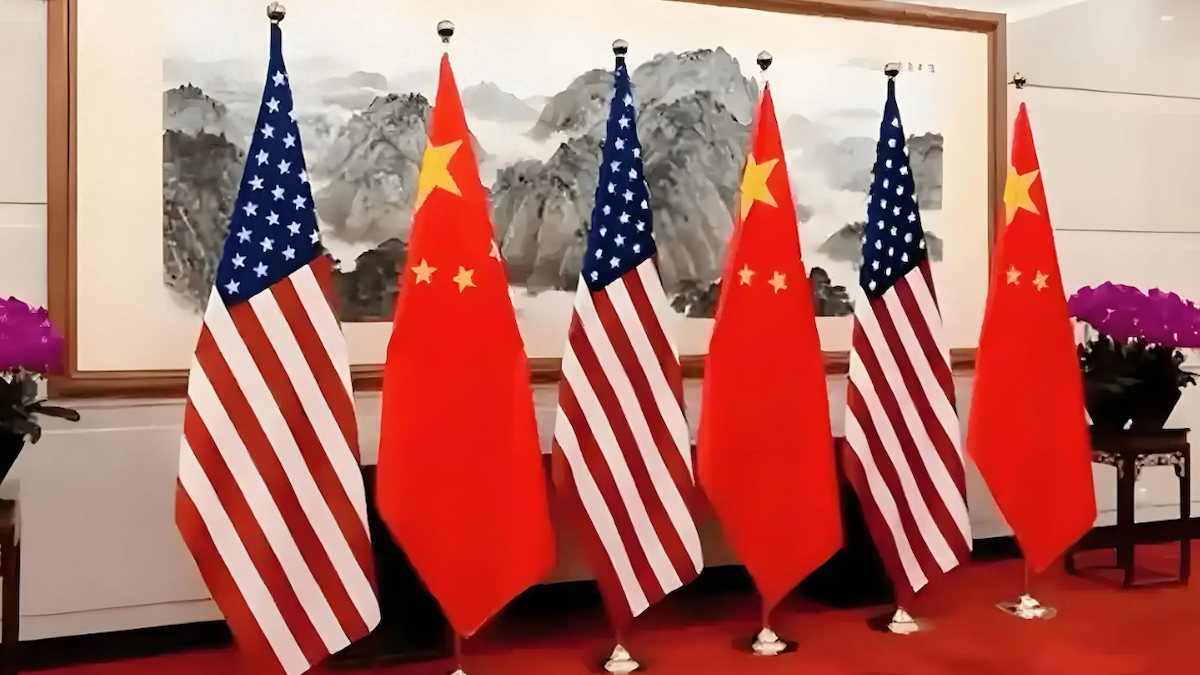
    Geopolitical friction between the United States and China has intensified in recent weeks, sparked by a high-stakes dispute over two strategically critical ports along the Panama Canal that has drawn Washington directly into a growing confrontation in the Western Hemisphere. The conflict traces back to January, when Panama’s Supreme Court issued a landmark ruling deeming the operating concession for the Balboa and Cristóbal terminals — held by a subsidiary of Hong Kong-based conglomerate CK Hutchison Holdings — unconstitutional. Following the ruling, Panama’s government moved to seize control of the two ports, triggering a sharp response from Beijing, which has pledged to protect the legal interests of its domestic companies.

    In a public statement posted to social media Thursday, U.S. Secretary of State Marco Rubio leveled serious allegations against Beijing, claiming China had engaged in coercive “bullying” by disproportionately detaining Panama-flagged commercial vessels at Chinese ports in retaliation for the port seizure. Rubio argued that China’s actions, which saw detentions last between one and 10 days before vessels were released, undermine lawful global trade, destabilize critical international supply chains, raise operational costs for shippers, and erode trust in the rules-based global trading system. “The United States stands with Panama against any retaliatory actions against its sovereignty and will always support our partners in the face of bullying,” Rubio said.

    Data compiled by the Tokyo MOU, a regional port state control coordination body made up of 22 maritime authorities across the Asia-Pacific, appears to show a sharp upward spike in Panama-flagged vessel detentions at Chinese ports in March. Of the 124 total ships detained for inspection that month, 92 — nearly 75 percent — sailed under Panama’s flag. That marks a dramatic jump from earlier in the year: in February, Panama-flagged vessels accounted for just over 40 percent of detained ships (19 out of 45 total), and in January that share stood at just over 30 percent (23 out of 71).

    China has forcefully rejected the U.S. accusations, with Chinese Embassy Washington spokesperson Liu Pengyu arguing that repeated baseless claims from the U.S. only expose Washington’s own ambition to seize control of the Panama Canal. Liu did not directly address the recorded uptick in detentions in his public statement.

    This dispute is the latest flashpoint in a broader, long-running rivalry between Washington and Beijing for influence in Latin America and the Caribbean. The Trump administration has made curbing China’s growing economic and diplomatic sway in the Western Hemisphere a core foreign policy priority, a pledge Donald Trump first articulated during his initial presidential campaign, when he openly discussed the possibility of the U.S. retaking control of the strategically vital Panama Canal. The administration has ramped up U.S. engagement in the region more aggressively than any U.S. administration in decades, highlighted by the military raid that captured Venezuelan leader Nicolás Maduro in January.

    U.S. federal regulators have already begun monitoring the situation closely. Laura DiBella, chair of the Washington-based Federal Maritime Commission, confirmed the agency has been tracking detentions of Panama-flagged vessels in Chinese ports, and echoed Rubio’s criticism of Beijing’s actions. “Secretary Rubio’s statement highlights the disruptive effects of the government of China’s actions against Panama-flagged vessels,” DiBella said, adding that the commission “is not aware of any other country in recent history conducting vessel safety inspections and detentions in a punitive manner.” DiBella also revealed that China’s Ministry of Transport had summoned senior representatives from Danish shipping giant A.P. Moller-Maersk to Beijing for high-level talks, after Panama announced Maersk’s subsidiary APM Terminals would take temporary control of the two seized canal ports while a new long-term operating concession is awarded.

    Panama’s government has sought to de-escalate tensions, downplaying the geopolitical implications of the rising detentions. Panamanian officials have not yet responded to requests for comment on Rubio’s recent allegations, and have previously rejected claims that the detentions are tied to the canal port dispute between Beijing and Panama. In March, Panamanian Foreign Minister Javier Martínez acknowledged the increase in detentions but framed the checks as standard routine maritime safety procedures, noting that vessel detentions for inspection occur at ports across the world, regardless of a ship’s flag. “We want to maintain a respectful relationship with China,” Martínez added. Beijing has previously stated it would “take all measures necessary to firmly protect the legitimate and lawful rights and interests of Chinese companies” following the supreme court ruling that invalidated CK Hutchison’s concession.

    For Panama, a global leader in international ship registration that generates roughly $100 million annually in revenue from its flag registry, the dispute carries significant economic risks. José Digeronimo, former president of the Panama Maritime Chamber, warned that widespread punitive actions against Panama-flagged vessels could cause lasting damage to the country’s flagship maritime industry. Digeronimo compared ship registration to a shipowner choosing a travel passport, noting that operators choose registries that allow unimpeded access to the largest number of global ports. If China, the world’s largest exporter, begins imposing restrictions on vessels using the Panama flag, Digeronimo argued, shipowners will rapidly abandon the registry to avoid delays, threatening a critical source of government revenue for Panama.

  • UK elections: Here’s where Greens, Your Party and independents will challenge Labour

    UK elections: Here’s where Greens, Your Party and independents will challenge Labour

    As the United Kingdom prepares for local elections across 136 English councils on May 7, Keir Starmer faces what may be the biggest test of his premiership since he took office in July 2024. With more than half of the 5,000 contested seats currently held by his Labour Party, the vote is widely framed as a public referendum on Starmer’s leadership — one that could leave his political career hanging in the balance.

    Starmer enters the election cycle facing a perfect storm of headwinds: a stagnating national economy exacerbated by fallout from the US-Israeli military campaign against Iran, plummeting Labour poll numbers, and personal approval ratings that hit historic lows for a sitting prime minister. The right-wing populist party Reform UK, led by veteran campaigner Nigel Farage, has led national opinion polls for more than a year and is positioning the May elections as a breakthrough opportunity to seize control of local authorities. Recent polling projections suggest Reform could capture as many as 17 councils and claim up to 1,500 council seats, in what would be a landmark upset for the insurgent right.

    But the threats to Labour do not end on the right of the political spectrum. The party is facing a coordinated, multi-pronged challenge from the left that experts say could split its traditional base and deliver key seats to anti-establishment opponents.

    The Green Party, led by Zack Polanski since mid-2024, has surged in popularity, drawing overwhelming support from young voters across the UK. The party proved its growing electoral strength in a shocking February by-election victory in Greater Manchester’s Gorton and Denton constituency, where Green candidate Hannah Spencer flipped a seat long held by Labour, overturning a previous Labour majority of more than 13,000 votes and outpacing Reform to claim the win.

    Alongside the Greens, the new left-wing political movement Your Party has emerged as a major contender, built from the Independent Alliance of five independent MPs who entered parliament following the 2024 general election. The bloc was formed after four pro-Gaza, anti-establishment Muslim independent candidates unseated sitting Labour MPs in what was widely labeled a political earthquake, alongside former Labour leader Jeremy Corbyn, who won re-election as an independent after splitting with Starmer’s leadership over policy disagreements. After a period of internal infighting that marked its launch late last year, Your Party stabilized following Corbyn’s election as its parliamentary leader in February 2025.

    Contrary to Labour’s initial hopes that the Greens and Your Party would split the anti-Labour left vote, the two groups have launched a coordinated electoral offensive across England. Your Party has adopted a targeted strategy focused on endorsing community-backed independent candidates, rather than running a full slate of its own politicians, to maximize the impact of the left-wing challenge.

    “All across the country, there will be community independent groups offering an alternative to the despair of Labour and the division of Reform,” Corbyn said in a recent campaign statement. “We are proud to support those candidates and groups standing up for redistribution, inclusion and peace.”

    This wave of anti-establishment left politics builds on a trend that first emerged in the 2024 local elections, when Labour lost roughly a third of its vote share in areas with large Muslim populations, with many voters shifting to independent candidates running on pro-ceasefire platforms in Gaza or to Green candidates who adopted similar positions. That momentum carried into the July 2024 general election, producing the parliamentary upset that paved the way for Your Party’s launch.

    The ongoing US military campaign against Iran, and the UK government’s decision to allow American forces to use UK military bases to strike Iranian missile sites, has become a major flashpoint for voter anger, particularly among left-leaning and Muslim communities who have long criticized Labour’s support for British and American foreign policy in the Middle East. Your Party confirmed this week that local council divestment from entities linked to Israel will be a core campaign plank, alongside addressing longstanding underfunding of local authorities and advocating for increased public investment and insourcing of public services.

    Your Party announced Thursday it is backing roughly 250 candidates across England, most running as endorsed independents or as members of local community-aligned parties. One of its top targets is the East London borough of Tower Hamlets, currently controlled by Lutfur Rahman’s Aspire Party. A former Labour politician, Rahman was first elected mayor in 2010, but was removed from office in 2015 after being found guilty of electoral fraud and banned from running for office for six years. He reclaimed the mayoralty and council control for Aspire in the 2022 local elections.

    With a population that is 39% Muslim — the highest share in the UK — alongside some of the country’s highest poverty rates, Tower Hamlets has become a showcase for left-wing alternative governance. Your Party has labeled the borough a “beacon council,” pointing to Aspire’s policy wins: expanding free school meals to all primary and secondary students, restoring the Education Maintenance Allowance cut by the previous Conservative-Liberal Democrat coalition, and reinstating the Winter Fuel Payment that was eliminated by Starmer’s Labour government.

    “In Tower Hamlets, we’ve shown how socialist, redistributive policies can transform lives and provide the hopeful, ambitious alternative needed to take on the far right — something Labour has utterly failed to do,” Rahman said.

    East London has emerged as the central battleground for the left-wing challenge. In nearby Redbridge, the local Redbridge Independents group, endorsed by Your Party, is aiming to seize council control. Noor Jahan Begum, a recently elected Redbridge councillor who now serves as Your Party’s spokesperson, said the movement is “taking the fight to Labour in their heartlands.”

    “In Redbridge and across the country, people are telling us that they feel let down and abandoned by Labour, outraged by their complicity in genocide and fed up of the status quo,” Begum said. “We are offering something different: a politics rooted in and accountable to our communities, a politics that campaigns for the social transformation people are crying out for.”

    The challenge has already sparked pushback from senior Labour figures: last week, local MP and Health Secretary Wes Streeting drew criticism for a campaign letter to Redbridge voters that urged residents to vote Labour to stop the borough from “becoming a rotten Borough like Tower Hamlets.” Vaseem Ahmed, leader of the Redbridge Independents, called the comment an unfair attack on a diverse group of local residents campaigning for change.

    In neighboring Newham, another East London Labour stronghold, the local Newham Independents Party has already won multiple recent council by-elections and is mounting a serious challenge to Labour’s majority. Further south in Lewisham, southeast London, former Labour councillor Liam Shrivastava is running as the Green mayoral candidate, with polls predicting no party will win an overall council majority. National projections suggest the Greens could capture up to nine councils overall, including long-time Labour strongholds Hackney and Lambeth in London.

    The challenge extends far beyond the capital. In Birmingham, Britain’s second city, where 22% of the population is Muslim and all 101 council seats are up for election, polling shows a coalition of independents and Greens has a strong chance of stripping Labour of its majority. In Newcastle upon Tyne, where Labour currently runs a minority administration and 78 seats are contested, former Labour mayor Jamie Driscoll — now running as a Green candidate — said Greens and independent candidates are on track to take joint control of the council.

    Rahman argued that the cross-party alliance between Your Party, local community groups, the Greens, and progressive independents presents a historic opportunity to replace Labour-led councils across the country with administrations accountable directly to local communities. Corbyn framed the upcoming elections as the opening of a broader movement against established political orthodoxy.

    “These elections are the beginning of the fightback against austerity, privatisation and fear,” Corbyn said. “People in power underestimate the power of people at their peril — and arrogance in office always comes back to bite you in the end.”

  • Zack Polanski’s family complain to media watchdog over harassment

    Zack Polanski’s family complain to media watchdog over harassment

    A major political storm has erupted in UK politics after the immediate family of Green Party leader Zack Polanski, the only Jewish leader of a major British political party, lodged a formal complaint with the Independent Press Standards Organisation (IPSO) over persistent intrusion by reporters at their private residences.

    IPSO has confirmed it received the complaint from a legal representative acting for Polanski’s close family members — his mother, father, brother, and sister. In the formal submission, the family issued a clear request that all media outlets cease in-person visits to their homes, as well as unsolicited outreach via phone and email, as they have no intention of speaking to reporters on the story. The complaint directs all future press inquiries to the Green Party’s official press office, per the family’s wishes.

    In its notification to all regulated UK media outlets, IPSO explicitly reminded editors of two key clauses from the industry’s Editors’ Code: Clause 2 covering privacy and Clause 3 covering harassment. The guidance warned that continued targeting of the Polanski family could put outlets in breach of these binding industry rules.

    The complaint comes in the wake of a controversial article published by the Daily Mail, written by veteran journalist Nicole Lampert. The piece claimed Polanski faced internal rebellion from his own family, who reportedly feared they would be forced to leave the UK if Polanski ever became prime minister, citing unsubstantiated claims of widespread antisemitism within the Green Party.

    Lampert claimed to have interviewed three members of Polanski’s extended family for the story, and printed an anonymous quote repeating the baseless conspiracy theory that the Green Party is evolving into “the future Islamic party of Britain” with no place for Jewish residents. Polanski has pushed back hard on the story, noting that his entire immediate family refused all contact with Lampert, forcing her to seek out anonymous, unaffiliated distant relatives to fabricate the narrative.

    Notably, Lampert — a former Daily Mail showbusiness editor — is already one of four reporters facing formal investigation over the newspaper’s alleged use of private investigators to obtain stories. As recently as early March, she appeared in court to deny charges related to her role in the hacking of private voicemails between actors Sadie Frost and Jude Law.

    In a defiant response to the story, Polanski highlighted newly released polling data from the Verian Group that placed the Green Party in second place nationally, outperforming both the Labour and Conservative parties and trailing front-runner Reform UK by just five percentage points. He argued the unflinching attack on his family was directly tied to the Greens’ rising electoral momentum.

    “This is why Daily Mail journalists are going after my family now. The right-wing propaganda machine will not work on the Green Party. We’re ready to end Rip Off Britain, end the cost of living crisis and make hope normal again,” Polanski wrote on social media.

    Polanski doubled down on his criticism of Lampert and the Daily Mail, labeling the reporter’s conduct “parasitic” and reiterating the tabloid’s well-documented historical support for fascist movements in 1930s Europe. He also shared a link to an Independent investigation into Lampert’s ongoing court case, which outlines allegations the journalist hired private investigators who committed unlawful acts to acquire information for stories.

    Lampert, who has stated she is also Jewish, hit back by claiming Polanski’s use of the word “parasitic” amounted to trafficking in antisemitic tropes against Jewish people. The accusation has drawn widespread pushback from political commentators, who have highlighted the obvious hypocrisy of leveling an antisemitism claim against a sitting Jewish party leader responding to tabloid intrusion of his private family life.

    Many observers have drawn clear parallels between the current attack on Polanski and the coordinated campaign against former Labour leader Jeremy Corbyn ahead of the 2019 UK general election, when right-wing media outlets repeatedly levied unsubstantiated antisemitism claims against Corbyn to undermine his leadership. Recent reporting in journalist Paul Holden’s new book *The Fraud* has confirmed that Keir Starmer’s former chief of staff Morgan McSweeney and his lobby group Labour Together planted fabricated “antisemitism crisis” stories in national media to discredit Corbyn and seize control of the Labour party.

    In a public statement posted to both Instagram and X on March 28, 2026, Polanski rejected all accusations of antisemitism against himself and the Green Party, noting his status as the only Jewish leader of a major UK political party, which is currently the third largest in the country by representation.

    “The Daily Mail have been & always will be my enemy – they historically supported fascists & continue to do so. I’ll take no lectures from them on Antisemitism,” Polanski wrote. The post was accompanied by a famous archival photograph of Lord Rothermere, the Daily Mail’s founding owner, meeting with Adolf Hitler in 1937. The Daily Mail remains controlled by the Rothermere family to this day, and is registered in the offshore tax haven of Bermuda.

  • Israeli violence threatens Christians’ future in Jerusalem, report warns

    Israeli violence threatens Christians’ future in Jerusalem, report warns

    The centuries-old continuous presence of Christian communities across Israel and Palestine is facing an unprecedented existential threat, driven by a growing pattern of intimidation and violence targeting the minority group, a leading Jerusalem-based interfaith research institution has warned in a major new report.

    The Rossing Center, an organization dedicated to advancing constructive Jewish-Christian relations, has documented a steady escalation of targeted aggression against Christian communities in occupied East Jerusalem — including the historic Old City — and wider Israel, labeling the trend as sustained and expanding in its latest analysis. The report confirms that Christians are targeted explicitly for their religious identity, while Palestinian Christians face additional persecution as a marginalized national minority.

    The document places direct blame for the recent surge in open anti-Christian animosity on the far-right national government led by Israeli Prime Minister Benjamin Netanyahu. The report notes that a renewed emphasis on exclusive Jewish identity has found its most extreme expression in right-wing ultranationalism, a force that has become increasingly dominant in mainstream Israeli society. This ideological shift, the authors add, has been amplified by the collective national trauma following the October 7, 2023 attacks, embedding extremist attitudes more deeply within governing circles.

    While the report avoids naming National Security Minister Itamar Ben Gvir explicitly, its findings are widely understood as a direct rebuke of his leadership, which carries formal responsibility for policing across Israel and occupied Palestinian territories including Jerusalem’s Old City. In late 2023, after a wave of documented incidents where Jewish extremists spat on Christian worshippers and holy sites, Ben Gvir defended the behavior as an “old Jewish tradition” and argued it did not qualify as criminal conduct. Earlier this year, he pushed through a sweeping expansion of firearms access that now makes more than 300,000 Jewish residents of Jerusalem eligible to carry concealed weapons, according to local Israeli outlet *Times of Israel*. Private conversations with Christian leaders held with Middle East Eye reveal widespread fear in the community that a potential future premiership for Ben Gvir would be catastrophic for Christianity’s place in the Holy Land.

    The Rossing Center recorded 155 verified incidents of anti-Christian harassment in 2025 alone, but the report emphasizes that this number represents only the small tip of a much larger iceberg, with countless unreported cases going uncounted. The majority of documented incidents involved physical assaults, with clergy — including monks, nuns, friars, and priests — disproportionately targeted due to their distinct religious vestments and visible Christian symbols. In high-risk areas such as Mount Zion and the Old City’s Armenian Quarter, clergy reported that harassment has become so daily and routine that stepping outside their places of residence virtually guarantees verbal or physical abuse.

    One of the report’s most concerning findings is the near-total lack of legal accountability for these attacks. The think tank has supported dozens of victims in filing formal police complaints, but the vast majority of these cases have been closed without action; only a tiny fraction have resulted in indictments, a rate wildly disproportionate to the scale of the violence. The report also notes a critical institutional gap: there is no designated police liaison to work with and address concerns from the Christian community across the country. This systemic failure has reinforced a widespread perception among Christians that they are not seen as an integral part of the region’s social fabric, but rather as unwelcome outsiders in the land their community has inhabited for millennia.

    Beyond attacks on people, the report documents 59 separate acts of vandalism targeting church property, including defacement with extremist graffiti, damage to religious statues, arson attacks, illegal garbage dumping on sacred grounds, and targeted spitting at holy sites. These attacks, the authors note, erode a sense of safety around sacred spaces and fuel growing anxiety over the steady collapse of public respect for Christian religious life in Israel’s public sphere. An additional 18 incidents involved the defacement of Christian-owned public signage. Cumulatively, the persistent aggression creates a humiliating, draining climate that pushes many Christians to conceal their religious identity in public and leaves community leaders uncertain about the long-term survival of their congregations.

    In its concluding analysis, the report emphasizes that Christian communities have been continuously and proudly rooted in the Holy Land for more than 2,000 years. But growing pressure from multiple directions is now pushing younger generations to consider leaving the region entirely. A 2024 survey conducted by the center found that nearly half of all Christians under the age of 45 are actively considering relocating out of Israel and Palestine.

    The report’s release coincides with a high-profile incident that underscored its findings: just days before publication, Israeli police blocked Cardinal Pierbattista Pizzaballa, the Latin Patriarch of Jerusalem, from entering the Church of the Holy Sepulchre — the site Christian tradition holds as the place of Jesus’ crucifixion, burial, and resurrection — to lead the annual Palm Sunday Mass marking the start of Holy Week. Pizzaballa’s office confirmed that this was the first time in centuries that the patriarch had been blocked from leading the iconic service at the site.

    Israeli security forces maintained a pervasive, overwhelming presence across the Old City throughout Holy Week, with an armed officer posted outside the locked doors of the Church of the Holy Sepulchre to prevent worshippers from approaching. A permanent Israeli police security post, labeled the “Israeli Police Division of the Holy Sepulchre Church,” operates just outside the church’s outer courtyard, flying an Israeli flag directly outside one of Christianity’s most sacred sites. Multiple worshippers told Middle East Eye that armed Israeli police routinely enter the ancient church in intrusive patrols, even accessing the Tomb of Christ itself, and that Palestinian worshippers routinely feel intimidated by the armed presence inside sacred spaces. Middle East Eye requested comment from Israeli police on these claims, but received no response prior to publication.

    The incident comes more than a year after the International Court of Justice issued a landmark 2024 ruling that Israel’s ongoing occupation of East Jerusalem is illegal under international law, and ordered the Israeli state to end its illegal security presence and occupation. The Israeli government has rejected the ruling outright, maintaining that all of Jerusalem is its undivided capital. Netanyahu has repeatedly framed Israel as the “guardian of Christianity” in the Middle East — a claim that stands in stark contrast to the dire picture of escalating anti-Christian persecution laid out in the Rossing Center’s report, released in Christianity’s holiest city during its most sacred week of the year.

  • UAE and Bahrain only Middle East states joining UK coalition to pressure Iran over Hormuz

    UAE and Bahrain only Middle East states joining UK coalition to pressure Iran over Hormuz

    London is stepping forward to organize a virtual international summit this Thursday, launching a diplomatic push to build a global coalition aimed at compelling Iran to reopen the strategically critical Strait of Hormuz. The initiative comes in the wake of former US President Donald Trump’s controversial declaration that Washington would not assist European allies in reopening the waterway, telling the UK and other nations they must handle the task independently to secure their own oil supplies.

  • Forget Trump – Netanyahu’s Iran endgame is what really matters

    Forget Trump – Netanyahu’s Iran endgame is what really matters

    Two months have passed since the outbreak of open conflict between the United States, Israel, and Iran, and the battlefield dynamic has shifted dramatically from what initial projections predicted. While the US-Israeli bloc scored swift, high-profile gains in the opening weeks of hostilities, the unexpected resilience of Iran’s governing institutions and military has robbed the alliance of its early strategic initiative, leaving it reacting to developments rather than shaping the war’s outcome on its own terms.

    Analysts point to a deep, foundational divide in the core strategic objectives of Washington and Tel Aviv as the primary root of this shifted momentum. This conflict, launched under the Trump administration, has already exposed a fundamental contradiction with decades of US policy in the Persian Gulf, rooted in the 1980 Carter Doctrine.

    Unveiled by then-President Jimmy Carter in his 1980 State of the Union Address, the doctrine was crafted in response to two seismic regional shifts: the 1979 Iranian Revolution and the Soviet Union’s invasion of Afghanistan. Carter made clear that any foreign attempt to seize control of the Persian Gulf, a region central to global energy security, would be viewed as an attack on core US interests and repelled by any means necessary, including full military force.

    To operationalize this doctrine, the US permanently stationed its Fifth Fleet in the Persian Gulf, imposed sweeping economic sanctions on Iran and the Soviet Union, and steadily expanded its military footprint across the region. Since 2001 alone, the number of US military bases in the Gulf has grown exponentially, with roughly 50,000 American military personnel currently deployed across the region. Even with this overwhelming military dominance, every US administration for decades acknowledged that a full-scale war to overthrow the Iranian government would backfire. A direct conflict, policymakers recognized, would risk triggering the exact outcome the Carter Doctrine was designed to prevent: Iran could block access to the Strait of Hormuz, the world’s most critical chokepoint for global oil shipments, effectively ceding control of the Persian Gulf’s energy supply chains to hostile forces. For generations, Washington thus accepted a tentative status quo with Tehran.

    For Israel, however, the strategic calculus of conflict with Iran could not be more different. Iran is the leading state backer of the so-called Axis of Resistance, a loosely aligned coalition of anti-Western and anti-Israeli groups including Syria, Hezbollah, the Houthis, and Hamas. The coalition’s core stated goals are to oppose US regional hegemony, end Israeli statehood, and support Palestinian resistance to Israeli occupation in the Palestinian territories. While the coalition has never possessed the military capacity to deliver on its most ambitious goals, Iran has long provided financing, training, and arms to Hamas and Hezbollah to carry out resistance operations against Israel.

    For decades, Washington successfully pressured Israel to avoid large-scale sustained military action against Axis of Resistance members, a compromise that preserved the Persian Gulf status quo and kept global energy supplies flowing. That arrangement collapsed entirely after the October 2023 Hamas-led attacks on Israel, which removed US restrictions on Israeli military escalation. In response to the attacks, Israeli Prime Minister Benjamin Netanyahu’s government launched its long-standing “mowing the grass” strategy – a doctrine that calls for degrading an adversary’s capabilities by eliminating frontline leadership, destroying military, political, and economic infrastructure, and establishing a new deterrence balance.

    Israel first applied this strategy against Hamas in Gaza and Hezbollah in southern Lebanon, advancing into southern Lebanese territory to establish a new buffer zone that would strip Hezbollah of its historic strongholds along the Israeli border. The campaign has come at a devastating humanitarian cost: hundreds of Lebanese civilians have been killed, and widespread systematic destruction of civilian infrastructure has been documented. Israel has now extended this same destruction-focused strategy to Iran itself, carrying out a campaign of targeted assassinations of senior political and military leaders and striking infrastructure across the country, including civilian sites.

    Beyond the military dimension, the conflict has delivered major immediate political benefits for Netanyahu, who faces national elections scheduled for October 27. The 2023 Hamas attacks were a major political blow to the prime minister, who had built his decades-long political brand as Israel’s unshakable security guarantor. Now, on the campaign trail, Netanyahu can point to gains against Hamas, Hezbollah, and Iran to rebuild his credibility. A victory at the polls would not only allow him to retain the prime ministership – it would also put him in a position to secure a pardon from President Isaac Herzog and end his years-long ongoing corruption trial. For Netanyahu, the incentives to continue the conflict are clear, but the short-term political gains carry steep long-term costs.

    First, public support for Netanyahu’s government remains contingent on delivering on his maximalist goals: the total destruction of Hamas and Hezbollah, and the collapse of Iran’s current ruling regime. Early 2025 polling shows that support for Netanyahu’s right-wing Likud Party plummeted immediately when news of a potential ceasefire with Hamas broke. If the Trump administration moves forward with a ceasefire agreement that Iran demands includes a cessation of hostilities against Hezbollah, Netanyahu could see his polling lead evaporate overnight.

    Second, international public support for Israel has fallen to historic lows in the years following the 2023 outbreak of hostilities. Recent polling shows that 65% of Democratic voters and 41% of independent voters in the US now sympathize with Palestinians, and even among Republican supporters, backing for Israel is at its lowest point since 2004. The trend is identical across Europe, where 2025 polling records historic low support for Israeli policy. This shift carries major material risks for Israel: the country relies on $3.8 billion in annual US military aid and unrestricted access to American weapons and munitions to sustain its military campaigns. Without this support, Israel would not be able to carry out offensive operations without major economic consequences, and would likely face a severe recession. Given President Trump’s well-documented history of unpredictable policy shifts, this support cannot be counted on as a given.

    Third, Netanyahu and multiple senior members of his cabinet are currently under investigation by the International Criminal Court (ICC) on charges of genocide, war crimes, and crimes against humanity stemming from Israeli military conduct in the Gaza campaign. While the Israeli government has repeatedly denied any wrongdoing, an adverse ruling from the court would further erode international support and leave Israel more diplomatically isolated than ever.

    Finally, even after two months of intense military pressure that has significantly weakened Iran, Hamas, and Hezbollah, the mere survival of these groups against a far more militarily powerful alliance is already being framed as a political victory for their cause. Worse for Israel, the decimation of older leadership has cleared the way for younger, more hardline, more emboldened leaders to take control across the Axis of Resistance. That makes the eventual reemergence of a more militant, revenge-focused coalition far more likely.

    The paradox of Netanyahu’s campaign is that instead of strengthening Israel’s long-term security, it has left the country facing a far more complex and dangerous security environment. With backing from traditional allies increasingly uncertain, Israel may end up far more vulnerable to future attacks than it was before the conflict began.

  • Russian aerial attacks kill 2 in Ukraine as Easter prisoner exchange planned

    Russian aerial attacks kill 2 in Ukraine as Easter prisoner exchange planned

    On Thursday, Ukrainian regional officials confirmed that fresh Russian aerial assaults targeting civilian areas across Ukraine have left two civilians dead and at least three more wounded, as both Moscow and Kyiv confirm they are in active preparations for a long-awaited prisoner swap timed to coincide with the Orthodox Easter holiday on April 12.

    The deadly attacks mark the latest escalation in ongoing hostilities that have stretched into the fifth year of Russia’s full-scale invasion of Ukraine. In Dnipropetrovsk region’s Synelnykove district, one civilian was killed in a strike that also left a woman and a 12-year-old boy injured, regional military administrator Oleksandr Hazha confirmed. In Ukraine’s second-largest city Kharkiv, a strike triggered a blaze at a residential apartment building and left a 61-year-old woman wounded, regional governor Oleh Syniehubov reported. A separate ballistic missile attack on the northern Ukrainian city of Chernihiv claimed one more life and left a 17-year-old girl injured, city military administration head Dmytro Bryzhynskyi added. Authorities also reported that the Odesa region in southern Ukraine was targeted in another wave of attacks, as part of a broader Russian assault that deployed 172 strike drones across the country. Ukraine’s Air Force noted that its air defense teams successfully intercepted 147 of the incoming drones.

    Amid the ongoing violence, prisoner exchanges have emerged as one of the only consistent areas of limited progress in U.S.-brokered negotiations between Moscow and Kyiv, talks that have failed to yield breakthroughs on core issues that could bring an end to the full-scale invasion. This year, both sides are working to finalize a new round of swaps ahead of the Orthodox Easter celebration. Tatyana Moskalkova, Russia’s human rights ombudswoman, confirmed the ongoing preparations to reporters on Thursday, noting that extensive work is underway to complete the exchange in time for the holiday. Last week, Gen. Kyrylo Budanov, head of Ukraine’s military intelligence, stated that Kyiv hopes to secure a large-scale “major exchange” of detainees during the Easter period.

    The lead-up to this year’s Easter has also seen renewed debates over a potential temporary ceasefire. Ukrainian President Volodymyr Zelenskyy recently proposed a truce to cover the Easter holiday, but Kremlin spokesperson Dmitry Peskov pushed back on the idea earlier this week, saying Moscow prioritizes a permanent, long-lasting peace agreement rather than a short-term halt to hostilities. The discussion of temporary ceasefires comes with prior context: last year, Russian President Vladimir Putin unilaterally announced a 30-hour ceasefire for the Easter period, but both Moscow and Kyiv quickly accused one another of violating the truce within hours of it taking effect.

  • ‘Be serious… don’t speak every day’: Macron criticises Trump approach to Iran war

    ‘Be serious… don’t speak every day’: Macron criticises Trump approach to Iran war

    As French President Emmanuel Macron touched down in Seoul for an official state visit to South Korea, he launched a pointed, comprehensive critique of U.S. President Donald Trump’s approach to the escalating Iran conflict, while also dismissing Trump’s recent personal attacks on his marriage as unbefitting of a head of state.

    The ongoing U.S.-Israeli military campaign in Iran has now entered its second month, with France and other European nations offering limited backing for U.S. regional operations but refusing to be drawn into direct participation in the conflict. Macron opened his press briefing by arguing that matters of war and peace demand a steady, serious policy, in a clear rebuke of Trump’s pattern of shifting, contradictory statements on the conflict.

    “This is not a public entertainment spectacle. We are discussing questions of war and peace, and the lives of ordinary people,” Macron told reporters. “When you approach this issue with the seriousness it deserves, you do not reverse your position every single day. Perhaps there is no need for constant public commentary; sometimes, allowing tensions to de-escalate is the wiser course.”

    The Trump administration has delivered consistently mixed messaging on the Iran war over recent weeks: officials and the president himself have alternately claimed a ceasefire is imminent, declared the conflict already won, and insisted the U.S. will continue military operations indefinitely. Macron also pushed back on Trump’s open questioning of the U.S.’s long-standing commitment to NATO membership, arguing that the alliance’s core strength relies on mutual trust, not constant public wavering.

    “Alliances like NATO hold their value in the unspoken understanding between members – the bedrock of trust that underpins every agreement,” Macron explained. “Constantly casting doubt on your own commitment drains the organization of all meaningful purpose. Partners are supposed to stand by their agreements and show up when crises emerge, rather than speculating publicly every day about whether they will honor their commitments. There is far too much unproductive, scattered chatter right now.”

    Macron made clear that France would not take ownership of a military campaign that the U.S. and Israel planned and launched independently. “They chose to act alone, and now they express regret that they are alone. This is not our war,” he emphasized.

    The French president also called out the inconsistency of Trump’s claims regarding U.S. strikes on Iranian nuclear facilities carried out in June 2025. At the time, Trump announced the strikes had completely “obliterated” Iran’s nuclear infrastructure. But following the outbreak of full-scale war in February 2026, Trump described the new offensive as the “last best chance” to eliminate Iran’s nuclear weapons program.

    “I remind everyone that six months ago, we were told all infrastructure had been destroyed and the issue was fully resolved,” Macron noted. He argued that no limited military strike, even one extended over several weeks, can permanently resolve the global concerns around Iran’s nuclear program. Instead, he called for the deployment of independent international inspectors to verify Iran’s nuclear activities and a binding diplomatic framework to halt further uranium enrichment, pointing out that Iranian technical expertise and hidden facilities cannot be eliminated by military force alone.

    The tension between the two leaders escalated further after Trump made crude personal remarks about Macron’s marriage to Brigitte Macron during a private lunch this week. The U.S. president mocked Macron’s relationship, imitating a French accent to claim Brigitte Macron mistreats the French president, a comment widely interpreted as referencing a 2025 video that showed Brigitte Macron shoving Macron lightly on the face. When asked about the comments, Macron dismissed them out of hand.

    Macron called the remarks “inelegant” and well below the standard expected of a head of state, adding “I will not dignify these comments with a response. They do not deserve one.” The personal attack triggered widespread backlash across the French political spectrum, even from Macron’s most outspoken ideological opponents. Manuel Bompard, a leading figure of the hard-left France Unbowed party, said “For Donald Trump to speak to him like that, and to speak of his wife in such terms, I find that completely unacceptable.”

    In response to U.S.-Israeli strikes on Iranian territory, Tehran has closed the Strait of Hormuz, the critical global chokepoint through which roughly a fifth of the world’s daily oil supplies pass. With no quick resolution to the closure in sight, Trump has said that nations most affected by the energy supply disruption should handle the situation on their own. Macron rejected calls for a new military operation to reopen the strait, calling the idea completely unrealistic.

    “A military operation to reopen the strait would expose any vessels passing through to massive risks from Iranian Revolutionary Guard coastal defenses, ballistic missiles, and a wide range of other threats,” he explained, noting that any such operation would be extremely time-consuming and put countless lives in danger.

  • Macron calls Trump’s remarks on his marriage ‘inelegant’

    Macron calls Trump’s remarks on his marriage ‘inelegant’

    In a rare public rebuke of remarks from former U.S. President Donald Trump, French head of state Emmanuel Macron has pushed back against comments Trump made about his personal marriage, calling the statements out of line and lacking basic diplomatic decorum.

    The clash between the two high-profile political figures centers on comments Trump made publicly regarding Macron’s marriage to Brigitte Macron, who is 24 years his senior. When asked to respond to the former American president’s words during a recent public appearance, Macron did not hold back in his assessment.

    Macron explicitly stated that Trump’s observations about his private marital life fell “neither elegant nor up to standard,” pushing back against what he framed as inappropriate intrusion into his personal affairs by the former U.S. leader. The incident has drawn new attention to the sometimes tense dynamic between Macron and Trump, who have a history of sparring over both policy and personal matters. While the exchange remains focused on the personal comments, it also underscores the broader frictions that have intermittently marked interactions between the two prominent global political figures.

  • US lifts sanctions on Venezuelan interim leader Delcy Rodríguez

    US lifts sanctions on Venezuelan interim leader Delcy Rodríguez

    In a significant shift in U.S.-Venezuela relations that marks the latest step in a rapidly unfolding diplomatic thaw, the United States has removed interim Venezuelan President Delcy Rodríguez from its Specially Designated Nationals (SDN) sanctions list. This policy change comes less than three months after U.S. military forces carried out a high-profile raid in Caracas that captured former Venezuelan leader Nicolás Maduro and his wife, transferring them to New York to face federal drug trafficking charges.

    Rodríguez, a longstanding close ally of Maduro who previously served as his vice president, was first added to the U.S. sanctions roster in 2018 over Washington’s accusations that she had undermined democratic governance in Venezuela. Just days after the raid that removed Maduro from power, she was sworn in as interim president by Venezuela’s National Assembly, which holds a majority loyal to Maduro’s faction. U.S. President Donald Trump has publicly praised Rodríguez, describing her as “a terrific person” who has collaborated effectively with Washington.

    Inclusion on the SDN list carries severe financial restrictions: all assets held by listed individuals within U.S. jurisdiction are frozen, and U.S. citizens and entities are prohibited from conducting any commercial transactions with them. Rodríguez welcomed the delisting in a public post on X, framing the move as “a significant step in the right direction to normalise and strengthen relations between our countries.”

    White House spokesperson Anna Kelly echoed that positive framing, emphasizing that the decision reflects tangible progress “between our two countries to promote stability, support economic recovery and advance political reconciliation in Venezuela.” She reaffirmed Trump’s assessment, noting “Delcy Rodríguez is doing a great job and is working with the United States very well.”

    Despite the upbeat tone from both governments, the decision has drawn sharp criticism from Venezuelan opposition activists based in Caracas. These critics argue that Washington should have used the leverage of sanctions to push Rodríguez to fulfill longstanding demands to release all political detainees still held in Venezuelan prisons. The release of political prisoners was one of the core conditions Secretary of State Marco Rubio laid out for Rodríguez shortly after Maduro’s removal from office.

    While Venezuela’s ruling National Assembly has approved an amnesty law that has led to the release of hundreds of detainees, leading prisoners’ rights organization Foro Penal reports that nearly 500 political prisoners remain in custody.

    The delisting of Rodríguez is the most visible signal yet of a steady warming of ties between the Trump administration and the interim government. Earlier this same week, the United States formally reopened its embassy in Caracas, seven years after it shuttered the diplomatic mission in response to the Maduro government’s actions. In a reciprocal move, Venezuela has also sent a diplomatic delegation back to Washington to reopen its own embassy there.

    In the months since Maduro was ousted, multiple high-level U.S. delegations have traveled to Caracas to hold talks on expanding U.S. access to Venezuela’s extensive oil and mineral reserves. But critics of Rodríguez’s interim administration have raised alarms that there has been almost no public discussion of scheduling free and democratic national elections, a key long-term demand from the international community.

    Venezuelan opposition leader María Corina Machado, who has lived in exile since leaving the country to accept the Nobel Peace Prize she was awarded in December, held a meeting with Marco Rubio on Tuesday. Though Trump has sidelined Machado to prioritize cooperation with Rodríguez, she struck a constructive tone, calling the discussion “excellent” and praising Rubio’s “dedication to democracy, freedom and Venezuelans’ well-being.”

    Speaking to Fox News after the meeting, Rubio said Washington is making steady progress in its engagement with Venezuela. Outlining a three-part strategy for the country’s transition, Rubio confirmed Venezuela has now entered the second phase: economic and political recovery. “Ultimately, there will have to be a transition phase. There will have to be free and fair elections in Venezuela, and that point has to come,” he stated. “It’s not forever, but we have to be patient, but we also can’t be complacent,” he added, declining to provide any timeline for when democratic elections would be held.