分类: politics

  • US lifts sanctions on Venezuela’s acting President Delcy Rodríguez

    US lifts sanctions on Venezuela’s acting President Delcy Rodríguez

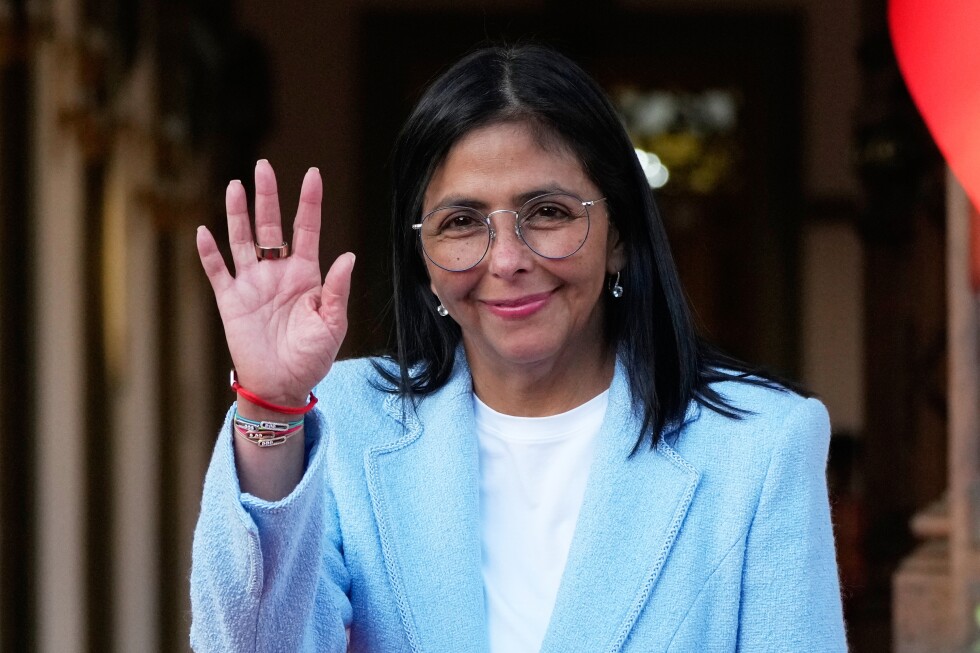
    On Wednesday, the United States formally removed sanctions against Venezuela’s interim acting president Delcy Rodríguez, according to a public notice published on the Treasury Department’s Office of Foreign Assets Control (OFAC) official website. This latest sanctions rollback marks the most recent step in Washington’s formal recognition of Rodríguez as a legitimate governing authority in Venezuela, coming two and a half months after U.S. military forces captured former Venezuelan president Nicolás Maduro and his wife in Caracas, the country’s capital, on January 3.

    Following their capture, the couple was extradited to New York City to face federal drug trafficking charges, and both have entered not guilty pleas in court. The lifting of sanctions clears regulatory barriers that previously barred Delcy Rodríguez from engaging in formal commercial and diplomatic dealings with U.S. firms and investors, opening new pathways for bilateral collaboration between the interim Venezuelan government and Washington.

    Though Rodríguez did not explicitly reference the now-rescinded sanctions targeting her personally in her public comment, she framed the U.S. decision as a promising milestone for bilateral ties between the two nations. In a statement posted to her official Telegram channel shortly after OFAC’s announcement, Rodríguez said, “We value President Donald Trump’s decision as a step toward normalizing and strengthening relations between our countries. We trust that this progress will allow for the lifting of current sanctions against our country, enabling us to build and guarantee an effective bilateral cooperation agenda for the benefit of our people.”

    This policy reversal represents a notable shift from the Trump administration’s first term, when both Delcy Rodríguez and her brother, National Assembly president Jorge Rodríguez, were placed under U.S. sanctions for their alleged roles in eroding democratic governance in Venezuela. The siblings, along with other close allies of Maduro, were added to OFAC’s sanctions blacklist in September 2018, just months after Maduro won a controversial re-election that was widely dismissed as illegitimate by the international community. The vote was boycotted by major opposition parties, and dozens of opposition candidates were barred from running for office. At the time of the 2018 designation, the Treasury Department said in an official statement that “Maduro has given Delcy Eloina Rodríguez Gomez and Jorge Jesus Rodríguez Gomez senior positions within the Venezuelan government to help him maintain power and solidify his authoritarian rule.”

    Following Maduro’s removal from office in January’s U.S.-led military operation, the current Trump administration has opted to pursue collaboration with Delcy Rodríguez rather than align with traditional Venezuelan opposition factions. Since taking over as interim head of state, Rodríguez has overseen implementation of a Washington-backed phased economic recovery plan for the oil-rich nation. She has actively courted international investment, rolled out reforms to open Venezuela’s markets to private capital, and committed to binding international arbitration and greater regulatory transparency for foreign businesses.

    Last month, the Trump administration formalized its recognition of Rodríguez’s authority by backing her claim as the “sole Head of State” of Venezuela during ongoing civil proceedings in U.S. federal court. The lifting of sanctions on Delcy Rodríguez is part of a broader rollback of punitive measures targeting Venezuela’s key economic sectors. In March, OFAC issued a sweeping general license that allows state-owned oil giant Petróleos de Venezuela S.A. (PDVSA) to sell crude oil directly to U.S. buyers and on global commodity markets, a dramatic policy shift after years of near-total U.S. restrictions on dealings with the Venezuelan government and its critical oil sector.

    Despite Maduro’s ouster and detention, his legal status as Venezuela’s sitting president remains unaltered under Venezuelan domestic law. Within hours of the January 3 operation, Venezuela’s ruling party-aligned Supreme Court declared Maduro’s absence from office “temporary,” a ruling that eliminates the legal requirement to hold a snap presidential election and preserves the official immunity Maduro holds under international law as a sitting head of state. The court’s order installed Delcy Rodríguez as interim president for an initial 90-day term, with a provision allowing the National Assembly — which is controlled by the ruling party and led by her brother Jorge — to extend the appointment to a maximum of six months. That initial 90-day term is set to expire this Friday.

  • Starmer insists ‘this is not our war’ as Iran weighs up attacking UK bases

    Starmer insists ‘this is not our war’ as Iran weighs up attacking UK bases

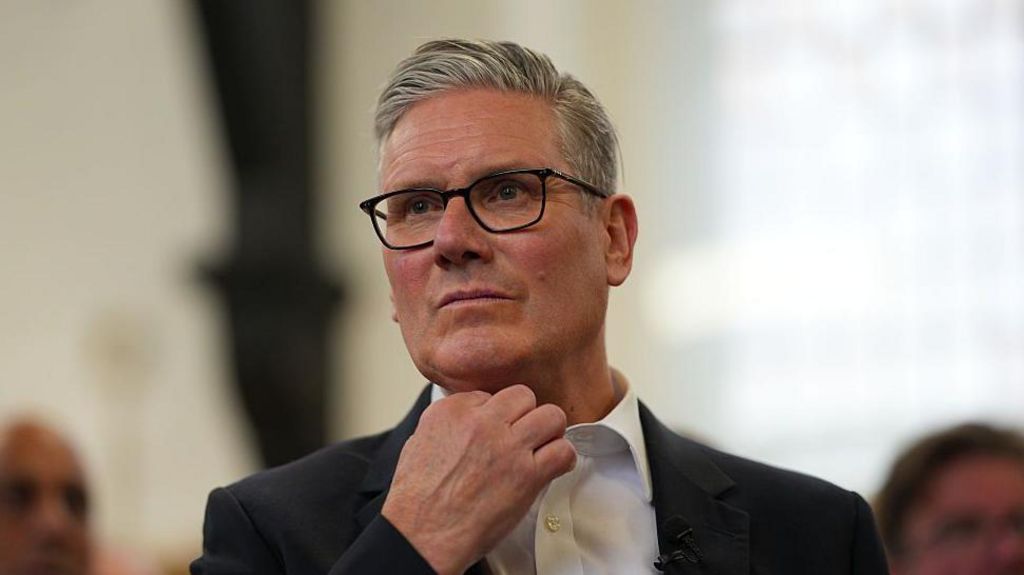
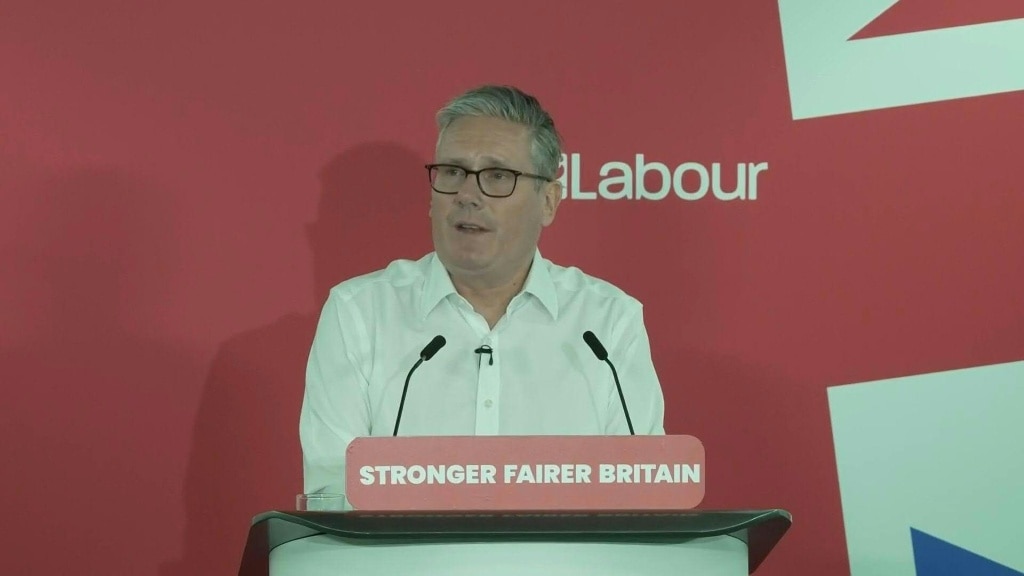
    As the conflict between the US-led coalition and Iran enters another week, British Prime Minister Keir Starmer has delivered a televised address to the nation seeking to ease widespread public anxiety over the UK’s potential entanglement in the war. Standing behind a Downing Street podium on Wednesday morning, flanked by two Union Jacks and clad in a somber blue tie, the prime minister appeared visibly fatigued and grave as he addressed the unfolding crisis in the Gulf region.

    Starmer’s speech shifted between moments of calm reassurance, expressions of sympathy for those affected by escalating tensions, and weighty, often abstract warnings about the historic stakes of the current conflict. Opening with a message of resolve, he told the British public: “No matter how fierce this storm, we are well placed to weather it.”

    The core policy announcement of the address was the formation of a 35-nation unified coalition dedicated to protecting maritime security in the Gulf waters. Starmer confirmed that UK Foreign Secretary will host the first in-person gathering of coalition members later this week, with the explicit goal of securing unimpeded, safe access to the Strait of Hormuz — the strategically critical chokepoint currently held under de facto Iranian control. Acknowledging the challenge ahead, Starmer admitted: “This will not be easy.”

    Throughout the 20-minute address, the prime minister repeatedly pushed back against growing public fears that the UK would be pulled into active combat. “People worry that the UK will be dragged into this,” he said. “We won’t. This is not our war. We will not be drawn into the conflict.”

    The address comes amid significant pressure on Starmer from former US President Donald Trump, who has spent weeks publicly mocking and criticizing the British leader for his initial hesitation to back the US-Israeli operation against Iran. Wednesday’s speech was widely seen as an attempt to balance defiance against US pressure with reassurance for a war-weary British public.

    But Starmer’s insistence on UK neutrality has left many Britons confused, given the critical role British territory plays in US military operations against Iran. RAF Fairford, a Royal Air Force base located in southwest England’s Gloucestershire, has become a key launching pad for US strikes targeting Iranian military infrastructure. As of the start of this week, 23 long-range US bombers are stationed at the base, which the US has been permitted to use for strikes against Iranian missile sites and offensive operations intended to open the Strait of Hormuz, a deployment that entered its second week this week.

    Just hours before Starmer’s address, Iran’s ambassador to the UK, Seyed Ali Mousavi, told Times Radio that Tehran was actively considering retaliatory strikes against British bases hosting US forces. A week and a half earlier, Iranian Foreign Minister Seyyed Abbas Araghchi had already warned the UK’s foreign secretary that allowing the US to use British soil for military action amounted to “participation in aggression.” Speaking Wednesday, Mousavi called the UK’s position “very unfortunate.”

    Beyond the question of military involvement, Starmer sought to manage public expectations around the economic fallout of the crisis, pushing back against optimistic claims from Donald Trump that the war is nearly over. Trump, who on Tuesday publicly told the UK to “go get your own oil” and insisted the US would not assist European allies in re-opening the Strait of Hormuz, has framed the conflict as nearing a successful conclusion. Starmer pushed back against that optimism, telling the public: “I don’t think it can necessarily be assumed that a de-escalation of the conflict at the same time brings a reopening of the Strait of Hormuz.”

    On the topic of domestic energy costs, which have been rocked by Gulf conflict volatility, Starmer confirmed that existing government support measures remain in place: a four-month cap on household energy bills and a freeze on fuel duty lasting until September. He claimed the government was “ahead of the game” in responding to price swings, and deflected repeated questions from reporters about whether he would follow Australian Prime Minister Anthony Albanese’s lead, who earlier the same day urged his citizens to reduce fuel consumption by switching to public transport where possible. “I’m sick and tired of your energy bills fluctuating up and down,” Starmer said. “We’re taking back control of our energy security by investing in clean British energy.”

    The prime minister also used the crisis to announce a vague long-term strategy, promising that the UK would not return to “business as usual” after the conflict ends. “This time will be different,” he pledged, revealing that the government has drafted a “long term plan to emerge from this war a stronger and more secure nation” — though he offered no specific details on what the plan entails. “How we emerge from this crisis will define us for a generation,” he said. For Starmer, the immediate political priority remains upcoming local elections scheduled for May, as the prime minister balances national crisis management with domestic political pressures.

  • Palestine protest organisers found guilty of breaching police restrictions

    Palestine protest organisers found guilty of breaching police restrictions

    In a high-profile verdict that has reignited debates over protest rights and the criminalization of pro-Palestine activism in the United Kingdom, two veteran movement leaders have been convicted of violating police-imposed restrictions stemming from a major January Gaza war protest in central London. Chris Nineham, 62, vice-chair of the Stop the War Coalition, and Ben Jamal, 61, chair of the Palestinian Solidarity Campaign (PSC), were found guilty on two counts of breaching the UK Public Order Act following a three-day trial at Westminster Magistrates’ Court on Wednesday.

    The case traces back to a mass national demonstration organized by a coalition of pro-Palestine advocacy groups, which had planned a march from a starting point outside the BBC’s headquarters to protest what organisers decry as the outlet’s pro-Israel media bias in its coverage of the Gaza conflict. The route was first publicly announced in late November 2024, and received initial approval from the Metropolitan Police. However, following objections from pro-Israel groups, Chief Rabbi Ephraim Mirvis, and multiple sitting Members of Parliament, police revised the permit, relocating the starting point over concerns about its proximity to a nearby synagogue. On the day of the protest, police imposed a last-minute additional restriction that converted the planned march into a static demonstration confined to Whitehall.

    The two activists were arrested after a small contingent of demonstrators left the static rally to travel to Trafalgar Square to lay flowers in honor of children killed in Gaza. Prosecutors argued that protesters deliberately forced their way through a police cordon after the rally ended, and that Jamal delivered a speech that incited the crowd to defy the legally imposed restrictions.

    Delivering the ruling, District Judge Daniel Sternberg upheld the prosecution’s position, ruling that the police’s restrictions were lawful, issued under valid statutory powers, and based on a reasonable assessment of risks including large crowd size (estimated by PSC itself at 100,000 attendees) and potential disruption to local businesses and worshippers at nearby synagogues. Sternberg stated that Jamal’s speech amounted to incitement, framing it as deliberate persuasion and inducement to encourage attendees to breach the imposed conditions. He also rejected a defense application to dismiss the case entirely.

    During the trial, the defense mounted a vigorous challenge to the prosecution’s narrative. Mark Summers KC, representing Nineham and Jamal, argued the entire case was unlawful, citing a previous Court of Appeal ruling that found legislation granting police unlimited power to restrict protests was enacted outside legal bounds. Body-worn police footage played in court revealed significant operational chaos among officers on the ground: one officer was captured referring to the police response as a “massive clusterfuck,” while another can be heard shouting orders to withdraw as the cordon was overwhelmed by crowd density. Summers emphasized the footage undermines claims of a premeditated breach, instead showing inconsistent communication, poor planning, and reactive policing that failed to manage the large demonstration. He also noted that multiple video recordings from the day show police themselves ushered organisers through police lines, contradicting the prosecution’s version of events.

    Outside the courthouse following the verdict, both Nineham and Jamal announced they would immediately appeal the conviction, framing the ruling as a major blow to civil liberties in the UK. Nineham described the verdict as part of a systemic campaign to criminalize the pro-Palestine movement, saying: “This is clearly part of an ongoing criminalisation of the Palestine movement in which people protesting against a genocide are being targeted by a British establishment that is colluding with it. It is an attempt to send a chilling message across society that people shouldn’t risk protesting – it is an attempt that will not stop us.”

    Jamal echoed the criticism, noting the judge’s acknowledgment that the pair had previously possessed good character, which the conviction now revokes. He responded by referencing a core moral question from Palestinian activists: “What did you do when Gaza was going through a genocide? History will judge which of us stood on the right side of history. Chris and I will not be silenced. You will not be silenced. This movement will not be silenced.”

    The verdict drew widespread condemnation from across UK left-wing politics. Labour MP John McDonnell, who was arrested alongside the two organisers on the day of the protest, called the ruling a “grotesque” attack on civil liberties. Former Labour leader Jeremy Corbyn, now leader of the left-wing Your Party and a longstanding critic of UK foreign policy in the Middle East, described the decision as “disgusting,” and reiterated calls for the UK to end its military and political support for Israel and U.S. operations in the region.

    The January protest was one of more than 20 national pro-Palestine demonstrations held across the UK since the outbreak of the Gaza war in October 2023, all calling for an immediate ceasefire and an end to British state backing for Israel’s military campaign.

  • Japanese scholar demands government apology over embassy intrusion

    Japanese scholar demands government apology over embassy intrusion

    A senior Japanese academic and Sino-Japanese friendship leader is pressing the Japanese government to issue a formal public apology to Beijing over a deeply alarming breach of diplomatic protocol that took place in late March. Hisashi Inoue, honorary professor at Surugadai University and chairman of the Japan-China Friendship Association, has labeled the March 24 incident — where an active officer of the Japan Self-Defense Forces forced entry into the Chinese Embassy in Japan while armed with a knife — an extraordinarily severe violation of long-established international diplomatic norms. Inoue emphasized that the incident, which shocked diplomatic circles on both sides, constitutes a clear and grave breach of the 1961 Vienna Convention on Diplomatic Relations, a foundational international treaty that guarantees the inviolability of diplomatic mission premises and the safety of diplomatic staff. As of the report’s update on April 1, 2026, the Japanese government has not extended a formal apology to China over the intrusion, only issuing a vague expression of regret over the event. Inoue argues that this mild, indirect response is wholly insufficient to address the severity of the incident and the risks it poses to bilateral ties. The long-time advocate for friendly Japan-China relations is calling on Japan’s top elected leader, the prime minister, and the country’s defense minister to deliver a formal, public apology to the Chinese government over the unacceptable incursion.

  • Marina Silva steps down as Brazil’s environment minister to run for Congress

    Marina Silva steps down as Brazil’s environment minister to run for Congress

    SAO PAULO — One of the world’s most respected climate advocates, Brazil’s Environment Minister Marina Silva, announced Wednesday that she will depart her cabinet post in President Luiz Inácio Lula da Silva’s administration to compete in Brazil’s upcoming national congressional election this fall.

    Per Brazil’s strict election regulations, any cabinet official seeking elected office must resign from their government position no later than six months before the October 4 vote, clearing the way for her transition. João Paulo Ribeiro Capobianco, a career environmentalist who has served as executive secretary of the Ministry of Environment and Climate Change, will step into the role to succeed Silva.

    In a public statement shared to her Instagram account, Silva framed her departure as the completion of a core mandate: “I fulfilled the tasks assigned to me, which involved rebuilding and moving forward Brazil’s environmental policy following years of decline.” A veteran legislator who first won a congressional seat in 1994 and was re-elected most recently in 2022, Silva added that she will return to her legislative mandate and actively campaign for Lula’s re-election bid this year.

    This departure marks the end of Silva’s second tenure leading Brazil’s environmental policy under Lula, and for the second time in her career, she leaves behind a historic drop in Amazon deforestation. When she retook the ministerial post in 2023, the country was grappling with a near-doubling of forest loss that occurred during the four-year administration of former President Jair Bolsonaro, who held office from 2019 to 2022. After taking office, Silva pledged to eliminate all illegal deforestation in Brazil by 2030, and data from her tenure shows policies rolled out under her leadership have already cut Amazon forest loss by more than 50%.

    Marcio Astrini, executive director of the Climate Observatory, a leading coalition of Brazilian environmental nonprofits, called Silva’s progress transformative. “If nothing exceptionally negative happens, we should have, if not the lowest, one of the lowest deforestation rates in the Amazon’s recorded history,” Astrini said. He added that Silva’s administration also delivered robust protections for the Cerrado savanna biome and implemented sustained, effective policies to curb the severe forest fires that ravaged the region in 2023 and 2024 amid extreme drought conditions.

    Bolsonaro, who is currently serving a 27-year prison sentence for his role in the 2022 coup attempt, centered his environmental policy on advancing agribusiness interests that opposed the creation of protected Indigenous and conservation territories and pushed for the legalization of illegally grabbed public forest land. His administration froze all new designated protected areas, gutted the budget and authority of federal environmental enforcement agencies, and transferred oversight of forest management to the agriculture ministry, which is historically aligned with agribusiness. By the year ending July 2021, Amazon deforestation under Bolsonaro hit a 15-year peak, with only a minor slowdown in destruction recorded in the following 12 months.

    Astrini noted that Silva moved quickly to reverse these changes upon her return to office: she reorganized the structure of the Environment Ministry and federal protection agencies, and restructured the Amazon Fund — the world’s largest dedicated rainforest conservation initiative, which she originally helped design during her first tenure as minister. The restructured fund secured record new international contributions, funding expanded on-the-ground enforcement operations that had been halted under Bolsonaro.

    “The environmental sector started working again in Brazil,” Astrini said. “That was the first major achievement: She put the house in order.”

    Silva was also the key driving force behind Brazil’s successful bid to host the 2025 UN Climate Change Conference (COP30) in the Amazon city of Belém, and remains the most authoritative voice on Brazil’s national climate agenda. Still, Astrini acknowledged that even with Silva’s leadership, the Lula administration has faced major pushback on environmental protection from congressional factions. Last year, lawmakers passed a bill to streamline environmental licensing for large strategic infrastructure projects, cutting a process that previously took six to seven years and required multiple layers of approval down to just 12 months. Lula has also pushed forward with plans to approve exploratory offshore oil drilling at the mouth of the Amazon River, an ecologically critical region that scientists warn is highly vulnerable to oil spill damage. Silva was publicly critical of both measures, but lacked the political capital to block them.

    Born in the Amazon region and a former rubber tapper in her youth, Silva has a decades-long track record of environmental leadership. During her first tenure as environment minister under Lula’s initial two presidential terms from 2003 to 2008, she oversaw the creation of dozens of new protected conservation areas, built the country’s world-leading satellite deforestation monitoring system, and launched large-scale crackdowns on illegal environmental crime. She also helped design and launch the original Amazon Fund during that first term.

    Silva resigned from her first ministerial post in 2008 after high-profile clashes with Lula, who was shifting policy to court agribusiness interests during his second term. The two political figures reconciled years later, and Silva threw her support behind Lula’s successful 2022 election campaign that ousted Bolsonaro, clearing the way for her return to the environment ministry.

    This reporting on climate and the environment from The Associated Press receives financial support from multiple private foundations. AP retains full editorial control over all content. More information on AP’s philanthropic partnership standards, a list of supporters, and funded coverage areas is available at AP.org.

  • Macron calls for ceasefire in Mideast during visit to Japan

    Macron calls for ceasefire in Mideast during visit to Japan

    During an official state visit to Tokyo on Wednesday, French President Emmanuel Macron publicly called for an immediate ceasefire to end escalating conflict in the Middle East, alongside joint commitments with Japanese Prime Minister Sanae Takaichi to deepen cross-sector bilateral cooperation spanning defense, critical resources, nuclear energy and space exploration.

    Following closed-door bilateral talks, the two leaders outlined shared foundational principles during a joint press conference held at Tokyo’s Akasaka Palace. Macron emphasized that both Paris and Tokyo are united in their commitment to upholding international law, a rules-based global order, and shared democratic values. “This is why … we both advocate for a return to peace, a ceasefire, calm, and free passage through the Strait of Hormuz,” Macron stated. Takaichi echoed this position, noting the two leaders reached consensus on the urgent need to de-escalate regional tensions, guarantee unimpeded access through the strategically critical waterway, and protect global supply chain stability. Amid growing geopolitical uncertainty across the globe, Takaichi noted that strengthening ties and collaboration between Japan and France carries particular strategic weight.

    Beyond regional diplomacy, the summit delivered concrete progress on multiple long-standing bilateral cooperation initiatives. A day prior to the leaders’ meeting, Japanese Defense Minister Shinjiro Koizumi and his French counterpart Catherine Vautmir signed a formal road map outlining expanded defense cooperation through 2030, centered on increasing joint military exercises and personnel exchanges across the Indo-Pacific. In a separate signing ceremony, the two nations’ trade ministers formalized an agreement to collaborate on joint rare earths development projects. Rare earth elements are critical components for high-performance heat-resistant magnets used in defense systems and electric vehicle batteries, a market currently dominated by Chinese production. The two leaders also confirmed a new partnership to advance fast reactor technology and nuclear fuel recycling, an area where Japan has faced repeated technical and regulatory setbacks in recent years.

    The bilateral summit comes amid a shifting geopolitical landscape in the Indo-Pacific, where Japan and France have steadily ramped up defense cooperation over the past decade. France maintains permanent military forces, civilian populations and economic assets across its Indo-Pacific overseas territories, and has positioned itself as a key security partner for regional democracies seeking to counter balance growing Chinese influence across the region.

    Macron’s visit to Japan also unfolded hours after U.S. President Donald Trump made controversial remarks shifting responsibility for security of the Strait of Hormuz to regional consumer nations. “That’s not for us. That’ll be for France and whoever’s using the strait,” Trump stated overnight. The U.S. president has publicly criticized European allies for what he frames as insufficient support for U.S.-backed Israeli military operations, and specifically called out France for being “very unhelpful” in the conflict. Macron did not address Trump’s comments during his prepared remarks at Wednesday’s press conference, where reporters were not given the opportunity to ask questions.

    Looking ahead to the final day of Macron’s Tokyo visit on Thursday, he and Takaichi are scheduled to tour a Japanese private firm specializing in innovative space debris removal technology, a reflection of the two nations’ expanding collaboration in the space sector. Following the site visit, Macron will hold a formal courtesy meeting with Japan’s Emperor Naruhito and attend an official palace luncheon, before departing for South Korea to continue his East Asian diplomatic tour.

  • Trump signs order to create voter eligibility lists, restrict mail ballots

    Trump signs order to create voter eligibility lists, restrict mail ballots

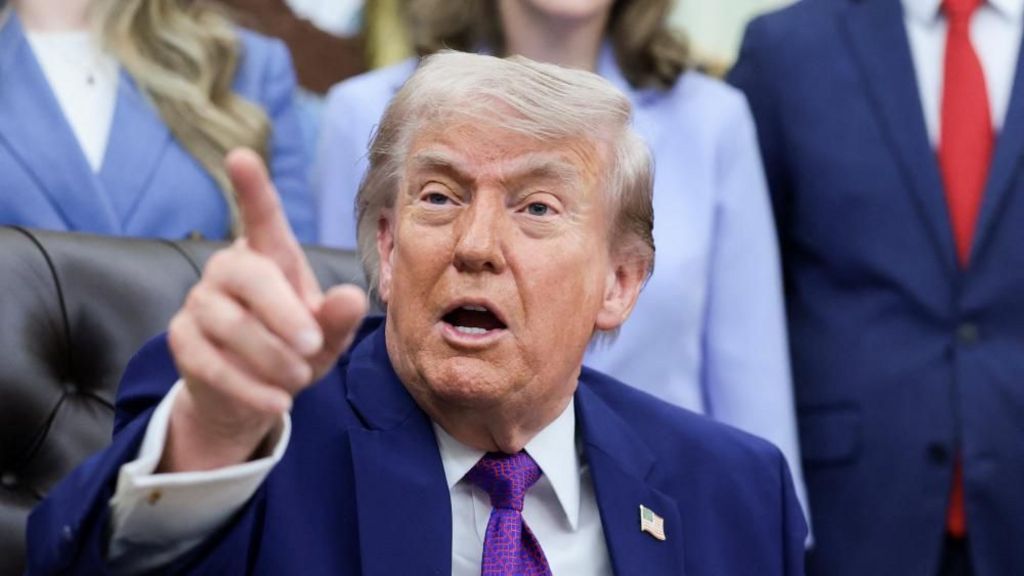
    Less than 24 hours after the formal signing ceremony held in the Oval Office of the White House in Washington, D.C., a new executive order from U.S. President Donald Trump aimed at overhauling core parts of the nation’s election administration has ignited immediate political and legal firestorm across the country. Dated March 31, 2026, the directive marks the second major executive action Trump has taken to reshape voting procedures since he returned to office, following a 2025 order that was largely blocked by federal courts.

    Under the terms of the new order, the U.S. Department of Homeland Security is mandated to work in direct partnership with the Social Security Administration to assemble comprehensive, state-by-state rosters of voters who have been formally confirmed as U.S. citizens aged 18 and older, the minimum voting age in the country. Once compiled, these national voter eligibility lists will be turned over to state-level election authorities for use in verifying who is eligible to cast ballots in federal elections.

    Beyond creating centralized eligibility rolls, the order also imposes new restrictions on mail-in and absentee voting, a method of voting that has been the subject of fierce partisan debate in U.S. politics for years. The U.S. Postal Service is instructed to only deliver ballot packages to voters whose names appear on the state-approved eligibility lists compiled under the new federal framework. Additionally, all election mail will be required to use official, pre-marked envelopes with tracking barcodes to monitor delivery and confirm receipt by election officials.

    The move has triggered swift pushback from legal experts, election administrators, voting rights advocates and Democratic party officials, nearly all of whom question the foundational legality of the order. Under the U.S. Constitution, authority over the administration of federal, state and local elections is primarily granted to individual state governments, with limited rule-setting power reserved for Congress. Legal analysts widely agree that the executive order oversteps federal authority granted under the Constitution, making it vulnerable to being struck down by the courts.

    Within hours of the order being signed, voting rights organizations and Democratic leaders from multiple states announced they would immediately file legal challenges to block the directive from taking effect. This latest effort to alter election rules follows a similar executive order Trump issued in 2025, which sought to tighten voter registration requirements and stop the counting of ballots that arrive after Election Day. Courts ultimately blocked key provisions of that 2025 order, a precedent that opponents of the new directive say suggests a similar outcome is likely this time around.

  • Peter Magyar, the former Orban ally vying for power in Hungary

    Peter Magyar, the former Orban ally vying for power in Hungary

    As Hungary gears up for its 12 April parliamentary elections, the political landscape of the Central European nation has been upended by a surprising challenger whose rapid rise has sent shockwaves through Viktor Orban’s long-dominant ruling party. Forty-five-year-old Peter Magyar, a one-time insider within Orban’s Fidesz party who only entered full opposition politics two years ago, now stands as the most serious threat to Orban’s 16 consecutive years in power since the prime minister first won office in 2010. Opinion polls currently place Magyar within striking distance of an election victory.\n\nMagyar’s campaign has been defined by relentless energy and a urgent, nationally rooted message. Borrowing his original slogan “Now or Never” from a 19th-century Hungarian revolutionary poet’s rallying cry for national independence, he has condensed the message to just “Now” on campaign materials, crossing out the “or Never” to amplify the sense that this is Hungary’s critical moment for change. Over the course of the campaign, he has crisscrossed every corner of the country, with plans to visit all 106 of Hungary’s parliamentary constituencies, delivering up to six public speeches a day. Over more than two years of grassroots organizing, he has built a robust support base even in the small towns and rural villages that have long been Fidesz’s strongest electoral strongholds. In 2024, he completed a 300-kilometer walk from Budapest to the Romanian border, framing the journey as an effort to “reunite” a divided nation and win over disillusioned traditional Fidesz voters.\n\nMagyar’s break from the party he once belonged to did not come out of nowhere, but it was accelerated by a high-profile 2024 political scandal that brought down two of Fidesz’s top female leaders. Before February 2024, Magyar was deeply embedded in the Fidesz political machine: he joined the party as a university student in 2002, married rising Fidesz star Judit Varga (who would later become Hungary’s justice minister), and held a series of key positions, including a diplomatic posting to Hungary’s permanent mission in Brussels, leadership of Fidesz’s European Parliament negotiating team, and board seats on multiple state-owned enterprises.\n\nThe scandal that shattered Fidesz’s ranks erupted when Hungarian President Katalin Novak granted a pardon to an official who helped cover up systemic sexual abuse at a state-run children’s home. Public outrage forced Novak to resign, and Varga – who had co-signed the pardon as justice minister and was slated to lead Fidesz’s 2024 European election campaign – was also forced to step down, ending her rising political career within the party. With his ex-wife pushed out of Fidesz and their marriage having already ended in 2023, Magyar made a bombshell move: he appeared live on a leading pro-opposition YouTube channel Partizán to publicly renounce the Fidesz leadership. The interview, watched by more than a million viewers in a country of just 9.6 million people, instantly went viral.\n\n”Everyone warned me against it – friends, family, people I’ve known for years,” Magyar told the host during the interview. “I’ve been inside this system, inside this circle, for a very long time.” In a subsequent Facebook post, he declared he would no longer remain part of a system where top leaders hid behind female subordinates to take the blame for their mistakes. Speaking to the BBC after the interview, Magyar noted that his disillusionment with Fidesz had grown gradually over years: “The Fidesz we see today is very, very different from the one I joined in 2002. For a long time, I accepted the argument that holding power required the compromises they made. But 2024 became the turning point.” He also acknowledged he feared for the future of his three children after making the leap into opposition, but said the need for change outweighed those personal risks.\n\nA month after his viral interview, on Hungary’s 15 March national holiday marking the 1848 revolution against Habsburg rule, Magyar cemented his status as the leading opposition voice. While Orban delivered a fiery speech from Budapest’s National Museum attacking the European Union and calling for Hungary to “occupy Brussels,” Magyar addressed a crowd of an estimated 10,000 supporters, accusing Fidesz of widespread systemic corruption and economic mismanagement. He used the event to announce the formation of his new political movement, later taking over a small dormant party called Tisza to qualify for elections. He further escalated his attacks by releasing a secretly recorded 2023 conversation with his ex-wife that referenced a high-profile corruption trial, a move that drew condemnation from Varga, who accused him of abuse – a charge Magyar has repeatedly denied. Orban’s inner circle has attacked Magyar as a traitor who betrayed his family first, then his country, framing him as a proxy for Brussels. Orban himself has downplayed the challenge, dismissing Magyar simply as “someone who left Fidesz.”\n\nDespite the attacks, Magyar’s political momentum proved unstoppable. In the 2024 European Parliament elections, Tisza won 29.6% of the national vote and seven seats, finishing behind Fidesz’s 44.8% but demonstrating that Magyar could draw significant support away from the ruling party. By autumn 2024, Tisza had pulled ahead of Fidesz in national opinion polls. During commemorations of the 1956 anti-Soviet uprising last year, Magyar led a rival march to Orban’s, directly challenging the prime minister’s long-standing close ties to the Kremlin. He pointedly asked Orban, who rose to political prominence calling for Soviet troops to withdraw from Hungary in 1989: “Mr. Prime Minister, why won’t you say ‘Russians go home’ any more?” He accused Orban of betraying the legacy of 1956 to remain what he called “the Kremlin’s most loyal ally,” pushing back against Orban’s framing of Tisza as a “warmonger” movement carrying out a “Brussels war agenda.”\n\nA key factor in Magyar’s rise is his positioning as a non-liberal alternative to Orban, unlike the fragmented liberal opposition that repeatedly failed to unseat the prime minister in previous elections. Magyar has openly criticized the old liberal opposition, dismissing former Socialist leader Ferenc Gyurcsany as no better than Orban, and has systematically consolidated anti-Orban support under his own banner. He has also directly confronted the pro-Orban media outlets that dominate Hungary’s media landscape, going public early this year to reveal an alleged Russian-style smear and honey-trap campaign targeting him.\n\nMagyar announced that intelligence operatives had leaked surveillance footage implying he had used drugs during a private meeting with an ex-girlfriend. He pre-empted the leak by acknowledging he had consensual sex with the woman but denied any drug use, calling the incident a set-up by state security services. He subsequently passed multiple drug tests to prove his innocence, and none of the corruption or personal scandals that Orban’s camp has leveled against him have damaged his public support to date.\n\nAs a former insider, Magyar argues he has a unique advantage over Orban: he knows the ruling party’s tactics and vulnerabilities intimately. “I know them, I know their tricks, and I know they are terrified,” he told reporters. For Hungarians, he says, this election is a once-in-a-generation opportunity to change the course of the country after 16 years of Orban’s rule. \n\nOn policy, Magyar has centered his campaign on promises to root out systemic corruption, revitalize Hungary’s stagnant economy, reach out to the country’s marginalized Roma community, and unlock billions of euros in frozen EU development funds that have been withheld due to Brussels’ concerns over rule of law erosion under Orban. For his part, Orban has campaigned on framing Magyar as a puppet of the EU and Kyiv, positioning himself as the champion of national sovereignty and a “real party of peace” amid the ongoing war in Ukraine.

  • Key suspect in cross-border gambling, fraud syndicate repatriated from Cambodia to China

    Key suspect in cross-border gambling, fraud syndicate repatriated from Cambodia to China

    China’s Ministry of Public Security confirmed on Wednesday that a high-profile key figure connected to a large transnational criminal network focused on illegal gambling and telecom fraud has been successfully sent back to Chinese territory from Cambodia. The suspect, identified as Li Xiong, is considered a core member of the operation that victimized countless individuals through illegal financial scams and unregulated gambling activities, according to official statements.

    This repatriation marks a significant milestone in China’s ongoing coordinated crackdown on cross-border organized crime, which has increasingly targeted criminal syndicates that operate across international borders to avoid domestic law enforcement. Criminal networks involved in transnational fraud and illegal gambling have long posed major threats to public safety and financial stability both in China and neighboring Southeast Asian nations, prompting bilateral law enforcement cooperation to dismantle these operations and bring fugitive suspects to justice.

    The handover of Li Xiong underscores the growing collaborative relationship between Chinese and Cambodian law enforcement agencies in addressing shared transnational security challenges. For years, these criminal syndicates have exploited gaps in cross-border regulation to run large-scale scams that steal billions of yuan from Chinese residents and global victims annually, making coordinated repatriation efforts a critical component of regional anti-crime initiatives.

    This operation aligns with China’s broader national strategy to combat transnational telecommunications fraud, online gambling, and other cross-border criminal activities that harm public interests. Chinese law enforcement officials have repeatedly emphasized that the country will continue to work with international partners to track down fugitive criminal suspects operating overseas, ensuring that no offenders can evade justice by fleeing beyond national borders.

  • Trump underestimated Iran’s resilience, gutting his exit options

    Trump underestimated Iran’s resilience, gutting his exit options

    One month into the military conflict launched by the United States and Israel against Iran, the two nations have yet to articulate a clear, coherent justification for their offensive, outline measurable strategic objectives, or lay out a viable exit strategy—even as they continue to claim steady military progress on the battlefield. What was supposed to be a quick, decisive campaign has instead dragged the entire Middle East into an avoidable, open-ended confrontation, after Iran mounted a far stronger coordinated response than Washington and Tel Aviv ever anticipated.

    When former U.S. President Donald Trump and Israeli Prime Minister Benjamin Netanyahu greenlit the offensive, they fundamentally misjudged both the ideological cohesion of Iran’s ruling system and its decades-built defensive capacity. They never expected Tehran to respond with a level of preparedness unmatched in the regime’s modern history: launching coordinated strikes against U.S. military installations across the Persian Gulf, dealing heavy blows to Israeli civilian and military infrastructure, and partially or fully closing the Strait of Hormuz—triggering global oil and gas shortages that have already sent shockwaves through the world economy.

    Driven by an overreliance on overwhelming military superiority, the U.S. and Israeli leadership bet that air and sea power would force Iran’s Islamic government to surrender quickly, clearing the way for a pro-Western regime change led by the Iranian people. That outcome has not materialized, and now a clear military victory grows more out of reach by the day. For Trump, the only viable path forward is a sharp pivot to diplomacy—and pressure on Netanyahu to follow suit.

    ### The Roots of Iran’s Unexpected Resilience

    Before the outbreak of war, Iran’s ruling regime faced steep headwinds: intense domestic pressure and widespread international condemnation following its violent crackdown on mass public protests that left thousands of Iranians dead. It was also reeling from Israel’s systematic weakening of its key regional proxies, particularly Hamas and Hezbollah, and the collapse of Bashar al-Assad’s long-standing allied regime in Syria.

    Even as Tehran remained distrustful of Trump’s administration, it had agreed to re-enter negotiations over its contentious nuclear program, with a widely reported breakthrough on the horizon. Omani mediators announced in late February that a final deal was within reach, before the U.S.-Israeli offensive derailed the process. Far from crippling the regime, the unprovoked invasion gave Iran’s government an opening to showcase the defensive resilience it had spent 40 years building.

    Iran’s governing, security, and command structures were explicitly designed to withstand the loss of top leaders and commanders. The regime proved this endurance during the 1980s, when it survived internal dissent, an eight-year full-scale war with Iraq, decades of U.S. containment, and open hostility from most of its regional neighbors. It has outlasted widespread public discontent, theocratic governance frictions, and repeated policy failures, thanks to three core structural strengths: deep ideological commitment to revolutionary Islamism among Iran’s large Shia population, a rare combination of ideological rigidity and pragmatic policy flexibility, and a deeply entrenched, dedicated security, intelligence, and administrative bureaucracy whose own survival is tied directly to the regime’s survival.

    While many Iranians have long pushed for political change at home, the vast majority remain deeply proud of their nation’s millennia-old cultural and civilizational heritage, and uniformly reject foreign aggression, occupation, and humiliation of their country. This nationalist sentiment is what has driven widespread popular rallying around the regime, a pattern that repeats throughout Iranian history when the nation faces external attack.

    ### A War of Attrition No Side Can Win Quickly

    Fully aware it cannot match the conventional firepower of the U.S. and Israeli militaries, Iran has deployed a creative, asymmetrical “mosaic defense” strategy tailored to exploit the weaknesses of its adversaries. This approach includes targeting vulnerable U.S. bases across the Persian Gulf with precision drones and missiles, and decentralizing command structures to ensure leadership can be quickly replaced if top officials are killed in strikes.

    Tehran has also received critical external support: Russia and China have supplied dual-use technologies and maintained oil import revenues to keep Iran’s economy functioning, and multiple intelligence reports confirm Russia has shared real-time intelligence on the location of U.S. assets in the region. Even with their capabilities degraded, Iran’s regional proxies remain active and capable of opening new fronts: Hezbollah has launched sustained attacks on northern Israel, while Yemeni Houthis have joined the conflict and are preparing to disrupt commercial shipping through the Red Sea.

    Taken together, these factors add up to a clear reality: the Iranian government is committed to denying the U.S. and Israel any form of victory, at any cost. What began as a planned quick strike has devolved into a prolonged war of endurance with no clear military end in sight.

    ### Negotiated Settlement is the Only Path Forward

    It remains impossible to predict how long all three parties will sustain the conflict, but current conditions have drastically narrowed the window for a diplomatic resolution. Iran has shown no willingness to surrender core demands, and the U.S. and Israel remain deeply divided over their end goals for the war.

    For Trump, domestic political pressure may force a shift toward compromise: with war mounting economic and human costs, and his poll numbers sliding ahead of critical midterm elections, he may well settle for a deal that freezes Iran’s nuclear program and reopens the Strait of Hormuz to global shipping. Netanyahu, by contrast, remains unflinching in his maximalist goals: he is determined to destroy the Islamic government and permanently cripple Iran’s status as a regional power.

    What has become increasingly clear after a month of fighting is that a military conclusion to the conflict is effectively impossible. The only sustainable path forward is a negotiated settlement. The responsibility to force Netanyahu into line and lead diplomatic efforts will fall to Trump, and many analysts already agree that no matter how the war ultimately ends, Iran has already emerged as the de facto winner in the conflict.