Nearly seven weeks after UK Prime Minister Keir Starmer vowed to deploy British military forces to board sanctioned Russian vessels operating in UK maritime territory, an independent investigation by BBC Verify has uncovered that almost 200 blacklisted ships linked to Russia’s shadow oil fleet have traversed UK waters, with zero publicly confirmed interceptions or boardings carried out to date.
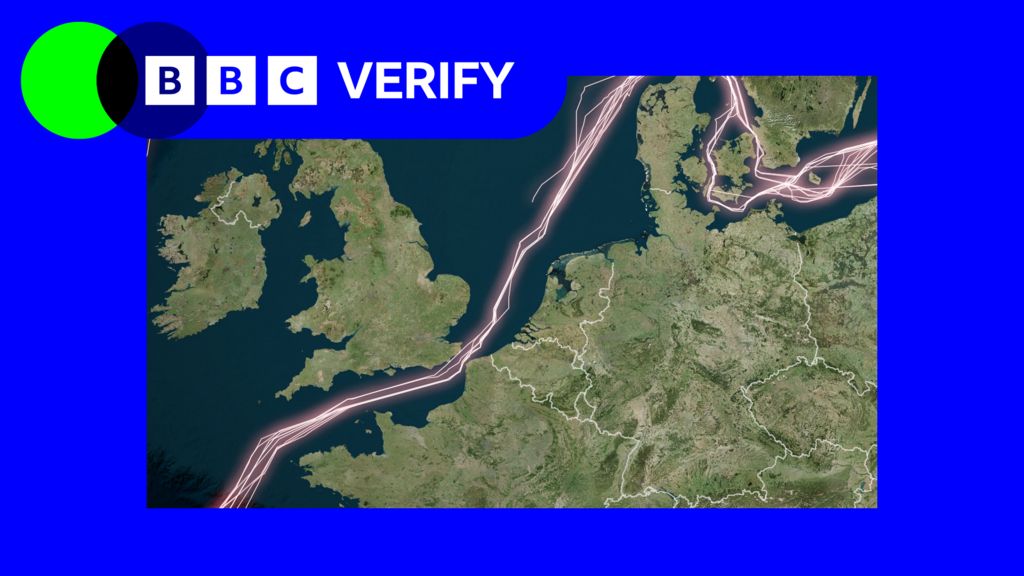
Starmer first announced the aggressive new enforcement policy in March, stating that British armed forces had been granted authority to intercept and board any sanctioned vessels passing through the UK’s maritime zones. But between March 25 and 15:00 BST on May 11, BBC Verify’s analysis of publicly available ship tracking data from MarineTraffic identified 184 UK-sanctioned vessels making a total of 238 separate trips through UK waters. As of the investigation’s publication, the UK government has not released any public statement or evidence confirming that any of these vessels have been boarded, despite Starmer’s high-profile pledge.
All 184 vessels in question appear on the UK Foreign Office’s official sanctions list, with documented ties to Russia. The shadow fleet, a loose network of vessels with deliberately obscured ownership and registration structures, was established by Moscow to evade harsh international sanctions imposed on its crude oil and energy exports following its full-scale invasion of Ukraine. The UK’s sanctions regime bars these vessels from entering UK ports, and prohibits British businesses and individuals from offering financial, insurance or brokerage services to any ship involved in transporting Russian oil. The government has framed this pressure on Russian oil revenues as a core measure to cut off funding for Moscow’s military campaign in Ukraine.
Of the tracked vessels, 173 were oil tankers, 10 were liquefied natural gas (LNG) carriers, and one was classified as a multi-purpose offshore vessel. Every vessel tracked entered the UK’s Exclusive Economic Zone (EEZ), a maritime area extending up to 200 nautical miles off the UK’s coastline, with the vast majority of transits occurring through the busy English Channel. In at least 94 of those journeys, the vessels crossed briefly into UK territorial waters, the 12-nautical-mile zone directly adjacent to the UK coast. BBC Verify confirmed that Starmer’s announced interception policy explicitly applies to both territorial waters and the EEZ.
MarineTraffic gathers its location data from vessels’ onboard Automatic Identification System (AIS) transponders, a mandatory tracking technology for most large commercial ships. However, AIS signals can be intentionally disabled by crews to hide a vessel’s true identity and location. The data shows significant gaps in tracking for many of the sanctioned vessels west of Scotland and Ireland, a common pattern for shadow fleet vessels attempting to avoid detection.
The investigation also uncovered one notable incident: satellite imagery analyzed by experts from intelligence firm MAIAR confirms that a sanctioned oil tanker named *Universal* was escorted through UK waters by a Russian frigate, almost certainly the Russian warship *Admiral Grigorovich*, in early April. Ship tracking data shows *Universal* entered UK waters in the early hours of April 8 before transiting the English Channel.
The complete lack of confirmed boardings has drawn sharp criticism from defense and maritime experts. Tom Sharpe, a former Royal Navy warship commander, described the inaction as “utterly confusing” and “pathetic.” Sharpe told BBC Verify that the UK possesses all the necessary military assets to carry out the pledged interceptions, including warships, specialized boarding teams, and customs enforcement capabilities. “We’ve got no maritime spine in us,” he said. “I see it time and time again with the way we operate our warships. We are risk averse, we’re poorly coordinated.”
However, legal experts note that significant international maritime law constraints may explain the government’s reluctance to carry out boardings. James M Turner KC, a leading shipping lawyer at Quadrant Chambers, explained that under standard international law, coastal states are generally prohibited from seizing or boarding vessels that are legally flying the flag of another sovereign nation, regardless of sanctions status. “The position with very few exceptions is that you can’t seize vessels that are flying the flag of another country,” Turner said. “If a ship travels through UK waters under a flag it is entitled to fly then there is very little a coastal state can do – regardless of whether the vessel has been sanctioned or is carrying sanctioned goods.”
Turner added that the policy appears to be unenforceable in all but a small number of edge cases, such as vessels sailing without a flag or falsely reporting their registration. “This is a case where rhetoric and reality do not coincide,” he said.
Alessio Patalano, professor of war and strategy at King’s College London, noted that while no boardings have occurred, the policy has already had a measurable deterrent effect. The investigation found that multiple sanctioned vessels have altered their standard routes to avoid UK waters entirely. For example, the *Yi Tong*, an oil tanker registered to a Chinese shipping firm based in Shandong province, previously made regular trips between Russia’s Port of Ust-Luga and China via the English Channel. In the weeks following Starmer’s announcement, the vessel took a far longer route around the west of Ireland and north of Scotland, completely avoiding the Channel and UK territorial waters. Longer routes increase fuel costs and transit time for cargo operators, cutting into the profits of Russian energy sales.
“The Russians are probably already thinking how to test the UK more, and we should expect ships taking a longer route bringing some measure of challenge to UK defences and infrastructure,” Patalano said. He also noted that the Russian naval escort of *Universal* could be interpreted as a sign that the UK’s policy is already putting Moscow under pressure.
The Kremlin has already condemned the UK’s interception policy as “another deeply hostile step directed at Russia” and warned that such aggressive actions “have consequences.”
When approached by BBC Verify for comment on its findings, the UK Ministry of Defence (MoD) declined to directly answer whether any interceptions or boardings had been carried out since March 25. Instead, the MoD stated it is “disrupting and deterring” shadow fleet vessels, and claimed that more than 700 suspected vessels have been “challenged” since October 2024. The department added that it would not comment on specific operational details “as this could compromise our ability to successfully take action against these ships.” Follow-up questions asking the MoD to clarify what constitutes a “challenge” were not answered with additional detail. The Royal Navy has confirmed it continues to monitor Russian vessels transiting UK maritime territory.