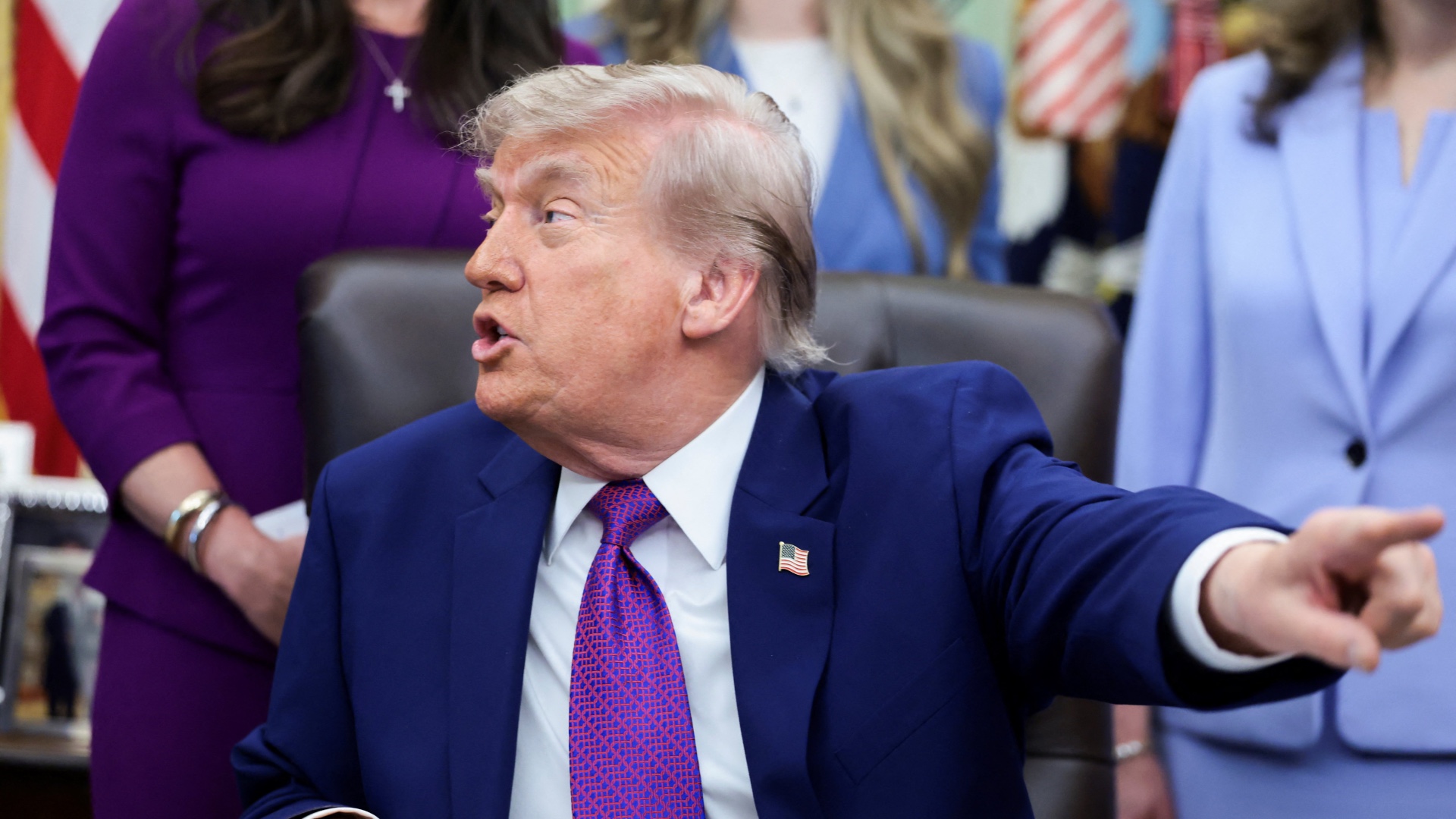
On a tense Monday at the White House, former U.S. President Donald Trump launched a sharp public rejection of a recently tabled peace proposal from Iran, dismissing the plan as “stupid garbage” and warning that the month-long ceasefire between U.S.-Israeli forces and Iran that has held since early April is barely clinging to survival. Despite the harsh rhetoric, however, Trump left a narrow door open to eventual diplomacy, noting that despite multiple rounds of on-again off-again negotiations, a final negotiated settlement remains within reach.
“I think it’s very possible. I’ve had a deal with them four or five times; they change their mind,” Trump told reporters, accusing Iran’s senior leadership of acting in bad faith and labeling the regime “very dishonorable.”
Details of Iran’s 14-point proposal, which was submitted to mediators on May 10, emerged earlier via Iran’s state-run IRNA news agency. The framework includes two non-negotiable core demands: financial compensation for the widespread physical and infrastructure damage inflicted during the 40-day U.S.-Israeli military campaign against the Islamic Republic, and formal international recognition of Iran’s full sovereignty over the strategically critical Strait of Hormuz, through which nearly 20% of global oil supplies pass daily.
Within hours of Trump’s public remarks, the U.S. Department of the Treasury followed up with a new round of punitive measures, blacklisting 12 individuals and business entities that agency officials accuse of facilitating illicit shipments of Iranian crude oil to Chinese markets. The sanctions package, branded “Operation Economic Fury” by the Treasury, targets a network of shipping and trading firms spread across multiple global hubs to cut off revenue streams the U.S. says fund Iranian military programs, regional proxy groups, and nuclear development.
“As Iran’s military desperately tries to regroup, [Operation] Economic Fury will continue to deprive the regime of funding for its weapons programs, terrorist proxies, and nuclear ambitions,” Treasury Secretary Scott Bessent said in an official statement. “Treasury will continue to cut the Iranian regime off from the financial networks it uses to carry out terrorist acts and to destabilize the global economy.”
The sanctioned entities include two Hong Kong-based firms, Blue Ocean Limited and Sanmu Limited, three Dubai-based operations: Ocean Allianz Shipping, Blanca Goods Wholesaler, and Universal Fortune Trading, as well as Atic Energy FZE based in Sharjah, United Arab Emirates, and Oman’s Zeus Logistics Group.
Iran quickly responded to the developments, with parliamentary speaker Mohammad Bagher Ghalibaf reaffirming that Iranian military forces are at full readiness to repel any new U.S. attack if hostilities resume. At the same time, Ghalibaf emphasized in a post on X that there is no path to peace outside of recognizing the core legitimate rights of the Iranian people that are laid out in the country’s 14-point proposal. Any attempt to bypass these demands will only lead to repeated failure, he warned, adding that delays from the U.S. side will only deepen the financial burden on American taxpayers.
Seeking to pre-empt public anxiety that his rejection of Iran’s peace plan could trigger a resumption of full-scale war and a subsequent spike in global energy prices, Trump told CBS News in a separate interview Monday that he is proposing to temporarily suspend the federal gasoline tax to offer financial relief to U.S. consumers. The current federal tax stands at 18 cents per gallon (roughly 4.7 cents per liter). As of Monday, the average U.S. retail price of gasoline hit $4.55 per gallon, with much higher rates recorded in major coastal and urban centers including New York City, Washington D.C., and Los Angeles.
The 40-day U.S.-Israeli military campaign against Iran, which launched on February 28, has already taken a heavy toll on Trump’s domestic political standing. By late April, his national approval rating plummeted to 34 percent, the lowest point of his current term. A new Reuters-Ipsos poll released Monday shows only a marginal uptick to 36 percent. The survey also reveals deep public dissatisfaction with Trump’s handling of the conflict: two-thirds of respondents said Trump has failed to clearly explain to the American public why the war was launched in the first place, and a matching share reported that the conflict has already negatively impacted their personal household finances.
This coverage is provided by Middle East Eye, an independent outlet offering in-depth reporting on the Middle East, North Africa, and surrounding regions.