分类: politics

  • Vietnamese party chief elected state president

    Vietnamese party chief elected state president

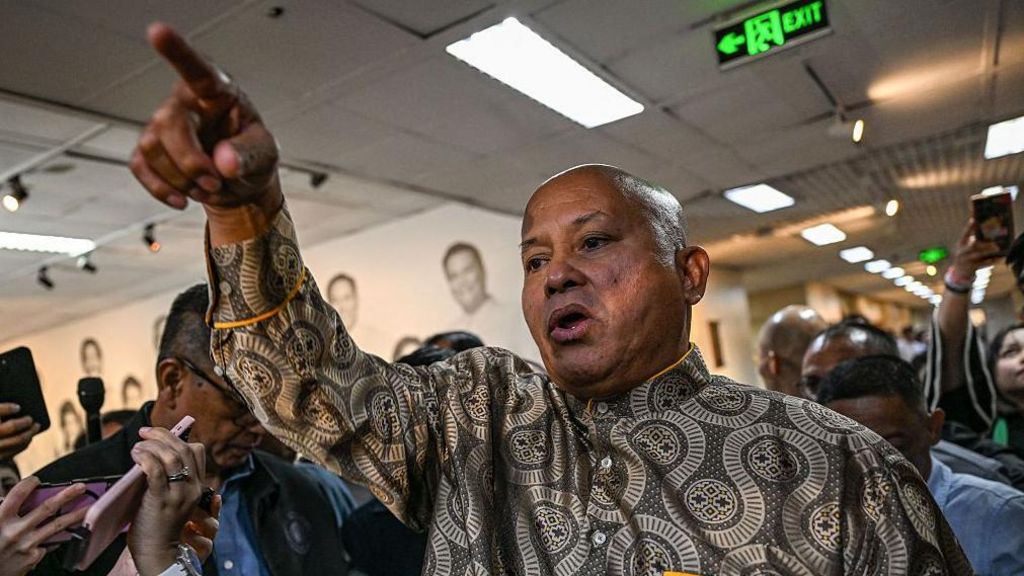
    In a historic unanimous vote held in Hanoi on Tuesday, April 7, 2026, Vietnam’s National Assembly has formally confirmed To Lam, the General Secretary of the Communist Party of Vietnam Central Committee, as the country’s state president for the 2026 to 2031 tenure. All 499 sitting deputies registered for the session were present, and every single legislator cast a vote in support of the election resolution confirming Lam’s appointment. This outcome marks a key step in consolidating Vietnam’s national leadership as the country enters a new five-year development cycle. To Lam is no stranger to the role of state president: he previously held the position from May to October 2024, before being elected CPVCC General Secretary in August of that same year. During the first plenary session of the 14th Central Committee held on January 23 this year, Lam was re-elected to the top party post for the 2026-2031 term. After his confirmation as head of state, To Lam delivered a policy-focused address to the National Assembly, laying out core priorities for his upcoming tenure. He emphasized that building a highly skilled domestic workforce is a critical prerequisite to meet the evolving development demands of Vietnam’s new era. Beyond workforce development, Lam also highlighted the need to continue refining national governing institutions and administrative frameworks, with the goal of building a modern, socially inclusive, and environmentally and economically sustainable Vietnamese society. To Lam also stressed that Vietnam will continue aligning its national development trajectory with evolving global trends in politics, economics, and human civilization, maintaining the country’s active and constructive role in the international community. The vote was held during an official session of Vietnam’s National Assembly in the capital Hanoi, with Lam taking the official oath of office during the proceedings. A photo from the swearing-in ceremony was distributed by international news agencies following the event.

  • New strikes in Tehran as deadline looms for Trump threat to infrastructure

    New strikes in Tehran as deadline looms for Trump threat to infrastructure

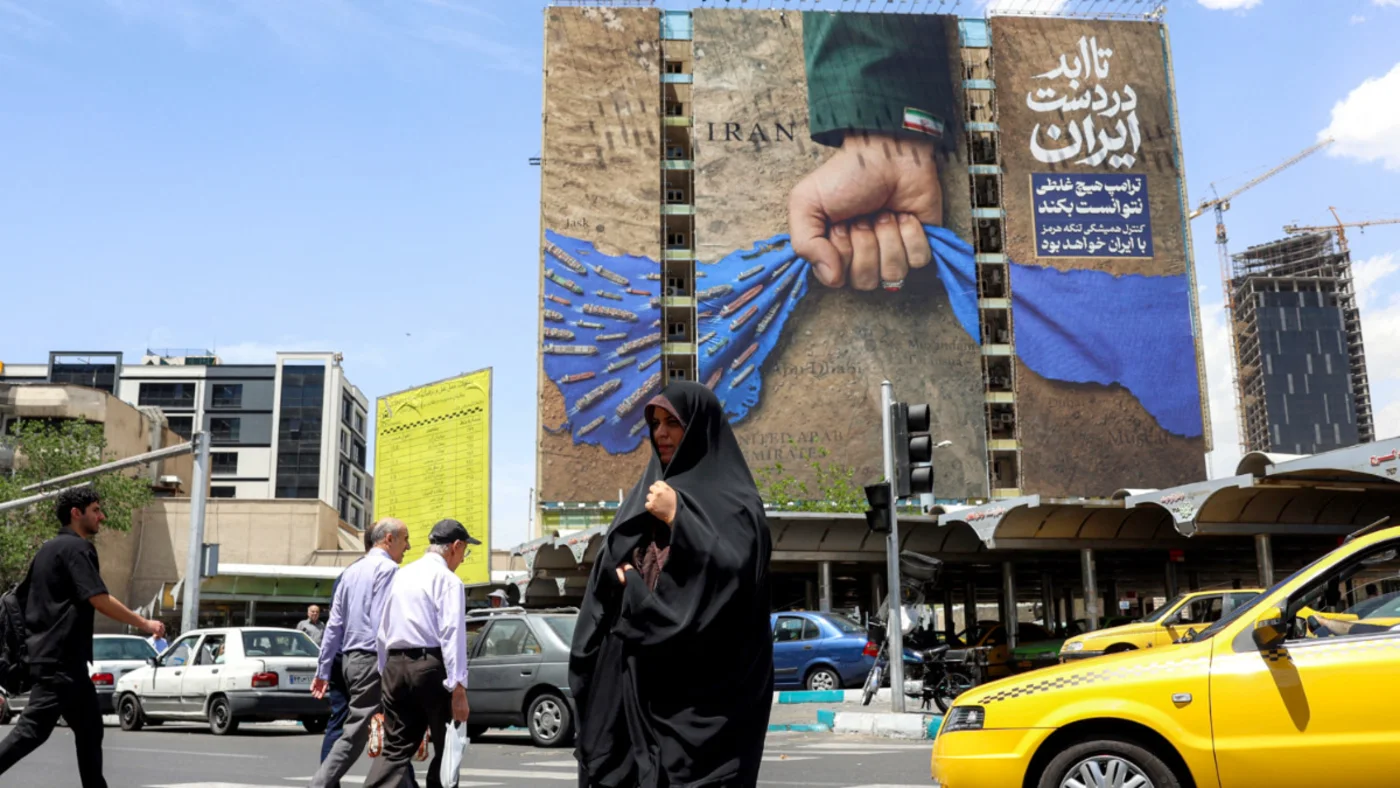
    As a high-stakes deadline set by former President Donald Trump hangs over the Middle East, fresh explosions have shaken Iran’s capital Tehran, escalating an already five-week-long conflict that threatens to upend global energy security and trigger wider regional instability. Trump has issued an explicit ultimatum to Iran: reopen the strategic Strait of Hormuz to unimpeded global maritime traffic by midnight GMT, or face the total destruction of the country’s critical civilian infrastructure.

    The US leader has doubled down on his threat, dismissing warnings that targeting public infrastructure could amount to war crimes. In blunt remarks at a recent press briefing, he warned that every major bridge across Iran would be destroyed, and every power plant would be rendered permanently inoperable if Tehran refused to comply with his demands. Iran’s military has already rejected Trump’s warning as arrogant, empty rhetoric that will not alter the course of its military operations, amid deep divisions within the Iranian public over how seriously to take the ultimatum.

    For many ordinary Iranians, the threat of further attack carries a devastating personal weight. “I’m terrified and so should everyone else in the country be,” Metanat, a 27-year-old university student who lost a classmate to a strike two weeks prior, told Agence France-Presse. While some Iranians dismiss Trump’s threats as empty posturing, she noted, “Death is not a joke.” Other Iranians have grown numb to repeated threats: 62-year-old pensioner Morteza Hamidi said he has watched Trump back down from past escalations, adding that while he no longer fears the rhetoric, he remains deeply gloomy about the country’s future after months of conflict.

    Diplomatic efforts to de-escalate the crisis, led by Pakistan acting as a neutral mediator between Washington and Tehran, have hit a critical sensitive stage, Iran’s ambassador to Islamabad confirmed Tuesday on social media platform X, though he offered no further details on the status of negotiations. A proposed 45-day ceasefire, brokered by a coalition of Pakistan, Egypt and Turkey, has been rejected by both sides. Trump initially called the plan significant, but ultimately rejected it as insufficient, while Iranian officials said the country rejects any temporary pause and insists on a permanent, definitive end to hostilities that protects its core national interests. Under the terms of the draft proposal, Iran would reopen the strait in exchange for the right to charge a $2 million transit fee per vessel, a portion of which would be shared with neighboring Oman, according to reporting from The New York Times.

    Military activity ramped up across the region on Tuesday. Israel Defense Forces confirmed it launched a new wave of airstrikes targeting what it describes as Iranian “terror regime infrastructure” across Tehran and other inland areas. Local Iranian media reported that the strikes completely destroyed Tehran’s historic Rafi-Nia synagogue, and that explosions were recorded across northern Tehran and the nearby city of Karaj. Following the Israeli strikes, Israel’s military confirmed it had detected multiple missile launches from Iran targeting Israeli territory, and that its air defense systems were actively intercepting incoming projectiles. Israel also issued an urgent advisory for Iranian civilians to avoid rail travel until 17:30 GMT amid the ongoing strikes.

    The threat of Iranian retaliation has forced precautionary disruptions across the Gulf region. Authorities temporarily closed the King Fahd Causeway, the key overland route connecting Saudi Arabia to Bahrain, as a security measure Tuesday. Air raid sirens sounded across Bahrain on Tuesday morning, while the United Arab Emirates confirmed its air defense systems engaged and intercepted incoming Iranian drones and missiles targeting the country. Overnight, a witness told AFP that an Iranian attack struck a major petrochemical complex in the Saudi industrial city of Jubail, just hours after similar energy infrastructure in Iran was hit in US-Israeli strikes.

    Iran has blocked all commercial traffic through the Strait of Hormuz, one of the world’s most critical energy chokepoints, since the outbreak of the war on February 28. The closure has already driven sharp spikes in global oil and natural gas prices, as roughly 20 percent of the world’s daily crude oil supplies transit through the waterway. Analysts warn that the conflict has already moved beyond a looming infrastructure war to an active one. “Infrastructure war is not looming. It is already underway,” wrote Sina Toossi, a senior fellow at the Washington-based Center for International Policy, in a Substack newsletter. Toossi noted that Iran’s demonstrated resilience throughout the conflict suggests Tehran will not back down on its core demand to maintain control over the strait, regardless of the military cost.

    On the multilateral diplomatic front, the United Nations Security Council is scheduled to vote on a weakened draft resolution addressing the closure of the strait on Tuesday, diplomatic sources told AFP. Earlier, more robust versions of the resolution were sidelined after key Council members threatened to veto the text, leaving negotiators to water down the language to secure a vote.

  • France’s Sarkozy says ‘innocent’ at trial over Libya funding

    France’s Sarkozy says ‘innocent’ at trial over Libya funding

    Paris, France – In a highly anticipated legal proceeding that has gripped French political discourse, former French President Nicolas Sarkozy took the stand at his appeals trial this Tuesday to publicly reiterate his innocence against long-standing allegations that he sought illegal campaign financing from the regime of former Libyan leader Muammar Gaddafi during his successful 2007 presidential bid.

    The accusations against Sarkozy center on claims that his team arranged a secret deal with Gaddafi: illicit financial backing for his 2007 election campaign in exchange for a pledge to rehabilitate the Libyan government’s international reputation, which had been shattered after the country was linked to two deadly plane bombings in the late 1980s. The 1988 bombing of Pan Am Flight 103 over Lockerbie, Scotland, claimed 259 lives on board plus 11 people on the ground, while the 1989 bombing of UTA Flight 772 over Niger killed 170 passengers and crew.

    Last September, a lower-level Paris court found Sarkozy, who held the French presidency from 2007 to 2012, guilty of criminal conspiracy related to the alleged funding scheme. While the court did not convict him of actually receiving or using the illicit Libyan funds for his campaign, it handed down a three-year prison sentence to be served out of a total five-year term. As a result, the 69-year-old right-wing politician became the first former French president in modern history to be incarcerated, serving 20 days in prison before being granted release on bail to await his appeal.

    In his opening remarks from the witness stand this week, with his wife, former model and singer Carla Bruni, seated in the courtroom gallery, Sarkozy addressed the gravity of the case directly. Acknowledging the deep grief of relatives of the bombing victims, who testified about their decades of suffering during proceedings last week, Sarkozy stated that only truth can respond to such profound loss. “But you cannot repair suffering with an injustice: I am innocent,” he emphasized, rejecting all prosecution claims against him.

    Prosecutors have maintained that Sarkozy’s close aides, acting with his full knowledge and approval, negotiated the financing agreement with Gaddafi’s regime. Sarkozy has consistently denied any wrongdoing throughout the entirety of the investigation and legal process.

    The current appeal trial is scheduled to continue through June 3, with a final verdict expected to be delivered by the appellate court in the autumn of this year. If the appeals court upholds his conviction and increases the penalty, Sarkozy could face up to 10 years in prison. This case is just one of multiple high-profile legal troubles Sarkozy has faced since leaving office in 2012; he has already been definitively convicted in two separate unrelated corruption and influence-peddling cases.

  • Thailand’s new coalition govt sworn in

    Thailand’s new coalition govt sworn in

    BANGKOK – A new chapter in Thailand’s national governance officially began this week, as the country’s freshly formed coalition government, headed by Prime Minister Anutin Charnvirakul, completed its formal swearing-in ceremony on Monday evening. The inauguration followed a royal endorsement granted to the new administration one week prior, clearing the final ceremonial hurdle for the incoming leadership.

    The 35-member cabinet took part in time-honored constitutional traditions, gathering at Bangkok’s Dusit Palace to recite the official oath of allegiance during an audience with King Maha Vajiralongkorn. In addition to Prime Minister Anutin, all seven deputy prime ministers, alongside full cabinet ministers and their respective deputies, were in attendance for the historic ceremony.

    Shortly after the formal inauguration concluded at the royal palace, Anutin traveled to Thailand’s government house to lead the first extraordinary cabinet meeting of the new administration. In the coming days, the prime minister is scheduled to deliver his administration’s official policy statement to the national parliament. This address marks the last procedural requirement before the new government can fully take up its governing duties and begin implementing its policy agenda.

    Anutin, the 59-year-old leader of the Bhumjaithai Party, secured a second term as prime minister of the Southeast Asian nation after winning a parliamentary confidence vote held in March. His victory cleared the way for negotiations to form the ruling coalition that has now officially taken office.

  • Iranians threaten to close another strait over Trump war

    Iranians threaten to close another strait over Trump war

    Escalating geopolitical tensions between the United States and Iran have reached a new critical juncture, as top Iranian officials have issued a stark warning that they could disrupt global energy supplies by closing a second key international oil chokepoint if the Trump administration follows through on threats to target Iranian civilian infrastructure. The warning comes after former U.S. President Donald Trump openly threatened to bomb Iranian power plants, a move that international legal experts widely characterize as a violation of the laws of war and a potential war crime.

    Ali Akbar Velayati, a former Iranian foreign minister and currently a senior advisor to Iran’s Supreme Leader Ayatollah Ali Khamenei, announced the potential retaliatory measure in a social media post published over the weekend. Velayati threatened that Iran could move to close the Strait of Bab al-Mandeb, a strategically critical waterway located off the coast of Yemen, where the Iran-aligned Houthi movement holds effective control over the adjacent coastline. “If the White House dares to repeat its foolish mistakes,” Velayati cautioned, “it will soon realize that the flow of global energy and trade can be disrupted with a single move.”

    As Al Jazeera highlighted in an analysis published on Monday, the Houthi movement already closed the Bab al-Mandeb Strait for a period during Israel’s ongoing military campaign in Gaza, demonstrating the feasibility of such a disruption. If Iran moves to close the Strait of Hormuz — the world’s most important oil chokepoint through which roughly a fifth of global oil supplies pass — at the same time that the Bab al-Mandeb is shut down, the combined disruption could send global energy prices soaring to uncharted highs, the outlet reported.

    “The strait is a vital route through which Saudi Arabia sends its oil to Asia,” Al Jazeera explained. “If Bab al-Mandeb and the Strait of Hormuz were both shut, that would block 25% … of the world’s oil and gas supply.”

    Energy markets have already seen steep price increases following the launch of new U.S. military hostilities against Iran more than a month ago, a conflict that critics have repeatedly deemed illegal under international law. As of Monday’s trading session, Brent crude oil futures were holding at $110 per barrel, while average U.S. retail gasoline prices climbed to $4.12 per gallon, according to data from motoring group AAA.

    Last week, Democratic members of the U.S. Congress’ Joint Economic Committee (JEC) released a formal analysis estimating that American consumers are now paying 35% more to refuel their vehicles than they did just one month prior, with the entire increase directly tied to the escalation of conflict with Iran.

    Rep. Don Beyer, a Virginia Democrat and member of the JEC, highlighted the committee’s findings in a Monday social media post, blaming the Trump administration’s unplanned, unauthorized military escalation for the financial strain hitting American households. “Americans are getting hit with major price shocks because President Trump decided to wage an illegal war against Iran with no plan or strategy,” Beyer said.

    Sen. Maggie Hassan, a New Hampshire Democrat and the ranking member of the JEC, told local outlet WMUR that the conflict has exacerbated pre-existing financial pressures that were already pushing working- and middle-class American families to the breaking point. “Families are already being pushed to the brink,” Hassan said. “That was true before the war started, by the cost of everything from groceries to rent to healthcare insurance premiums and prescriptions and even more. But now they’re being forced to pay more at the pump.”

  • India’s top court hears challenges to ruling on women’s entry into temple

    India’s top court hears challenges to ruling on women’s entry into temple

    Decades of gender-based exclusion at one of Hinduism’s most revered pilgrimage sites will once again be put under constitutional scrutiny this month, as India’s Supreme Court prepares to hear a high-stakes review of a 2018 ruling that opened the iconic Sabarimala Temple to women of menstruating age.

    Located in the southern Indian state of Kerala, the Sabarimala shrine dedicated to Lord Ayyappa has long enforced a ban on all women between 10 and 50 years of age, a restriction rooted in traditional Hindu beliefs that frame menstruation as a state of ritual impurity. For generations, only prepubescent girls and post-menopausal women have been permitted to enter the temple, which draws millions of male devotees from across India annually.

    That centuries-old practice was upended in 2018, when a five-judge Supreme Court bench delivered a landmark 3-2 verdict striking down the entry ban as discriminatory and unconstitutional. The majority ruled that the constitutional right to practice religion is guaranteed equally to all people regardless of gender, rejecting arguments that long-standing tradition justified the exclusion. The ruling’s lone female justice, Indu Malhotra, who has since retired, issued a notable dissent, arguing that courts should avoid interfering with deeply held religious sentiments, and that secular concepts of rationality have no place in adjudicating religious customs.

    The 2018 verdict sparked widespread, sometimes violent protests across Kerala, with conservative groups mobilizing to block women attempting to access the temple; many women who tried to enter were turned away, and some were physically assaulted. In response, hundreds of thousands of supporters of gender equality in religious spaces held counter-protests, while dozens of petitions for judicial review of the 2018 ruling were filed with the Supreme Court by groups seeking to reinstate the ban.

    The Supreme Court accepted the review petitions in 2019, first convening a seven-judge bench that quickly expanded the scope of the case to include a range of parallel gender and religious freedom disputes across India’s different faith communities. A planned 2020 hearing before a nine-judge constitutional bench was derailed by the onset of the COVID-19 pandemic, leaving the case in limbo for years.

    That changed this past weekend, when Chief Justice of India Surya Kant announced the reconstitution of the nine-judge constitutional bench to finally hear the petitions. The bench’s composition has drawn note for its deliberate diversity: it includes Justice BV Nagarathna, currently the only female judge on the Supreme Court and the justice in line to become India’s first female Chief Justice in 2025, with judges drawn from a cross-section of India’s religious, caste and regional communities. Legal analysts widely view this inclusive selection as an effort to build broader public legitimacy for a verdict that is certain to touch on deeply contested cultural and religious issues.

    Beyond the future of Sabarimala, the bench’s ruling will set a binding precedent for a slate of other pressing questions around gender, religion and constitutional rights across India. These include challenges to entry bans for women in Parsi fire temples and Muslim mosques, the legal authority of religious institutions to excommunicate community members, and the long-debated legality of female genital mutilation practiced within the small Dawoodi Bohra Muslim community.

    In the lead-up to the opening of hearings, the Travancore Devaswom Board, the government body that manages the Sabarimala temple, has urged the court to avoid intervening in faith-based traditional practices. India’s federal government has also formally signaled its support for the review petitions seeking to overturn the 2018 ruling. The hearings are scheduled to conclude on April 22, with a ruling expected in the coming months that will shape the contours of gender equality and religious freedom in India for decades to come.

    Over the past decade, women’s rights activists across India have increasingly challenged centuries-old gender-based restrictions at religious sites, arguing that such exclusions violate the fundamental equal rights guaranteed to all citizens under India’s constitution. The outcome of the Sabarimala review is widely expected to either advance or set back that movement for equal access to religious spaces across the country.

  • Trump threatens Iran could be ‘taken out’ in one night

    Trump threatens Iran could be ‘taken out’ in one night

    On April 6, 2026, U.S. President Donald Trump delivered a stark public warning to Iran during a White House press briefing in Washington D.C., standing alongside newly appointed Defense Secretary Pete Hegseth. The president set a firm 8 p.m. Eastern Time deadline on Tuesday for Iran to reach a negotiated agreement and reopen the strategically critical Strait of Hormuz, threatening that the entire Iranian nation could be “taken out” in a single night of military action — a night that could fall as soon as the deadline passes.

    “The entire country could be taken out in one night, and that night might be tomorrow night,” Trump told reporters gathered in the James S. Brady Press Briefing Room. Despite the escalated threats, the president acknowledged that indirect negotiations through intermediaries have made progress, framing Iran as an “active, willing participant” in talks aimed at resolving the ongoing standoff.

    “I can’t talk about ceasefire, but I can tell you that we have an active, willing participant on the other side. They would like to be able to make a deal. I can’t say any more than that,” Trump added, confirming that the Tuesday evening ultimatum remains final. Beyond broad threats of full-scale elimination of Iranian state capacity, the president revealed his administration has a detailed operational plan to demolish critical infrastructure across Iran, targeting key bridges and power plants by midnight Tuesday if no deal is reached. “I mean complete demolition by 12 o’clock. And it will happen over a period of four hours if we wanted to. We don’t want that to happen,” he claimed, emphasizing that military action remains a preventable outcome.

    Defense Secretary Hegseth backed up the president’s threats, confirming that U.S. military forces have already ramped up offensive operations. He told reporters that Monday’s airstrikes would be the largest single wave of attacks launched since the U.S. military campaign against Iran began on February 28, with even heavier strikes scheduled for Tuesday ahead of the deadline. “Per the president’s direction, today will be the largest volume of strikes since Day One of this operation. Tomorrow, even more than today. And then Iran has a choice,” Hegseth stated.

    The escalating exchange has ratcheted up fears of a full-scale regional conflict in the Middle East, centered on control of the Strait of Hormuz — a chokepoint through which roughly 20% of global oil supplies pass, making its closure a major threat to global energy markets and international economic stability.

  • JD Vance travels to Hungary days before election, hoping to boost Orbán’s campaign

    JD Vance travels to Hungary days before election, hoping to boost Orbán’s campaign

    On Tuesday, U.S. Vice President JD Vance touched down in Budapest, Hungary, capping a sequence of high-profile displays of backing from the Trump administration for incumbent Prime Minister Viktor Orbán, a long-time conservative ally who is locked in a tight race that threatens to end his 16 consecutive years in power.

    Orbán, who has led Hungary since 2010, is vying for a fifth straight term at the helm of his nationalist-populist Fidesz party. Ahead of the April 12 general election, most independent opinion surveys put Fidesz more than 10 points behind among committed voters, trailing the center-right Tisza party led by challenger Péter Magyar. This race stands as the toughest electoral test Orbán has faced in two decades, with many political analysts forecasting a possible end to his grip on national governance.

    For years, critics have levied accusations against Orbán that he has systematically consolidated control over Hungary’s state institutions, restricted independent press freedom, and allowed systemic political corruption to take root — all claims the prime minister has repeatedly and categorically denied. Despite this controversy, Orbán has emerged as a defining figurehead for the global far-right movement, drawing widespread admiration from conservative populist factions across the Western world.

    President Donald Trump has repeatedly thrown his full support behind Orbán’s re-election bid, and ranks of the MAGA movement have widely lauded the Hungarian leader’s hardline stances on immigration, rollbacks of LGBTQ+ protections, and consolidation of control over domestic media and academic institutions.

    Trailing in polls, Orbán has turned to appearances with high-profile international supporters to shore up his campaign’s momentum, and Vance’s two-day visit marks the most public demonstration of the Trump administration’s all-in commitment to securing an Orbán victory this weekend. During the trip, Vance is scheduled to hold an official bilateral meeting with Orbán before making an unprecedented public appearance at one of the prime minister’s campaign rallies.

    This direct involvement in another nation’s electoral campaign marks a break from longstanding diplomatic norms, where most foreign leaders avoid openly campaigning for domestic political candidates in other countries. The irony of Vance’s visit has not gone unnoticed: Orbán has frequently lashed out at any comment on Hungary’s election from European Union leaders, framing even mild expressions of support for his challengers as an unacceptable violation of Hungarian sovereignty and foreign meddling.

    Vance’s stop in Budapest is far from the first show of U.S. support for Orbán from the second Trump administration. Hungary has long stood at odds with the vast majority of the European Union, refusing to provide military or financial aid to Ukraine following Russia’s full-scale 2022 invasion, and continuing to import large volumes of Russian energy despite EU sanctions and efforts to diversify away from Moscow-supplied fuel. Last November, following a White House meeting between Orbán and Trump, Hungary secured a rare exemption from U.S. sanctions on Russian oil and gas. In February, U.S. Secretary of State Marco Rubio traveled to Budapest, where he openly praised Orbán and highlighted the close ties between the prime minister and Trump, telling Orbán that “President Trump is deeply committed to your success because your success is our success.”

    Last month, Orbán hosted the Hungarian iteration of the Conservative Political Action Conference (CPAC), drawing dozens of far-right allies from across Europe and beyond, alongside a gathering of the Patriots for Europe, the third-largest parliamentary grouping in the European Parliament. Trump delivered a pre-recorded video address to the conference, reiterating his “complete and total endorsement” of Orbán and calling him a “fantastic guy.”

    The Trump administration’s enthusiastic backing of Orbán aligns with its broader strategy of building close ties with far-right populist parties across Europe, a relationship that has been reciprocated by conservative nationalist leaders from Spain, France, Germany and the Netherlands. Still, Trump’s unconventional foreign policy approach has created tensions in many European relationships in recent months, with disputes over Greenland, Venezuela and Iran straining bilateral ties with multiple U.S. allies on the continent. Orbán, however, has remained one of Trump’s most unwavering international supporters, even echoing the U.S. president’s false claims that the 2020 U.S. presidential election was stolen through widespread voter fraud. Shortly before Trump’s second inauguration, Orbán told state-run Hungarian radio that Democrats “took the presidency away from Donald Trump through fraud.”

  • Taiwan opposition leader makes first China visit since 2016

    Taiwan opposition leader makes first China visit since 2016

    In a landmark move marking the first visit by an incumbent leader of Taiwan’s main opposition party to mainland China in a decade, Kuomintang (KMT) chairperson Cheng Li-wun landed in mainland China on Monday. Cheng, who assumed the KMT’s top leadership post last year, confirmed she happily accepted an invitation from Chinese President Xi Jinping for the six-day trip, framing her visit as an effort to build a “bridge for peace” across the Taiwan Strait.

    Cross-strait communications have been partially frozen by Beijing since 2016, when Tsai Ing-wen of the pro-independence leaning Democratic Progressive Party took office as Taiwan’s president. Beijing cut the formal exchanges after Tsai refused to accept the 1992 Consensus, which endorses the one-China principle.

    During her visit, Cheng is scheduled to travel across three major Chinese cities: Shanghai, Nanjing, and Beijing, with a planned meeting with President Xi expected in the final stretch of the trip. While the KMT has historically held warmer cross-strait ties with the Chinese Communist Party compared to the ruling Democratic Progressive Party, analysts note that Cheng’s eager approach to this visit marks a clear shift from the more cautious stance adopted by her recent KMT predecessors.

    The timing of the visit comes as growing skepticism toward the United States has spread among sectors of Taiwan’s public, a shift largely driven by inconsistent signals from former president Donald Trump on U.S. policy toward Taiwan and ongoing uncertainty stemming from the Middle East conflict, according to William Yang, a Northeast Asia analyst at the International Crisis Group, a non-profit global think tank.

    Yang explained that Cheng is positioning this visit as an opportunity to demonstrate her ability as a political leader to sustain constructive cross-strait exchanges and work toward de-escalating long-running tensions between the two sides. For decades, Beijing has maintained its position that self-governed Taiwan is an inalienable part of Chinese territory, stating it will eventually reunify the island with the mainland and not ruling out the use of military force to achieve this goal. Meanwhile, a large share of Taiwan’s population identifies as a distinct sovereign nation.

    While the United States officially recognizes Beijing as the sole legitimate government of China rather than Taipei, it has remained Taiwan’s largest provider of military arms for decades. In recent years, Trump has publicly stated that Taiwan should fully compensate the U.S. for any security protection it receives against mainland China. Just one week before Cheng’s arrival in mainland China, a bipartisan delegation of U.S. lawmakers visited Taipei to push Taiwan’s legislature to pass a proposed $40 billion special defense budget, which is currently stalled in the opposition-controlled legislative body.

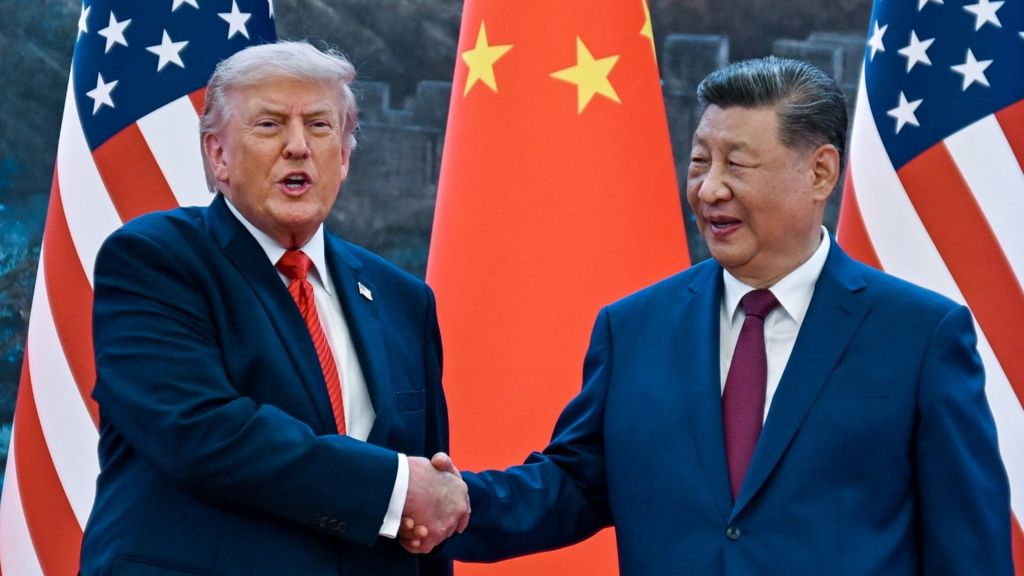
    The invitation from Xi to Cheng also comes roughly one month before Xi is set to hold a scheduled meeting with Trump during Trump’s visit to Beijing on May 14 and 15. According to Wen-ti Sung, a political scientist at Australian National University’s Taiwan Centre, Beijing’s move to hold a cordial dialogue with Taiwan’s main opposition party is a strategic step to weaken arguments in favor of expanding U.S.-Taiwan defense cooperation.

    This strategic positioning, Sung added, will allow Beijing to prioritize negotiating trade and economic agreements with the U.S. during Trump’s visit, rather than being forced to center the meeting on cross-strait disputes.

    For Cheng and the KMT, the visit carries clear domestic political benefits ahead of Taiwan’s upcoming local elections scheduled for later this year. Though Cheng launched her political career as a pro-independence advocate, she has worked in recent years to build a public reputation as a cross-strait peacemaker. Yang notes that Cheng is attempting to navigate a careful middle path between Washington and Beijing, strengthening her own domestic leadership standing while highlighting that current Taiwan President Lai Ching-te has failed to restart official engagement with mainland China.

    However, Cheng’s conciliatory stance toward Beijing has faced significant backlash within Taiwan, according to Chong Ja-Ian, a political scientist at the National University of Singapore. Chong explained that many Taiwanese voters view Cheng as an unprincipled opportunist who prioritizes her own political survival and advancement over core issues, a public perception that is reflected in opinion polls showing low public confidence in her leadership.

    “That also means that she is willing to wheel and deal,” Chong added. “Who this benefits, and how much, are the bigger questions that remain unanswered.”

  • Trump boasts about ‘subterfuge’ in operation to rescue US airman in Iran

    Trump boasts about ‘subterfuge’ in operation to rescue US airman in Iran

    On a Monday appearance at the White House, former US President Donald Trump delivered a detailed account of a high-stakes cross-border rescue operation that recovered two downed US airmen from Iranian territory earlier that weekend, framing the mission as a remarkable success for US military capabilities. The incident unfolded after an American F-15E Strike Eagle was shot down over Iranian soil on Friday, triggering an urgent race between US special operations teams and Iranian security forces to locate the jet’s two crew members: the pilot and a weapons systems officer. While the pilot was evacuated by US forces the same day the jet crashed, the second injured airman remained at large for nearly 48 hours before being recovered by US troops on Sunday.

    US officials had initially released almost no verifiable details about the crash location or the exact parameters of the rescue mission, leaving open source analysts and international observers to piece together information from fragmented reports. Speaking publicly for the first time after the operation concluded, Trump compared the challenge of locating the wounded airman to “finding a needle in a haystack,” emphasizing the increased difficulty of the mission given the officer’s life-threatening bleeding and vulnerable position deep in enemy territory. “That’s a long time when you’re in tough shape and when you’re bleeding,” Trump told reporters, praising the airman’s resilience in evading capture for two full days.

    Conflicting reports of the crash and rescue locations quickly emerged, with public observations placing US search and refueling aircraft over Iran’s southwestern Kohgiluyeh and Boyer-Ahmad province over the weekend, a sighting that prompted Iranian authorities to mobilize thousands of regular soldiers, Basij paramilitary fighters and civilian volunteers to launch a massive manhunt in the region. However, reporting from Reuters placed the actual F-15E crash site in central Iran’s Isfahan province, hundreds of kilometers away from the area Iranian forces were searching. Trump confirmed this discrepancy was no accident: it was a deliberate deception tactic designed to distract Iranian security forces from the true recovery zone.

    “ We were bringing them all over, and a lot of it was subterfuge. We wanted them to think he was in a different location because they had a vast military force out there. Thousands of people were looking, so we were scattered all over like we were right on top of them,” Trump explained. The geographic mismatch drew immediate scrutiny from open source intelligence analysts, and some unsubstantiated speculation emerged that the rescue mission served as cover for a secret separate operation to seize Iran’s stockpile of highly enriched uranium stored at a nuclear site located in Isfahan, a facility that was the target of a US strike in June.

    Iranian officials quickly amplified these claims, though they offered no concrete evidence to support the allegation of an undisclosed secondary mission. “The possibility that this was a deception operation to steal enriched uranium should not be ignored at all,” stated Iranian foreign ministry spokesman Esmaeil Baqaei. Speaking to Middle East Eye on condition of anonymity, two former US defense and intelligence officials pushed back against these claims, noting that while an unusually large contingent of US military personnel was deployed to the mission, the additional manpower was intended to secure the landing zone and provide backup firepower for the extraction team, not for a separate nuclear operation.

    Competing narratives have also emerged around the losses suffered during the operation. Iranian officials have framed the entire incident as a decisive defeat for the US, pointing to the downing of the F-15E as well as the reported loss of additional US assets including C-130 transport planes, H-60 Black Hawk helicopters and at least one MQ-9 Reaper surveillance drone. Trump acknowledged that US forces were forced to destroy two aircraft that became stuck in soft sand during the extraction, but downplayed the loss as a planned part of the mission’s contingency protocol.

    “We had a contingency plan which was unbelievable where lighter, faster aircraft came in and they took them [US soldiers] out. We blew up the old planes… because we had equipment on the planes,” Trump said, referencing sensitive anti-aircraft systems mounted on the abandoned aircraft that the US refused to leave in Iranian hands. Trump also confirmed that three US helicopters were used in the rescue operation, and defense experts who have examined photographs of debris from the US landing zone have identified wreckage matching the frame of an MH-6M Little Bird, a small, highly maneuverable helicopter typically used for special operations insertions and extractions that was likely used to retrieve the downed airman and transfer him to the main extraction landing zone.