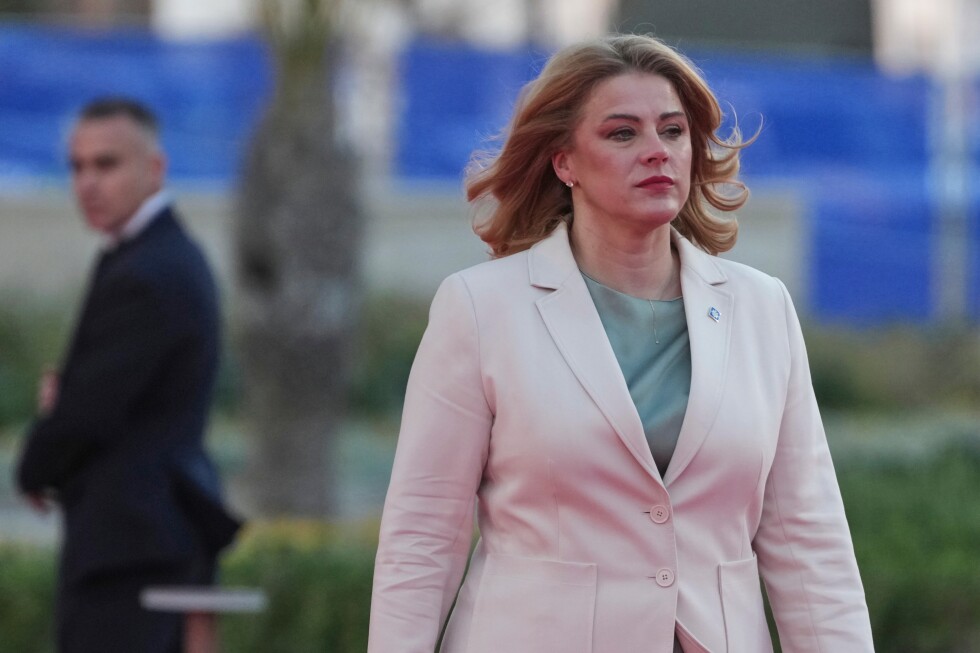
RIGA, Latvia – A dramatic political shift unfolded in the Baltic state of Latvia this week, as center-right Prime Minister Evika Silina tendered her resignation Thursday after her left-leaning coalition partner, the Progressives Party, withdrew its parliamentary support, stripping the ruling government of its working majority.
The collapse of the three-party ruling coalition traces back to growing tensions over a series of high-profile incidents involving stray drones, which Latvian officials have linked to Ukraine’s ongoing conflict with Russia. The crisis first boiled over last week, when Defense Minister Andris Spruds, a Progressives Party member appointed through the coalition agreement, was forced to step down after losing confidence from both the prime minister and the Latvian public.
Explaining her decision to remove Spruds over the weekend, Silina stated that the repeated drone incursions had exposed a critical failure at the top of the defense sector. “The drones incidents clearly demonstrated that the political leadership of the defense sector has failed to fulfill its promise of safe skies over our country,” she said Sunday.
The most notable of the incursions occurred on May 7, when two drones presumed to be Ukrainian crossed the Latvian border. One of the unmanned aerial vehicles crashed at a domestic fuel storage facility, triggering widespread public alarm over border security gaps. Spruds had argued that the drones, originally targeting Russian positions, strayed into Latvian territory by accident. But critics pushed back on that assessment, pointing out that this incursion was just one of several similar events across the three Baltic states that have occurred since March. Every incident, critics argue, has laid bare critical weaknesses in Latvia’s ability to detect and respond to cross-border military threats, eroding public trust in the government’s national security commitments.
Long before the drone crisis, the tripartite coalition – which also included a agrarian political party – had already been fraying for months, strained by disagreements across a range of policy and political issues. Silina’s exit from office also comes just five months ahead of Latvia’s scheduled general elections this October, leaving a period of political uncertainty as the country moves toward a national vote.
In a public post on X Thursday announcing her resignation, Silina emphasized her commitment to national interests, saying, “My priority has always been, and remains, the well-being and security of Latvia’s people. Parties and coalitions change, but Latvia endures. And my responsibility to society comes above all else.”
Latvian President Edgars Rinkevics, who holds the constitutional authority to appoint a new prime minister, will convene talks with representatives of all parliamentary political parties on Friday to chart a path forward for forming a new government.
In a recent comment on the drone incidents, Ukrainian Foreign Minister Andrii Sybiha offered a counter-explanation for the incursions. Speaking Sunday, Sybiha claimed that the stray drones were the result of Russian electronic warfare operations intentionally diverting Ukrainian drones away from their intended targets inside Russia. To help prevent similar future events, Sybiha offered Ukraine’s full technical and intelligence support to Baltic states and Finland to shore up their airspace security.
Related cross-border security issues have been rising in the region in recent months: Latvia’s security service recently reported that two individuals had set fire to train infrastructure connected to Russian logistics, and a prominent Russian academic specializing in North Korea studies was expelled from the country following a short detention period.