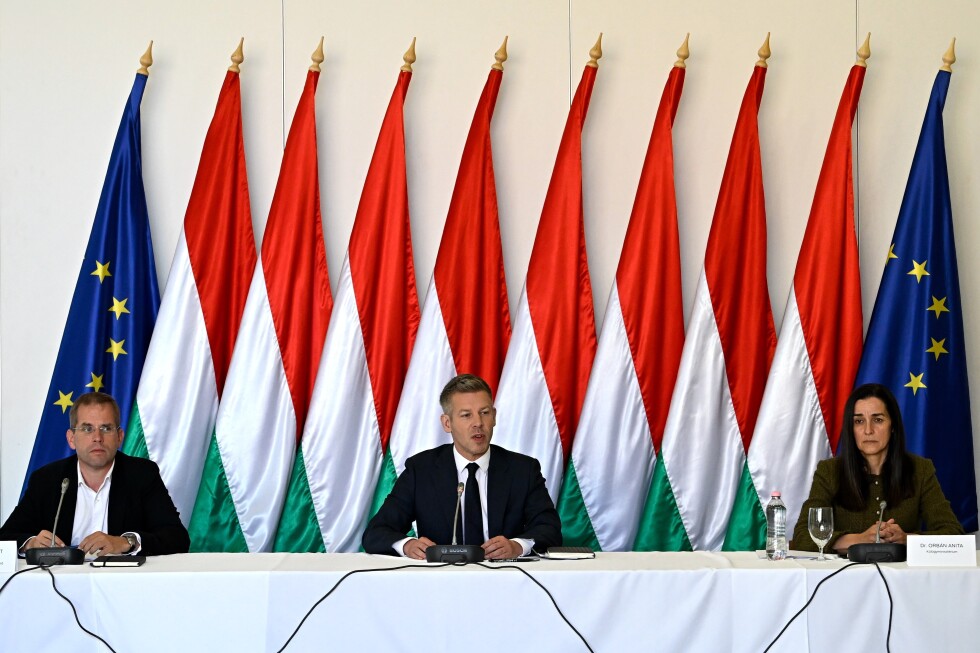
BUDAPEST — In a move that signals a sharp break from the pro-Kremlin policies of Hungary’s previous administration, new Prime Minister Péter Magyar has summoned Russia’s top envoy to Budapest to answer for a massive Russian drone assault that struck western Ukraine’s Transcarpathia region, just across Hungary’s northern border.
The Wednesday attack was part of one of the longest and largest Russian air barrages of the war to date. Ukrainian President Volodymyr Zelenskyy confirmed that Moscow launched more than 800 drones across 20 Ukrainian regions, hitting Transcarpathia directly. The multi-hour assault left at least six civilians dead and dozens more injured, among them multiple children.
Transcarpathia hosts a large ethnic Hungarian community, making the strike a direct matter of national concern for Budapest. Russian Ambassador Evgeny Stanislavov was scheduled to meet with Hungarian Foreign Minister Anita Orbán at the foreign ministry at midday Thursday, where top Hungarian officials will deliver a formal rebuke of the attack.
“The Hungarian government strongly condemns the Russian attack on Transcarpathia,” Magyar announced publicly during a Wednesday press briefing in southern Hungary’s Ópusztaszer, confirming the diplomatic summons. “She will tell him the same and ask for information on when Russia and Vladimir Putin plan to finally end this bloody war that began more than four years ago,” the prime minister added.
As of Thursday morning, the Kremlin has not issued any public response to the summons.
The diplomatic action is widely viewed as a defining turning point in Hungarian foreign policy. For 16 years, former Prime Minister Viktor Orbán maintained unusually close ties to Moscow, even after Russia’s 2022 full-scale invasion of Ukraine, defied widespread EU and NATO consensus to isolate the Kremlin. That era ended in April, when Magyar defeated Orbán in a historic general election, ending the former leader’s long hold on power. Since taking office, Magyar has pledged to roll back Orbán’s legacy, prioritizing rooting out systemic corruption and aligning Hungary more closely with EU and NATO collective security goals.
Zelenskyy welcomed Hungary’s new stance, calling the summons a powerful, important signal from Budapest. “Moscow has once again shown itself to be a common threat not only to Ukraine, but also to neighbouring countries and Europe as a whole,” Zelenskyy wrote on social media, thanking Magyar for his firm stance.
The diplomatic summons comes amid already heightened tensions between Moscow and Budapest. In March, ahead of the election that unseated Orbán, Ambassador Stanislavov published a public Facebook open letter to Magyar, denying Russian interference in Hungarian politics to support Orbán, a long-time Kremlin ally. “It’s really not worth scaring Hungarians with imaginary Russian threats,” Stanislavov wrote at the time, adding that the Russian embassy’s only goals were maintaining normal bilateral relations, pursuing mutually beneficial cooperation where possible, and protecting the interests of Russian and Hungarian citizens.
This report includes contributions from correspondent McNeil in Brussels.