Nearly 18 months after a cross-border incursion that ended in forced removal by Israeli military forces, Ori Plasse still recalls the rush of what he calls a ‘homecoming’ in southern Lebanon. For the 51-year-old contract farmworker and veteran West Bank settlement activist, that short, unauthorized trip only reinforced a decades-long ideological belief: the entire region between the Nile and Euphrates rivers, including modern-day southern Lebanon, was divinely promised to the Jewish people, and Israeli civilians must claim it.
Plasse is one of the growing ranks of Uri Tzafon – Hebrew for ‘Awake, North Wind’ – a far-right fringe settler movement co-founded in 2024 by Anna Sloutskin, a 37-year-old research biologist who lives in an Israeli settlement in the occupied West Bank. Sloutskin launched the group in honor of her brother, Israel Sokol, an Israeli soldier killed in Gaza earlier that year, who she says harbored a lifelong dream of settling in Lebanon’s green, snow-capped northern landscapes.
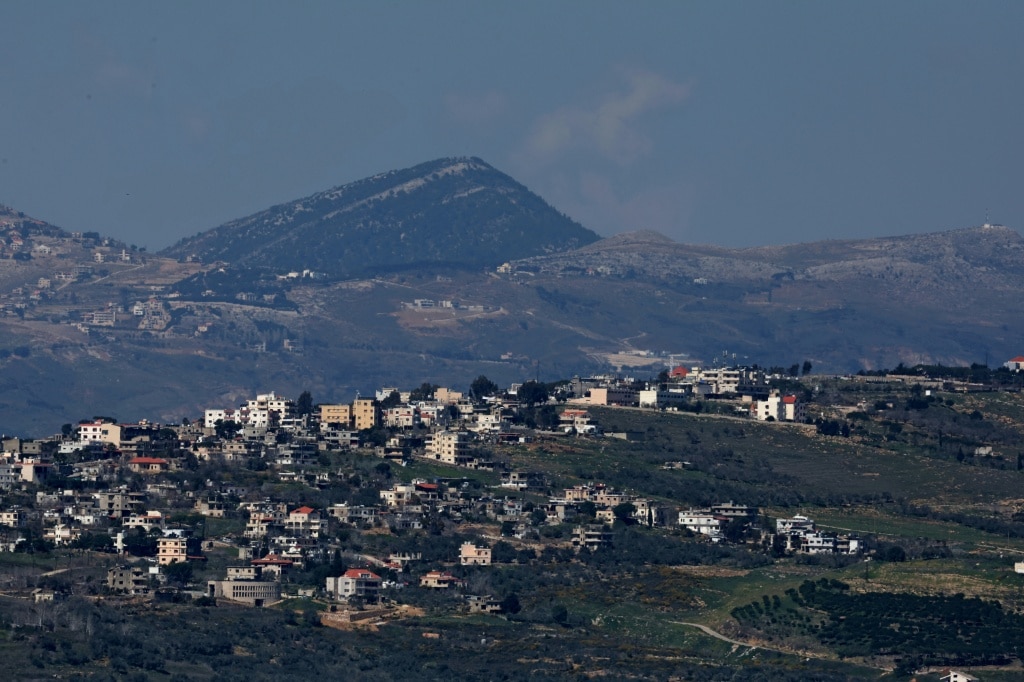
Today, the movement counts dozens of member families and has built a robust online presence, with more than 600 followers on its WhatsApp channel and over 900 on Telegram, where it shares invites to strategy meetings and maps marking what it claims are ancient Jewish settlements across southern Lebanon. Its core goal is unambiguous: push the Israeli border north to the Litani River, which sits roughly 30 kilometers inside current Lebanese territory, bar the return of Lebanese civilians displaced by recent conflict, and formally annex the area as part of the State of Israel.
“The IDF goes in, conquers, and clears. And afterwards we must not withdraw, but settle,” Sloutskin explained from a hilltop lookout dedicated to her brother near the Karnei Shomron settlement in the northern West Bank. For Sloutskin, establishing permanent Israeli civilian settlement in southern Lebanon is not just an ideological quest – it is a core national security imperative that would break the cycle of cross-border attacks from the Iran-backed Hezbollah group.
The ongoing conflict between Israel and Hezbollah has already displaced more than one million Lebanese people from the south. After Israeli forces invaded parts of southern Lebanon earlier this year, a ceasefire took hold in mid-April, and bilateral negotiations are currently underway in Washington to resolve the border dispute. The Israeli military has not ruled out keeping troops in the area long-term, but has given no timeline for a potential withdrawal.
While the Israeli government has not publicly endorsed the movement’s plan to settle southern Lebanon, it has already greenlit massive expansion of illegal Israeli settlements in the occupied West Bank, where far-right cabinet ministers have openly called for full annexation of the territory. More than 500,000 Israelis currently live in settlements across the West Bank (excluding East Jerusalem) that are deemed illegal under international law, alongside roughly three million Palestinian residents.
Sloutskin claims the movement already has quiet backing from some sitting Israeli lawmakers and even cabinet ministers. Last month, the group posted a photo of a meeting between Sloutskin and Environmental Protection Minister Idit Silman, with a caption confirming the territorial takeover agenda was raised during the discussion. Plasse added that the movement plans to court more political support ahead of Israel’s general elections scheduled for later this year, though he acknowledged that most politicians have so far offered only vague, non-committal responses.
The movement has already attempted small-scale, direct action to advance its goals. A year and a half ago, Plasse and a small group of activists crossed into Lebanon through an open border gate to plant trees and pitch a tent, hoping to jumpstart a new settlement outpost – a tactic that echoes the rapid growth of informal outposts across the occupied West Bank. He was quickly escorted out by Israeli soldiers, but he calls the experience transformative. In February 2025, the group organized another tree-planting event along the border, posting photos of smiling children beside Israeli flags and protest placards. Two participants crossed the border fence during the event, prompting a public condemnation from the Israeli military, which called the incident a criminal act that endangered both civilians and service members.
At his home in northern Israel’s Moshav Sde Yaakov, Plasse keeps a shipping container stocked with supplies for future settlement construction: mattresses, sleeping bags, plastic sheeting, and a vintage book of maps showing Israel’s claimed borders stretching from Egypt to Iraq. He also proudly displays a certificate of appreciation for Gaza settlement activism, signed by high-profile far-right Israeli officials including National Security Minister Itamar Ben Gvir and Knesset Deputy Speaker Limor Son Har-Melech.
Though settling southern Lebanon remains a fringe position within Israeli society today, both Sloutskin and Plasse say they are confident their agenda will gradually move into the mainstream. In their view, popular pressure from grassroots activists is what will ultimately drive territorial change. “Ultimately, it has to be the people who want it,” Sloutskin said. “The people must lead.”