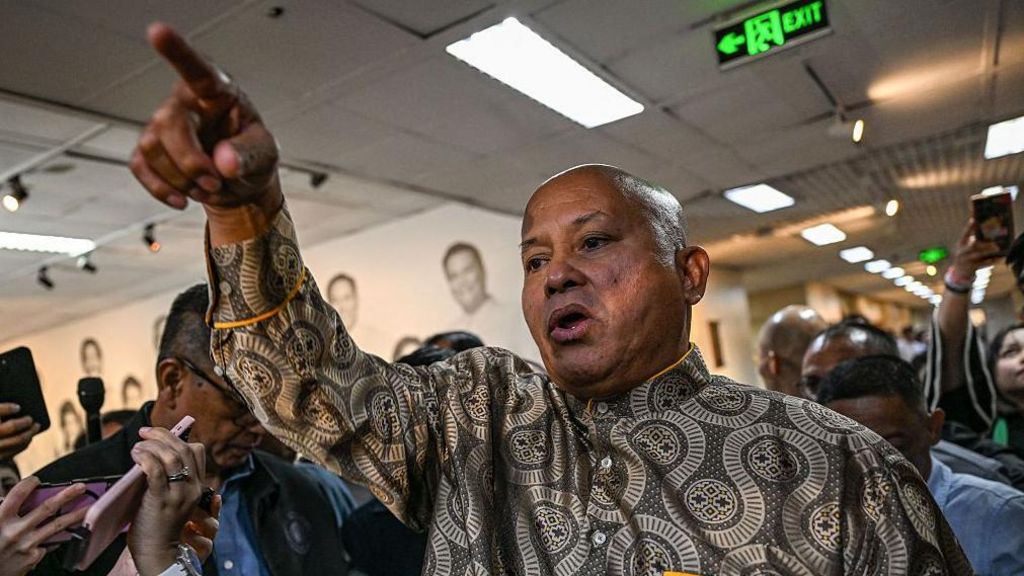
Manila, the Philippines — A chaotic eruption of gunfire inside the Philippine Senate this week has plunged the country’s already fractured political landscape into open crisis, capping a weeks-long standoff over an International Criminal Court (ICC) arrest warrant for a close ally of former president Rodrigo Duterte and exposing the deepening rift between the country’s two most powerful political dynasties.
The crisis centers on Senator Ronald “Bato” dela Rosa, one of Duterte’s most loyal long-time associates. As chief of the Philippine National Police from 2016 to 2018, dela Rosa served as the public face of Duterte’s brutal nationwide war on drugs, a campaign that left thousands of suspected drug users and small-scale dealers dead. Human rights organizations have documented hundreds of cases of extrajudicial summary executions during the crackdown, leading the ICC to open a crimes against humanity investigation into the campaign.
The ICC unsealed its arrest warrant for dela Rosa on Monday this week, coinciding with the senator’s first appearance on the Senate floor after months of unexplained absence from public life. The development came months after Duterte himself was taken into custody and transferred to The Hague in March 2025 to face his own ICC charges connected to the drug war. Though Duterte withdrew the Philippines from the ICC during his presidency in 2019, the tribunal has maintained it retains jurisdiction over crimes committed before the withdrawal, including thousands of drug war deaths that dated back to Duterte’s time as mayor of Davao City.
Within days of the warrant being made public, dela Rosa sought protective refuge within the Senate, filing a petition with the Philippine Supreme Court to block local authorities from executing the ICC’s order. On Wednesday, the high court rejected his request for an immediate temporary restraining order, giving President Ferdinand “Bongbong” Marcos Jr.’s administration 72 hours to submit its official response to the petition.
Hours after the Supreme Court’s ruling, dela Rosa took to Facebook Live to issue a public appeal, warning supporters he had received intelligence that authorities were en route to arrest him. “I am calling for your help: let us not have another Filipino brought to The Hague like President Duterte,” he told viewers. Roughly 60 minutes later, multiple gunshots rang out on the Senate’s second floor, triggering panic across the complex.
Chaotic scenes unfolded live on national television: journalists and legislative staff scrambled for cover, the entire Senate building was placed under immediate lockdown, and heavily armed security personnel in flak jackets cordoned off the entire premises. Initial conflicting accounts emerged over the source of the gunfire: Senate Secretary Mark Llandro Mendoza told local reporters that agents from the National Bureau of Investigation (NBI) had attempted to enter the building and fired shots while retreating. But NBI director denied the claim, stating no agents had been deployed to the Senate that day.
Interior Secretary Jonvic Remulla later entered the building to meet with legislative leaders, and emerged alongside newly installed Senate President Alan Peter Cayetano to confirm no injuries were reported. The pair confirmed shots had been fired but declined to name potential perpetrators, noting an official investigation was still ongoing. By the following morning, police announced they had detained at least one person in connection with the shooting. President Marcos addressed the nation in a YouTube video shortly after the incident, calling for calm and promising a full probe. “We will get to the bottom of this… Was this encounter part of destabilisation? We will need to know,” he said.
The gunfire incident is the most visible escalation of a rapidly worsening political power struggle between the Marcos and Duterte political clans, an alliance that collapsed spectacularly after the two groups won the 2022 national election in a landslide. Just this week, the House of Representatives — where Marcos allies hold a majority — voted to impeach Vice President Sara Duterte, Rodrigo Duterte’s daughter and Marcos’ top political rival, over allegations of corruption and plots to assassinate the president. The articles of impeachment were formally transmitted to the Senate on the same day the shooting occurred, and the chamber will now act as an impeachment court with the power to remove Sara Duterte from office and bar her from running for president in the 2028 election.
Dela Rosa’s surprise return to the Senate this week also upended the chamber’s power balance: his presence helped secure enough votes to install Cayetano — a former Duterte foreign minister and vice presidential running mate — as the new Senate president. The 24-member Senate is now controlled by a majority bloc composed of dela Rosa and other Duterte allies, leaving Marcos-aligned senators in the minority. The overlapping crises of the ICC arrest standoff, impeachment trial, and now the Senate shooting have brought long-simmering tensions between the two dynasties to a head, leaving the Philippines facing one of its most unstable political periods in recent history.