分类: politics

  • The Iran war doesn’t immediately jeopardize Taiwan

    The Iran war doesn’t immediately jeopardize Taiwan

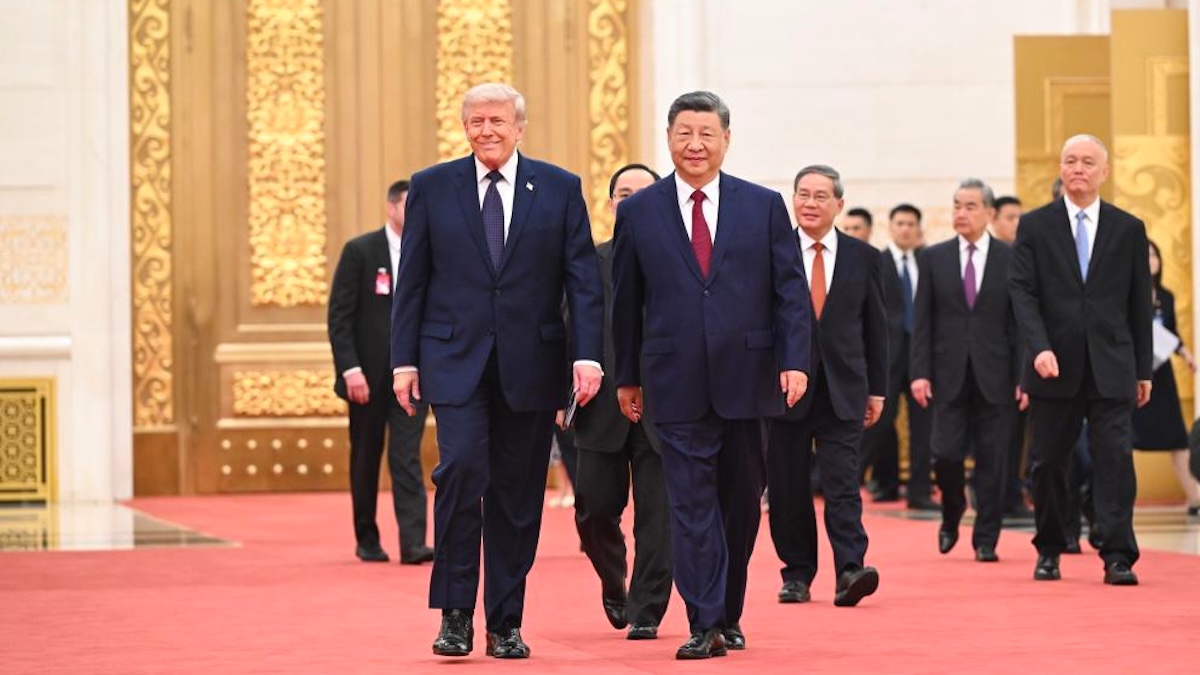
    The global ripple effects of the United States and Israel’s joint military campaign against Iran have extended across continents, reaching deep into Asian geopolitics – and nowhere is this indirect influence more consequential than for Taiwan’s security amid ongoing cross-Strait tensions with mainland China. This analysis explores two core, interconnected questions that sit at the center of regional security calculations: first, how the Iran conflict alters perceptions of U.S. willingness to intervene militarily to defend Taiwan, and second, how it shifts Beijing’s calculus of whether to launch an invasion of the island.

    Critics of the U.S. campaign against Iran have raised a host of objections: they argue the operation was unnecessarily aggressive, that Washington skipped over ongoing diplomatic negotiations with Tehran without cause, that Iran posed no immediate threat justifying a large-scale attack, that U.S. leaders failed to consult allies before moving forward, and that they underestimated Iran’s capacity to sustain retaliatory action even after heavy damage to its conventional military forces. But for Taiwan, the central concern runs in the opposite direction: whether the current U.S. administration is bold enough to commit American troops to the island’s defense, rather than stepping back from a cross-Strait conflict.

    For years, many foreign policy observers have framed former President Donald Trump’s approach to global affairs as leaning toward isolationism. Prominent commentators, including Temple University Tokyo campus Professor Robert Dujarric, former U.S. National Security Advisor John Bolton, and The Guardian foreign affairs analyst Simon Tinsdall, have all argued that Trump prioritizes avoiding a major war in Asia over blocking China from annexing Taiwan.

    It is true that China would be a far more formidable opponent than Iran, so willingness to engage in large-scale operations in the Middle East does not automatically translate to willingness to fight a great-power conflict in the Indo-Pacific. Even so, the Iran campaign demonstrates that this U.S. administration is willing to rule out the option of deploying large conventional forces in distant conflicts outside of the Western Hemisphere – a key shift that Beijing cannot ignore.

    Beijing’s longstanding strategic approach to territorial expansion follows a framework of cautious aggression: it first probes for weakness, only advancing further if it encounters minimal resistance. This aligns with the classic strategic guidance often attributed to early Soviet leaders Josef Stalin and Vladimir Lenin: “If you hit mush, keep going; if you hit steel, pull back.” For a Chinese leadership that relies heavily on gray zone tactics to advance its interests without open war, the pattern of bold actions taken by the Trump administration – from the targeted strike that killed Quds Force commander Qasem Soleimani during his first term, to the political intervention in Venezuela, the tightening of Cuba’s oil blockade, the large-scale bombardment of Iran, and even public discussions of seizing Greenland – comes as a striking departure from previous expectations of U.S. restraint.

    Given this track record of unilateral, forceful action, it is now effectively impossible for Chinese planners to confidently conclude the U.S. would refuse to militarily intervene to defend Taiwan.

    This uncertainty around U.S. intervention leads to the second critical question: how the Iran conflict changes the likelihood that China will choose to launch an invasion of Taiwan.

    Some analysts have argued that Washington’s adoption of a “might makes right” approach, visible in its actions against Iran and Venezuela, gives Beijing a green light to pursue its own territorial goals by force against Taiwan. But this argument misses key realities of Chinese strategic planning. Beijing does not tie its policy decisions to a normative standard set by the United States. The Chinese government has long maintained it will use force against Taiwan if its leadership deems it necessary, a threat formalized in the 2005 Anti-Succession Law.

    For years, Chinese state propaganda has emphasized the narrative that the U.S. is a declining “paper tiger,” pointing to the 2021 withdrawal from Afghanistan as proof of American weakness. But the U.S. military’s smooth, successful execution of the complex large-scale operation in Iran, thousands of miles from the American homeland, offers a stark counterpoint. Meanwhile, Chinese-supplied military equipment – particularly air defense systems – performed poorly in both Venezuela and Iran, offering Chinese leadership an unvarnished reminder that the U.S. armed forces remain the most capable in the world.

    While Chinese officials and state media publicly condemned the U.S. campaign as illegal and brutal, many independent and state-aligned Chinese analysts openly acknowledged American operational competence. Prominent Chinese foreign affairs scholar Zheng Yongnian concluded the U.S. “still [ranks] number one” in global military power. Analyst Niu Tanqin noted he “cannot but admire” the U.S. military’s performance, and leading international relations scholar Shi Yinhong confirmed that the tactical success of American forces “strongly impressed the leaders [in Beijing].” This clear demonstration of coordinated, advanced military capability carries tangible deterrent weight for Beijing’s Taiwan planning.

    At the same time, Chinese observers have also noted that the Iran campaign has diverted U.S. military focus and depleted stockpiles of key weapons that would be used to counter Chinese expansion in the Indo-Pacific. U.S. officials have insisted the conflict has not delayed pre-planned weapons deliveries to Taiwan that the island has already purchased, noting that munitions used in Iran are drawn from existing U.S. military stockpiles rather than from production lines allocated for foreign sales. Even so, the U.S. has temporarily reallocated significant military capabilities from Asia to the Middle East for the Iran campaign, including Patriot interceptors, THAAD anti-missile systems, the USS Abraham Lincoln carrier strike group, two additional guided-missile destroyers, and two Marine expeditionary units.

    U.S. forces have also expended large stockpiles of high-value precision weapons, most notably Tomahawk cruise missiles – a system that would play a critical role in any Indo-Pacific conflict thanks to its long range, powerful warhead, and newly developed anti-ship variant. To date, the U.S. has fired between 850 and 1,000 Tomahawks in the Iran campaign, and replacing the entire stockpile will take two to three years at a cost of roughly $3.5 million per missile. This has led some analysts to speculate that the diversion of forces and depletion of munitions creates a new window of opportunity for China to attack Taiwan, arguing that U.S. military stockpiles were already stretched thin before the Iran conflict, and China could now count on U.S. forces running out of critical munitions far more quickly in a cross-Strait war.

    This window-of-opportunity argument holds weight only if one accepts the premise that Chinese leader Xi Jinping has already decided to forcibly annex Taiwan as soon as the odds of success appear favorable. But that premise fails to account for the massive risks and downsides that a full-scale invasion would pose for China’s leadership.

    In any invasion scenario, China would have to plan for a coordinated defensive response from Taiwanese, U.S., and Japanese forces. Even as the U.S. draws down its precision munition stockpiles, Taiwan is on track to assemble what it calls “the world’s highest density of anti-ship missiles” by the end of 2026. Japan has also begun mass production of its new Type 25 anti-ship cruise missile – a system with range covering the entire Taiwan Strait – and began deploying the weapon in March 2026.

    A Chinese victory is far from guaranteed, and even a limited victory would likely be pyrrhic. The U.S. Navy would almost certainly interdict China’s seaborne energy imports, and a full-scale war in the Taiwan Strait would halt commercial shipping along most of China’s eastern coast for weeks or months. The resulting economic turmoil could trigger widespread social and political unrest within mainland China, and Beijing would face a generations-long challenge to pacify and govern a hostile Taiwanese population.

    Beyond these immediate military and economic risks, Beijing has no pressing need to resort to force against Taiwan in the near term. Chinese strategic thinking holds that U.S. comprehensive power is in gradual decline, while China continues to advance in industrial and technological capacity. Over time, this shift improves Beijing’s relative position, increasing the likelihood that Washington will eventually choose to step back from competition for strategic leadership in East Asia on its own.

    Domestically, Xi is still in the midst of a sweeping purge of roughly half of China’s senior military commanders, with a disproportionate share of those removed coming from the People’s Liberation Army Rocket Force – the service branch that would play a central role in any invasion of Taiwan. This ongoing leadership reshuffle creates significant internal uncertainty that discourages any high-stakes military gambit in the near term.

    Politically, Beijing also has reason to wait for a more favorable outcome through peaceful means. Taiwan’s main opposition Kuomintang (KMT) accepts Beijing’s core position that Taiwan is part of a single China, and Beijing holds out hope that the KMT will regain control of Taiwan’s presidency in the 2028 election. Recent political developments have bolstered these hopes: KMT Chairwoman Cheng Li-wun’s high-profile visit to mainland China in April 2025 underscored the party’s willingness to engage with Beijing, and the KMT holds a legislative majority in coalition with the Taiwan People’s Party. Incumbent President Lai Ching-te of the ruling Democratic Progressive Party (DPP) has struggled with low approval ratings – his ratings were negative for most of 2025 and hover around 50 percent in 2026 – and the KMT successfully defeated a 2025 DPP recall campaign that attempted to remove 31 KMT legislators, with all 31 retaining their seats. While it remains far from certain that the KMT will win the presidency in 2028 and implement a more Beijing-friendly cross-Strait policy, current trends give Beijing ample reason to wait and watch rather than rush to war.

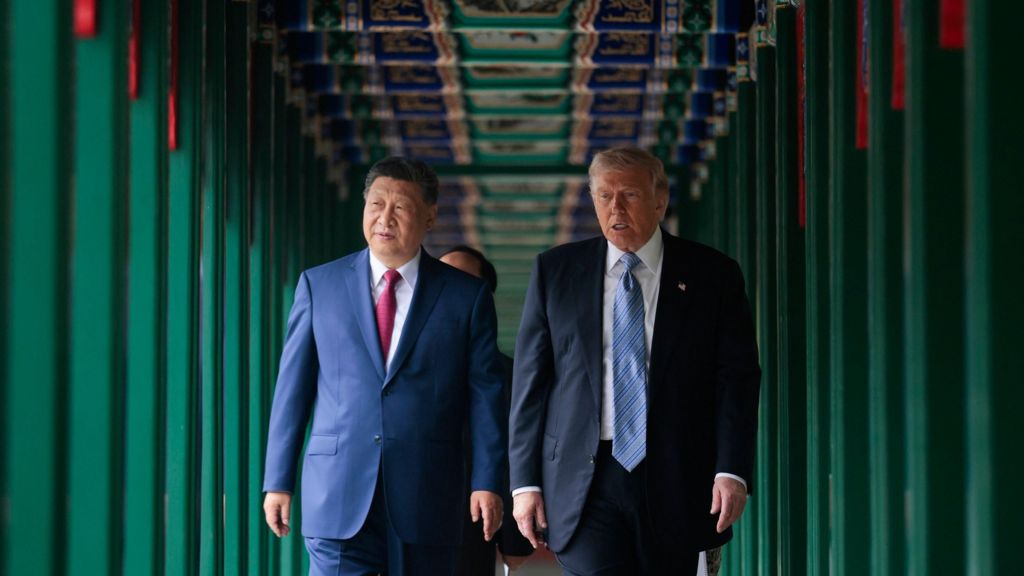
    Diplomatically, Beijing also has incentives to avoid conflict this year. Trump and Xi are scheduled to hold two formal summits in 2026, and Beijing is eager to stabilize bilateral economic relations, which are currently under a temporary truce after a years-long trade war that saw the U.S. impose steep tariffs on Chinese imports and China threaten to restrict rare earth exports to the U.S. A sudden invasion of Taiwan would derail this economic stabilization effort. Additionally, Beijing will have the opportunity during the summits to push for limited U.S. concessions on Washington’s support for Taipei; the U.S. has already agreed to delay the announcement of a major new arms sale to Taiwan until after Trump’s first May 2026 meeting with Xi, creating an opening for Beijing to secure a limited political win without resorting to force.

    Finally, the Iran conflict has drawn new attention to underrecognized vulnerabilities in Taiwan’s energy security: the island relies on seaborne imports for more than 95 percent of its oil and liquid natural gas (LNG), with LNG accounting for roughly half of Taiwan’s electricity generation. Taiwan’s strategic LNG reserve only covers 8 to 11 days of demand, and while its 100-day oil reserve is more robust, the island remains highly exposed to any disruption of maritime supply routes. Addressing these energy vulnerabilities, along with hardening Taiwan’s western coastline with mobile, survivable anti-ship and anti-air missile batteries, should be a top priority for Taipei’s security planners.

    Even with these new challenges highlighted by the Iran conflict, the campaign does not create immediate additional risk of an invasion for Taiwan. Despite the depletion of U.S. precision munitions and the diversion of some regional forces to the Middle East, Beijing faces a host of compelling domestic, political, and strategic incentives to hold off from launching a high-risk invasion attempt for the foreseeable future.

  • How Pakistan helped secure a fragile ceasefire between the US and Iran

    How Pakistan helped secure a fragile ceasefire between the US and Iran

    Weeks of quiet behind-the-scenes diplomacy led by Pakistan has culminated in a breakthrough agreement for a two-week ceasefire between long-standing adversaries Iran and the United States, a deal that narrowly came together after last-minute escalations nearly derailed the entire process.

    In the hours leading up to the official ceasefire announcement, confidential insights shared with the BBC by an anonymous Pakistani source close to the negotiations highlighted the high-stakes, fast-moving nature of the talks. The source, who was not part of the core negotiating team, confirmed that Pakistan had maintained its role as the primary intermediary between Tehran and Washington, with discussions advancing “at pace” through a tightly controlled, very small circle of Pakistani negotiators. The mood throughout the final stretch, the source added, remained “sombre and serious but still hopeful” that a halt to hostilities could be reached, with only hours left to lock in the framework.

    Pakistan’s long-standing ties to both sides made it a natural broker for the talks: it shares a lengthy border and decades of what it describes as a “brotherly” relationship with Iran, while it maintains close security cooperation with the United States. Former U.S. President Donald Trump has publicly praised Pakistan’s top military commander, Field Marshall Asim Munir, calling him his “favorite” Field Marshall and noting that Munir has unique insight into Iranian politics.

    The path to the ceasefire was far from smooth, however. Just two days before the agreement, unplanned escalations – an Israeli strike on Iranian targets followed by an Iranian attack on Saudi Arabia – threw months of diplomatic work into doubt. Speaking to Pakistan’s parliament on Tuesday, Foreign Minister Ishaq Dar acknowledged that until the attacks, negotiators had been cautiously optimistic about progress. “Until yesterday we were very optimistic that things are moving in a positive direction,” Dar said, adding that Pakistan “was still trying to manage things as much as possible” to salvage the deal.

    Munir, Pakistan’s top military leader, issued unusually blunt criticism of Iran’s move, calling the attack on Saudi Arabia a deliberate setback that “spoils sincere efforts to resolve the conflict through peaceful means.” The rebuke marked one of the strongest public statements Pakistan has made against Iran since the broader conflict began. International analysts noted that the criticism was likely intentional, designed to ramp up external pressure on Tehran to compromise, particularly given Pakistan’s existing mutual defense pact with Saudi Arabia – a pact that has not yet been activated despite repeated attacks on Saudi territory throughout the conflict.

    In the hours after midnight Pakistan local time, Prime Minister Shehbaz Sharif took to social media platform X to outline the emerging framework, writing that “diplomatic efforts… are progressing steadily, strongly and powerfully with the potential to lead to substantive results in near future.” Sharif called on Trump to extend the existing U.S. deadline for a negotiated outcome by two weeks, and requested that Iran keep the critical Strait of Hormuz open to commercial shipping for the duration of the ceasefire.

    Shortly after Sharif’s post, Iran’s ambassador to Pakistan Reza Amiri Moghadam confirmed the diplomatic progress in his own X post, writing at around 3 a.m. local time that negotiations had moved “a step forward from critical, sensitive stage.” Just two hours later, Sharif made the official announcement: a two-week ceasefire had been formally agreed by both sides. As part of the next step, he invited representatives from Iran and the U.S. to travel to Islamabad on April 10 for direct talks aimed at reaching a permanent, conclusive peace agreement.

    Even with the ceasefire in place, however, observers and insiders remain cautious about long-term prospects. The anonymous Pakistani source emphasized to the BBC that negotiators are “still being very circumspect” given the “continued fragility” of the situation. Decades of mutual hostility have left deep-rooted distrust between Iran and the U.S., with both sides holding strongly entrenched positions on core issues. While Pakistan has succeeded in bringing the two adversaries to the negotiating table in Islamabad, the question of what substantive agreements they can reach to lock in long-term peace remains far from answered.

  • Middle East war: ceasefire reactions

    Middle East war: ceasefire reactions

    In a development that has shifted the trajectory of the recent Middle East conflict, the United States and Iran have reached an agreement on a 14-day ceasefire, with both countries putting forward claims of victory following weeks of heightened tensions. As news of the truce spread, leaders and diplomatic bodies across the world have shared varied yet broadly welcoming responses to the breakthrough.

    The United Nations, one of the first global bodies to weigh in, issued a cautiously optimistic statement through Secretary-General António Guterres. While Guterres welcomed the announcement of the temporary ceasefire, his spokesperson emphasized that the truce is only a first step. The statement called on all conflict parties to strictly adhere to the ceasefire terms and uphold their obligations under international humanitarian law, framing the truce as a critical foundation to build toward a lasting, comprehensive peace across the entire Middle East region.

    Australian Prime Minister Anthony Albanese’s office echoed the UN’s cautious tone, highlighting the steep costs of a prolonged conflict. The statement warned that the longer hostilities continue, the more severe the damage to the global economy will be, paired with mounting, irreversible human suffering. Australia reaffirmed its commitment to seeing the ceasefire fully enforced, joined other nations in calling for full compliance with international humanitarian law, and prioritized the protection of innocent civilian lives caught in the crossfire.

    New Zealand’s foreign ministry also struck a balance between encouragement and realism. A spokesperson for Foreign Minister Winston Peters noted that the ceasefire announcement itself is an encouraging development, but stressed that substantial work lies ahead to lock in long-term stability. The spokesperson confirmed that New Zealand will continue to stand behind all diplomatic and peacebuilding efforts aimed at securing a permanent, durable end to the ongoing conflict in the coming weeks and months.

    For Japan, a nation heavily dependent on the Strait of Hormuz for its energy supplies, the key priority is tangible action to de-escalate tensions. As the world’s fourth-largest economy and fifth-largest crude oil importer, Japan relied on the strategic waterway for roughly 70% of its oil imports before the outbreak of the current conflict. Government spokesperson Minoru Kihara emphasized that the most critical next step is the implementation of concrete measures to ease tensions, specifically including guarantees for safe, unimpeded navigation through the Strait of Hormuz. Japan expressed hope that permanent peace agreements would be finalized through diplomatic channels in the near term.

    Iraq’s foreign ministry, which has a direct stake in regional stability, welcomed the ceasefire in an official post on X. The ministry called on Washington and Tehran to leverage this positive opening as a jumping-off point for sustained, serious dialogue that addresses the core roots of their ongoing disputes, rather than treating the truce as a final resolution. By focusing on root-cause issues, the ministry argued, the two sides can gradually rebuild mutual trust and lay the groundwork for long-term stability.

    Pakistani Prime Minister Shehbaz Sharif offered an unexpectedly broad framing of the ceasefire in his own X post, claiming the truce between the US, Iran and their respective allies covers all conflict zones, including neighboring Lebanon, and went into effect immediately. However, Israel quickly issued a correction to Sharif’s announcement, confirming that the two-week temporary ceasefire does not extend to hostilities in Lebanese territory. Even as leaders gather to welcome the ceasefire, this last-minute discrepancy underscores the lingering uncertainty and complexity of forging a unified peace deal across the region’s multiple interconnected conflicts.

  • Trump to AFP: Iran deal ‘total and complete victory’ for US

    Trump to AFP: Iran deal ‘total and complete victory’ for US

    Just hours after a last-minute ceasefire agreement between the United States and Iran was announced, U.S. President Donald Trump sat down for an exclusive brief telephone interview with Agence France-Presse (AFP), where he framed the two-week truce as an unqualified win for Washington. The deal came together barely 60 minutes before Trump’s self-imposed deadline for devastating military strikes against Iran was set to expire, pulling the two nations back from the brink of full-scale conflict after more than a month of joint destructive attacks by the U.S. and Israel.

    When asked directly whether he could claim victory following the truce, Trump responded firmly to AFP: “Total and complete victory. 100 percent. No question about it.” The upbeat assessment from the Republican leader comes even as Iranian officials have publicly framed the ceasefire as a victory for their own side, and lingering public uncertainty remains over the exact terms both nations have committed to. One major point of ambiguity centers on the future of the Strait of Hormuz, a critical global chokepoint for oil shipments that has seen major disruption during the conflict. Despite the open questions, Trump asserted that the agreement lays solid groundwork for a more durable long-term settlement.

    “We have a 15 point transaction, of which most of those things have been agreed on. We’ll see what happens. We’ll see if it gets there,” Trump told reporters. He had previously outlined on his Truth Social platform that Iran had submitted a 10-point proposal that he deemed “workable.” When pressed on whether he would revive his earlier threats to destroy Iran’s civilian infrastructure — including power plants and critical bridges — if the ceasefire collapses, Trump declined to confirm or deny the position, saying only “You’re going to have to see.”

    Another core unresolved issue is the fate of Iran’s existing stockpile of enriched uranium, a key flashpoint that Trump has previously cited as a central motivation for the conflict, with the White House aiming to ensure Iran can never develop a nuclear weapon. While the president offered no concrete details on how the material will be handled under the new deal, he insisted the issue would be resolved appropriately. “That will be perfectly taken care of, or I wouldn’t have settled,” Trump said.

    The ceasefire, brokered in part through diplomatic mediation by Pakistan, caps weeks of escalating tensions that drew global concern over regional stability. Trump credited Chinese diplomatic pressure for helping convince Tehran to come to the negotiating table, telling AFP “I hear yes” when asked if Beijing had played a role in pushing its long-time ally Iran to pursue talks.

    The confirmation of Chinese involvement sets the stage for a highly anticipated bilateral summit between Trump and Chinese President Xi Jinping, scheduled for mid-May in Beijing. The meeting was originally planned for early April, but Trump postponed it, citing a need to remain in Washington to oversee U.S. military operations related to the Iran conflict. China maintains complex regional ties: it is one of Iran’s closest international partners, the largest buyer of Iranian crude oil (most of which transits the Strait of Hormuz), while also holding deep economic connections to Gulf Arab states and repeatedly condemning Iranian attacks on those nations in recent months.

  • Neo-Nazi Joel Davis calls for freedom of alleged war criminal Ben Roberts-Smith while speaking outside court

    Neo-Nazi Joel Davis calls for freedom of alleged war criminal Ben Roberts-Smith while speaking outside court

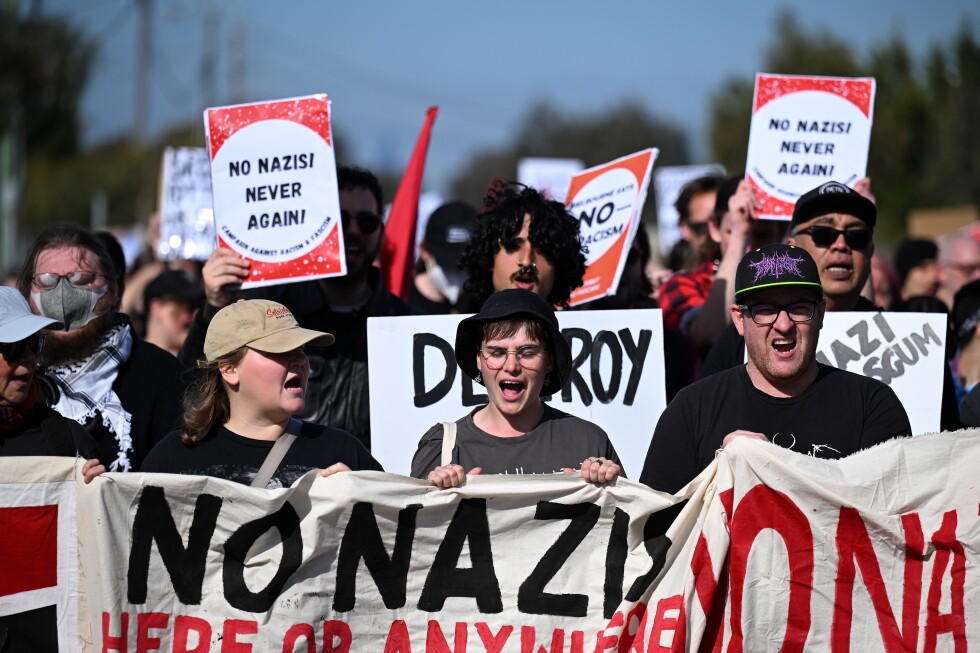
    On a Wednesday outside Sydney’s Downing Centre Local Court, a former senior figure in Australia’s most prominent neo-Nazi extremist organisation made an unprompted public intervention, using his court appearance to demand the release of decorated veteran Ben Roberts-Smith, who is currently facing five murder charges linked to alleged war crimes committed in Afghanistan between 2009 and 2012.

    Joel Davis, the ex-leading member of the National Socialist Network (NSN), appeared before the court this week for a routine procedural hearing in his own ongoing criminal case. Davis faces 10 separate charges of using a digital communications service to menace, harass, or cause offense against two high-profile Australian political figures: federal independent Member for Wentworth Allegra Spender, and New South Wales Opposition Leader Kellie Sloane. He has not yet entered formal pleas to any of the charges against him.

    Court documents and prior testimony outline the allegations against Davis. Last year, after Spender publicly condemned an NSN rally held outside the New South Wales state parliament, Davis sent a viral inflammatory message on the encrypted messaging platform Telegram that read, “Patriots, I bid thee to rhetorically rape Allegra Spender.” Separately, he is accused of posting a threatening comment about Sloane on social media, writing, “stupid b**** needs to be beaten fr (for real)” in response to a news article about the NSW Liberal leader.

    Davis was only released from custody last week, after the New South Wales Supreme Court granted him bail. The court confirmed during that bail hearing that Davis had cut ties with the NSN: the extremist group had expelled him six months prior after his violent viral comments brought widespread public condemnation and reputational damage to the organisation, with NSN state leader Jack Eltis ruling that Davis had “brought the organisation into public disrepute.” Davis had previously claimed in a failed January bail application that he had left the group, just days after NSN announced it was disbanding. His defense lawyer told the court that Davis has shifted away from his prior extreme political views, and now aims to focus on raising his newborn child—whose birth he missed while he was in remand custody.

    As part of his strict bail conditions, Davis is barred from coming within 100 meters of Spender, Sloane, or their electoral offices, is forbidden from contacting either woman directly, and has been banned from accessing any social media platforms.

    Outside the Downing Centre on Wednesday, Davis ignored questions about his own legal case and instead turned attention to Roberts-Smith, who was formally charged with five counts of murder by the Australian Federal Police just one day earlier. Roberts-Smith, a former Victoria Cross recipient once lauded as Australia’s most decorated modern soldier, is accused of murdering unarmed Afghan civilians during his deployments to Afghanistan between 2009 and 2012. He has repeatedly denied all allegations against him.

    Davis framed the prosecution of Roberts-Smith as a symbol of national failure in comments to waiting reporters. “I don’t want to talk about my case but I want to say something about Ben Roberts-Smith’s situation, which I think is emblematic … of everything wrong with this country,” Davis told reporters. “What kind of a country prosecutes its war heroes … Free Ben Roberts-Smith.”

    Wednesday’s procedural hearing saw Davis’ case adjourned, with the next court date scheduled for June this year.

  • ‘Show respect’: Energy Minister Chris Bowen fires up over clean energy, Iran war

    ‘Show respect’: Energy Minister Chris Bowen fires up over clean energy, Iran war

    A heated public confrontation has put Australia’s ongoing clean energy transition at the center of national debate, after Energy Minister Chris Bowen clashed sharply with a senior reporter during a Wednesday press briefing originally called to address an ongoing national fuel shortage.

    The briefing was convened to update the public on the state of the diesel crisis, with Bowen confirming that three percent of Australia’s retail service stations still remain without stock of the fuel. But what was intended as a routine update quickly devolved into tension when questions turned to the government’s signature climate and energy policy.

    Liam Bartlett, a reporter with 7News Spotlight, who had interjected earlier in the press conference, challenged Bowen directly, linking the ongoing Iran conflict to Australia’s renewable energy push. “If this war in Iran has showed nothing else, hasn’t it proved, once and for all, that your obsession with renewables will only lead us down the track to another energy crisis?” Bartlett asked.

    Bowen immediately pushed back on the framing of the question, dismissing it as a loaded partisan comment rather than a legitimate inquiry. What followed was a back-and-forth that escalated rapidly, with Bowen accusing the reporter of breaking press conference convention and cutting off other journalists waiting for their turn to ask questions.

    In a forceful defense of the government’s renewable energy strategy, Bowen pushed back against claims that renewables create energy insecurity. “Renewable energy is secure,” he said. “The Australian sun cannot be interrupted by a war or anything else. Solar energy has to travel 150,000,000km from the sun. It doesn’t have to travel the 150km of the Strait of Hormuz.”

    Responding to accusations that the government was falling behind schedule on its transition targets, and that Bowen had avoided engagement with Bartlett’s media outlet, the minister pushed back on those claims too. He noted that he had held daily press briefings to update the public on energy issues, and that this was the first time Bartlett had attended to ask a question.

    Calling on the reporter to show respect to fellow journalists who had attended all consecutive briefings, Bowen said, “I think you need to show a bit more respect to your colleagues. This is a room full of journalists. Everyone here gets a question. You’ve come to a press conference. Congratulations. Other journalists have been at every press conference.” The confrontation quickly became the lead focus of coverage of the press briefing, reigniting public debate over the pace and security of Australia’s shift away from fossil fuels.

  • US lawmakers call to remove Trump after ‘civilization will die’ threat against Iran

    US lawmakers call to remove Trump after ‘civilization will die’ threat against Iran

    A growing coalition of Democratic U.S. lawmakers is demanding President Donald Trump be stripped of executive authority through the 25th Amendment, a little-used constitutional mechanism that allows the vice president and cabinet to remove a sitting president deemed unfit to fulfill their official duties. The unprecedented call comes amid an escalating war in the Middle East that has now entered its seventh week, driven by Trump’s increasingly extreme rhetoric targeting Iran that critics have labeled a threat of genocide and war crimes.

    In a social media post Tuesday, Trump issued an ultimatum to Iran’s leadership: by 8 p.m. Washington local time, Tehran must agree to Washington’s demands to reopen the Strait of Hormuz, halt all nuclear enrichment activities, and end its domestic missile production program. If his conditions are not met, Trump vowed to “obliterate” Iran’s critical civilian infrastructure—including energy grids, communications networks, and public water systems that millions of Iranian civilians depend on for survival. In his most alarming remark, he warned that “a whole civilization will die tonight” if the Islamic Republic refuses to comply.

    Iranian leaders have flatly rejected Trump’s non-negotiable preconditions, countering with demands for a complete end to all U.S. and Israeli military hostilities across the region and full financial compensation for damage already inflicted by ongoing conflict.

    As of Tuesday afternoon in Washington, D.C., at least 30 sitting members of Congress have publicly and explicitly called for Trump’s immediate removal through the 25th Amendment process. California Congressman Ro Khanna laid out the urgency of the demand in a video posted to X Tuesday, arguing that Trump’s public statements cross fundamental moral and legal lines.

    “If the United States Congress has any life left in it, every member of the House and Senate must be calling for Trump’s removal today, based on the 25th amendment,” Khanna said. “He is threatening the entire destruction of a civilisation. He is calling Iranians ‘animals’. He is showing a total disregard for the humanity of people in Iran, in Gaza, in Cuba. This is a moral crime. It is a war crime. We need to be demanding that Congress convene today, and we need to be invoking the 25th amendment.”

    When questioned by reporters Monday about whether targeting Iran’s civilian infrastructure could constitute a war crime given its direct impact on civilian survival, Trump dismissed all concerns out of hand.

    Colorado Congresswoman Diana DeGette added that if Trump’s cabinet refuses to act to remove the president, Congress should immediately launch new impeachment proceedings. “Donald Trump is openly threatening war crimes against the entirety of Iranian civilization. 25th Amendment proceedings must begin immediately, but if the Cabinet is too cowardly, the House should begin the impeachment process,” she wrote on X.

    Illinois Congresswoman Delia Ramirez echoed DeGette’s position, accusing Trump of deliberately escalating the conflict to advance his own political and financial interests. “He is a warmonger, escalating the conflict for his own profit and consolidation of power,” Ramirez added.

    Congress has already seen one impeachment effort against Trump launched earlier this year, on December 10 by Texas Congressman Al Green. The measure currently has only two co-sponsors and has failed to gain momentum, largely because both chambers of Congress are held by Republican majorities—any impeachment trial in the Senate would almost certainly result in acquittal. If November’s midterm elections flip congressional control to Democrats, however, a third impeachment (following 2018 and 2021 efforts) becomes a distinct possibility.

    Arizona Congresswoman Yassamin Ansari, who is of Iranian descent, went a step further Monday, announcing she will introduce articles of impeachment against Secretary of War Pete Hegseth, one of the most prominent public advocates for expanding the war into Iran. “Trump is escalating a devastating, illegal war, threatening massive war crimes and targeting civilian infrastructure in Iran…the rhetoric has crossed every line. Pete Hegseth is complicit,” Ansari wrote. “It’s clear he’s unfit to be president.”

    Michigan Congressman Shri Thanedar called out Republican lawmakers for their silence, writing on X: “If Vance, Rubio & the others continue to be spineless cowards, Congress must do everything possible to stop Trump & this war.” Fellow Michigan Congresswoman Rashida Tlaib called Trump a “maniac” who “should be removed from office,” adding: “After bombing a school and massacring young girls, the war criminal in the White House is threatening genocide. It’s time to invoke the 25th Amendment.”

    Minnesota Congresswoman Ilhan Omar, who has been repeatedly targeted by Trump’s anti-Somali rhetoric, called Trump an “unhinged lunatic” and issued a two-word demand: “Impeach. Remove.” Wisconsin Congressman Mark Pocan warned that Trump poses an immediate existential risk: “He is too unhinged, dangerous, and deranged to have the nuclear codes!” California Congresswoman Sydney Kamlager-Dove labeled Trump’s rhetoric “pure evil,” urging Republicans to break with the president. “Republicans, if there were ever a time to stand up, it’s now,” she wrote. “I’m sick to my stomach. Trump’s genocidal language and indiscriminate warfare cannot be normalized or accepted.”

    Multiple other Democratic lawmakers have echoed these condemnations, with Massachusetts Congressman Seth Moulton arguing that the threat cannot be dismissed as typical Trump behavior. “This is not just ‘Trump being Trump’. This is an insane man who is unfit for office,” Moulton said. Delaware Congresswoman Sarah McBride noted that Trump’s threat crosses an unprecedented red line even for a presidency defined by controversial rhetoric. “In a political career defined by grotesque statements, this president’s horrifying, illegal, and genocidal threat this morning is among the most dangerous and appalling,” she wrote Tuesday. “You can’t shout ‘fire’ in a crowded theater and a president cannot be allowed to threaten genocide with the United States military.”

    Massachusetts Senator Ed Markey went even further, urging active-duty U.S. troops to refuse to carry out any orders that qualify as war crimes, noting that the current conflict was never authorized by Congress. “To the members of our military: remember, you do not have to follow illegal orders,” Markey wrote.

    No sitting Republican lawmakers have publicly expressed support for removing Trump, but one high-profile former Republican member of Congress, Marjorie Taylor-Greene of Georgia, broke with party lines to back the 25th Amendment push. “25TH AMENDMENT!!! Not a single bomb has dropped on America. We cannot kill an entire civilization. This is evil and madness,” she wrote on X.

    The 25th Amendment, ratified in 1967, outlines the formal constitutional process for transferring executive power in the event a sitting president is deemed unable to carry out their duties. The mechanism has never before been used to permanently remove a sitting president; past uses have only involved temporary transfers of power while presidents underwent medical procedures requiring general anesthesia.

    To initiate the process to remove Trump, Vice President JD Vance and a majority of Trump’s cabinet (or an alternate congressional body created for this purpose) must first formally agree that the president is unfit to serve due to mental or physical incapacity. That declaration must be submitted in writing to the Speaker of the House and the Senate President Pro Tempore, the second-highest ranking Senate leader who presides over votes when the vice president is absent. Immediately upon submission, Vance would assume the powers of the acting presidency.

    Trump would then have the right to submit his own declaration to Congress asserting he is capable of resuming his duties, which would allow him to retake power immediately. Vance and the cabinet would then have four days to submit an appeal to Congress, at which point lawmakers would convene to vote on the question of removal. A two-thirds majority vote in both the House and Senate is required to formalize the president’s removal, after which the vice president would serve as acting president until the next scheduled presidential election. Without that two-thirds majority, Trump would remain in office.

  • Iran ceasefire deal a temporary win for Trump – but it comes at a cost

    Iran ceasefire deal a temporary win for Trump – but it comes at a cost

    Just 90 minutes before a self-imposed deadline that would have triggered massive U.S. airstrikes against Iranian energy and transportation infrastructure, a last-minute de-escalation has pulled the region back from the brink of full-scale war. On Tuesday Washington time, U.S. President Donald Trump announced via his social media platform that Washington and Tehran had made substantial progress toward a definitive peace agreement, and he had approved a 14-day ceasefire to create space for negotiations to move forward.

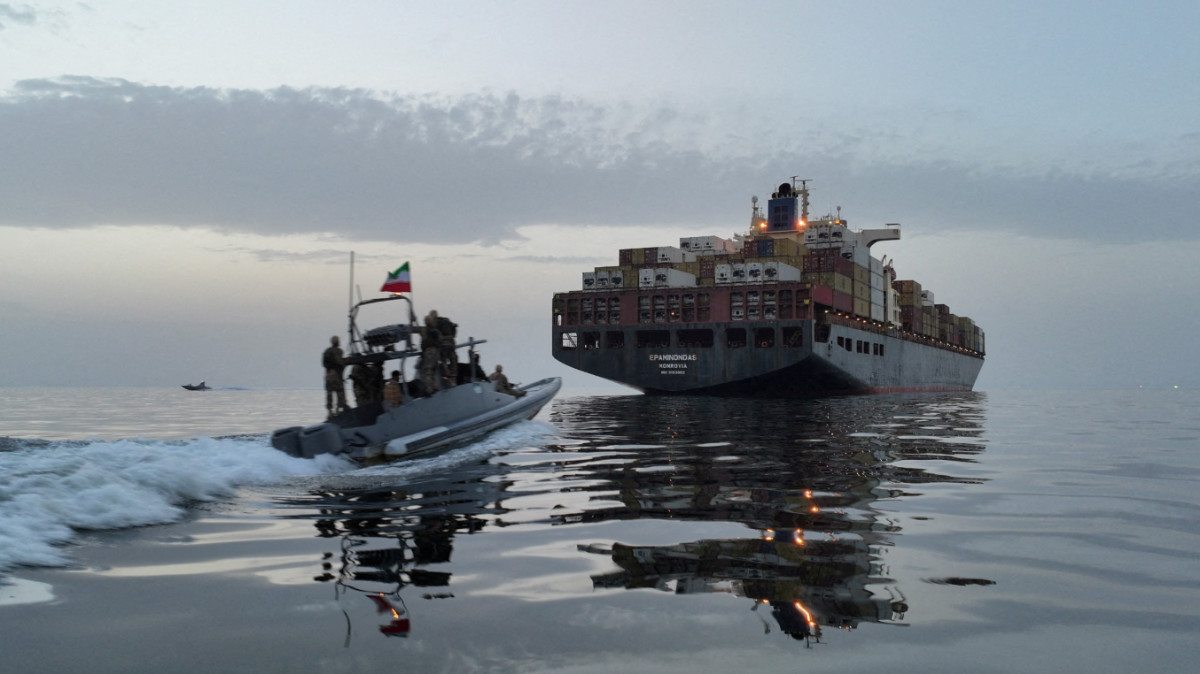
    The ceasefire is not a one-sided commitment: it requires Iran to also suspend all offensive operations and fully reopen the Strait of Hormuz, the world’s most critical oil chokepoint, for unimpeded commercial shipping. Tehran has publicly confirmed it will meet these conditions. The breakthrough comes as a surprise to many global observers, since earlier the same day, Trump had issued an unprecedented, inflammatory threat that he would wipe out Iranian civilization “never to be brought back again” – a statement that shattered long-held norms of diplomatic rhetoric from sitting U.S. presidents.

    It remains unconfirmed whether this extreme threat pushed Iran to accept a ceasefire it had rejected in earlier talks. What is undeniable is that the president’s rhetoric marks a profound break from decades of U.S. diplomatic practice. Even if the temporary ceasefire paves the way for a lasting peace deal, experts say Trump’s threats and the brief conflict have already reshaped how the international community views the United States. A nation that long positioned itself as a global guarantor of stability is now seen as destabilizing the core foundations of the existing international order, as Trump, who has built his political brand on breaking domestic norms, extends that approach to global diplomacy.

    Domestically, the president’s comments have sparked sharp bipartisan backlash. Congressional Democrats have been quick to condemn the threats, with some even calling for Trump’s removal from office. “It is clear that the president has continued to decline and is not fit to lead,” Congressman Joaquin Castro posted on X. Senate Majority Leader Chuck Schumer, the top Senate Democrat, added that any Republican who refuses to vote to end the Iran war will be held responsible for all consequences of the conflict.

    While most members of Trump’s own party have rallied around him, defections are far more widespread than in most previous controversies. Georgia Republican Congressman Austin Scott, a senior member of the House Armed Services Committee, publicly rejected the president’s rhetoric, telling reporters “The president’s comments are counter-productive, and I do not agree with them.” Normally loyal Wisconsin Senator Ron Johnson called a full-scale bombing campaign a “huge mistake,” while Texas Congressman Nathaniel Moran wrote on social media that he could not support threatening the destruction of an entire civilization. “This is not who we are, and it is not consistent with the principles that have long guided America,” Moran said. Alaska Senator Lisa Murkowski, a frequent critic of Trump, added that the threat “cannot be excused away as an attempt to gain leverage in negotiations with Iran.”

    The White House has already pushed back against critics, arguing that Trump’s high-stakes leverage worked to force Iran to the negotiating table. In his ceasefire announcement, Trump claimed the U.S. had “met and exceeded” all of its initial military objectives in the conflict. U.S. airstrikes have degraded Iran’s conventional military capabilities and killed multiple top Iranian regime leaders, though the Islamic fundamentalist government remains in power.

    Many core U.S. objectives remain unfulfilled, however. The status of Iran’s enriched uranium stockpile – the core material for a potential nuclear weapons program – remains undisclosed, and Iran still retains significant influence over regional armed proxies including Yemen’s Houthi rebels. Even if Iran fully opens the Strait of Hormuz, the crisis has underscored Tehran’s ability to disrupt global energy supplies by closing the chokepoint, strengthening its geopolitical leverage going forward.

    In his official response to the ceasefire announcement, Iranian Foreign Minister Seyed Aragchi confirmed Iran would suspend its defensive operations and allow safe commercial passage through the Strait of Hormuz, coordinated with Iranian armed forces. He added that the U.S. had accepted the general framework of Iran’s 10-point peace proposal, which includes full withdrawal of U.S. military forces from the Middle East, lifting all economic sanctions on Iran, war reparations from the U.S., and formal Iranian sovereignty over the Strait of Hormuz. It remains unclear whether Trump will agree to any of these sweeping demands, leaving the 14-day negotiation period facing major potential pitfalls.

    For the immediate term, the ceasefire delivers a political win for Trump, who followed through on his high-stakes threat to force a negotiation. But the truce is only a temporary pause in hostilities, not a permanent resolution. The full long-term cost of the president’s unprecedented rhetoric, the conflict, and the norm-breaking that preceded the ceasefire will not be clear for years to come.

  • Trump-backed Republican Clay Fuller wins election to replace Marjorie Taylor Greene

    Trump-backed Republican Clay Fuller wins election to replace Marjorie Taylor Greene

    A high-stakes special runoff election in northwest Georgia has delivered a critical win for Republicans and former President Donald Trump, with Clay Fuller projected to claim the vacant 14th Congressional District seat over Democratic challenger Shawn Harris. The victory, called by major election observers including CBS News, the BBC’s U.S. partner, shores up the Republican Party’s fragile 217-214 majority in the U.S. House of Representatives – a margin so narrow that a single flipped seat could upend the party’s legislative agenda.

    The race was triggered earlier this year when Marjorie Taylor Greene, the district’s former Republican congresswoman and once a staunch Trump ally, resigned after breaking publicly with the former president. Fuller, a lieutenant colonel in the Georgia Air National Guard and a former White House fellow during Trump’s first term, will immediately step into office to serve the remainder of Greene’s term, which expires in January 2027. He will not get a grace period, however: he must immediately launch a new campaign to defend the seat in November’s midterm general elections, where he is widely expected to face Harris once again.

    The path to Tuesday’s runoff began with an all-candidate special election held on March 10, where a crowded field of Republican contenders split the conservative vote. In that initial contest, Harris edged out Fuller by a narrow margin, but no candidate reached the 50% vote threshold required to win outright, forcing the head-to-head runoff.

    Political observers across Washington monitored the race closely as a critical bellwether for Trump’s remaining influence over the Republican base ahead of November’s midterms. Fuller’s rise to become the GOP’s consensus candidate was driven almost entirely by Trump’s early and unwavering endorsement. In a last-minute appeal to voters on the eve of the election, Trump took to social media to urge turnout, writing, “I am asking all Republicans, America First Patriots, and MAGA Warriors, to please GET OUT AND VOTE for a fantastic Candidate, Clay Fuller, who has my Complete and Total Endorsement!”

    Political science professor Andra Gillespie of Emory University noted that Trump’s endorsement of Fuller, rather than a more hardline MAGA-aligned candidate, was a deliberate strategic calculation. “In general, part of President Trump’s strategy in endorsing Fuller was this recognition that the most red meat, MAGA-affiliated candidate in this particular instance, might be off-putting to voters in the middle,” Gillespie explained. “This was an attempt to not lose those voters.”

    For Democrats, the race represented a rare pickup opportunity in a deeply conservative district. Democrats argued that low off-cycle turnout, a common dynamic in special runoffs, would play to their advantage if they could mobilize enough Democratic and independent voters. The party invested early in the race: former Democratic presidential candidate and cabinet secretary Pete Buttigieg held a public town hall with Harris in March to boost his name recognition and turnout. After advancing to the runoff, Harris reached across party lines to court voters who had supported other Republican candidates in the March special election, saying, “Everybody who voted for any other candidate […] I want to talk to every last one of them, and say: ‘Give me a chance.’”

    Gillespie noted ahead of the vote that a Harris win would have required a series of unlikely missteps from Fuller and a massive Democratic turnout effort. “Several things had to go right for Harris – and wrong for Fuller – for the Democrat to win this race,” she said.

    Geographically, Georgia’s 14th Congressional District stretches from the outer northwestern suburbs of Atlanta all the way to the Tennessee state line. It is a mostly rural constituency that has long been a safe Republican seat, though it holds small but concentrated pockets of Democratic support in the Atlanta-adjacent suburbs and around the city of Rome. With Fuller’s win, the district remains in Republican hands, reinforcing the party’s narrow control of the House as the country heads into a contentious midterm election cycle that will determine control of Congress for the next two years.

    Fuller’s policy positions align closely with Trump’s national agenda, most notably his hardline stance on curbing illegal immigration and advancing mass deportation policies, a key priority for the former president’s base.

  • North Korea launches a second projectile in 2 days, Seoul says

    North Korea launches a second projectile in 2 days, Seoul says

    South Korea’s joint military command confirmed Wednesday that North Korea has conducted a second projectile launch off its eastern coastline, coming just one day after a similar unidentified weapons test near the country’s capital area. The South Korean Joint Chiefs of Staff did not release additional details on the latest launch, including estimates of how far the projectile traveled or confirmation of what type of weapon system was tested.

    The launch activity follows a key weapons development announcement made earlier this week by North Korea: state reports confirmed leader Kim Jong Un personally oversaw testing of an upgraded solid-fuel engine designed for strategic weapons, a development Pyongyang framed as a major breakthrough for its national military arsenal.

    Solid-fuel missile technology represents a significant strategic advancement over older liquid-fuel systems. Unlike liquid-fuel weapons, which require on-site fueling immediately before launch and cannot remain stationary for long periods, solid-fuel missiles are far easier to transport, can be deployed faster, and are much harder for enemy intelligence agencies to detect and destroy prior to launch. This latest engine test marks the first test of its kind conducted by North Korea in seven months, and aligns directly with Kim Jong Un’s stated goal of developing a more maneuverable, stealthier missile force capable of striking targets across the United States and its regional allies.

    According to South Korean lawmakers who attended a closed-door briefing this week, Seoul’s National Intelligence Service has assessed that the solid-fuel engine work is part of a broader effort to develop a more powerful intercontinental ballistic missile (ICBM) capable of carrying multiple independent nuclear warheads.

    North Korea has accelerated its expansion of nuclear and conventional weapons capabilities since high-stakes denuclearization negotiations between Kim Jong Un and former U.S. President Donald Trump collapsed in 2019. During a ruling Workers’ Party Congress held in January of this year, Kim indicated Pyongyang remained open to the possibility of dialogue with the U.S., but set a key condition: Washington must abandon its demand that North Korea commit to nuclear disarmament before any formal talks can resume.