分类: politics

  • Germany suspends military approval for long stays abroad for men under 45

    Germany suspends military approval for long stays abroad for men under 45

    Against the backdrop of shifting European security dynamics following Russia’s full-scale invasion of Ukraine, Germany has moved to roll back a little-noticed provision of its newly reinstated military service framework that sparked widespread public pushback in recent days.

    The Military Service Modernization Act, which entered into force on January 1 this year, was designed to strengthen German and European defense capabilities in response to heightened regional security threats stemming from the ongoing war in Ukraine. In principle, the legislation brings back compulsory conscription after years of an all-volunteer force, though active conscription will only be triggered if voluntary recruitment falls short of the German armed forces’ targets.

    Under the law’s original fine print, a previously little-publicized requirement mandated that all German males aged 17 and older secure prior official approval before taking any trip or extended stay abroad lasting longer than three months. This provision flew under the public radar until a major German newspaper broke the story last week, igniting a fierce public debate over civil liberties and the scope of the new conscription framework. As of this week, the rule has never actually been enforced against any German citizen, defense officials confirmed.

    On Monday, German Defense Minister Boris Pistorius, a member of the Social Democratic Party, announced a broad exemption to the controversial requirement in comments to the German Press Agency (DPA). Pistorius emphasized that regardless of age — whether 17, 45, or any age between those thresholds — all military-age men retain full freedom of movement, and no advance approval is currently required for international travel of any length. Extended stays abroad also will not need to be reported to defense authorities, he added.

    “During this peacetime period, there will be no permission procedures. We are suspending the permission requirement as long as military service is voluntary,” Pistorius stated. He added that the German government will develop tailored emergency protocols to activate the rule only in the event of a national security crisis, framing the original inclusion of the provision as a legitimate precautionary measure to prepare for unforeseen security contingencies.

    The new law has already rolled out preliminary steps toward its goal of expanding Germany’s military capacity: since January, all 18-year-old Germans have received a mandatory questionnaire for men (voluntary for women) asking about their willingness to serve in the armed forces. Starting in July 2027, all 18-year-old men will also be required to complete a mandatory medical fitness examination to assess their eligibility for potential military service, should conscription be activated in the future.

    This military expansion aligns with the top security priority laid out by German Chancellor Friedrich Merz, who has publicly stated his goal to build the most powerful conventional military force across Europe, in a bid to bolster collective European defense amid ongoing regional tensions.

  • Survey finds 60 percent of Americans view Israel unfavourably following Iran war

    Survey finds 60 percent of Americans view Israel unfavourably following Iran war

    Weeks into the joint US-Israeli military campaign in Iran, a newly released Pew Research Center survey has documented a dramatic, sustained shift in American public opinion, with a clear majority of US adults now holding unfavorable views of the State of Israel. Data collected in late March, published Tuesday evening just as a ceasefire agreement between Washington and Tehran was announced, shows 60% of Americans now view Israel unfavorably — up 7 percentage points from 2023 and a nearly 20-point jump from 2022 levels.

    The erosion of public support extends to Israeli Prime Minister Benjamin Netanyahu as well. The survey finds that six in 10 Americans have little to no confidence that Netanyahu will act appropriately in global affairs, marking a 7-point increase in disapproval since last year and a 20-point rise since early 2023. Partisan gaps have widened alongside this overall shift: half of all Democratic respondents now report holding no confidence at all in Netanyahu, up from 37% just 12 months prior, while 80% of Democrats and Democratic-leaning independent voters now view Israel unfavorably. That marks a steep climb from 69% in 2023 and just 53% in 2022.

    Perhaps the most striking finding for Israel’s long-term standing in US politics is the deep generational divide that cuts across both major American political parties. A majority of all US adults under the age of 50, regardless of partisan affiliation, now hold negative views of both Israel and Netanyahu. Even among young Republicans — a voting bloc that was reliably pro-Israel as recently as three years ago — 57% now view Israel unfavorably, up from 50% last year, and only 30% express confidence in Netanyahu’s leadership on the world stage.

    The most dramatic shift can be seen in the share of Americans holding intensely negative views of the country: the proportion of respondents who say they have a “very unfavorable” opinion of Israel has nearly tripled since 2022, rising from 10% to 28% today.

    This shifting public mood has unfolded against a backdrop of escalating regional conflict that has had tangible global impacts. By the time the survey was fielded, the US-Israeli war in Iran had already entered its second month, leaving more than 4,000 people dead, sending global oil prices soaring, and destroying critical civilian infrastructure across Iran. Growing public discussion of Israel’s extensive influence over US political and policy decision-making has also reshaped popular perceptions of the country.

    Weeks before the survey was published, the controversy over Israel’s role in the conflict spilled into the open when a senior former Trump administration intelligence official resigned in protest over the war, claiming US leaders had been manipulated into launching the conflict by an Israeli-aligned and pro-war “echo chamber.” Joseph Kent, then-director of the National Counterterrorism Center — the US agency responsible for coordinating all federal counterterrorism intelligence, which falls under the oversight of Director of National Intelligence Tulsi Gabbard — outlined his opposition in a public resignation letter. “I cannot in good conscience support the ongoing war in Iran,” Kent wrote. “Iran posed no imminent threat to our nation, and it is clear that we started this war due to pressure from Israel and its powerful American lobby.” In the final days of March, a coalition of anti-war US military veterans issued a similar rebuke, condemning what they described as disproportionate Israeli influence guiding American military policy in the Middle East.

  • Suspects who allegedly threw bomb outside NYC mayor’s home wanted to kill 60 people, prosecutors say

    Suspects who allegedly threw bomb outside NYC mayor’s home wanted to kill 60 people, prosecutors say

    A planned deadly terrorist attack targeting New York City was derailed by law enforcement before any harm could be done, after two young American men allegedly plotted to detonate explosives at a protest outside the mayor’s official residence in the name of the Islamic State, federal prosecutors have confirmed.

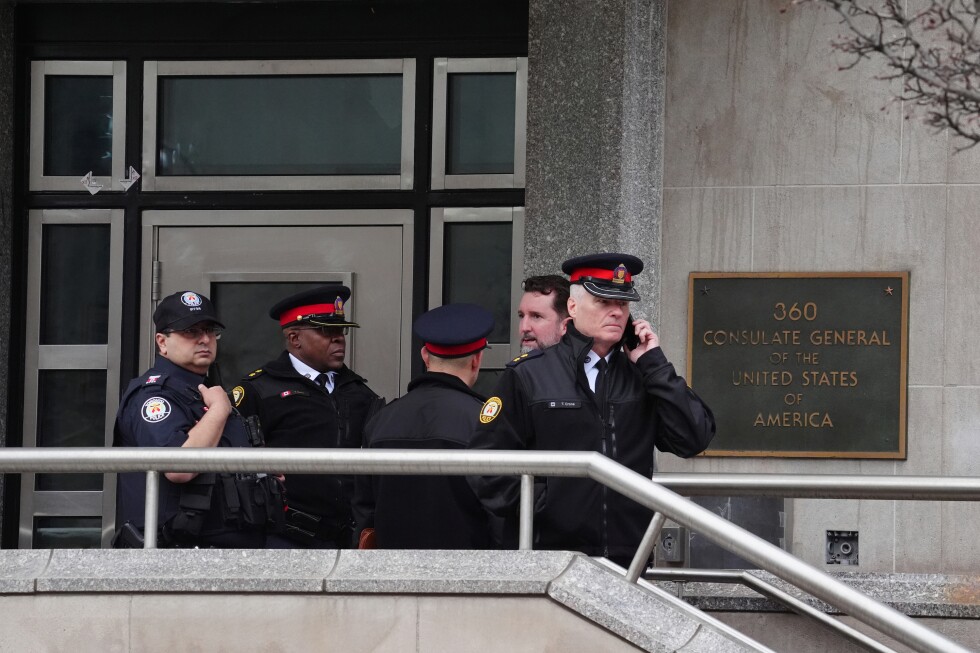
    An unsealed indictment released Tuesday lays out the full scope of the conspiracy against 18-year-old Emir Balat and 19-year-old Ibrahim Kayumi, both Pennsylvania residents who are US citizens. The foiled plot unfolded on March 7 outside Gracie Mansion, the official home of New York City Mayor Zohran Mamdani, where an anti-Islam protest was being held. According to court documents, the pair attempted to set off two homemade explosive devices that failed to detonate as planned, leaving no injuries and allowing authorities to take both suspects into custody immediately. Security footage captured one of the men being detained just seconds after he ignited one of the dud devices. At the time of the attempted attack, Mamdani and his wife Rama Duwaji were not present at the residence.

    Prosecutors allege the attack was planned to inflict mass casualties in service of IS ideology. Captured dashcam audio from the pair’s vehicle recorded one of the suspects stating plainly, “All I know is I want to start terror, bro. I want to petrify these people.” The indictment details that Balat told his co-conspirator the attack could kill anywhere from 8 to 16 people, and as many as 30 to 60 if the bombing site was crowded. Law enforcement officials further allege the pair hoped their attack would outpace the deadliness of the 2013 Boston Marathon bombing, which killed three people and injured hundreds.

    Following their arrest on March 7, both suspects voluntarily waived their constitutional right to remain silent, according to official court records. In a written statement after being taken into custody, Balat explicitly pledged allegiance to the Islamic State and called for the death of non-believers, according to a criminal complaint obtained by the BBC. Kayumi similarly admitted his affiliation with IS, confirmed he regularly consumed the group’s extremist propaganda on his personal phone, and acknowledged that IS ideology was a core motivating factor for the attempted attack.

    A search of the vehicle the pair used to travel to New York City turned up a cache of evidence confirming the conspiracy: three days of recorded dashcam footage, a handwritten notebook detailing bomb construction, and an unexploded third bomb. The notebook did not only outline the Gracie Mansion plot, prosecutors say: it also contained multiple alternative attack plans, including ramming a vehicle into crowds at festivals, parades, protests, or other large public gatherings.

    Mamdani has publicly confirmed that the two suspects traveled to New York City with the explicit intent to carry out an act of terrorism. As of this report, Balat and Kayumi remain in federal custody following their March 7 arrest, awaiting further legal proceedings.

  • Former Sinochem executive prosecuted for bribery, abuse of power

    Former Sinochem executive prosecuted for bribery, abuse of power

    China’s Supreme People’s Procuratorate announced Wednesday that Feng Zhibin, the 62-year-old former deputy general manager of Sinochem Group, has been formally prosecuted on three criminal charges: bribery, influence trading, and abuse of power by a state-owned enterprise personnel.

    The corruption case against Feng was first investigated and closed by the National Commission of Supervision, China’s top anti-graft watchdog, before being transferred to prosecutorial authorities for review. Following a designation from the Supreme People’s Procuratorate, the Heilongjiang Provincial People’s Procuratorate approved Feng’s arrest, and the Daqing People’s Procuratorate has now lodged a public indictment with the Daqing Intermediate People’s Court, bringing the high-profile case one step closer to trial.

    Prosecutors laid out detailed allegations of Feng’s misconduct spanning his decades-long tenure in senior leadership roles at the major state-owned conglomerate. Over his career, Feng held a string of key positions at Sinochem, including assistant general manager, general manager of the group’s investment department, chairman and general manager of Sinochem Lantian Corporation, general manager of Sinofert Holding Limited, and ultimately deputy general manager of the parent Sinochem Group, before becoming chairman of Sinochem International Corporation in 2016. According to the indictment, Feng abused the authority granted by these posts to secure illicit benefits for third parties in exchange for accepting large sums of money and high-value assets.

    Even after stepping down from his official roles, prosecutors say Feng continued to exploit the influence of his former senior positions. He is accused of leveraging his past status to pressure other sitting state functionaries into granting illegal benefits to associates, once again accepting substantial improper payments and valuables in return.

    The prosecution adds that as a senior employee of a state-owned enterprise, Feng’s deliberate abuse of power for personal gain has caused severe financial losses to Sinochem Group and inflicted major damage on national interests. Legal officials note that Feng’s actions meet the criteria for criminal liability on all three charges brought against him.

    Feng’s career at Sinochem began in 2000, when he joined the group and quickly rose through the corporate ranks. In June 2018, he officially resigned from all his positions at the conglomerate, citing personal reasons. Formal anti-graft investigations into Feng were launched in July 2025, and he was expelled from the Communist Party of China in January 2026 as investigations uncovered evidence of his wrongdoing.

    Headquartered in Beijing, Sinochem Group operates as a wholly owned subsidiary of Sinochem Holdings Corporation, one of China’s core centrally administered state-owned enterprises overseen by the State-owned Assets Supervision and Administration Commission of the State Council. A leading market player in China’s energy and chemical sectors, Sinochem also maintains major business footprints in urban infrastructure operations and non-banking financial services.

  • Mainland reiterates readiness to strive for peace across Taiwan Strait

    Mainland reiterates readiness to strive for peace across Taiwan Strait

    BEIJING – A senior spokesperson from China’s mainland authorities reaffirmed Wednesday the mainland’s consistent commitment to pursuing peaceful development across the Taiwan Strait, during a press briefing addressing a landmark visit by a delegation from Taiwan’s Kuomintang (KMT) party.

    The KMT delegation, headed by party chairwoman Cheng Li-wun, touched down in Shanghai on Tuesday, kicking off a six-day visit that will take the group through Jiangsu Province, Shanghai and Beijing, concluding this coming Sunday. This trip marks the first time in 10 years that a sitting KMT chairperson has led a party delegation to the Chinese mainland, marking an important moment for cross-Strait exchanges after a decade of limited high-level party-to-party contact.

    Zhu Fenglian, spokesperson for the State Council Taiwan Affairs Office, laid out the mainland’s stance in response to questions about the visit. “On the shared political foundation of upholding the 1992 Consensus and opposing ‘Taiwan independence,’ we stand ready to work with all political parties, groups and individuals across Taiwan – the Kuomintang included – to advance the steady, peaceful development of cross-Strait relations,” Zhu stated.

    Zhu further emphasized that both sides of the Taiwan Strait are part of one indivisible China, and that questions concerning cross-Strait ties are internal matters that must be resolved through dialogue and consultation between Chinese people on both sides. She added that compatriots across the Strait share sufficient wisdom and collective capability to resolve their own issues in a way that serves the common interests of all Chinese people.

    The visit comes as cross-Strait relations have faced heightened tensions in recent years, driven by pro-separatist forces on the island and external interference. The high-profile KMT visit is widely seen as an opportunity to restart people-to-people and party-to-party exchanges, opening a new channel for dialogue to reduce misunderstanding and lower regional risks.

  • Greece to ban social media for under-15s from next year

    Greece to ban social media for under-15s from next year

    In a bold step to address growing concerns over adolescent mental health, Greece has announced sweeping new regulations that will bar all users under the age of 15 from accessing social media platforms, joining a expanding wave of national governments across the globe moving to restrict minors’ exposure to potentially harmful online environments.

    Prime Minister Kyriakos Mitsotakis framed the policy as a targeted response to three interconnected crises: soaring rates of anxiety, chronic sleep disruption among young Greeks, and the intentional “addictive design” embedded into many major social media platforms. The restriction is scheduled to go into effect starting in January 2025, with full details of the enforcement and regulatory framework set to be released later the same day the announcement was made.

    Mitsotakis shared the initiative in a public video message posted to TikTok, where he outlined the personal feedback that drove the policy change. “Many young people tell me they feel exhausted from comparisons, from comments, from the pressure to always be online,” he said, adding that he had heard consistent reports from parents about children struggling with poor sleep, constant anxiety, and compulsive phone use.

    The prime minister stressed that the ban is not an attempt to cut young people off from digital technology entirely, noting that digital tools can be powerful sources of inspiration, knowledge, and creative growth. “But the addictive design of certain applications, and a business model based on capturing your attention – on how long you stay in front of a screen – takes away your innocence and your freedom,” he argued. “That has to stop somewhere.”

    Beyond Greece’s national borders, Mitsotakis is pushing for coordinated action across the European Union. In a formal letter to European Commission President Ursula von der Leyen, he called for a unified EU regulatory framework to “complement and reinforce the necessary national initiatives for the protection of minors.” His proposed regional rules include mandatory age verification for all users across every platform, a continent-wide ban on social media access for under-15s, and a requirement that platforms re-verify all users’ ages every six months to prevent workarounds.

    Greece is far from alone in pursuing strict limits on minor social media use. Australia made global history last December when it became the first country to mandate that major platforms including TikTok, YouTube and Snapchat remove all accounts belonging to users under 16, with steep financial penalties for non-compliance. Several other EU nations, including France, Austria and Spain, have already advanced similar regulatory proposals. The United Kingdom has opened a public consultation on a proposed ban for under-16s, while Ireland and Denmark are currently evaluating comparable measures.

    Industry stakeholders have pushed back heavily against broad, age-based restrictions. Social media companies argue that blanket bans are impractical to enforce, ineffective at achieving their stated goals, and risk leaving vulnerable, socially isolated teenagers cut off from critical online support networks. Reddit has already launched a legal challenge to Australia’s new under-16 ban, contesting the law in court.

    The global conversation around minor social media use has sharpened dramatically in recent months, fueled by mounting research linking heavy early social media exposure to negative mental health outcomes, and a high-profile legal ruling in the United States. In a landmark March trial, a jury found Meta and YouTube liable for contributing to a young woman’s childhood social media addiction. Jurors determined that Meta, the parent company of Instagram, Facebook and WhatsApp, and Google, which owns YouTube, intentionally designed platforms to be addictive, causing measurable harm to the plaintiff’s mental health. Both companies have rejected the verdict and announced plans to appeal, with Meta arguing that teen mental health is a complex issue with no single cause that can be pinned on one platform.

    As more nations move to implement national restrictions, the push for a coordinated EU framework signals a growing shift toward tighter global regulation of big tech’s impact on children and adolescents.

  • Trump complains NATO ‘wasn’t there when we needed them’ after talks with alliance leader Rutte

    Trump complains NATO ‘wasn’t there when we needed them’ after talks with alliance leader Rutte

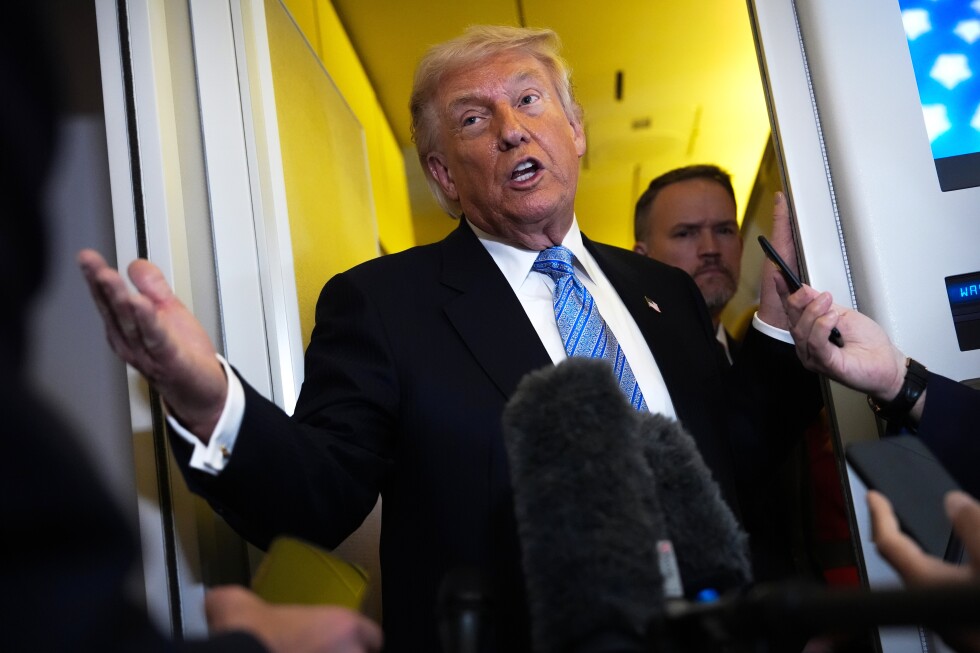
    WASHINGTON — Tensions between former and current U.S. President Donald Trump and the trans-Atlantic military alliance NATO boiled over into public view Wednesday, following a closed-door meeting between Trump and NATO Secretary-General Mark Rutte that had been widely expected to defuse Trump’s fury over the alliance’s response to the recent Iran conflict.

    In the lead-up to the private talks, Trump opened the door to a potential U.S. withdrawal from the 75-year-old alliance, after NATO member states rejected his call to join U.S. military actions when Iran blocked the Strait of Hormuz — a critical global shipping chokepoint that carries roughly one-fifth of the world’s daily oil supplies. The blockage triggered a sharp spike in global energy prices, amplifying Trump’s frustration with alliance partners.

    Shortly after the meeting concluded, Trump took to social media to voice his lingering anger in an unfiltered all-caps statement. “NATO WASN’T THERE WHEN WE NEEDED THEM, AND THEY WON’T BE THERE IF WE NEED THEM AGAIN,” the post read. The White House declined to offer additional context or clarification on Trump’s remarks immediately after the meeting.

    The talks came just one day after the U.S. and Iran reached a tentative two-week ceasefire agreement that includes the full reopening of the Strait of Hormuz. The ceasefire was finalized only after Trump issued a stark threat to target Iran’s critical infrastructure, warning that “a whole civilization will die tonight” if Tehran did not back down.

    Earlier Wednesday, White House Press Secretary Karoline Leavitt confirmed that Trump had raised the possibility of a U.S. exit from NATO ahead of the meeting, telling reporters “I think it’s something the president will be discussing in a couple of hours with Secretary-General Rutte.”

    Trump’s long-standing criticism of NATO dates back to his first presidential term, and U.S. law passed by Congress in 2023 explicitly blocks any sitting U.S. president from withdrawing from the alliance without congressional approval. Despite the legal restriction, Trump has repeatedly claimed he holds unilateral authority to pull the U.S. out of the 32-member bloc, which was founded in 1949 to deter Soviet expansionism during the Cold War. NATO’s core founding commitment is its mutual defense clause, which states that an armed attack against one member is considered an attack against all — a provision that has only been invoked once, in 2001, to support the U.S. following the September 11 terrorist attacks.

    Beyond the Iran conflict, Trump also renewed his grievances over NATO’s stance on Greenland, the semi-autonomous Danish territory that Trump attempted to secure U.S. control over earlier this year, before backing down following negotiations with Rutte. In a separate social media post Wednesday, Trump railed, “REMEMBER GREENLAND, THAT BIG, POORLY RUN, PIECE OF ICE!!!”

    It remains unclear whether the Trump administration will move to challenge the 2023 law blocking unilateral presidential withdrawal from NATO. Notably, that legislation was championed by current Secretary of State Marco Rubio, who was serving as a U.S. Senator from Florida when the bill passed. Rubio met separately with Rutte Wednesday morning at the U.S. State Department ahead of the White House meeting. In a post-meeting statement, the State Department said the pair discussed the Iran conflict, ongoing U.S. diplomatic efforts to end the Russia-Ukraine war, and “increasing coordination and burden shifting with NATO allies.”

    Top Republican leaders have already broken with Trump over his NATO stance. On Tuesday night, Senate Minority Leader Mitch McConnell of Kentucky, who serves on the Senate Armed Services Committee, issued a statement reaffirming his support for the alliance. “Following the September 11th attacks, NATO allies sent their young servicemembers to fight and die alongside America’s own in Afghanistan and Iraq,” McConnell wrote. The senior Republican urged Trump to remain “clear and consistent” on U.S. alliance commitments, arguing it is not in the United States’ national interest to “spend more time nursing grudges with allies who share our interests than deterring adversaries who threaten us.”

    NATO has already faced significant instability since Trump returned to the presidency, over his cuts to U.S. military support for Ukraine and repeated threats to seize Greenland from Denmark, a long-standing NATO ally. Trump’s criticism of the alliance intensified sharply after the outbreak of the U.S.-Iran war in late February, with the president arguing that securing the Strait of Hormuz should fall to the European and regional nations that depend on its oil shipments, not the United States. “Go to the strait and just take it,” Trump told supporters last week.

    Additional friction emerged when two NATO members, Spain and France, moved to ban or restrict U.S. access to their national airspace and joint military facilities for operations related to the Iran war. While those nations have joined a broader international coalition to help secure the strait once the conflict ends, their refusal to back immediate U.S. action further stoked Trump’s anger. British Prime Minister Keir Starmer, another frequent target of Trump’s criticism, was scheduled to travel to the Gulf region Wednesday to support the newly brokered ceasefire, as the U.K. leads efforts to draft a post-conflict security framework for the strait.

    This is not the first time Trump has threatened to walk away from NATO. The president has repeatedly vowed to abandon alliance partners that fail to meet the bloc’s target of spending 2% of their gross domestic product on defense. In his recently published memoir, former NATO Secretary-General Jens Stoltenberg revealed he personally feared Trump would withdraw the U.S. from the alliance as early as 2018, during Trump’s first term in office.

    Contributions to this reporting were provided by Associated Press journalists Aamer Madhani and Matthew Lee in Washington, and Lorne Cook in Brussels.

  • Full text of Iran’s National Security Council statement on ceasefire

    Full text of Iran’s National Security Council statement on ceasefire

    After 40 days of open conflict that ignited when US and Israeli forces launched strikes on Iranian targets, triggering cross-regional retaliatory missile and drone attacks that pushed the Middle East to the brink of full-scale war, a two-week ceasefire has entered into force, opening a fragile diplomatic window to de-escalate tensions. The outbreak of fighting severely disrupted commercial shipping through the Strait of Hormuz, the world’s most critical chokepoint for global energy supplies, stoking widespread international alarm over the risk of a broader regional conflict that could send shockwaves through the global economy.

    The ceasefire agreement, announced by former US President Donald Trump, was brokered through extensive mediation led by the government of Pakistan, and it is conditional on the full reopening of the Strait of Hormuz to commercial traffic, with formal negotiations set to kick off in Islamabad in the coming days. Both Washington and Tehran have claimed victory from the period of open conflict: US officials assert that American forces achieved all core military objectives set out at the start of hostilities, while Iranian authorities frame the ceasefire as a triumph that forced the United States to agree to negotiate based on Tehran’s pre-set 10-point framework of demands.

    Key agenda items for the upcoming talks include rules governing maritime transit through the Strait of Hormuz, full relief for Iran from international and US sanctions, and a negotiated settlement over the future presence of US combat forces across the Middle East. Iranian officials have stressed that the opening of negotiations does not mark a permanent end to hostilities, while their US counterparts have described the diplomatic process as a rare opportunity to forge a broader, long-term stability agreement. Most independent observers characterize the ceasefire as a temporary pause to de-escalate, rather than a durable resolution, with the final outcome of talks remaining deeply uncertain.

    In a full official statement released by Iran’s Supreme National Security Council, Tehran framed the ceasefire as an undeniable, historic defeat for US and Israeli aggression. The statement credits what it calls the strategic prudence of Iran’s supreme leadership, the bravery of Iranian and Axis of Resistance fighters across the region, and the unified mass support of the Iranian people for forcing the US to accept Tehran’s 10-point terms as a basis for negotiations. The core demands laid out in the Iranian framework include a binding US commitment to refrain from future aggression against Iran, permanent recognition of Iran’s full sovereignty over the Strait of Hormuz, international recognition of Iran’s right to nuclear enrichment, full lifting of all primary and secondary sanctions on Iran, termination of all hostile UN Security Council and International Atomic Energy Agency Board of Governors resolutions against the country, full compensation for damages Iran has sustained from decades of US hostilities, complete withdrawal of all US combat forces from the Middle East region, and an end to all US support for military campaigns against the Axis of Resistance, including Hezbollah in Lebanon.

    The statement notes that from the opening hours of the conflict, US and Israeli leadership held wildly optimistic assumptions that a rapid military campaign would force Iran into full surrender, partition the country, and seize its natural energy resources. These plans failed entirely, the statement argues, due to coordinated defensive and offensive operations by Iran and its resistance allies that inflicted irreversible damage to US military infrastructure across the region, weakened the Israeli military’s position in occupied territories, and exposed the inability of the US-led coalition to achieve core war aims within the first 10 days of fighting.

    According to the Iranian official statement, the United States began reaching out through quiet diplomatic channels to request a ceasefire shortly after that, but Tehran rejected all initial appeals until all of its core preconditions were formally accepted. Tehran also notes that it has repeatedly rejected arbitrary deadlines set by the US, emphasizing that it places no value on timelines imposed by hostile powers. The ceasefire and negotiation process were approved by Iran’s Supreme National Security Council and supreme leadership after the US formally accepted all 10 of Iran’s core principles via Pakistani mediation, with talks set to open in Islamabad on April 10 and allocated a two-week window that can be extended by mutual consent.

    The statement stresses that the opening of negotiations does not mean an end to the conflict, and that hostilities will resume if the US fails to follow through on its commitments to finalize the agreement in line with Iran’s 10-point framework. It calls for full national unity across all Iranian political groups and civil society during the negotiation period, noting that the process is an extension of the battlefield fought under the supervision of Iran’s highest leadership. The statement concludes by warning that Iran remains fully militarily prepared to resume hostilities immediately if the US makes any concession or violates the agreed terms, while celebrating what it calls a historic turning point that has established Iranian regional dominance as the basis for any future security order in the Middle East.

  • The gift card Israel uses to buy US weapons

    The gift card Israel uses to buy US weapons

    For decades, the framing of U.S. military transfers to Israel as “arms sales” has obscured a critical, underreported reality: the vast majority of these transactions are not paid for by the Israeli government, but by American taxpayers. This hidden subsidy is now at the center of a growing congressional pushback, led by progressive lawmakers who are demanding an end to U.S. public funding for what they describe as destructive Israeli military operations.

    Earlier this year, four U.S. senators — Independent Bernie Sanders of Vermont, Democrats Chris Van Hollen of Maryland, Jeff Merkley of Oregon, and Peter Welch of Vermont — introduced joint resolutions of disapproval to block a $659 million shipment of 22,000 bombs to Israel, a transfer originally approved by the Trump administration. What makes this deal particularly contentious, the lawmakers argue, is that many of the weapons are being drawn directly from active U.S. military stockpiles, and the entire cost will be covered by U.S. taxpayers.

    In a public statement announcing the resolutions, Sanders emphasized that in the wake of widespread destruction caused by Israel’s far-right government under Benjamin Netanyahu across Gaza, Lebanon, and regional flashpoints like Iran, providing tens of thousands of new munitions is the last priority American taxpayers should be forced to fund. Van Hollen echoed this position, noting that Congress must use every legislative tool at its disposal to halt what the caucus frames as Trump’s escalation of regional conflict, starting with cutting off taxpayer-funded weapons transfers to the Netanyahu administration.

    Policy analyst Stephen Semler, a non-resident senior fellow at the Center for International Policy, recently published an in-depth data investigation that confirms the broad scope of taxpayer funding for U.S. arms transfers to Israel. As Semler explains, the label of “arms sale” is misleading by design. While Israel is officially listed as the purchaser in formal government notifications, the funding source is almost exclusively the U.S. Foreign Military Financing (FMF) program — an annual U.S. military aid package that provides Israel with at least $3.3 billion in public U.S. funds each year, which functions essentially as a taxpayer-funded “gift card” for Israeli weapons purchases.

    Semler illustrated this dynamic by examining the four most recent publicly notified arms sales to Israel, published in the Federal Register: a $740 million deal for armored personnel carriers, a $1.98 billion contract for tactical vehicles and accessories, a $3.8 billion transfer for attack helicopters and related weaponry, and a $150 million deal for utility helicopters and replacement parts. In every single listing, the “funding source” field is marked as Foreign Military Financing, meaning U.S. taxpayer money covers the cost. Only one deal included a minor contribution from Israeli national funds, making the overwhelming majority of the $6.7 billion in tested transactions fully U.S.-funded. The 22,000-bomb shipment targeted by the Senate resolutions? Both components of that deal are 100% FMF-funded.

    Expanding this analysis to cover the full four-year term of the Biden administration from 2021 to 2024, Semler compiled and cross-checked data from two official U.S. defense sources: the Defense Security Cooperation Agency’s (DSCA) Historical Sales Books for government-brokered Foreign Military Sales, and the Directorate of Defense Trade Controls’ (DDTC) Section 655 Reports for private commercial Direct Commercial Sales. The findings are stark: the Biden administration authorized a total of $22 billion in arms sales to Israel over that period, split between more than $13.2 billion in government-brokered deals and over $8.7 billion in commercial transactions.

    DSCA data shows 90% of government-brokered sales are covered by U.S. military aid, and while DDTC does not publicly disclose funding sources for commercial sales, Semler’s estimate based on Israel’s historic average of FMF spending on commercial arms puts that share at 68%. All combined, Semler calculates that U.S. taxpayers covered $17.8 billion of the $22 billion in total Biden-era arms sales to Israel — 81% of the total value, or nearly $18 billion in taxpayer subsidies that have been misrepresented as commercial sales.

    This reality undermines the most common policy justifications for continuing large-scale arms transfers to Israel. Proponents of the deals often argue they boost U.S. economic activity and create domestic jobs, but the fact that American taxpayers foot the bill eliminates any claim that the transfers bring meaningful foreign investment into the U.S. economy. Even the job creation argument falls apart under scrutiny: military spending is widely recognized as one of the least efficient ways for the U.S. government to generate new employment.

    Historical data backs this up: in 1985, the U.S. military budget stood at $295 billion, equal to $746 billion in 2024 inflation-adjusted dollars, and the U.S. arms industry employed 3 million American workers. By 2021, the inflation-adjusted military budget had grown by $132 billion to $879 billion — an 18% real increase — but arms industry employment plummeted to just 1.1 million workers, a 63% drop in jobs despite massively increased public spending. The reliance on a job creation argument also tacitly reveals the weakness of national security justifications, Semmer argues: a policy that truly served core U.S. national security interests would not need to be defended on the grounds of job growth alone.

    As the Senate prepares to consider the resolutions to block the Trump-approved bomb shipment, the analysis makes clear that the debate is not just about Israel’s military actions in the Middle East — it is about the growing burden of U.S. taxpayer funding for foreign military operations. Semler concludes that American taxpayers are owed a refund for decades of hidden subsidies, rather than being asked to cover billions more in weapons costs under new and existing administrations.

  • Japan’s distortions denounced

    Japan’s distortions denounced

    Diplomatic tensions between South Korea and Japan have reignited after Tokyo approved a new batch of high school textbooks containing disputed territorial claims and whitewashed accounts of Japanese World War II imperial atrocities, drawing sharp condemnation from Seoul. In an official statement released March 24, South Korea’s Ministry of Education voiced deep regret over the decision by Japan’s Ministry of Education, Culture, Sports, Science and Technology to greenlight textbooks that advance what Seoul calls ‘historical distortions’ rooted in Tokyo’s self-serving national narrative, and issued a strong call for immediate rectification.

    South Korean authorities specifically flagged two key categories of problematic content in the approved textbooks. First, the materials reiterate Japan’s long-disputed claim of full territorial sovereignty over the Dokdo islets, a group of small rocky outcrops in the Sea of Japan that have been under South Korean administrative control for decades, and falsely characterize South Korea’s presence as ‘illegal occupation’. Second, the texts systematically downplay or erase documented wartime crimes committed by Imperial Japan, including the systematic forced mobilization of Korean laborers and the institutionalized sexual enslavement of so-called ‘comfort women’ during WWII.

    The condemnation extended beyond the education sector: South Korea’s Ministry of Foreign Affairs quickly summoned Hirotaka Matsuo, deputy chief of mission at the Japanese Embassy in Seoul, to formally register the country’s official protest against the textbook approval.

    The approved textbooks are slated for introduction in Japanese high schools starting in the 2027 academic year, covering core subjects including Japanese history, world history, geography and civics. According to existing reports, the content of the new batch largely mirrors the controversial textbooks approved by Tokyo four years prior, which already included Japan’s territorial claim to Dokdo. For context, a 2021-approved textbook from major Japanese publisher Teikoku Shoin explicitly stated that ‘Takeshima’ — Japan’s name for Dokdo — is Japan’s inherent territory, claiming the islands were legally incorporated into Shimane Prefecture after a 1905 Japanese declaration, and repeated the false claim that South Korea occupies the territory illegally. When publisher Ninomiya Shoten submitted its new textbooks for official screening last year, it retained the same ‘illegal occupation’ language, and the Japanese screening panel raised no objections to the content.

    Japanese domestic media has noted that descriptions aligning with the Japanese government’s official positions on both territorial disputes and modern historical narratives have become fully normalized in approved textbooks, with no need for additional screening adjustments from regulators. This systemic alignment is no accident: Tokyo has embedded its preferred narrative into the national education system through a three-layered content control system that starts with binding national curriculum guidelines — the highest governing principle for textbook content — followed by official commentary on the guidelines and a final centralized screening process.

    Over the past decade, this system has increasingly enabled the erasure of accountability for wartime crimes. Textbook descriptions have gradually removed language acknowledging coercion in wartime labor mobilization and the sexual enslavement of comfort women. In a 2021 parliamentary written response, the Japanese government declared that terms such as ‘taken away’ or ‘forcibly taken away’ to describe the displacement of Korean forced laborers were inappropriate, and mandated the use of the neutral-sounding term ‘mobilized’ instead. Since that policy change, the explicit language acknowledging forced coercion has been entirely removed from approved Japanese high school textbooks.

    In its statement, South Korea’s education ministry reaffirmed the country’s commitment to its long-term goal, as outlined by South Korea’s president in a speech marking the anniversary of the March 1 Independence Movement, of building ‘an amiable new world based on true understanding and empathy between the two countries’. The ministry added that building lasting peace and cooperation in Northeast Asia requires the Japanese government to adopt a responsible stance toward its historical legacy, a standard that Tokyo has yet to meet with the latest textbook approval.

    This report, sourced from South Korea’s *The Korea Herald*, is part of a weekly Asia-focused collaboration from the Asia News Network, a regional grouping of 20 leading Asian media outlets including China Daily.