In a landmark bilateral meeting that sent ripples across global geopolitics, the White House released new details Thursday outlining shifting alignments between Washington and Beijing on the escalating crisis around Iran and the strategic Strait of Hormuz, following face-to-face talks between U.S. President Donald Trump and Chinese President Xi Jinping.
The diplomatic gathering wrapped up with an elaborate state dinner hosted by Xi, attended by top-ranking U.S. administration officials and American business leaders. The two leaders of the world’s largest economies opted to set aside long-running public disagreements over contentious flashpoints including Taiwan and Iran policy at least for the day, turning their public focus toward advancing bilateral commercial agreements.
In an interview with Fox News following his closed-door meeting with Xi, Trump offered new remarks about China’s shifting position, claiming Xi had proposed to mediate an end to the ongoing U.S.-Israeli military campaign against Iran while downplaying frictions over Beijing’s long-standing ties to Tehran. According to Trump, Xi made a firm statement that China would not supply military equipment to Iran amid the conflict. He added that Xi affirmed China’s commitment to keeping the Strait of Hormuz, one of the world’s most critical energy chokepoints, open to international shipping, and offered Chinese assistance to de-escalate tensions wherever possible.
These claims come amid multiple media reports outlining recent military support from Beijing to Tehran. Middle East Eye (MEE) was the first outlet to report that China delivered air defense systems to Iran after its June 2025 conflict with Israel and the United States. The outlet further reported that ahead of a planned 2026 Iranian attack, Beijing also supplied Tehran with kamikaze drones. The New York Times later confirmed that shipments of Chinese shoulder-fired air defense systems arrived in Iran back in April, while the Financial Times reported that Iranian forces have used advanced Chinese satellite imagery to target U.S. military installations positioned across the Gulf region.
Even ahead of Trump’s high-profile visit to China, analysts noted that Beijing has clear strategic incentives to push for an early end to the ongoing war in Iran. Ahmed Aboudouh, an associate fellow at the London-based Chatham House and head of the China Studies research unit at the Emirates Policy Center, previously told MEE that both Washington and Beijing share core overlapping goals: preventing Iran from developing nuclear weapons and securing the full reopening of the Strait of Hormuz to commercial shipping.
As the world’s top buyer of Iranian crude oil, purchasing roughly 90 percent of Tehran’s total oil exports, China’s posture toward Iran is being closely watched by policymakers in Tehran and across global energy markets. Trump acknowledged the deep economic ties between the two countries in his Fox News interview, noting, “Look, anybody that buys that much oil has obviously got some kind of relationship with them [Iran],” when referencing Xi’s engagement with Tehran.
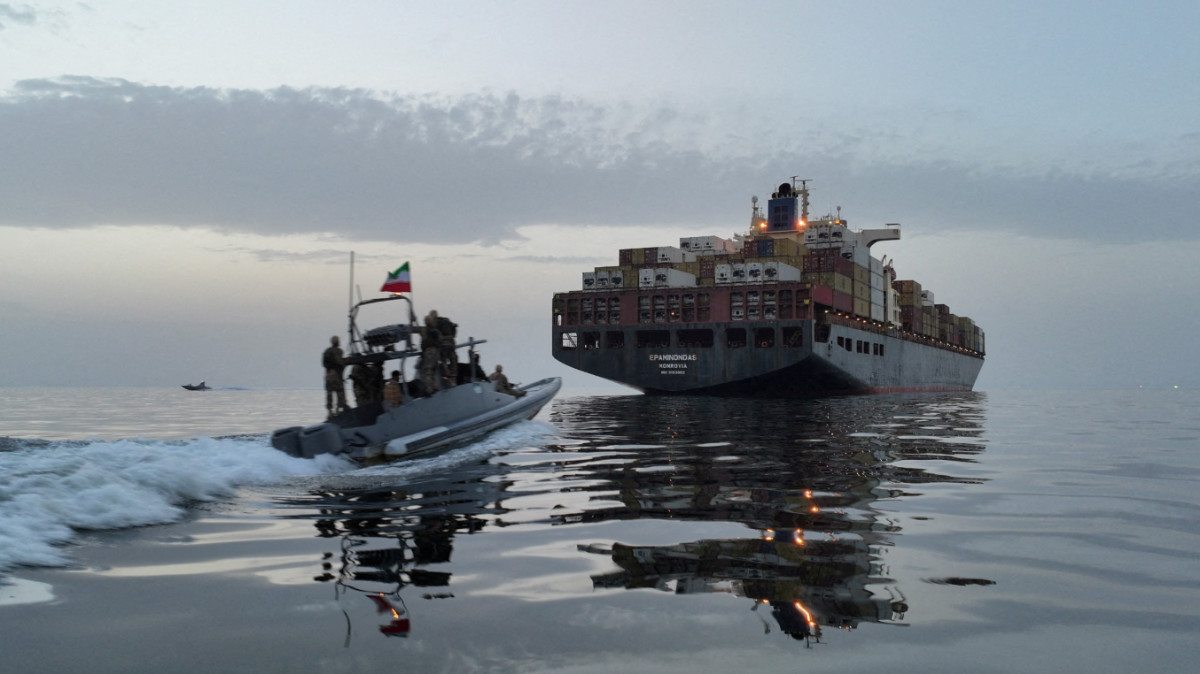
On Thursday, Iran’s Islamic Revolutionary Guard Corps (IRGC) announced it had authorized passage for a group of Chinese-flagged vessels through the Strait of Hormuz in line with pre-negotiated agreements on Tehran’s strait management protocols. The IRGC confirmed that the transit of these vessels began overnight Wednesday. Iranian state television reported that “more than 30 ships” had been cleared for passage, though it did not confirm how many of the vessels were Chinese-owned or flagged.
Even as Chinese vessels were allowed to transit the waterway, new reports of Iranian maritime activity emerged Thursday that signaled ongoing tensions. The UK Maritime Trading Organization confirmed that Iranian forces seized a commercial cargo vessel anchored off the coast of the United Arab Emirates’ Fujairah port earlier the same day, a move that underscores the fragile security environment in the region even as major powers negotiate new de-escalation frameworks.