Almost a decade after the United Kingdom’s narrow 2016 vote to leave the European Union, the long-dormant debate over Brexit has exploded back into British political life, with a senior cabinet minister adding his voice to growing calls for the country to ultimately rejoin the bloc.
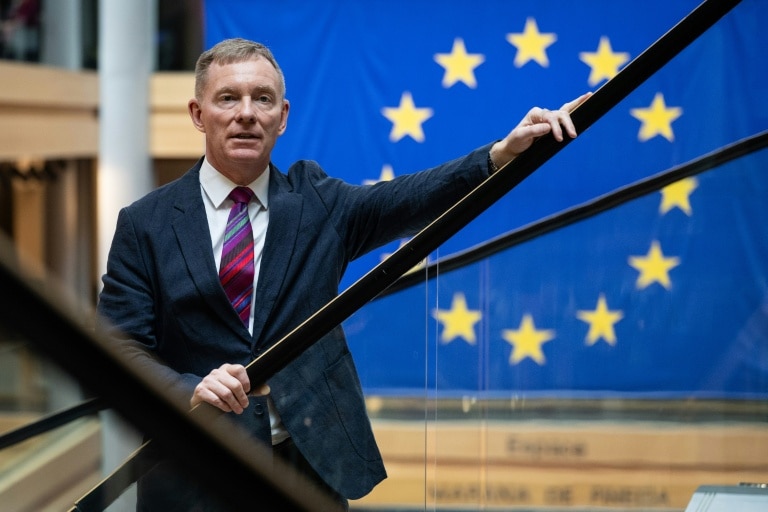
Speaking to Agence France-Presse during a visit to the European Parliament in Strasbourg for talks with legislators on strengthening post-Brexit bilateral ties, British Trade Secretary Chris Bryant made the unprecedented remark that he hopes to see Britain readmitted as a full EU member during his lifetime. The 64-year-old minister, who admitted that his “heart broke on the night of the Brexit vote”, went further than Prime Minister Keir Starmer’s current official stance. Starmer, whose Labour Party has sought to carve out a middle ground on the issue, has pushed for incremental alignment with the EU but has stopped short of backing a new membership application or a return to the European single market.
Bryant’s comments came on the heels of a high-profile call from outgoing Health Secretary Wes Streeting, one of Starmer’s potential successors as Labour leader, who publicly backed rejoining over the weekend. The dual statements have thrown the divisive Brexit issue back to the center of British politics at a moment of severe instability for Starmer’s government. Fresh off of disappointing local election results for Labour earlier this month, dozens of the party’s Members of Parliament have publicly called on Starmer to step down, creating open leadership turmoil just two years into Labour’s current term of office.
In his interview, Bryant did not shy away from the economic costs of Brexit, which he argued have created massive headwinds for the UK. Pointing to official data showing that more than 16,000 British firms have ceased exporting to the European single market since the split, he described Brexit as “an own goal for us”. While the Labour government has prioritized expanding trade partnerships with third countries ranging from South Korea to Turkey to Switzerland, Bryant emphasized that the EU still accounts for 47 percent of the UK’s total trade — a volume no other combination of partners can match. “That’s what we need to get right,” he added.
The minister also acknowledged that any path to rejoining remains a long-term prospect, conceding, “We’re not going to be doing that this summer.” But he rejected the idea that the current domestic political upheaval would derail the UK’s gradual push for a reset of relations with Brussels. Confident in the long-term trajectory, Bryant noted that Labour’s current parliamentary mandate runs through 2029, and argued that any future Labour government — whether led by Starmer or a successor — would prioritize deeper integration with the EU.
Pro-EU forces have gained new momentum in recent months amid shifting global dynamics. As former US President Donald Trump’s foreign policy has injected deep uncertainty into long-standing transatlantic alliances, pressure has grown for the UK to rebuild closer institutional ties with the EU. London and Brussels are already scheduled to hold their second bilateral summit this coming summer, building on the May 2025 meeting that delivered tangible progress: a new agreement to deepen defense and security cooperation, and a rollback of post-Brexit frictions on food trade.
Not surprisingly, the new calls for rejoining have already drawn fierce pushback from prominent Brexit supporters. Nigel Farage, the face of the 2016 Leave campaign and now leader of the hard-right, anti-immigration Reform UK party, has already attacked Streeting’s comments, accusing him of seeking to “drag” the country back into the EU against the 2016 result. The reemergence of the Brexit issue sets the stage for a bitter new domestic political fight that could reshape the trajectory of UK-EU relations for years to come.