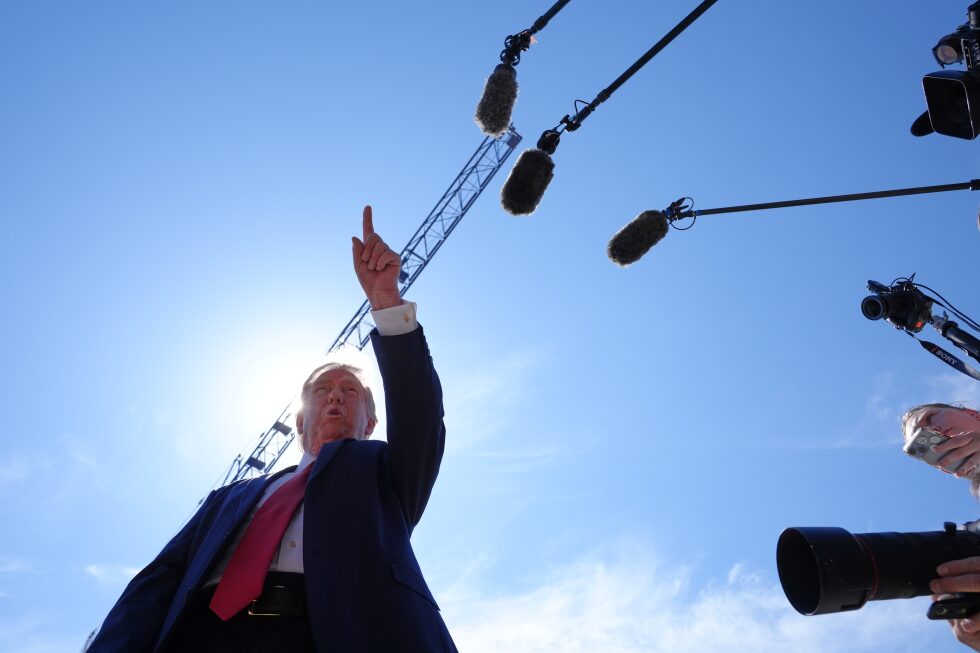
BRUSSELS — Amid lingering uncertainty over U.S. military posture in Europe following a surprise troop cut announcement from former President Donald Trump, America’s senior military official at NATO has moved to calm allied anxiety, confirming Tuesday that no further withdrawals are planned in the near term beyond the 5,000 troops already scheduled to leave the continent.
U.S. Lieutenant General Alex Grynkewich’s public clarification comes two weeks after Trump’s uncoordinated announcement of the drawdown caught NATO alliance leaders off guard, breaking long-standing agreements between Washington and its partners to coordinate all major military adjustments in Europe to prevent dangerous security gaps. The announcement followed a heated public dispute between Trump and German Chancellor Friedrich Merz, who publicly criticized U.S. strategy amid the ongoing Iran conflict, saying Washington had been “humiliated” by Iranian leadership and lacked a clear plan for the war. The criticism triggered sharp anger from Trump, leading to widespread speculation that the troop cuts were intended as a punitive measure against Berlin.
In the weeks after Trump’s announcement, the Pentagon clarified that the 5,000 troop reduction would not involve recalling service members already permanently stationed in Europe. Instead, the drawdown will be implemented by canceling planned rotational deployments: roughly 4,000 soldiers from the U.S. Army’s 2nd Armored Brigade Combat Team will no longer deploy to Poland as scheduled, and a planned deployment of 1,000 long-range missile and rocket specialists to Germany will be scrapped. Specific logistics for the adjusted deployment schedule are still being finalized by military planners.
Speaking to reporters on the sidelines of a gathering of senior military leaders from NATO’s 32 member states at the alliance’s Brussels headquarters, Grynkewich stated clearly, “It will be 5,000 troops coming out of Europe. It’s all that I’m expecting in the near term.”
Before his press briefing, Grynkewich said he held discussions with frontline military commanders from Estonia, Latvia, Lithuania, and Poland — NATO member states that share direct borders with Russia and Ukraine, and have been the most vocal about maintaining strong allied deterrence on the alliance’s eastern flank. The talks covered revised force posture options and adjustments to military capabilities in the region.
The general emphasized that the 5,000-person drawdown would not weaken European security or NATO’s deterrence posture against Russian aggression. However, he also warned allies that additional redeployments of U.S. troops should be expected in the coming years, framing the shift as a natural progression as European allies build up their own independent defense capacity. “Over the long term, we absolutely should expect additional redeployments as Europe continues to build capability and capacity and step up to provide more of the conventional defense of Europe,” Grynkewich explained. He added that the adjustment will be a gradual, multi-year process, and that “We’re going to stay well-synchronized with our allies moving forward.”
Compared to the roughly 80,000 U.S. military personnel currently stationed across Europe, the 5,000-person cut is relatively small, and the scale of the reduction has not sparked major alarm among NATO allies. What has caused concern among partners, however, is the lack of prior coordination for the announcement, as well as the widespread perception that the cuts are a punitive measure targeting Germany over its public criticism of Trump’s Iran policy.