MANHATTAN, N.Y. — An Iraqi man accused of orchestrating a sprawling plot of terror attacks targeting Western and Israeli interests across Europe and North America entered a not guilty plea during his initial federal court appearance Monday, where he publicly declared himself a prisoner of war and decried civilian casualties in regional conflict involving the United States, Israel and Iran.
Mohammad Baqer Saad Dawood Al-Saadi, 45, faces federal charges of conspiracy to provide material support to two U.S.-designated foreign terrorist organizations: Kata’ib Hizballah, an Iran-aligned Iraqi Shia militant group, and the Islamic Revolutionary Guard Corps (IRGC) of Iran. Prosecutors further allege he acted as a commanding figure within Kata’ib Hizballah while planning at least 18 coordinated attacks in retaliation for ongoing military conflict between the U.S.-Israel bloc and Iran.
The proceeding took an unscripted turn when Al-Saadi refused to take his seat after entering his plea, prompting U.S. District Judge Colleen McMahon to order marshals to escort him to his chair. Two court officers approached the defendant, with one resting a hand on his shoulder to guide him into position. Court observers noted Al-Saadi did not act aggressively or intentionally disrupt the hearing; his out-of-process comments stemmed from his response to the charges against him. Through an Arabic interpreter, Al-Saadi told the court, “I’m not guilty in a war situation. I’m a prisoner of war. I’m not a threat. Children and women are being killed by your rockets.”
Defense counsel Andrew Dalack pushed back on the prosecution’s narrative, telling the judge his client was a legitimate employee of the Iraqi government, though he declined to share details of Al-Saadi’s official role. Dalack also outlined the harsh conditions his client has endured in custody: he was held in an underground Turkish prison for two weeks before being transferred to U.S. Federal Bureau of Investigation custody, and has been kept in solitary confinement at a high-security federal lockup in Brooklyn following his extradition to the U.S. Dalack added that Al-Saadi is seeking to establish contact with Iraqi diplomatic officials and his immediate family, but expects U.S. authorities will impose strict restrictions on all communications.
When the charges against Al-Saadi were first announced publicly last month, Dalack told reporters his client maintains he is being politically persecuted for his personal ties to Qasem Soleimani, the longtime head of the IRGC Quds Force who was killed in a U.S. drone strike in Baghdad in 2020.
The allegations against Al-Saadi outline a multi-year cross-continental terror campaign. Beyond the 18 planned attacks across Europe, he faces direct charges for two completed attacks: a 2023 firebombing of a bank in Amsterdam, and a stabbing targeting Jewish men in London. Court documents filed by federal prosecutors also reveal that Al-Saadi plotted to attack a synagogue in New York City as recently as last month, and shared detailed photos and site maps of Jewish community centers in Los Angeles, California and Scottsdale, Arizona to an undercover law enforcement operative he believed was a co-conspirator.
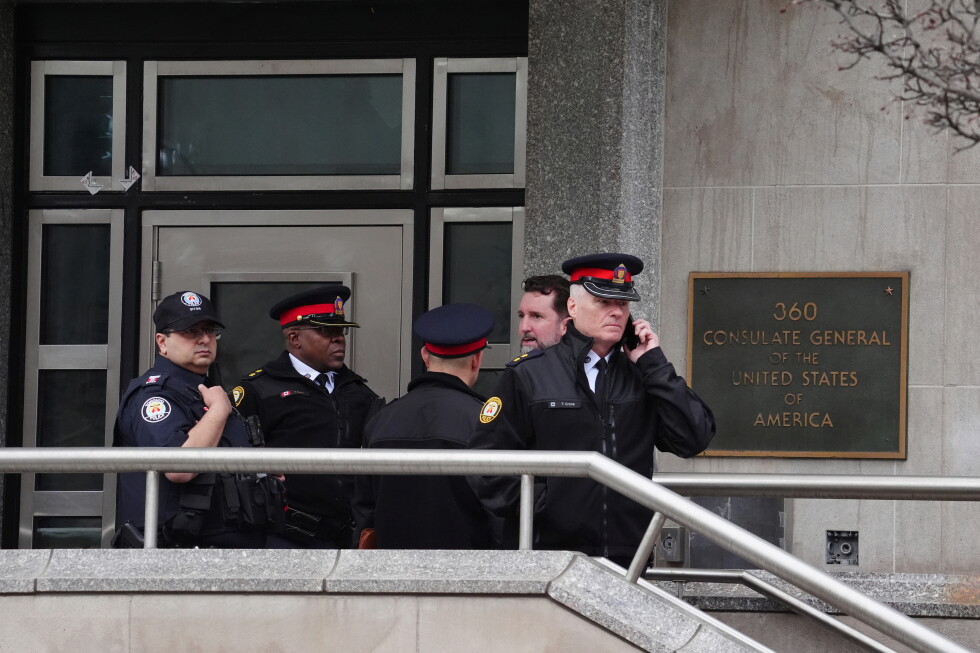
He is also linked to two high-profile attacks in Canada from earlier this year: a breach of a synagogue and a March shooting at the U.S. Consulate in Toronto. Prosecutors confirm Al-Saadi directed and coerced other actors to carry out attacks against all U.S. and Israeli-affiliated targets, explicitly calling for the killing of American and Jewish civilians. According to court filings, Al-Saadi documented the attacks and coordinated planning through social platforms including Snapchat and Telegram, and discussed operational details in phone calls that were recorded by an FBI confidential informant he had recruited to help carry out domestic attacks in the U.S.