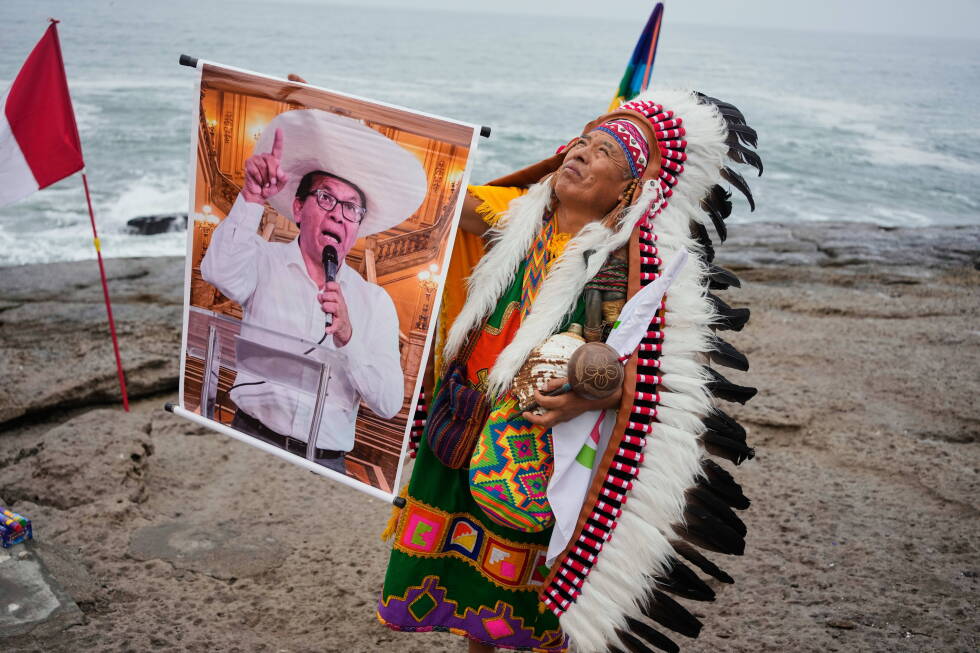
LIMA, Peru – As Peru braces for a high-stakes presidential runoff that will shape the future of a South American nation roiled by years of political upheaval and corruption, Indigenous shamans from across the country gathered Monday on the sunbaked shores of Lima’s Herradura Beach for a traditional blessing ritual focused on the two remaining candidates. Held in the coastal Chorrillos district, the centuries-old ceremony comes ahead of Sunday’s decisive vote, a contest that arrives amid a decade-long cycle of presidential ousters tied to widespread corruption scandals that have gutted public trust in the country’s political institutions.
This pre-election ritual is a longstanding cultural tradition, held at the turn of every new year and ahead of major electoral contests to invoke spiritual guidance for the country’s political future. The gathered shamans arranged public portraits of the two runoff contenders at their seaside altar, where they led chants and blessings using traditional ceremonial items: vivid flower petals, fresh fruit, sacred coca leaves, aromatic palo santo (known locally as “holy wood”), cured black tobacco, ceremonial swords, and symbolic ritual dolls. To close the public portion of the ceremony, participants lit brightly colored flares and beat traditional drums, filling the coastal air with rhythm and smoke.
The two candidates facing off Sunday are Keiko Fujimori, a conservative political figure and daughter of disgraced former Peruvian President Alberto Fujimori, and Roberto Sánchez, a nationalist former cabinet minister and sitting congressman. Polling ahead of the runoff shows the pair locked in a dead heat, with neither candidate holding a statistically significant lead over the other. The path to the runoff has already been rocky: in April’s crowded first-round election, Fujimori captured just over 17% of the vote, while Sánchez earned roughly 12% to claim the second spot. That initial round was marred by widespread logistical failures that left thousands of voters both in Peru and living overseas unable to cast their ballots, forcing the country’s national electoral body to spend weeks sorting through disputes and finalizing the two candidates who would advance to the runoff.
Andrés de los Santos, a shaman who traveled to the capital from northern Peru to participate in the ritual, emphasized the core purpose of the gathering: “The ritual we perform is primarily intended to ensure that the best candidate is the one who represents our Peru.” Unlike in past years, the assembled shamans chose not to issue a public prediction of the election’s outcome this cycle. That choice marks a departure from earlier ceremonies, when the group has publicly forecast political shifts: at the end of 2025, they predicted that Venezuela’s sitting President Nicolás Maduro, who currently faces U.S. drug trafficking charges, will leave office before the end of 2026.
Whoever claims victory on Sunday will step into the office of president as Peru’s ninth sitting head of state in just 10 years, a staggering pace of turnover driven by repeated corruption scandals. The winner will replace interim President José María Balcázar, who took office in February after his predecessor, interim leader José Jerí, was removed from office just four months into his term over widespread corruption allegations. The new president will be sworn in on July 28 to serve a full five-year term, tasked with stabilizing the country’s fractured political landscape and restoring public faith in government.