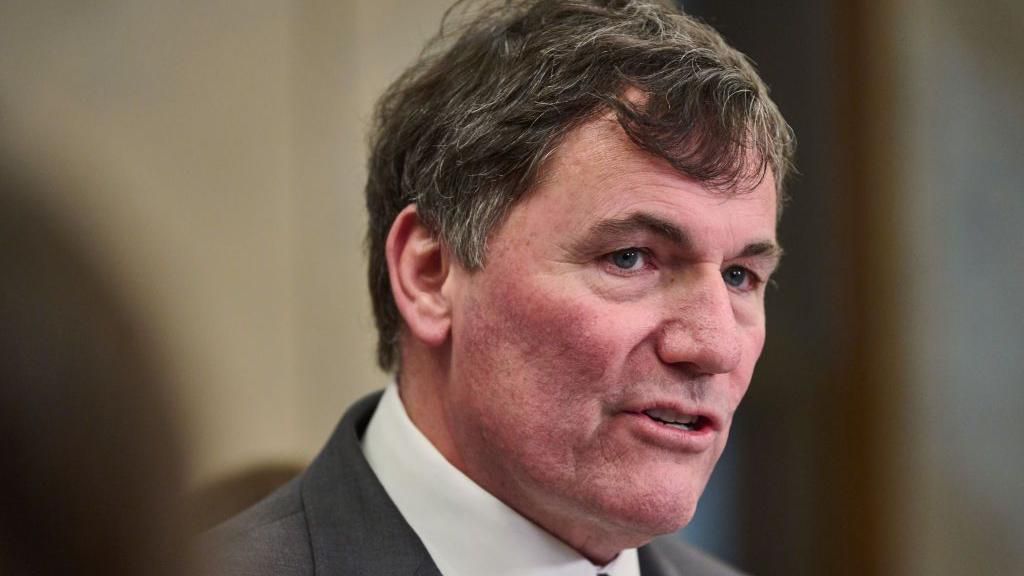
As a critical July 1 deadline for renegotiating the United States-Mexico-Canada Agreement (USMCA) rapidly approaches, Canada has tabled a formal request to extend the landmark North American trade pact for 16 years, with its top trade envoy set to meet with U.S. trade officials in Washington on Tuesday to break a months-long deadlock in bilateral negotiations.
Dominic LeBlanc, Canada’s Minister for Canada-U.S. Trade, formally submitted the 16-year extension proposal in an official notice released Tuesday, framing the tripartite agreement as a mutually transformative framework that has delivered broad economic gains across all three North American nations. LeBlanc’s trip to the U.S. capital comes directly after U.S. Trade Representative Jamieson Greer wrapped up a fresh round of formal bilateral talks with Mexico, a negotiation process that has moved far faster than parallel discussions with Canada, where several core sticking points have kept the two sides far apart.
The primary flashpoints in the Canada-U.S. talks center on long-running sectoral tariff disputes, automotive regional content rules, agricultural market access, and lingering tensions tied to tariffs first imposed by former U.S. President Donald Trump. Canadian Prime Minister Mark Carney has repeatedly pushed for the elimination or reduction of existing U.S. tariffs on Canadian steel, aluminum, automobiles and softwood lumber, a key Canadian export. But Greer has signaled that Washington is unlikely to fully remove these levies, and has pushed back against Canada over a series of ongoing trade irritants.
One major point of U.S. frustration stems from a decision by most Canadian provinces to pull American liquor off retail shelves in response to Trump’s original tariffs, a retaliatory move that Greer has highlighted as a key barrier to progress. Washington is also demanding expanded access to Canada’s tightly regulated dairy market, where Canada uses production quotas and import restrictions to protect its domestic dairy farming sector. Additionally, the U.S. is pushing to raise the required share of U.S.-sourced content in vehicles manufactured in North America to qualify for USMCA tariff-free treatment, a proposal that would tighten the existing rules of origin for the automotive sector.
Per Reuters reporting, the U.S. has proposed a mandate that at least 50 percent of a North American vehicle’s content be sourced from the United States during its talks with Mexico. Carney pushed back on this demand this week, noting that vehicles currently produced in Canada already contain a U.S. content share roughly equal to the 50 percent threshold the U.S. has proposed. In a speech in New York City last week, Carney framed a strong Canadian economy as a net benefit for U.S. growth, saying, “A strong Canada will help make America great again,” nodding to a well-known political slogan from Trump.
Domestically, Carney is facing mounting political pressure to wrap up a successful deal quickly, as the Conservative opposition has targeted the prime minister over Canada’s sluggish economic growth and elevated youth unemployment. On Tuesday morning, Conservative Member of Parliament Jasraj Singh Hallan used a press conference to attack Carney, calling the prime minister a “grand illusionist” who has failed to deliver on his campaign promises to boost Canadian economic growth. Hallan demanded the government outline a clear plan to move negotiations forward.
Greer has previously blamed the slow pace of Canada-U.S. talks on Canada’s decision to retaliate against U.S. tariffs, a step Mexico opted not to take. “Two countries in the world retaliated against us: The People’s Republic of China and Canada,” Greer told reporters last week. “So they’re just in a different spot, and it’s hard to see necessarily where that ends.”
If all three member nations fail to reach an agreement to extend the full USMCA by July 1, the pact will default to annual renewal cycles, a status that will continue through 2036 unless a new long-term extension is approved. The upcoming talks between LeBlanc and Greer are widely seen as a critical test of whether a long-term deal can be reached before the deadline, with economic implications for trade, manufacturing and employment across North America.