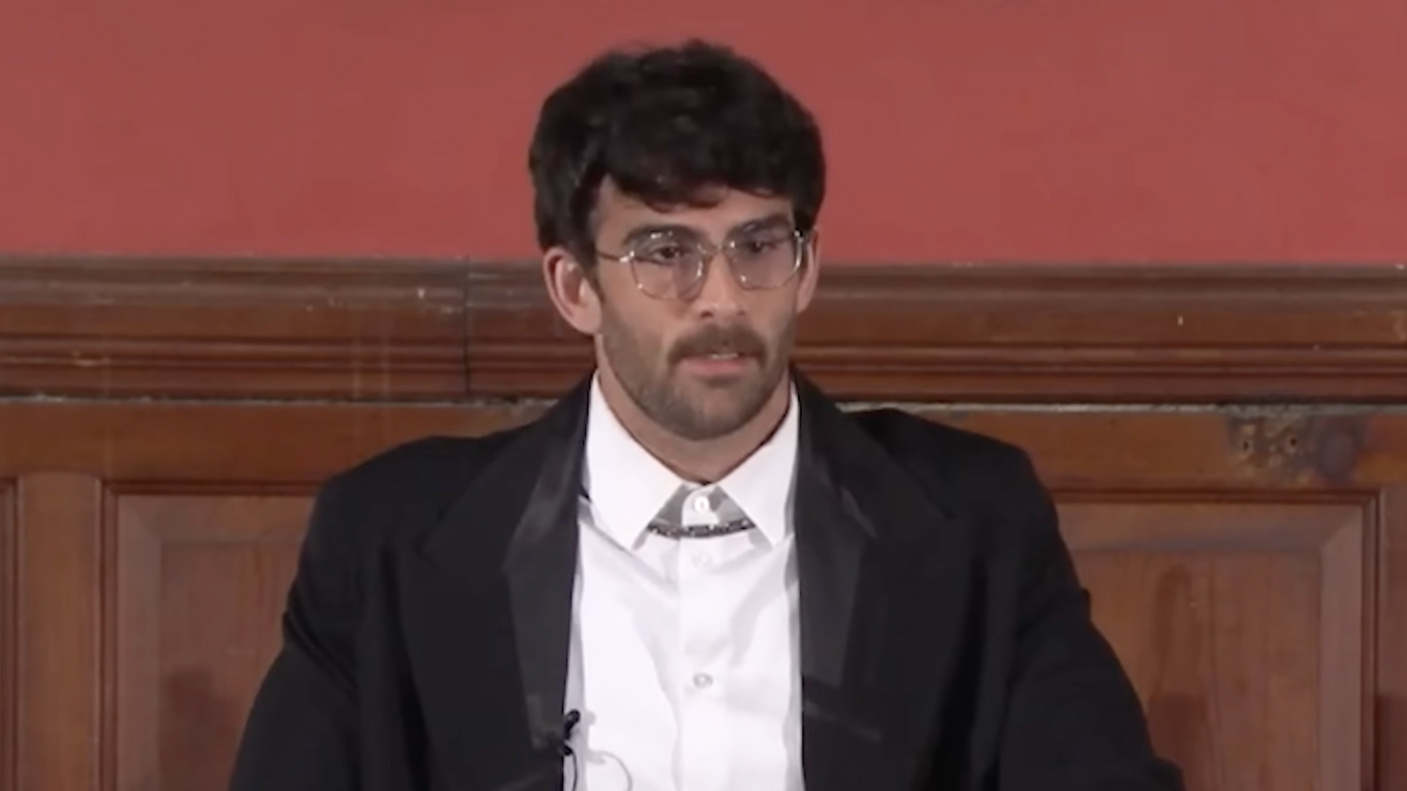
For nearly 200 years, the Oxford Union has stood as one of the world’s most iconic platforms for provocative and unfiltered debate, with former British Prime Minister Harold Macmillan once hailing it as “the last bastion of free speech in the western world.” Today, that famous line is emblazoned outside the society’s campus bar, a constant reminder of the core principle the institution was built to defend – and this term, its president Arwa Elrayess is putting that principle to the test in a high-profile standoff with the British government.
Elrayess, a Palestinian student, has issued a firm vow to push forward with a planned speaking event featuring American political commentators Cenk Uygur and Hasan Piker, after UK authorities barred the two men from entering the country. Originally scheduled to appear in person at the union and at London’s SXSW festival, the pair will now address Oxford students via livestream on Saturday 6 June, with the society refusing to scrap the event entirely.
The clash began when UK Home Secretary Shabana Mahmood revoked Uygur’s electronic travel authorisation, ruling that his presence in the United Kingdom would not be “conducive to the public good.” Uygur, for his part, says the ban stems from his public criticism of Israel. In a post on X, he explained that the UK government labeled his widely shared claim that Israel influences the U.S. Congress via campaign donations as antisemitic, even as it acknowledged his statement was factually grounded. “Don’t know if facts will soon be banned in Britain,” he wrote. “I didn’t get banned for criticizing the UK, but for criticizing Israel. They broke the irony record by saying it was because I said Israel might control other governments. I wonder if they’re going to ban themselves.”
Piker, who spoke at the Oxford Union last year, noted his 2024 address focused on “the dangers of conflating Judaism and Zionism & how this foments antisemitism.”
In an exclusive interview with Middle East Eye published Monday, Elrayess issued a sharp rebuke of the government’s decision, doubling down on the union’s commitment to holding the event. “The Oxford Union was founded on one principle: that ideas are challenged through debate, not silenced by decree,” she said. “We have never turned a speaker away because of their political beliefs nor have we sought a permission slip from the state. We will not start now.” Reaffirming that the event would not be canceled, she added, “Free speech does not require a visa.”
Elrayess, who has personal experience with the censorship of pro-Palestinian speech, framed the standoff as a defense of the institution’s 201-year legacy. Founded in 1823 by students rebelling against official campus censorship, the Oxford Union has a long history of defending controversial speech that draws political backlash. In 1933, the union passed an anti-war motion that earned a blistering condemnation from Winston Churchill, who called the body “abject, squalid, shameless” and “nauseating.” In 1964, civil rights leader Malcolm X delivered a legendary address defending the principle that “extremism in the defence of liberty is no vice; moderation in the pursuit of justice is no virtue.” More recently, the union made headlines when O.J. Simpson spoke just after his acquittal on murder charges, and the UK government blocked broadcasts of a speech by Sinn Fein politician Gerry Adams. Just this year, the society drew widespread condemnation from right-wing British media after its members voted overwhelmingly to declare Israel “an apartheid state responsible for genocide.” It also faced criticism earlier this year for extending an invitation to far-right activist Tommy Robinson for an Islam-related debate, a decision that tested the society’s commitment to hearing opposing views.
The government’s entry ban has already drawn sharp criticism from across the British political left. Green Party leader Zack Polanski has accused the new Labour government of “doing everything possible to silence criticism of the Israeli government.” Former Labour leader Jeremy Corbyn echoed that criticism, denouncing the ban as “an attack on the freedom to criticise Israel, as well as the UK government’s own complicity in genocide.”
For Elrayess and the Oxford Union, the livestream event this weekend will be a tangible demonstration of whether Macmillan’s decades-old description of the society as a bastion of free speech still holds true today.