分类: politics

  • Hormuz standoff sets a tense tone for Trump-Xi meet

    Hormuz standoff sets a tense tone for Trump-Xi meet

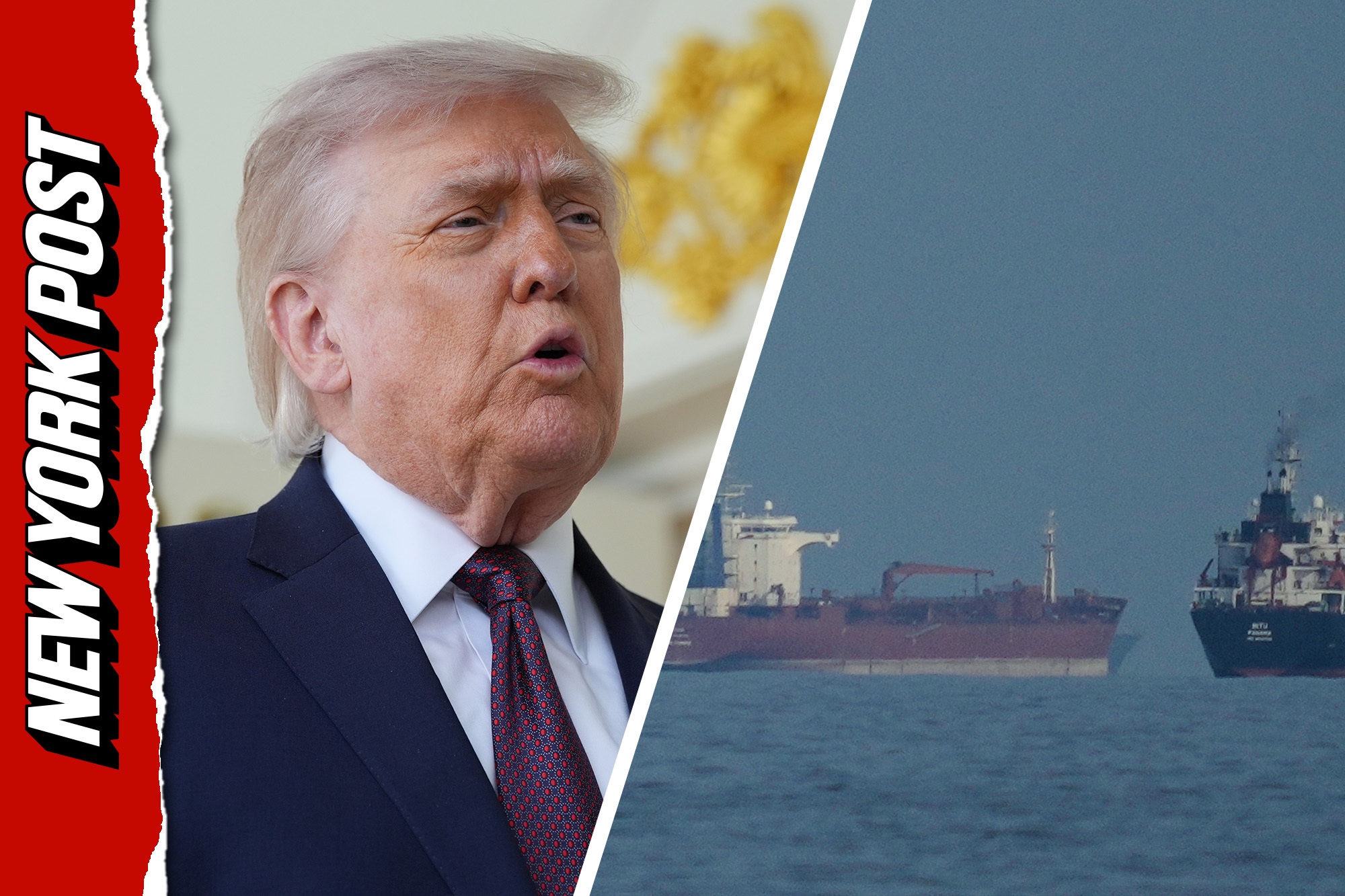
    The Persian Gulf has been pushed into uncharted, high-risk territory following the Trump administration’s decision to impose a naval blockade on the Strait of Hormuz, a strategic chokepoint that carries roughly one-fifth of the world’s daily oil shipments. The controversial measure was announced by former President Donald Trump after ceasefire negotiations with Iran collapsed on April 11, with the breakdown rooted in Iran’s refusal to relinquish its claimed control over the strait. Washington’s blockade is explicitly framed to counter two Iranian moves: Tehran’s plan to block passage for vessels it considers hostile, and its proposal to implement a new transit toll system for all commercial ships passing through the waterway.

    Beyond its stated goal of countering Iran, the blockade marks a deliberate show of force by the Trump administration that directly challenges Beijing. In recent years, China has emerged as the largest buyer of Iranian crude oil, and it is one of the only countries whose commercial shipping has been able to transit the strait without interference from regional forces. This special status was put to an early test on April 14, when the Rich Starry, a Chinese-owned and operated tanker already under US sanctions for carrying Iranian oil, prepared to make the passage. While many observers expected a direct confrontation between the tanker and US naval forces deployed to the region, the vessel ultimately reversed course in the Gulf of Oman and turned back. US officials have since confirmed that six vessels attempting to transit the strait have been turned away under the blockade.

    The Rich Starry’s decision to avoid confrontation has been widely interpreted as a signal that Beijing is not yet willing to directly challenge Washington’s stated red lines in the region, particularly ahead of a planned US presidential state visit to China scheduled for next month — a trip that was originally postponed from March 31 amid escalating tensions with Iran. Beijing has already publicly condemned the US blockade, labeling it a “dangerous and irresponsible act” that threatens global energy security. Even so, the decision to step back from a direct clash may be read by Washington as a sign of Chinese reluctance to escalate, a perception that analysts warn could embolden the Trump administration to take more aggressive action against Chinese shipping in the region going forward.

    Any attempt by the US to seize a Chinese-flagged or Chinese-owned tanker carries severe escalation risks. If Washington moves to seize a vessel, Beijing could easily characterize the action as an act of war, framing it as a deliberate attempt to disrupt the Chinese economy by cutting off critical energy supplies. While a direct armed confrontation between the United States and China in the Persian Gulf remains unlikely at this stage, the crisis has already spurred speculation that Beijing could deploy its 48th Escort Group, based at its military facility in Djibouti, to the region. The unit has long conducted anti-piracy patrols and escort missions for Chinese commercial ships in the Gulf, and its deployment would raise a pressing new question: would Washington be willing to open fire on Chinese naval vessels to enforce its blockade?

    Beyond direct naval confrontation, China has multiple indirect options to respond to the US move. One widely discussed path is increased military support for Iran. Unconfirmed intelligence reporting from The New York Times has alleged that Beijing has already shipped shoulder-launched anti-aircraft missiles to Tehran, a claim that Chinese officials have repeatedly and forcefully denied. China’s Beidou satellite navigation system is already known to provide positioning support for Iran’s existing missile arsenal, which is targeted at US and Israeli assets in the region. Additional transfers of advanced weapons, including long-range missiles and attack drones, would allow Beijing to counter the US blockade without direct engagement.

    Alternative, Beijing could choose to retaliate against US interests outside the Middle East, targeting American economic and strategic assets in the Asia-Pacific. The current context plays into this possibility: the US has already redeployed key missile defense systems from South Korea to the Middle East, leaving American allies in the Asia-Pacific more exposed. At the same time, fuel shortages sparked by strait disruptions have already put additional economic strain on regional powers, creating more openings for Chinese action if Beijing chooses to escalate.

    Despite Beijing’s stated preference for a stable Middle East and open global trade — a status quo from which China has benefited enormously from decades of globalization — the crisis also creates unique strategic and economic opportunities for China to advance its long-term goals. One of the most significant is the expansion of the renminbi’s role in global energy markets. Iran already conducts nearly all of its oil trade transactions in renminbi, accelerating the rise of the so-called petroyuan as a challenger to the decades-long dominance of the petrodollar in global energy trade. Combined with China’s position as the leading supplier of aviation fuel across the Asia-Pacific, the current crisis has already cemented China’s larger role in the global energy economy.

    Another potential beneficiary of prolonged energy market disruption is China’s electric vehicle (EV) industry. A sustained oil shortage would likely push more consumers and governments to accelerate the transition to EVs, a market where Chinese manufacturers like BYD already hold a dominant global market share. Analysts draw a parallel to the 1970s OPEC oil crisis, when fuel-efficient Japanese vehicles outcompeted larger, less efficient American and European models, capturing massive global market share. A prolonged oil crisis today could similarly turn Chinese EV brands into global household names, expanding the global influence of “Brand China.”

    Finally, the crisis reinforces China’s ongoing narrative that it is a more reliable and stable global partner than the United States, amid widespread perceptions of unpredictability from the Trump administration over the past 15 months. China already holds a more favorable global public image than the US in most international polling, and a wider regional conflict stemming from the blockade would likely widen that gap further. In the end, the course taken by the Rich Starry may end up charting the future trajectory of US-China great power competition, and the shape of the global order that competition will produce.

  • Millions listen to Ethiopian star’s song taking swipe at government

    Millions listen to Ethiopian star’s song taking swipe at government

    As Ethiopia prepares for its upcoming June general election, a new music release from the nation’s most iconic musician has ignited widespread public conversation, delivering a seeming rebuke of the current government that resonates deeply with growing discontent across the country. Titled *Das Tal*, which translates to “Put Up the Tent” in English, the track was uploaded to YouTube last Thursday, and has already amassed more than seven million views from audiences at home and abroad.

    The song draws its symbolism from Ethiopia’s traditional mourning tents, spaces where communities gather to grieve shared loss. Throughout the track, 49-year-old Teddy Afro — born Tewodros Kassahun — crafts a raw, lyrical lament for what he frames as a lost nation. “The spirit of being Ethiopian is now pushed away,” he sings. “Now I understand the sorrow and pain. Where can someone go to mourn, where do you cry? In the place that raised me, in the village where I grew up, I have become a stranger, like someone with no country.”

    Controversy preceded the track’s official launch, when a planned preview event for journalists in the capital city of Addis Ababa was abruptly canceled, with no clear explanation given for the last-minute cancellation.

    This is far from the first time Teddy Afro has clashed with Ethiopian governments: for more than two decades, he has been one of the most prominent dissident voices in the country’s cultural landscape, where open criticism of ruling authorities has regularly resulted in legal and professional repercussions for critics. Twenty years ago, he was imprisoned for 16 months on charges related to a hit-and-run incident, charges he has long maintained were fabricated as political retribution for his criticism of the government.

    In 2017, his most recent full album *Ethiopia*, which centered on historical narratives and called for cross-ethnic unity across the country, became a commercial sensation. It topped Billboard’s World Albums chart for multiple consecutive weeks and recorded massive sales among Ethiopian audiences both domestically and internationally, but authorities blocked the album’s official release within Ethiopia’s borders.

    That same period saw massive nationwide anti-government protests sparked by longstanding grievances over the marginalization of the Oromo people, Ethiopia’s largest ethnic group. Those protests ultimately led to the resignation of the long-serving prime minister and paved the way for current Prime Minister Abiy Ahmed, an Oromo himself, to take power. Abiy campaigned on a promise of a new era of inclusive unity for Ethiopia’s multi-ethnic population, and Teddy Afro initially welcomed his agenda. In a 2017 interview with the BBC, the musician framed his work as rooted in a call for collective love, echoing civil rights leader Martin Luther King Jr.: “Hate cannot drive out hate: only love can do that. And for us to come out of the situation we are in, I believe the only choice we have is love.”

    In the years since Abiy took office, however, Teddy Afro has become increasingly disillusioned with the government’s leadership. Widespread interethnic violence across the country and the brutal two-year civil war in the Tigray region, which killed hundreds of thousands of people, have pushed the musician to sharpen his criticism. In 2022, he released a track calling out the growing danger of ethnic tribalism, a theme he expands on in his latest release.

    For his part, Prime Minister Abiy has repeatedly emphasized his commitment to national unity, framing collective solidarity as the only path to lasting security and economic prosperity for all Ethiopians. With the general election just weeks away, political messaging around national unity is set to intensify across the political spectrum — and Teddy Afro’s viral new track has already placed national discontent at the center of public discourse in the lead-up to the vote.

  • War in the Middle East: latest developments

    War in the Middle East: latest developments

    Fresh developments across the Middle East this week have deepened existing frictions between the United States and Iran, while regional mediators continue high-stakes diplomatic pushes to de-escalate the crisis and advance stalled peace negotiations. From a provocative attack on a commercial tanker in a strategic waterway to shifting positions on ceasefire extension and navigation access, the rapidly unfolding events have left regional stability hanging in the balance.

    In the first major reported incident, the United Kingdom’s Maritime Trade Operations Centre confirmed that Iranian Revolutionary Guards Corps (IRGC) gunboats opened fire on a commercial tanker 20 nautical miles northeast of Oman in the Strait of Hormuz, without prior radio warning. Authorities confirmed all crew members aboard the vessel are unharmed, and official investigations into the attack are currently underway. The Strait of Hormuz remains one of the world’s most critical chokepoints for global oil supplies, with roughly a fifth of all global oil shipments passing through the waterway daily.

    Shortly after the tanker incident, a statement attributed to Iran’s Supreme Leader Mojtaba Khamenei, who has not appeared in public since the current conflict began, was published to his official Telegram channel. In the message, Khamenei asserted that Iran’s naval forces are fully prepared to inflict new defeats on US military forces in the region, saying “our brave navy stands ready to make the enemies taste the bitterness of new defeats.”

    Diplomatic efforts to bring the two sides back to the negotiating table remain gridlocked, Iranian Deputy Foreign Minister Saeed Khatibzadeh confirmed to reporters this week. After the first round of Pakistan-brokered peace talks between Iran and the US collapsed, no new date for a second meeting has been set. “Until we agree on the framework, we cannot set the date,” Khatibzadeh said, adding that Tehran refuses to enter talks that are destined to fail, as such an outcome would only provide a pretext for further escalation. The deputy foreign minister also pushed back against recent threats from Washington of new military strikes, criticizing US President Donald Trump’s frequent public comments on the conflict, saying “the American side tweets a lot, talks a lot. Sometimes confusing, sometimes contradictory.”

    Despite the stalemate, regional mediators Egypt and Pakistan say they are continuing intensive work to broker a final agreement between the two adversaries. Egyptian Foreign Minister Badr Abdelatty told reporters that both Cairo and Islamabad are working “very hard” to reach a deal, saying “we hope to do so in the coming days” and that Cairo is “pushing very hard in order to move forward.” Pakistan’s top diplomatic and military leadership have also wrapped up a round of shuttle diplomacy this week: Army Chief Field Marshal Asim Munir concluded a three-day visit to Tehran where he met with Iran’s top leadership and peace negotiators, while Pakistani Prime Minister Shehbaz Sharif returned home from a separate visit to Turkey. A second round of official talks is still tentatively expected to be held in Islamabad in the coming week, though no date has been confirmed.

    In a major reversal of a prior concession made during early negotiations, Iran’s central military command announced this week that it would resume “strict management” of the Strait of Hormuz, rolling back a previous decision to unblock the strategic channel. The military said the reversal came in response to Washington breaking its earlier commitment to ease a naval blockade on commercial ships traveling to and from Iranian ports.

    Iran has taken a small step to ease restrictions on global aviation, however, partially reopening its eastern airspace to transit flights for international airlines. The Iranian Civil Aviation Authority confirmed that key air routes through the eastern section of the country’s airspace are now open for transiting international flights, and that several Iranian airports have also resumed limited operations.

    On the American side, President Trump confirmed Friday that if no peace deal is reached with Tehran, he plans to maintain the US naval blockade of Iranian ports, and may choose not to extend the current bilateral ceasefire that is set to expire this coming Wednesday. “Maybe I won’t extend it, but the blockade is going to remain,” Trump told reporters during an interview aboard Air Force One. Despite the tough stance, the president remained optimistic about the prospects for a breakthrough, saying “I think it’s going to happen.”

    In another key development related to broader regional conflict, Turkish Foreign Minister Hakan Fidan used his speaking slot at the Antalya Diplomacy Forum to level sharp criticism at Israeli Prime Minister Benjamin Netanyahu’s government, accusing it of using national security as a pretext to seize additional territory. “Israel is not after its own security. Israel is after more land. Security is being used by the Netanyahu government as an excuse to occupy more land,” Fidan said.

  • With a handshake, Spain and Mexico put diplomatic tussle over their colonial past behind them

    With a handshake, Spain and Mexico put diplomatic tussle over their colonial past behind them

    BARCELONA, Spain – In a landmark moment for bilateral ties, Mexican President Claudia Sheinbaum closed a years-long diplomatic rift between Mexico and Spain rooted in the legacy of Spanish colonial rule, wrapping up the reconciliation with a handshake and conciliatory remarks during her Saturday appearance at a Barcelona pro-democracy gathering.

    Addressing delegates at the IV Meeting in Defense of Democracy – a conference bringing together political representatives from 15 nations focused on countering the global rise of illiberal governance – Sheinbaum pushed back on narratives of ongoing tension between the two nations. “There is no diplomatic crisis, there never was one,” she stated, moments before she greeted Spanish Prime Minister Pedro Sánchez with a handshake. She emphasized that the core of the discussion has always been honoring the experiences and contributions of Indigenous communities across Mexico, rather than perpetuating conflict.

    The diplomatic standoff stretches back to 2019, when then-Mexican President Andrés Manuel López Obrador sent an open letter to Spain’s King Felipe VI and Pope Francis calling for a formal, public acknowledgment of systematic abuses carried out against Indigenous populations during the 16th-century Spanish conquest of Mexico. The Spanish government rejected the demand for an official apology at the time, a decision that gradually eroded warm relations between the two governments.

    Ties reached their lowest point earlier this year, when Sheinbaum declined to extend an inauguration invitation to King Felipe VI over the continued refusal to issue the formal apology. Sánchez labeled the snub “unacceptable,” and Spain retaliated by breaking with longstanding diplomatic tradition, declining to send any official representative to the Mexican president’s inauguration ceremony.

    The turning point came in March 2025, when King Felipe VI took an unprecedented step toward reconciliation by publicly acknowledging that the colonial conquest of the Americas resulted in widespread abuse and mistreatment of Indigenous native communities. The concession cleared a path for renewed diplomacy, and the Mexican government responded by inviting the Spanish monarch to attend a 2025 FIFA World Cup match hosted in Mexico this summer.

    At Saturday’s summit, Sánchez did not publicly address the now-resolved dispute, instead focusing on shared collaborative goals. He thanked Sheinbaum for Mexico’s agreement to host the next iteration of the pro-democracy gathering in 2026, marking a quiet but clear return to normal diplomatic engagement between the two nations.

  • Progressive leaders rally in Barcelona to defend the traditional liberal order

    Progressive leaders rally in Barcelona to defend the traditional liberal order

    BARCELONA, Spain — A high-profile gathering of progressive and centrist democratic leaders convened in Barcelona on Saturday, with a shared mission to reverse eroding public trust in the global liberal order, which faces growing pressure from surging far-right extremism and spreading international conflict. Spanish Prime Minister Pedro Sánchez, a vocal critic of U.S. President Donald Trump and the recent U.S.-Israeli military campaign against Iran, is hosting two interconnected events focused on democratic resilience and progressive policy in the convention center of Spain’s second-largest city.

    The fourth iteration of the Meeting in Defense of Democracy brought together sitting heads of state from across the Global West and Global South, including Brazil’s Luiz Inácio Lula da Silva, Mexico’s Claudia Sheinbaum, South Africa’s Cyril Ramaphosa, and Colombia’s Gustavo Petro. In addition to leaders from 10 other nations represented at the summit, British Deputy Prime Minister David Lammy also took part in the proceedings.

    Though no attending leader explicitly named Trump during the portion of the summit open to media coverage, the shadow of his administration’s staunchly unilateral agenda — a sharp break from decades of established U.S. foreign policy, marked by repeated public criticism of NATO and the United Nations — hung over every discussion. The entire summit is framed around defending the existing multilateral, rules-based global system that Trump’s approach has directly challenged.

    Opening the gathering, Sánchez laid out the core threats that attendees have united to address: “We all see the attacks against the multilateral system, the repeated attempts to undermine international law and the dangerous normalization of the use of force.” He outlined the summit’s key priorities for strengthening the global order: kickstarting comprehensive reform of the United Nations, implementing regulatory frameworks for social media platforms to curb the spread of hate speech and harmful disinformation, and developing evidence-based policy solutions to address rapidly widening economic inequality around the world.

    “ We all share the vision that democracy is the best system to respond to the complexities of our societies,” Sánchez added. Organizers note that the forum was first established in 2024 as a joint initiative by Brazil, Spain, and Chile, created to serve as a collaborative space for developing strategies to counter the triple threats of extremism, deep political polarization, and widespread misinformation that have eroded the foundations of participatory democracy across the globe.

    Following the conclusion of the defense of democracy summit, a subset of leaders remained in Barcelona to participate in the inaugural Global Progressive Mobilization, an event expected to draw roughly 3,000 left-leaning elected officials, policy experts, and activists to exchange ideas and coordinate cross-border action.

    Saturday’s back-to-back gatherings came one day after Sánchez and Lula held a pre-summit bilateral meeting at a historic former royal palace in Barcelona. The two leaders used that discussion to highlight their shared alarm over the series of ongoing conflicts that have roiled global stability: Russia’s full-scale invasion of Ukraine, Israel’s military offensive in Gaza launched in response to the October 2023 attack by Hamas, and the latest outbreak of hostilities involving Iran that has sent shockwaves through global energy markets.

    Sánchez and Lula occupy a unique space in contemporary global politics: they count among the small handful of high-profile progressive leaders who have retained national power and popular support despite a broad global shift toward right-wing governance. Both leaders have consistently upheld multilateral cooperation, universal human rights, robust environmental protections, and gender equality — a set of core values that have come under repeated attack from Trump, Argentina’s libertarian far-right President Javier Milei, and a growing bloc of far-right movements across Europe.

  • Turkey says Israel using security as a pretext to acquire ‘more land’

    Turkey says Israel using security as a pretext to acquire ‘more land’

    Amid a sustained surge in cross-border diplomatic friction between Ankara and Jerusalem, Turkey’s top foreign policy official has leveled sharp accusations against Israel, claiming the Jewish state is hiding territorial expansion ambitions behind a veneer of legitimate security concerns. Turkish Foreign Minister Hakan Fidan delivered the scathing critique Saturday during a high-profile panel discussion at the Antalya Diplomacy Forum, a key annual gathering of global diplomatic leaders held in Turkey’s Mediterranean resort city of Antalya.

    In prepared remarks delivered in English, Fidan pushed back against Israel’s longstanding framing of its military actions across the Middle East as acts of self-defense, arguing this narrative has created a misleading “illusion” for the international community. “Israel is not after its own security. Israel is after more land,” Fidan stated directly, adding that Israeli Prime Minister Benjamin Netanyahu’s administration deliberately leverages security justifications to legitimize the seizure of additional territory.

    Fidan traced this pattern of expansion across multiple regional flashpoints: from long-disputed Palestinian territories including Gaza, the occupied West Bank, and East Jerusalem, to the growing border tensions between Israel and Lebanon, and ongoing spillover into Syrian territory. “This is onward occupation and expansionism in the region, and I think this has to stop,” he added. Fidan went on to argue that lasting peace for Israel in the Middle East can only be achieved if the country respects its neighbors’ right to sovereignty, territorial integrity, and personal security, rather than relying on military dominance to achieve its goals.

    Public disagreements between Turkey and Israel have become a near-daily occurrence in recent months, fueled by competing stances on the Gaza war, rising geopolitical tensions involving Iran, and long-running disagreements over the future of Syria. Bilateral relations between the two regional powers have been severely damaged since 2010, when Israeli commandos raided an aid flotilla attempting to break Israel’s naval blockade of Gaza, killing nine Turkish activists and one American national. The flotilla was organized in part by a Turkish humanitarian aid group.

    On the sidelines of the Antalya forum, Fidan held diplomatic talks Friday with his counterparts from Pakistan, Saudi Arabia, and Egypt, with the ongoing Middle East conflict topping the agenda. Fidan emphasized that regional nations must take collective ownership of shared regional challenges, noting that Israel remains the sole actor in the region pursuing deliberate territorial expansion.

    Turning to another major global conflict, Fidan also addressed Turkey’s long-running quiet diplomatic efforts to resolve the Russia-Ukraine war, noting that these mediation efforts have been pushed off the global agenda in recent months by rising tensions surrounding Iran. “That has left the Russia-Ukraine war on the side,” Fidan said, adding that the international community should refocus its attention on negotiating a resolution to the conflict as soon as Iran-linked tensions de-escalate. He also warned that the ongoing conflict between Russia and Ukraine remains vulnerable to further escalation.

    Turkey has positioned itself as a neutral mediator between Moscow and Kyiv since the full-scale invasion began in 2022, having hosted multiple rounds of direct peace negotiations between the two sides. This year’s Antalya Diplomacy Forum continues that mediation role, hosting Russian Foreign Minister Sergei Lavrov and Ukrainian Foreign Minister Andrii Sybiha for separate panel appearances during the event.

  • Fuel price rise adds to US dilemma on Chinese EVs

    Fuel price rise adds to US dilemma on Chinese EVs

    Escalating geopolitical tensions in the Middle East have sent global oil prices surging in recent months, creating a sharp, uncomfortable policy dilemma for Washington: rising fuel costs are driving growing consumer demand for affordable electric vehicles, but long-standing US trade barriers continue to block Chinese EV brands that could meet that demand.

    The global benchmark Brent crude climbed 4.7% to settle at $99.39 per barrel this Thursday, a sharp jump from the roughly $70 per barrel price point that held before the Iran conflict intensified in late February. The run-up in crude has pushed retail gasoline prices higher across the United States, making the lower operating costs of electric vehicles far more attractive to cost-conscious car shoppers.

    For years, the US federal government has locked Chinese-made passenger vehicles out of the domestic market through steep tariffs that exceed 100%, with official justifications centered on protecting domestic manufacturing jobs and addressing unsubstantiated national security risks. A 2025 regulatory rule went even further, banning the import and sale of connected vehicles and critical automotive components with ties to China. Nand Mulchandani, a visiting fellow at Stanford University’s Hoover Institution, points out that intense lobbying from domestic industry groups has been a core driver of these restrictions, noting US legacy automakers have continuously pressured the Biden administration to secure artificial competitive advantages in the domestic market.

    Despite the political and regulatory headwinds blocking their entry, data shows large segments of US consumers are eager for access to Chinese EV brands, drawn by their combination of competitive pricing, innovative features, and strong overall value. A Cox Automotive survey of 802 US consumers planning to purchase a new vehicle within the next two years, conducted between December 29 and January 2, found that 49% of respondents rated Chinese vehicles as offering very good or excellent value for money. Forty percent of all survey participants said they supported allowing Chinese auto brands to enter the US market, with that number jumping to 69% among younger, more demographics.

    The high cost of new vehicles in the US has only amplified this consumer demand. For nearly a year, the average transaction price for a new vehicle in the country has hovered around $50,000, pushing a growing share of buyers to seek lower-cost alternatives that Chinese manufacturers are uniquely positioned to provide. Joanna Stern, senior personal technology columnist at The Wall Street Journal, highlighted this gap in a January 29 column after testing Chinese EVs, noting that leading manufacturers including Xiaomi, BYD and Geely have earned global recognition for delivering longer battery ranges and deeply integrated, user-friendly digital platforms.

    “We’re talking software that feels smooth like a brand-new smartphone, not a screen you have to jab five times to load a map. Plus, they often cost tens of thousands of dollars less than Western competitors. In Europe and Mexico, they’re blowing past Tesla and other EV rivals,” Stern wrote in her column, titled I Test Drove a Chinese EV. Now I Don’t Want to Buy American Cars Anymore.

    That assessment is echoed by EV enthusiasts on social platforms. On Reddit’s popular r/electricvehicles forum, users frequently highlight that Chinese electric vehicles offer premium features including luxury seating, customizable ambient lighting, and intuitive infotainment systems at their price points, delivering far better value than many Western brands. Many commenters note that Chinese EVs’ performance, high-end interior finishes, advanced connectivity, and driver-assist systems match or even exceed those offered by market leader Tesla.

    Yet while consumer sentiment has shifted sharply in favor of greater access to Chinese EVs, the position of US auto industry leadership remains dramatically opposed. Last month, major US auto trade groups sent a formal letter to the White House urging the administration to maintain the full ban on Chinese automakers’ entry into the US market, citing competitive fairness concerns, per a report from Reuters. Notably, President Donald Trump struck a more moderate tone during a January appearance in Detroit, saying he would be open to Chinese automakers establishing domestic manufacturing operations in the US as long as those facilities employed American workers.

    Some automotive industry analysts argue that blocking Chinese EVs entirely is short-sighted, and that US manufacturers could learn critical lessons from China’s agile production model. Steve Greenfield, founder and CEO of automotive technology advisory firm Automotive Ventures, observed that Chinese automakers have compressed development timelines dramatically: new models can move from concept to full production in as little as 18 to 24 months, roughly half the average timeline for many legacy Western manufacturers. Greenfield added that Chinese manufacturers achieve this faster pace while maintaining consistent quality, keeping production costs low through advanced automation and optimized supply chains.

    Greenfield told Automotive News that US legacy automakers would benefit greatly from understanding how Chinese firms deliver affordable, high-quality EVs so quickly, and that strategic cross-border partnerships could deliver widespread gains for the US industry. For his part, Mulchandani noted the ultimate future of Chinese EVs in the US market will depend on a broader policy calculation of costs and benefits for the country as a whole. “If the government does the calculations and thinks that this would be net good for the country and for the consumers, I’m sure they’ll make the right decision,” Mulchandani told China Daily.

  • Starmer’s Mandelson nightmare never ends. This time, it may cost him his job as UK leader

    Starmer’s Mandelson nightmare never ends. This time, it may cost him his job as UK leader

    LONDON — For British Prime Minister Keir Starmer, the name Peter Mandelson has become a political albatross that threatens to end his tenure in Downing Street, just eight months after he swept to power on a promise of clean governance after years of Conservative Party scandal. The deepening controversy around Starmer’s fateful decision to appoint Mandelson, a veteran Labour figure with long-documented ties to convicted sex offender Jeffrey Epstein, as Britain’s ambassador to the United States has reignited urgent questions about the prime minister’s judgment and credibility.

    Two months ago, Starmer already survived a wave of internal pressure over the 2024 appointment, with senior Labour figures including the party’s Scottish leader calling for his resignation. This time, the crisis is far more severe: Starmer now stands accused of misleading the UK Parliament over whether Mandelson cleared mandatory official vetting to take the sensitive diplomatic post.

    The bombshell dropped earlier this week, when The Guardian revealed that Mandelson had originally been denied formal security clearance for the ambassador role — a position Starmer once described as the most coveted posting in UK diplomacy. This directly contradicts Starmer’s previous statement to Parliament that “full due process” was followed during the appointment process. The UK government has confirmed that Starmer and senior cabinet ministers only learned this week that the Foreign Office had issued a negative initial assessment of Mandelson’s eligibility. The fallout has already forced the resignation of Olly Robbins, the Foreign Office’s top civil servant.

    Vetting for the ambassador role would have included a full review of Mandelson’s financial history, professional connections, and personal associations, with his long-standing links to Epstein a core point of scrutiny. Starmer has pushed back against claims that he pressured officials to bypass red flags about the 72-year-old appointee, saying he is “absolutely furious” that details of the blocked initial clearance were hidden from him, calling the omission “staggering” and “unforgivable.” The prime minister is set to address Parliament and the public on the scandal Monday.

    This controversy is far from an unexpected crisis. Mandelson was always a high-risk pick for the critical US ambassador role: he resigned twice from previous Labour governments over early 2000s ethical and financial missteps, and his association with Epstein, the disgraced financier who died in prison in 2019 while serving a sentence for sex trafficking, was well documented ahead of the appointment. Starmer’s original calculation was clear: he gambled that Mandelson’s well-honed lobbying skills and deep trade expertise would help the UK secure favorable terms with a second Trump administration, avoiding the most punishing tariffs on British exports. For a time, that gambit appeared to pay off.

    The narrative shifted dramatically in September 2025, when newly released private emails proved Mandelson had publicly supported Epstein even after the financier was convicted and jailed for sex offenses. Starmer moved quickly to fire Mandelson, hoping to close the chapter on the embarrassment. But a new wave of disclosures followed in January, when the US Department of Justice released millions of pages of court documents tied to the Epstein case. Files included emails showing that while Mandelson served in the Labour government between 2009 and 2010, he passed sensitive, potentially market-moving government information to Epstein.

    Starmer has repeatedly apologized to the British public and to Epstein’s victims for trusting what he calls “Mandelson’s lies.” British police have since launched a formal criminal investigation into Mandelson’s conduct: officers searched his two properties in London and western England, and arrested him on February 23 on suspicion of misconduct in public office. He was released on bail after more than nine hours of questioning, and has denied all wrongdoing; he does not face any accusations of sexual misconduct tied to the Epstein case.

    Before the latest vetting revelations, political fervor around Starmer’s leadership had cooled. The prime minister had earned moderate public support for his decision to avoid direct British involvement in the Iran conflict, and he had hoped to weather expected heavy Labour losses in May’s local elections, the UK equivalent of US midterms. That calm has evaporated entirely.

    “Starmer positioned himself as the leader who always followed the rules, a stark contrast to figures like Boris Johnson, and he won office on a promise to ‘drain the swamp’ of the scandal that marred the previous Conservative government,” explained Tim Bale, a politics professor at Queen Mary University of London. “Because he built his entire electoral platform on integrity, the latest revelations from this mess mean many voters now see him as both a liar and a hypocrite — and hypocrisy is one of the most unforgivable sins for any British politician.”

    Opposition Conservative leader Kemi Badenoch has doubled down on calls for Starmer’s resignation, saying “This scandal is not ending. He has run out of people to sack, he has run out of places to hide, he has run out of authority. The buck stops with him. His position is untenable and he must go.”

    The ultimate fate of Starmer’s leadership now hinges on the mood of his own Labour Party lawmakers. So far, only a small handful of senior party figures have openly called for him to step down. But ahead of Starmer’s Monday parliamentary address, political observers are watching closely to see if more Labour representatives break ranks after this weekend’s local campaign events with voters. Should more party members publicly withdraw their confidence, Starmer’s position could become unsustainable almost overnight. Confidence in political leaders can evaporate in an instant, a lesson Britain learned just a few years ago: Boris Johnson won a landslide parliamentary majority in 2019, only to resign as prime minister and lawmaker three years later amid a cascade of overlapping scandals.

  • Iran, not US, cancels Hormuz blockade after Israel-Lebanon truce

    Iran, not US, cancels Hormuz blockade after Israel-Lebanon truce

    On Friday, Iran formally announced the full reopening of the Strait of Hormuz, one of the world’s most critical strategic shipping chokepoints, to all international commercial vessels, a move tied to the newly implemented ceasefire agreement between Israel and Lebanon. The announcement came directly from Iranian Foreign Minister Abbas Araghchi, who clarified that open passage would be maintained for the duration of the ceasefire along the pre-coordinated shipping route already made public by Iranian authorities.

    The development drew an initial response from former U.S. President Donald Trump, who first extended gratitude to Iran via a post on his Truth Social platform. Just 20 minutes after his first message, however, Trump issued a follow-up post that clarified U.S. policy would remain unchanged on one key front: “THE STRAIT OF HORMUZ IS COMPLETELY OPEN AND READY FOR BUSINESS AND FULL PASSAGE, BUT THE NAVAL BLOCKADE WILL REMAIN IN FULL FORCE AND EFFECT AS IT PERTAINS TO IRAN, ONLY, UNTIL SUCH TIME AS OUR TRANSACTION WITH IRAN IS 100% COMPLETE. THIS PROCESS SHOULD GO VERY QUICKLY IN THAT MOST OF THE POINTS ARE ALREADY NEGOTIATED.”

    This multi-front ceasefire framework traces back to an agreement reached on April 7 between the U.S., Iran, and Israel, which established a two-week truce. The deal came together after Trump threatened a catastrophic full-scale attack on Iran, warning that “a whole civilization will die tonight” if an agreement was not reached that same day. All parties have explicitly stressed that the current truce does not mark a permanent end to the broader ongoing conflict across the Middle East.

    Friday’s announcement follows the rollout of a tentative 10-day ceasefire between Israeli and Lebanese forces. The 50 days of heavy Israeli bombardment that preceded the truce have left a devastating humanitarian toll in Lebanon: thousands of Lebanese people have been killed or injured, including hundreds of children, and more than one million have been displaced from their homes.

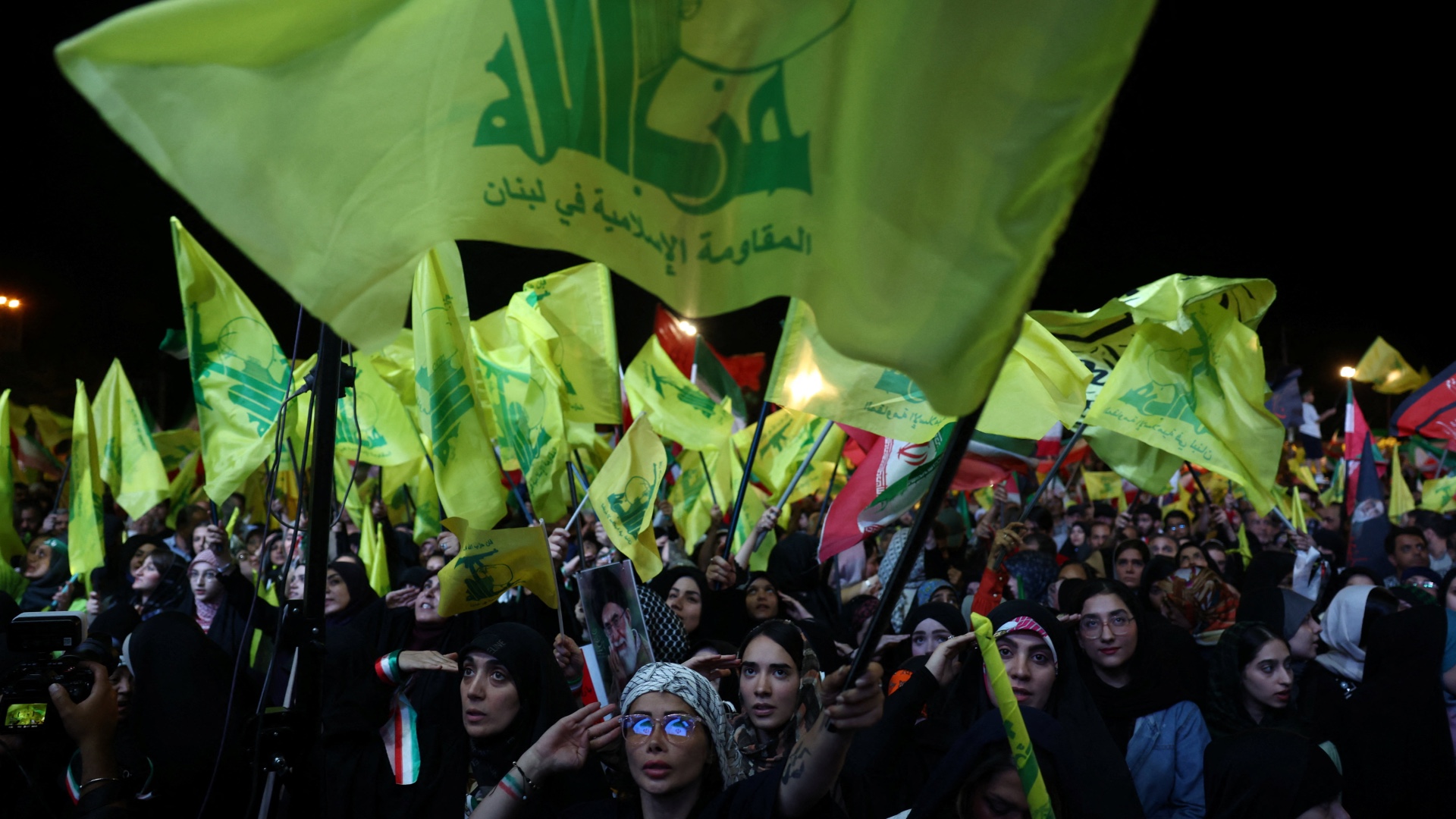
    A major unresolved question hangs over the truce: how Hezbollah, the Iran-aligned Lebanese militant group that was not included in the ceasefire negotiations, will respond. Hezbollah has launched ongoing rocket and drone strikes on Israeli territory in retaliation for Israel’s military campaign in Gaza and its incursion into southern Lebanon, and the weak Lebanese central government currently lacks the capacity to prevent the group from resuming attacks if it chooses to do so.

    The broader conflict that sparked this latest diplomatic push has already had catastrophic consequences across the region. Since the war’s escalation on February 28, thousands of Iranian civilians have been killed or wounded in U.S. and Israeli airstrikes. That same day, a U.S. cruise missile strike on a girls’ school in the Iranian city of Minab killed 168 people, the vast majority of whom were children.

    Approximately 30 minutes after his posts addressing the Strait of Hormuz, Trump issued another statement on Truth Social addressing the situation in Lebanon. He wrote: “the USA will, separately, work with Lebanon, and deal with the Hezboolah [sic] situation in an appropriate manner. Israel will not be bombing Lebanon any longer. They are PROHIBITED from doing so by the U.S.A. Enough is enough!!!”

    Within minutes of Trump’s public prohibition on further Israeli bombing, both Lebanese and Israeli media reported that Israel had carried out a new drone strike targeting a motorcycle traveling between the southern Lebanese towns of Kounine and Beit Yahoun, killing one person. The official terms of the ceasefire signed Thursday allow Israel to carry out so-called “defensive” strikes in response to what it frames as planned, imminent, or ongoing attacks. This immediate breach of the truce’s spirit has underscored widespread concerns that the ceasefire is fragile and unlikely to bring a lasting end to violence in the region.

  • Palestine Football Association president denied entry to Canada for Fifa event: Report

    Palestine Football Association president denied entry to Canada for Fifa event: Report

    In a development first reported by The Guardian on Friday, three top representatives of the Palestine Football Association (PFA) — including its president Jibril Rajoub — have been blocked from entering Canada, where global football’s governing body FIFA will hold its annual congressional meeting in Vancouver on April 30. This visa rejection comes at a fraught moment for international football, as Canada is set to co-host the 2026 men’s FIFA World Cup alongside the United States and Mexico, and the PFA is already locked in a high-stakes dispute with FIFA over Israeli football activity in occupied Palestinian territory.

    Rajoub had been expected to use his speaking slot at the Vancouver congress to publicly raise the issue of Israeli matches being held in the West Bank, a territory universally recognized by the United Nations as illegally occupied by Israel. The PFA has formally called on FIFA to step in immediately to resolve the visa issue and allow its delegation to participate in the gathering, where their presence was already set to put the long-running territorial conflict at the center of global football’s agenda.

    When contacted for comment, Immigration, Refugees and Citizenship Canada declined to share specific details about the visa applications, citing privacy rules for individual cases. The department only confirmed that all entry applications are assessed individually based on documentation submitted by each applicant.

    This latest clash follows months of escalating tension between Palestinian advocates and global football leadership. Earlier this year, the PFA filed a formal complaint over the Israeli matches in the West Bank. After completing a review of the complaint last month, FIFA released a statement arguing that the final legal status of the West Bank remains an unsettled, complex issue under international law, and as a result, the organization would take no disciplinary or regulatory action against the Israel Football Association. That inaction prompted a unprecedented legal challenge: in February, a coalition of six pro-Palestinian human rights and sports justice groups — including Irish Sport for Palestine, Scottish Sport for Palestine, Just Peace Advocates, Euro-Med Human Rights Monitor, and Sport Scholars for Justice in Palestine — submitted a 120-page complaint to the International Criminal Court prosecutor, The New York Times confirmed. The complaint names FIFA president Gianni Infantino and UEFA (European football’s governing body) president Aleksander Ceferin, accusing both of aiding and abetting war crimes by allowing Israeli clubs to host official league matches on seized Palestinian land.

    Beyond the immediate dispute over Palestinian participation in the FIFA Congress, the visa denials also unfold against a backdrop of growing concern over immigration and entry policies for the 2026 World Cup, particularly in the United States. Co-host the U.S. has already faced public backlash over flagging ticket sales driven by exorbitant pricing, as well as widespread fears that foreign visitors and immigrant residents will be targeted by U.S. federal immigration authorities during the tournament.

    While there is no publicly confirmed link between U.S. and Canadian immigration decisions on these applications, the two neighboring countries’ border agencies have a long history of sharing intelligence and screening data. Over the 15 months since the Trump administration took office, the U.S. has implemented sweeping new entry restrictions for international visitors, including mandatory social media vetting that requires applicants to share years of personal online activity. Multiple cases have already been documented of visitors being denied entry after border agents found social media content critical of U.S. government policies. Others have been detained for weeks in overcrowded, unsanitary facilities run by U.S. Immigration and Customs Enforcement (ICE) — privately operated detention centers that generate profit for their operators based on the number of detainees held — before being allowed to return to their home countries.

    Last December, Andrew Giuliani, who leads the White House 2026 FIFA World Cup Task Force, publicly confirmed that the Trump administration could not guarantee that non-U.S. citizens would be safe from ICE raids at World Cup stadiums. That comment came just months after a high-profile incident in July, when ICE agents arrested a father of two at a FIFA Club World Cup match in New Jersey. Human Rights Watch issued a public statement at the time calling for urgent reform of U.S. entry policies, warning that the current regime creates unnecessary risk for visitors and directly undermines FIFA’s stated core values of human rights, inclusion, and open global participation. Giulani later defended the arrest, claiming the man had violated event rules by flying a drone to take a family photo at the match.