分类: politics

  • Turkey says Muslim countries concerned by Israel-Greece-Cyprus alliance

    Turkey says Muslim countries concerned by Israel-Greece-Cyprus alliance

    Speaking at this weekend’s Antalya Diplomacy Forum in southern Turkey, Foreign Minister Hakan Fidan has amplified longstanding Turkish concerns over the expanding trilateral military alliance between Israel, Greece, and Cyprus, warning that the bloc has sparked quiet unease among Muslim nations across the region.

    Fidan pointedly noted that Greece, a longstanding member of the North Atlantic Treaty Organization, has moved forward with the partnership despite its NATO commitments, adding that Turkish officials have never received public or private assurances that the alliance was not structured to counter Turkish regional interests.

    The top diplomat referenced a provocative 2023 comment made by Israeli Prime Minister Benjamin Netanyahu during a trilateral summit in Jerusalem. Standing alongside his Greek and Cypriot counterparts, Netanyahu issued a veiled jab at regional powers with imperial ambitions, saying: “To those who fantasise they can re-establish their empires and their dominion over our lands, I say: Forget it. It’s not going to happen. Don’t even think about it.” Fidan confirmed the comment was widely interpreted as a direct reference to Turkey.

    The Israel-Greece-Cyprus alignment, first launched in the early 2010s, already includes formal security and defense cooperation, encompassing joint military exercises, cross-border intelligence sharing, and coordinated strategic planning in the Eastern Mediterranean. Just last week, Fidan drew sharp backlash from Athens when he claimed the alliance is designed to encircle Turkey from the south, warning that the bloc “brings more problems” and “leads to war.”

    Greek officials immediately rejected the accusation, emphasizing that their cooperation with Israel and Cyprus is purely defensive in nature and not targeted at any third country. Repeating his position on Sunday, Fidan pushed back against Athens’ denials, arguing that the military dimension of the trilateral partnership is undeniable.

    “Greece can say what it wants, but the picture is clear,” Fidan told attendees of the forum. “There is no other country in Europe that has taken this kind of step towards military cooperation and partnership.”

    He added that Turkey’s concerns extend far beyond national security, noting that the alliance is a source of quiet anxiety for Muslim countries across the region, even if most have chosen not to voice their worries publicly. “Israel has been recently running an expansionist policy, and Turkey’s concerns aren’t unwarranted,” Fidan said.

    In a bid to counter framing that Turkey is building a counter-bloc to the Israel-led alliance, Fidan clarified that recent regular dialogue mechanisms Turkey has established with Saudi Arabia, Egypt, and Pakistan to coordinate on regional issues are not equivalent to a military alliance, and are not directed against Israel. “We aren’t like Israel. They established a military alliance with Greece and Cyprus against the Muslim countries,” Fidan said. “We, unlike Israel, try to end the conflicts in the region, stabilise it.”

    Internal tensions within the trilateral alliance have already come to light in recent months. A December 2023 report from Cypriot newspaper Politis revealed that Nicosia is uncomfortable being dragged into the growing standoff between Israel and Turkey, accusing Netanyahu of stoking tensions to score domestic political gains. A regional official familiar with internal negotiations confirmed to Middle East Eye at the time that Cyprus is uneasy with Israel’s aggressive approach, calling the prime minister’s rhetoric “the usual playbook with Israel: messaging to its domestic audience with lots of bluster and gusto, ignoring the hard facts and projecting its own narrative.”

    The report also noted that selective leaks from Israeli sources claiming the three countries planned to form a joint military brigade — with 1,000 troops each from Israel and Greece, and 500 from Cyprus — had particularly agitated Cypriot officials. Both Cypriot Defense Minister Vasilis Palmas and a senior Greek official denied any plans for a joint brigade in separate comments to Middle East Eye in December and early 2024 respectively.

  • Ontario Premier Doug Ford agrees to sell $21m private jet following outcry

    Ontario Premier Doug Ford agrees to sell $21m private jet following outcry

    Ontario, Canada’s most populous province, has launched a process to offload a pre-owned private jet purchased just days ago for Premier Doug Ford, a move that came after intense public and political criticism over the C$28.9 million ($21 million) government expenditure.

    When the acquisition of the 2016 Canadian-built Bombardier Challenger 650 executive jet was first confirmed last Friday, Ford’s administration framed the purchase as a practical investment for official travel. Specifically, officials noted the jet would be used for cross-border trips to Washington D.C. and other U.S. destinations to lobby against harmful tariffs imposed during the previous Trump administration, a core policy priority for the provincial government.

    But the disclosure immediately sparked widespread outrage across the political spectrum and among public advocacy groups. Political opponents swiftly labeled the aircraft a “gravy plane”, accusing Ford of being disconnected from the financial struggles of ordinary Ontario households at a time of ongoing economic pressure. By Sunday, just two days after the purchase was made public, Ford announced a reversal in a formal statement, confirming the jet would be sold “as quickly as possible” through partnerships with aircraft manufacturer Bombardier and other industry partners.

    “Despite the best of intentions, I have heard and agree that now is not the right time for the expense of a government plane,” Ford said in the statement. He added that his administration would continue its core work of building cross-border relationships with business and political leaders, pushing back against unfair tariffs, attracting new private investment and creating jobs for Ontario workers, regardless of the aircraft sale.

    Critics have rejected Ford’s framing of the reversal as a responsive move, arguing the U-turn only came after public anger grew unmanageable. Marit Stiles, leader of the official opposition Ontario New Democratic Party, argued Ford “only changed his mind after the heat got too hot”. In a scathing social media post, she said: “Doug Ford is turning the plane around mid-air for an emergency landing because he got caught living like a rockstar on your dime.”

    Interim leader of the Ontario Liberal Party John Fraser echoed the criticism, accusing Ford of seeking to “live like a billionaire” using public funds. “Trying to buy a private jet while families are struggling says everything you need to know about Doug Ford,” Fraser wrote on social media.

    The Canadian Taxpayers Federation, a prominent non-partisan advocacy group that advocates for fiscal restraint, also joined the chorus of critics, urging Ford to abandon the private jet plan entirely and stick to commercial air travel for official trips.

    The controversy comes at a weak moment politically for Ford, who won an unexpected third consecutive majority government in provincial elections last year. Polling data from Angus Reid released earlier this year puts Ford’s approval rating at around 31%, one of the lowest approval ratings for any sitting provincial premier in Canada.

  • Mediators push US-Iran ceasefire extension as deal hopes fade

    Mediators push US-Iran ceasefire extension as deal hopes fade

    As a critical Wednesday deadline for a US-Iran ceasefire approaches, diplomatic mediators have begun pushing to extend the truce, after hopes of locking in a comprehensive peace agreement dimmed over the weekend, multiple anonymous senior regional sources told Middle East Eye.

    While negotiators had made incremental progress on core sticking points in the days leading up to the weekend, the shifting geopolitical context has widened unresolved gaps across key negotiation tracks, a senior Turkish official confirmed. The official noted that the complex, multifaceted talks have seen some modules move forward as scheduled, but irreconcilable differences remain on other critical components that cannot be bridged in the remaining timeline before the two-week ceasefire expires on Wednesday.

    Pakistani mediators, who have played a central role in facilitating the talks, are eager to extend the deadline to keep negotiations alive, and remain optimistic that a final resolution can be secured in the days following the original expiration. Turkish Foreign Minister Hakan Fidan has publicly backed the extension push, saying additional time is a non-negotiable requirement to reach a durable deal. Still, a senior Turkish security official warned that the risk of total negotiations collapse is tangible, and a breakdown could spark a far more brutal new round of open conflict between the two nations.

    Before the weekend shift in diplomatic momentum, negotiators had laid out a detailed draft framework covering the full scope of disputed issues. The draft includes provisions to transfer Iran’s stockpile of highly enriched uranium to Pakistan, implement a multi-year moratorium on domestic uranium enrichment, establish new transit rules for the Strait of Hormuz, require partial disarmament of Iran-aligned armed groups across the Middle East, and deliver immediate sanctions relief alongside the unfreezing of an estimated $100 billion in Iranian sovereign assets held abroad. Notably, Iran’s ballistic missile program is entirely excluded from the current draft agreement.

    One of the most contentious unresolved disputes centers on the length of the enrichment suspension. The U.S. originally demanded a 20-year moratorium, while conflicting reports place Iran’s current offer between a five-year and 12-year halt. After the initial moratorium period expires, the agreement would allow Iran to extend the pause in consultation with the International Atomic Energy Agency (IAEA). On the transfer of enriched uranium, however, sources indicate Tehran has come close to accepting the proposal: Pakistan originally suggested sending the stockpile to a neutral third country, a principle Iran agreed to, before Tehran put forward Pakistan itself as the storage destination, which Islamabad accepted.

    The draft framework also lays out new rules for shipping through the Strait of Hormuz, a chokepoint for 20% of the world’s daily oil trade. Under the proposal, Iran would fully reopen the strait, collect a transit tariff to be split with Oman, and maintain exclusive control over transits, requiring individual approval for every passing vessel. Critically, the deal would ban military warships from transiting the strait, a provision that would block British and French plans to escort commercial tankers through the waterway.

    The weekend shift in momentum came after rising tensions in the Strait of Hormuz Saturday: Iran announced it was closing the waterway just two days after reopening it, citing the ongoing U.S. naval blockade, which Tehran says constitutes a direct violation of the existing ceasefire. The move was intended to demonstrate Iran’s continued sovereignty over its territorial waters and push back against the blockade, according to Iranian sources.

    On Sunday, U.S. President Donald Trump accused Iran of violating the ceasefire with the strait closure, but confirmed that U.S. negotiating teams would travel to Islamabad for a new round of talks Monday. In an interview with Fox News and a subsequent post on Truth Social, Trump issued an extreme warning, saying the U.S. would “blow up the whole country” if Iran refused to sign a deal, adding that “it’s time for the Iran killing machine to end” after 47 years of inaction by previous U.S. administrations. In response, Iran’s state-owned Tasnim news agency reported that Tehran has not yet committed to sending a negotiating delegation to Pakistan as long as the U.S. naval blockade remains in place.

    On the issue of regional armed groups aligned with Iran, the draft requires the partial disbandment of Iraq’s Popular Mobilisation Forces (PMF) and Lebanon’s Hezbollah, and could open a path to a non-aggression pact or even full peace deal between Lebanon and Israel. The proposal would require Iranian-aligned PMF factions to withdraw from border regions near Kuwait and Jordan, and cap the total number of PMF fighters at 15,000, down from the group’s current estimated 238,000 total members. For Hezbollah, the agreement would require the group to dismantle all offensive weapons targeting Israel, while allowing it to retain small arms for self-defense.

    Multiple sources have cast major doubt on the feasibility of the Hezbollah disarmament provision. One senior Lebanese source noted that Hezbollah emerged as a resistance movement in response to Israeli invasion, and that the Lebanese military lacks the capacity to defend the country from Israeli incursion, meaning the group will never agree to give up its offensive capabilities. Iran has also pushed back on the provision, flatly denying that it exercises control over either Hezbollah or the PMF, and insisting both groups make their own decisions independent of Tehran.

    Additional layers of uncertainty hang over the negotiations beyond core policy disputes. Reports are conflicting over whether Iran’s top leadership has signed off on the draft framework: one source says Supreme Leader Mojtaba Khamenei has approved the text, but other sources claim Khamenei remains severely injured from the attack that killed his predecessor, Ayatollah Ali Khamenei, having lost a leg and suffered serious facial trauma that leaves him unable to communicate. There is also no consensus on how any final agreement would be structured or announced, with negotiators only agreeing to separate “packets of agreements on different files” so far.

    Beyond Iran’s internal divides, the deal also faces major external threats from key regional actors. Israeli Prime Minister Benjamin Netanyahu has already been pressured by the Trump administration to pause Israel’s offensive in southern Lebanon, but the current draft falls far short of Israel’s core war aims: it allows Iran to retain its regime, keep its ballistic missile program, and only suspend rather than permanently end uranium enrichment. With Israel facing an election year, Netanyahu’s popularity has already suffered from a ceasefire that does not deliver a definitive victory, and senior sources confirm he will reject the current framework. There are also widespread doubts that Israel’s intelligence service Mossad will abandon its decades-long goal of forcing regime change in Iran.

    Three Gulf Arab states that suffered major damage to their energy infrastructure and urban centers during the recent conflict also stand opposed to the draft. After initially lobbying against a U.S.-led attack on Iran, the United Arab Emirates, Kuwait, and Bahrain have since pushed Trump to continue military operations to eliminate Iran’s military and nuclear capabilities, with some evidence indicating the UAE and Bahrain even participated in recent drone strikes on Iranian targets. For these states, the current draft would be seen as a betrayal of their security interests by the U.S.

  • 17 die in US immigration custody this year: report

    17 die in US immigration custody this year: report

    WASHINGTON D.C. – New official data from U.S. Immigration and Customs Enforcement (ICE) confirms that 17 people held in immigration detention facilities across the United States have died since the start of 2026, marking a continuation of a years-long upward trend in detainee mortality that has drawn widespread criticism from immigration advocacy and human rights groups.

    The most recent fatality, recorded by ICE this Thursday, involves a 27-year-old Cuban national who was found unresponsive in his cell at a Miami federal detention center on April 12. Emergency response teams carried out immediate resuscitation procedures, but the man was pronounced dead at the scene. Authorities have not yet released a confirmed cause of death, noting that the investigation into the circumstances of his passing remains ongoing.

    Historical data compiled by ICE and reported by NBC News places this year’s mortality figures in a troubling context. In 2025, ICE recorded 33 detainee deaths across its custody network – the highest annual total recorded in more than 20 years. That marked a sharp jump from 2024, when 11 deaths were reported among people held in immigration detention.

    As of early April 2026, ICE’s total detainee population sits at more than 60,000 people. While this overall population number has fallen modestly in recent months, it remains substantially higher than the detention levels recorded before the return of Donald Trump to the U.S. presidency, a period during which the administration has implemented sweeping and restrictive immigration policies that expanded detention capacity and increased overall detention numbers.

  • ACOSS, Oxfam Australia, among 50 community organisations demanding 25pc gas tax and CGT reform

    ACOSS, Oxfam Australia, among 50 community organisations demanding 25pc gas tax and CGT reform

    As Australia’s federal budget delivery approaches, a coalition of 50 leading Australian community and welfare organizations has launched a coordinated call for sweeping tax reforms, targeting gas extraction, housing tax concessions and mining industry subsidies to raise tens of billions in annual revenue that would go directly to easing widespread cost-of-living strain for low-income and vulnerable households.

    Leading the advocacy coalition are two of the nation’s most prominent welfare groups — the Australian Council of Social Service (ACOSS) and Oxfam Australia. In an open letter to the Albanese government, the coalition outlined three targeted, practical policy changes it describes as commonsense reforms that would strengthen the national revenue base while correcting inequities across Australia’s housing, energy and tax systems.

    The first proposal is the introduction of a 25 percent levy on exported natural gas. The coalition argues this measure would secure a fairer return for Australian citizens from their nation’s natural resources, with projections indicating it could generate up to $17 billion in new annual public revenue. Beyond expanding government funding, the policy is also expected to help lower domestic gas prices for household consumers, delivering immediate relief to energy cost burdens.

    Second, the coalition calls for rolling back two longstanding housing tax policies: the capital gains tax discount and negative gearing arrangements that primarily benefit property investors. The group estimates this reform would raise $20 billion in revenue over its first four years, with larger long-term gains. Additionally, curbing these tax concessions would ease competitive pressure on the residential housing market, helping to cool sky-high property prices and improve access for first-time home buyers.

    The third proposal is the gradual phase-out of diesel fuel rebates for mining companies. This change is projected to add another $20 billion in revenue over the first four years of implementation, while delivering two broader public benefits: strengthening national energy security and cutting harmful climate pollution tied to fossil fuel extraction activities.

    All new revenue generated from these three reforms would be redirected to expanded community services and targeted income support, the coalition confirms. Key priorities include increasing the base rate of JobSeeker, Youth Allowance and other core income support payments to give vulnerable households the financial buffer they need to cope with soaring living costs. The coalition also notes the additional funding could support other critical national priorities, including First Nations self-determination initiatives, expanded social and affordable housing, improved disaster resilience, and accelerated renewable energy transition.

    ACOSS Chief Executive Cassandra Goldie emphasized that the current cost-of-living crisis has created an increasingly unsustainable situation for Australia’s most vulnerable communities. “People on the lowest incomes are skipping meals, delaying medical care and rationing energy just to get by,” Goldie said. She added that frontline support services across the country are already operating at full capacity, facing ever-growing demand and increasingly complex needs from vulnerable households. “Current policy settings are not meeting the needs of our communities – it’s clear that significant and sustained public investment is essential.”

    Goldie pointed out that Australia currently collects roughly $100 billion less in annual public revenue as a share of the economy compared to the average for other OECD member nations, arguing the country has ample capacity to raise additional fair, sustainable revenue to meet pressing community needs. “We clearly have the capacity to raise more money and invest it where it’s needed,” she said. These policy proposals have already been formally submitted to the federal government as part of ACOSS’s official pre-budget submission, which pushes for increased investment in income supports and essential public services.

    Treasurer Jim Chalmers is scheduled to deliver the 2025 federal budget to parliament on May 12, where the government will outline its revenue and spending priorities for the coming fiscal year.

  • Watch: Obama and Mamdani sing with children in New York

    Watch: Obama and Mamdani sing with children in New York

    In a warm, unscripted moment that drew smiles from onlookers at a Bronx early childhood care facility, former United States President Barack Obama and New York City Mayor Eric Adams came together for their first public meeting, putting policy aside to connect with the city’s youngest residents.

    The gathering, held at the community-focused child care center in the Bronx—a neighborhood long identified with disparities in access to affordable early childhood education—was designed to shine a spotlight on the importance of investing in child care infrastructure and youth development programs across New York City. After brief introductory remarks about the need for expanded support for working families and accessible early learning opportunities, the conversation shifted to a more lighthearted exchange: the two political leaders joined a group of young children in song, leaning in to sing along to a popular children’s tune the kids had been practicing.

    Cellphone footage captured from the event quickly circulated online, showing the pair leaning down to the children’s level, smiling, and matching the young group’s energy as they sang. The meeting marks the first in-person public encounter between the former two-term Democratic president and the current New York City mayor, who took office in 2022, and signals growing collaboration around local youth-focused policy initiatives. Community organizers at the center noted that the high-profile visit will help raise much-needed attention and funding for child care services in the Bronx, where nearly 40 percent of families report struggling to find affordable, licensed early care for their children.

    For attendees, the musical interlude offered a rare, approachable look at political leaders outside of formal press conferences and policy debates, highlighting their shared commitment to centering children’s needs in future policy planning.

  • Britain’s chief rabbi says Jews are facing a campaign of violence after spate of arson attacks

    Britain’s chief rabbi says Jews are facing a campaign of violence after spate of arson attacks

    LONDON – A foiled arson attack on a northwest London synagogue has thrown a harsh spotlight on growing threats targeting British Jewish communities, with the country’s most senior Jewish leader warning that Jews are now facing an escalating, coordinated campaign of violence and intimidation.

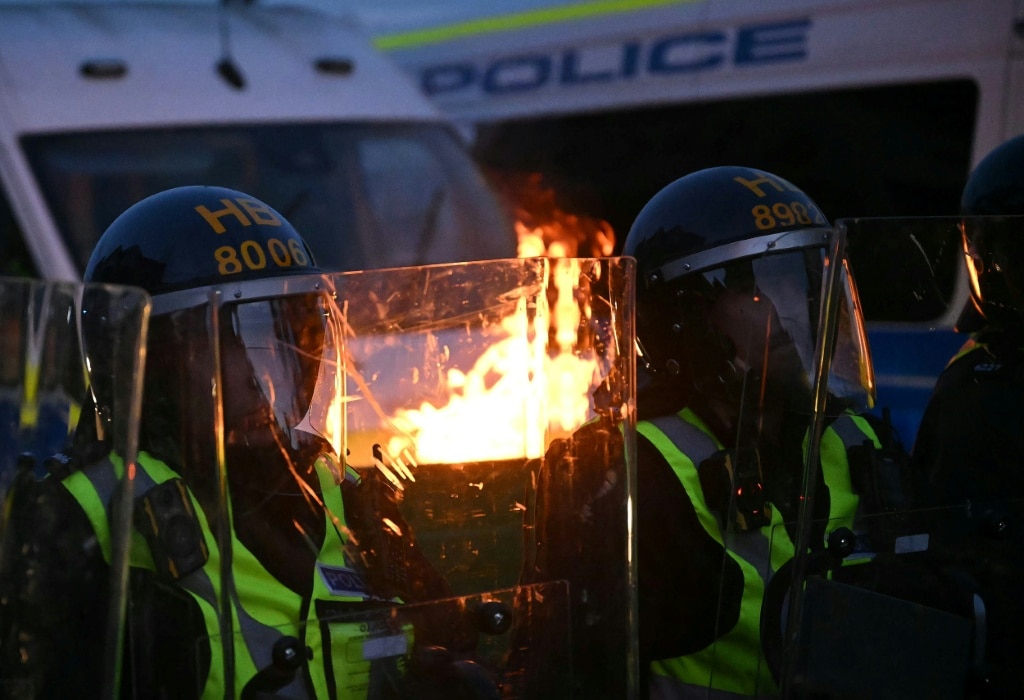
    The attempted arson at Kenton United Synagogue, which occurred late Saturday, left only minor damage to the building, and no injuries were reported in the incident. It marks the latest in a string of suspicious fires targeting Jewish-associated sites and an Iranian opposition media outlet across the capital over the past month, all of which are now under the direction of counterterrorism investigators.

    In a public statement posted to the social platform X on Sunday, Chief Rabbi Ephraim Mirvis sounded the alarm over the accelerating danger of the current wave of threats. “A sustained campaign of violence and intimidation against the Jewish community of the UK is gathering momentum,” Mirvis wrote. “Thank God, no lives have been lost, but we cannot, and must not, wait for that to change before we understand just how dangerous this moment is for all of our society.”

    Prime Minister Keir Starmer responded quickly to the incidents, saying he was appalled by the targeted attacks and issuing a firm pledge that all perpetrators would be held accountable. “Those responsible will be found and brought to justice,” Starmer said.

    London’s Metropolitan Police has responded by deploying additional uniformed and plainclothes officers to the city’s northwest, the area where most of the recent attacks have been concentrated. The series of incidents began unfolding weeks ago, with targets including multiple synagogues, ambulances operated by a Jewish charity, and the offices of a Persian-language media outlet that is openly critical of the Iranian government. The arson attempt at the Kenton synagogue came just 24 hours after another incident Friday night, when suspects tried to ignite containers of flammable fluid outside the former offices of a London-based Jewish charity.

    To date, no one has been hurt in any of the linked incidents. Law enforcement officials have already arrested and charged several suspects, whose ages range from teenagers to people in their 40s. While investigators have not formally connected all of the cases to a single network, Counter Terrorism Policing London took over lead investigative duties due to striking similarities in the attacks and public online claims of responsibility from a little-known group calling itself Harakat Ashab al-Yamin al-Islamia, or the Islamic Movement of the Companions of the Right.

    Israeli officials have characterized the group as a newly formed organization with suspected ties to an Iranian proxy network. The group has also claimed responsibility for similar synagogue attacks in Belgium and the Netherlands in recent weeks. It also released an online video threatening to carry out a drone attack carrying hazardous materials at Israel’s embassy in London. While no attack was ultimately carried out at the embassy, police closed London’s popular Kensington Gardens park Friday to investigate discarded items that included two jars holding unidentified powder. Tests later confirmed the substances found were not harmful.

    British authorities have long accused Iran of orchestrating attacks on European soil through criminal proxy networks, targeting both Iranian opposition outlets and Jewish communities across the continent. MI5, the U.K.’s domestic intelligence agency, reported that it disrupted more than 20 potentially lethal Iran-backed plots in the 12 months leading up to October this year.

    Still, some independent security analysts have urged caution over the group’s claims, noting that Harakat Ashab al-Yamin al-Islamia is more likely a “flag of convenience” – a name used by disparate actors to claim responsibility for attacks – rather than a structured, centralized terrorist organization.

  • Pauline Hanson’s One Nation primary vote dips to 24 per cent, new Newspoll survey finds

    Pauline Hanson’s One Nation primary vote dips to 24 per cent, new Newspoll survey finds

    Fresh political polling from Australia’s leading pollsters has delivered new data on shifting voter support, recording a second consecutive slight drop in the primary vote for Pauline Hanson’s One Nation that suggests the far-right party’s surge in popularity earlier this year may have hit a peak. The latest Newspoll, carried out for The Australian, surveyed 1,235 registered voters over four days last week, and found the party’s primary support fell by two percentage points to 24%. Both the ruling Labor Party and the centre-right Coalition remained unchanged, holding 31% and 21% of the primary vote respectively. The Greens gained one point to reach 13% support, while minor party and independent candidates grouped in the “other” category also saw a one-point uptick to hit 11%. The incremental decline of One Nation marks a continuation of a downward trend that began after the party hit a high of 27% support on two separate occasions in early and late February. Support dipped one point in March, making this latest drop the second in as many months. Even with the current dip, however, One Nation’s polling numbers remain vastly higher than its 2025 federal election result of 6.4%, demonstrating the party retains a far stronger hold on the electorate than it did during the last national vote. The broader trend of declining support identified in the Newspoll is echoed by separate data from the Resolve Political Monitor, which polled 1,807 voters this month for the Sydney Morning Herald and The Age. That survey also recorded a two-point drop in One Nation support, falling from 24% to 22%. Alongside primary voting intention, the Newspoll also measured public approval of preferred prime minister, finding incumbent Anthony Albanese’s lead over Opposition leader Angus Taylor widened slightly. Forty-six percent of respondents said Albanese would make a better prime minister, compared to 37% who backed Taylor. With the federal May budget just weeks away, pollsters also asked voters to weigh in on 10 separate proposals to increase national tax revenue. None of the proposals won majority support from the full electorate, though just 18% of respondents rejected all 10 options outright. The most popular policy was an increase to the petroleum resource rent tax, which earned 42% support from those surveyed. A reduction in tax concessions for property investors followed at 35%, while cutting tax concessions for family trusts won 29% backing from respondents. The results give the Albanese government clear signals on which tax reform proposals have the most public traction as it finalizes budget negotiations ahead of the official release.

  • Allies back Starmer as Mandelson and Epstein leave the UK leader fighting for his job

    Allies back Starmer as Mandelson and Epstein leave the UK leader fighting for his job

    LONDON – As Prime Minister Keir Starmer braces for a make-or-break showdown with restive British lawmakers on Monday, his grip on the highest office in the United Kingdom hangs by a thread, triggered by a explosive botched appointment of a disgraced political ally to the nation’s most critical diplomatic post.

    The crisis centers on Starmer’s January 2025 decision to name Peter Mandelson, a veteran politician with longstanding ties to late convicted sex offender Jeffrey Epstein, as Britain’s ambassador to the United States. It has now been revealed that Mandelson failed the mandatory intensive security vetting process required for the role – and Starmer claims he was never notified of the damning vetting recommendation that barred Mandelson from receiving clearance. The Prime Minister says he is “furious” over the withheld information, insisting he would never have moved forward with the appointment had he been informed of the outcome. The Foreign Office, which holds final authority over diplomatic nominations, ultimately approved Mandelson’s appointment despite the vetting panel’s opposition.

    Senior figures within Starmer’s own Cabinet have rushed to shore up his position this weekend. Deputy Prime Minister David Lammy defended the Prime Minister, stating, “if Starmer had known, he would never, ever have appointed him ambassador.” Technology Secretary Liz Kendall echoed the defense during a Sunday interview with Sky News, arguing Starmer “is a man of integrity and there is no way he would have proceeded” with the nomination had he been aware of the failed security check.

    The fallout has already claimed one high-profile casualty: Olly Robbins, the top civil servant at the Foreign Office, was forced to step down on Thursday. Supporters of Robbins, however, insist he is being made a scapegoat for the political failure, claiming he only followed established protocol in handling the sensitive vetting process. Robbins is set to deliver his own account of the chain of events to the House of Commons Foreign Affairs Committee on Tuesday. Simon McDonald, who served as Foreign Office permanent secretary until 2020, backed that narrative, telling the BBC that Robbins had been “thrown under the bus.” McDonald added that highly classified vetting information “would never be shared” with the prime minister or his political staff, per longstanding security rules.

    All major opposition parties have already united in calling for Starmer’s immediate resignation. Kemi Badenoch, leader of the right-of-center Conservative Party, called the prime minister’s position “untenable.” Liberal Democrats leader Ed Davey doubled down on that demand Sunday, saying, “the government is in perpetual crisis, and I don’t think they can get out of that unless Keir Starmer moves aside.”

    While Starmer’s Labour Party holds a substantial parliamentary majority, any push to remove him from office will have to come from his own party lawmakers – many of whom are already deeply frustrated by the party’s plummeting approval ratings. Starmer temporarily defused tensions over the appointment back in February, when a small group of Labour MPs first called for his resignation. But political analysts widely expect a formal leadership challenge to launch after local and regional elections conclude on May 7, where polling projects major losses for Labour.

    Internal divisions within Labour run deeper than just the Mandelson scandal. Some MPs argue that changing leadership mid-term would be deeply damaging amid ongoing global instability, including the active wars in Ukraine and the Middle East, with a national election not required for another three years. But other party members have grown despairing over Starmer’s string of missteps since he led Labour to a landslide general election victory in July 2024. The Prime Minister has struggled to deliver on campaign pledges to boost economic growth, repair strained public services, and ease the country’s ongoing cost-of-living crisis, and has already been forced to reverse course on multiple key policy positions.

    Critics argue the Mandelson appointment lays bare a fundamental failure of judgment on Starmer’s part. Government documents released in March 2025, after Parliament forced transparency, show Starmer’s own own staff warned him that Mandelson’s close friendship with Epstein – who died in prison in 2019 while serving a sentence for sex offenses – created significant “reputational risk” for the government. Despite those warnings, Downing Street moved forward with the nomination, pointing to Mandelson’s experience as a former European Union trade chief and his extensive network of contacts among global political and business elites, which officials framed as a major asset for engaging with U.S. President Donald Trump’s second administration.

    Mandelson’s tenure in Washington lasted less than nine months. Starmer fired him in September 2025, after new evidence emerged that Mandelson had lied about the full extent of his connections to Epstein. The release of millions of pages of court documents related to Epstein by the U.S. Department of Justice earlier this year brought fresh damaging revelations, showing Mandelson maintained his relationship with the financier even after Epstein’s 2008 conviction for sexual offenses involving a minor. Emails included in the document dump also suggested Mandelson shared sensitive, potentially market-moving British government information with Epstein in 2009, following the global financial crisis.

    British law enforcement launched a criminal investigation into the allegations, and arrested Mandelson on February 23 on suspicion of misconduct in public office. He has since been released from custody without bail conditions as the investigation proceeds. Mandelson has repeatedly denied all wrongdoing, has not been formally charged with any crime, and does not face any allegations of sexual misconduct connected to the Epstein case.

  • Zelensky slams oil sanctions relief for Russia

    Zelensky slams oil sanctions relief for Russia

    A fresh political controversy has erupted over the Trump administration’s last-minute decision to extend a sanctions waiver allowing seaborne Russian oil to enter global markets, drawing sharp condemnation from Ukrainian President Volodymyr Zelensky and fierce criticism from top Democratic leaders.

    The 30-day extension, announced Friday, greenlights the sale of Russian crude and petroleum products already loaded onto tankers through 12:01 a.m. GMT on May 16. The move renews an earlier sanctions relief measure that expired on April 11, and comes as the White House seeks to rein in skyrocketing global energy prices amplified by ongoing conflict in the Middle East. The reversal of policy is particularly notable: just two days before the extension was issued, U.S. Treasury Secretary Scott Bessent publicly stated the waiver would not be renewed.

    In a Sunday post on the social platform X, Zelensky lashed out at the easing of restrictions, arguing that every dollar of revenue generated by Russian oil sales directly funds Moscow’s full-scale invasion of Ukraine. He highlighted that more than 110 tankers carrying roughly 12 million tonnes of Russian crude are currently sailing the world’s oceans in violation of existing international sanctions, and the waiver now clears the way for these shipments to be sold without legal consequence. Zelensky valued this volume of oil at roughly $10 billion, a sum he says will be converted directly into new military strikes targeting Ukrainian civilian and military infrastructure.

    To underscore the immediate human cost of Russia’s continued funding, the Ukrainian president noted that in just the past seven days, Russian forces have launched over 2,360 attack drones, more than 1,320 guided aerial bombs, and nearly 60 projectiles of varying ranges against Ukrainian population centers. Local officials in the northern Ukrainian city of Chernihiv confirmed one such overnight attack left a 16-year-old boy dead and four additional civilians wounded. “It is important that Russian tankers are stopped, not allowed to deliver oil to ports. The aggressor’s oil exports must decrease, and Ukraine’s long-range sanctions continue to work toward that goal,” Zelensky said. He did not explicitly name the U.S. in his public statement.

    The decision has also sparked outrage from leading Democratic lawmakers, who have labeled the move “shameful.” In a joint statement, Senate Majority Leader Chuck Schumer, Senators Jeanne Shaheen and Elizabeth Warren argued that the reversal flies directly in the face of Bessent’s recent public commitment, and benefits Russian President Vladimir Putin disproportionately. “Make no mistake, Putin has been one of the biggest beneficiaries of President Trump’s war against Iran, as Russia saw oil revenues nearly double in March,” the statement read.

    Ukraine currently relies heavily on U.S. military and diplomatic support to fend off Russia’s invasion, which entered its fifth year this year. Relations between Zelensky and Trump have been fraught, with a high-profile public disagreement between the two leaders during a 2024 Oval Office meeting making headlines. Political observers note Trump’s decision to push for energy price relief comes ahead of critical midterm elections in the U.S., where rising fuel costs have become a top voter concern.