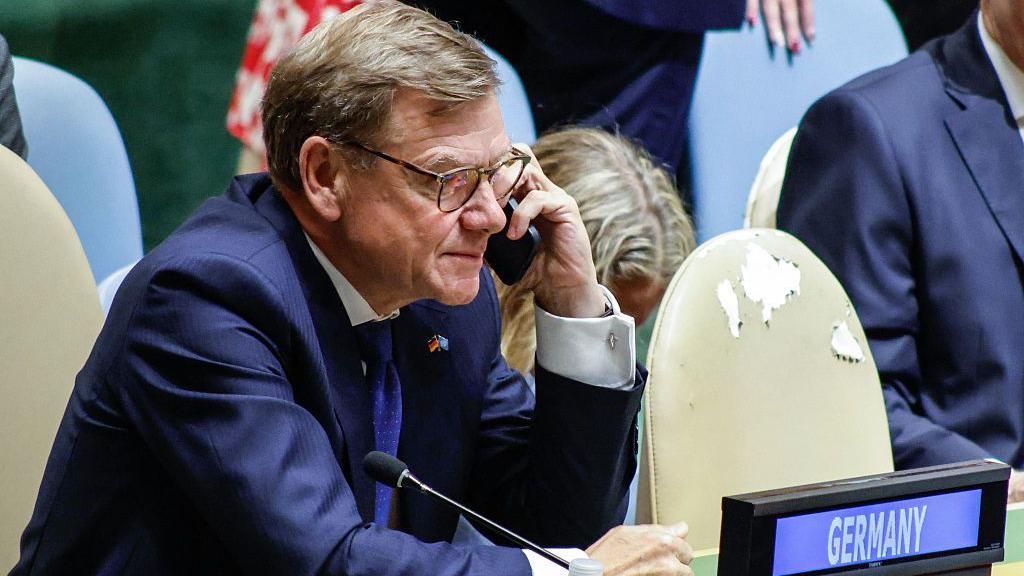
In a surprising outcome that has sent ripples through global diplomatic circles, Germany failed to secure one of the two rotating Western European and Others Group seats on the United Nations Security Council in Wednesday’s vote, marking a stinging diplomatic setback for the country’s ambitions to play a more prominent role in global governance. The winning candidates for the two-year terms starting in 2027 were revealed as Portugal, which earned 134 votes, and Austria, which secured 131 votes, while Germany only collected 104 backing ballots from UN member states. Three other countries — Kyrgyzstan, Trinidad and Tobago, and Zimbabwe — also won election to the 15-member body in concurrent voting for the remaining rotating seats.
The UN Security Council, the only UN organ empowered to pass legally binding resolutions covering everything from the imposition of international sanctions to the authorization of military interventions, comprises five permanent veto-wielding members — China, France, Russia, the United Kingdom, and the United States — alongside 10 rotating non-permanent members elected on a regional basis to two-year terms.
Senior German figures have been quick to offer explanations for the unexpected defeat, with senior lawmaker Johann Wadephul labeling the result a “bitter defeat” for the nation. In his post-vote analysis, Wadephul argued that Germany’s unwavering public support for Ukraine in its conflict with Russia directly contributed to the loss, noting that Moscow has actively worked to turn global opinion against Berlin’s Security Council bid. “It is no secret that Russia stirred up sentiment against Germany,” Wadephul stated, adding that Germany’s clear-cut positions on high-stakes global issues are not shared by all 193 UN member states.
Beyond the fallout from the Ukraine war, Wadephul also cited Germany’s long-standing commitment to supporting Israel amid the ongoing Middle East conflict as another factor that cost the country critical votes. “The fact that Germany must always assume a special responsibility for Israel in the Middle East conflict may also have cost votes,” he explained. He also acknowledged that Germany’s late entry into the race for the rotating seat created additional obstacles for its campaign.
To date, Russia has not issued any public response to German claims that it lobbied against Berlin’s Security Council candidacy.
The failed bid comes as a particularly sharp embarrassment for German Chancellor Friedrich Merz, who has centered his political brand on a pledge to restore and elevate Germany’s standing on the global stage following a series of domestic political challenges. Opposition critics have seized on the result to argue that the defeat highlights Merz’s weakened position at home and failed diplomatic strategy abroad, leaving him beleaguered on the domestic front and embarrassed internationally.
Despite the setback, Merz struck a measured tone in his public remarks after the vote, congratulating Austria and Portugal on their successful campaigns and reaffirming Germany’s long-term commitment to multilateral cooperation. “This result does not alter the tasks we face at the United Nations. Germany remains a reliable pillar of the multilateral system,” Merz said, emphasizing that Berlin would continue to uphold its international responsibilities even without a seat at the Security Council table.