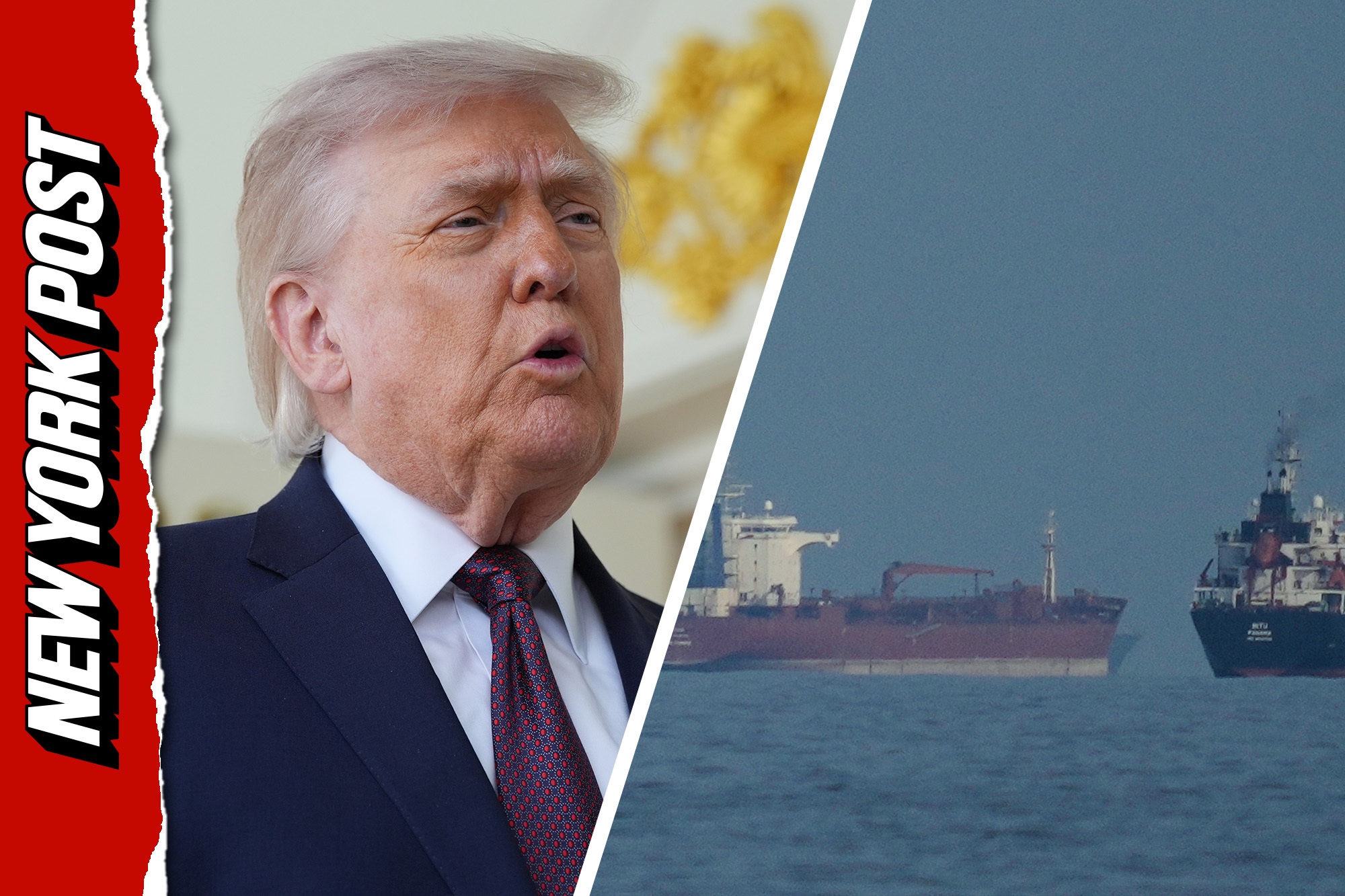
On Wednesday, former U.S. President Donald Trump offered a cautiously upbeat outlook on negotiating an end to the ongoing conflict with Iran — a conflict widely characterized as an illegal war initiated under his leadership — even as he conceded that the standoff could stretch on for multiple additional months.
During an interview with *The New York Post*, Trump was asked whether the current U.S.-led blockade of Iran would remain in place through this year’s Labor Day, which falls on September 7. Responding to the question, Trump stated, “I don’t know. I mean, I think it could be, but I think it’s unlikely.” He went on to assert, “I think this will resolve itself fairly quickly.”
For months, Trump has leveraged incremental hints that the conflict could wrap up imminently as a tool to prevent global oil prices from surging to catastrophic levels, even as the war drags on with no clear end in sight. While the Trump administration has repeatedly maintained that a previously agreed ceasefire remains in effect, new developments have shattered that narrative: CNN reported Wednesday that Iran launched retaliatory strikes against U.S. military bases stationed in Kuwait and Bahrain, after U.S. forces fired a Hellfire missile at a Botswana-flagged oil tanker en route to an Iranian port.
Al Jazeera further confirmed that Iran’s retaliation included drone and missile strikes targeting Kuwait’s international airport, which left one civilian dead and dozens more wounded. The fresh escalation has amplified already grave warnings about the fragility of global oil markets, particularly amid the ongoing closure of the Strait of Hormuz, a critical chokepoint for global crude oil supplies.
Days before the latest exchange of fire, prominent oil industry analyst Patrick De Haan issued a stark warning that oil prices are on the cusp of a sharp upward spike if the Strait of Hormuz remains blocked. De Haan explained that U.S. petroleum stockpiles, which have been drawn down at an unprecedented rate since the outbreak of the war, are set to hit their lowest level in more than 20 years. In a public social media post, De Haan wrote: “US distillate inventories will likely fall under 100 million barrels for the first time in over 20 years, exacerbated by high exports due to the closure of the Strait of Hormuz. This is a powder keg waiting to go off if a deal to reopen the strait doesn’t happen soon.”
Ryan Cooper, an analyst with *The American Prospect*, echoed that warning in an analysis published Wednesday, noting that the emergency strategies global governments have relied on to cap oil prices — most notably coordinated releases from strategic petroleum reserves — are fast approaching their limits due to crippling supply constraints. “As storages dwindle and run out, the only way to match demand to supply will be for the price to rise high enough to destroy something like 10 to 20% of global oil consumption,” Cooper wrote. He added that because much of global oil demand is driven by non-negotiable, essential use cases that are largely insensitive to price shifts, benchmark crude prices could surge past $150 per barrel.
Such a price jump would not only send gasoline and diesel costs soaring for consumers around the world, Cooper added, but would trigger corresponding price increases for nearly every goods category, as almost all products rely on oil for transportation or as a raw material for plastic production.