分类: politics

  • Antisemitism ‘allowed to come into the open’ says Bondi victim’s daughter

    Antisemitism ‘allowed to come into the open’ says Bondi victim’s daughter

    Sydney, Australia – As public hearings kick off for Australia’s national royal commission investigating rising antisemitism, witnesses are delivering harrowing firsthand accounts of grief, fear, and a dramatic shift in social acceptance of anti-Jewish hatred tied to the December 2024 Bondi Beach Hanukkah shooting that left 15 people dead. The commission was convened in direct response to the deadly attack, the first major public inquiry of its kind focused on addressing a documented surge in antisemitic violence and harassment across the nation.

    Sheina Gutnick, the daughter of victim Reuven Morrison, was the first witness to take the stand at the Sydney public hearing on Monday. Morrison, a Jewish Australian who fled the Soviet Union at age 14 and built his life in Australia, meeting his wife on iconic Bondi Beach, was killed while rushing to stop the attackers by hurling objects at the gunmen to disrupt their shooting rampage. In raw, emotional testimony, Gutnick detailed the abuse she has endured in the attack’s aftermath, including direct messages calling for her own death. She also described a stark, alarming shift in the visibility of antisemitism dating back to October 2023, saying anti-Jewish rhetoric has rapidly moved from the margins to mainstream public discourse.

    “I felt as though antisemitism was allowed to come into the open,” Gutnick told the commission. “All of a sudden it was socially, morally acceptable for antisemitic comments to be made in public discourse.” Even the place her parents fell in love now carries heavy, conflicting emotions for Gutnick: “Bondi held ‘complicated’ feelings for me, despite having beautiful childhood memories at the famous beach,” she added.

    The attack, carried out by 50-year-old gunman Sajid Akram who was shot dead by responding police at the scene, also involved his son Naveed Akram, the alleged second attacker. Naveed Akram was critically wounded during the police response, has since been moved from hospital to custody, and faces 59 criminal charges including 15 counts of murder and one count of committing a terrorist act.

    A second witness, identified only as AAL for safety reasons, also broke down during his testimony, describing decades of love for his adopted country after moving from South Africa in the 1980s, but now questioning whether it is a safe home for his grandchildren. “I treated Australia as home from the day I stepped off the plane,” AAL said. “I have to admit things have changed – I have to think very seriously whether this is the country for my grandchildren.”

    Commission officials confirmed that as of Monday morning, nearly 7,500 public submissions have been received from community members and stakeholders across the country. This first phase of public hearings, scheduled to run through May 15, centers on collecting firsthand lived experiences of antisemitism from victims and community members.

    Last week, Virginia Bell, a former High Court justice leading the inquiry, released an interim report containing 14 urgent policy recommendations. Key proposals include strengthening national gun reform regulations and expanding dedicated police protection currently reserved for major Jewish high holy days to all Jewish community events. Bell has already noted that the sharp spike in antisemitism recorded in Australia mirrors surges seen across other Western nations, and is directly linked to ongoing conflict in the Middle East.

    “It’s important that people understand how quickly those events can prompt ugly displays of hostility towards Jewish Australians simply because they’re Jews,” Bell said ahead of this week’s hearings. The commission is on track to deliver its final full report to the government on the one-year anniversary of the December shooting.

  • What to know about the US military presence in Europe as Trump seeks drawdown of thousands of troops

    What to know about the US military presence in Europe as Trump seeks drawdown of thousands of troops

    For nearly 80 years, a persistent U.S. military presence across Europe has stood as a cornerstone of transatlantic security, a legacy forged in the aftermath of World War II and hardened during the Cold War’s standoff against Soviet expansion. Today, that long-standing posture faces unprecedented upheaval, after former President Donald Trump’s pledge to slash American troop deployments in Germany has thrust Washington’s commitment to European security into the global spotlight.

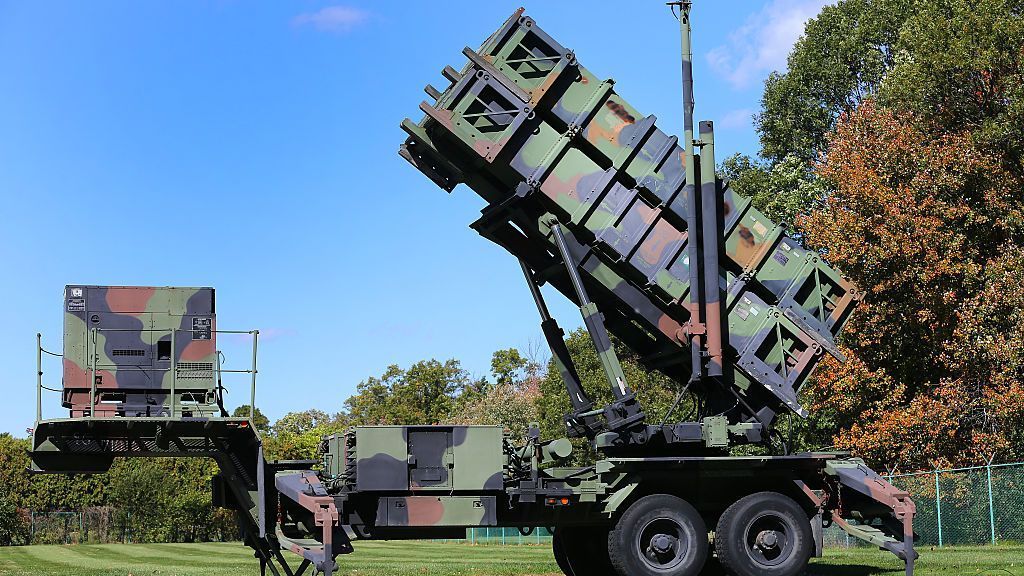
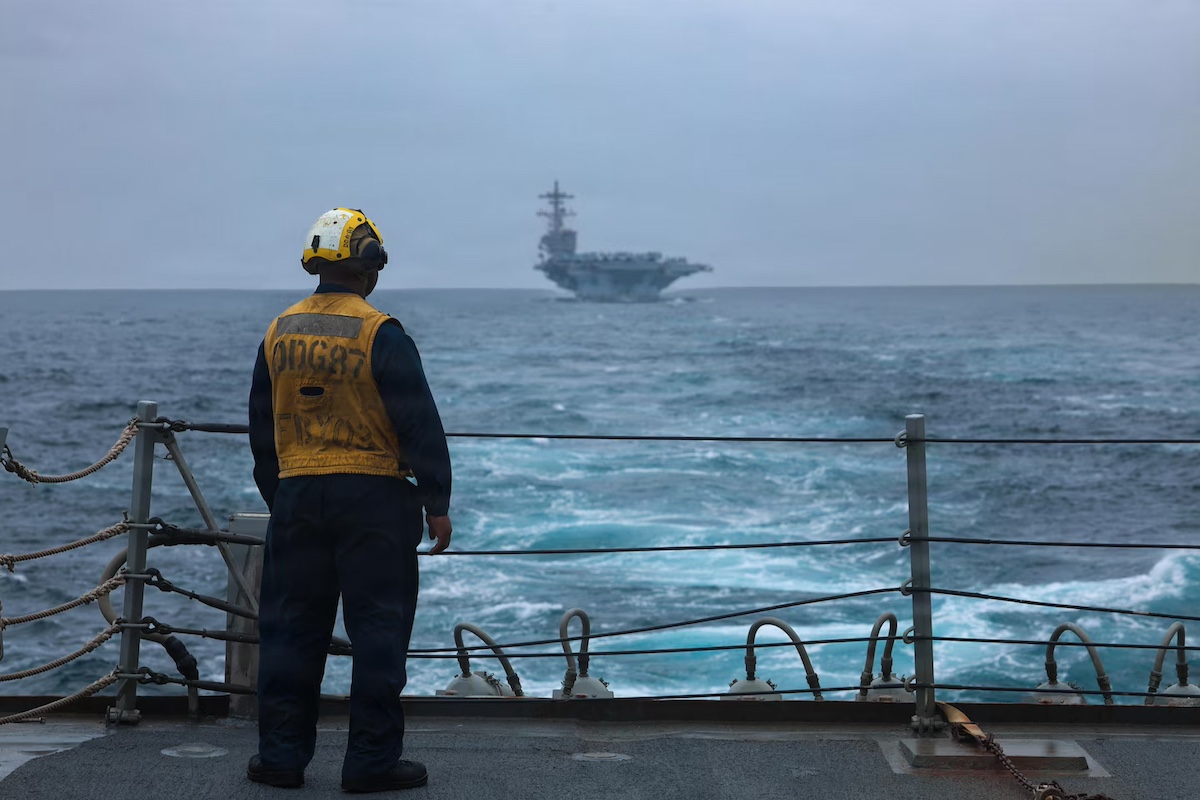
    Currently, the U.S. maintains between 80,000 and 100,000 active-duty troops across the European continent, with more than 36,000 stationed in Germany alone. On a Friday announcement, the Pentagon confirmed it would withdraw 5,000 troops from the country, but Trump upped the ante a day later, telling reporters he intends to go “a lot further” than that initial drawdown.

    Beyond its historical role as a deterrent to adversarial powers, the U.S. military footprint in Europe serves critical global strategic functions. Troops based in the region support operational deployments spanning the Arctic, Africa, and the Middle East, including ongoing tensions with Iran. Germany, in particular, hosts strategically vital infrastructure: it is home to the headquarters of both U.S. European Command (EUCOM) and U.S. Africa Command, Ramstein Air Base — a key logistical hub for the continent — and the Landstuhl Regional Medical Center, which treated thousands of casualties from the Afghanistan and Iraq wars. Germany also hosts a portion of the roughly 100 American nuclear bombs deployed across European NATO bases, according to a March estimate from the Federation of American Scientists.

    Per December Pentagon data, other major U.S. troop deployments in Europe include more than 12,000 troops in Italy and 10,000 in the United Kingdom. EUCOM, established in 1947, is one of the Defense Department’s 11 unified combatant commands, with oversight of security operations across roughly 50 countries and territories. Following Russia’s 2022 full-scale invasion of Ukraine, the U.S. increased its overall troop presence in Europe to reinforce deterrence along NATO’s eastern flank, and NATO allies including Germany have anticipated for more than a year that these additional troops would be the first withdrawn under any drawdown plan. To date, the Pentagon has released few details about which units or missions will be affected by the newly announced cuts.

    The drawdown plan marks a sharp break from decades of bipartisan U.S. consensus on transatlantic security. Trump has long criticized European NATO allies for failing to carry enough of the defense burden, and the announcement comes amid escalating tensions with German Chancellor Friedrich Merz, who claimed last week that the U.S. had been “humiliated” by Iran and accused the White House of lacking a clear strategy for the Middle East.

    Top Republican leaders of both congressional armed services committees have already pushed back against the plan, warning that a premature withdrawal would send the wrong signal to Russian President Vladimir Putin amid his ongoing war in Ukraine. Sen. Roger Wicker of Mississippi and Rep. Mike Rogers of Alabama argued instead that troops should be repositioned to bases in Eastern Europe, rather than removed entirely from the continent. The pair also noted that NATO allies have made major infrastructure investments to host U.S. forces, and confirmed that following Friday’s announcement, the Pentagon had canceled the planned deployment of a U.S. Army long-range missile fires battalion to Germany.

    The Trump administration’s January National Defense Strategy lays out the administration’s broader vision for transatlantic security, asserting that European nations must take greater ownership of their own defense. “While we are and will remain engaged in Europe, we must — and will — prioritize defending the U.S. Homeland and deterring China,” the document states. It adds that Europe’s collective economic power remains globally significant, noting that Germany’s economy alone “dwarfs that of Russia,” and that “our NATO allies are substantially more powerful than Russia — it is not even close.” The strategy highlights Trump’s leadership in pushing NATO allies to commit to raising total defense spending to 5% of GDP, a target embraced by the alliance in recent years.

    For its part, Germany has taken significant steps in recent years to modernize its long-underfunded military, the Bundeswehr, in the wake of Russia’s 2022 Ukraine invasion. That year, Berlin established a €100 billion ($117 billion) special fund to upgrade the military, most of which has already been allocated to new weapons and equipment procurement. Late last year, Merz’s government unveiled plans to expand active-duty military personnel from roughly 180,000 to 260,000, a level not seen since Germany ended conscription in 2001, when the force numbered 300,000 including conscripts. Berlin also plans to grow its reserve force to roughly 200,000, more than double its current size.

    Following the Pentagon’s announcement, German Defense Minister Boris Pistorius told German news agency dpa that he acknowledged Europe must take greater responsibility for its own security, adding that the Bundeswehr is already growing, accelerating equipment procurement, and upgrading military infrastructure to meet new security demands.

    As discussions over the drawdown move forward, the decision will have far-reaching implications for transatlantic alliance cohesion, deterrence against Russian aggression, and U.S. global power projection capabilities for years to come.

  • Europe, Canada leaders hold Yerevan talks in Trump’s shadow

    Europe, Canada leaders hold Yerevan talks in Trump’s shadow

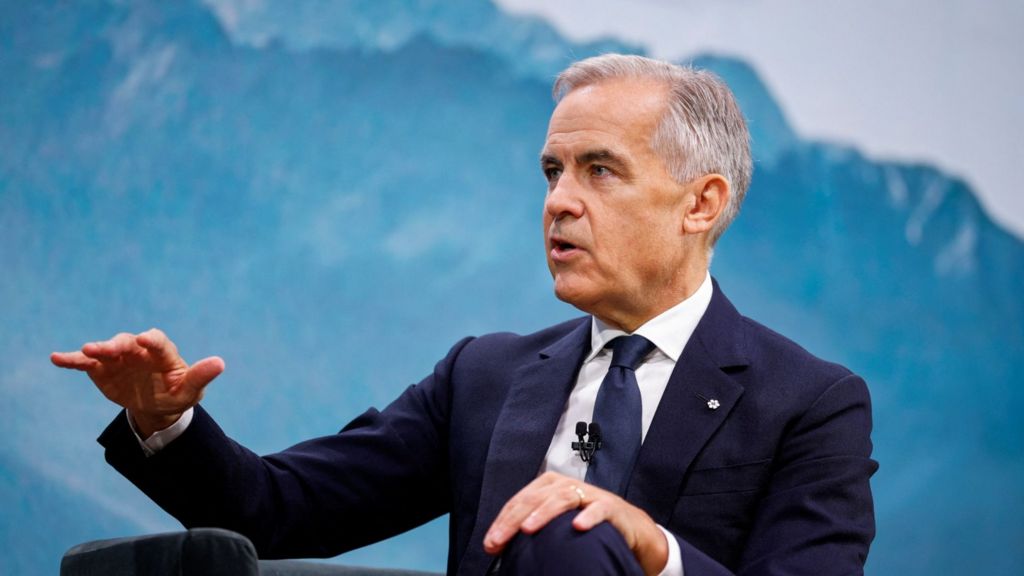
    Against a backdrop of shifting global alliances and rising geopolitical uncertainty driven by U.S. policy shifts under Donald Trump, dozens of European leaders and Canadian Prime Minister Mark Carney convened in Armenia’s capital Yerevan on Monday for the latest summit of the European Political Community (EPC), a biannual forum designed to strengthen cross-continental security cooperation.

    The geopolitical shadow of U.S. President Donald Trump hangs heavily over the two-day gathering, held at a strategic crossroads between Russia and the Middle East — the two core topics dominating the summit agenda. Ahead of the official opening of talks, European Council President Antonio Costa posted to social media Sunday after arriving in Yerevan, noting that leaders from across Europe, joined by Canada as an invited guest, would collaborate on strategies to boost collective security and regional resilience.

    Two ongoing conflicts have sent shockwaves through transatlantic relations in recent months: the escalating Iran war, which has sent global energy prices soaring and disrupted international markets, and Russia’s full-scale invasion of Ukraine, now grinding into its fifth year. Recent tensions between Trump and German Chancellor Friedrich Merz — who publicly criticized Washington’s handling of the Iran conflict — prompted the U.S. to announce plans to withdraw 5,000 American troops from Germany, deepening existing doubts about Washington’s long-term commitment to defending its NATO allies in Europe.

    Key attendees at the summit include Ukrainian President Volodymyr Zelensky and NATO Secretary General Mark Rutte; Merz will be represented by French President Emmanuel Macron for the proceedings. Notably, Carney’s participation marks the first time a non-European leader has joined EPC talks, a shift widely interpreted as a response to closer alignment between Ottawa and Europe amid shared pushback against Trump’s policies. Like many European economies, Canada has taken major damage from Trump’s sweeping tariffs, and Carney has emerged as a leading voice for middle powers pushing back against the U.S. president’s unilateral agenda. Earlier this year, he delivered a widely cited address calling on mid-sized nations to unite in the face of a new global order defined by great power competition and the erosion of long-standing international rules-based systems.

    Sebastien Maillard, a special adviser at the Paris-based Jacques Delors Institute think tank, noted that the EPC was originally framed as a cooperative body focused on countering Russian aggression after the 2022 invasion of Ukraine. “With the invitation to Canada, this initiative — which was initially driven by geography — is now taking on an anti-Trump slant,” Maillard explained. In a tangible step to deepen its ties with Europe, Canada has already become the first non-European country to join the EU’s defense financing scheme, as Ottawa actively seeks to diversify its economic and security partnerships away from its traditional southern neighbor the U.S., while expanding bilateral trade cooperation with the bloc. A senior anonymous EU official noted that “Canada has a way of looking at the world and looking at ways to solve the challenges we have currently that Europe shares to a great extent.”

    Launched in 2022 on the initiative of Emmanuel Macron, the EPC was created in direct response to Russia’s invasion of Ukraine, bringing together all EU member states alongside 21 additional non-EU countries for informal dialogue. Unlike formal EU summits, the EPC does not typically produce binding policy decisions, instead prioritizing open multilateral and one-on-one discussions between leaders. Most delegates arrived in Yerevan on Sunday for an informal opening dinner, with Spanish Prime Minister Pedro Sanchez expected to join Monday after a technical issue with his aircraft forced an emergency landing in Turkey, requiring him to stay overnight in Ankara.

    Monday’s gathering marks the first time the EPC has held a summit in the Caucasus region, a milestone that comes as Armenia actively pursues closer ties with the European Union while carefully reducing its long-standing reliance on traditional ally Russia. The EPC summit will be followed Tuesday by a formal EU-Armenia summit featuring European Commission President Ursula von der Leyen and Antonio Costa, who has described the meeting as a “major milestone” in Armenia’s rapprochement with the bloc.

    Relations between Yerevan and Moscow have deteriorated sharply in recent years, fueled by widespread anger in Armenia over the failure of Russian peacekeepers to intervene during recurring military conflicts between Armenia and neighboring Azerbaijan. Under Prime Minister Nikol Pashinyan, Armenia has adopted an official strategy of “diversification”, maintaining limited ties with Russia while expanding political and economic links with Western institutions. The country of 3.5 million signed a comprehensive partnership agreement with the EU in 2017, and formally announced its intention to apply for EU membership last year. In April, the EU deployed a special mission to Armenia to help the country counter foreign interference, amid widespread intelligence suggesting Russia is running a large-scale disinformation campaign to disrupt Armenia’s June general elections.

    While Russian President Vladimir Putin has stated he is “completely calm” about Armenia’s outreach to the EU, he has issued a clear warning that simultaneous membership in both the EU and the Russian-led Eurasian Economic Union is “simply impossible.”

  • Penny Wong dodges questions about Aussie refusal of ISIS brides

    Penny Wong dodges questions about Aussie refusal of ISIS brides

    A growing diplomatic and political controversy has emerged over the fate of 13 Australian citizens – nine children and four women – linked to former Islamic State fighters, after the group was released last month from the Al-Roj detention camp in northeastern Syria and blocked from traveling to Damascus to arrange their return home. The Syrian government publicly confirmed last week to the Associated Press that it halted the group’s travel to the capital’s airport, stating that Australian federal authorities had explicitly refused to accept the group back into the country. The case has put the Albanese government under intense scrutiny from opposition lawmakers, who accuse the cabinet of lacking transparency around its handling of the high-stakes national security issue.

    During an interview with the morning current affairs program *Sunrise* on Monday, Australia’s Foreign Affairs Minister Penny Wong repeatedly dodged direct questions about whether the Syrian government’s claims of an Australian refusal were accurate. When pressed to confirm if Canberra had rejected the group’s repatriation request, Wong declined to endorse the Syrian government’s statement, instead stating, “I can’t speak for the Syrian government. I can only speak for the Australian government, and what I am saying is we are not acting to repatriate them.” She further implied that the Syrian account aligns with the Australian government’s longstanding position of refusing to facilitate the group’s return, a policy that was maintained after a previous attempt by the group to reach Damascus was turned back by Syrian authorities in February.

    Notably, Wong did acknowledge that as registered Australian citizens, the group holds an inherent legal right to enter and return to Australian territory, a fundamental entitlement under national immigration law. The federal government has not outlined how it intends to reconcile this legal right with its stated policy of refusing to actively repatriate the group.

    In terms of national security preparations, Home Affairs Minister Tony Burke has already issued a temporary exclusion order for one adult member of the group, following an official security assessment from the Australian Security Intelligence Organisation (ASIO). When asked last week whether authorities would immediately arrest the group upon arrival, Burke emphasized he would not interfere in operational law enforcement matters, leaving all public announcements to the Australian Federal Police’s discretion. “There is no way I’ll interfere with anything operationally,” Burke stated.

    Reports confirm that the group received new Australian passports with the support of Jamal Rifi, a well-respected Sydney-based community doctor who has long advocated for the repatriation of stranded children from Syrian detention camps.

    The center-right Coalition opposition has ramped up criticism of the Albanese government’s handling of the case, accusing cabinet of both a lack of transparency and failure to fully utilize existing legal powers to block the group’s entry. Opposition Home Affairs Spokesman Jonno Duniam argued over the weekend that the government’s ambiguous stance poses an unacceptable risk to national security. “There seems to be equivocation and a lack of certainty, a lack of clarity, when it comes to something so important as national security and protecting us from a risk that I believe, and many Australians believe, ISIS brides would pose to the Australian community,” Duniam said.

    The case comes amid shifting global dynamics around the detention of ISIS affiliates: since the collapse of ISIS’s self-declared caliphate in 2019, tens of thousands of foreign citizens, including many women and children, have been held in Kurdish-run detention camps across northeastern Syria, where most have been held in poor conditions. In recent months, as relations between Western powers and Syria’s new transitional government have begun to thaw, U.S. officials have actively pressured foreign governments to repatriate their citizens held in these camps, rather than leaving them stranded in Syrian territory.

  • Rudy Giuliani in critical condition in hospital

    Rudy Giuliani in critical condition in hospital

    Longtime Donald Trump ally and former New York City Mayor Rudy Giuliani has been admitted to hospital in stable but critical condition, his spokesperson has confirmed. In a social media statement released Sunday, Ted Goodman, Giuliani’s communications representative, announced the news, calling for public prayers for the one-time mayor who has long been a polarizing figure in American political life.

    Shortly after Goodman’s announcement went public, former President Donald Trump shared his own reaction on social media. Trump hailed Giuliani as a “true warrior” and described him as the greatest mayor in New York City’s history, echoing the praise that has long come from his closest political allies. Trump also echoed a familiar grievance, claiming that Giuliani had been unfairly targeted by what he called “Radical Left Lunatics” for his work challenging the results of the 2020 presidential election.

    Goodman did not disclose specific details about the cause of Giuliani’s current hospitalization. The 81-year-old, who will turn 82 later this month, has already dealt with serious health complications stemming from a car crash last September. The accident took place in New Hampshire, when a vehicle struck the Ford Bronco Giuliani was riding in from behind. At the time of the crash, his security team confirmed he suffered a fractured thoracic vertebra, multiple cuts and bruises, and additional injuries to his left arm and lower leg.

    Giuliani has remained one of Donald Trump’s most loyal and high-profile surrogates since the 2020 election, leading the former president’s failed legal efforts to overturn the election result that saw Joe Biden defeat Trump. Across dozens of public appearances and court filings, Giuliani spread baseless false claims that Biden and his allies engaged in widespread ballot fraud to steal the election. These unsubstantiated claims led to significant legal consequences for the former mayor: a civil jury ordered him to pay $148 million in defamation damages to two Georgia election workers who he falsely accused of participating in fraudulent voting activity.

    In his statement, Goodman emphasized Giuliani’s long reputation as a political fighter, noting that the former mayor has faced every personal and professional challenge in his life with unshakable resolve. “He’s fighting with that same level of strength as we speak,” Goodman said, before asking supporters to join the former mayor’s team in praying for his recovery.

  • Anti-Semitism royal commission begins hearings months after 15  killed in alleged Bondi terror attack

    Anti-Semitism royal commission begins hearings months after 15 killed in alleged Bondi terror attack

    Sydney, Australia – The first round of public hearings for Australia’s Royal Commission on Anti-Semitism and Social Cohesion is set to get underway Monday in Sydney’s central business district, launching a historic national inquiry that will center Jewish Australian voices and their firsthand accounts of rising anti-Jewish hatred across the country. The inquiry was called in the wake of a devastating December 2025 terror attack at a Bondi Beach Chanukah celebration that left 15 people dead, and a sharp nationwide uptick in anti-Semitic incidents following the October 7 2024 Hamas attacks in Israel.

    The attack, which targeted the annual Chanukah By The Sea gathering, unfolded when Naveed Akram and his father Sajid allegedly opened fire on attendees, killing 15 people and wounding dozens more. Sajid Akram was fatally shot by responding police, while Naveed Akram has not yet entered pleas to 59 criminal charges, including 40 counts of attempted murder. Australian authorities allege the pair were radicalized and inspired by the extremist group ISIS, marking one of the deadliest anti-Semitic attacks in the nation’s modern history.

    Pressure on the federal Albanese government to launch a sweeping public inquiry built steadily in the weeks following the attack, after the government initially commissioned a classified internal review of security agency performance led by former Australian Security Intelligence Organisation director Dennis Richardson. Prime Minister Anthony Albanese announced the royal commission on January 8, 25 days after the attack, reversing the government’s earlier position to meet demands from the Australian Jewish community for a transparent, public examination of systemic gaps in addressing anti-Semitism.

    “I’ve listened, and in a democracy, that’s a good thing to listen to what people are saying,” Albanese told reporters at the time of the announcement. “I’ve taken the time to reflect, to meet with leaders in the Jewish community, and most importantly, I’ve met with many of the families of victims and survivors of that horrific attack. It’s clear to me that a royal commission is essential to achieving this.”

    Presided over by royal commissioner Virginia Bell, the opening two-week block of hearings will focus on core foundational questions: how anti-Semitism is defined in the Australian context, its current prevalence across Australian society and public institutions, and how best to measure the scope of the problem. Over the course of the hearings, dozens of witnesses will testify, including community leaders and everyday Jewish Australians who will share their lived experiences of anti-Semitic harassment, discrimination, and violence.

    Peter Wertheim, co-chief executive of the Executive Council of Australian Jewry, described the inquiry as the most significant national examination of anti-Semitism in Australia’s history. “Over the next fortnight, the country will hear from the people who lead our community alongside ordinary Australians who have lived through what happens when words of hatred go unchallenged long enough that they stop being only words,” Wertheim said in a statement. “The Jewish community is approaching this as Australians asking Australian institutions to look honestly at what has happened in this country and what needs to change.”

    Due to limited capacity at the Sydney CBD hearing venue, public attendance will be restricted, and the proceedings will be streamed live for audiences around the country to access remotely.

    The opening of public hearings comes just days after Bell released an interim report containing 14 urgent recommendations to address immediate gaps in anti-Semitism protection and counter-terrorism preparedness, all of which Albanese has pledged to fully implement. Five of the recommendations remain classified for national security reasons, but public measures include boosting security resourcing for Jewish High Holy Days and major Jewish festivals, strengthening cross-agency counter-terrorism information sharing between federal and state governments, upgrading national gun control regulations, and prioritizing a national gun buyback program to update the outdated national firearms agreement. Bell also called for the commonwealth counter-terrorism coordinator role to be converted to a full-time position, and mandated that the prime minister and all National Security Committee ministers participate in counter-terrorism exercises within nine months of every federal election.

    Albanese has committed to responding swiftly to the interim recommendations. The royal commission will ultimately examine four core mandate areas over the course of its inquiry: mapping the nature, prevalence, and root drivers of anti-Semitism across Australian society and institutions, including ideologically and religiously motivated extremism; advising law enforcement, border control, and security agencies on policy and operational changes to counter anti-Semitic violence and hatred; investigating the full circumstances of the December 14 2025 Bondi Beach attack; and proposing broader reforms to strengthen national social cohesion and counter the spread of violent extremist ideology across the country.

    “A Royal Commission is not the beginning or the end of what Australia must do to eradicate anti-Semitism, protect ourselves from terrorism or strengthen our social cohesion,” Albanese said when announcing the inquiry. “That is an ongoing national effort, for all of us. Because an attack on Jewish Australians is an attack on all Australians.”

    The royal commission’s final report, including full findings and long-term policy recommendations, is scheduled to be delivered to the government on December 14 2026, marking the one-year anniversary of the Bondi Beach atrocity.

  • Green Party leader Zack Polanski condemns ‘vile antisemitic caricature’ in The Times

    Green Party leader Zack Polanski condemns ‘vile antisemitic caricature’ in The Times

    A major political and media controversy has swept the United Kingdom this week, centered on a deeply divisive cartoon published by The Times of London depicting Green Party leader Zack Polanski, who is openly Jewish. Polanski and his party have lambasted the national newspaper for running what they describe as a blatantly antisemitic caricature, echoing harmful age-old tropes about Jewish people.

    The cartoon depicts Polanski with an exaggerated hooked nose — a visual trope long used to dehumanize Jewish people in antisemitic propaganda — kicking police officers who were in the process of arresting Essa Suleiman, the 45-year-old Somali-born British suspect in a recent stabbing attack in Golders Green, a heavily Jewish neighborhood in northwest London. Suleiman stands accused of stabbing two Jewish men in the attack, alongside a separate charge of attempted murder for a separate incident earlier the same day where he allegedly targeted a Muslim acquaintance of 20 years, Ishmail Hussein.

    The illustration references circulating cell phone footage that appears to show arresting officers repeatedly kicking Suleiman in the head during his apprehension. After the attack, Polanski publicly condemned the stabbings, but later retweeted a post on the social platform X that raised questions about the officers’ use of force during the arrest. That retweet sparked immediate backlash from senior political and law enforcement figures across the UK.

    Metropolitan Police Commissioner Mark Rowley released an open public letter to Polanski expressing his disappointment with the Green leader’s response, a move that prompted its own criticism from observers who questioned the police’s commitment to political impartiality and called for the letter to be withdrawn.

    Top politicians have levied harsh criticism at Polanski in the wake of the incident. Former Conservative minister and current Reform UK figure Robert Jenrick went so far as to accuse Polanski of being “on the side of terrorists”, while UK Prime Minister Keir Starmer labeled Polanski’s criticism of officer conduct “disgraceful” and claimed he was “not fit to lead any political party”.

    Polanski has hit back at these attacks, noting that he is the only Jewish leader of a national political party in the UK, and accusing Starmer of weaponizing antisemitism to score cheap political points. He added that he already faces persistent antisemitic abuse on a daily basis, revealing that two separate people have been arrested for antisemitic actions targeting him in just the last six weeks. He also shared that he was targeted with a Nazi salute by a Reform UK supporter at a recent rally in Hastings.

    The Green Party has confirmed it filed an official complaint with The Times editor Tony Gallagher over the cartoon, saying it is “astonishing” that a major national outlet would choose to publish such imagery at a time when antisemitic sentiment and violence are rising across the UK. In a statement, the party condemned what it called the “deeply irresponsible” rhetoric from both senior politicians and media outlets, arguing that their attacks open Polanski up to further targeted harm in the aftermath of a violent attack on the Jewish community he is part of.

    Speaking in an interview with BBC’s Laura Kuenssberg on Sunday, Polanski confirmed that The Times has yet to issue an apology or withdraw the offensive caricature. He later issued an apology for sharing the retweet questioning officer conduct, acknowledging that X was not an appropriate forum to raise concerns about police behavior. He did, however, stand by his view that all public servants, including police officers, should be open to scrutiny, and noted he has requested a meeting with Rowley to resolve the tensions between him and the Met.

    In further developments related to the case, the Metropolitan Police confirmed last Friday that Suleiman — who had only been released from a psychiatric hospital days before the attacks — would not face terrorism charges. He has instead been charged with three counts of attempted murder and one count of illegal possession of a bladed weapon in public.

    The Golders Green attack has already become a flashpoint in ongoing national debates about pro-Palestine protests, which have been held across the UK since the outbreak of the 2023 Israel-Gaza war. Starmer and other senior politicians have seized on the attack to call for greater restrictions on pro-Palestine marches, even suggesting that some demonstrations could be banned entirely, and that offensive language used during protests should be policed.

    When Kuenssberg asked Polanski whether he agreed with Starmer’s labeling of the common protest chant “globalise the intifada” as racist, Polanski rejected the prime minister’s framing. He reaffirmed his support for freedom of speech and freedom of protest in the UK, arguing that policing protest language would do nothing to improve safety for Jewish communities. Noting that the term intifada originally refers to uprisings against Israeli occupation in the 1980s, Polanski pointed out that the occupation remains ongoing, making public discussion of the issue a legitimate and necessary part of public discourse. He added that he opposed creating new laws to restrict protest, and instead called for protections for peaceful protest activity.

    On the question of whether the Green Party takes the threat of antisemitism seriously, Polanski noted that Jewish safety is not an abstract issue for him as a Jewish community member. He acknowledged that no political party has fully eliminated antisemitism within its ranks, and agreed that all parties need to expand anti-racism training and improve candidate vetting to address antisemitism, Islamophobia and all other forms of racism across the political spectrum.

  • Iran says US has responded to its latest peace proposal

    Iran says US has responded to its latest peace proposal

    Tensions between the United States and Iran remain at a fragile standstill this weekend, as President Donald Trump confirmed that renewed military action against Iranian targets remains on the table, even as Tehran has tabled a new 14-point peace proposal to de-escalate the ongoing conflict.

    According to Iranian state-linked media, Washington has delivered its formal response to Tehran’s overture through diplomatic channels in Pakistan, and Iranian officials are currently reviewing the document. The U.S. government has not yet officially confirmed that it issued a response to the Iranian proposal.

    Trump, speaking to reporters in Palm Beach, Florida on Saturday, noted that he had only received a broad overview of the plan and was waiting to review its full text. He added that he already expects the proposal to fall short of Washington’s requirements. In a subsequent post on his social media platform Truth Social, Trump doubled down on his long-standing criticism of the Iranian government, writing that Tehran “has not yet paid a big enough price for what they have done to Humanity, and the World, over the last 47 years.”

    Tehran’s 14-point framework puts forward three core demands for a lasting deal: the full withdrawal of U.S. military forces from regions bordering Iran, an end to the ongoing U.S. naval blockade of Iranian ports, and a complete ceasefire to all hostilities across the region, including Israel’s military campaign in Lebanon. The proposal also calls for a final bilateral agreement to be finalized within 30 days, and prioritizes ending the full conflict rather than just extending the temporary ceasefire that has been in place since early April.

    Iran’s latest proposal was drafted in response to an earlier nine-point U.S. plan that called for a two-month temporary ceasefire, according to Iranian state sources.

    When asked directly by a BBC reporter whether new U.S. military strikes inside Iran remained a possibility, Trump did not rule out the action, saying “it’s a possibility. If they misbehave. If they do something bad. But right now we’ll see.” The president also made clear he has no intention of a full U.S. withdrawal from the conflict in the near term, arguing that a sustained U.S. presence is needed to prevent the need for future military intervention years down the line. “We’re not leaving,” he said. “We’re going to do it, so nobody has to go back in two years or five years.”

    The ongoing standoff has already had tangible global economic impacts: in response to earlier U.S. and Israeli strikes on Iranian targets, Tehran has imposed sweeping new restrictions on commercial shipping through the Strait of Hormuz, one of the world’s most critical chokepoints for global oil supplies.

    The developments come as Trump faces growing cross-partisan pressure from Congress over his handling of the conflict, which entered its 60th day on Friday following the formal notification of U.S. military action on March 2. Under U.S. law, the president is required to secure congressional approval for ongoing military action within 60 days of notification, or end hostilities. In a letter to congressional leaders sent Friday, Trump argued that the April 8 ceasefire had “terminated” active conflict, pausing the legal clock on the approval requirement. He also dismissed concerns over the ongoing naval blockade, calling it “a very friendly blockade” that “nobody is even challenging.” The president repeated his long-standing red line on Iranian nuclear policy Friday, reaffirming that “Iran can never have a nuclear weapon” — a position Tehran has rejected, saying its nuclear program is entirely for peaceful civilian uses, despite international reports that Iran has enriched uranium to near-weapons grade levels.

    Growing numbers of congressional Republicans have joined Democrats in publicly expressing frustration with the conflict, criticizing it as costly, open-ended, and lacking clear strategic goals. Missouri Republican Senator Josh Hawley called on the administration to begin withdrawing U.S. forces and said any continuation of the war would require congressional authorization — a step he says he opposes. “I don’t really want to do that,” Hawley said. “I want to wind it down.”

    Alaska Republican Senator Lisa Murkowski, a frequent critic of Trump, struck a more nuanced tone, saying she doubts the success of ongoing negotiations and that an abrupt U.S. withdrawal would leave critical Iranian military capabilities intact. But she added that she also opposes granting the administration unlimited authority to continue the conflict. “While the administration may point to ongoing negotiations, events on the ground and the rhetoric coming out of Tehran tell a different story,” she said. “But if the U.S. steps back abruptly and prematurely, we almost certainly leave their critical capabilities intact. And those are not risks that I’m willing to take. But the answer is not a blank check for another endless war.”

  • Japanese PM reaffirms intention to revise Constitution

    Japanese PM reaffirms intention to revise Constitution

    On Japan’s Constitution Memorial Day, Prime Minister Sanae Takaichi publicly reaffirmed her long-stated goal to amend the nation’s 1947 pacifist Constitution, a step that would mark the first change to the country’s founding legal framework since it took effect more than 70 years ago, according to reports from local Japanese media.

    Takaichi delivered her remarks via pre-recorded video at a rally organized by supporters of constitutional revision, framing the push for change as a necessary update for modern Japan. She argued that the post-World War II supreme law, which has anchored the nation’s governance for decades, needs periodic adjustments to align with shifting contemporary societal and geopolitical demands, Kyodo News reported.

    As leader of the ruling Liberal Democratic Party (LDP), Takaichi noted her administration will push forward with substantive deliberations in the Diet, Japan’s national parliament, and work to secure cross-party buy-in to advance the amendment process toward a final vote. The LDP has prioritized constitutional reform for years, with the most contentious proposed change centered on Article 9, the iconic clause that formally renounces war as a tool of state policy and prohibits Japan from maintaining formal offensive military capabilities.

    This clause has been the cornerstone of Japan’s pacifist foreign and defense policy since the end of World War II, and any alteration to its text would represent a seismic shift in the nation’s global security posture. Takaichi first ramped up public pressure for reform at an LDP party convention held on April 12, where she declared that the moment for constitutional change has arrived. She told attendees at that event that the party aims to have a concrete constitutional amendment proposal ready for presentation at the 2027 LDP annual convention. That announcement has already triggered widespread public pushback, with large-scale protests drawing crowds of opponents to the Japanese parliament building in Tokyo as recently as mid-April, where demonstrators called for the preservation of Article 9 in its original form.

  • Rubio to visit Rome, meet Pope Leo after Trump row

    Rubio to visit Rome, meet Pope Leo after Trump row

    Weeks after a high-profile public clash between U.S. President Donald Trump and Pope Leo XIV exposed deep rifts in U.S.-Vatican relations and strained transatlantic alliances, U.S. Secretary of State Marco Rubio is scheduled to travel to Rome this week for a planned meeting with the pontiff, a senior Vatican source confirmed to AFP on Sunday.

    The planned gathering, first reported by Italian media outlets, is set to take place Thursday with the explicit goal of de-escalating tensions between the White House and the Holy See, according to local newspaper coverage. The meeting comes just ahead of a key milestone for Pope Leo, who will mark one year in office as the head of the global Catholic Church this Friday. Elected by the College of Cardinals on May 8, 2025 following the passing of Pope Francis, the 70-year-old Leo made history as the first American-born pope in the Church’s 2,000-year history.

    His unique origin has positioned his statements to carry unusual weight in U.S. political discourse, a platform he has not shied away from using: he has previously criticized the Trump administration’s hardline immigration policies, but it was his sharp anti-war rhetoric in the wake of U.S.-Israeli strikes on Iran that triggered Trump’s fierce public backlash. Leo drew Trump’s wrath after calling the president’s open threat to destroy Iran “unacceptable” and urging U.S. citizens to pressure their elected representatives to prioritize diplomatic peace efforts.

    Trump responded with a blistering social media post attacking the pope as “WEAK on Crime, and terrible for Foreign Policy”, adding that he was “not a big fan of Pope Leo” and falsely claiming the pontiff supported Iran acquiring nuclear weapons. Leo countered that he held a “moral duty to speak out” against war, and later made headlines with a speech in Cameroon that condemned “tyrants” for destabilizing the global order. The pope later clarified the speech had been written months before the public row, and he had no intention of reigniting conflict with Trump.

    Global Christian communities quickly voiced solidarity with Pope Leo, and the backlash extended to Italian Prime Minister Giorgia Meloni, one of Trump’s closest European allies. When Meloni called Trump’s criticism of the pope “unacceptable”, the U.S. president turned his ire on her, attacking her in an interview with Italian daily Corriere della Sera. Trump said he was “shocked at her. I thought she had courage, but I was wrong”, and accused the far-right Italian leader, who has long positioned herself as a bridge between competing U.S. and European interests, of failing to support the U.S. within NATO.

    Trump has gone even further, threatening to withdraw all U.S. troops from Italy, claiming Rome has “not been of any help to us” in the Iran conflict. He has issued identical threats against Spain, and the Pentagon has already formally announced it will withdraw 5,000 U.S. troops from Germany. As of the end of 2025, the U.S. maintains 12,662 active-duty troops in Italy, 3,814 in Spain, and 36,436 in Germany, according to official data.

    Alongside his planned meeting with Pope Leo, Rubio is scheduled to hold talks with Vatican Secretary of State Pietro Parolin and Italian Foreign Minister Antonio Tajani. The U.S. secretary of state had previously requested a meeting with Meloni, but that gathering will not go forward following Trump’s break with the Italian prime minister, the source confirmed. Additional media reports also indicate Rubio will meet Italian Defense Minister Guido Crosetto, as divisions over the Middle East war continue to deepen long-running frictions across transatlantic ties.