分类: politics

  • Russia declares a unilateral ceasefire in Ukraine to mark Victory Day

    Russia declares a unilateral ceasefire in Ukraine to mark Victory Day

    Russia’s Defense Ministry has announced a unilateral ceasefire that will be in effect across Ukraine on Friday and Saturday, timed to coincide with the 81st anniversary of Nazi Germany’s defeat in World War II, while issuing a stark warning that it will respond with force if Kyiv attempts to undermine Russia’s Victory Day commemorations.

    In an official statement released Monday, the ministry expressed hope that Ukrainian leadership would match the ceasefire announcement for Russia’s most meaningful national secular holiday. As of Tuesday morning, Ukrainian officials had not issued any public response to Russia’s proposal.

    The announcement comes one week after Russian authorities confirmed they would drastically scale back the traditional annual Victory Day military parade on Moscow’s iconic Red Square, a decision directly tied to growing security fears over potential cross-border attacks from Ukraine. Since Russia launched its full-scale invasion more than four years ago, Ukraine has carried out a growing number of deep-strike drone attacks targeting locations inside Russian territory as part of its counter-offensive operations.

    Russia’s Defense Ministry went on to issue an explicit threat: if Ukraine carries out any action to disrupt Saturday’s Victory Day celebrations, Russian forces will launch a massive missile strike against central Kyiv. The statement also included a formal warning to civilian residents of the Ukrainian capital and staff working at foreign diplomatic missions, urging them to evacuate the city immediately to avoid harm.

    The ceasefire discussion was first raised last week during a phone call between Russian President Vladimir Putin and former U.S. President Donald Trump, where Putin first floated the idea of a truce to mark the national holiday.

    For decades, the Kremlin has leaned on the elaborate, spectacle-driven Victory Day parade as a platform to display Russia’s military power and diplomatic standing on the global stage, and the holiday has long served as a unifying source of national patriotic pride for the Russian public. This year, however, the Moscow parade will proceed without the traditional display of tanks, ballistic missiles, and other heavy military equipment for the first time in almost 20 years. Many smaller regional parades held across Russia’s vast territory have also been cut back or canceled entirely due to persistent security concerns.

    World War II holds a unique, unifying role in modern Russian national memory. For the Soviet Union, the conflict—referred to domestically as the Great Patriotic War (1941–1945)—cost 27 million lives, a staggering national loss that remains etched into the collective Russian psyche decades later, standing as one of the few shared historical touchstones across Russia’s turbulent modern political history.

    Over his 25-plus years in power, Putin has elevated Victory Day into a core ideological pillar of his presidency, frequently framing the ongoing conflict in Ukraine through the lens of the World War II anti-Nazi struggle to justify the invasion. Last year’s 80th anniversary commemoration drew the largest gathering of global heads of state to Moscow in a decade, with high-profile international guests including Chinese President Xi Jinping, Brazilian President Luiz Inácio Lula da Silva, and Slovak Prime Minister Robert Fico in attendance. For that 2024 event, Putin declared a 72-hour unilateral ceasefire starting May 7, and authorities shut down cellular internet access across Moscow for multiple days to reduce the risk of Ukrainian drone attacks.

  • Greens compare Reform UK’s detention centre pledge to racist 1960s Tory campaign slogan

    Greens compare Reform UK’s detention centre pledge to racist 1960s Tory campaign slogan

    Days ahead of the UK’s May 7 local elections, where both Reform UK and the Green Party are projecting major gains, the right-wing populist party has sparked national outrage with a controversial pledge that weaponizes migration policy for partisan gain.

    Reform UK, led by Nigel Farage, has already made clamping down on unauthorized migration a core campaign promise, previously committing to deport 600,000 people residing in the UK illegally and construct a network of new detention facilities with capacity for up to 24,000 detainees. In a provocative announcement Sunday, Reform UK’s home affairs spokesperson Zia Yusuf laid out explicit partisan criteria for where these facilities will — and will not — be located.

    Yusuf confirmed that no detention centres would be sited in any parliamentary constituency represented by a Reform UK MP, nor in local councils controlled by the party. “Of the remaining areas, we will prioritise Green-controlled parliamentary constituencies and Green-controlled councils to locate the detention centres,” he said. Yusuf framed the policy in blunt electoral terms: “Put simply, if you vote in a Reform council or Reform MP, we guarantee you won’t have a detention centre near you. If you vote Green, there’s a good chance you will.”

    Yusuf justified the policy by pointing to an internal Green Party policy document that states the party “wants to see a world without borders,” arguing the partisan siting was a fitting consequence of the Greens’ open-borders stance. To pre-empt expected legal challenges to the plan, Yusuf added that a Reform UK government would push through new legislation to block courts from halting construction, mandating that facilities be built in Green-leaning areas regardless of legal pushback. He framed the upcoming local elections as a fundamental clash for the UK’s future, claiming “the failed era of the Tory-Labour uniparty is over” and that the 7 May votes are “a battle for the soul of Britain between Reform and the Greens.”

    The pledge has drawn fierce condemnation from across the political spectrum, starting with the Green Party. A senior Green Party source told Middle East Eye that the policy is “reminiscent” of the racist 1960s campaigning by the Conservative Party, specifically calling out parallels to the 1964 election campaign of Conservative politician Peter Griffiths. Griffiths infamously distributed racist flyers in the Smethwick constituency urging voters: “If you want a n****r for a neighbour, vote Labour.” The source also dismissed Farage as a desperate “establishment stooge” whose credibility is eroding among his own base.

    Criticism has also extended to figures on the British right, who have rejected the policy as an unacceptable abuse of state power. Fraser Nelson, a conservative columnist for The Times, described the pledge as a “new departure for UK politics” that rejects the longstanding principle of a prime minister governing for all citizens, in favor of an overtly partisan approach to state policy.

    Simon Clarke, director of centre-right think tank UK Onward, called the proposal “abhorrent.” Clarke noted that the policy explicitly targets sites for detention centres as political punishment for communities that do not support Reform UK — a penalty that would not only apply to Green voters, but to supporters of the Conservatives, Liberal Democrats and Labour as well. He added that the plan would “almost certainly be deemed an abuse of ministerial power for political purposes, and as such would likely be struck down in court before ever being implemented, wasting millions for the taxpayer without detaining anyone.”

  • Israeli MP calls for ‘conquest, expulsion, settlement’ as she tours Gaza boundary

    Israeli MP calls for ‘conquest, expulsion, settlement’ as she tours Gaza boundary

    Against a backdrop of growing speculation that Israel is preparing to restart large-scale military operations in Gaza, a senior far-right Israeli lawmaker has reignited controversy with extreme new calls for the full occupation of the Gaza Strip and the forced expulsion of its civilian population, framing the move as the sole path to long-term Israeli security.

    Limor Son Har-Melech, a parliament member from the far-right Otzma Yehudit party led by National Security Minister Itamar Ben-Gvir, made the remarks in a social media post on X Sunday following an official inspection tour of communities along the Gaza-Israel border. In the post, which included photos and video from her tour, she argued that Israel remains trapped in what she called a failed strategic framework for Gaza, and that there is no substitute for military conquest, mass displacement of local residents, and the establishment of new Jewish settlements across the enclave.

    “Any other solution is unfeasible and will bring upon us the next massacre,” she wrote. Son Har-Melech also emphasized that Israel has no choice but to seize full control of the Netzarim Corridor, a strategic strip of land that splits Gaza into separate northern and southern zones, and to build a permanent chain of Israeli settlements along the route.

    This latest statement is far from an outlier for the hardline politician, who has a long track record of incendiary rhetoric targeting Palestinians. In previous public remarks, she has praised an Israeli citizen convicted of murdering three members of a Palestinian family, and backed a group of Israeli prison staff accused of sexually assaulting Palestinian detainees, falsely claiming the officers were framed. Son Har-Melech has also organized and participated in multiple public events advocating for Israeli resettlement of occupied Palestinian territories, including a conference hosted inside Israel’s parliament, the Knesset, that explicitly called for the expulsion of all Palestinians from Gaza and laid out detailed plans for Jewish settlement construction in the enclave.

    Son Har-Melech’s comments come as Israeli military leaders are pushing for an immediate resumption of offensive operations in Gaza, according to reporting from Israeli Army Radio. The outlet cited senior defense officials who argue that the current moment presents a unique and optimal window to defeat Hamas, the governing group of Gaza. Planners have already finalized military blueprints for the renewed offensive, Army Radio reported, with only a final sign-off from Israel’s top political leadership required to launch hostilities.

  • Iran threatens to attack US warships that enter Strait of Hormuz

    Iran threatens to attack US warships that enter Strait of Hormuz

    Escalating cross-border tensions have thrown the strategically critical Strait of Hormuz back into the global spotlight, after Iran’s top military commander issued a stark warning that any United States naval vessel entering the waterway will face immediate armed attack. The new threat comes just days after former US President Donald Trump launched what he calls “Project Freedom”, framed as a humanitarian mission to extract commercial ships stranded in the strait amid ongoing restrictions from Tehran.

    The warning, first reported by Reuters early Monday, came from Ali Abdollahi, commander of Iran’s unified military command. “We warn that any foreign armed forces, especially the aggressive US army, will be attacked if they intend to approach and enter the Strait of Hormuz,” Abdollahi stated, marking the second time in days that Iranian military officials have explicitly targeted the US with this threat.

    Trump, who had previously ordered a full blockade on Iranian ports and avoided deploying US naval assets into the strait over fears of retaliation, launched the new initiative Sunday. He has already issued a counter-warning to Iran, stating that any interference with the US mission will prompt a direct military response from American forces.

    Stretching between Iran and Oman, the Strait of Hormuz is widely considered the world’s most vital energy chokepoint. Roughly 20% of the globe’s daily crude oil output and a fifth of global liquefied natural gas shipments pass through the narrow waterway, according to International Energy Agency data. When the strait was closed amid recent conflict, the IEA recorded the largest single supply disruption in global energy history: output fell by more than 10 million barrels of oil per day, while global LNG supplies dropped by 20%.

    The sharp exchange of threats comes against a fragile backdrop of diplomatic efforts to end the ongoing US-Iran conflict, with Pakistan serving as the neutral mediator between the two sides. A ceasefire has been in place since April 8, but Iranian leadership has openly questioned the sincerity of US commitment to a lasting peace deal.
    Iranian Foreign Ministry spokesperson Esmail Baghaei slammed Washington on Monday for dragging out negotiations, saying US demands throughout the talks have been “excessive”. “The other side must resolve to adopt a reasonable approach and abandon excessive demands regarding Iran,” Baghaei told reporters. He also added that all nations that have participated in the conflict, both directly and indirectly, bear collective responsibility for the ongoing crisis.

    Many Iranian political observers, including academic Mohammad Maraandi — who is widely viewed as aligned with senior Iranian government officials — share the widespread skepticism over US intentions. Maraandi has publicly argued that the US is using diplomatic talks as a cover to rebuild its military positioning in the region ahead of a new wave of attacks on Iran.

    According to reporting from Al Jazeera, Iran recently submitted a formal three-phase peace proposal to the US via Pakistani mediators, with the goal of turning the current fragile ceasefire into a permanent end to hostilities within 30 days. The core of the proposal centers on a binding regional non-aggression pact, which would require commitments from all regional actors including Israel to avoid future conflict and cement stability across the Middle East.

    Under the first phase of the proposal, the Strait of Hormuz would be gradually reopened to commercial traffic in tandem with the US lifting its blockade and trade restrictions on Iranian ports. Tehran has also offered to take full responsibility for clearing sea mines from the waterway to restore safe navigation for global shipping.

  • Rubio plans to visit the Vatican this week as tensions between Trump and the pope rise

    Rubio plans to visit the Vatican this week as tensions between Trump and the pope rise

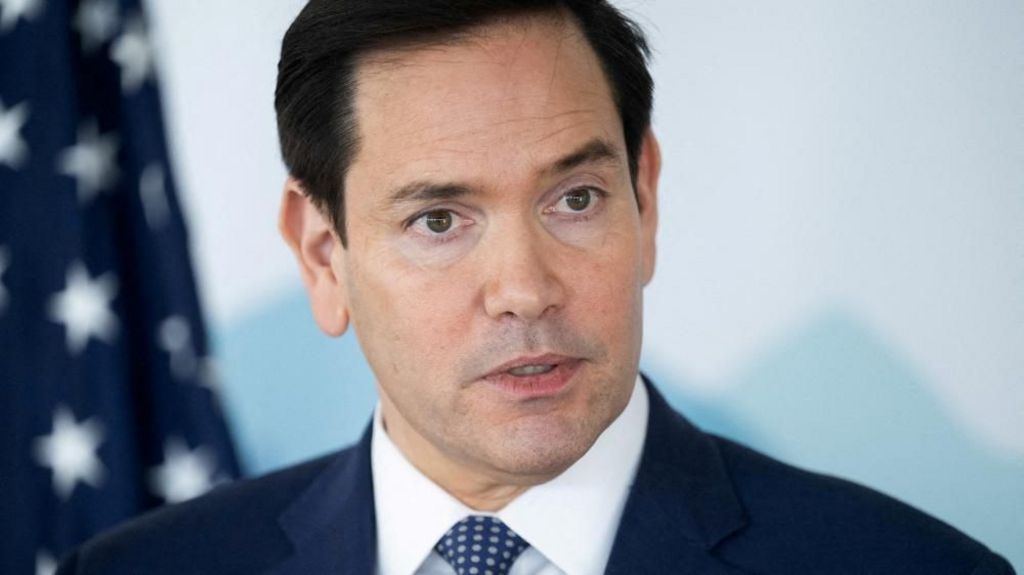
    A high-stakes diplomatic mission is set to unfold this week, as U.S. Secretary of State Marco Rubio travels to Rome and Vatican City to defuse rapidly escalating friction between President Donald Trump and the first American-born pontiff, Pope Leo XIV, rooted in deep disagreements over the Trump administration’s Iran war policy. The State Department officially confirmed Rubio’s itinerary on Monday, noting that the trip, scheduled for Thursday and Friday, marks the Catholic secretary’s third official visit to Italy or the Holy See since he took office as the Republican administration’s top diplomat. Vatican officials have publicly confirmed that Rubio will hold a one-on-one meeting with Pope Leo on Thursday.

    According to a formal statement from the State Department, the core agenda for Rubio’s discussions with Holy See leadership will center on the volatile security situation across the Middle East, alongside overlapping policy priorities for the U.S. and the Vatican in the Western Hemisphere. Separate meetings with Italian government counterparts, the statement added, will focus on collaborative security objectives and continued strategic alignment between the two NATO allies.

    The diplomatic outreach comes at a moment of open public friction between the sitting U.S. president and the pope. Tensions first flared last month, when Trump issued a scathing social media rebuke of Pope Leo, accusing the pontiff of being soft on transnational crime and terrorism over Leo’s public criticism of the administration’s hardline immigration and deportation policies, as well as its ongoing military campaign in Iran. In response, the Pope delivered a widely interpreted rebuke, stating that God does not hear the prayers of leaders who choose to wage aggressive war. The exchange escalated dramatically when Trump shared a now-deleted social media graphic that depicted him in the likeness of Jesus Christ.

    To date, Trump has rejected repeated calls to apologize for the controversial post, offering a shifting explanation that he initially believed the image portrayed him as a medical professional rather than a Christ figure. The friction between the White House and the Vatican has already spilled beyond religious and diplomatic circles, seeping into Italian domestic politics: Prime Minister Giorgia Meloni, a longstanding ally of Trump, has publicly condemned the president’s comments about the pope. In turn, Trump has lashed out at Meloni, part of a broader growing frustration with NATO allies that he accuses of failing to provide sufficient support for the Iran war. That frustration has already translated into policy, with the Pentagon announcing plans to withdraw thousands of U.S. troops from Germany in the coming months.

    This is far from the first time Rubio has been tapped to clean up after Trump’s provocative rhetoric: the secretary has repeatedly been tasked with walking back or softening the president’s harsh public statements on European relations, NATO and Middle East policy. Beyond the international diplomatic ramifications, the high-profile dispute with the pope carries notable domestic political stakes for the Republican Party, as the U.S. approaches upcoming midterm congressional elections.

    Pope Leo has sought to frame his own comments as non-partisan, saying his public calls for peace and criticism of the Iran war and other global conflicts were not intended as a direct attack on Trump or any other political leader. Prior to this week’s trip, Rubio has made two official visits to Italy as Secretary of State. His first trip, in May 2025, included attendance at Pope Leo’s inaugural mass and a private audience with the pontiff alongside Vice President JD Vance. His second visit, in February, again paired with Vance, for the opening ceremony of the Milan Winter Olympics, where the pair met with U.S. Olympic athletes. This story has been corrected to confirm that this week’s trip will bring Rubio’s total number of official visits to Italy or the Vatican to at least three.

  • Modi’s BJP conquers Bengal, one of India’s toughest political frontiers

    Modi’s BJP conquers Bengal, one of India’s toughest political frontiers

    For over a decade, Narendra Modi’s Bharatiya Janata Party (BJP) has reshaped India’s political map, sweeping through the Hindi-speaking heartland, expanding into the country’s western and northeastern regions, and dismantling long-dominant regional opposition. For years, however, one state stood as a stubborn outlier to Modi’s national advance: West Bengal. Culturally distinct and historically resistant to national BJP expansion, West Bengal’s 2026 state election emerged as one of the most consequential political contests in modern Indian history, with results that promise to reshape the trajectory of Modi’s 12-year national rule.

    With an electorate of more than 100 million people — larger than the entire voting population of Germany — this was no routine subnational election. When the final results were confirmed on Monday, the BJP secured a historic victory over three-term incumbent Mamata Banerjee and her Trinamool Congress (TMC) party, marking the completion of the BJP’s decades-long march to power across eastern India. “Winning Bengal is a big victory for the BJP – a land of promise that has long eluded its grasp,” explained author and veteran political journalist Nilanjan Mukhopadhyay.

    Monday’s election results upended political landscapes across southern India as well. In Tamil Nadu, the ruling DMK government led by MK Stalin was decisively ousted by movie star-turned-politician Vijay and his newly formed TVK party, bringing the era of film-led politics back to the state in dramatic fashion. In Kerala, the Congress-aligned United Democratic Front (UDF) defeated the ruling Left Democratic Front (LDF) after two consecutive terms in office, bringing an end to the last remaining Communist-led state government in India. Only in Assam did the BJP buck a national anti-incumbent trend to retain power, while the party and its coalition partners also held control of the federal territory of Puducherry. Even with these major shifts across the south, no result carried the national political weight of the BJP’s breakthrough in West Bengal.

    West Bengal has seen just one change in ruling government in nearly 50 years: the Communist Left Front held power for 34 years before Banerjee’s populist TMC took control 15 years ago. Political analysts have long characterized the state’s political system as one that favors long-ruling “hegemonic” parties, making the BJP’s victory all the more remarkable. Analysts note the outcome is not a sudden political upheaval, but rather the culmination of a 10-year incremental political project by the BJP. Unlike the party’s rapid takeover of Tripura or earlier breakthrough in Assam, West Bengal was never a quick conquest.

    “The BJP has been a major force in Bengal for three successive elections, consistently polling around 39% of the popular vote,” said Rahul Verma, a fellow at the Centre for Policy Research. Once the party solidified its base in the 39-40% vote share range, Verma explained, it only needed an additional 5-6% of the vote to cross the winning threshold. Final voting trends confirm the BJP secured just over 44% of the popular vote this cycle, enough to secure a majority. What makes this outcome particularly striking is that the BJP achieved this majority without building the deep grassroots organizational infrastructure that regional parties have historically relied on to win power in West Bengal. The TMC still maintained a denser on-the-ground network and retained the charismatic draw of Banerjee, yet the BJP held a commanding vote share even while facing accusations of political intimidation and fighting one of India’s most deeply entrenched regional parties. “That suggests,” Verma says, “the party’s support now extends beyond the limits of its relatively thin organisational structure.”

    What political shifts pushed the final result firmly toward the BJP? For 15 years, Banerjee’s TMC built an unbeatable social coalition, uniting women, Muslim voters, and large segments of the Hindu electorate across both rural and urban West Bengal. Women in particular formed the backbone of the TMC’s welfare-focused political strategy: a 2021 post-poll survey by Lokniti-CSDS found TMC support among women reached 50%, four points higher than support among men, a gap that reflected the impact of years of women-centered welfare programming and Banerjee’s work expanding women’s political representation. This election cycle, the BJP directly targeted this TMC advantage, rolling out its own promises of larger direct cash transfers and expanded social welfare benefits.

    “Banerjee’s long electoral success rested on a delicate equilibrium between welfare and organisation. But the very organisation that sustained her for 15 years also became her Achilles’ heel,” said political scientist Bhanu Joshi. “That balance broke down as the party machinery weakened and welfare politics appeared to reach its limits – voters began to see benefits as routine rather than transformative. The BJP’s opening was to translate this anti-TMC fatigue into a sharper language of Hindu consolidation. So this is not simply a story of welfare failing; it is a story of welfare and organisation no longer being strong enough to contain polarisation,” Joshi added.

    The election also reaffirmed the critical role of Muslim voters in West Bengal’s political math, even as final details of voting patterns remain preliminary. Muslims make up roughly 27% of the state’s population, and nearly a third of legislative seats have majority or plurality Muslim populations. In the 2021 election, the TMC won 84 of 88 Muslim-majority seats, reflecting a broad consolidation of Muslim support behind Banerjee. While early data indicates the TMC retained significant Muslim support this cycle, the BJP worked to offset this advantage through Hindu voter consolidation and competing welfare promises. “The BJP combined an aggressive welfare pitch with sharper polarisation. It promised to double cash benefits, while visible communalisation consolidated sections of the Bengali Hindu vote behind the party,” said Maidul Islam, a political scientist at Kolkata’s Centre for Studies in Social Sciences.

    BJP leaders, however, frame the result as a rejection of TMC governance rather than an ideological victory. The TMC created a “crisis of leadership for itself,” senior BJP leader Dharmendra Pradhan told reporters, accusing the party of “arrogance” and claiming that “voters, particularly women angered by atrocities and law-and-order failures, had decisively rejected the Trinamool Congress.”

    A major point of controversy throughout the campaign was the fiercely debated special revision of West Bengal’s electoral rolls. The Election Commission of India framed the process as a routine cleanup to remove duplicate and ineligible voter registrations. But with nearly three million voters still waiting for tribunal decisions on their registration status before polling began, Banerjee, activists and civil society groups alleged the process amounted to a “mass disenfranchisement exercise” that disproportionately targeted poor, minority, and migrant voters in border districts. Analysts note the controversy will likely face increased scrutiny in closely fought seats where the winning margin was smaller than the number of voters removed from the rolls. “The revision of polls will come into play [once the results are in],” politician and activist Yogendra Yadav told NDTV.

    Most analysts agree the electoral roll controversy alone cannot explain the scale of the BJP’s surge. Additional factors that worked in the party’s favor included a tightly focused national campaign centered on alleged corruption and governance failures in the TMC government, with the party repeatedly highlighting high-profile scandals like the state’s controversial teacher recruitment scam rather than relying solely on personal attacks against Banerjee.

    With the BJP’s victory confirmed, the political implications extend far beyond the borders of West Bengal. Unlike neighboring Bihar, where the BJP governs through coalition alliances, or 2024’s breakthrough in Odisha against a weakened regional incumbent, a standalone victory in West Bengal cements the BJP’s status as a national competitor capable of winning even India’s most politically formidable regional strongholds. “It would strengthen Modi enormously,” says Mukhopadhyay. “More than Odisha, this would be seen as a personal political victory not only for Narendra Modi, but also for Home Minister Amit Shah, who effectively ran the campaign.”

    Within the BJP’s internal power structure, Shah is almost certain to emerge as the unofficial “man of the match” for the win, echoing the political capital Modi gained after the party’s landmark 2014 victory in Uttar Pradesh, which elevated Shah to the national leadership. Mukhopadhyay notes a West Bengal victory could also reshape the BJP’s internal succession politics, reinforcing Shah’s position as Modi’s most likely successor and potentially moving him ahead of rivals including Yogi Adityanath, Nitin Gadkari and Rajnath Singh in the party’s next-generation power hierarchy.

    For decades, West Bengal prided itself on resisting the national political currents that transformed the rest of India. Now that the BJP has finally breached one of India’s most enduring regional strongholds, the result marks not just the end of an era for West Bengal politics, but the beginning of a new chapter for the Modi-led BJP project across India.

  • UAE-Israel ties useful but nowhere near a Middle East reset

    UAE-Israel ties useful but nowhere near a Middle East reset

    Five and a half years have passed since the Abraham Accords were signed in a ceremony on the White House South Lawn, where celebratory triumphalism overshadowed a far more sober underlying reality. While the normalization agreement between Israel and the United Arab Emirates marked a meaningful breakthrough in regional relations, it never delivered the long-promised “dawn of a new Middle East” that U.S. diplomats touted that day. A cascade of escalating regional crises – from the October 7 attacks, the devastating Gaza war, an Israeli targeted strike on Hamas leaders in Doha, and most recently the 12-day cross-border conflict with Iran that brought an Israeli Iron Dome battery to Emirati soil – has rendered the original optimistic Washington narrative increasingly unsustainable.

    Today, policy analysts and Israeli strategists are consumed by one core question: Can the UAE-Israel partnership reorient the entire Middle East’s balance of power? This analysis argues that question itself is rooted in the same flawed assumption that has undermined U.S. Middle East policy dating back to the Carter administration: the belief that a bilateral alignment between two U.S.-aligned states can replace the hard, messy work of building a durable regional order, and that carefully choreographed diplomatic publicity can override the underlying realities of power distribution across the region.

    To evaluate the Accords fairly, one must start by separating tangible progress from overstated hype. The economic and security ties forged between the two states are not empty rhetoric. In 2024, bilateral trade hit $3.2 billion and continues an upward trajectory. Israeli tech firms have established permanent headquarters at Abu Dhabi Global Market, while Emirati sovereign capital has become a major investor in Israel’s high-tech sector. Defense cooperation has also moved well beyond symbolic gestures: when UAE’s defense conglomerate Edge Group acquired Elbit Systems’ Hermes 900 drones, it marked the first substantive industrial defense partnership between the two nations, rather than just an exchange of friendly press statements. Most notably, during the 2026 conflict with Iran, Israeli military personnel operating an Iron Dome defense system from Emirati territory represented a genuinely unprecedented development: an Israeli forward defensive posture in the Persian Gulf, made possible only by the strategic opening created by the Accords.

    These are meaningful tactical achievements, but they do not add up to a strategic transformation of the region. To claim otherwise is to ignore both the fundamental constraints shaping Emirati foreign policy and the structural regional realities that no single bilateral partnership can erase.

    First, the UAE itself is a small federation of seven emirates with a population majority made up of expatriate workers, whose long-term security still ultimately relies on U.S. extended deterrence. For more than a decade, Emirati leaders have judged Washington to be an increasingly unreliable security patron, so they have systematically pursued hedging strategies across major global powers – building closer ties with Beijing, Moscow, New Delhi, and most consequentially, pursuing quiet tactical reconciliation with Iran. The decision to normalize relations with Israel was always a pragmatic calculation: it gave Abu Dhabi a useful counterweight to Iranian regional expansion while unlocking significant economic benefits. It was never, despite optimistic rhetoric in press releases and Negev Forum communiques, a decision to subordinate Emirati grand strategy to Israeli interests. When Sheikh Mohammed bin Zayed traveled to Doha just hours after Israel’s strike on Hamas leaders there, he was not betraying the Accords. He was simply demonstrating that the Accords were never meant to be the sole organizing principle of UAE foreign policy – and no rational Gulf leadership would ever allow them to become so.

    This leads to the second structural reality: Arab Gulf states have never sought, and do not want, to be junior partners in an Israeli-led regional order. The ideological project of an “Abraham Alliance,” championed by former Israeli Prime Minister Benjamin Netanyahu and embraced by American neoconservatives eager to anoint any new regional alignment as transformative, assumes a level of Emirati deference to Israeli strategic priorities that Abu Dhabi has never accepted. The UAE swiftly and clearly condemned the October 7 attacks, but it has also maintained an open humanitarian corridor for Gaza, publicly denounced what it calls Israeli violations of international law, pulled Israeli participation from the Dubai Airshow, and warned that any Israeli annexation of the West Bank would cross a permanent red line. These are not the actions of a satellite state. They are the measured moves of a small state carefully hedging its bets in an unstable neighborhood, exactly as small states have always done.

    Third, the future of the Accords is inextricably tied to Saudi Arabia, the most powerful Arab Gulf state. Without Riyadh joining the Abraham framework, the agreement remains a useful but limited diplomatic win. With Saudi participation, it would amount to a genuine regional reordering. But Saudi Arabia’s core condition for normalization – that Israel must create a credible path to an independent Palestinian state – has only hardened in the wake of the Gaza war. Israel’s current ruling coalition relies on far-right political partners who openly and proudly advocate for permanent annexation of the West Bank, making it impossible to deliver the political commitments Saudi Arabia demands. This is not a problem that can be fixed with clever diplomatic maneuvering, nor is it merely a question of personality – though Netanyahu’s personal credibility across the Gulf is widely reported to be severely diminished. It is a fundamental clash of incompatible strategic objectives, one that a potential second Trump administration, for all its focus on dealmaking, will find far more intractable than the first Trump administration did.

    Finally, the broader regional environment has not shifted in the direction the Accords’ original architects predicted. While Iran has been weakened by the collapse of its Axis of Resistance and U.S. strikes on its nuclear program, it remains a major regional power that cannot be simply dismissed from the regional order. Turkey has expanded its influence across post-Assad Syria, while Qatar – whose ties to Hamas Israeli leaders have long sought to punish – has emerged from the Gaza war with its diplomatic standing strengthened, not diminished. Qatar now hosts key U.S.-brokered ceasefire negotiations and summits that have repeatedly set the terms for potential conflict resolution. The much-hyped regional realignment promised by the Accords has actually produced a more crowded, more complex regional system, not a simpler, more pro-Western order.

    So what can the UAE-Israel partnership actually achieve? Quite a lot, when judged by realistic, modest standards. It can act as a platform for cross-border technology transfer, intelligence sharing, and joint commercial development. It has given Israel a level of regional integration that would have seemed unthinkable just 20 years ago. It helps the UAE diversify its non-oil economy and modernize its defense industrial base. It provides a mutual hedge against Iranian assertiveness without forcing either side into a formal alliance that neither can afford to accept. These are not small achievements. For two pragmatic states navigating a volatile neighborhood, they represent real, tangible gains.

    But they are not a transformation of the regional balance of power. Instead, they are a pragmatic adaptation by two states to a new multipolar Middle East, where American hegemony has receded, core disputes over Palestinian self-determination remain unresolved, and regional actors increasingly take responsibility for managing their own security and order. These adaptations are important, and they should be welcomed. But they should never be confused with the grand strategic reordering they have so often been described as.

    As realist geopolitical thought has long held, history does not easily bend to the press conferences of great powers. The Middle East’s fundamental fault lines – the unresolved Palestinian question, Iran’s regional role, decades of Sunni-Shia division, the stalled progress on Saudi-Israeli normalization, and the gradual rebalancing of U.S. regional commitments – will shape the future regional order far more than any single bilateral partnership, however valuable that partnership may be. To expect anything more is to mistake the choreography of diplomatic spectacle for the hard substance of geopolitics. It is a mistake Washington has made many times before. There is no clear reason for it to make the same mistake again.

  • A European lawmaker is sentenced in a fraud case involving Czech populist leader Andrej Babiš

    A European lawmaker is sentenced in a fraud case involving Czech populist leader Andrej Babiš

    PRAGUE — In a high-profile legal ruling that has roiled the Czech political landscape just months after Prime Minister Andrej Babiš formed his new government, a municipal court in Prague found former close aide Jana Nagyová guilty of fraud connected to a $2 million European Union subsidy scheme on Monday. The court handed Nagyová a three-year suspended prison sentence and ordered her to pay a fine of 500,000 Czech koruna, equal to approximately $24,000. The verdict is not binding, as Nagyová retains the right to file an appeal to challenge the conviction.

    The case, one of the most controversial political legal matters in modern Czech history, names both Nagyová and Babiš, a populist billionaire who began his third term as prime minister in December 2024, as co-defendants. The fraud allegation centers on the Stork’s Nest farm, a property that was deliberately restructured to qualify for EU agricultural subsidies earmarked exclusively for small and medium-sized enterprises.

    Originally owned by Agrofert, the large industrial conglomerate controlled by Babiš, the farm was transferred into the names of Babiš’s family members to meet the small-business eligibility criteria for the funding. After securing the $2 million in subsidies, full ownership of the property was transferred back to Agrofert — a company that would never have qualified for the targeted funding on its own. Agrofert has since returned the disputed subsidy to authorities.

    Unlike Nagyová, who currently serves as a member of the European Parliament and has already had her legal immunity lifted by EU legislative bodies, Babiš retains parliamentary immunity from criminal prosecution. In March, lawmakers in the lower chamber of the Czech Parliament voted down a motion to revoke Babiš’s immunity, a decision that means any trial against the sitting prime minister cannot proceed until his current term ends in 2029. Babiš has repeatedly denied any wrongdoing, framing the entire case as a politically motivated attack against his administration.

    Babiš’s return to the prime minister’s office came after his populist political movement ANO — which translates to YES in Czech — secured a decisive victory in October national elections. He went on to form a narrow governing coalition with two small right-wing and populist parties: the anti-immigrant Freedom and Direct Democracy party, and the right-wing Motorists party. The coalition’s stated policy agenda marks a notable shift from the previous Czech government, including plans to reduce Czech military and political support for Ukraine amid the ongoing Russian invasion, and to push back against a number of flagship European Union policy initiatives. The conviction of Babiš’s former closest associate is expected to amplify domestic tensions, with opposition leaders already calling for greater transparency and accountability for the new administration.

  • Austria expels 3 Russian Embassy staff over suspected antenna spying in Vienna

    Austria expels 3 Russian Embassy staff over suspected antenna spying in Vienna

    VIENNA – In a sharp escalation of diplomatic tensions between Moscow and a European Union member state, Austria’s Foreign Ministry announced Monday it has expelled three Russian Embassy personnel over credible allegations of systematic espionage targeting international organizations headquartered in the country. The move confirms an earlier report from Austrian public broadcaster ORF, which first broke the story Sunday, detailing accusations that the three diplomats used hidden antenna arrays installed on the roofs of two Russian diplomatic properties – the main Russian Embassy in central Vienna and a separate diplomatic compound in the capital’s Donaustadt district – to conduct covert intelligence gathering.

    According to ORF’s reporting, the custom-built antenna installations gave Russian intelligence operatives the capability to intercept satellite internet data transmitted by major international organizations based in Vienna. The Austrian capital hosts a dense network of key global bodies, including multiple United Nations agencies, the United Nations’ nuclear watchdog the International Atomic Energy Agency (IAEA), the Organization of the Petroleum Exporting Countries (OPEC), and the Organization for Security and Co-operation in Europe (OSCE).

    In an official statement announcing the expulsions, Austrian Foreign Minister Beate Meinl-Reisinger emphasized that the new government has shifted its approach to addressing foreign espionage on Austrian soil. “Espionage is a security problem for Austria. In this government, we have changed course and are taking decisive action against it,” Meinl-Reisinger said. “We have made this unequivocally clear to the Russian side, also with regard to the array of antennas at the Russian embassy. One thing is clear: it is unacceptable for diplomatic immunity to be used to engage in espionage.”

    The incident traces back to April, when Austrian authorities summoned Russian Ambassador Dmitry Lyubinsky to the Foreign Ministry over the suspected activities. Prosecutors requested that Moscow waive diplomatic immunity for the three employees to allow a formal criminal investigation, but Russia rejected the request – a decision that directly triggered the expulsion order, ORF confirmed. As of Monday, all three expelled diplomats have already departed Austrian territory.

    Beyond the immediate expulsions, the Austrian government is moving to update the country’s national espionage legislation to close critical gaps that currently leave international organizations based in Austria underprotected. Under existing law, espionage carried out by foreign actors is only criminalized if it targets direct Austrian national interests. The proposed regulatory reforms, put forward by the current administration, will extend the same legal protections to activities involving international organizations hosted on Austrian soil, the Austrian Press Agency confirmed.

    The expulsions mark the latest in a series of reciprocal diplomatic expulsions between Western European states and Russia that have taken place since Moscow launched its full-scale invasion of Ukraine in February 2022. Austria, which holds formal military neutrality as an EU member, initially avoided taking high-profile diplomatic action against Moscow but has ramped up such expulsions in recent months.

    The Russian Embassy in Vienna had not responded to direct requests for comment on the decision by Monday afternoon. However, in a public statement posted to its official Telegram channel Monday, the embassy called Austria’s decision “outrageous” and warned that Moscow would issue a forceful reciprocal response. The statement added that “Vienna bears full responsibility for the further deterioration of bilateral relations, which are already at a historical low.”

  • US vs China: two armies, two theories of the body

    US vs China: two armies, two theories of the body

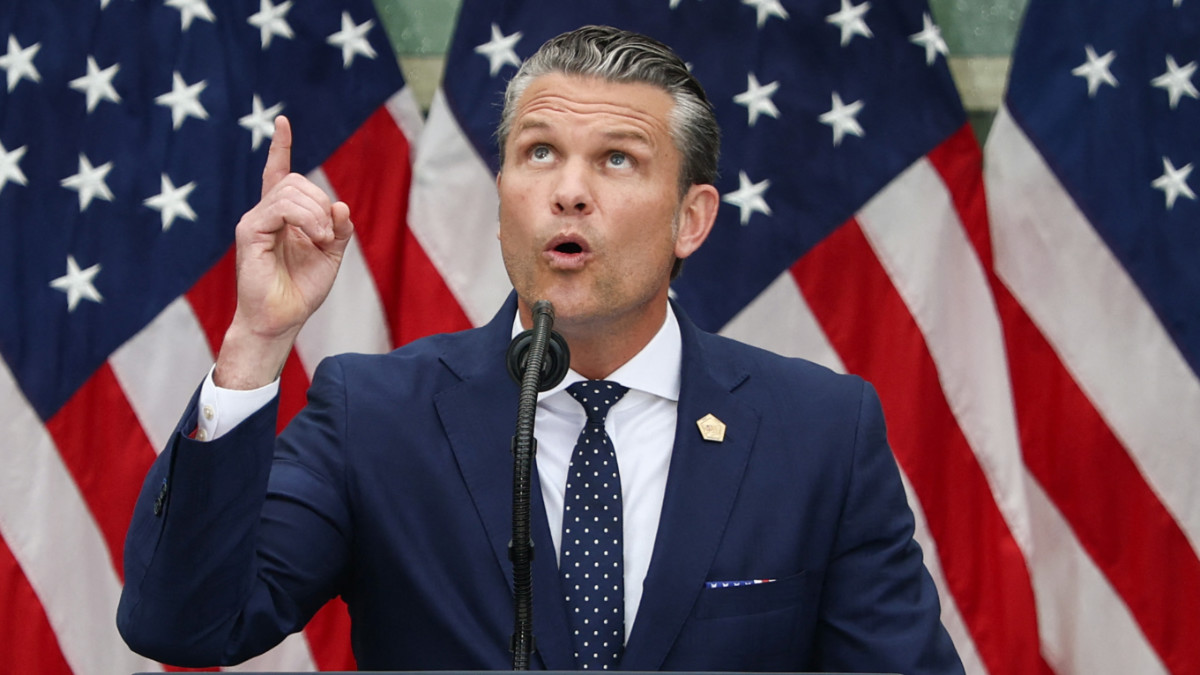
    In the first week of May 2026, as China’s People’s Liberation Army (PLA) carried forward its long-standing annual routine of large-scale immunization drills with little public fanfare, U.S. Defense Secretary Pete Hegseth made a landmark policy announcement: American service members would no longer face a mandatory requirement to receive the seasonal influenza vaccine. This shift ends a policy that had remained almost continuously in place across the U.S. military since 1945.

    On the surface, this change appears to be nothing more than a narrow adjustment to military administrative rules. But when contrasted with the PLA’s consistent approach to force health protection, the decision reveals a far deeper ideological split over the boundary between an individual service member’s personal autonomy and the collective requirements of national military power.

    Formally signed into effect on April 21, the new U.S. policy reclassifies seasonal flu vaccination as a voluntary choice for all active-duty personnel, reserve troops, and civilian employees working for the Department of Defense. Mandatory vaccine requirements remain in place for other illnesses including measles, mumps, and polio. The Biden administration’s official justifications for the change center on expanding individual medical autonomy and upholding religious freedom for service members.

    In sharp contrast, the PLA frames routine universal immunization as a standard, unremarkable component of force readiness protection. For Chinese military planners, immunization follows the same logic as mandatory physical fitness testing: it is a core operational requirement, not a personal medical decision left to individual preference.

    This contrast is not a simple case of a democratic vs. authoritarian divide, as the original analysis points out. Multiple Western-aligned militaries around the world, from the Singapore Armed Forces to the Israel Defense Forces and the British Armed Forces, maintain non-negotiable mandatory vaccine schedules without being labeled illiberal or anti-democratic.

    What makes the new U.S. stance unprecedented among modern great power defense policies is its core framing: it treats a service member’s immune system as, by default, an individual’s private sphere, separate from military operational requirements.

    Setting aside the ideological debate, all military institutions must confront one unavoidable practical question: can a contagious respiratory virus, which spreads rapidly in the close-quarters environments shared barracks, berthing areas on warships, and military training camps, be effectively managed if prevention is left to individual personal choice?

    History offers an unforgiving answer to this question. During World War I, approximately 45,000 U.S. military personnel died from influenza complications. For the vast majority of modern military history, infectious disease has killed more service members than direct combat engagement. Among new military recruits, who live in extremely dense group quarters, flu hospitalization rates are roughly 10 times higher than rates among the broader military population. A flu outbreak on a submarine deployed at sea or at a remote forward operating base is far more than a personal inconvenience: it is a direct threat to the unit’s ability to complete its assigned mission.

    Chinese military planners, whose force is increasingly oriented toward expeditionary operations and long-duration naval deployments far from home ports, have fully internalized this historical lesson with no ambivalence. The United States, which originally helped develop the modern global playbook for military force health protection, is now conducting a live, real-world experiment to test whether voluntary vaccine uptake can achieve the same high levels of coverage that mandatory mandates have long delivered.

    Public health researchers have long warned that mandatory requirements are the most reliable tool to reach the herd immunity thresholds needed to stop outbreaks in closed, congregate populations like military bases. If voluntary uptake leads to a meaningful drop in flu vaccination rates among U.S. service members, the PLA will gain a small but measurable advantage in operational readiness during peak respiratory virus seasons — an advantage gained without any military confrontation or public diplomatic statement.

    Beyond operational readiness, the policy shift carries a less obvious cultural cost for the U.S. military. When top Pentagon leadership frames a decades-old preventive public health measure as “overly broad and not rational,” it signals to the entire force that readiness-focused medical policy is open to negotiation and shaped by ideological conflict. This ripple effect will not stay limited to influenza vaccination. Commanders preparing for potential exposure to anthrax, new pandemic virus variants, or engineered biological weapons will now operate in a changed environment, where troops can reasonably question why one vaccine is mandatory when a different routine vaccine was made voluntary just a year earlier. Adversaries that invest in biological warfare capabilities closely track these kinds of cultural shifts in military policy.

    The PLA’s approach faces its own set of tradeoffs, the analysis notes. Its culture of rigid compliance guarantees high vaccination coverage, but it gives up the legitimacy dividend that comes from persuading service members of the value of immunization, rather than simply ordering it. Troops who accept vaccination because they understand how it protects both themselves and their unit are more resilient partners during long-term campaigns than troops who only comply because refusal is not permitted. A military that cannot distinguish between informed consent and blind obedience will struggle to improvise during high-stress operations, particularly in joint missions with allied forces that expect troops to participate with full, informed understanding of operational requirements.

    Neither the U.S. nor the Chinese model is clearly optimal, the author argues. Instead of caricaturing one another’s approaches, defense establishments on both sides could gain useful insights from each other’s frameworks. A more effective, mission-aligned vaccine doctrine would start with one single question for every immunization requirement: does this vaccine directly protect operational deployability and reduce preventable disruption to military missions?

    If the answer is yes, the policy should be defended as a core readiness measure, not pulled into broader cultural and ideological political battles. Under this targeted doctrine, influenza vaccination would remain mandatory in settings where the operational case for it is strongest: recruit training camps, warships, submarines, aviation units, military medical facilities, rapid-deployment response forces, and troops assigned to overseas missions. In lower-risk settings, vaccination could be strongly encouraged without being universally mandated. Medical exemptions would still be available, but they would be tied to operational risk assessments rather than ideological or identity-based claims.

    This balanced approach would preserve the PLA’s strength in operational discipline while integrating the Western insight that institutional legitimacy itself acts as a force multiplier for military readiness. It would also pull the U.S. policy debate out of the unproductive binary choice between universal mandatory mandates and unrestricted individual opt-outs modeled on consumer choice.

    A single flu shot is a routine, low-stakes medical procedure. But the policy that governs it carries profound meaning. It encodes how a nation-state understands the fundamental relationship between the individual service member and the collective military mission, between personal conscience and unit cohesion, between individual freedom and the requirements of national defense.

    Today, China and the United States are conducting parallel, contrasting experiments on how to balance these core priorities. The results of these experiments will not show up in official press releases or diplomatic statements. They will appear in sick call rosters, delayed deployment timelines, and the quiet, unpublicized metrics that measure military readiness. Military planners have relearned the same lesson in every generation since the 1918 influenza pandemic: infectious disease does not stop being an operational threat just because policy chooses to frame it as a personal matter. Whichever military remembers this lesson most clearly, and translates it into a doctrine that its own troops actually believe in, will gain a strategic advantage that no amount of defense procurement spending can buy.