分类: politics

  • A European lawmaker is sentenced in a fraud case involving Czech populist leader Andrej Babiš

    A European lawmaker is sentenced in a fraud case involving Czech populist leader Andrej Babiš

    PRAGUE — In a high-profile legal ruling that has roiled the Czech political landscape just months after Prime Minister Andrej Babiš formed his new government, a municipal court in Prague found former close aide Jana Nagyová guilty of fraud connected to a $2 million European Union subsidy scheme on Monday. The court handed Nagyová a three-year suspended prison sentence and ordered her to pay a fine of 500,000 Czech koruna, equal to approximately $24,000. The verdict is not binding, as Nagyová retains the right to file an appeal to challenge the conviction.

    The case, one of the most controversial political legal matters in modern Czech history, names both Nagyová and Babiš, a populist billionaire who began his third term as prime minister in December 2024, as co-defendants. The fraud allegation centers on the Stork’s Nest farm, a property that was deliberately restructured to qualify for EU agricultural subsidies earmarked exclusively for small and medium-sized enterprises.

    Originally owned by Agrofert, the large industrial conglomerate controlled by Babiš, the farm was transferred into the names of Babiš’s family members to meet the small-business eligibility criteria for the funding. After securing the $2 million in subsidies, full ownership of the property was transferred back to Agrofert — a company that would never have qualified for the targeted funding on its own. Agrofert has since returned the disputed subsidy to authorities.

    Unlike Nagyová, who currently serves as a member of the European Parliament and has already had her legal immunity lifted by EU legislative bodies, Babiš retains parliamentary immunity from criminal prosecution. In March, lawmakers in the lower chamber of the Czech Parliament voted down a motion to revoke Babiš’s immunity, a decision that means any trial against the sitting prime minister cannot proceed until his current term ends in 2029. Babiš has repeatedly denied any wrongdoing, framing the entire case as a politically motivated attack against his administration.

    Babiš’s return to the prime minister’s office came after his populist political movement ANO — which translates to YES in Czech — secured a decisive victory in October national elections. He went on to form a narrow governing coalition with two small right-wing and populist parties: the anti-immigrant Freedom and Direct Democracy party, and the right-wing Motorists party. The coalition’s stated policy agenda marks a notable shift from the previous Czech government, including plans to reduce Czech military and political support for Ukraine amid the ongoing Russian invasion, and to push back against a number of flagship European Union policy initiatives. The conviction of Babiš’s former closest associate is expected to amplify domestic tensions, with opposition leaders already calling for greater transparency and accountability for the new administration.

  • Austria expels 3 Russian Embassy staff over suspected antenna spying in Vienna

    Austria expels 3 Russian Embassy staff over suspected antenna spying in Vienna

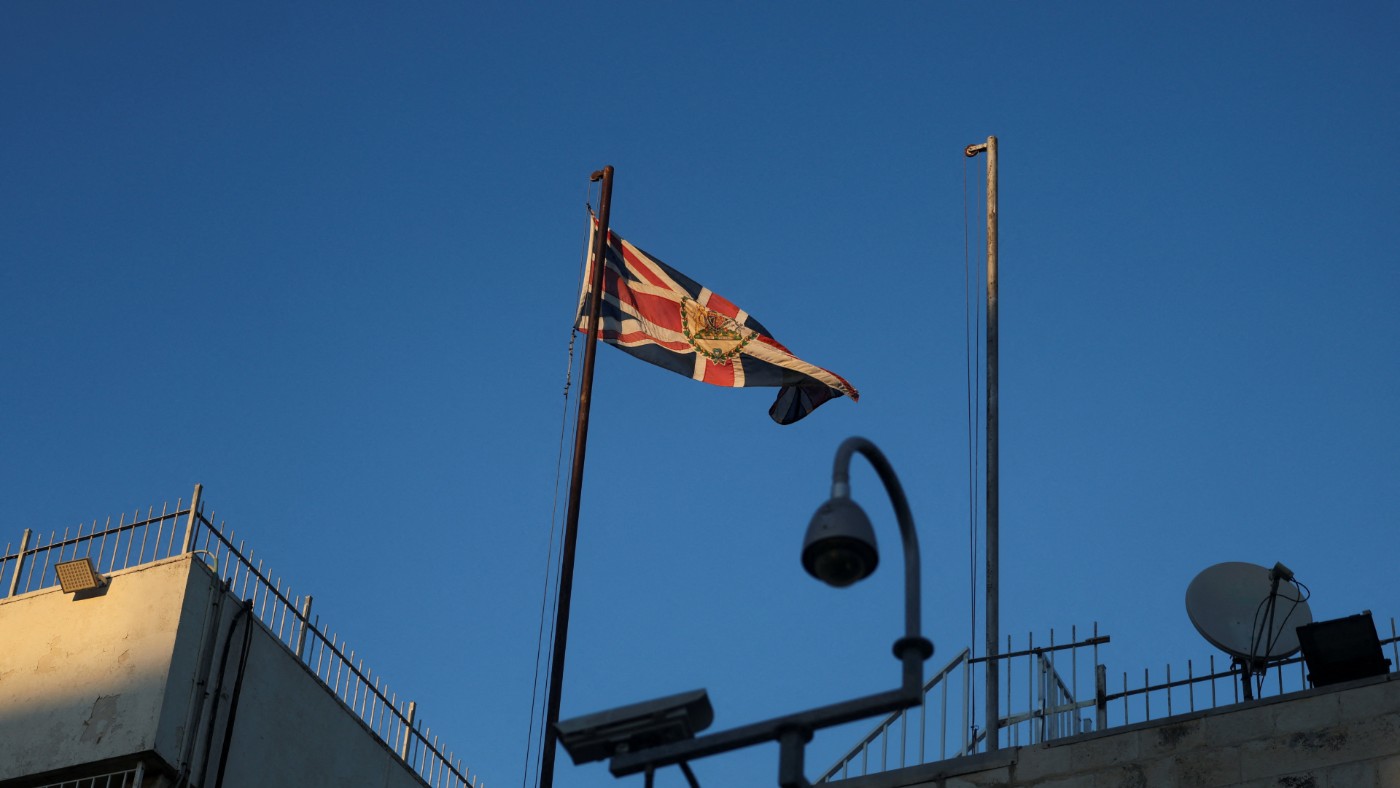
    VIENNA – In a sharp escalation of diplomatic tensions between Moscow and a European Union member state, Austria’s Foreign Ministry announced Monday it has expelled three Russian Embassy personnel over credible allegations of systematic espionage targeting international organizations headquartered in the country. The move confirms an earlier report from Austrian public broadcaster ORF, which first broke the story Sunday, detailing accusations that the three diplomats used hidden antenna arrays installed on the roofs of two Russian diplomatic properties – the main Russian Embassy in central Vienna and a separate diplomatic compound in the capital’s Donaustadt district – to conduct covert intelligence gathering.

    According to ORF’s reporting, the custom-built antenna installations gave Russian intelligence operatives the capability to intercept satellite internet data transmitted by major international organizations based in Vienna. The Austrian capital hosts a dense network of key global bodies, including multiple United Nations agencies, the United Nations’ nuclear watchdog the International Atomic Energy Agency (IAEA), the Organization of the Petroleum Exporting Countries (OPEC), and the Organization for Security and Co-operation in Europe (OSCE).

    In an official statement announcing the expulsions, Austrian Foreign Minister Beate Meinl-Reisinger emphasized that the new government has shifted its approach to addressing foreign espionage on Austrian soil. “Espionage is a security problem for Austria. In this government, we have changed course and are taking decisive action against it,” Meinl-Reisinger said. “We have made this unequivocally clear to the Russian side, also with regard to the array of antennas at the Russian embassy. One thing is clear: it is unacceptable for diplomatic immunity to be used to engage in espionage.”

    The incident traces back to April, when Austrian authorities summoned Russian Ambassador Dmitry Lyubinsky to the Foreign Ministry over the suspected activities. Prosecutors requested that Moscow waive diplomatic immunity for the three employees to allow a formal criminal investigation, but Russia rejected the request – a decision that directly triggered the expulsion order, ORF confirmed. As of Monday, all three expelled diplomats have already departed Austrian territory.

    Beyond the immediate expulsions, the Austrian government is moving to update the country’s national espionage legislation to close critical gaps that currently leave international organizations based in Austria underprotected. Under existing law, espionage carried out by foreign actors is only criminalized if it targets direct Austrian national interests. The proposed regulatory reforms, put forward by the current administration, will extend the same legal protections to activities involving international organizations hosted on Austrian soil, the Austrian Press Agency confirmed.

    The expulsions mark the latest in a series of reciprocal diplomatic expulsions between Western European states and Russia that have taken place since Moscow launched its full-scale invasion of Ukraine in February 2022. Austria, which holds formal military neutrality as an EU member, initially avoided taking high-profile diplomatic action against Moscow but has ramped up such expulsions in recent months.

    The Russian Embassy in Vienna had not responded to direct requests for comment on the decision by Monday afternoon. However, in a public statement posted to its official Telegram channel Monday, the embassy called Austria’s decision “outrageous” and warned that Moscow would issue a forceful reciprocal response. The statement added that “Vienna bears full responsibility for the further deterioration of bilateral relations, which are already at a historical low.”

  • US vs China: two armies, two theories of the body

    US vs China: two armies, two theories of the body

    In the first week of May 2026, as China’s People’s Liberation Army (PLA) carried forward its long-standing annual routine of large-scale immunization drills with little public fanfare, U.S. Defense Secretary Pete Hegseth made a landmark policy announcement: American service members would no longer face a mandatory requirement to receive the seasonal influenza vaccine. This shift ends a policy that had remained almost continuously in place across the U.S. military since 1945.

    On the surface, this change appears to be nothing more than a narrow adjustment to military administrative rules. But when contrasted with the PLA’s consistent approach to force health protection, the decision reveals a far deeper ideological split over the boundary between an individual service member’s personal autonomy and the collective requirements of national military power.

    Formally signed into effect on April 21, the new U.S. policy reclassifies seasonal flu vaccination as a voluntary choice for all active-duty personnel, reserve troops, and civilian employees working for the Department of Defense. Mandatory vaccine requirements remain in place for other illnesses including measles, mumps, and polio. The Biden administration’s official justifications for the change center on expanding individual medical autonomy and upholding religious freedom for service members.

    In sharp contrast, the PLA frames routine universal immunization as a standard, unremarkable component of force readiness protection. For Chinese military planners, immunization follows the same logic as mandatory physical fitness testing: it is a core operational requirement, not a personal medical decision left to individual preference.

    This contrast is not a simple case of a democratic vs. authoritarian divide, as the original analysis points out. Multiple Western-aligned militaries around the world, from the Singapore Armed Forces to the Israel Defense Forces and the British Armed Forces, maintain non-negotiable mandatory vaccine schedules without being labeled illiberal or anti-democratic.

    What makes the new U.S. stance unprecedented among modern great power defense policies is its core framing: it treats a service member’s immune system as, by default, an individual’s private sphere, separate from military operational requirements.

    Setting aside the ideological debate, all military institutions must confront one unavoidable practical question: can a contagious respiratory virus, which spreads rapidly in the close-quarters environments shared barracks, berthing areas on warships, and military training camps, be effectively managed if prevention is left to individual personal choice?

    History offers an unforgiving answer to this question. During World War I, approximately 45,000 U.S. military personnel died from influenza complications. For the vast majority of modern military history, infectious disease has killed more service members than direct combat engagement. Among new military recruits, who live in extremely dense group quarters, flu hospitalization rates are roughly 10 times higher than rates among the broader military population. A flu outbreak on a submarine deployed at sea or at a remote forward operating base is far more than a personal inconvenience: it is a direct threat to the unit’s ability to complete its assigned mission.

    Chinese military planners, whose force is increasingly oriented toward expeditionary operations and long-duration naval deployments far from home ports, have fully internalized this historical lesson with no ambivalence. The United States, which originally helped develop the modern global playbook for military force health protection, is now conducting a live, real-world experiment to test whether voluntary vaccine uptake can achieve the same high levels of coverage that mandatory mandates have long delivered.

    Public health researchers have long warned that mandatory requirements are the most reliable tool to reach the herd immunity thresholds needed to stop outbreaks in closed, congregate populations like military bases. If voluntary uptake leads to a meaningful drop in flu vaccination rates among U.S. service members, the PLA will gain a small but measurable advantage in operational readiness during peak respiratory virus seasons — an advantage gained without any military confrontation or public diplomatic statement.

    Beyond operational readiness, the policy shift carries a less obvious cultural cost for the U.S. military. When top Pentagon leadership frames a decades-old preventive public health measure as “overly broad and not rational,” it signals to the entire force that readiness-focused medical policy is open to negotiation and shaped by ideological conflict. This ripple effect will not stay limited to influenza vaccination. Commanders preparing for potential exposure to anthrax, new pandemic virus variants, or engineered biological weapons will now operate in a changed environment, where troops can reasonably question why one vaccine is mandatory when a different routine vaccine was made voluntary just a year earlier. Adversaries that invest in biological warfare capabilities closely track these kinds of cultural shifts in military policy.

    The PLA’s approach faces its own set of tradeoffs, the analysis notes. Its culture of rigid compliance guarantees high vaccination coverage, but it gives up the legitimacy dividend that comes from persuading service members of the value of immunization, rather than simply ordering it. Troops who accept vaccination because they understand how it protects both themselves and their unit are more resilient partners during long-term campaigns than troops who only comply because refusal is not permitted. A military that cannot distinguish between informed consent and blind obedience will struggle to improvise during high-stress operations, particularly in joint missions with allied forces that expect troops to participate with full, informed understanding of operational requirements.

    Neither the U.S. nor the Chinese model is clearly optimal, the author argues. Instead of caricaturing one another’s approaches, defense establishments on both sides could gain useful insights from each other’s frameworks. A more effective, mission-aligned vaccine doctrine would start with one single question for every immunization requirement: does this vaccine directly protect operational deployability and reduce preventable disruption to military missions?

    If the answer is yes, the policy should be defended as a core readiness measure, not pulled into broader cultural and ideological political battles. Under this targeted doctrine, influenza vaccination would remain mandatory in settings where the operational case for it is strongest: recruit training camps, warships, submarines, aviation units, military medical facilities, rapid-deployment response forces, and troops assigned to overseas missions. In lower-risk settings, vaccination could be strongly encouraged without being universally mandated. Medical exemptions would still be available, but they would be tied to operational risk assessments rather than ideological or identity-based claims.

    This balanced approach would preserve the PLA’s strength in operational discipline while integrating the Western insight that institutional legitimacy itself acts as a force multiplier for military readiness. It would also pull the U.S. policy debate out of the unproductive binary choice between universal mandatory mandates and unrestricted individual opt-outs modeled on consumer choice.

    A single flu shot is a routine, low-stakes medical procedure. But the policy that governs it carries profound meaning. It encodes how a nation-state understands the fundamental relationship between the individual service member and the collective military mission, between personal conscience and unit cohesion, between individual freedom and the requirements of national defense.

    Today, China and the United States are conducting parallel, contrasting experiments on how to balance these core priorities. The results of these experiments will not show up in official press releases or diplomatic statements. They will appear in sick call rosters, delayed deployment timelines, and the quiet, unpublicized metrics that measure military readiness. Military planners have relearned the same lesson in every generation since the 1918 influenza pandemic: infectious disease does not stop being an operational threat just because policy chooses to frame it as a personal matter. Whichever military remembers this lesson most clearly, and translates it into a doctrine that its own troops actually believe in, will gain a strategic advantage that no amount of defense procurement spending can buy.

  • New alliances shakes up Nigerian political landscape

    New alliances shakes up Nigerian political landscape

    Nigeria’s political landscape is bracing for a major shift nine months ahead of the 2026 presidential election, as two of the country’s highest-profile opposition figures have announced a surprise party switch that could upend the race against incumbent President Bola Tinubu.

    Former governors Peter Obi and Rabiu Kwankwaso, who placed third and fourth respectively in the 2023 presidential contest, formally joined the Nigeria Democratic Congress (NDC) during a ceremony at the party’s Abuja national headquarters on Sunday, where they were welcomed by NDC national leader Senator Seriake Dickson. The move opens the door for a united opposition joint ticket to challenge Tinubu’s ruling All Progressives Congress (APC) in the January 2026 vote.

    Prior to this switch, Obi and Kwankwaso were members of the African Democratic Congress (ADC), alongside 2023’s second-place finisher, former Vice-President Atiku Abubakar. Their exit from the ADC comes less than a year after all three opposition heavyweights merged into the party, an alliance that quickly collapsed amid messy public legal disputes over party leadership.

    Obi, who ran as the Labour Party’s 2023 presidential candidate before leaving the party, blamed the infighting on interference from the ruling government. “The same Nigerian state and its agents that created unnecessary crises and hostility within the Labour Party that forced me to leave now appear to be finding their way into the ADC,” he stated in his remarks on Sunday. Allies of President Tinubu have rejected these claims, denying any coordinated effort to sabotage opposition political groups.

    While some political observers frame the split as further fragmentation of Nigeria’s already fractured opposition, supporters of the new NDC alliance argue the move will eliminate internal chaos and create a more cohesive, focused challenge to the APC. Both Obi and Kwankwaso bring distinct, complementary electoral strengths to the new party: Obi commands massive, enthusiastic support from young voters across Nigeria’s southern regions, while Kwankwaso holds substantial political influence in the country’s populous north. Both have built robust grassroots followings from their tenures as state governors.

    Following their formal induction into the NDC, Obi and Kwankwaso issued calls for national unity, expanded economic and social opportunities for Nigeria’s large youth population, and an end to the persistent internal infighting that has weakened the country’s opposition movements in past elections.

    Political analyst Bala Yusuf told the BBC that the party switch has the potential to completely redraw Nigeria’s electoral map ahead of next year’s vote. “If the NDC fields Obi as its presidential candidate and Kwankwaso as vice-president, they will definitely give the ruling APC a run for their money at the polls,” Yusuf noted.

    One key unresolved question remains: the alliance has not yet announced who will take the top spot on the presidential ticket, a contentious issue that has sunk previous opposition power-sharing deals in Nigeria. President Tinubu, who assumed office in May 2023, has not yet issued any public response to the opposition’s latest restructuring.

    Next January’s election will mark Nigeria’s eighth democratic presidential contest since the end of military rule in 1999.

  • Modi’s party is set to take control of West Bengal in key election, dealing a blow to opposition

    Modi’s party is set to take control of West Bengal in key election, dealing a blow to opposition

    NEW DELHI – A series of staggered state elections across India are on track to reshape the country’s national political balance, with Prime Minister Narendra Modi’s ruling Bharatiya Janata Party (BJP) positioned to secure a historic breakthrough in West Bengal, one of the opposition’s longest-held strongholds.

    Partial results released by India’s Election Commission show the Hindu nationalist BJP leading in at least 190 of the 294 seats in West Bengal’s state legislative assembly, with final official counts scheduled to be confirmed by Monday evening. If the projected results hold, this will mark the first time the BJP has claimed governing power in West Bengal, a politically critical state where the All India Trinamool Congress (AITC), led by Modi’s most vocal national critic Mamata Banerjee, has held office since 2011. Banerjee’s party spent more than a decade building a regional political fortress in the state, and the BJP’s efforts to unseat her administration have stretched across multiple election cycles.

    The projected outcome already carries major national ramifications for Modi midway through his third term as prime minister. Following the 2024 general election, the BJP was forced to rely on a coalition of smaller regional allies to form a majority government. A historic win in West Bengal is expected to bolster Modi’s domestic political standing, cement his authority within the ruling alliance, and clear a path for his planned 2029 campaign for a fourth consecutive term – a record in modern Indian politics.

    For India’s fragmented national opposition, the projected loss in West Bengal represents a severe setback. Banerjee had positioned herself as the de facto leader of a loose coalition of regional anti-BJP parties, working to unify disparate opposition groups against the ruling party’s nationwide dominance. Her defeat is expected to weaken her bargaining power within the already divided opposition bloc, which has long struggled to put forward a unified, sustained challenge to Modi’s popularity.

    The West Bengal poll has already been mired in controversy, with opposition leaders issuing sharp criticism after the Election Commission removed millions of names from the state’s electoral rolls ahead of voting. The election commission’s decision to purge the voter rolls sparked widespread accusations of bias favoring the ruling BJP, claims that have added tension to the already high-stakes contest.

    West Bengal is not the only state facing a political shift in this round of India’s regularly scheduled state elections, which are held on staggered cycles across the country’s 28 states and 8 federal territories. Three other states also held elections alongside West Bengal, each delivering surprising results that upend local political orders.

    In the southern developed state of Tamil Nadu, a relatively new political party led by massively popular Tamil film star Joseph Vijay is on track to oust the incumbent DMK government. Vijay launched his Tamilaga Vettri Kazhagam party just two years ago, marking one of the fastest political rises in modern Indian politics – a path that mirrors a longstanding tradition in Tamil Nadu, where film stars have repeatedly won election to the state’s highest office.

    In Kerala, another southern Indian state, the opposition bloc led by the Indian National Congress is projected to defeat the incumbent Communist Party of India (Marxist) government, ending decades of continuous leftist rule in one of the last remaining strongholds of communist governance in India.

    In the northeastern state of Assam, meanwhile, Modi’s BJP is set to return to power for a third consecutive term, extending its hold on the region and solidifying its status as the dominant political force across most of India.

  • Iran warns will attack US forces in Hormuz after Trump announces escort plan

    Iran warns will attack US forces in Hormuz after Trump announces escort plan

    Tensions between the United States and Iran have spiked dramatically in the strategic Strait of Hormuz, after former U.S. President Donald Trump announced a new U.S. military escort mission for commercial shipping through the waterway, prompting Tehran to issue an explicit threat to attack any American forces that enter the strait.

    The current standoff stems from a months-long conflict that has deadlocked diplomatic negotiations since a ceasefire between the U.S.-Israeli coalition and Iran went into effect on April 8. At the heart of the dispute is Iran’s decision to block access to the Strait of Hormuz, a critical global chokepoint that carries a third of the world’s seaborne oil and natural gas exports, along with key supplies of agricultural fertilizer. Iran’s blockade has choked off global energy and commodity flows, while the U.S. has retaliated with its own counter-blockade of Iranian ports.

    On Sunday, Trump took to his social platform Truth Social to unveil the new maritime escort operation, which he branded “Project Freedom”. He framed the mission as a humanitarian intervention, designed to assist hundreds of commercial ships and crews trapped in the Gulf region, many of which are facing dwindling supplies of food and essential provisions. “We will use best efforts to get their Ships and Crews safely out of the Strait. In all cases, they said they will not be returning until the area becomes safe for navigation,” Trump wrote, confirming the operation would get underway on Monday.

    The U.S. leader also noted that his diplomatic representatives were holding constructive talks with Iranian officials, adding that ongoing discussions could yield a mutually beneficial agreement for both sides. Notably, however, he made no public reference to the 14-point peace proposal that Tehran says it submitted last week to end the conflict, which includes a one-month deadline for negotiations to reopen the strait, lift the U.S. blockade, and formally end hostilities, according to U.S. news outlet Axios, which cited two anonymous sources briefed on the Iranian plan.

    Within hours of Trump’s announcement, Iran’s military central command issued a firm rebuke. In a statement carried by Iranian state broadcaster IRIB, Major General Ali Abdollahi emphasized that all safe passage through the Strait of Hormuz must be coordinated with Iranian forces under any circumstances. “We warn that any foreign armed force — especially the aggressive US military — if they intend to approach or enter the Strait of Hormuz, will be targeted and attacked,” Abdollahi said. The Iranian Revolutionary Guards doubled down on the warning Sunday, framing Trump’s choice as a binary one: “an impossible operation or a bad deal with the Islamic Republic of Iran.”

    U.S. Central Command has assembled a large-scale force for the Hormuz mission, including guided-missile destroyers, more than 100 land and sea-based aircraft, advanced multi-domain unmanned surveillance and strike platforms, and 15,000 active-duty service members. As of April 29, maritime intelligence firm AXSMarine recorded more than 900 commercial vessels stuck in the Gulf region amid the ongoing blockade.

    The escalating standoff has sparked deep concern among U.S. European allies, who face major economic damage from prolonged closure of the strait. German Foreign Minister Johann Wadephul publicly called for the immediate reopening of the waterway, and in a call with Iranian Foreign Minister Abbas Araghchi, Wadephul stressed that Germany supported a negotiated settlement, but insisted “Iran must completely and verifiably renounce nuclear weapons and immediately open the Strait of Hormuz.”

    French President Emmanuel Macron, who has led efforts to organize an international coalition to secure the strait alongside Britain and other partners, said the only viable path forward is “a coordinated reopening by the United States and Iran.”

    Global energy markets have already been roiled by the blockade: current oil prices sit roughly 50 percent higher than pre-conflict levels, driven almost entirely by supply chain disruptions through the strait.

    Trump, who spent the weekend at his Mar-a-Lago resort in Florida, declined to specify what actions would prompt new U.S. military strikes against Iran, but warned that any interference with the humanitarian escort mission would be met with force. “If in any way, this Humanitarian (ship-guiding) process is interfered with, that interference will, unfortunately, have to be dealt with forcefully,” he wrote.

    U.S. Treasury Secretary Scott Bessent doubled down on Washington’s pressure campaign, telling Fox News that the U.S. naval blockade is part of a sweeping economic embargo designed to cripple the Iranian government. “We are suffocating the regime, and they are not able to pay their soldiers,” Bessent said. “This is a real economic blockade, and it is in all parts of government.”

  • In Wales, UK Labour Party loses grip on storied heartland

    In Wales, UK Labour Party loses grip on storied heartland

    For more than 100 years, Wales – the birthplace of the UK’s beloved National Health Service and a once-thriving industrial powerhouse – has stood as an unshakable stronghold of the UK Labour Party. Woven into the very identity of the nation’s working-class communities, Labour’s roots here run deep: the party’s first leader, Keir Hardie, held a seat in the industrial South Valleys, and Welsh statesman Aneurin Bevan founded the NHS in 1948. Since the creation of Wales’ devolved parliament, the Senedd, in 1999, Labour has held uninterrupted control of the regional government, overseeing key portfolios from healthcare to education. But that decades-long hold is on the brink of collapse ahead of the May 7 Senedd elections, as persistent cost-of-living crises push long-loyal voters to abandon historic political loyalties for anti-establishment alternatives.

    Polling data widely projects Labour’s 27-year run of devolved government will end this election cycle. The new proportional voting system leaves the final outcome unclear, but surveys show Labour trails both the hard-right Reform UK and progressive Welsh nationalist party Plaid Cymru, mirroring a national trend where the ruling Labour Party faces unprecedented pressure from both the far left and far right of the political spectrum. A defeat in Wales would deliver a devastating blow to UK Labour leader Keir Starmer, who has led the party for two years, and is expected to fuel growing calls for his resignation from within party ranks.

    Many long-time Labour voters say the party has abandoned its working-class roots, pushing them to seek options elsewhere. Ross Mumford, a 59-year-old delivery driver in Cardiff who has voted Labour his entire life, following the same loyalty as his father and grandfather, called the break from Labour a generational end to a family tradition. Critical of Starmer’s handling of the Peter Mandelson scandal, which he accuses the leader of lying about, Mumford will now cast his vote for Reform UK, drawn to party leader Nigel Farage’s reputation as a straight-talking outsider. “Let’s give them a try. What have we got to lose?” he said, echoing a common sentiment among voters frustrated by Labour’s governance since the party took power from the Conservatives in 2024 after 14 years of Conservative rule.

    Hope Porter, a 35-year-old artist and former Labour voter in Cardiff, plans to vote for the left-wing Green Party, angered by Starmer’s stance on the Israel-Gaza conflict. “They’re Tories in red at this point. I don’t think they are actually for working class people anymore,” she said. Not all long-time supporters have abandoned the party, however. Sitting near a statue of Aneurin Bevan in central Cardiff, 83-year-old retiree Sue Jenkins says she remains loyal to Labour. While she acknowledges Starmer could improve his performance, she praises his stance against former U.S. President Donald Trump over the U.S.-Israel conflict. “If Labour don’t get in, I’ll be very upset,” she said.

    Labour candidate Huw Thomas argues that the complex new voting system makes an overall majority for any party unlikely, leaving the race wide open. “The narrative that this is the end of the Labour Party in Wales, I don’t think that’s a given,” he told reporters. On the campaign trail in traditional Labour territories, anti-establishment parties are seeing unprecedented momentum. In Merthyr Tydfil, 23 miles north of Cardiff where Keir Hardie once served as MP, Reform UK volunteers distribute campaign fliers to passing voters, drawing honks of support from drivers and occasional criticism from opponents. The town, once a global hub of coal mining and iron production, still struggles with high unemployment and systemic deprivation, says Reform candidate David Hughes. “People are losing hope,” he noted.

    Robert Clarke, a 69-year-old Reform volunteer, cites the party’s pledges to scrap net-zero climate targets – he opposes large-scale wind farm development across Wales’ scenic countryside – and crack down on irregular migration as key reasons for his support. “Unless we change the direction this country is taking, I feel my grandchildren will not have a country,” he said. Further south in the market town of Pontypridd, Plaid Cymru campaigners are also capitalizing on voter discontent, knocking on doors in what has long been safe Labour territory. Candidate Heledd Fychan says the party is drawing thousands of disaffected Labour voters, who feel betrayed by Starmer’s decision to cut heating subsidies for elderly residents. “We’re definitely picking up disaffected voters,” Fychan said. Retired teacher Ceri James, 65, of Cardiff, says he will vote Plaid Cymru for their positive, community-focused policy agenda.

    Political analysts say a Labour loss in Wales would trigger immediate turmoil at the national level, with widespread speculation that disgruntled Labour MPs in Westminster would move to oust Starmer from his leadership position. Laura McAllister, a politics professor at Cardiff University, told AFP that a defeat “will pose enormous problems for the party.” As voters prepare to head to the polls, the election is set to be one of the most significant political shifts in modern Welsh history, ending an era of unbroken Labour rule and reshaping the future of UK politics.

  • European leaders see Trump’s troop drawdown from Germany as new proof they must go it alone

    European leaders see Trump’s troop drawdown from Germany as new proof they must go it alone

    YEREVAN, ARMENIA – During a gathering of European leadership in the Armenian capital this week, top European officials have reacted with surprise to U.S. President Donald Trump’s unexpected announcement that he plans to withdraw far more American troops from Germany than initially disclosed, with many framing the move as a long-delayed wake-up call for Europe to take full ownership of its own regional security.

    The Pentagon first made public last week that it would withdraw approximately 5,000 U.S. service members from German military bases. But during a press briefing Saturday, Trump upended that plan by confirming the final drawdown would be far deeper than the 5,000-troop figure, offering no public explanation for the sudden scaling back of the U.S. military presence on European soil. The unanticipated decision caught NATO alliance leadership completely off guard, and comes amid a rapidly escalating public dispute between Trump and German Chancellor Friedrich Merz over the ongoing U.S.-led Israeli war on Iran. A core source of Trump’s frustration has been the widespread reluctance among European NATO allies to commit military support or operational access to the Middle East conflict.

    Speaking to reporters on the sidelines of the European summit Monday, Norwegian Prime Minister Jonas Gahr Støre downplayed the immediate stakes of the drawdown, while acknowledging the shifting security dynamic across the transatlantic alliance. “I wouldn’t exaggerate that because I think we are expecting that Europe is taking more charge of its own security,” Støre said. “I do not see those figures as dramatic, but I think they should be handled in a harmonious way inside the framework of NATO.”

    European Union foreign policy chief Kaja Kallas noted that discussions about a potential U.S. troop drawdown from Europe have circulated for years, but admitted the sudden timing of Trump’s announcement took the bloc by surprise. “There has been a talk about withdrawal of U.S. troops for a long time from Europe. But of course, the timing of this announcement comes as a surprise,” Kallas said. When asked if the move is intended as a direct rebuke of Merz, who recently stated the U.S. had been humiliated by Iran during ceasefire negotiations, Kallas declined to speculate. “I don’t see into the head of President Trump, so he has to explain it himself,” she added.

    NATO leadership has moved quickly to clarify the alliance’s position, with a spokesperson noting over the weekend that officials from the 32-nation bloc are currently working with U.S. counterparts to work out the full details of the revised force posture in Germany. NATO Secretary-General Mark Rutte, who has long positioned himself as a key liaison between Trump and European allies, also sought to soften the impact of the announcement, acknowledging that the White House has been clear about its disappointment over limited European backing for the Iran war.

    Multiple major European powers have already rejected U.S. requests for unrestricted access to their national military bases and airspace for operations targeting Iran. Spain has gone the furthest, formally barring U.S. forces from using its Spanish-based infrastructure and airspace for any activities related to the Iran conflict. Even the United Kingdom and France, traditional U.S. security partners, have declined to grant the unrestricted access the White House has requested. Europe has also refused to commit forces to patrol the critical Strait of Hormuz, a chokepoint for nearly 20% of the world’s daily oil trade, until a ceasefire is reached in the war.

    Notably, European allies and Canada have been aware since Trump’s return to the White House last year that he intended to draw down U.S. troop levels in Europe; a small contingent of U.S. forces already withdrew from Romania last October. U.S. officials had previously pledged to coordinate all troop movement adjustments with NATO allies to avoid creating a destabilizing security gap across the continent. Rutte, who has openly praised Trump’s leadership within NATO despite the U.S. president’s repeated criticism of most alliance members, said the message from Washington has been received. “I would say the Europeans have heard a message. They are now making sure that all the bilateral basing agreements are being implemented,” Rutte said.

    Rutte added that European nations have already moved to pre-position key military assets closer to potential conflict zones in preparation for the next phase of transatlantic security alignment, though he offered no specific details on what assets would be moved or where they would be stationed. Additional reporting for this story was filed from Brussels by AP correspondent Dustin Cook.

  • Japan and Australia agree to deepen cooperation on energy, defense and critical minerals

    Japan and Australia agree to deepen cooperation on energy, defense and critical minerals

    CANBERRA, Australia – In a landmark first visit to Australia by Japan’s sitting Prime Minister Sanae Takaichi, the top leaders of the two Indo-Pacific nations have pledged to expand comprehensive strategic cooperation across energy security, defense collaboration, and critical minerals development, as escalating conflict in Iran raises fresh fears of disruption to global supply chains.

    Takaichi held official strategic talks with Australian Prime Minister Anthony Albanese at Australia’s Parliament House in Canberra on Monday, covering a broad swath of regional and global issues ranging from China’s regional influence, developments in Southeast Asia and Pacific Island nations, to nuclear non-proliferation and the ongoing issue of North Korean abductions of Japanese citizens.

    Addressing reporters after the closed-door discussions, Takaichi emphasized that any prolonged disruption to shipping through the Strait of Hormuz — a critical chokepoint for 20% of the world’s daily oil trade — would send severe shockwaves through the Indo-Pacific region. “We affirmed that Japan and Australia will maintain close communication and respond to this developing situation with a strong sense of urgency,” she said via an interpreter.

    Bilateral energy ties already form a backbone of the two nations’ relationship: Australia currently supplies nearly half of Japan’s total liquefied natural gas imports, while Japan ranks among Australia’s top five suppliers of refined gasoline and diesel. This existing partnership has taken on new urgency in recent months, after Israeli and U.S. strikes on Iranian targets starting in February triggered supply chain disruptions that forced Albanese to embark on a regional tour of Singapore, Brunei and Malaysia in recent weeks to shore up Australian fuel supplies.

    Albanese noted that the new set of bilateral agreements reached Monday would protect both nations from growing global volatility. “For Australians, it will mean we are less vulnerable to global shocks like we are seeing right now because of conflict in the Middle East,” he said. “Our joint statement on energy security reaffirms our commitment to navigate the current energy crisis together and maintain open trade flows of essential energy goods including liquid fuels and gas.”

    A core new commitment in the agreements elevates critical minerals cooperation to a central pillar of the bilateral economic security relationship, directly targeting China’s dominant grip on global heavy rare earth processing — a sector critical to manufacturing heat-resistant high-strength magnets used in defense systems and electric vehicle batteries. The joint statement issued by both leaders explicitly raised “strong concerns over all forms of economic coercion, and the use of non-market policies and practices that are leading to harmful overcapacity and market distortions, as well as export restrictions, particularly on critical minerals.” To advance this partnership, the Australian government will commit up to 1.3 billion Australian dollars (US$930 million) to support joint critical minerals development projects involving Japanese partners.

    The talks also produced new advances in defense cooperation, coming just two weeks after Japanese and Australian defense ministers signed contracts to launch construction of a AU$10 billion (US$6.5 billion) fleet of Japanese-designed frigates for the Royal Australian Navy. Under the deal, Mitsubishi Heavy Industries will build the first three Mogami-class frigates in Japanese shipyards, with an additional eight vessels to be constructed locally at a Western Australian shipyard.

    In a light-hearted moment following the formal talks, Albanese — an amateur disc jockey who performs at charity events under the stage name DJ Albo — joked about Takaichi’s well-documented passion for heavy metal music. “Sanae and I will spend more time together later today and we will continue our discussions including on issues like heavy metal music and other important matters of state,” he said.

    Albanese added that the expanded partnership will deliver tangible benefits to residents of both nations, as the world grapples with growing geopolitical uncertainty that threatens global trade and economic stability.

  • Western Australia moves to ban no grounds evictions, but industry warns there would be ‘no winners’

    Western Australia moves to ban no grounds evictions, but industry warns there would be ‘no winners’

    Western Australia has become the latest Australian state to advance sweeping rental market reforms centered on a full ban on no-grounds evictions, a policy shift that has ignited sharp disagreement between state government leaders, housing industry representatives and tenant advocacy groups amid an ongoing national housing affordability crisis. The proposal comes as Western Australia grapples with one of the country’s tightest rental markets, with plummeting available supply and soaring rental costs that have put unprecedented strain on low- and middle-income renters across the state.

    Under the planned changes to Western Australia’s Residential Tenancies Act, private landlords will only be permitted to end a tenancy if they can demonstrate a legally valid reason for eviction. Acceptable reasons outlined in the reform package include the property owner or an immediate family member planning to move into the home, the need for major structural renovations or full demolition of the property, repeated breaches of tenancy terms by the renter, sale of the property, consistent non-payment of rent, and documented illegal activity occurring on the premises. Beyond the ban on no-fault evictions, the reforms also introduce new limits on what personal background information landlords and real estate agents can request from prospective tenants, along with a mandate that requires property owners to offer at least one rent payment option that does not charge extra processing fees to renters.

    State officials confirmed that the Department of Local Government, Industry Regulation and Safety will launch a public consultation period to gather feedback on the fine details of the legislation as the drafting process moves forward. In a formal announcement of the reforms, Western Australian Premier Roger Cook emphasized that the changes are designed to reinforce rental security and build a more equitable housing market for all residents. “Ending no-grounds terminations and replacing them with commonsense, clearly defined reasons for eviction makes Western Australia’s rental market far fairer,” Cook said. “This next wave of residential tenancies reforms builds on our previous changes, which included a ban on competitive rent bidding and limiting rent increases to no more than once every 12 months.”

    Commerce Minister Tony Buti added that the reform package responds directly to growing cost-of-living pressures that have left many private renters at constant risk of unexpected displacement. “The government is committed to reform that ensures fairness across the board, and that includes making sure no Western Australian loses their private tenancy amid rising cost-of-living pressures,” Buti said. “This has flow-on benefits for the entire community. At the same time, the next phase of tenancy reforms demonstrates our commitment to providing stronger protections for renters and a fairer, more secure housing system for all.”

    Not all stakeholders have backed the plan, however. The Real Estate Institute of Western Australia (REIWA) has emerged as the policy’s most prominent critic, with president Suzanne Brown warning that the change will backfire for both landlords and renters, leaving “no winners” in the already strained rental market. Brown stressed that the organization’s opposition is not rooted in anti-tenant bias, but in concern for the long-term stability of Western Australia’s rental supply. “Across the state, the rental market has not fully recovered from the mass exodus of investors that followed the COVID-19 pandemic,” Brown said. “Western Australia cannot afford to lose any more rental properties. Another drop in supply will see the vacancy rate fall even further, competition for available properties increase, and put even more upward pressure on rent prices that are already out of reach for many families.”

    Tenant advocacy groups have pushed back strongly against these warnings, arguing that data from other Australian states that have already implemented no-grounds eviction bans shows no measurable negative impact on overall rental supply. Jesse Noakes, a campaigner with the End Unfair Evictions coalition, noted that even if some property investors choose to exit the market following the reform, existing properties do not disappear from the housing system entirely. “Even if a property investor sells a house, it is not as if it disappears into a puff of smoke. Either it houses someone who was previously renting, or it returns to the rental market shortly after,” Noakes said. Citing data from Anglicare, he added that available rental supply in Western Australia has already collapsed from more than 14,000 available properties in 2018 to just 3,000 in 2024, meaning the market cannot get any tighter than it already is. “The rental market can’t get any worse – this can only make things better for renters across the state,” he said.

    While some progressive political leaders have welcomed the announcement as a long-overdue win for tenant rights, the Western Australian Greens have argued that the proposed reforms do not go far enough to address the state’s housing crisis. Tim Clifford, the Greens’ WA housing spokesperson, called the ban a historic step forward, but warned that similar legislation in other Australian states contains significant loopholes that still allow landlords to carry out de facto no-fault evictions, such as through extreme rent hikes that force renters to leave voluntarily. “We’re still going to introduce our rent cap bill this week, because we do know the government will walk back from any reforms if we do not maintain pressure on them to deliver stronger protections,” Clifford said.