分类: politics

  • My five-minute phone call with President Trump

    My five-minute phone call with President Trump

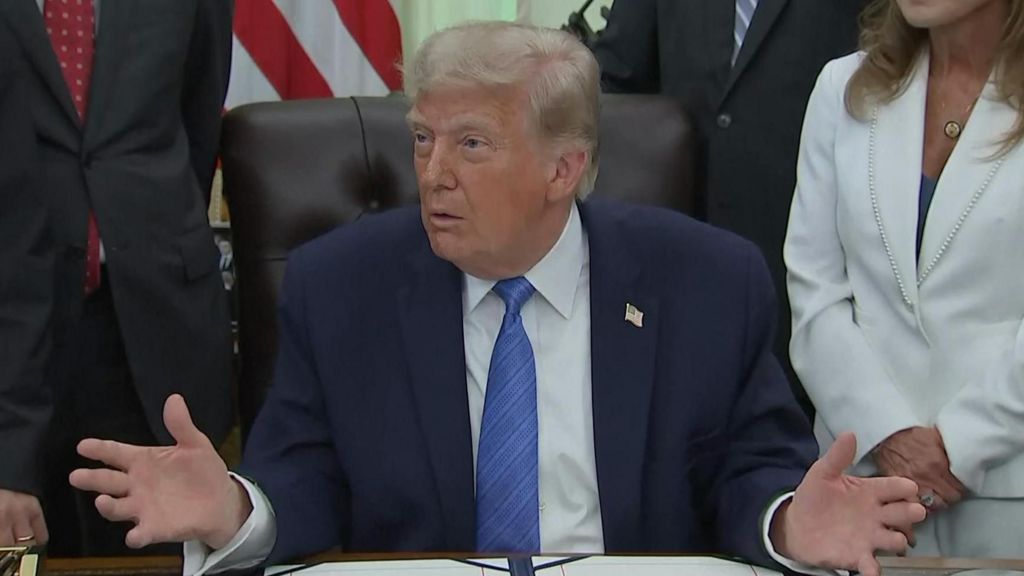
    In a brief but revealing five-minute phone interaction, former United States President Donald Trump fielded questions from journalist Sarah Smith on a trio of pressing international topics, offering quick insights into his perspectives on key transatlantic and Middle Eastern issues. The discussion opened with Smith querying Trump about the upcoming official visit of Britain’s King Charles III to the United States, a diplomatic engagement that carries significant weight for the long-standing partnership between the two nations. Moving beyond the scheduled royal trip, the conversation turned to the current state of what has long been termed the “special relationship” between Washington and London, a bond that has weathered shifting political landscapes and changing administrations on both sides of the Atlantic. The third and most geographically distant topic centered on the ongoing conflict involving Iran, a decades-long source of regional instability and a top foreign policy priority for successive U.S. administrations. While the full details of Trump’s responses were not laid out in the initial briefing, the short call touched on three of the most consequential threads in modern U.S. foreign policy, highlighting how these issues remain central to political discourse even outside of an active presidential term.

  • South African police chief suspended over $20m health contract

    South African police chief suspended over $20m health contract

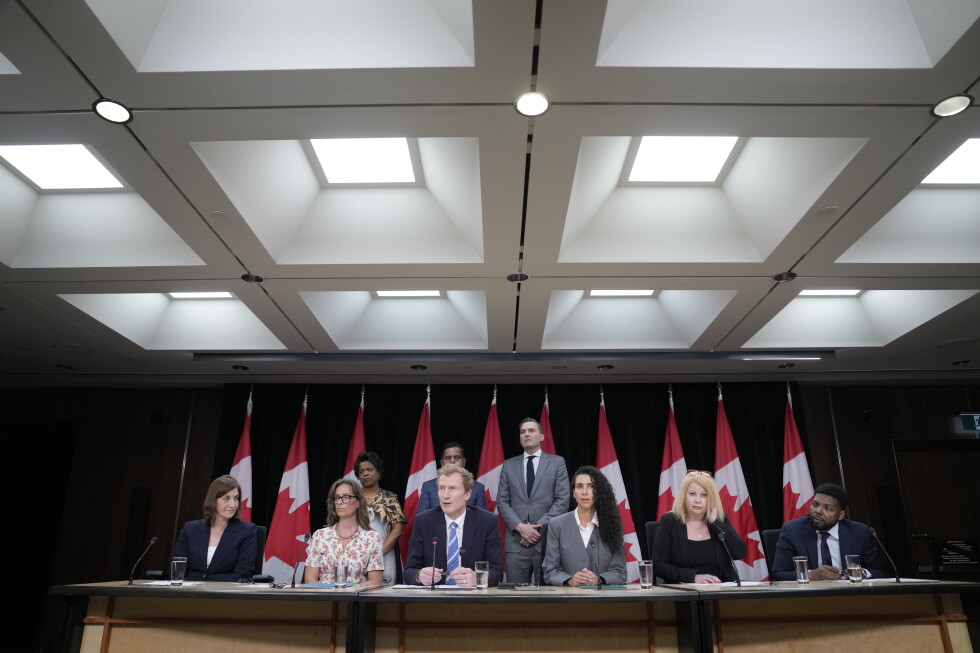
    In a significant move targeting institutional corruption within South Africa’s law enforcement apparatus, President Cyril Ramaphosa has ordered precautionary suspension for the country’s national police commissioner, General Fannie Masemola, just hours after the 62-year-old top officer was formally criminally charged in a Pretoria court this Tuesday.

    The charges against Masemola stem from a botched and highly controversial 2024 $21 million health tender awarded to a company tied to prominent businessman Vusimuzi “Cat” Matlala. The contract, which was intended to deliver on-site health services to South Africa’s police force, was cancelled in May 2025 after red flags over irregular awarding procedures emerged, triggering a wide-ranging criminal probe that has already swept up a dozen senior serving and former police officials.

    Unlike the other accused individuals, who face direct corruption charges for allegations of colluding with Matlala (who has also been charged in the case), Masemola has been cited on four counts of violating South Africa’s Public Finance Management Act. The legislation outlines mandatory oversight requirements for public officials to protect taxpayer funds from misallocation and misuse. Prosecutors allege Masemola failed to carry out his required oversight duties during the tender evaluation and awarding process, leaving him accountable for the irregular spending. None of the accused, including Masemola, have yet entered pleas in the ongoing court proceedings.

    Speaking to reporters following his initial court appearance, Masemola publicly denied all allegations against him. “I know that I’m not guilty, I’m not wrong, but the law must take its course,” he stated, maintaining his innocence as the judicial process moves forward.

    Ramaphosa announced the suspension decision during an official press briefing in the nation’s capital Pretoria, alongside Lieutenant-General Puleng Dimpane, who has been appointed to step in as acting national police commissioner for the duration of Masemola’s suspension, which will remain in place until the court case reaches a final conclusion.

    Explaining his decision, Ramaphosa cited the gravity of the charges and the central role the police commissioner holds in the country’s ongoing national fight against organized crime and public corruption. “It is vital for law enforcement agencies to be capable, ethical and effective, and to retain the confidence of the people of South Africa,” the president emphasized, noting his administration has faced mounting public pressure to root out graft within the police force.

    Masemola’s suspension marks a historic milestone: he is now the third sitting national police commissioner in South Africa to be subjected to a criminal investigation while holding office.

    Dimpane, Masemola’s interim replacement, brings nearly two decades of experience within the South African Police Service, having served as the service’s chief financial officer since 2018. Despite her long tenure in a senior financial oversight role, her appointment has already drawn public scrutiny, as she oversaw the police service’s finances throughout the period when the alleged irregularities around the health tender took place. Dimpane has previously issued public statements denying any personal involvement in corruption linked to the contract.

    The allegations of graft around the Medicare24 Tshwane District tender were first uncovered during public hearings of the Madlanga Commission, an inquiry launched by Ramaphosa last September specifically to investigate systemic corruption within South Africa’s police service. To date, the investigation has resulted in criminal charges against more than a dozen senior officials, in one of the highest-profile anti-corruption probes targeting South Africa’s law enforcement in recent years.

  • What the Iran-Iraq war taught today’s Iranian leaders – and why that matters

    What the Iran-Iraq war taught today’s Iranian leaders – and why that matters

    Forty-four years ago, in September 1980, Iraqi leader Saddam Hussein launched a coordinated full-scale ground and air invasion of neighboring Iran, confident his forces would capture the Iranian capital Tehran in a matter of weeks and secure a swift, decisive victory. What followed upended both leaders’ calculations: the conflict dragged on for nearly eight brutal years, claimed the lives of more than one million combatants and civilians, and left vast swathes of infrastructure and territory in ruin. Yet far from being a catastrophic footnote in Middle Eastern history, this devastating war fundamentally reshaped and solidified the Islamic Republic of Iran into the political and military entity it is today, casting a long shadow that continues to define Iran’s actions amid the 2025 US-Israeli military campaign against the country.

    The invasion came at a moment of unprecedented chaos for Iran. Just one year prior, the 1979 Islamic Revolution had ousted the Western-backed Shah, a key US and Israeli ally in the region, leaving the country’s new leadership scrambling to consolidate control. The pre-revolutionary Iranian military had fractured in the wake of the uprising, and a fragmented landscape of competing factions – nationalist groups, leftist movements, and moderate religious factions – vied for power against the ultraconservative clerical bloc led by Ayatollah Ruhollah Khomeini, Iran’s first supreme leader.

    Saddam’s gambit to topple Khomeini’s fragile new regime backfired spectacularly. Rather than weakening clerical rule, the invasion provided a catalyst for Khomeini’s faction to tighten its grip on power, eliminate political rivals, and entrench the core institutions of the Islamic Republic. For opposition figures, the conflict proved a perfect tool for authoritarian consolidation. “For a dictatorial regime, war is the best blessing because any dissenting voice can be silenced under its pretext and the foundations of totalitarianism can be strengthened,” explained Behrouz Farahani, a Paris-based Iranian opposition critic. This framing was explicitly embraced by Khomeini himself: the phrase “War is a blessing,” attributed to the supreme leader, was painted as graffiti on walls across Iranian cities throughout the conflict.

    When the war finally ended in 1988, Khomeini died just 12 months later, opening the door for Ayatollah Ali Khamenei – Iran’s current supreme leader – to consolidate power and launch full-scale national reconstruction. While the original “War is a blessing” graffiti faded from city walls, replaced by slogans from Khamenei, the core lessons the ruling clerical establishment drew from the 1980-1988 war have guided every major political and military decision Iran has made in the decades since.

    Most notably, the vast majority of Iran’s most powerful contemporary political and military leaders cut their teeth in the Iran-Iraq War. The slain Quds Force commander Qassem Soleimani, his successor Esmail Qaani, former senior security official Ali Larijani (assassinated by Israel in March 2025), current foreign minister Abbas Araghchi – who led Iran’s negotiations with the US – and influential parliament speaker Mohammad Bagher Ghalibaf all served in the Islamic Revolutionary Guard Corps (IRGC) during the conflict, many remaining in military service for years after the ceasefire before transitioning to civilian politics.

    Against the backdrop of the February 2025 US-Israeli invasion of Iran, analysts argue the country’s current strategy is directly shaped by hard-won lessons from the 1980s conflict. The most foundational lesson was the imperative of self-reliance. When Saddam launched his invasion, Iran found itself almost entirely isolated on the international stage: Western powers backed Saddam, and nearly all regional Arab states (with the exceptions of Syria and occasional support from Libya) aligned against Iran. Its post-revolutionary military was in disarray, and it quickly lost control of parts of the oil-rich Khuzestan province. Yet despite the isolation, shortage of weapons, and internal chaos, Iranian forces managed to push Iraqi troops back within roughly a year.

    “While Iran was under attack by Iraq, they [the Iranian establishment] realised they were not going to receive any help from the outside, so they had to rely on themselves,” explained Maziar Behrooz, a leading scholar of contemporary Iranian history and author of *Iran at War: Interactions with the Modern World and the Struggle with Imperial Russia*. “The lesson from that war was missile technology, which they reverse-engineered and then improved. Today we see its result, both in Iran’s drone and missile technologies, which have inflicted substantial damage to those who have now attacked Iran.”

    A second critical lesson was the value of moving critical military infrastructure underground. In the years after the 1988 ceasefire, Iran built missile and drone production facilities deep inside mountain networks and relocated portions of its nuclear program underground to avoid targeted strikes. Analysts credit this shift, born of the Iran-Iraq war experience, for the failure of US and Israeli efforts to disable Iran’s strike capacity in the current conflict.

    This commitment to self-reliance extended far beyond the military, reshaping Iran’s entire political and economic approach. Before the 1979 revolution, Iran was heavily dependent on Western powers, particularly the US, for both military equipment and civilian infrastructure. That dynamic shifted permanently during and after the war. “The establishment realised it had to be independent and rely as much as possible on its own resources,” said Peyman Jafari, an Iranian historian and professor at the College of William & Mary in Virginia. “Reliance on their own initiatives and strategising their policies within this framework became of high importance for them in the military, industry, intelligence, and all other fields.”

    The war also reshaped how the clerical establishment consolidated domestic power. Just months before the invasion, the 1979 US embassy hostage crisis had already stoked widespread anti-American sentiment among the Iranian public, fueled by decades of resentment over the 1953 CIA-backed coup that restored the Shah to power after he ousted Iran’s democratically elected prime minister. The invasion allowed the new regime to tie together anti-Western sentiment and nationalist mobilization to crush internal opposition. Beginning in 1981, the Khomeini-led government moved rapidly to eliminate rival factions: it cracked down on the main opposition group the People’s Mojahedin Organisation, forced out the country’s first post-revolution president Abolhassan Banisadr, launched military campaigns against Kurdish separatist groups, and dismantled remaining leftist and nationalist factions. This process created a new post-revolutionary social order: while many Iranians supported the new regime, a large share of the population stepped back as bystanders, waiting out the conflict to see which faction would emerge victorious.

    This same dynamic is playing out in the 2025 conflict. After the Iranian government violently suppressed nationwide anti-establishment protests in January 2025, the incoming US-Israeli invasion allowed the regime to stoke nationalist sentiment to repair its standing with the public, while also cracking down further on dissent. Executions of imprisoned dissidents have risen, new stricter laws criminalizing “espionage” and “contact with foreign media” have been enacted, and arrests on these charges have become far more widespread.

    Beyond domestic consolidation, the Iran-Iraq War created a permanent shift in Iran’s governance structure: after the ceasefire, hundreds of senior and mid-level IRGC commanders transitioned into roles across politics, the economy, cultural institutions, and even sports administration. This process began during the war, but accelerated rapidly after 1988, as battlefield veterans were redirected into building new state institutions. Jafari argues this process was bonded by a shared experience of “army brotherhood” forged during eight years of brutal conflict. “Because that war lasted very long, that brotherhood was really forged in steel,” he noted. These deep, battle-tied bonds have created a highly organized, layered state system that has surprised Western and Israeli observers by its resilience in the current conflict. Many analysts had predicted that targeted assassinations of senior Iranian leadership would collapse the system, but the opposite has occurred, a failure Jafari attributes to outdated orientalist assumptions about Iran’s governance. “This is rooted in this slivery orientalist idea that these Iranians are kind of savages who cannot organise any modern state. This system is very organised, with layers of offices, a finance system, and planning for its own survival,” he explained.

    While the war taught the Islamic Republic how to survive external threats, it did not resolve deep-seated internal tensions – and analysts note the regime failed to learn one critical lesson from the conflict: repression alone cannot resolve public dissatisfaction, and over time it only deepens public discontent. Even during the war, there was underlying public discontent with Khomeini’s rule, but the regime enjoyed broader popular support and faced far fewer constraints on cracking down on dissent. Today, that balance has shifted, with a shrinking circle of power and growing distance between the state and Iranian society. “In undemocratic countries, the ability to listen to the base diminishes over time, and as repression intensifies, understanding what the base demands becomes increasingly impossible,” Behrooz noted. Jafari added that long-standing structural issues have left most Iranians disillusioned with the current system: “Because of the ideological, political and cultural restrictions, many citizens do not feel that they can be integrated in this system. Moreover, we have economic problems, poverty, mismanagement, and corruption, and that’s why the majority are fed up with the system.”

    This analysis was originally produced by Middle East Eye, an independent outlet specializing in coverage of the Middle East and North Africa.

  • Trump tells BBC that King’s visit could ‘absolutely’ help repair relations with UK

    Trump tells BBC that King’s visit could ‘absolutely’ help repair relations with UK

    In an exclusive phone interview with the BBC that was first reported by Reuters, U.S. President Donald Trump has expressed confidence that next week’s landmark four-day state visit by King Charles III and Queen Camilla will go a long way toward mending any recent strains in the bilateral relationship between the United States and the United Kingdom.

    When asked directly if the high-profile royal trip could help reset transatlantic ties, Trump offered an unreservedly positive response. “Absolutely. He’s fantastic. He’s a fantastic man. Absolutely the answer is yes,” the president told reporters, noting that he has built a long-standing personal rapport with the British monarch over many years. Calling Charles a brave and outstanding leader, Trump emphasized that the visit would without a doubt deliver positive outcomes for both nations.

    The royal tour is scheduled to kick off this coming Monday, with the King and Queen set to hold a private audience with President Trump at the White House shortly after their arrival in Washington D.C. Beyond the bilateral meeting, King Charles will also deliver a historic address to a joint session of the U.S. Congress, a rare honor reserved for visiting heads of state and global leaders. After wrapping up two days of engagements in the U.S. capital, the royal couple will travel onward to New York, Virginia, and Bermuda before returning to the United Kingdom at the end of the trip. According to the UK Foreign Office, the visit is timed to coincide with the 250th anniversary of U.S. independence, and is designed to celebrate the deep, long-standing partnership between the two countries rooted in shared history, mutual prosperity, and collective security.

    Beyond the royal visit, Trump also opened up about his tense relationship with UK Prime Minister Keir Starmer in the interview, conducted on Thursday. The two leaders have publicly clashed in recent weeks over multiple policy issues, most notably the ongoing conflict in Iran. Starmer has also faced growing domestic political pressure after his controversial appointment of Lord Mandelson as the new UK ambassador to the United States. Earlier this week, Trump took to his social platform Truth Social to slam the pick as “a really bad pick”, but added that Starmer still had “plenty of time to recover” his standing with the White House.

    Clarifying that comment during the BBC interview, Trump outlined the conditions under which he believes the UK prime minister can repair relations: Starmer would need to open up further North Sea oil and gas extraction for development – a policy Trump has repeatedly pushed for – and enact much stricter immigration controls, which Trump argued are currently lacking. “If he opened the North Sea and if his immigration policies became strong, which right now they’re not, he can recover, but if he doesn’t, I don’t think he has a chance,” Trump said.

    The president also addressed ongoing tensions over the Iran war, where he has openly criticized the UK and other U.S. allies for their limited level of military support. Starmer has repeatedly ruled out deploying UK troops to avoid expanding the conflict into a wider regional war. When asked why he had pushed allies to join the conflict, Trump pushed back on the idea that the U.S. needed additional military backing. “I didn’t need them at all but they should’ve been there. I didn’t need them, obviously,” he said. “We’ve wiped Iran’s military out. I didn’t need anybody. I wanted to see whether or not they would be involved,” Trump added, framing his repeated calls for allied support as “more of a test” of alliance commitments.

    Finally, Trump addressed widespread international backlash over his controversial threat earlier this month, when he warned that “a whole civilisation will die tonight” unless Iran agreed to a negotiated settlement. The comment drew widespread global condemnation, including public criticism from the Pope and the United Nations Secretary-General, with many observers speculating the comment referred to a potential nuclear strike. When asked if the threat was referencing nuclear weapons, Trump did not directly answer, instead arguing that his hardline rhetoric was yielding results. “The other side is dying to make a deal. So whatever I’m saying or whatever I’m doing, it seems to be working very well,” he concluded.

  • US eases access to marijuana for medical use

    US eases access to marijuana for medical use

    In a landmark policy shift that aligns federal regulation with decades of shifting public opinion and state-level reform, the U.S. Department of Justice announced Thursday it has reclassified marijuana from a Schedule I controlled substance to Schedule III, a move designed to expand patient access to medical cannabis and clear longstanding barriers to scientific research on the drug’s therapeutic benefits and risks.

    Acting Attorney General Todd Blanche explained that the new classification reflects the updated scientific consensus that marijuana carries moderate to low risk of dependence. By updating its federal status, Blanche said, the change will open up access to life-changing treatments for vulnerable patients and give clinicians clearer authority to make evidence-based care decisions based on individual patient needs.

    For decades, marijuana has been grouped in the Schedule I category alongside heroin and methamphetamine, a classification that labels drugs as having no accepted medical value and an extremely high potential for abuse. That outdated designation created massive bureaucratic hurdles for researchers hoping to study cannabis, and put federal policy sharply at odds with changes across the country: today, 40 U.S. states permit medical marijuana use, while 24 states and Washington D.C. have legalized the drug for adult recreational use.

    Thursday’s policy change fulfills an executive order President Donald Trump issued last December, which directed the Justice Department to speed up the reclassification process to expand access for patients with serious medical conditions, including cancer and chronic pain. Trump noted at the December announcement that patients and their families had long pushed for this shift, saying, “We have people begging for me to do this. People that are in great pain.” The president emphasized that the reclassification does not equal nationwide legalization, and reiterated his longstanding personal stance against drug use, saying he has always advised his own children to avoid drugs, alcohol, and tobacco.

    Unlike the Biden administration, which began the reclassification process but failed to finalize the change before Trump took office in early 2025, the Trump administration delivered on the promised reform. It also laid out next steps for broader potential changes: the Justice Department will open expedited public hearings starting in June to evaluate whether additional adjustments to marijuana’s federal status are warranted in line with federal law.

    Crucially, the reclassification does not override existing state bans on recreational or medical marijuana use, nor does it legalize recreational cannabis at the federal level. But it removes the thick layer of regulatory red tape that has stymied clinical research for decades. “These actions will enable more targeted, rigorous research into marijuana’s safety and efficacy,” Blanche said.

    Beyond patient access and research, the shift is expected to deliver significant financial benefits to legal cannabis businesses. The new classification lowers the tax burden on licensed cannabis operators, many of which have faced steep, punitive tax penalties under the old Schedule I rules. The change leaves intact the nation’s patchwork of state-level regulations for cannabis cultivation, distribution, and personal possession, but marks the most significant adjustment to federal marijuana policy in modern U.S. history.

  • Why the European Union’s wartime loan is a vital lifeline for cash-strapped Ukraine

    Why the European Union’s wartime loan is a vital lifeline for cash-strapped Ukraine

    KYIV, Ukraine — Cash-strapped Ukraine, locked in its second major year of defensive war against Russian invasion, has secured a landmark 90 billion-euro ($106 billion) multi-year loan from the European Union, a financial lifeline that will keep the country’s core state functions and wartime military operations running through 2027.

    The massive financial package received formal unanimous approval from EU member states on Thursday, marking the end of a months-long political deadlock that nearly left Kyiv facing catastrophic resource shortages as early as this spring. The final green light came just days after Ukrainian President Volodymyr Zelenskyy confirmed full repairs to the Ukrainian segment of the Druzhba oil pipeline, with oil transit resuming to landlocked Slovakia and Hungary — a key precondition Budapest and Bratislava had tied to the release of the funds.

    Negotiations over the package had stalled for months due to internal political friction within the 27-nation bloc, most notably staunch opposition from outgoing Hungarian Prime Minister Viktor Orbán, a longstanding Kremlin ally within the EU. Orbán’s electoral defeat earlier this month removed the single biggest barrier to progress, clearing the path for final negotiations to resume and reach a successful conclusion.

    ### The Urgent Rationale for the Package
    The timing of the approved loan could not be more critical for Kyiv. The International Monetary Fund projects that Ukraine will face a total financing gap of approximately 136 billion euros ($158 billion) over the 2026–2027 period, as the country’s tax base remains gutted by war and most of its export infrastructure remains blocked by Russian naval forces. The EU loan is expected to cover around two-thirds of this total shortfall. Without the funding, senior Ukrainian and EU officials warned that Kyiv could have exhausted the resources needed to keep basic public services running and sustain frontline military operations as early as the coming spring.

    Funding will be disbursed in two equal installments: 45 billion euros ($53 billion) will be made available for the remainder of 2026, with an equal 45 billion euros allocated for the full 2027 calendar year. Under the terms of the agreement, roughly one-third of the total package will go toward stabilizing Ukraine’s national budget to fund pensions, public sector salaries, healthcare and other core government services. The remaining two-thirds will be directed to defense priorities, including the procurement of foreign weapons systems and the expansion of Ukraine’s domestic arms manufacturing capacity. The first disbursement of funds is expected to reach Kyiv within the next several months.

    ### What Caused the Months-Long Delay
    EU leaders initially reached a political agreement on the loan framework back in December 2025, but implementation was put on hold amid a bitter dispute over the Druzhba oil pipeline. In a compromise reached that same month, the Czech Republic, Hungary and Slovakia had agreed not to block the EU from raising the full amount on global capital markets, on the condition that the three countries would not be required to contribute any financial guarantees to the package.

    The dispute escalated in late January, when the Ukrainian segment of the Druzhba network — which carries Russian crude oil to refineries in Slovakia and Hungary — was knocked offline after an alleged Russian drone attack. Both the Hungarian and Slovakian governments publicly accused Ukraine of deliberately cutting off oil supplies to pressure their leaders, turning a technical infrastructure issue into a broader political standoff within the bloc and holding up the loan approval.

    The impasse was only broken earlier this week, when Hungary and Slovakia confirmed that Ukraine had fully restored oil transit through the pipeline. Zelenskyy’s announcement that all repair work was complete removed the final outstanding barrier to the deal. Thursday’s formal vote, which unanimously approved adjustments to the EU’s 10-year long-term budget to accommodate the new spending, was the final procedural step required to release the package.

    ### Repayment Terms Tied to Russian War Reparations
    In a departure from earlier proposals that would have used billions in frozen Russian central bank assets to back the loan, EU leaders agreed to a more cautious framework that will tie Ukraine’s repayment obligation directly to future war compensation from Moscow. Under the new terms, Ukraine will not be required to begin repaying the loan until after Russia formally compensates Ukraine for the massive physical and economic damage caused by its full-scale invasion.

    EU leaders opted against mobilizing frozen Russian assets to back the loan after widespread concerns over potential Russian retaliation against European financial institutions and complex international legal challenges that could block the seizure of the assets. The bloc has opted to keep the estimated $300 billion in Russian central bank assets frozen until Moscow agrees to end its invasion and pay full reparations for the damage inflicted on Ukraine.

  • Trump administration reclassifies cannabis as less dangerous

    Trump administration reclassifies cannabis as less dangerous

    After months of anticipation, the United States Department of Justice has finalized a landmark reclassification of cannabis, marking one of the most significant overhauls to American federal drug policy in modern history. This long-awaited policy change moves cannabis, commonly referred to as marijuana, from its decades-long placement as a Schedule I controlled substance — a category reserved for drugs with no accepted medical use and high abuse potential — to Schedule III, placing it in the same regulatory grouping as prescription Tylenol with codeine.

    The process for this change was first set in motion last year, when former President Donald Trump issued an executive order directing his administration to launch the reclassification review. The core goal of that directive was to expand both public access to cannabis for medical use and create clearer pathways for academic and clinical research into the drug’s therapeutic properties. Even with this reclassification, cannabis remains prohibited for non-medical recreational use at the federal level, a legal contradiction that has defined American cannabis regulation for decades. This conflict persists even as a strong majority of U.S. states have already moved to legalize cannabis for either medical use, adult recreational use, or both, with state-licensed retail dispensaries operating legally across much of the country.

    On Thursday, Acting Attorney General Todd Blanche signed off on the formal reclassification, which applies to two broad groups of cannabis products: those regulated by the federal Food and Drug Administration, and products sold through providers that hold valid state-issued medical marijuana licenses. While the final announcement of the reclassification came this week, the move has been widely expected since December, when Trump first initiated the administrative review process.

    The policy change will not go into effect immediately. Once the new rule is published in the Federal Register, a mandatory 30-day public comment and waiting period will begin before it takes legal effect. Legal challenges to the reclassification are widely expected during this window, and analysts note that such challenges could delay full implementation of the change for months, or even multiple years. The U.S. Drug Enforcement Administration is scheduled to hold a public hearing on the regulatory change in late June to address stakeholder input and procedural requirements.

    This reclassification is the second major shift in federal drug policy that the Trump administration has advanced in less than a week. Just five days before announcing the cannabis reclassification, Trump signed a separate executive order aimed at expanding access to psychedelic substances for clinical research and experimental medical treatment, signaling a broader push to relax long-standing federal restrictions on mind-altering substances with emerging therapeutic potential.

  • Authorities expose 10 ecological violation cases, urge stricter enforcement

    Authorities expose 10 ecological violation cases, urge stricter enforcement

    On April 23, 2026, China’s two leading national regulatory bodies for natural resources and forestry released 10 representative cases of ecological and land use violations detected across the country in the first quarter of 2026, issuing a clear call for heightened regulatory accountability and stricter adherence to national environmental and land use boundaries.

    The enforcement action highlights a nationwide crackdown on activity that encroaches on protected ecological zones and critical farmland, with confirmed violations spanning 10 provincial-level administrative regions across northern, southern, western and eastern China. These regions include the Inner Mongolia Autonomous Region, Xinjiang Uygur Autonomous Region, Heilongjiang Province, Jiangsu Province, Jiangxi Province, Guangdong Province, Guizhou Province, Gansu Province, Qinghai Province, and Chongqing Municipality. The offenses cited across the 10 cases cover a range of illegal activities: unauthorized land occupation, deliberate destruction of permanent basic farmland, unlicensed mineral extraction, and irreversible damage to forest and grassland ecosystems.

    One high-profile case cited by regulators is located in Tongliao, Inner Mongolia. Satellite imagery captured in February 2026 revealed large stacks of wind power generation equipment stored illegally on protected farmland. Investigations trace the violation back to November 2023, when the Horqin Industrial Park Management Committee signed a land lease agreement with a local logistics firm. The contract allowed the company to occupy more than 13.3 hectares of farmland for equipment storage and logistics operations without securing mandatory land use approval from national regulatory authorities. Regulators confirmed that long-term heavy compaction from stacked equipment destroyed the arable plow layer, rendering the land unsuitable for future agricultural production.

    In Xuzhou, Jiangsu Province, continuous satellite monitoring from September 2022 through December 2025 tracked a steady transformation of vegetated farmland to bare, cleared ground. Authorities found that beginning in October 2023, a local individual identified only by the surname Tang illegally occupied 26.5 hectares of permanent basic farmland to cultivate and harvest decorative turf for commercial sale. The activity caused permanent, severe damage to the land’s arable plow layer.

    A third notable case unfolded in Zhuhai, Guangdong Province, where a local aquaculture technology company seized 2.5 hectares of state-owned agricultural land without official approval, nearly 40 percent of which is classified as protected farmland. Between October 2024 and February 2025, the company constructed a range of non-agricultural facilities on the site, including a public parking lot, an off-road vehicle training track, outdoor recreational event spaces, and a full-service commercial restaurant.

    Following the public release of the cases, the Ministry of Natural Resources and the National Forestry and Grassland Administration issued a formal directive to local governments and regulatory departments across all levels. The agencies urged local officials to draw key enforcement lessons from the exposed violations, strengthen on-the-ground monitoring, and strictly enforce three critical national development boundaries: the permanent farmland protection red line, the ecological conservation red line, and the urban development boundary. All economic and infrastructure development activities, the directive emphasizes, must operate fully within the bounds of existing national environmental and land use laws and regulations. The two national bodies added that they will maintain continuous, long-term monitoring of rectification efforts for all 10 exposed violations, ensuring all illegal activity is remediated and responsible parties are held accountable.

  • ‘Sovereignty’ bill seeking to deter foreign influence has drawn widespread concern in Uganda

    ‘Sovereignty’ bill seeking to deter foreign influence has drawn widespread concern in Uganda

    In Kampala, Uganda, a proposed piece of government legislation framed as a defense against foreign political interference is facing fierce, cross-sector backlash over its sweeping, broad definitions of ‘foreign agents’ and the widespread harm critics warn it could inflict on civic and economic activity across the country.

    The draft law, officially dubbed the Protection of Sovereignty Bill, is currently advancing through parliamentary review, with a final vote potentially coming within days. Despite mounting condemnation from a diverse coalition including political opposition groups, banking industry leaders, business associations, civil society organizations and ordinary Ugandans who rely on cross-border remittances, the legislation continues to move forward.

    Critics across the political and social spectrum argue the bill’s true purpose is not to protect national sovereignty, but to stifle political opposition and crack down on independent civic groups, which frequently rely on international grants to carry out work focused on governance accountability and human rights promotion. For observers, the bill marks a clear escalation of long-growing authoritarian repression under long-ruling President Yoweri Museveni.

    Prominent Ugandan political analyst Charles Onyango-Obbo described the legislation’s provisions as unprecedented in their scope and potential impact. ‘They redefine who counts as foreign,’ he explained. ‘This law extends state control beyond political spheres into nearly every corner of daily economic and social life.’

    Unlike traditional regulations that only target non-citizens, the bill’s definition of a foreign actor includes any Ugandan citizen residing outside the country, along with all companies and organizations not formally domiciled in Uganda. This broad classification catches everyone from international students and migrant workers to diaspora businesspeople and diplomatic staff living abroad. If enacted in its current form, all Ugandans falling under the foreign agent definition would be required to complete official registration to avoid processing delays for banking transactions, with banks facing heavy penalties if they fail to comply with the new rules.

    Ugandan authorities have defended the legislation, arguing it is necessary to safeguard national social cohesion and protect the country’s internal affairs from outside interference. But opponents counter that the bill’s reach is so broad that it would impact nearly every Ugandan, whether living at home or in the diaspora.

    Isaac Ssemakadde, president of the Uganda Law Society, rejected the government’s framing in an official statement. ‘This bill does not protect sovereignty,’ he said. ‘It destroys the very sovereignty — the people’s right to self-determination — that belongs to all Ugandans.’

    Among the key controversial provisions is a cap on external funding for any group labeled a foreign agent: organizations would be banned from receiving more than 400 million Ugandan shillings (roughly $110,000) in external grants or funding over a 12-month period without explicit approval from the interior minister.

    The Uganda Bankers’ Association raised alarm about the legislation’s potential economic fallout in a formal letter sent to the attorney general’s office. The group warned the bill would undermine the central bank’s exclusive regulatory authority, erode foreign investor confidence, and create an unpredictable operating environment for all commercial financial institutions. Because most Ugandan commercial banks count foreign shareholders and rely on offshore borrowing, routine banking activity could easily trigger the foreign agent classification, the association noted, causing compliance and reputational risks to spike overnight.

    The introduction of the bill comes just months after Museveni, 81, secured his seventh consecutive term in office in a disputed January election that has been widely rejected by the opposition as fraudulent. Museveni, who has held uninterrupted power since 1986, has a long history of labeling his political opponents as foreign agents undermining national interests. His main rival in the 2021 election, opposition leader Bobi Wine, was repeatedly accused by Museveni of being an unpatriotic foreign proxy.

    Wine, who went into hiding immediately after the election and now lives in temporary exile in the United States, has repeatedly denied these accusations. He says Museveni must be held accountable for the widespread abuses that have occurred during his decades-long rule. Wine, who draws broad support from young urban Ugandans, officially garnered 24.7% of the vote, a result he has dismissed as fabricated.

    Sarah Bireete, head of the Center for Constitutional Governance, a leading Ugandan civic group, criticized the government for hiding behind nationalist rhetoric to target civil society. ‘If you want to regulate and close down civil society, just amend the existing NGO Act,’ she told reporters. ‘If you want to eliminate civil society in Uganda entirely, go amend the constitution and say openly that there will be no civil society here. But hiding behind the banner of protecting sovereignty to crack down on independent groups? If that’s your goal, why not just change the existing laws that govern civil society directly?’

  • US Senate clears key hurdle in bid to fund two immigration agencies

    US Senate clears key hurdle in bid to fund two immigration agencies

    A months-long partial shutdown of the U.S. Department of Homeland Security moved one step closer to resolution early Thursday, after Senate Republicans pushed through a procedural vote to advance funding for two of the department’s core immigration enforcement agencies without Democratic support. The late-night session stretched until roughly 3:30 a.m. local time, dragged out by a series of Democratic amendments in a tactic commonly referred to as “vote-a-rama,” and ultimately passed by a narrow 50-48 margin.

    Republicans opted to use a special legislative rule that allowed the spending measure to pass with a simple majority, after weeks of negotiations with Democrats collapsed over Democratic demands for agency reforms. Two Senate Republicans who have frequently broken with former President Donald Trump’s policy positions joined all voting Democrats in opposing the measure, while one Democrat and one Republican abstained from the vote entirely.

    The approved measure would allocate funding for U.S. Immigration and Customs Enforcement (ICE) and U.S. Customs and Border Protection (CBP) through the end of Donald Trump’s presidential term. A separate bipartisan bill that would fund the remainder of DHS, the parent department of both agencies, previously passed the Senate, but both pieces of legislation now need approval from the U.S. House of Representatives before they can be sent to the president’s desk for signature. It remains unclear when House lawmakers will bring either measure up for a vote, as House Republicans have often diverged from their Senate counterparts on immigration and spending policy in recent months.

    Senate Majority Whip John Thune, the chamber’s top Republican, praised the outcome of Thursday’s vote but acknowledged that the legislative process is far from over. “We still have a multi-step process ahead of us,” Thune told reporters Thursday morning.

    The partial government shutdown, which has left DHS without formal appropriations since February 14, is the longest partial shutdown in U.S. history. The current impasse grew out of a Democratic refusal to approve new funding for ICE and CBP until the agencies adopt major reforms, a response to two fatal shootings of Minneapolis residents Alex Pretti and Renee Good by agency operatives during a January immigration raid in Minnesota.

    As the standoff stretched into March, the funding gap began to directly impact everyday Americans: widespread staff shortages among DHS airport security officers led to travel chaos across the country, with security queues stretching from terminal checkpoints all the way to airport parking lots. Hundreds of officers resigned or skipped shifts after going weeks without pay amid the shutdown. Trump temporarily alleviated the crisis by signing an executive order that redirected existing departmental funds to pay security personnel, easing immediate pressure on congressional negotiators. But that pressure has rapidly built back up in recent weeks.

    Homeland Security Secretary Mark Mullin warned this week in an interview with Fox News that the department will exhaust all available emergency funding to cover employee salaries by the first week of May. “I’ve got one payroll left and there is no more emergency funds, so the president can’t do another executive order because there’s no more money there,” Mullin said. Trump has set a firm deadline of June 1 for a full budget package to reach his desk for signature, leaving congressional negotiators with a narrow window to resolve the months-long standoff.