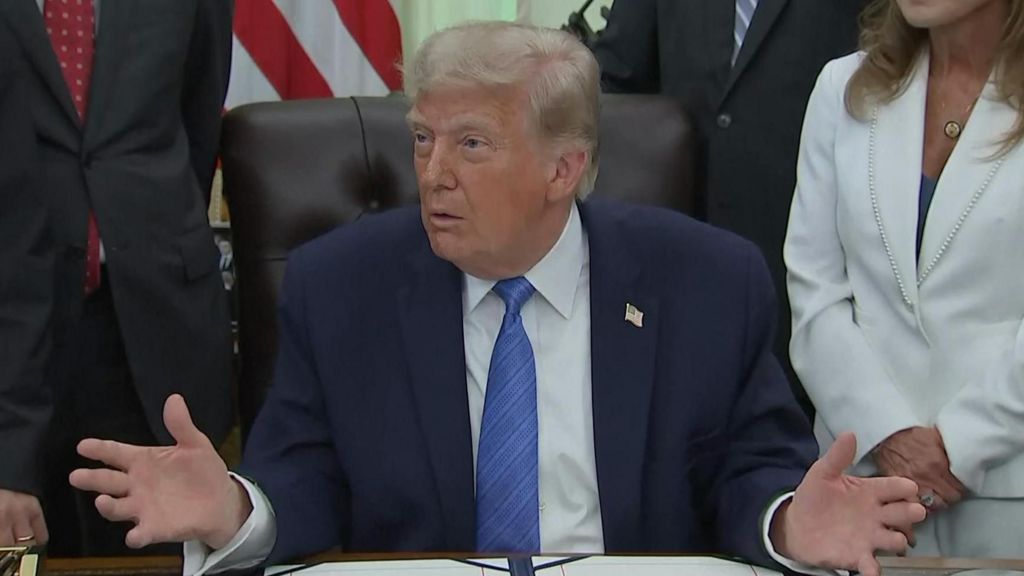
In a stunning, unscripted remark that sent ripples through political and economic circles, former U.S. President Donald Trump publicly declared “I love inflation,” a comment that defies mainstream economic consensus and contradicts decades of political messaging around price stability. The unusual statement comes as American households continue to grapple with persistent cost-of-living increases that have eroded purchasing power for low- and middle-income families across the country. In the same public appearance, Trump dropped another unanticipated bombshell regarding U.S. energy policy toward Iran, confirming that the United States has been extracting millions of barrels of oil from Iranian reserves without Tehran’s awareness until his public disclosure. “Tehran didn’t know until right now,” Trump stated, confirming the unannounced action that escalates long-running tensions between Washington and Tehran. Foreign policy experts have already raised alarms over the reveal, noting that unacknowledged seizure of energy resources risks amplifying regional instability in the Middle East and could prompt retaliatory measures from Iran that roil global energy markets. The dual comments have drawn sharp criticism from economic analysts who point to widespread public hardship linked to high inflation, as well as from national security specialists who warn that public disclosure of covert operations undermines strategic messaging and puts U.S. interests at greater risk in the region.
分类: politics
-

Norway crown princess’s son to stay in custody before rape verdict, says court
In a high-profile legal decision that has gripped Norway and drawn new scrutiny to the country’s royal household, Oslo’s Court of Appeal has rejected a bid to release Marius Borg Høiby, the son of Crown Princess Mette-Marit, from pre-verdict custody, reversing a lower court’s ruling that would have freed him ahead of his upcoming rape trial verdict.
Høiby, 29, has been held in custody since early February 2026, when he was detained ahead of trial on 40 separate criminal charges, including four counts of rape, multiple counts of assault, violation of a restraining order, drug possession, and traffic offenses. He has consistently denied the most severe allegations, including all rape and relationship violence charges, though he has admitted to some lesser offenses. The case against Høiby first emerged in August 2024, when he was arrested at an ex-girlfriend’s apartment in Oslo’s upscale Frogner neighborhood, where a restraining order barred him from contacting her.
The release request came amid a devastating health update for Høiby’s mother, 52-year-old Crown Princess Mette-Marit, who has lived with a rare, incurable form of pulmonary fibrosis since 2018. Last week, her medical team confirmed her condition has deteriorated sharply over the past three months, placing her on a waiting list for a life-saving lung transplant. Per Norwegian transplant protocol, placement on the list indicates doctors estimate the patient has less than 12 months to live without the procedure. Pulmonary fibrosis causes progressive scarring of lung tissue, restricting breathing and oxygen flow through the bloodstream.
Høiby’s legal team argued that their client should be granted temporary release to be by his mother’s side during her health crisis. “Sitting inside when I know Mum is so sick is unbearable,” Høiby told Oslo District Court earlier this week. On Monday, the lower court sided with the defense, ruling that while there was a small risk of reoffending, Høiby had remained drug-free in custody, and continued detention would be “disproportionately intrusive.”
That ruling was quickly appealed by prosecutors, and on Wednesday the higher court rejected the release order entirely. The Court of Appeal found that the risk of Høiby reoffending and making prohibited contact with the Frogner ex-girlfriend remained “virtually unchanged” from its previous May 13 assessment, with no new evidence to justify altering his custodial status.
“We are very, very disappointed on behalf of our client. One can imagine how he feels,” Ellen Holager Andenæs, one of Høiby’s two defense attorneys, told local Norwegian media outlets after the ruling. Prosecutors have requested a seven-year and seven-month prison sentence for Høiby, and the three judges presiding over the six-week trial are set to deliver their full verdict on all 40 charges next Monday.
Though Høiby was born before Mette-Marit married Crown Prince Haakon, the heir to the Norwegian throne, and is not an official member of the royal family, he has been raised within the royal household. The ongoing legal proceeding, compounded by recently revealed details of a three-year friendship between Mette-Marit and disgraced deceased sex offender Jeffrey Epstein, has created significant public controversy and cast a shadow over the Norwegian royal institution.
The royal family has remained visible amid the dual crises: Crown Prince Haakon and Crown Princess Mette-Marit visited Høiby in Oslo prison last Sunday, shortly after her transplant waiting list placement was made public. The couple’s two children, Princess Ingrid Alexandra and Prince Sverre Magnus, visited Høiby hours after Mette-Marit was admitted to hospital last Thursday. Høiby was granted a temporary furlough from custody on Monday to meet with his mother’s medical team at the royal family’s Skaugum estate outside Oslo.
Norway’s elderly monarchs, 89-year-old King Harald V and 88-year-old Queen Sonja, have largely stayed out of the recent crises, though during a public royal engagement on Tuesday, Queen Sonja confirmed to reporters that “the situation is serious” regarding the crown princess’s health.
-
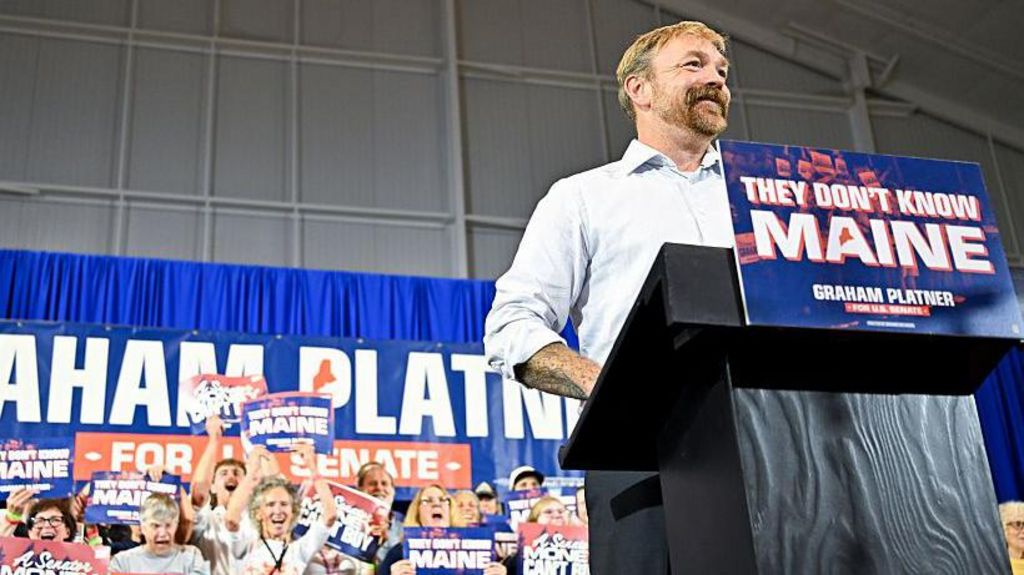
‘People can change’: Scandal-hit Platner on Maine primary win
In a surprising turn of events that has upended expectations for Maine’s U.S. Senate race, Graham Platner, a Democratic candidate whose primary campaign was roiled by high-profile controversies, has emerged victorious in the state’s party primary. His win now sets him up as the Democratic Party’s official nominee heading into the critical November midterm elections, where he will compete for the open Senate seat representing Maine.
Platner’s path to the nomination was far from smooth. For weeks leading up to primary day, his campaign faced constant scrutiny and public backlash over a series of unflattering revelations that dominated local political headlines. Many political analysts had predicted that the cascading scandals would derail his bid for the nomination, with opponents and pundits alike arguing that the controversies would make voters unwilling to throw their support behind him. But in a post-victory statement, Platner pushed back against that narrative, leaning into a message of personal redemption that appeared to resonate with primary voters. “People can change,” Platner told supporters after the results were finalized, framing his campaign as a testament to the possibility of personal growth and second chances.
The outcome of the primary has already shifted the dynamics of the general election race. Political strategists across the state are now re-assessing their projections for November, as Platner’s ability to overcome scandal to win the nomination signals an unpredictable race ahead. While Democrats will now unify behind Platner as their official nominee, the lingering questions from the primary campaign are expected to remain a central point of attack for his general election opponent. Regardless of what comes next, Platner’s primary win stands as a reminder that even the most troubled campaigns can defy political odds when candidates connect with voters on messages of change and redemption.
-
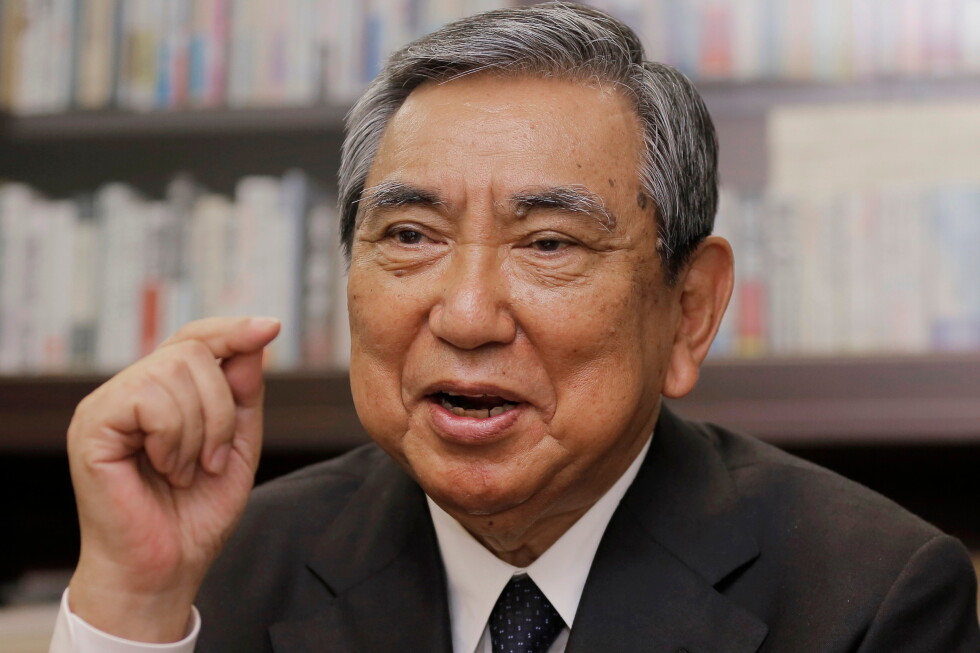
Yohei Kono, who apologized for Japan’s wartime sexual abuses of ‘comfort women,’ dies at 89
TOKYO — Yohei Kono, a towering figure in Japanese politics whose landmark 1993 apology to wartime sexual slavery victims cemented his legacy as a vocal advocate for reckoning with Japan’s 20th-century military history, has passed away at the age of 89. The office of Kono’s son, former Japanese Foreign Minister Taro Kono, confirmed the veteran statesman died of natural causes linked to old age on Monday.
Born in January 1937, Kono entered Japanese politics in 1967, following the death of his father Ichiro Kono, a prominent lawmaker within Japan’s long-governing Liberal Democratic Party (LDP). Over his 42-year political career before retiring in 2009, Kono held a string of the country’s most influential positions, including Chief Cabinet Secretary, President of the LDP, and Speaker of Japan’s lower house of parliament — the more powerful chamber of the country’s bicameral national legislature.
Kono’s most defining contribution to Japanese and regional history came in 1993, when as Chief Cabinet Secretary he delivered an unprecedented formal apology to the tens of thousands of “comfort women” forced into sexual slavery by Japan’s wartime military across occupied Asia. The apology followed an official Japanese government investigation that confirmed the military’s direct role in operating frontline brothels and coercing women into sexual servitude. This groundbreaking statement laid the groundwork for the broader 1995 apology for wartime atrocities issued by then-Prime Minister Tomiichi Murayama.
Internationally, both the Kono Statement and the Murayama Statement were widely seen as critical steps toward Japan acknowledging its wartime aggression and reconciling with neighboring countries that suffered under Japanese occupation. For decades, the statements served as a cornerstone for improved diplomatic relations between Japan and its Asian neighbors China and South Korea, which were among the nations most impacted by Japan’s pre-1945 imperial expansion.
However, the commitments made in the Kono Statement have faced persistent backlash from Japanese nationalist and conservative political factions, who argue Japan should abandon focus on what they frame as “negative history” to rebuild national pride. Pressure to water down or erase the apology grew significantly during the tenure of nationalist former Prime Minister Shinzo Abe, with multiple high-profile attempts to revise the original statement. Kono remained unflinching in his defense of his 1993 remarks, repeatedly warning that any effort to whitewash established historical facts would ultimately damage the international reputation of the Japanese people.
Beyond his work on historical reconciliation, Kono placed consistent priority on building and maintaining constructive, friendly relations with China, South Korea, and other Asian nations that endured Japanese wartime atrocities. Even long after his formal retirement from electoral politics in 2009, Kono remained active in diplomatic outreach, almost annually leading cross-party and business delegations to China to help stabilize bilateral relations during periods of tension. Earlier this year, he was still planning a new visit to Beijing, amid a sharp downturn in Tokyo-Beijing relations that followed a controversial statement from current Prime Minister Sanae Takaichi. In November, Takaichi claimed a hypothetical Chinese military operation against Taiwan would justify a deployment of Japanese troops, prompting fierce pushback from Beijing.
-

How Saudis really view the US-Iran war
Since the outbreak of open conflict between Iran and Israel backed by the United States earlier this year, Saudi Arabia — Iran’s long-standing regional rival — has faced intense diplomatic and strategic pressure over how to respond to the expanding Middle East war. After initially condemning Iranian retaliatory strikes on Saudi and other Gulf Arab territory that followed early U.S. and Israeli military moves in late February, emerging reports indicate Riyadh has shifted toward more direct engagement against Tehran. By May, anonymous U.S. and Iranian officials fueled widespread speculation that the kingdom had launched covert strikes on Iranian soil, a step that dramatically raises the risk of a full-blown regional conflict that could draw in global powers.
Against this high-stakes backdrop, little verified information has existed about how Saudi citizens view potential military confrontation with Iran, due to the kingdom’s restrictive political environment that makes independent public opinion polling extremely rare. To fill this critical information gap, two political scientists specializing in Middle Eastern affairs have conducted ongoing independent survey research of Saudi nationals starting in March 2026, tracking domestic attitudes toward alignment with the United States and offensive military action against Iranian missile infrastructure.
To overcome barriers to traditional polling in the authoritarian kingdom, the research team used a custom social media targeting platform it has deployed for regional surveys since the mid-2010s, and applied Bayesian statistical adjustment to correct for online sampling bias, aligning the sample with age, gender, and geographic demographic proportions from the official Saudi census. To date, the project has collected more than 300 valid responses from all regions of Saudi Arabia, creating a rare independent snapshot of domestic public opinion at a moment of regional crisis.
The survey’s first key finding upends some common assumptions about Saudi attitudes toward the U.S. alliance: roughly 75% of respondents agreed or strongly agreed that Saudi Arabia should strengthen its bilateral relationship with Washington, even after the U.S. launched strikes on Iran on February 28 without extensive consultation with Gulf allies. Conventional analysis predicted that unilateral U.S. escalation would erode public support for alignment, but the data shows the opposite: Iranian strikes on Gulf territory have actually reinforced Saudi public backing for the U.S. security partnership, even among those who view the alliance as imperfect.
When it comes to direct Saudi military strikes against Iranian missile launch sites, however, the public is sharply split: 49% of respondents support offensive action, while 51% oppose it. The data also shows correlated attitudes: respondents who support closer U.S. ties are far more likely to back military action against Iran, while opponents of alignment overwhelmingly oppose escalation. Demographic breakdowns reveal clear gaps in opinion: support for strikes hits 61% among middle-aged Saudis, compared to 45% among younger Saudi citizens, and 54% of male respondents back action versus just 43% of female respondents.
Notably, the Saudi public has not hardened into extreme blocs of hawks and doves. Only 15% of respondents strongly support military action, and just 16% strongly oppose it. The vast majority of respondents hold ambivalent middle-ground views, indicating that most Saudi citizens distinguish between supporting the long-term U.S. security commitment and backing open military escalation against Iran.
These findings help resolve the apparent contradiction in recent reported Saudi behavior: multiple media outlets have confirmed that the Saudi air force carried out covert airstrikes on Iranian territory in May, a major break from Riyadh’s decades-long policy of relying on the U.S. security umbrella established after World War II. At the same time, reports claim Crown Prince Mohammed bin Salman, Saudi Arabia’s de facto leader, privately pressured U.S. President Donald Trump to maintain intense military pressure on Iran, calling the conflict a historic opportunity to weaken the kingdom’s rival. Yet publicly, Riyadh has maintained a posture of restraint, focused on its long-standing goal of de-risking the region to protect its economic and infrastructure interests.
The survey data clarifies why this mixed approach makes political sense for Saudi leadership. Even in authoritarian systems without electoral accountability, rulers remain highly sensitive to the domestic political costs of acting against broad public preferences. The poll shows Saudi leaders face competing incentives: they need to uphold the deterrent value of the U.S. alliance and demonstrate resolve against Iranian aggression, but they also want to avoid the domestic political backlash that would come from overt full-scale war.
From this perspective, Saudi Arabia’s strategy of public restraint paired with reported covert action to degrade Iranian capabilities is a deliberate compromise. It allows the kingdom to advance its core regional security objectives without triggering the domestic political risks that open, large-scale escalation would bring.
-

Three questions Bill Gates could face as he testifies to Congress on Epstein
One of the world’s most recognizable tech billionaires and philanthropists, Microsoft co-founder Bill Gates, will appear Wednesday before a U.S. congressional committee to answer long-simmering questions about his past connections to deceased convicted sex offender Jeffrey Epstein. The interview marks the latest chapter in the ongoing fallout from the 2026 release of more than three million pages of court documents related to Epstein’s federal criminal investigation, where Gates’ name appears thousands of times.
Gates has confirmed his appearance is voluntary, and in a public statement, he said he welcomes the chance to address the House Oversight Committee’s questions about his relationship with the disgraced financier. Epstein died by suicide in a New York jail cell in 2019 while awaiting trial on federal sex trafficking charges; his long-time accomplice Ghislaine Maxwell is currently serving a 20-year prison sentence for her role in his criminal ring.
The recently unsealed documents from the U.S. Department of Justice have reignited public and congressional scrutiny of Gates’ ties to Epstein. Among the released materials are multiple undated photos: one captures Gates standing near an aircraft alongside Epstein’s pilot, while others show Gates posing with his arm around Epstein alongside several unidentified women. The documents also include a series of draft emails allegedly written by Epstein that make multiple unsubstantiated, disputed claims about Gates’ personal life. These include allegations that Epstein arranged secret affairs for Gates with married women, that Gates contracted a sexually transmitted infection from women Epstein connected him to, that Epstein helped Gates obtain medication to treat the infection, and that Gates attempted to secretly give antibiotics to his then-wife Melinda to prevent her from contracting the infection. Gates has forcefully denied all of these unproven claims, but he has publicly admitted to having had extramarital affairs with two Russian women.
Gates’ core public defense of his relationship with Epstein has framed their association as strictly transactional: he has said the pair connected in 2011, three years after Epstein’s Florida conviction for soliciting prostitution involving a minor, to discuss potential philanthropic funding for the Bill & Melinda Gates Foundation. Gates has repeatedly stated no such funding ever materialized, and that he cut off all contact with Epstein in 2014. He has also repeatedly denied any wrongdoing or knowledge of Epstein’s illegal activities, though he has publicly acknowledged he made a terrible mistake in ever meeting with Epstein. “I was foolish to spend time with him. I was one of many people who regret ever knowing him,” Gates said earlier this year. “Every minute I spent with him I regret.”
Lawmakers on the House Oversight Committee have laid out three core lines of questioning they plan to pursue during Wednesday’s interview. First, they will challenge Gates’ claim that he was unaware of the full extent of Epstein’s criminal past even as the pair maintained contact years after his conviction. Committee Democrat Robert Garcia noted last week that Gates continued interacting with Epstein even after basic information about Epstein’s horrific crimes was already public, saying “we want to ask Mr. Gates, why continue that relationship? Who else did he see? What else might he know? And who else should we be bringing in to ask questions of?”
Lawmakers also plan to press Gates on why he maintained a years-long relationship with Epstein when no philanthropic funding ever materialized from their discussions— a timeline that stretches far longer than would be expected for a failed funding pitch. Additionally, the committee will investigate whether Epstein sought to leverage his connection to Gates, one of the most connected and influential figures in global public life, to advance and protect his illegal criminal enterprise. The committee has stated it believes Gates has key insight into how Epstein and Maxwell cultivated powerful connections to shield their crimes.
Congressman Suhas Subramanyam, another Democratic member of the committee, told the BBC that investigators specifically want to know if Epstein attempted to blackmail Gates, as he is alleged to have done with other high-profile associates. Epstein was known to meticulously document his relationships with powerful figures, keeping detailed records of meetings, personal information, and embarrassing personal details that could be used for leverage. While there is no concrete evidence of blackmail against Gates to date, the unproven claims about Gates’ personal life contained in Epstein’s documents raise questions about potential leverage. The Gates Foundation has previously confirmed that a small number of its staff interacted with Epstein at Gates’ direction to explore potential philanthropic funding for global health initiatives, but that no collaboration was ever finalized and the foundation regrets any contact with the disgraced financier.
The interview comes as congressional investigators continue to unpack the full scope of Epstein’s network of powerful connections, years after his death brought an end to any criminal prosecution of the financier himself.
-
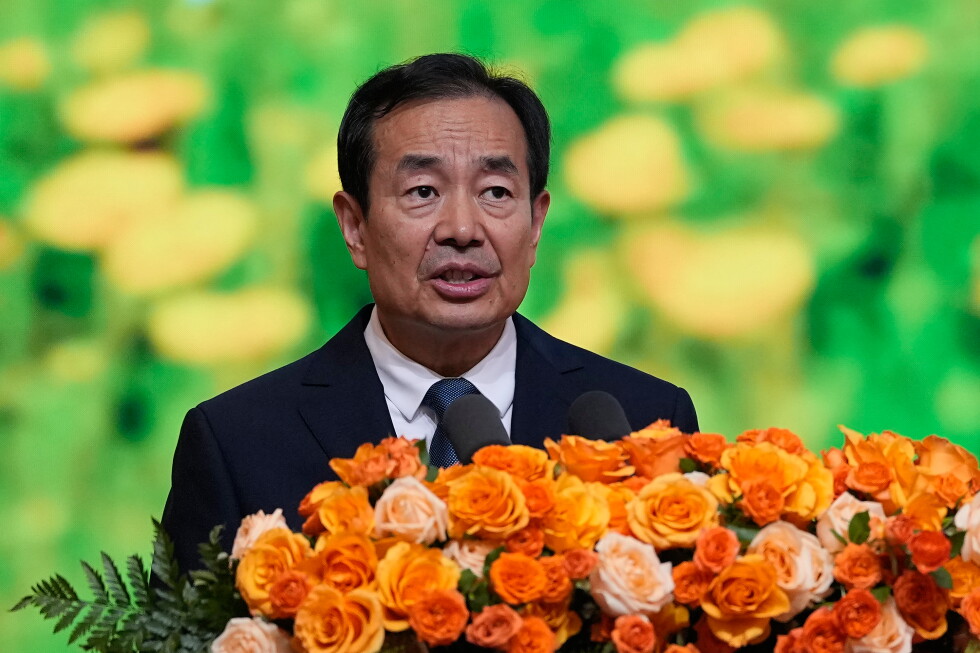
China touts Xinjiang at trade forum, spotlighting a region once marked by detention centers
ALTAY, China – Against a backdrop of long-standing international controversy over human rights violations against ethnic minority communities, China has convened a high-profile international gathering in its northwestern Xinjiang Uyghur Autonomous Region aimed at showcasing the country’s economic development push for the strategically located territory.
The one-day International Conference for Trans-Altai Subregional Cooperation, held Wednesday in the border city of Altay, brought together senior officials from Kazakhstan, Mongolia, Russia and multiple other regional countries. Attendees are scheduled to hold working sessions focused on expanding cross-border trade and building out new economic partnership frameworks for the resource-rich, landlocked Trans-Altai zone.
In his opening address to the conference, Chen Xiaojiang, the top Communist Party official in Xinjiang, framed the region’s current growth trajectory as clear proof of the success of Beijing’s governing model. “Xinjiang has become a vivid epitome of China’s rapid economic development and fully reflected the significant advantages and vitality of China’s governance,” Chen stated, adding that regional authorities have laid out ambitious plans to roll out dozens of large-scale infrastructure projects—including expanded railway networks and upgraded air transport connections—to support long-term growth. Beijing also aims to scale up development of Xinjiang’s core core sectors: coal, crude oil, natural gas and cotton, among other resource and agricultural industries.
Like many of China’s inland western provinces, Xinjiang lags far behind the country’s wealthy, industrialized eastern coastal regions in economic output and household income. Official 2020 data underscores this gap: rural residents in Xinjiang recorded an average per capita annual income of just 13,052 yuan, equivalent to roughly $1,927, compared to 31,930 yuan ($4,714) for rural households in eastern China’s prosperous Zhejiang province. This persistent economic inequality has been cited by Beijing as one of the underlying drivers of past social unrest in the region, which Beijing has used to justify sweeping security crackdowns starting in 2017.
Following isolated attacks carried out by a small group of Uyghur extremists that culminated in widespread unrest, Beijing launched a broad crackdown that saw an estimated 1 million or more ethnic minority residents—overwhelmingly Uyghurs, a mostly Muslim Turkic ethnic group—detained in a network of extrajudicial internment camps across the region. Chinese authorities have long defended the detentions as necessary counterterrorism and anti-extremism measures designed to root out separatist and violent extremist ideology.
By 2021, Beijing announced that it had closed the vast majority of the formal detention camps, but independent investigations and leaked documents have confirmed that many of the facilities were simply repurposed into standard prisons. A data leak shared with the Associated Press revealed that thousands of Uyghur detainees have been handed down lengthy prison sentences on what independent policy experts widely agree are fabricated or grossly exaggerated charges linked to separatism or religious extremism.
Even for ethnic minority residents not held in formal detention, human rights advocates report widespread, systematic coercion. The London-based human rights organization Global Rights Compliance found that forced participation in state-run labor programs remains pervasive across southern Xinjiang, the region’s area with the largest concentration of Uyghur residents, and that the scope of this forced labor has expanded under China’s current five-year national economic development plan.
Beijing has repeatedly pushed back against global criticism of its policies in Xinjiang, arguing that what it labels “anti-China forces” have deliberately distorted and exaggerated conditions in the region. Chinese authorities maintain that all counterterrorism and anti-extremism measures applied in Xinjiang do not target specific ethnic, religious or regional groups, but are focused solely on protecting national security and public safety across the region.
-
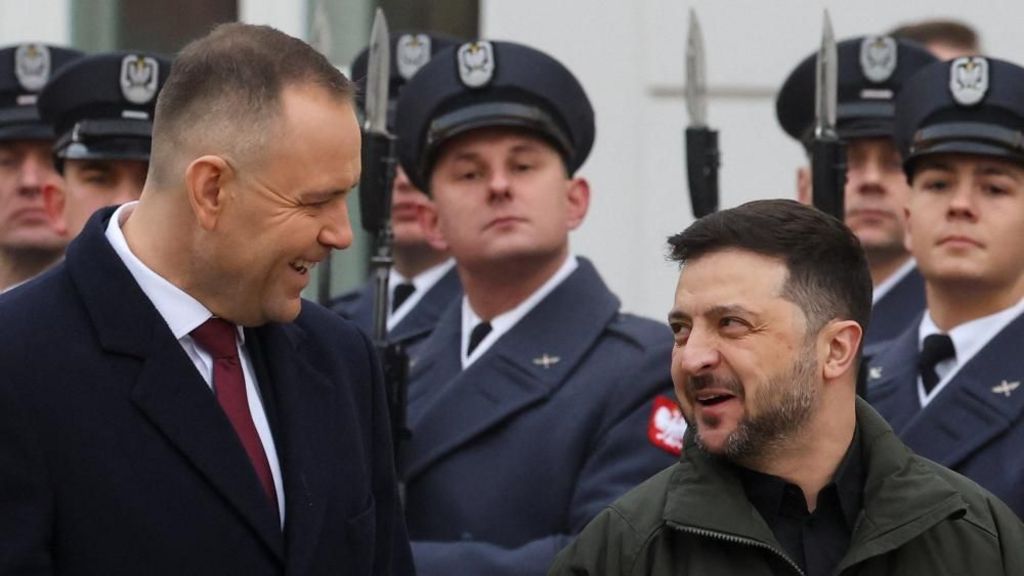
Zelensky under pressure to end row with Poland over WW2 name of army unit
A deep diplomatic rift has opened between Ukraine and one of its most critical European allies, Poland, after a presidential decree from Volodymyr Zelensky honoring a mid-20th century Ukrainian nationalist military group reignited long-simmering historical tensions that now threaten to upend bilateral cooperation.
The conflict traces back to a late-May decree from Zelensky that renamed a Ukrainian Special Operations Forces unit after the Ukrainian Insurgent Army (UPA), a partisan group that operated across Eastern Europe between the 1940s and 1950s. For many Ukrainians, the UPA is enshrined as a symbol of national resistance, celebrated for fighting against three occupying forces: Nazi Germany, the Soviet Red Army, and interwar Polish governing authorities. Naming the elite military unit “Heroes of the Ukrainian Insurgent Army” was framed by Zelensky as an effort to honor the legacy of Ukrainian independence struggle, a tradition that remains resonant for frontline Ukrainian troops who today display the UPA’s red-and-black flag in combat against Russia’s 2022 full-scale invasion.
But the move triggered immediate and widespread outrage across Poland’s entire political spectrum. Warsaw accuses the UPA of perpetrating a targeted genocide of ethnic Polish civilians in the Volhynia region between 1943 and 1945, a massacre that historians estimate killed roughly 100,000 Poles. Polish President Karol Nawrocki condemned the decree as an unacceptable glorification of “bandits and killers,” a view echoed even by pro-Ukrainian politicians including Prime Minister Donald Tusk. Many Poles have framed the decision as a deep act of ingratitude, pointing to Poland’s unprecedented support for Ukraine since Russia’s invasion: Poland was the first neighbor to open its borders to more than 4 million Ukrainian refugees, and currently hosts nearly 1 million displaced Ukrainians, while also serving as a key hub for Western military aid to Kyiv.
The anger has escalated to the highest levels of state honors, with Nawrocki confirming he is actively considering revoking the Order of the White Eagle – Poland’s highest state decoration, awarded to Zelensky by then-President Andrzej Duda in 2023. The Polish president told reporters he has already held consultations with the Order’s governing council, and will announce a final decision “in due course.” Under Polish regulations, the honor can be revoked if a recipient is found to have committed an act that renders them unworthy of the distinction, though commentators note any formal revocation would require backing from Prime Minister Tusk, who has sought to de-escalate the standoff.
Hardline political factions in Poland have pushed for far more aggressive action against Kyiv. Opposition Law and Justice party MPs have called for a full sweeping reassessment of bilateral relations, while far-right Confederation leader Krzysztof Bosak has demanded Poland cut funding for the Starlink satellite internet services critical to Ukraine’s military operations, and block Ukraine’s EU accession process until Kyiv reverses the unit naming decree. Nawrocki himself went further, stating that Zelensky’s decision proves “Ukraine is not ready to join the European family.”
Kyiv has so far declined to issue a formal official response to the criticism, though Ukraine’s foreign ministry has stressed it never intended to cause offense to Poland. In a last-ditch effort to ease tensions, Zelensky’s chief of staff Kyrylo Budanov traveled to Warsaw over the weekend to meet with Polish officials ahead of the Order of the White Eagle council meeting. However, the diplomatic outreach failed to produce a breakthrough: following Budanov’s visit, Nawrocki moved forward with convening the honorary council to discuss revoking Zelensky’s award, and Tusk later acknowledged openly that “diplomacy has yielded no results.”
The growing rift has already produced visible ripple effects: Zelensky, who regularly departs for foreign trips from Poland’s Rzeszów Airport, chose this week to fly to the United Kingdom via Moldova instead. Tusk has clarified the airport remains open to the Ukrainian leader, saying “I am not going to tell him where and how to fly,” but the shift underscores the growing chill in relations.
Analysts warn that a formal revocation of Zelensky’s honor could trigger a full diplomatic rupture between the two neighbors, with serious consequences for both nations and the broader Western coalition supporting Ukraine against Russia. The growing discontent in Poland already threatens to overshadow a major upcoming conference on Ukraine’s post-war reconstruction, scheduled for later this month in Gdansk, with Polish foreign ministry officials indicating Zelensky may choose to skip the event entirely. Observers also note rising tensions could benefit right-wing Polish parties that have grown increasingly critical of continued military and refugee support for Ukraine, a shift that aligns with the strategic goals of the Kremlin.
Tusk has repeatedly pushed for de-escalation, urging both leaders to hold direct, honest negotiations to resolve the dispute before tensions spiral out of control. “Co-operation serves the interest of both our states and nations, while conflict serves Moscow’s interests,” he emphasized in a recent statement, framing continued bilateral unity as a critical national and continental security priority.
-

NDIS insider charged over alleged $5m plot to defraud disability scheme
A 48-year-old Adelaide-based employee of Australia’s National Disability Insurance Agency (NDIA) has been hit with multiple criminal charges over her alleged role in a $5 million fraud plot targeting the National Disability Insurance Scheme (NDIS), the federal government’s flagship support program for people living with disability. The scheme was first flagged to authorities in March this year, when internal systems detected the employee’s unauthorized access to protected personal records held by the agency. Law enforcement and investigative bodies have since laid out the full scope of the alleged misconduct.
According to charging documents from the Australian Federal Police (AFP), the woman accessed more than 40 protected NDIS participant records without permission both during and outside of her scheduled working hours. Investigators allege she used that illicit access to file false claims against the NDIS plans of her own family members, who are registered NDIS participants. The claims were submitted for supports and services that were never actually delivered to the participants, the AFP says. To date, the accused is alleged to have received more than $53,000 in improper payments through a local NDIS service provider, as part of the broader $5 million coordinated fraud scheme.
Beyond the fraudulent claims, investigators say the woman also violated conflict of interest rules: she failed to disclose to the NDIA that she had an ownership or operational connection to a local NDIS-registered business, and also did not declare that one of her relatives was employed at that same business. The undeclared connection created the opportunity for the alleged fraud, authorities say.
On Thursday, a multi-agency enforcement team comprising AFP officers, NDIA internal investigators, South Australia Police, and Services Australia personnel carried out coordinated raids at three locations: the woman’s private residence in Blakeview, a second residential property in Mawson Lakes, and a business premises in the Adelaide suburb of Prospect. Multiple electronic devices were seized across all three sites, and investigators are currently conducting forensic analysis on the seized hardware to build out their case. Police have confirmed that additional charges are expected as the investigation progresses, with probing into potential co-conspirators ongoing.
The case was investigated by the Australian Government’s Fraud Fusion Taskforce (FFT), a specialized multi-agency unit set up to target large-scale fraud against federal government payment programs. AFP Detective Inspector Aidan Milner emphasized that the collaborative structure of the taskforce was critical to uncovering and halting the alleged exploitation of a program designed to support some of Australia’s most vulnerable community members.
A spokesperson for the NDIA reiterated that the agency takes all allegations of internal misconduct and fraud extremely seriously. “Anyone who abuses their position for personal gain will be caught and held to account,” the spokesperson said. “The safety of participants and security of their personal information are absolute priorities. This arrest shows we act decisively when our systems detect alleged fraudulent activity and we pursue every lead with our Fraud Fusion Taskforce partners.”
Louise Glanville, NDIS Quality and Safeguards Commissioner, added that the Australian community has zero tolerance for fraud against the NDIS, a program that relies on public trust to deliver critical support to hundreds of thousands of participants across the country.
-
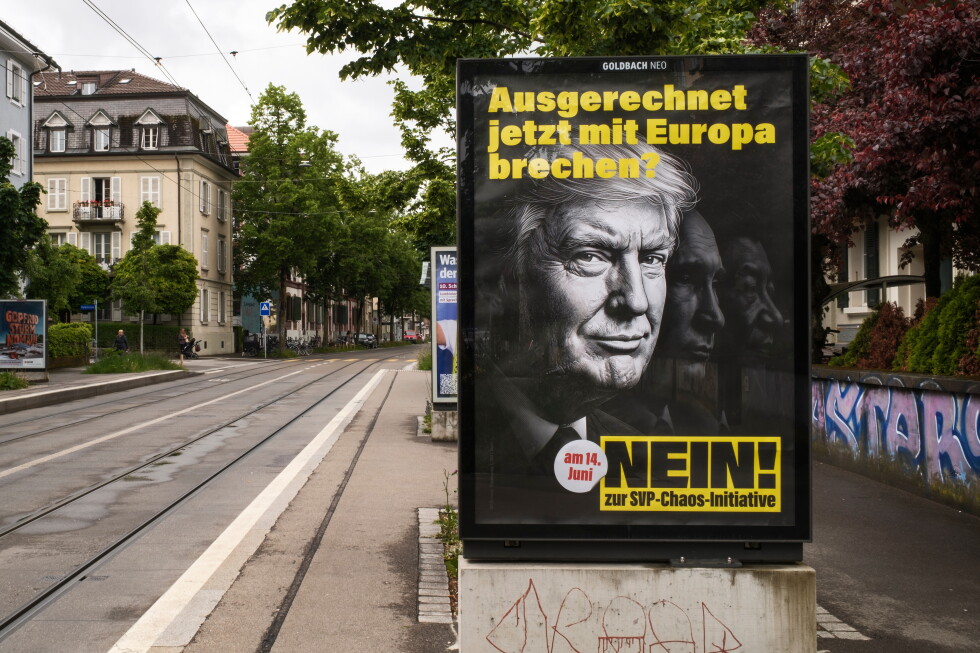
Vote looms in Switzerland after foes of migration put proposal to cap population at 10 million
GENEVA — On Sunday, Swiss voters will head to polling stations to decide on an unprecedented national proposal that would put a hard cap on the Alpine nation’s total population, capping decades of anti-immigration advocacy led by the country’s most prominent right-wing political bloc. If approved, the initiative would lock in a maximum population of 10 million for Switzerland by the middle of the 21st century, marking the first time any national electorate has ever voted on an explicit legal limit to a country’s total population.
Switzerland’s direct democratic system gives citizens the power to force national votes on policy changes through signature collection, with national referendums typically held four times annually. The measure is championed by the populist Swiss People’s Party, the largest faction in the country’s federal parliament, which has built decades of political support on stoking isolationist sentiment around immigration. Pre-election polling from leading Swiss research firm gfs.bern indicates the outcome will likely be an extremely close contest, leaving the final result uncertain ahead of voting.
Proponents of the initiative argue that decades of open border policies with the neighboring European Union have stretched Switzerland’s housing stock, public infrastructure, social welfare systems, and natural resources thin, eroding the country’s distinct way of life. Bernard Bapst, a Fribourg-based lawmaker for the Swiss People’s Party and former customs official, claimed that cross-border openness has led to a measurable rise in criminal activity across the country, rejecting critics’ warnings that the policy threatens national security.
Opponents, however, warn that passing the proposal would amount to a catastrophic self-inflicted economic and diplomatic wound for the wealthy, export-dependent nation. They emphasize that Switzerland has reaped enormous economic benefits from free movement with the EU, which supplies critical skilled labor to key Swiss sectors including healthcare, finance, pharmaceuticals, and technology. The country’s federal government and national parliament both officially oppose the cap, and EconomieSuisse, Switzerland’s leading business group, has labeled the initiative an “absurd proposal” that puts the country’s long-term security and prosperity at risk.
Official government data illustrates the scale of demographic and economic shift that has fueled the debate. Since Switzerland and the EU agreed to ease free movement rules for workers and residents across their shared border in 2002, Switzerland’s total population has surged 23% to 9.1 million by the end of 2024. Over that same period, the country’s total economic output has also grown by 24%. “We are the victim of our own success,” explained Reto Föllmi, an international economics professor at the University of St. Gallen, summing up the core tension at the heart of the vote.
If voters approve the cap, the Swiss federal government will be legally required to implement policies to hit the 10 million target by 2050. If the population hits the 9.5 million threshold before 2050, the government would be forced to impose new restrictions on asylum claims, family reunification, and permanent residency permits. It would also likely require Switzerland to scrap its existing free movement agreement with the EU entirely.
Experts note that any immediate economic or demographic disruption would be limited by the policy’s long-term timeline, but the diplomatic and investment impacts would be felt far sooner. Political science professor Rene Schwok of the University of Geneva notes that a yes vote would significantly strain relations between Bern and Brussels — the EU is Switzerland’s largest trading partner by a wide margin — and create deep uncertainty for foreign firms looking to invest in the country. As of 2024, 32% of Switzerland’s population is foreign-born, the second-highest share among OECD nations, trailing only Luxembourg where more than half of all residents were born abroad.
Immigration has been a polarizing, long-running political issue across the European continent for decades, as countries grapple with aging native populations and rising anti-immigrant political sentiment. Unlike many other Western European nations where anti-immigrant rhetoric focuses primarily on migration from the developing world, the vast majority of foreign-born residents in Switzerland come from other European countries.
This is far from the first time Swiss voters have weighed in on immigration restrictions over the past 50 years. Only one prior immigration cap referendum — the 2014 “Against Mass immigration” measure — passed by a narrow margin, after campaigners stoked public fears about overpopulation and growing Muslim communities in the country. While many countries around the world enforce limits on new immigration, no nation has ever held a national vote on an explicit cap to its own total population, according to Philippe Wanner, a leading demography expert at the University of Geneva.
The debate in Switzerland stretches back generations. At the turn of the 21st century, as anti-immigration sentiment began to rise, former Swiss President Adolf Ogi summarized the opposing perspective that still defines the “no” campaign: “We live from foreigners … we need laborers for tourism … we need intelligent people in Switzerland.”