分类: politics

  • Kenyan leader sparks uproar after  mocking Nigerians’ spoken English

    Kenyan leader sparks uproar after mocking Nigerians’ spoken English

    A controversial comment from Kenyan President William Ruto has ignited fierce cross-border debate across African social media, after he claimed Kenyans speak some of the world’s best English while suggesting Nigerian-accented English is incomprehensible without a translator.

    Ruto made the remarks during a public address to members of the Kenyan diaspora in Italy on Monday. He opened the discussion on national language proficiency by boasting of the quality of Kenya’s education system and the high standard of English spoken by Kenyans. “Our education is good. Our English is good. We speak some of the best English in the world,” Ruto told the crowd, which responded with laughter. He added, “If you listen to a Nigerian speaking, you don’t know what they are saying. You need a translator even when they are speaking English.” Ruto also went on to note that Kenya has strong human capital that only requires additional training to reach its full potential.

    The comment quickly spread across social media platforms, drawing sharp condemnation from Nigerians, other Africans, and global observers alike. Critics have accused Ruto of demeaning a neighboring African nation and parroting colonial-era biases about language standards. Well-known Zimbabwean journalist Hopewell Chin’ono pushed back against the framing that English proficiency correlates to national worth, writing online: “English is a colonial language, not a measure of intelligence, capability, or national progress.”

    Former Nigerian senator Shehu Sani also criticized Ruto’s jab, pointing out Nigeria’s rich literary legacy that includes globally acclaimed voices such as Nobel Prize in Literature winner Wole Soyinka, foundational author Chinua Achebe, and bestselling writer Chimamanda Ngozi Adichie. “Ruto is mocking the English of the country with a Nobel Prize for literature winner. The Nation of Achebe and Chimamanda,” Sani wrote on platform X.

    Many online commentators also urged Ruto to redirect his focus to domestic challenges within Kenya, including the country’s ongoing cost of living crisis and high unemployment rates, framing the controversial comment as an unnecessary distraction from pressing public issues.

    Linguistically, both Kenya and Nigeria inherited English as an official language from their history as former British colonies, but each nation has developed distinct, culturally rooted spoken varieties shaped by local indigenous languages. Nigeria is home to more than 500 distinct indigenous languages that have shaped the unique cadence, intonation, and accent of Nigerian English. In Kenya, the mix of Bantu, Nilotic, and Cushitic language families has similarly given rise to a distinct local English accent.

    A small contingent of Kenyan online users have defended Ruto’s comments, arguing that critics misinterpreted his intent and missed the intended humor of the offhand remark. As of Wednesday, Ruto’s administration has not issued an official statement or apology addressing the backlash.

    The social media firestorm comes amid a recent pattern of tense, high-profile online exchanges between Kenyan and Nigerian public figures and citizens. Earlier this month, Nigerian President Bola Tinubu drew backlash from Kenyan online users after claiming Nigerians were “better off than those in Kenya and other African countries” despite rising domestic fuel prices in Nigeria. Many online observers have interpreted Ruto’s recent comment as a tit-for-tat response to Tinubu’s earlier statement, though Ruto never explicitly referenced Tinubu’s remark during his address. Cross-border online spats between the two nations are common, with previous clashes centered on economic comparisons, pop culture, sports, and increasingly, political rhetoric.

  • In Baltic skies, NATO and Russian pilots size each other up warily but without a tilt into war

    In Baltic skies, NATO and Russian pilots size each other up warily but without a tilt into war

    At Lithuania’s Šiauliai Air Base, the rhythm of NATO’s frontline Baltic air policing mission is defined by split-second urgency. When the alliance’s scramble alert sounds, French Rafale fighter pilots — already pre-suited to cut response times — rush in vans to prepared, missile-armed jets waiting in hardened hangars. Within minutes of lifting off from the northern European base, they are over the Baltic Sea, executing standard intercept procedures for Russian military aircraft approaching NATO alliance airspace.

    On a recent busy Monday observed by an Associated Press journalist, French pilots scrambled under NATO command to intercept a coordinated Russian flight formation: two nuclear-capable Tu-22M3 supersonic bombers, which Russia has repurposed for ground strikes in Ukraine, escorted by advanced Su-30 and Su-35 fighter jets. The Russian warplanes flew a more than four-hour mission from a base near St. Petersburg, passing the coastlines of five NATO nations — Finland, Estonia, Latvia, Lithuania and Poland — before turning back near Danish airspace. According to the French detachment, the Russian aircraft never activated their transponders, filed required flight plans, or maintained radio contact with civilian air traffic controllers. Fighters from Sweden, Finland, Poland, Denmark and Romania also launched to monitor the incursion, a multilateral show of coordinated airspace security.

    This high-alert cat-and-mouse game plays out hundreds of times a year, hundreds of miles from public view, as NATO seeks to avoid an accidental escalation that could pull the 32-nation alliance into open conflict with Russia amid tensions over Moscow’s full-scale invasion of Ukraine. In intercepts like this, neither side crosses into open hostility: pilots from both forces simply monitor and document one another, maintaining a cautious distance even as armed missiles remain visible on jet hardpoints. As mission commanders describe it, the dynamic is less cat and mouse than two wary cats, claws bared but holding back from a fight.

    The Baltic states of Estonia, Latvia, and Lithuania — all NATO members that share borders with Russia and its ally Belarus — lack the independent air power to defend their own airspace. Since 2004, when the three countries joined the alliance, NATO has rotated national detachments through Baltic bases to maintain 24/7, year-round air policing, a mission designed to deter aggression rather than provoke conflict, and reassure frontline allies of the alliance’s collective security commitment.

    Currently, the Šiauliai base hosts two detachments: a four-jet French Rafale wing, commanded by Lt. Col. Alexandre — whose full surname is withheld for security reasons — and a six F-16 contingent from the Romanian Air Force. The French detachment took over the mission from Spanish forces earlier this spring, and will hand off to an Italian unit when their four-month rotation ends in August. A wall inside the base’s temporary headquarters bears plaques and badges from every rotating detachment that has served at the base, a quiet record of the mission’s continuity.

    Col. Mihaita Marin, commander of the Romanian detachment, explained that NATO forces are required to scramble whenever Russian military aircraft violate International Civil Aviation Organization (ICAO) rules for international airspace — rules that govern transponder use, flight planning, and radio communication. “There are plenty of times in which, on purpose or not, they’re not really respecting the ICAO rules,” Marin said. “So obviously we are forced to take off and just make sure that they are who they say they are and their intention is peaceful.”

    The arrival of spring, which brings milder temperatures and clearer flying conditions across the Baltic region, has pushed interception rates higher. Since French and Romanian forces deployed for their rotation in early April, interceptions have become nearly a daily occurrence, a rate commanders expect to climb further as weather improves. Lt. Col. Alexandre noted that it remains unclear why Russian pilots repeatedly operate in violation of global airspace rules. “We don’t know if it’s lack of professionalism or just a means for them to test us,” he said. “But what is sure is that we need to go every time. We cannot say, ‘OK, that’s usual, this time we will just let them pass.’”

    Across the tense standoff, the core goal of the NATO mission remains consistent: to maintain constant vigilance without triggering the open war both sides currently seek to avoid. “We watch each other, scrutinize each other and try to make sure that it doesn’t go any further,” Alexandre said.

  • China to send giant pandas to Atlanta again

    China to send giant pandas to Atlanta again

    BEIJING – Decades after the end of its first giant panda partnership with China, Zoo Atlanta is poised to welcome a new pair of the beloved endangered species, marking a fresh chapter in Sino-U.S. panda diplomacy even as broader bilateral relations remain strained. The announcement came Friday, just weeks before U.S. President Donald Trump’s widely anticipated official visit to Beijing for high-level talks with Chinese leadership.

    The China Wildlife Conservation Association (CWCA) confirmed in an official statement that the two new arrivals — male Ping Ping and female Fu Shuang, both raised at the Chengdu Research Base of Giant Panda Breeding, China’s leading giant panda conservation facility — will launch a 10-year collaborative conservation program under a bilateral agreement signed between CWCA and Zoo Atlanta in 2024. While the exact departure date from China for the pandas has not yet been released, preparations on the U.S. side are moving forward at full speed.

    According to the CWCA, American teams are currently completing final upgrades to the giant panda enclosures to ensure the new pair will have a comfortable, secure habitat, with Chinese conservation experts providing ongoing technical guidance throughout the renovation process.

    Zoo Atlanta first shared the news of the upcoming arrival Thursday, expressing overwhelming enthusiasm for the new partnership. “We can’t wait to meet Ping Ping and Fu Shuang and to welcome our members, guests, city, and community back to the wonder and joy of giant pandas,” said Raymond B. King, the zoo’s president, noting the institution was deeply honored to be chosen as stewards for the new pair.

    This new agreement comes after the conclusion of Zoo Atlanta’s original giant panda program in 2024. During that first cooperation period, the previous pair of pandas, Lun Lun and Yang Yang, successfully birthed seven cubs during their tenure in Atlanta. By October 2024, all seven cubs had been relocated to China, with the original adult pair and their two youngest offspring departing for their return that same month.

    For more than half a century, China’s global giant panda loan and conservation partnership program has served as a core pillar of Chinese soft-power diplomacy, widely known as “panda diplomacy.” Giant pandas first became a symbol of unofficial Sino-U.S. friendship back in 1972, when Beijing gifted a pair of pandas to the National Zoo in Washington D.C. shortly after the normalization of bilateral relations. Today, even as geopolitical and trade tensions between the two powers remain high, conservation experts and officials frame the renewed panda partnerships as a rare area of shared cooperation. Both Washington’s National Zoo and San Diego Zoo received new giant pandas from China in 2024, signaling a broader restart to the program after previous panda pairs returned to China amid shifting bilateral dynamics.

    The CWCA emphasized in its announcement that the new decade-long cooperation with Zoo Atlanta will advance critical joint work across multiple key conservation and scientific areas, including giant panda disease prevention and treatment, joint research, and academic exchanges between Chinese and American experts. Officials from both sides highlight that beyond its diplomatic significance, the program carries major global value for the long-term survival of giant pandas, a species that has rebounded from endangered status thanks to decades of cross-border conservation work.

  • India criticizes ‘poor taste’ Trump post against immigrants

    India criticizes ‘poor taste’ Trump post against immigrants

    A fresh diplomatic row has erupted between the United States and India after former President Donald Trump shared an incendiary social media post that branded India a “hellhole” and attacked Indian immigrants to the U.S. The controversy comes just weeks ahead of a planned official visit to New Delhi by U.S. Secretary of State Marco Rubio, whose trip was already framed as an effort to de-escalate recent bilateral tensions between the two long-time strategic partners.

    The inflammatory post, shared by Trump late Wednesday, targets the long-standing U.S. constitutional principle of birthright citizenship, echoing decades of far-right anti-immigration rhetoric. Beyond attacking birthright citizenship, the post spread two false and harmful claims about Indian immigrants working in the U.S. technology sector: first, that they systematically refuse to hire white, American-born workers, and second, that they lack adequate English language proficiency. The post went on to generalize its attack, claiming that birthright citizenship allows immigrants to bring entire family chains into the U.S. from what it called “hellhole” countries including China and India.

    India’s Ministry of External Affairs issued a swift and sharp rebuke of the comments on Thursday. Spokesperson Randhir Jaiswal dismissed the remarks as “obviously uninformed, inappropriate and in poor taste,” emphasizing that they do not align with the long-standing foundation of the India-U.S. relationship, which is built on mutual respect and overlapping strategic and economic interests.

    The post has also drawn widespread condemnation from American political and advocacy groups. Democratic Congressman Ami Bera, whose parents immigrated to the U.S. from India, called the comment “offensive, ignorant and beneath the dignity of the office” of the U.S. presidency. He added that Trump, who was born into immense wealth and privilege, has never experienced the daily struggles that shape the lives of millions of immigrant families across the United States.

    The Hindu American Foundation, a leading advocacy group representing Indian-American communities, also issued a statement saying it was deeply disturbed by the “hateful, racist screed.” The organization noted on social media platform X that the president’s endorsement of such bigoted rhetoric fuels rising xenophobia and racism already at record levels in the U.S., putting Indian-American and other immigrant communities at direct risk of harm.

    Cracking down on illegal and legal immigration has been a signature policy priority for Trump throughout his political career, and he has repeatedly targeted the H-1B temporary work visa program that is widely used by skilled Indian technology workers. This is not the first public friction between Trump and the Indian government: for months, Trump maintained steep punitive tariffs on Indian imports after taking offense to Prime Minister Narendra Modi’s muted response to his offer of mediation during a military conflict between India and Pakistan.

    Trump’s confrontational approach to India marks a clear break from decades of policy pursued by successive U.S. administrations of both major political parties. For decades, U.S. policymakers have prioritized building cooperative bilateral ties with the world’s largest democracy, framing New Delhi as a key strategic counterweight to an increasingly assertive China in the Indo-Pacific region.

  • US soldier allegedly bet on Maduro operation using intel

    US soldier allegedly bet on Maduro operation using intel

    The U.S. Department of Justice announced criminal charges Thursday against a 38-year-old active-duty Army soldier accused of exploiting classified access to a secret U.S. military operation to illegally profit hundreds of thousands of dollars via an online prediction betting platform.

    Gannon Ken Van Dyke, a resident of Fayetteville, North Carolina, faces five felony counts stemming from his alleged bets on Polymarket, a popular crypto-based prediction market. Court documents allege Van Dyke, who participated in planning and executing the U.S. mission to capture former Venezuelan President Nicolas Maduro, placed wagers on two key outcomes: that U.S. forces would enter Caracas and that Maduro would be removed from power. When the operation launched on January 3, which resulted in Maduro and his wife Cilia Flores being arrested and transferred to New York to face federal drug trafficking charges, Van Dyke walked away with more than $400,000 in illicit winnings, prosecutors say.

    Acting U.S. Attorney General Todd Blanche emphasized the gravity of the alleged misconduct in an official statement. “Our men and women in uniform are entrusted with classified information solely to carry out their national security missions,” Blanche said. “They are strictly prohibited from exploiting this highly sensitive data for personal financial gain.”

    In a response to the charges, Polymarket officials confirmed they had proactively flagged the suspicious betting activity to the Department of Justice and fully cooperated with the ongoing investigation. “Insider trading has no place on Polymarket,” the company said in a statement. “Today’s arrest is proof the system works.”

    The indictment against Van Dyke is not an isolated incident: it represents the latest confirmed case of insiders leveraging nonpublic information about the second Trump administration’s policy and military actions to profit from prediction market bets. Earlier this year, six unidentified Polymarket accounts netted a combined $1.2 million by correctly betting the U.S. would launch a military strike against Iran on February 28, the exact date open hostilities in the Middle East began. No arrests have been made in that case, and investigators have not uncovered any evidence linking President Donald Trump or senior White House staff to those transactions.

    Speaking to reporters Thursday, Trump distanced himself from the unregulated prediction betting industry. “The whole world, unfortunately, has become somewhat of a casino… in Europe and every place, they’re doing these betting things,” Trump said. “I was never much in favor of it.”

    The charges have reignited long-simmering accusations of systemic conflicts of interest plaguing Trump’s second term in office, particularly centered on connections between Trump’s family and Polymarket itself. Progressive Democratic Senator Bernie Sanders highlighted these concerns in a post Thursday on the social platform X, arguing that the Trump family has amassed $4 billion in unethical income during his time in office, calling the situation an “unprecedented kleptocracy.”

    Previous incidents have already raised alarms about potential insider trading tied to the White House: in March, Trump posted on his Truth Social platform that talks with Iran were “very productive,” a statement that triggered a drop in global oil prices and a surge in equity markets. Market analysts calculated that traders who placed positioned in oil and stock futures in advance of the post earned tens of millions of dollars in profits. The Trump family has also earned hundreds of millions of dollars from cryptocurrency investments, a sector Trump has moved to deregulate since returning to office. Most notably, Trump’s eldest son, Donald Trump Jr., is a partner at private equity firm 1789 Capital, which made a multimillion-dollar investment in Polymarket in 2024. Following the investment, Polymarket named Trump Jr. as a company advisor.

    If convicted on all five charges — one count of wire fraud, one count of unlawful monetary transaction, and three counts of violating the Commodity Exchange Act — Van Dyke faces a maximum sentence of 50 years in federal prison.

  • Heavy weapons use in Iran war sparks concerns over US readiness in Taiwan: Report

    Heavy weapons use in Iran war sparks concerns over US readiness in Taiwan: Report

    A new report from The Wall Street Journal has brought urgent attention to a growing gap in U.S. military stockpiles, driven by extensive weapons expenditure in ongoing operations against Iran. Multiple senior U.S. officials have raised alarms that the heavy drawdown of munitions leaves America ill-prepared to execute its longstanding defense commitments to Taiwan in the event of a potential Chinese incursion in the near term. According to the report published Thursday, this munitions shortage would not only hinder U.S. military operations but also put American service members at substantially elevated risk if a conflict over Taiwan broke out in the near future.

    The scale of depletion is significant: U.S. forces alone have expended between 1,500 and 2,000 air defense interceptors during strikes and defensive operations against Iran, alongside more than 1,000 Tomahawk cruise missiles, one of America’s primary long-range offensive weapons. What makes the shortage particularly pressing is the extended timeline to replenish these stockpiles: defense industry production chains currently require up to six years to replace the munitions already used in the Iran campaign. This production lag has forced senior U.S. national security officials to open discussions about revising existing operational plans for Taiwan’s defense, an issue that remains the top strategic priority for U.S. policymakers in the Indo-Pacific.

    The ripple effects of this munitions shortage extend far beyond the Indo-Pacific, reshaping security dynamics across the Middle East. When the U.S.-Israeli campaign against Iran launched earlier this year in June 2025, regional U.S. allies including Gulf Cooperation Council states requested urgent resupplies of Patriot air defense interceptors to fend off retaliatory Iranian drone and missile strikes. However, the U.S. turned these requests down, as its own stockpiles were already drained supporting Israeli air defense operations during the opening phase of the war. As the conflict has dragged on, Iran has launched thousands of drones and missiles against Gulf states, with Bahrain, Kuwait, and the United Arab Emirates enduring the heaviest wave of attacks, and the U.S. has been unable to fill the growing security gap.

    This vacuum created by U.S. stockpile shortages has been filled by an unexpected actor: Ukraine. On Thursday, Ukrainian President Volodymyr Zelensky confirmed that Kyiv has signed new security agreements with Saudi Arabia, the United Arab Emirates, and Qatar focused specifically on countering Iranian drone threats. Ukraine has first-hand experience countering the same Iranian-origin drones that Russia has deployed extensively against Ukrainian targets throughout the full-scale invasion, and has developed lower-cost anti-drone technologies that outperform more expensive American systems like the Patriot in this specific niche, making it an attractive alternative partner for Gulf states.

    The strategic ramifications of this depletion are already shifting the global balance of power. The Trump administration has acknowledged the need to ramp up domestic defense production, and the Pentagon unveiled its new 10-year $1.5 trillion defense budget proposal this week – the largest in U.S. history – designed to expand production capacity and rebuild stockpiles. Even so, many independent defense analysts argue that the ongoing Iran war has already handed China a major strategic advantage. By draining U.S. conventional arsenal and drawing American strategic attention and resources back to the Middle East, the conflict has strengthened China’s diplomatic and military influence across the globe.

    Recent reports have further highlighted this shifting dynamic. Following the June 2025 Iran war, Middle East Eye documented that China completed sales of air defense systems to Iran, and later followed up with deliveries of unmanned aerial vehicles. The New York Times added to these reports Saturday, confirming that U.S. intelligence assessments indicate China may have also provided man-portable shoulder-fired surface-to-air missiles to the Iranian military. These developments mark a significant deepening of military ties between Beijing and Tehran, a shift that would have been far less likely if the U.S. had not been distracted and depleated by its own operations in the region.

  • Woodside grilled by senator over political donations amid calls for new gas tax

    Woodside grilled by senator over political donations amid calls for new gas tax

    Australia’s largest ASX-listed energy firm Woodside Energy has found itself at the center of a fiery senate inquiry, where executives defended the nation’s existing gas taxation framework amid intense scrutiny over the company’s decade-long $2.5 million in political donations to Australia’s three major parties: the Liberals, Nationals, and Labor.

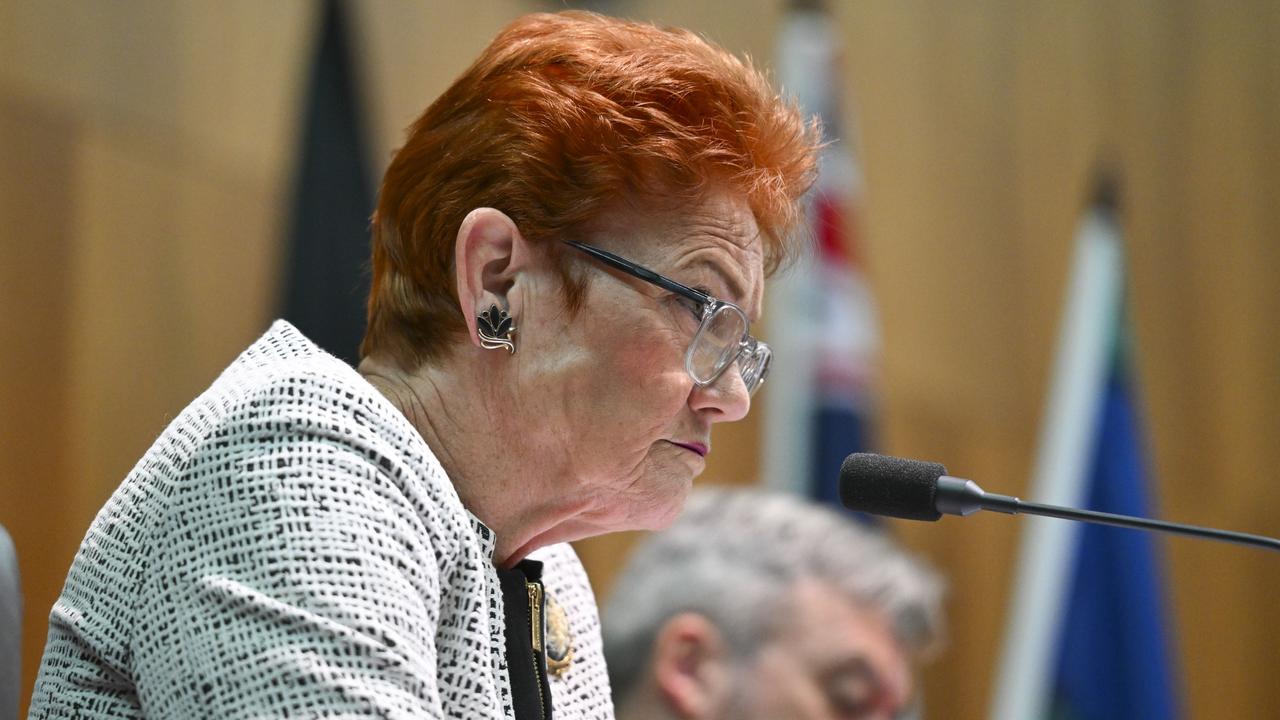
    The hearing, focused on reviewing gas resource taxation rules, was led by Greens committee chair Steph Hodgins-May, who pressed Woodside representatives hard over the nature of their political giving. Hodgins-May challenged the company to disclose what policy access the donations secured, questioning whether corporate funding should even buy entry into policy discussions. “As a Greens senator I could never ever imagine taking money in exchange for a meeting with a stakeholder,” she stated during the session. She further pressed for details on private communications between Woodside executives and Western Australian Premier Roger Cook ahead of Cook’s public stance opposing new gas taxes ahead of the upcoming federal budget, a question Woodside officials declined to answer immediately, saying they would respond to the query on notice.

    The inquiry comes amid growing public and political pressure to implement a new 25% minimum tax on gas exports, a push Hodgins-May has publicly backed. She has pushed back against industry warnings that the time is not right for such a reform, arguing that energy giants have long delayed sharing their extraordinary windfall profits with the Australian public, the rightful owners of the nation’s natural resources. This momentum for higher gas taxes has built following a global energy price surge triggered by ongoing geopolitical conflicts in Ukraine and the Middle East, which has delivered Australian gas exporters a combined $149 billion in export profits since 2022. Over that same period, Australia’s national debt has swelled to nearly $1 trillion, with economic analysts projecting a 25% export tax would add roughly $17 billion in annual government revenue.

    In his opening testimony before the committee, Woodside Chief Financial Officer Graham Tiver defended the company’s record and the current taxation structure. Tiver emphasized that Woodside already makes a massive contribution to Australian public finances and the national economy, noting that over the past four years, the company has paid roughly $13.8 billion in taxes, royalties, Petroleum Resource Rent Taxes, and other levies, equal to around 44% of revenue from its gas projects being returned to government. “Each year Woodside makes a very substantial contribution back to the Australian community through tax, royalties and other levies. When Woodside succeeds, Australian workers, community and shareholders share in that success, and governments receive the revenue needed to fund essential services such as hospitals, schools and roads,” Tiver said.

    Tiver added that Australia’s existing tax framework strikes the right balance between generating public revenue and supporting the stable, competitive investment environment needed to maintain domestic energy security, create jobs, and keep local energy prices affordable. He noted that Woodside invests more than $10 billion in upfront capital for new projects, and that effective tax rates increase naturally over the lifecycle of gas developments as upfront costs are depreciated.

    Market analysts have noted that the debate over windfall gas taxes brings legitimate arguments on both sides. Morningstar market strategist Lochlan Halloway explained that it is understandable for Australians to feel frustrated by the sudden surge in gas producer profits at a time of broader cost of living pressures. He acknowledged that as the collective owners of Australia’s natural resource endowment, the Australian public currently receives a smaller share of windfall profits than resource holders in comparable nations such as Norway or Qatar. However, Halloway warned that retroactively imposing a new windfall tax carries long-term economic risks. Unlike Norway, where the government is not just a tax collector but also an equity participant that shares upfront project costs and downside risks, a unilateral windfall tax in Australia would shift all asymmetric risk to private investors: the public would collect gains during price booms, but private capital would still bear all losses during price downturns. Halloway noted that the United Kingdom implemented a similar unbalanced windfall levy, and the policy has already led to a complete halt in new offshore North Sea oil and gas exploration, a situation not seen since 1964. Such an outcome in Australia would risk deterring future energy investment and undermining long-term energy security, he argued.

  • EU unblocks funds as Ukraine presses for membership progress

    EU unblocks funds as Ukraine presses for membership progress

    After months of diplomatic gridlock driven by Hungarian opposition, European Union leaders have formally given final approval to a €90 billion ($105 billion) aid package for Ukraine, paired with a new round of anti-Russia sanctions. The breakthrough comes as Ukrainian President Volodymyr Zelensky arrived in the Cypriot coastal resort of Ayia Napa for talks with EU leaders, where he immediately shifted the conversation to advancing Kyiv’s long-held ambition of full European Union membership.

    Zelensky opened his remarks by expressing profound gratitude for the long-delayed financial support, noting that the funds would be critical to keeping Ukraine’s military equipped and sending a clear, unified message to Moscow that European backing for Kyiv remains unshaken. But speaking to reporters outside the seaside conference venue, the Ukrainian leader made clear that his priority now is moving accession talks forward, stating bluntly: “We will push everybody.” He added that his ultimate goal is securing full Ukrainian membership in the bloc by 2027.

    The path to membership talks has recently cleared significantly, following the electoral defeat of Hungarian nationalist leader Viktor Orban earlier this month, who had spent months blocking progress on both the aid package and the opening of accession negotiating clusters. Orban, who skipped what would have been his final EU summit before leaving office, had wielded his veto over the €90 billion loan as leverage to force Ukraine to repair a pipeline damaged in a Russian strike. With repair work completed this week, Russian oil has resumed flowing through the pipeline to both Hungary and Slovakia, resolving the last sticking point for the aid package.

    European Council President Antonio Costa, who represents the bloc’s 27 member states, signaled openness to moving forward, saying the EU must “look forward and prepare the next step”, which would include formally opening the first negotiating clusters for Ukraine’s accession. However, not all EU capitals are on board with accelerating the process. Several senior leaders have pushed back against a fast track, arguing that accession must follow a strict merit-based system that requires Ukraine to meet all membership criteria before advancing. “Fast tracks are not possible,” Belgian Prime Minister Bart De Wever said. Luxembourg Prime Minister Luc Frieden echoed that stance, noting that “you simply cannot become a member of a club without meeting the conditions.”

    French President Emmanuel Macron declined to take a position on accelerated membership, but called on the EU executive branch to draft a clear timeline and outline next steps to be completed in the coming weeks. For his part, Zelensky has rejected calls for a lesser, symbolic membership status, reiterating that Ukraine will accept nothing less than full membership in the bloc. Zelensky also outlined plans for the aid, saying the €90 billion will go toward strengthening Ukraine’s military, expanding domestic air defense production, and shoring up the country’s damaged energy grid. He expects the first disbursement of funds to arrive by late May or early June at the latest.

    Beyond Ukraine, the summit in Cyprus, which currently holds the rotating EU presidency, will tackle a range of pressing global and internal issues. EU leaders will turn their attention to the ongoing Middle East conflict and its economic fallout, which has driven sharp spikes in global energy prices. The island nation was drawn into the conflict in March when a drone struck a British military base located on Cypriot territory. On Friday, EU leaders will be joined by their counterparts from Lebanon, Egypt, Syria and Jordan for what a senior EU official described as “intensive dialogue” on regional stability.

    A top economic priority for the bloc is addressing disruption to global energy supplies linked to tensions around the Strait of Hormuz. A de facto partial closure of the key shipping route has already pushed oil prices sharply higher and reduced jet fuel supplies across Europe. Leaders will also hold their first discussion on the EU’s 2028-2034 multi-year budget. The European Commission has proposed a expanded two trillion euro ($2.3 trillion) budget to account for new priorities including aid for Ukraine and defense spending, but many national governments have already pushed back against calls to increase their national contributions to the bloc.

  • US soldier charged after winning $400,000 betting on removal of Maduro

    US soldier charged after winning $400,000 betting on removal of Maduro

    An active-duty U.S. Army special forces soldier has been arrested and charged by the Department of Justice for illegally trading on classified information about the military operation that captured former Venezuelan leader Nicolas Maduro, turning confidential mission details into hundreds of thousands of dollars in illegal profits, federal officials announced Thursday.

    Gannon Ken Van Dyke, a soldier stationed at Fort Bragg, North Carolina, used nonpublic classified information about Operation Absolute Resolve — the codename for the night-time raid that seized Maduro and his wife Cilia Flores from their Caracas compound on January 3 — to place targeted bets on Polymarket, a cryptocurrency-based prediction platform, according to the unsealed indictment. Prosecutors allege that Van Dyke, who was involved in the planning and execution of the operation between December 2025 and January 2026, gained authorized access to highly sensitive mission details including the operation’s timing and expected outcome.

    In late December 2025, Van Dyke created a Polymarket account and invested more than $33,000 across Venezuela and Maduro-related prediction markets, all with the explicit goal of personal financial gain, the DOJ said. When the operation concluded as planned, Van Dyke walked away with more than $409,000 in winnings from his insider trades.

    Polymarket officials confirmed Thursday that after the platform detected suspicious activity tied to classified government information, it immediately referred the case to the Department of Justice and fully cooperated with the ongoing investigation. “Insider trading has no place on Polymarket. Today’s arrest is proof the system works,” the company said in a social media statement.

    Van Dyke faces five separate federal charges: unlawful use of confidential government information for personal gain, theft of nonpublic government information, commodities fraud, wire fraud, and making an unlawful monetary transaction. As a member of the U.S. military granted access to classified information, Van Dyke had previously signed binding non-disclosure agreements promising he would never reveal or misuse any classified or sensitive operational information for any unauthorized purpose, DOJ officials noted.

    “Our men and women in uniform are trusted with classified information in order to accomplish their mission as safely and effectively as possible, and are prohibited from using this highly sensitive information for personal financial gain,” said acting U.S. Attorney General Todd Blanche. “Widespread access to prediction markets is a relatively new phenomenon, but federal laws protecting national security information fully apply.”

    U.S. Attorney Jay Clayton for the Southern District of New York — the judicial district where the case will be tried — echoed that sentiment, emphasizing that prediction markets do not qualify as safe havens for actors looking to profit from misappropriated confidential or classified information. The independent U.S. Commodity Futures Trading Commission also filed a separate civil complaint against Van Dyke on Thursday, bringing additional insider trading allegations against him.

    The raid that captured Maduro transferred the former Venezuelan leader and his wife to New York, where they face ongoing charges of weapons trafficking and drug trafficking, allegations the pair have repeatedly denied.

    During a press briefing on an unrelated matter Thursday, U.S. President Donald Trump told reporters he had not yet been briefed on the allegations against Van Dyke but would review the case. When asked about growing concerns that unregulated prediction markets create openings for widespread insider trading involving sensitive government information, Trump said he disapproved of the practice. “The whole world, unfortunately, has become somewhat of a casino, and you look at what’s going on all over the world, in Europe and every place, they’re doing these betting things,” he said. “I was never much in favour of it.”

  • Trump ‘gold card’ visa granted to one person so far: US commerce chief

    Trump ‘gold card’ visa granted to one person so far: US commerce chief

    A high-profile immigration initiative launched by US President Donald Trump has marked its first formal approval, with only one applicant successfully clearing the process for the administration’s signature $1 million ‘gold card’ residency visa to date, the nation’s top commerce official told lawmakers this week.

    US Commerce Secretary Howard Lutnick made the disclosure Thursday during a hearing before the US House of Representatives, updating Congress on the status of a program that has sparked intense debate since its unveiling last year. First ordered into creation by Trump in September 2024, the gold card scheme offers permanent US residency in exchange for a flat entry fee. It opened its application portal to prospective candidates in December 2024.

    Beyond the single completed approval, Lutnick confirmed that hundreds of additional candidates are currently moving through the multi-stage review pipeline. All applicants face not just the steep financial cost, but also rigorous background screening. The program sets a $1 million fee for individual applicants, while corporate sponsorship of candidates carries a $2 million price tag. Applicants must also cover a separate $15,000 processing fee charged by the US Department of Homeland Security, and all submissions undergo what Lutnick described as ‘most serious vetting and analysis.’

    The gold card program was paired with another Trump immigration policy: a new $100,000 annual fee added to the popular H-1B skilled worker visa program for foreign employees. When first announcing the initiative, Trump framed it as a measure that would attract high-impact job creators to the US while generating new revenue to help cut the federal national deficit.

    The update on the gold card program comes amid broader shifts in US immigration policy under Trump’s second term. Since returning to the presidency in 2025, the administration has pushed for stricter immigration controls and carried out a series of large-scale, aggressive deportation raids across the country.