分类: politics

  • Nato says ‘no provision’ to expel members after report US could seek to suspend Spain

    Nato says ‘no provision’ to expel members after report US could seek to suspend Spain

    Tensions are roiling the North Atlantic Treaty Organization after a leaked internal Pentagon email laid out potential retaliatory measures against alliance members that have declined to back US military efforts in the ongoing Iran conflict, sparking a fierce debate over alliance cohesion and the future of collective defense commitments. The leak, first reported by Reuters via an unnamed senior US official, triggered immediate pushback from NATO leadership, affected member states and key European allies, who have moved quickly to reject any suggestion that membership could be revoked or suspended.

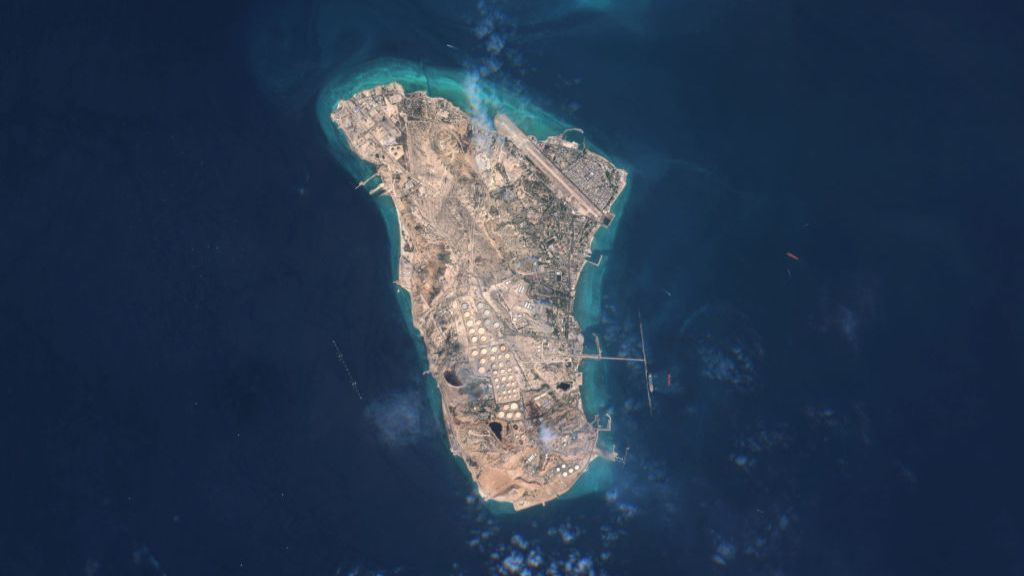
    The controversy stems from growing friction between the US administration under Donald Trump and several NATO allies over responses to the Iran conflict that escalated after joint US-Israeli strikes on Iran in late February. Following the attacks, Iran restricted commercial shipping through the Strait of Hormuz, one of the world’s most critical chokepoints for global energy supplies. Spain has drawn particular US ire for its refusal to grant US forces access to its two military installations — Naval Station Rota and Morón Air Base — to launch offensive operations against Iran.

    In the wake of the report claiming Washington was exploring options to suspend Spanish membership over its stance, a NATO spokesperson told the BBC that the alliance’s founding Washington Treaty contains no mechanism whatsoever to suspend or expel member states. Spanish Prime Minister Pedro Sánchez also dismissed the leaked memo outright, noting that Madrid only recognizes formal official communications from the US government. “We do not work based on emails. We work with official documents and official positions taken, in this case, by the government of the United States,” Sánchez told reporters. He added that Spain remains committed to full cooperation with its allies, but that all actions will adhere strictly to international law.

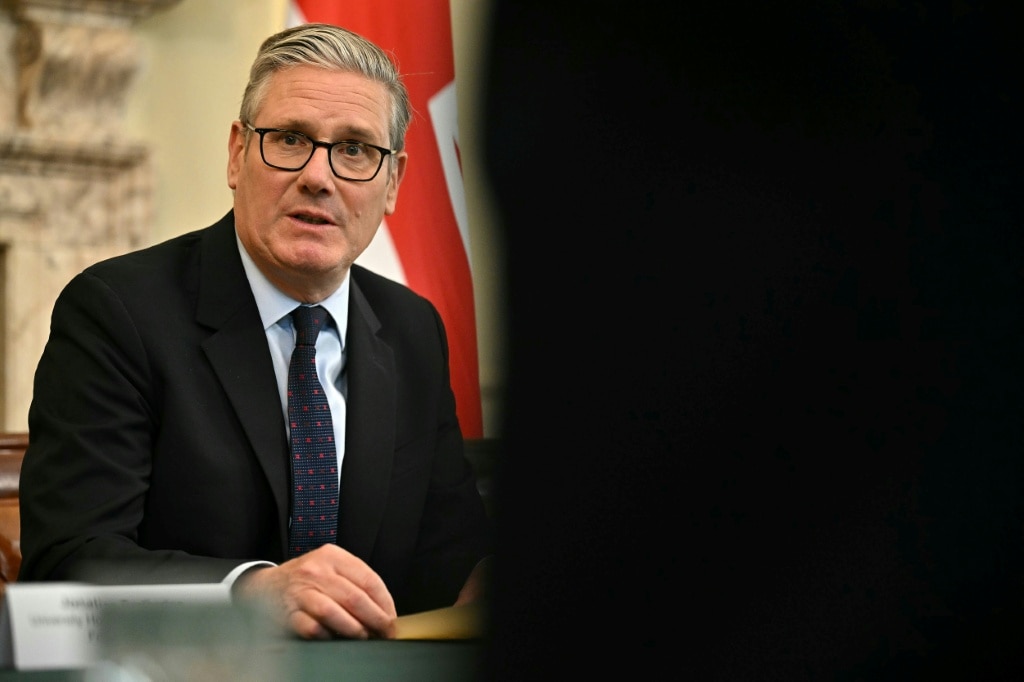
    Beyond potential action against Spain, the leaked email also outlined a far more provocative proposal: reassessing longstanding US diplomatic support for the United Kingdom’s sovereignty claim over the Falkland Islands, a South Atlantic territory that is also claimed by Argentina as the Malvinas. The 1982 Falklands War between the UK and Argentina ended in British control of the archipelago, which sits roughly 300 miles off Argentina’s coast and 8,000 miles from the UK. UK Prime Minister Keir Starmer has already drawn a line against deeper involvement in the Iran conflict, saying that expanding UK participation in the war or supporting the current US port blockade of Iran runs counter to British national interests. While the UK has allowed the US to use its military bases for strikes on Iranian targets and has deployed Royal Air Force jets to shoot down Iranian drones, Starmer’s government has stopped short of full backing for the US campaign.

    Other retaliatory options outlined in the memo included removing so-called “difficult” allied nations from key leadership positions within the alliance’s bureaucratic structure. The memo did not propose a full US withdrawal from NATO or the permanent closure of American military bases across Europe, the source told Reuters. Instead, it framed access to basing, staging and overflight rights as the non-negotiable baseline for alliance participation, arguing that members that refuse to extend these privileges should face consequences.

    Trump has spent months openly criticizing NATO allies for what he frames as unequal burden-sharing and a lack of reciprocity in security commitments. Just last month, he repeated his longstanding claim that NATO has been a “one-way street” for the US, writing that “We will protect them, but they will do nothing for us.”

    In an official comment following the leak, Pentagon Press Secretary Kingsley Wilson did not deny the existence of the internal memo, and echoed the president’s criticism of alliance members. “Despite ‘everything’ the US has done for its NATO allies, ‘they were not there for us,’” Wilson stated. She added that the Defense Department will work to present the president with actionable options to ensure that allies move beyond being a “paper tiger” and begin contributing their fair share to collective defense efforts, declining to offer further detail on internal deliberations.

    Key European leaders have moved quickly to tamp down divisions and reaffirm their commitment to alliance unity in the wake of the leak. Italian Prime Minister Giorgia Meloni used a recent EU summit in Cyprus to call on all NATO members to close ranks, arguing that the alliance remains an indispensable source of collective strength for the transatlantic community. “We must work to strengthen NATO’s European pillar… which must clearly complement the American one,” Meloni told reporters.

    A German government spokesperson echoed that sentiment in a regular Berlin press briefing, saying that Spain’s NATO membership is not in any doubt: “Spain is a member of NATO. And I see no reason why that should change.” Other European powers, including France, have joined the UK in saying they will only commit to securing the Strait of Hormuz after a lasting ceasefire or end to the conflict. The BBC has reached out to both the Pentagon and 10 Downing Street for additional comment on the leak and the proposals outlined in the memo.

  • Taiwan compatriots attend PLA Navy’s 77th anniversary open-day event

    Taiwan compatriots attend PLA Navy’s 77th anniversary open-day event

    On April 23, 2026, a group of Taiwan compatriots took part in a special public open-day event held in Qingdao, Shandong Province, to mark the 77th founding anniversary of the People’s Liberation Army (PLA) Navy. As part of the anniversary celebrations, the group was granted access to tour active-duty warships that had been opened exclusively for the occasion, getting an up-close look at the branch’s capabilities.

    During their visit, the Taiwan compatriots walked through the decks and interior spaces of the vessels, receiving detailed introductions to the warships’ advanced weapons systems and onboard equipment from serving naval officers. They also gained first-hand insight into the daily working routines and life of the officers and crew stationed aboard the ships, posing for photos with service members to commemorate the occasion.

    Public open-house events that open active-duty naval vessels to civilian visitors are a long-standing common practice among navies across the globe. For the PLA Navy, these public engagement events have become a regular fixture in recent years. The service has hosted multiple such open days to mark major national and institutional milestones, including its annual founding anniversary and China’s National Day.

  • Sánchez sidesteps a Spain-US dispute at NATO, brushing off reported Pentagon email

    Sánchez sidesteps a Spain-US dispute at NATO, brushing off reported Pentagon email

    Amid growing transatlantic friction over U.S. military operations in the Iran war, Spanish Prime Minister Pedro Sánchez has declined to engage with unconfirmed reports that the Pentagon is considering punitive measures against NATO allies that refuse to back American actions. Spain has emerged as a primary target of this potential pushback, after Madrid formally barred U.S. forces tied to the conflict from accessing its military bases and national airspace. The Spanish government has repeatedly justified its position by arguing that U.S.-Israeli military action in Iran violates international law.

    Spain is not alone in its refusal: both France and the United Kingdom have also declined to grant U.S. forces unfettered access to their territories for bombing operations against Iran. Reports of the Pentagon’s internal deliberations first emerged via Reuters, which cited an anonymous U.S. official referencing an internal Defense Department email. The document even raised the possibility of suspending Spain’s full membership in NATO, alongside a proposal to reassess longstanding U.S. support for the United Kingdom’s territorial claim over the Falkland Islands (known as the Islas Malvinas in Argentina).

    Speaking to reporters on the sidelines of a European Union summit held in Nicosia, Cyprus, Sánchez pushed back on the unsubstantiated claims. “We do not work with emails,” the prime minister noted. “We work with official documents and positions taken, in this case, by the government of the United States.” He reaffirmed that Spain’s stance remains unchanged: “The position of the government of Spain is clear: absolute collaboration with the allies, but always within the framework of international legality.”

    This tension comes as NATO itself has formally distanced itself from the Iran conflict. Operating on the basis of consensus, the alliance requires the unanimous agreement of all 32 member states to launch collective action. Crucially, NATO’s founding charter also lacks any formal mechanism to suspend or expel a member nation, even if a member disagrees with the policies of one ally. Member states are only permitted to voluntarily exit the alliance, a process that requires one year’s formal notification to other partners. As an institution, NATO’s only direct role tied to the conflict is limited to defending its own sovereign territory.

    The friction has its roots in former U.S. President Donald Trump’s public anger over what he frames as a failure of many NATO allies to back U.S. actions in Iran and assist with security patrols in the Strait of Hormuz, a critical global oil trade chokepoint. Trump has repeatedly questioned the value of U.S. membership in the transatlantic military alliance, and has even threatened to impose trade restrictions on Spain in retaliation for its base access ban. Beyond the Iran war, Spain has also drawn criticism from allies for failing to meet agreed NATO defense spending targets.

    EU officials have voiced confusion over the U.S. criticism of European allies, noting that France and the United Kingdom are already leading a planned effort to secure maritime trade in the Strait of Hormuz once hostilities in Iran end. EU High Representative for Foreign Affairs Kaja Kallas pointed out that Washington has already asked the bloc to deliver exactly the post-conflict support Europe has committed to providing. “When we have had contacts with the American counterparts, then actually their asks for us have been exactly what we are able to offer after the cessation of hostilities,” Kallas said. “Demining, escorting of ships, all of this that we have been discussing.”

    NATO Secretary-General Mark Rutte, however, has implicitly criticized the position of Spain and other allied holdouts, noting that long-standing bilateral agreements between the U.S. and European allies covering overflight access and base hosting should be honored. To date, several other NATO allies have permitted U.S. warplanes to use their airspace and American military bases on their territory for operations tied to the Iran war.

    Against a backdrop of growing uncertainty over the durability of U.S. security commitments to Europe, EU leaders used the Nicosia summit to debate new frameworks for collective European self-defense. With Cyprus holding the rotating EU presidency through July, Cypriot President Nikos Christodoulides confirmed that leaders have instructed the European Commission to draft a strategic blueprint outlining how the bloc would respond if one member requests collective assistance under Article 42.7 of the EU treaties.

    This mutual defense clause has only been invoked once in the bloc’s history, when France requested support following the 2015 terror attacks in Paris. Next month, EU envoys and defense ministers will hold table-top simulation exercises to test how the clause could be activated in future scenarios, mapping out how the bloc can leverage not just its combined military capabilities, but also other policy tools unavailable to NATO—including trade sanctions, border management, and visa restrictions.

  • Trump says no rush to end Iran war, US citizens to pay more for gasoline

    Trump says no rush to end Iran war, US citizens to pay more for gasoline

    WASHINGTON – As negotiations over a ceasefire to the weeks-long conflict between the US-Israeli bloc and Iran remain deadlocked, former and current US President Donald Trump made clear Thursday that he feels no urgency to bring the military confrontation to an early end, warning American consumers that they will need to shoulder elevated gasoline costs for the foreseeable future as part of the tradeoff for his administration’s policy goals.

    Speaking to reporters on the White House grounds, Trump emphasized he has no intention of forcing a rushed resolution to the conflict. “I don’t want to rush myself,” he stated, noting that US citizens should prepare to pay more at the pump for the short term, arguing the long-term outcome — an Iran stripped of nuclear weapons capabilities — would make the financial pain worth it.

    Earlier the same day, Trump doubled down on this position in a post to his social media platform Truth Social, framing the conflict as a battle of endurance that favors Washington. “I am possibly the least pressured person ever to be in this position. I have all the time in the World, but Iran doesn’t — The clock is ticking! Time is not on their side!” he wrote.

    Trump went on to insist that any final peace agreement with Iran must be structured exclusively on US terms and aligned with his own preferred timeline. “A deal will only be made when it’s appropriate and good for the United States of America, our Allies and, in fact, the rest of the World,” he added.

    The comments echoed remarks Trump made one day earlier, when he confirmed there is no fixed timeline for ending the conflict and no immediate pressure to act on the ceasefire extension he announced Tuesday, even as talks remain stalled. White House Press Secretary Karoline Leavitt reinforced this stance Wednesday, telling reporters that Tehran has not been given a firm deadline to put forward a formal peace proposal to Washington.

  • India condemns remarks shared by Trump calling it a ‘hellhole’

    India condemns remarks shared by Trump calling it a ‘hellhole’

    A diplomatic controversy has erupted between India and the United States after former and returning U.S. President Donald Trump shared inflammatory, anti-Indian comments made by podcaster Michael Savage to his Truth Social platform, drawing sharp condemnation from New Delhi and sparking public outrage across the country.

    In the shared transcript of Savage’s commentary centered on U.S. birthright citizenship policy, the podcaster claimed immigrants from India and China are systematically abusing the 14th Amendment provision that grants automatic citizenship to children born on U.S. soil. Savage went further, making unsubstantiated claims that Indian and Chinese migrants have taken over high-tech hiring processes in California, displacing qualified white American workers, and referred to India and China as “hellholes” in his remarks.

    India’s Ministry of External Affairs issued a formal public response to the incident, stopping short of naming either Trump or Savage directly but leaving no ambiguity about New Delhi’s position. The ministry described the comments as “uninformed, inappropriate and in poor taste,” emphasizing that they do not align with the longstanding foundation of the India-U.S. partnership, which is built on mutual respect and overlapping strategic and economic interests.

    The criticism extended beyond the Indian government to the country’s main opposition bloc, the Indian National Congress, which labeled the remarks “extremely insulting and anti-Indian.” The party called on Prime Minister Narendra Modi’s administration to raise the issue directly with the U.S. president and formally register a strong diplomatic objection in a public post on X.

    The controversy comes at a fragile moment for bilateral relations between New Delhi and Washington, which have faced growing friction since Trump returned to the U.S. presidency. Trump has repeatedly pressured India to cut all purchases of Russian crude oil, arguing that Indian import revenues help fund Russia’s ongoing military operation in Ukraine. In a temporary reversal earlier this year, however, the U.S. eased some sanctions restrictions to allow India to take delivery of millions of barrels of Russian oil that had been stranded at sea, preventing a potential domestic energy supply disruption.

    Trade relations have also been turbulent under the second Trump administration. Last year, Trump imposed steep 50% tariffs on a range of Indian goods, with 25 percentage points of that levy framed as a penalty for India’s continued Russian energy purchases. Earlier this year, the administration rolled those tariffs back to 18% as part of an ongoing broader trade negotiation between the two powers. To advance efforts to repair strained ties, U.S. Secretary of State Marco Rubio is scheduled to conduct an official visit to New Delhi next month, a trip widely viewed as a key step toward resetting the bilateral relationship.

    Consistent with his administration’s hardline stance on immigration, Trump has implemented sweeping new restrictions on unauthorized migration since returning to office, and has repeatedly argued that immigrants displace American workers in the U.S. labor market. A key policy target for the current administration has been the H-1B visa program, which allows U.S. companies to hire skilled foreign workers for specialty roles. Indian nationals account for the majority of H-1B visas issued annually; the program is widely credited with boosting U.S. innovation by attracting global talent, but critics, including Trump, claim it suppresses wages for domestic workers and limits employment opportunities for Americans.

    Savage’s comments, which Trump amplified via his social media platform, align closely with the administration’s existing views on immigration and the H-1B program. All of Savage’s claims about systemic hiring discrimination against white workers in California’s technology sector were made without any supporting evidence to back the allegations.

    The controversy is tied to a pending legal challenge before the U.S. Supreme Court, which is currently hearing arguments against a Trump executive order that seeks to end birthright citizenship for children born in the U.S. to undocumented immigrants and certain temporary visa holders. Savage’s remarks were framed as part of the broader public debate over that policy change.

  • Prosecutors seek 30-year prison term for South Korea’s Yoon for drone flights over Pyongyang

    Prosecutors seek 30-year prison term for South Korea’s Yoon for drone flights over Pyongyang

    In a major development marking the closing phase of the criminal trial against former South Korean President Yoon Suk Yeol, state prosecutors have formally asked the Seoul Central District Court to sentence the ousted conservative leader to 30 years in prison over explosive allegations that he deliberately stoked cross-border tensions with North Korea to consolidate authoritarian power at home.

    The charges against Yoon, which include aiding an adversarial power and multiple counts of abuse of authority, are part of a sprawling set of indictments connected to his short-lived, controversial declaration of martial law in December 2024. Special prosecutors led by independent investigator Cho Eun-suk argued in court Friday that Yoon and his top national security allies orchestrated unauthorized drone flights over Pyongyang roughly two months before the martial law declaration. Prosecutors allege the provocative drone incursions were intended to ratchet up inter-Korean hostilities, creating a manufactured crisis that Yoon could exploit to justify imposing domestic martial law, during which he labeled rival liberal political factions as North Korea-aligned “anti-state” forces.

    North Korea first publicly accused South Korea of flying surveillance drones over Pyongyang to drop anti-regime propaganda leaflets on three separate occasions in October 2024. Then-Defense Minister Kim Yong Hyun, a close confidant of Yoon, initially issued an ambiguous denial of the claims, before South Korea’s Defense Ministry later revised its position to state it could neither confirm nor deny Pyongyang’s allegations. The incident triggered a sharp spike in cross-border tensions that lasted through the end of 2024.

    Yoon ultimately moved forward with his late-night martial law declaration on December 3, 2024. In a live televised address to the nation, he attacked opposition liberal parties over a series of policy disputes, most notably their impeachment of his top appointed officials and cuts to his administration’s proposed budget. The extraordinary decree was overturned just six hours after it was announced, after a quorum of opposition and ruling-party lawmakers breached blockades set up by armed soldiers and police that Yoon had deployed to shut down access to the National Assembly. Lawmakers voted unanimously to invalidate the martial law order, forcing Yoon’s cabinet to formally rescind the measure.

    The political fallout from the crisis unfolded rapidly: Yoon was suspended from presidential duties on December 14, 2024, following impeachment by the liberal-controlled National Assembly, and the Constitutional Court formally removed him from office in April 2025. He was taken into custody in July 2025 and has since stood trial on multiple overlapping criminal charges connected to the martial law incident. Earlier this year, the Seoul Central District Court found Yoon guilty of the more severe charge of rebellion and sentenced him to life in prison. Both Yoon, who has maintained his innocence, and prosecutors — who had originally pushed for a death sentence in that case — have appealed the verdict. Yoon’s legal team has repeatedly denied all allegations against him, and had no immediate public response to Friday’s 30-year sentence request.

    Prosecutors are also seeking a 25-year prison term for Kim Yong Hyun, Yoon’s former defense minister and a key co-conspirator who they say helped plan the martial law declaration and mobilize military forces to implement it. In a public statement released Friday, Cho’s investigation team alleged that Yoon deliberately sought to create a de facto state of war between the two Koreas as part of a premeditated plot to remove political opponents, monopolize state power and extend his time in office beyond his legal term.

    Yoon’s brief martial law declaration plunged South Korea into one of its most severe political crises in modern history, paralyzing domestic governance, halting high-level diplomatic engagement, and triggering significant volatility in South Korean financial markets. The political turmoil only stabilized after Yoon’s liberal rival, Lee Jae Myung, won a snap presidential election in June 2025. Shortly after taking office, Lee signed into law legislation authorizing independent, wide-ranging investigations into the martial law incident and all other criminal allegations against Yoon, his wife, and his close political associates.

  • Middle East conflict looks increasingly like a war nobody can win

    Middle East conflict looks increasingly like a war nobody can win

    The question of what constitutes victory over Iran is one that rarely receives a clear, consistent answer—and the chasm between competing definitions lies at the heart of the long-running standoff between Iran, the United States, and Israel. In political circles in Washington and Jerusalem, the vision of success is framed in uncompromising, decisive terms: the permanent elimination of Iran’s nuclear program, the fragmentation of its regional power projection networks, and even the ousting of Iran’s top political leadership. This is the language of total war, rooted in the expectation of a clear, conclusive endpoint.

    From Tehran’s perspective, however, the definition of victory could not be more different. For Iran, success boils down to one core goal: national survival. This fundamental asymmetry in objectives shapes every dimension of the ongoing conflict, and it creates a decisive structural advantage for the side that requires far less to claim victory. Today, that side is Iran.

    There is no ignoring the stark military imbalance between the two camps. The US and Israel possess cutting-edge precision strike capabilities that can reach targets across Iranian territory, and they have repeatedly demonstrated their ability to hit critical infrastructure, senior leadership, and key strategic assets.

    Yet tactical military gains have consistently failed to translate into the desired political outcomes. Iran’s state structure has not fractured, its governing system remains fully intact, and its military, regional, and ideological networks continue to operate unimpeded. Even its most sensitive strategic capabilities, including its accumulated nuclear expertise, have proven remarkably resilient to external pressure.

    The core miscalculation from Washington and Jerusalem stems from the false assumption that Iran operates by the same strategic rules as Western powers. It does not. Iran has no ambition to deliver an outright military defeat to the US or Israel. Instead, its strategy centers on outlasting its adversaries, complicating their strategic objectives, and raising the human and financial cost of continued pressure until that cost becomes unsustainable.

    This logic plays out across every front of the conflict. The battlefield extends far beyond direct military confrontation, stretching into global shipping lanes, international energy markets, and regional alliance structures. Disruptions to shipping in the Strait of Hormuz are no random accident: they are deliberate pressure tactics designed to inflict global economic pain.

    Iran’s strategy is not aimed at regional dominance—it is aimed at entanglement. Tehran does not need to win a traditional military victory if it can draw its opponents into a protracted conflict that is too costly to sustain and too complex to resolve on Western terms.

    When conflicts stall, the default response from stronger powers is almost always escalation: expanded bombing campaigns, strikes on critical energy infrastructure, and even the extreme option of a full ground invasion with “boots on the ground.” The unspoken assumption is that greater force will eventually force a breakthrough.

    But Iran is far from a passive target. It has already proven it is willing to launch retaliatory strikes across the Middle East, targeting sites in Saudi Arabia, the United Arab Emirates, Qatar, Kuwait, Bahrain, Oman, Jordan, and Iraq. Any Western strikes on Iran’s energy infrastructure would not remain contained; they would trigger immediate retaliation against these neighboring states, rapidly widening the scope of the conflict.

    A further critical constraint undermines the case for escalation: current estimates suggest the US has already depleted between 45% and 50% of its key missile stockpiles, including roughly 30% of its entire inventory of Tomahawk cruise missiles. This leaves the stark reality that escalation is no longer just a question of political will—it is a question of military capacity. In any broader conflict, the limiting factor will not be how far Washington is willing to go, but how much firepower it has left to deploy.

    The human and geopolitical consequences of escalation would extend far beyond the battlefield. Iran’s retaliation would target neighboring countries’ power, fuel, and water systems. As summer temperatures climb across the Middle East, this would render large swathes of the region increasingly uninhabitable, forcing millions of people to flee their homes and creating a new large-scale humanitarian displacement crisis.

    Even after widespread escalation, the core reality of the conflict would remain unchanged. Iran’s political and social system is structured for long-term endurance, and any ground invasion would almost certainly devolve into a protracted, attritional conflict that drains Western resources for years. Most importantly, escalation misses the fundamental point of the standoff: the problem is not a lack of force, but the absence of a realistic political objective that military force can actually achieve.

    Compounding this strategic confusion is a quiet but consequential rift between the US and Israel over their end goals. Israel’s public posture reflects a commitment to maximalist outcomes: a deep, potentially irreversible weakening of Iran’s governing system, if not outright regime collapse. The US, by contrast, has oscillated between competing approaches: coercion, containment, and occasional negotiation with Tehran.

    These are not minor differences in tone—they are fundamental divides in strategy. Wars waged without a shared, clear definition of victory almost never produce the desired outcome. Instead, they generate endless military activity with no strategic convergence: constant military movement, but little progress toward a sustainable resolution.

    Today, the conflict has settled into a familiar, intractable pattern. It is no longer a confrontation moving toward a decisive conclusion. Instead, it has locked into a cycle of targeted strikes followed by temporary pauses, fragile ceasefires that hold just long enough to avoid total collapse, and on-again off-again negotiations that progress just enough to avoid total failure.

    The repeated extension of these ceasefires is not a sign of progress—it is a reflection of strategic constraint. Under the current administration, Washington has strong political incentives to keep talks alive, avoid deep escalation, and end the conflict sooner rather than later. The alternatives—an all-out regional war or a catastrophic global economic shock—are far too politically risky to pursue.

    This dynamic works directly to Iran’s advantage. Tehran has no need to make quick concessions when delaying negotiations only strengthens its strategic position.

    Time is not a neutral factor in this conflict. The longer the stalemate drags on, the more it intersects with the most fragile pressure points of the global economy. International energy markets are already strained, key supply routes are under constant threat, and global energy reserves are tightening. Industries dependent on stable fuel supplies—aviation, commercial shipping, global manufacturing—face growing exposure to disruption.

    What began as a regional standoff has now evolved into a systemic global risk. Even limited disruptions to energy supplies can ripple outward across the global economy, driving up consumer prices, breaking global supply chains, and undermining political stability in countries around the world. The longer the stalemate persists, the greater the cumulative strain on the global system, and the closer the world edges toward a full-scale global economic shock.

    In purely conventional military terms, the balance of power is clear: the US and Israel hold overwhelming military superiority over Iran. But the outcome of wars is never decided by military capability alone. It is decided by the interaction of strategic goals, accumulated costs, and the passage of time.

    Measured by that standard, Iran’s position is far stronger than conventional military analysis suggests. It has set a far lower bar for success, demonstrated a much higher tolerance for prolonged external pressure, and proven it can impose significant costs on its adversaries far beyond the traditional battlefield. Most critically, Iran does not need to win a decisive military victory—it only needs to prevent the US and Israel from achieving their stated goals. So far, it has done exactly that.

    Returning to the original question: can the US and Israel win this conflict? If winning means forcing Iran into total submission or fundamentally reshaping its strategic posture, the unavoidable conclusion is that they cannot. What they can do is continue managing the conflict, containing its worst excesses, and shaping its marginal outcomes. But that is not victory—that is just endurance.

    The greatest danger of the current impasse is the persistent belief that just a little more pressure, one more round of escalation, or a few more months of stalemate will eventually deliver a breakthrough. If that belief is misplaced, this is not a war on the cusp of being won—it is a war that cannot be won at all. It is a forever war.

  • IP protection in new fields strengthened

    IP protection in new fields strengthened

    Ahead of the 2026 World Intellectual Property Day, senior Chinese regulatory officials outlined major progress in the nation’s intellectual property (IP) development and announced new targeted measures to strengthen IP safeguards for fast-growing emerging technology fields during a press conference held Thursday.

    Rui Wenbiao, deputy director of the China National Intellectual Property Administration (CNIPA), reported that China saw continuous improvement in the quality of domestic IP creation and further intensified IP protection across all sectors in 2025. Last year alone, China granted 972,000 invention patents, pushing the total number of active domestic invention patents past the 5 million mark — a milestone that makes China the first country in the world to reach this figure.

    Along with this overall growth, China has secured a large number of core patents in high-potential emerging sectors, including quantum technology, biomanufacturing, brain-computer interfaces, and 6G communications. Additional IP data for 2025 also shows the nation registered more than 4.2 million new trademarks, 10.67 million new copyrights, 6,986 new plant variety rights, and recognized 104 new geographical indication products, Rui added.

    On the global innovation stage, China achieved a landmark ranking jump in 2025: the World Intellectual Property Organization’s Global Innovation Index placed China 10th globally, marking the first time the country has entered the top 10 of the index. It also now hosts 24 of the world’s 100 leading science and technology innovation clusters, with the Shenzhen-Hong Kong-Guangzhou cluster holding the number one spot worldwide.

    “With their vibrant innovative activity, high technical density, and enormous market potential, emerging fields have become new core drivers and engines powering China’s high-quality economic and social development,” Rui said. In response to this rapid growth, CNIPA has already ramped up IP protection efforts for these sectors, and has placed increased focus on addressing ethical concerns tied to artificial intelligence applications. Moving forward, Rui noted that CNIPA will work alongside other relevant government bodies to refine national IP legal frameworks, to better adapt to the unique needs of these growing sectors and resolve emerging regulatory challenges.

    Wang Huowang, head of the Law Enforcement and Inspection Bureau at the State Administration for Market Regulation, added that targeted IP enforcement campaigns in emerging sectors and the e-commerce industry will be a top priority for Chinese regulators in 2026. “We will strengthen proactive enforcement and forward-looking IP protection for new fields and emerging business models, including next-generation information technology, artificial intelligence, biotechnology, new energy, and green environmental protection,” Wang explained. Regulators will also intensify crackdowns on common illegal IP activities, such as malicious trademark squatting and trademark infringement, to create a more secure regulatory environment that supports the healthy development of emerging industries.

    Wang Zhicheng, head of the Copyright Administration of the Publicity Department of the Communist Party of China Central Committee, emphasized that copyright has grown into a critical strategic resource for China’s innovation-driven development. In recent years, law enforcement teams have expanded anti-piracy campaigns targeting key sectors including film, cultural products, and youth publications, actions designed to support healthy industry growth and protect the welfare of China’s younger population. This year, anti-piracy enforcement will focus specifically on audiovisual works, online literature, and digital content distribution, with advanced digital technologies being deployed to boost the efficiency of enforcement operations, Wang added.

  • Chinese foreign minister and Thai prime minister agree to collaborate on fighting cyberscams

    Chinese foreign minister and Thai prime minister agree to collaborate on fighting cyberscams

    BANGKOK – On a regional diplomatic tour aimed at deepening bilateral ties across Southeast Asia, Chinese Foreign Minister Wang Yi held official talks with Thai Prime Minister Anutin Charnvirakul in Bangkok on Friday, centered on elevating the long-standing strategic partnership between the two nations and expanding cross-sector collaboration.

    Following the closed-door meeting, Thai government spokesperson Rachada Dhnadirek confirmed that the two leaders reached a clear consensus to strengthen joint action against transnational criminal networks, with a specific focus on combating cyberscams, alongside advancing cooperation in other key priority areas. In the meeting, Anutin expressed sincere gratitude to Beijing for its consistent support of Thailand amid regional and global challenges, while Wang extended congratulations to the prime minister on retaining his cabinet position following Thailand’s recent general election. Wang also underscored his firm confidence that the Thailand-China relationship will continue to gain momentum and deepen in the coming years, according to the spokesperson.

    The meeting kicked off with a formal greeting at Bangkok’s Government House, where the two leaders shook hands and posed for official photos before entering discussions. Ahead of his talks with Anutin, Wang had already held productive working sessions with his Thai counterpart, Foreign Minister Sihasak Phuangketkeow, government officials confirmed.

    Wang’s three-day visit to Thailand began Thursday, coming directly after a series of high-level meetings with Cambodian government officials in Phnom Penh. That stop focused on strengthening political and security cooperation between China and Cambodia, wrapping up successfully before Wang traveled onward to Thailand. Per the official schedule released by the Chinese Foreign Ministry, Myanmar will be the next stop on Wang’s Southeast Asian diplomatic tour after he concludes his engagements in Thailand.

    The diplomatic engagement builds on a deepening foundation of ties between Beijing and Bangkok: China has held the position of Thailand’s largest trading partner for years, and the two nations marked the 50th anniversary of the establishment of formal diplomatic relations in 2023, a milestone that included an unprecedented historic visit to China by Thailand’s reigning monarch, King Maha Vajiralongkorn, last November. In recent years, Chinese direct investment into Thailand has also grown at an accelerated pace, a trend partially driven by a broader shift of Chinese manufacturing operations into Southeast Asia as companies seek to mitigate the impact of United States tariffs on Chinese-made goods.

  • Aboriginal children’s book pulled over illustrator’s Bondi attack comments

    Aboriginal children’s book pulled over illustrator’s Bondi attack comments

    A controversial decision by one of Australia’s most established publishing houses to scrap a printed Indigenous children’s book has ignited fierce national debate over free speech, antisemitism, and political censorship, with dozens of prominent authors severing ties in protest.

    The canceled work, *Bila, A River Cycle*, was written by award-winning Wiradjuri poet Jazz Money and illustrated by Melbourne-based artist Matt Chun. Thousands of copies of the book had already gone to press before the publisher, University of Queensland Press (UQP), announced it would halt distribution and explore recycling options for the entire print run, currently held in storage.

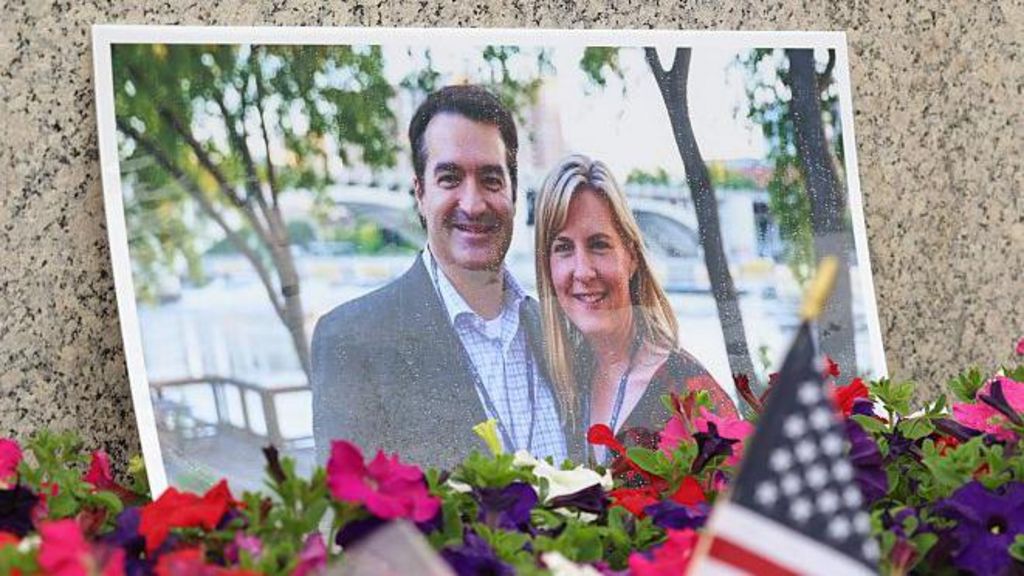
    The cancellation came in response to public comments Chun made in a Substack essay published earlier this year, where he reflected on public and media reactions to the December 2024 Bondi beach shooting. In that attack, two gunmen opened fire on a Jewish festival hosted at the iconic Sydney beach, killing 15 people including prominent Chabad rabbi Eli Schlanger, head of the local Chabad mission which organized the gathering.

    In his essay, Chun argued that the Australian political left had rushed to perform public respectability in the wake of the attack to avoid unfounded accusations of antisemitism, and criticized widespread media framing of the incident. He also publicly called out Schlanger and the Chabad organization for their longstanding support of Israeli military actions and illegal settlements in occupied Palestinian territories.

    In an official statement to the BBC, The University of Queensland, UQP’s parent institution, described Chun’s comments as “abhorrent and hateful to the innocent victims of the attack.” The institution added that it could not overlook or condone the remarks, nor move forward with publication in any way that could be interpreted as institutional endorsement or association with Chun’s views. UQP also expressed regret over the negative impact of the decision on Jazz Money, noting the institution holds deep respect for the award-winning Indigenous author and would welcome the chance to collaborate with her on future projects.

    Separately, New South Wales Police confirmed to the BBC that the force’s Engagement and Hate Crime Unit is leading an investigation into Chun’s social media and Substack post.

    Chun has pushed back against UQP’s decision, arguing on his public Instagram that the institution has failed to identify which specific passages of his political writing violate its internal policies and values, nor has it pointed to any clause in the existing publishing contract that justifies terminating the agreement. He also revealed that he and Money have been aware of UQP’s cancellation decision for several months, long before it became public.

    Money, whose poetry has earned national accolades including the 2025 Kate Challis RAKA Award for Indigenous artists and the Australia Council for the Arts First Nations Emerging Career Award, announced her relationship with UQP is permanently over. In an Instagram post, she warned that the decision to pulp *Bila* sets a dangerous precedent that any book exploring political, urgent or sensitive topics can be targeted for censorship, cancellation and retaliation.

    UQP’s move has prompted widespread backlash from Australia’s literary community, with multiple high-profile writers launching a boycott and severing all existing professional ties with the 76-year-old publisher. Award-winning Indigenous poet Evelyn Araluen said she was extremely disappointed by UQP’s handling of the book, and would terminate all remaining contracts she held with the press. Australian-Palestinian author Randa Abdel-Fattah, who made headlines earlier this year when she was disinvited from a major Adelaide literary festival sparking national outcry, said her upcoming upcoming UQP title *Discipline* will be her first and last book with the publisher. Other prominent writers including Melissa Lucashenko and Natalia Figueroa Barroso have also publicly announced they are ending their partnerships with the press.

    Founded in 1948 as an academic publishing house, UQP has grown into one of Australia’s leading independent publishers, releasing titles across fiction, nonfiction, poetry and children’s literature.