分类: politics

  • Women, children allegedly ‘groomed’ by Australian paid guards on Nauru detention centre, inquiry told

    Women, children allegedly ‘groomed’ by Australian paid guards on Nauru detention centre, inquiry told

    A former detainee at Australia’s offshore detention facility on Nauru has delivered harrowing, unprecedented testimony to a federal Senate inquiry, laying out detailed allegations of systemic grooming, sexual exploitation, and abuse of vulnerable women and children at the hands of government-contracted security guards.

    The witness, identified only as Maryam, who was intercepted while attempting to reach Australia by boat in 2013 and subsequently detained on Nauru, appeared before the Legal and Constitutional Affairs References Committee in Canberra this week to share her account of life inside the controversial camp. Her testimony painted a bleak picture of chronic systemic deprivation that guards deliberately leveraged for their own abusive ends.

    According to Maryam, the facility operated by contractors working under Australian government contracts saw guards build an exploitative ‘trading system’ that coerced detainees into sexual compliance in exchange for basic necessities. Detainees who needed critical items including food, hygiene products, and tobacco were forced to trade sexual favors to access the goods they needed to survive. For children, the manipulation followed a similar pattern: guards offered small treats like lollipops or chewing gum in exchange for hugs or kisses, a pattern of behavior Maryam now recognizes as deliberate grooming.

    ‘Many of us struggled to process what was happening while we lived through it,’ Maryam told the committee. ‘But looking back, it is clear that women and children across the center were being systematically groomed by the very people paid to keep us safe. They used their power over our access to basic needs for their own gratification.’

    Maryam confirmed that the accused guards included both Australian and Nauruan nationals, all of whom were compensated through Australian federal government contracts. Beyond the sexual exploitation, she detailed ongoing neglect that created the conditions for abuse: detainees were forced to wear the same clothing – including undergarments – they arrived in for up to six months, a policy that led to widespread skin infections and other preventable health issues across the camp.

    Shortages of essential goods were not accidental, she argued, but a persistent condition that empowered guards to exploit vulnerable detainees for coercive sexual exchanges. ‘We ended up needing protection from the people who were supposed to protect us,’ she told the inquiry.

    The current inquiry is focused on reviewing Australia’s longstanding offshore refugee processing and resettlement policies, a contentious political framework that has drawn international criticism for decades for poor treatment of asylum seekers. Investigators have been collecting evidence from witnesses and stakeholders over the past several months, and a final report outlining the committee’s findings is scheduled for publication in early June.

  • China invokes rules to blunt US sanctions on ‘teapot’ refiners

    China invokes rules to blunt US sanctions on ‘teapot’ refiners

    In a landmark move marking the first practical deployment of a half-decade-old Chinese counter-sanctions legal framework, Beijing has moved to block the enforcement of United States sanctions targeting five independent Chinese “teapot” oil refiners, including Dalian-headquartered Hengli Petrochemical Refinery, which Washington blacklisted over accusations of violating US restrictions on Iranian crude imports.

    Issued on May 2, the order from China’s Ministry of Commerce relies on the *Rules on Counteracting Unjustified Extraterritorial Application of Foreign Legislation and Other Measures*, widely known as China’s “Blocking Rules.” The ministry formally ruled that all US sanctions measures—including placing the five petrochemical firms on the US Treasury’s Specially Designated Nationals (SDN) list, freezing their assets under US jurisdiction and imposing transaction bans—“shall not be recognized, enforced or complied with” within Chinese territory. The order also bars Chinese domestic companies and financial institutions from participating in the US sanctions regime, though it did not explicitly clarify whether the prohibition extends to Hong Kong, which processes a large share of China-Iran crude oil transactions.

    The five refiners were added to the US SDN list in staggered actions between March 2025 and April 2026: Shandong Shouguang Luqing Petrochemical Co Ltd on March 20, 2025; Shandong Shengxing Chemical Co Ltd on April 16, 2025; Hebei Xinhai Chemical Group Co Ltd on May 8, 2025; Shandong Jincheng Petrochemical Group Co Ltd on October 9, 2025; and Hengli Petrochemical (Dalian) Refinery Co Ltd on April 24, 2026.

    In an April 28 statement, the Office of Foreign Assets Control (OFAC), the US Treasury department’s sanctions enforcement arm, said that beginning in March 2025, it had designated multiple China-based independent refiners that had collectively processed billions of dollars in crude oil originating from Iran, which it claimed ultimately supports the Iranian government. OFAC also issued a formal warning to global financial institutions, noting that the US was prepared to leverage its full range of regulatory authorities and deploy secondary sanctions against any foreign financial institutions that continue to facilitate transactions tied to Iran’s oil sector.

    Chinese policy analysts and state media have framed the first-ever use of the Blocking Rules—originally adopted in January 2021 at the end of US President Donald Trump’s first term—as a measured, principled response to US unilateralism, representing a shift from holding counter-sanctions tools in reserve to active deployment against extraterritorial US pressure.

    Liu Chunsheng, an associate professor of international trade at the Central University of Finance and Economics, told Hong Kong media that the Blocking Rules were activated because the US has repeatedly abused unilateral sanctions and long-arm jurisdiction, acting as a self-appointed global police force that uses sanctions to disrupt legitimate economic and trade activity by Chinese firms. He characterized the US actions as a form of economic and trade bullying designed to coerce other nations into aligning with its policy priorities.

    “The Blocking Rules are a targeted legal mechanism to counter unreasonable external sanctions, protect the legitimate rights of Chinese companies operating overseas, safeguard the stability of global industrial and supply chains, and uphold a fair international economic and trade order,” Liu explained, adding that the move sets a critical precedent for other countries, particularly developing economies, facing similar unilateral pressure from the US.

    Cui Fan, a professor of international trade at the University of International Business of Economics and chief expert at the China Society for World Trade Organization Studies, noted that since 2025, the US has steadily expanded sanctions targeting Chinese refining, shipping and port companies connected to Iranian oil trade, imposing asset freezes and broad transaction bans while rejecting legitimate claims from Chinese firms. He warned that allowing these unilateral measures to go unchallenged would disrupt China’s energy supply chain stability and undermine China’s energy security and core development interests.

    “Against this backdrop, activating the Blocking Rules is a necessary step to safeguard China’s national and corporate interests, while the framework establishes formal institutional mechanisms to protect the lawful rights of Chinese citizens, legal entities and other organizations,” Cui said. He also pointed to the rapid growth of the US SDN list, which now includes roughly 18,900 global entities and individuals, more than 1,100 of which are linked to mainland China and over 400 connected to Hong Kong. Washington’s so-called “50% rule,” which designates any entity directly or indirectly 50% or more owned by a sanctioned party as also blocked, even if not explicitly named, extends sanctions impact to a vast network of affiliated firms across the global economy.

    The escalating sanctions dispute has further strained already tense bilateral relations between Beijing and Washington just two weeks before a scheduled May 13-14 meeting between US President Donald Trump and Chinese President Xi Jinping in China. The two leaders are expected to address a wide range of contentious issues during the summit, including ongoing conflicts in Ukraine and the Middle East, persistent trade frictions, and competing export control regimes.

    The escalation builds on a series of recent US actions targeting Sino-Iranian energy ties: In mid-April, US Treasury Secretary Scott Bessent announced that the US had sent formal warnings to two unnamed Chinese banks, alerting them to potential secondary sanctions if they continued facilitating transactions tied to Iranian oil. On April 24, OFAC added Hengli Petrochemical to the SDN list, calling the refiner one of Iran’s most important crude customers, alongside blacklisting roughly 40 shipping firms and vessels it accuses of being part of Iran’s “shadow fleet” for undocumented oil shipments. Four days later, OFAC issued its broader warning to financial institutions over secondary sanctions risks tied to Chinese independent teapot refiners.

    Adopted in January 2021, the Blocking Rules establish a formal interagency process led by the Ministry of Commerce, working alongside China’s national planning agency and other relevant departments, to assess whether foreign laws and measures constitute improper extraterritorial application. The assessment is based on four core criteria: whether the foreign measure violates international law or foundational norms of international relations; its potential impact on China’s sovereignty, security and development interests; its potential harm to the lawful rights and interests of Chinese individuals and entities; and other relevant contextual factors.

    The framework also includes a formal exemption process: Chinese entities seeking permission to comply with restricted foreign sanctions must submit a written request to the Ministry of Commerce outlining the rationale and scope of the requested compliance, and the ministry issues a decision within 30 days, with accelerated processing for urgent cases. Some independent analysts note that this exemption structure could allow large Chinese banks with global operations and US-based assets to seek approval to comply with US sanctions, while smaller regional Chinese banks can continue processing Iranian oil transaction settlements while absorbing the associated regulatory risk.

    Zhou Chengyang, a Chinese current affairs commentator, told Russian media outlet Sputnik that independent refiners including Hengli are expected to continue settling crude purchases in Chinese renminbi, diversifying settlement channels and combining strategic reserve drawdowns with market-based procurement to maintain stable oil supply operations. The framework for processing these transactions has already been tested in recent years: In 2012, OFAC added China’s Bank of Kunlun to the SDN list for its role in settling Iranian oil trades, which resulted in the bank being expelled from the global SWIFT dollar clearing system. In 2019, OFAC added Bank of Kunlun to its stricter CAPTA sanctions list, which restricts foreign banks from maintaining US correspondent accounts for the institution.

    Chinese state media reports confirm that despite sweeping US sanctions, Bank of Kunlun has continued facilitating Iranian and Russian oil transaction settlements through China’s own Cross-Border Interbank Payment System (CIPS), relying on a barter-style clearing mechanism that offsets payments through matched reciprocal trade flows rather than direct US dollar transfers. Under this structure, Chinese importers and Iranian exporters settle accounts through reciprocal credit arrangements via partner banks, allowing trade to proceed without relying on the US dollar or Western clearing infrastructure.

  • ‘It’s an elite matter’: UAE confirms it’s in talks for swap line loan with US

    ‘It’s an elite matter’: UAE confirms it’s in talks for swap line loan with US

    On a Monday marked by renewed regional volatility following fresh Iranian air strikes against the United Arab Emirates, senior Emirati officials made the first public confirmation that the country is negotiating a currency swap agreement with the United States, framing the arrangement as a marker of membership in an exclusive cohort of US allies rather than a financial lifeline.

    Speaking at the “Make It In The Emirates” manufacturing conference hosted in Abu Dhabi, UAE Trade Minister Thani bin Ahmed al-Zeyoudi clarified the context of the ongoing discussions. “We have this discussion and conversation with many, it’s part of an elite group that the US is having this swap policy with. They are only having it with five countries,” Zeyoudi told attendees. He emphasized that the agreement would not act as a bailout, noting instead that it reflects the deep integration of trade and investment ties between the two nations that have created a practical need for the swap arrangement.

    Zeyoudi’s remarks mark the first on-the-record confirmation of the talks from an Emirati government official, after months of conflicting public statements from both sides of the negotiation. The confirmation comes against a backdrop of heightened military tension across the Persian Gulf: a fragile ceasefire collapsed into uncertainty Monday after Iran launched a wave of missiles and drones targeting the UAE, an attack widely viewed as retaliation for a planned US naval transit through the Strait of Hormuz amid ongoing US-Israel military operations against Iran-linked forces.

    Weeks prior, UAE Ambassador to the US Yousef al-Otaiba pushed back against early speculation that the country was seeking external financial support. In a lengthy post on the social platform X, Otaiba noted the UAE holds roughly $2 trillion in sovereign wealth investments and $300 billion in foreign exchange reserves, stating that “Any suggestion that the UAE requires external financial backing misreads the facts.” He did not, however, explicitly deny that negotiations were underway.

    Former US President Donald Trump first confirmed the existence of talks last month, and US Treasury Secretary Scott Bessent later noted that multiple Gulf states and Asian economies had requested access to US currency swap lines. Zeyoudi’s framing of the potential agreement aligns with Otaiba’s earlier pushback, designed to quell rumors that the UAE’s financial position has weakened amid regional conflict.

    Currency swap lines are traditionally a tool to provide central banks with access to US dollar liquidity during periods of economic distress. Historically, Washington has extended these short-term loan arrangements to two distinct groups: lower and middle-income economies facing financial instability, such as Mexico and Argentina, and large developed economies whose stability is seen as critical to global economic health, including Canada, the United Kingdom and Japan. Even with regional disruptions that have cut the UAE’s oil exports by more than half compared to pre-conflict levels – the country continues to ship crude through the port of Fujairah, which bypasses the blockaded Strait of Hormuz – experts note the wealthy Gulf state does not fit neatly into either existing category.

    Brad Setser, a former US Treasury economist now based at the Council on Foreign Relations, described the UAE’s request as slightly unusual given the substantial reserves held by its central bank and the scale of its sovereign wealth funds.

    Beyond economic considerations, the ongoing negotiations are unfolding alongside major shifts in the UAE’s geopolitical alignment. The country has publicly and privately lobbied Washington to adopt a far more aggressive stance against Iran, a position that puts it at odds with neighboring Saudi Arabia, which has backed Pakistani-led mediation efforts to de-escalate regional tensions. The talks also follow the UAE’s high-profile decision to withdraw from the Saudi-led OPEC oil cartel, a move that some analysts have linked directly to the negotiations with the US.

    Ellen Wald, a senior fellow at the Atlantic Council and author of *Saudi Inc: The Rise and Fall of the World’s Richest Company*, laid out the broader geopolitical hypothesis in a recent LinkedIn post. “It is possible that this break could also be [the] result of some sort of ‘deal’ between [the] UAE and Israel [and the] US, wherein they helped defend the UAE from Iran in exchange for delivering a major blow to Opec, which Trump has long sought,” Wald wrote. She added that she would not be surprised to see a formal defense agreement between the UAE and US announced in the near future.

  • Have any lessons been learned from US failures in the Iran war?

    Have any lessons been learned from US failures in the Iran war?

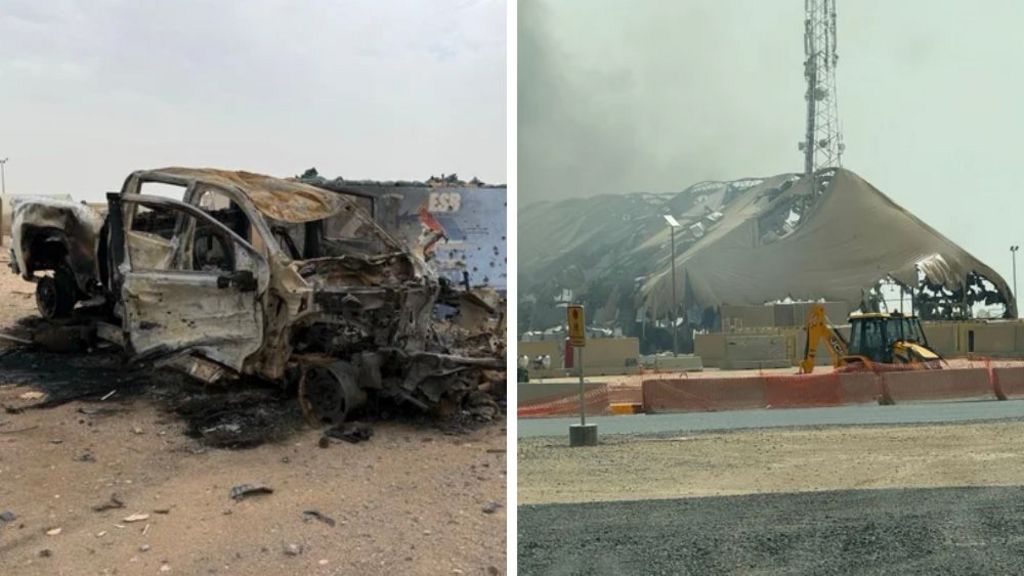
    The 2026 conflict between the United States and Iran has delivered significant tactical wins for U.S. forces, but those gains have come at a steep, underreported cost: a wave of retaliatory Iranian strikes across Middle East bases has inflicted far more damage to critical U.S. military assets than initial disclosures acknowledged. International intelligence assessments and newly analyzed satellite data confirm that between February and March 2026, 16 U.S. military sites across eight Middle Eastern nations were targeted, with several installations suffering damage severe enough to render them non-operational.

    Among the costliest losses are high-value airborne early warning assets that form the backbone of U.S. regional surveillance and battle management. The U.S. Air Force’s E-3 Sentry Airborne Warning and Control System (AWACS), a decades-old but irreplaceable battle management platform built on the retired Boeing 707 airframe, suffered catastrophic losses that have worsened the service’s already shrinking deployable AWACS fleet. When the conflict began, the U.S. only had roughly 10 operational E-3s available for global deployment, as aging airframes have left many unflyable. In a decision now widely criticized as a major strategic mistake, the Pentagon moved the majority of its functional E-3 fleet – six jets to Saudi Arabia’s Prince Sultan Air Base and two to the United Arab Emirates’ Al Dhafra Air Base – to cut loiter time and extend on-station surveillance coverage.

    This forward deployment left the already limited fleet extremely vulnerable. At the time of Iran’s coordinated March strikes, two E-3s were parked on the open tarmac at Prince Sultan, with no hardened aircraft shelters available to protect them – the 30-foot diameter radome mounted on the E-3’s fuselage is too large to fit in existing shelter infrastructure. Supported by geolocation intelligence from Russian and Chinese commercial satellites, including China’s high-resolution TEE-01B operated by Earth Eye (which has 0.5-meter imaging resolution), the Islamic Revolutionary Guard Corps (IRGC) targeted the base between March 13 and 15, the opening window of their retaliatory campaign. One E-3 (serial number 81-0005, manufactured in 1981) was completely destroyed, and a second was damaged beyond economical repair. A top-tier U.S. THAAD AN/TPY-2 radar at Jordan’s Muwaffaq As-Salti Airbase was also destroyed in parallel strikes.

    While open source analysts debate whether the strike was carried out by an IRGC Khaibar-Shekan medium-range ballistic missile – a maneuverable third-generation design with a 550-kilogram warhead – or a modified Shahed drone (the observed blast size aligns closer to a smaller drone warhead), military analysts agree the incident highlights critical avoidable errors by U.S. planners. Many also note the strike carried echoes of Russian strategic retaliation: after the U.S. assisted Ukraine in destroying or damaging four of Russia’s own aging A-50 AWACS fleet between 2024 and 2025, a loss that severely strained Russia’s already limited airborne surveillance capacity, the sharing of targeting intelligence with Iran served as a direct tit-for-tat blow.

    The conflict has also been marked by costly friendly fire incidents and embarrassing surveillance failures that expose critical gaps in U.S. and allied defense integration. On March 1, an Iranian modified F-5 fighter jet, domestically upgraded and renamed the Kowsar, evaded all layered U.S. and Kuwaiti air defenses to strike Camp Buehring, a critical U.S. Army prepositioning base 25 miles from the Iraqi border. Flying at extremely low altitude across the Persian Gulf to avoid radar detection, the Kowsar slipped into Kuwaiti airspace and reached the base in under 40 minutes, where it inflicted massive damage: the base command center and multiple prepositioned equipment warehouses were destroyed, a CH-47 Chinook was lost on the ground, six U.S. soldiers were killed, and nearly 60 more were wounded. The jet successfully returned to Iranian territory without interception.

    Military researchers have hypothesized that radar ducting, an atmospheric phenomenon common over the Persian Gulf that traps radar signals along the surface and creates blind spots for ground-based radar, allowed the Kowsar to evade detection. Iranian forces are already known to have exploited these ducting blind spots in other strikes during the conflict, having studied U.S. Tomahawk cruise missile doctrine for low-altitude penetration that the U.S. itself used extensively against Iranian targets during the four-week conflict. Despite U.S. forces having access to look-down/shoot-down radar technology that can detect low-flying aircraft from above, no early warning was generated, leaving the base completely undefended against the strike. In the aftermath of the incident, the U.S. rushed mobile M-SHORAD air defense systems to Gulf bases to counter similar low-altitude threats, and by May, most of Iran’s Kowsar fleet had been destroyed on the ground by U.S. B-2 and F-35 strikes.

    A day after the Camp Buehring attack, another devastating friendly fire incident unfolded over Kuwaiti airspace that killed no personnel but destroyed three advanced U.S. F-15E fighter jets. A Kuwaiti Air Force F/A-18C Hornet pilot engaged the three F-15Es, shooting all three down in a 30-second engagement using AIM-9M Sidewinder infrared homing missiles. Because F-15E variants do not carry infrared missile warning systems, the U.S. aircrews received no alert of the incoming attack, though military analysts note even with warning, evading the short-range missiles would have been extremely difficult. All three U.S. pilots ejected and were safely rescued.

    Investigations into the incident found the Kuwaiti pilot misidentified the F-15Es as Iranian Kowsar jets, which had carried out the Camp Buehring strike just 24 hours earlier. The incident has raised major questions about allied identification friend or foe (IFF) protocols: while both U.S. and Kuwaiti forces use encrypted Mode 5 IFF systems that should prevent friendly engagements, analysts believe heavy electronic jamming across the theater either disabled IFF on the Kuwaiti jet or distorted the signal, leading the F/A-18’s radar to classify the U.S. jets as hostile. The pilot also failed to follow established rules of engagement by firing without requesting ground control clearance, a procedural failure that compounded the technical error.

    Looking across the first months of the conflict, defense analysts including former U.S. Deputy Under Secretary of Defense Stephen Bryen, the author of this analysis, note that while the U.S. has achieved broad strategic objectives against Iran, the series of avoidable blunders exposes critical gaps in planning. Iran has proven far more tactically resourceful than many U.S. planners anticipated, and the consistent provision of intelligence and material support from Russia and China – which continues throughout the conflict – has amplified the impact of Iranian strikes. The question now facing U.S. defense leadership is whether the hard-won lessons from these losses will be integrated into future strategic planning, or if they will be overlooked as the U.S. focuses on its successes in the campaign.

  • Trump team denies Iran hit US warship entering Hormuz Strait

    Trump team denies Iran hit US warship entering Hormuz Strait

    Tensions between the United States and Iran have spiked dramatically this week after Iranian state media claimed Tehran’s forces struck a U.S. Navy warship entering the Strait of Hormuz without authorization, a claim immediately and categorically rejected by the Trump administration.

    The standoff traces back to an announcement over the weekend from former President Donald Trump, who unveiled what the U.S. calls “Project Freedom” – an initiative under which the U.S. Navy would provide armed escort for commercial vessels transiting the strategic waterway. Iranian officials swiftly pushed back against the move, framing it as a deliberate provocation designed to draw Tehran into retaliatory action that would justify further escalation. Iranian military leaders pledged that any vessel attempting to pass through the strait without explicit Iranian approval would be intercepted immediately.

    On Monday morning, Iran’s Fars News Agency, an outlet closely tied to the Islamic Revolutionary Guard Corps (IRGC), reported that such an interception had already escalated to an attack. Citing unnamed local sources, the agency said two missiles had struck a U.S. Navy frigate that had violated transit security protocols off the coast of Jask, after the vessel ignored repeated warnings from the Iranian Navy. The report claimed the strike disabled the warship, forcing it to retreat from the area and abandon its attempt to traverse the strait.

    A senior Iranian official later told Reuters that it remained unclear how much damage the vessel had sustained, if any. Separately, Iran’s Tasnim News Agency released a statement from the Iranian army’s public affairs division claiming that Iranian naval forces had successfully prevented “enemy American-Zionist destroyers” from entering the Strait of Hormuz region through swift, decisive action.

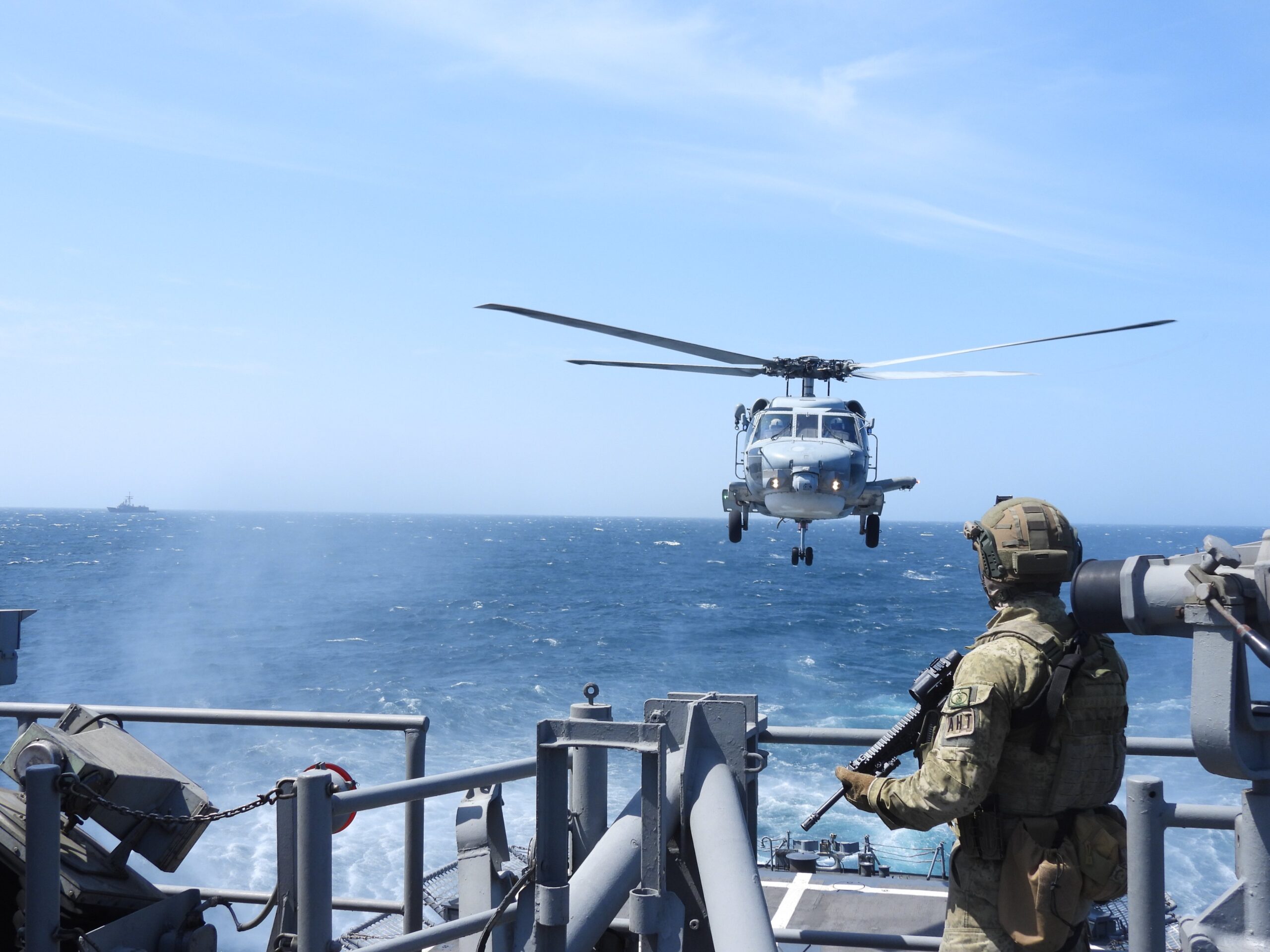
    U.S. Central Command (CENTCOM) moved within hours to debunk the Iranian claims, publishing an official fact-check across its social media channels. The command explicitly refuted the assertion that the IRGC had struck a U.S. warship with two missiles, stating flatly: “No U.S. Navy ships have been struck.” CENTCOM added that U.S. forces continue to operate in support of Project Freedom and uphold an existing naval blockade on Iranian ports, noting that U.S. guided-missile destroyers recently transited the Strait of Hormuz to operate in the Persian Gulf, and are actively facilitating safe passage for commercial shipping. As an initial milestone, the command said two U.S.-flagged merchant vessels had already successfully transited the waterway and are continuing their voyages safely.

    The strategic Strait of Hormuz, which carries roughly 20 percent of the world’s seaborne oil shipments, has been the focal point of a high-stakes standoff between Iran and the U.S.-led bloc since Iran moved to restrict access for unauthorized vessels in retaliation for a U.S.-Israeli military campaign launched in late February. The restrictions have already roiled global energy markets, pushing global oil prices sharply higher, driving average U.S. gasoline prices above $4 per gallon, and adding new inflationary pressure to economies worldwide.

    Independent verification of both sides’ competing claims remains elusive. Open-source marine tracking analysts have noted that public tracking data does not show the two U.S.-flagged merchant vessels transiting the strait on Monday, though the vessels could have disabled their tracking systems to conceal their movement.

    Critics have called into question the credibility of the Trump administration’s denial, pointing to a pattern of misleading statements from past U.S. military encounters in the region. Matt Duss, a former foreign policy advisor to U.S. Senator Bernie Sanders, warned the public to approach the administration’s claims with deep skepticism, citing a repeated pattern of immediate denials that are later walked back as damaging information emerges slowly over time, after public attention has shifted.

    As a prominent example, Duss noted that after the first Trump administration assassinated IRGC General Qassem Soleimani in 2020, Trump initially claimed Iranian retaliatory strikes on Iraq’s Al Asad Air Base, a U.S. military installation, caused zero American casualties. In the weeks that followed, declassified Pentagon information confirmed more than 100 U.S. troops had suffered traumatic brain injuries from the attacks. More recently, Duss added, CENTCOM initially denied Iranian claims to have shot down a U.S. fighter jet in early April, claiming “all aircraft are accounted for” – even as one aircraft had indeed been downed, requiring a multi-day covert operation to rescue two pilots from Iranian territory.

  • Pulitzers honor damning coverage of Trump and his policies

    Pulitzers honor damning coverage of Trump and his policies

    The 2025 Pulitzer Prizes, announced Monday by Columbia University’s award committee, have cemented a clear stand in defense of independent journalism, with the majority of top honors going to outlets that published searing, in-depth investigations into the policies and actions of the second Donald Trump administration.

    Ahead of revealing the year’s winners, Pulitzer Administrator Marjorie Miller opened the announcement with a firm rebuke of growing threats to press freedom under the current U.S. presidency, saying: “We stand for civil discourse and against censorship. Unfortunately, this bears repeating now, as media access to the White House and Pentagon is restricted, free speech is challenged in the streets, and the President of the United States has filed lawsuits for billions of dollars for defamation and malice against multiple print and broadcast media.”

    The most prestigious award, the Pulitzer Prize for Public Service, went to *The Washington Post* for its exhaustive reporting on Trump’s chaotic overhaul of the U.S. federal bureaucracy. Miller noted that the outlet’s coverage laid out in rich detail both the direct human toll of widespread staffing cuts and the long-term structural consequences of the reshuffle for the entire country.

    *The New York Times* took home the prize for Investigative Reporting for its explosive series exposing how Trump leveraged the power of the presidency to unlock lucrative business opportunities, lining the pockets of his immediate family and close political allies. The reporting detailed how members of Trump’s inner circle profited from their connections to wealthy Gulf monarchies and controversial forays into the cryptocurrency market.

    In the Local Reporting category, *The Chicago Tribune* earned recognition for what the committee called vivid, muscular prose documenting a siege-like incursion of federal immigration agents into the Midwestern city, carried out as part of the Trump administration’s hardline crackdown on undocumented migration. A second Local Reporting prize was awarded to the Connecticut Mirror and ProPublica for an investigation into predatory, unregulated vehicle towing practices across the state.

    Beyond the awards focused on the Trump administration, the committee issued a special posthumous and long-overdue citation to Miami Herald reporter Julie K. Brown for her groundbreaking 2017 and 2018 reporting on convicted sex offender Jeffrey Epstein. Miller explained that Brown’s *Perversion of Justice* series, published nearly a decade before Epstein’s 2019 arrest on federal sex trafficking charges, first revealed how politically connected prosecutors had shielded Epstein from serious prosecution when he was first accused of abusing dozens of underage young women.

    *The New York Times* also won the Breaking News Photography prize for Saher Alghorra’s haunting, sensitive collection of images capturing mass devastation and widespread starvation in Gaza amid the ongoing Israel-Hamas war. Reuters took home the National Reporting prize for its rigorous investigation into how Trump has expanded executive power to exact political vengeance on perceived opponents, aided by hardline supporters within his administration. The Associated Press won the International Reporting category for its exposé of how the U.S. government allowed American tech firms to sell sensitive surveillance technology to China.

    Other major reporting honors went to the *San Francisco Chronicle*, which won the Explanatory Reporting prize for its series examining the aftermath of Southern California wildfires, documenting how major insurance companies routinely undervalued destroyed properties, wrongfully denied homeowners’ claims, and stalled rebuilding efforts for thousands of disaster survivors. Reuters also earned the Beat Reporting prize for its inventive and revelatory work exposing how Meta Platforms knowingly allowed widespread scams and AI-driven manipulation to run rampant across its Facebook and Instagram platforms, putting users at risk.

    The Breaking News Reporting prize went to the *Minnesota Star Tribune* for its comprehensive, community-focused coverage of a mass shooting at a back-to-school gathering at a Catholic school in the state, which left two children dead and 17 others wounded. The outlet’s coverage put a spotlight on the persistent prevalence of gun violence across the United States and the ongoing failures of policy efforts to curb it. The Feature Writing prize went to Aaron Parsley of *Texas Monthly* for his intimate, devastating personal account of the Central Texas floods that destroyed his family home and killed his nephew.

    In the arts categories, Bess Wohl’s play *Liberation* won the Pulitzer Prize for Drama, Jill Lepore’s *We the People* took the prize for History, and Amanda Vaill’s *Pride and Pleasure* was awarded the Pulitzer for Biography. Overseen by Columbia University, the Pulitzer Prizes remain the most prestigious award for American journalism and the arts, with this year’s winners drawing a clear line between independent investigative work and the growing threats to press freedom under the current administration.

  • Alberta separatists submit petition for independence referendum

    Alberta separatists submit petition for independence referendum

    A years-long movement pushing for Alberta’s separation from Canada reached a pivotal milestone this week, as organizers of the citizen-led initiative formally submitted a petition calling for a fall independence referendum — only to see their progress halted by a court challenge from Indigenous First Nations groups.

    Led by the grassroots group Stay Free Alberta, the petition drive required a minimum of 178,000 signatures, equal to 10% of the province’s eligible voters, to qualify for a public vote. In a press conference outside Edmonton’s election office Monday, group leader Mitch Sylvestre announced organizers had collected more than 300,000 signatures, far exceeding the threshold. Calling the moment a historic turning point for the separatist cause, Sylvestre framed the campaign’s progress as advancing to the final stage of a high-stakes political process, comparing it to reaching the championship round of the Stanley Cup hockey tournament.

    The separatist movement in Alberta draws its core support from long-held grievances of western alienation, a sentiment shared by many residents who argue the province’s economic and political interests are consistently sidelined by federal decision-makers in Ottawa. Frustration has boiled over in recent years particularly over federal climate policy, which many Albertans blame for restricting growth of the province’s lucrative oil and gas industry, especially under the current Liberal federal government. Once relegated to the political fringe, the movement has gained traction over the past 12 months, pushing the once-remote possibility of a national unity crisis into the mainstream of Canadian political discourse.

    Despite the milestone for pro-separation organizers, their path forward is now blocked by a legal challenge launched by multiple First Nations communities, including the Athabasca Chipewyan First Nation, who argue that an independent Alberta would violate the constitutionally protected treaty rights their communities signed with the British Crown more than a century before the formation of modern Canada. According to Kevin Hille, legal counsel for the First Nation group, an international border created by separation would fundamentally alter treaty access and the community’s traditional way of life, and full independence would effectively sever the binding treaty agreements between Indigenous communities and the Canadian state.

    Hille pointed to a December 2025 ruling by an Alberta court that already found an independence referendum would be unlawful because it infringes on First Nations constitutional rights. Since that ruling, the provincial government has amended local laws to remove the requirement that citizen-initiated referendums align with the Canadian constitution, and allowed the petition process to move forward. The current court case will decide whether the original December ruling still stands despite the legislative change. A final decision on the challenge is expected by the end of May. If the First Nations challenge succeeds, only a referendum proposed directly by the provincial government could move forward, effectively ending the current citizen-led initiative. A court has already paused the official signature verification process while it considers the case.

    If the petition is ultimately approved and signatures verified, Albertans will head to the polls as early as October 19 to vote on the question: “Do you agree that the Province of Alberta should cease to be part of Canada to become an independent state?”

    Public opinion polling suggests separation still lacks majority support among Albertans. A February 2026 survey by Canadian polling firm Abacus Data found that roughly 25% of residents support independence, while a majority remain opposed to splitting from Canada. A counter-petition organized by anti-separation activists calling “Forever Canadian” has already collected more than 450,000 signatures, and is currently under review by a provincial legislative committee to qualify for a separate public vote.

    Proponents of separation argue that independence would allow Alberta to unlock the full economic potential of its vast natural resource reserves and keep all revenue generated by the province’s energy sector. The movement has also drawn international attention: organizers confirmed earlier this year that they held meetings with officials from the U.S. Trump administration to discuss a feasibility study for a potential $500 billion line of credit in the event of separation, though they stressed they have not requested direct funding from the U.S. government.

  • Trump’s Hormuz ‘protection’ seeks ‘pretext for escalation’: Iran

    Trump’s Hormuz ‘protection’ seeks ‘pretext for escalation’: Iran

    Tensions have escalated sharply in the Persian Gulf after former U.S. President Donald Trump unveiled a new U.S. military-led initiative to escort stranded commercial vessels through the closed Strait of Hormuz, a move Iranian officials have decried as a deliberate provocation designed to trigger conflict and justify expanded military aggression against the Islamic Republic.

    The plan, branded “Project Freedom” and scheduled to launch Monday, was first announced by Trump on his social media platform Truth Social, and later confirmed by U.S. Central Command (CENTCOM). In his announcement, Trump framed the operation as a humanitarian gesture, stating his administration had notified nations with ships trapped in the key waterway that U.S. forces would safely guide vessels out of Iranian restricted areas so they could resume commercial activity. CENTCOM later released detailed force deployments for the mission: it will include guided-missile destroyers, more than 100 land and sea-based aircraft, multi-domain unmanned surveillance and combat systems, and a contingent of 15,000 active-duty service members. The command also noted the operation will be backed by a new cross-agency international coordination framework called the Maritime Freedom Construct, which pairs diplomatic outreach with military coordination to bolster maritime security in the strait.

    Iran, which closed the strategically critical strait in response to the U.S.-Israeli war and the Trump administration’s naval blockade of the country, has issued a firm, unified rejection of the plan. An anonymous senior Iranian official told independent outlet Drop Site that Trump’s proposal is engineered to goad Iran into firing the first shot, creating a false pretext for military escalation. The official stressed that any commercial vessel attempting to traverse restricted transit routes without prior coordination with Iranian authorities will be intercepted immediately by Iranian security forces. Should U.S. military vessels intervene to disrupt these interceptions, the official added, Iran will respond with immediate, proportional force. The official also noted that U.S. warships are currently positioned far from the restricted transit corridor, meaning Iran would engage non-compliant commercial vessels long before they could reach American assets, accusing Trump of leveraging civilian ships as political pawns in his domestic and geopolitical agenda.

    Ebrahim Azizi, chair of the Iranian Parliament’s national security commission, echoed the criticism, warning that any U.S. interference in Iran’s new maritime regulatory framework for the Strait of Hormuz constitutes a direct violation of the ceasefire brokered earlier this April. He dismissed Trump’s initiative outright, stating that the strategically vital waterway cannot be governed by “delusional posts” on social media.

    The escalation over the strait comes as both sides navigate fragile, indirect negotiations to end the three-month-long war. Iranian Foreign Ministry spokesperson Esmaeil Baghaei confirmed Sunday that Tehran is currently reviewing the U.S. government’s response to Iran’s 14-point peace proposal, which was shared via Pakistani intermediation. Baghaei clarified that the proposal is exclusively focused on ending immediate hostilities, and that no nuclear-related negotiations are currently underway, despite repeated claims from Trump and U.S. Defense Secretary Pete Hegseth that halting Iran’s purported nuclear weapons program is a core U.S. war aim. Iran has long denied pursuing nuclear weapons, and U.S. intelligence assessments have repeatedly concluded Iran does not maintain an active nuclear weapons program as described by U.S. officials. Trump has already cast doubt on the proposal’s viability, writing on social media Saturday that he cannot imagine the plan being acceptable, claiming Iran has not paid a sufficient price for its actions over the past 47 years.

    The exact details of the 14-point proposal remain publicly unconfirmed, but foreign policy analysts have offered preliminary assessments. Trita Parsi, executive vice president of the Quincy Institute for Responsible Statecraft, argued Sunday that the proposal represents an unstated push for a broad grand bargain to resolve the 47-year history of U.S.-Iran hostility, rather than just a temporary ceasefire. Parsi noted the plan implicitly calls for both sides to restrain their regional proxies, including Israel and Hezbollah, an approach that could align with Trump’s known negotiating instincts.

    Domestically, the war has become a growing political liability for Trump. A new ABC News/Washington Post/Ipsos poll released Friday found that 61% of U.S. voters view Trump’s decision to launch the war as a mistake, while 66% disapprove of his handling of the conflict. The poll also recorded Trump’s lowest presidential approval rating to date.

    Analysts have noted that Iran’s current strategy, which includes closing the Strait of Hormuz to disrupt global energy and commodity trade, aligns directly with a long-documented asymmetric warfare doctrine developed by Iran’s military leadership. Archival footage from the 1990s, recently shared online by journalist Séamus Malekafzali, featured late Iranian Revolutionary Guard Corps commander Hossein Salami — who was killed in a U.S.-Israeli strike last year — outlining the doctrine for IRGC staff. Salami argued that while direct conflict with the U.S. is possible, victory is achievable if Iran can shift fighting to terrain that neutralizes U.S. military advantages and exploits U.S. weaknesses. Geopolitical analysts paraphrase the doctrine as focusing on drawing out conflict to raise economic costs and fuel domestic political turmoil in the U.S., eroding its political will to sustain military engagement.

    This approach is already visible in the closure of the Strait of Hormuz, a waterway that carries roughly 25% of global seaborne oil trade and one-third of the world’s seaborne fertilizer trade annually. Harrison Mann, a fellow with the advocacy group Win Without War, explained the dynamic during a Sunday CNN appearance, noting that Iran is able to inflict meaningful economic pain on the U.S. and its allies through this form of economic warfare, a pressure campaign that will be unsustainable for Trump over the long term.

    Project Freedom has drawn immediate backing from hardline U.S. Iran war supporters, including South Carolina Senator Lindsey Graham, a leading Republican advocate for military action against Tehran. Graham said he fully endorses Trump’s decision, stating that while he supports a diplomatic end to the conflict, it is past time to reestablish freedom of navigation in the strait and respond forcefully to Iran if it continues what Graham described as “terrorizing the world.”

  • ‘Elephant in the room’ Trump looms over European attempt at unity

    ‘Elephant in the room’ Trump looms over European attempt at unity

    The shadow of U.S. President Donald Trump hung heavily over this week’s European Political Community (EPC) summit in Yerevan, Armenia, even as leaders stopped short of naming him directly during closed and open discussions. For attendees at the gathering, which brought together dozens of heads of state and government from across the continent, growing American disengagement from European security was the unmissable issue driving urgent talks of European strategic self-reliance.

    Addressing delegates on the opening day of the summit, French President Emmanuel Macron framed Europe’s decades-long over-dependence on Washington’s security guarantees as the “elephant in the room” that leaders could no longer afford to ignore. The gathering, which is structured as a less formal alternative to rigid institutional EU summits, was convened to address three core priorities: strengthening energy security across the continent, defending democratic institutions, and sustaining military and economic support for Ukraine amid its third year of defending against Russia’s full-scale invasion.

    The summit also marked a milestone for host nation Armenia, which will hold its first ever formal direct negotiation session with the European Union on Tuesday, a step that underscores the country’s accelerating westward political alignment. The move has already drawn sharp criticism from neighboring Russia, which has long viewed the South Caucasus nation as part of its traditional sphere of influence.

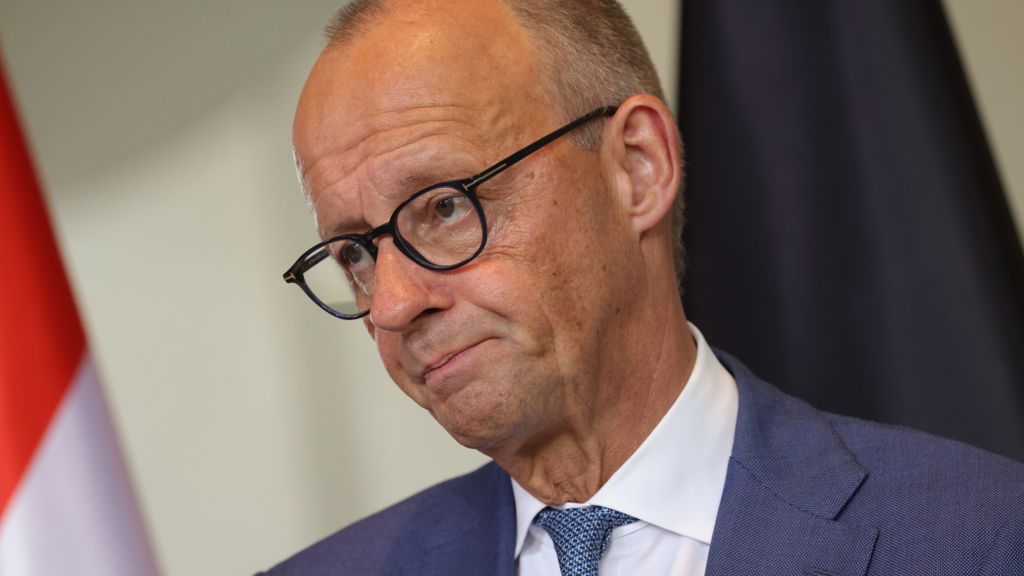
    Recent policy moves from the Trump White House have amplified the urgency of European calls for greater defense autonomy. Trump’s recent announcement that he will withdraw 5,000 U.S. troops and long-range deterrent missiles from bases in Germany — missiles deployed by predecessor Joe Biden explicitly to counter potential Russian aggression — has deepened European concerns about Washington’s commitment to regional security. Tensions rose further after German Chancellor Friedrich Merz, who was unable to attend the Yerevan summit, publicly criticized Trump’s military campaign against Iran as strategically unmoored. Trump hit back, dismissing Merz as ineffective, and German officials have since scrambled to de-escalate the public rift.

    NATO Secretary General Mark Rutte, who has long pursued a strategy of diplomatic outreach to Trump, acknowledged that alliance leaders are well aware of the U.S. president’s longstanding frustration with European defense spending levels, which he has repeatedly criticized as insufficient. “We have heard his frustrations,” Rutte told reporters on the sidelines of the summit.

    Beyond frictions with Washington, European leaders also confront a cascade of overlapping global challenges that threaten regional stability. The ongoing military conflict between the U.S.-Israel bloc and Iran, and the subsequent disruption to global oil supplies through the Strait of Hormuz, has sent ongoing economic ripples across Europe that continue to strain energy markets and economic growth. Meanwhile, the war in Ukraine grinds on, with Ukrainian President Volodymyr Zelensky using his address to the summit to urge allies to maintain unwavering pressure on the Kremlin ahead of a key decision point this summer.

    “This summer will be a moment when Vladimir Putin decides what to do next,” Zelensky told delegates. “We must push him toward diplomacy. Russia can’t afford new military equipment, which makes clear they are not as strong as they once projected to be.”

    The summit also signaled a notable shift in post-Brexit relations between the United Kingdom and the European Union, under new UK Prime Minister Keir Starmer. Starmer, who acknowledged that European alliances “are not where we want them to be” in comments widely interpreted as a reference to shifting U.S. policy, again called on European nations to accelerate efforts to strengthen their own defense capabilities. He has also made little secret of his ambition to deepen cooperation and even policy alignment with the bloc, a sharp break from the hardline Eurosceptic approach of his recent predecessors.

    Currently, the UK is in active negotiations to join an EU-led €90 billion (£78 billion) loan framework designed to provide long-term economic and military support to Ukraine. The UK has been one of Ukraine’s most steadfast allies since Russia’s 2022 invasion, but the move marks a growing shift toward coordinating that support through European institutional frameworks. Starmer defended the negotiations, noting that the agreement would deliver tangible benefits to both Kyiv and British workers. “It’s of great benefit to Ukraine, but also the jobs it’ll create in the United Kingdom,” he said. He declined to comment on media reports that the EU is demanding the UK pay roughly £1 billion ($1.3 billion) annually as part of a broader reset in bilateral relations, a demand that aligns with longstanding expert arguments that the UK must pay for access to European single market benefits.

    Experts and leaders alike acknowledge that forging genuine European strategic autonomy — freeing the continent from dependence on U.S. military power and the potential political leverage that comes with it — will be a decades-long project. For now, the bloc’s core hope is that incremental progress on developing independent European military capabilities will ease Trump’s frustrations, and keep Washington at least partially aligned with European interests as the continent confronts a growing array of interconnected security and economic challenges.

  • India’s Modi celebrates ‘record’ win in opposition-held West Bengal

    India’s Modi celebrates ‘record’ win in opposition-held West Bengal

    In a landmark political shake-up that has reshaped India’s regional electoral map, Prime Minister Narendra Modi’s Bharatiya Janata Party (BJP) secured a historic first-ever majority win in West Bengal, a state long held as an unassailable stronghold of the regional opposition All India Trinamool Congress (TMC). The final results from India’s multi-phase April-May state and territorial elections, announced Monday, delivered a series of seismic shifts across five jurisdictions, with far-reaching implications for national politics ahead of the 2029 general election.

    With vote counting completed under heavy security deployment in West Bengal, a state home to more than 100 million people, the Election Commission of India confirmed the BJP won 206 of the 294 legislative assembly seats — a record-breaking outcome that ends TMC’s 14-year consecutive rule of the state. Beyond West Bengal, the BJP also secured its third consecutive term in power in the northeastern state of Assam, and earned a place in the ruling governing coalition in the small coastal union territory of Puducherry.

    For Prime Minister Modi, 75, the surprise breakthrough in West Bengal comes as a major political boost as he navigates pressing domestic economic challenges and complex foreign policy priorities, including persistently high national unemployment and a pending bilateral trade deal with the United States, ahead of the 2029 national general election.

    Taking to social media to address the win, Modi framed the result as a victory for popular mandate and performance-focused governance. “The 2026 West Bengal Assembly Elections will be remembered forever,” he wrote. “People’s power has prevailed and BJP’s politics of good governance has triumphed. BJP’s record win in West Bengal would not be possible without the efforts and struggles of countless Karyakartas (workers) over generations.”

    Thousands of party workers and supporters poured onto the streets of Kolkata, West Bengal’s capital, to celebrate the historic win, dancing to pro-party victory anthems amid widespread jubilation. The BJP had waged an aggressive year-long campaign to unseat TMC leader Mamata Banerjee, the 71-year-old firebrand incumbent who had held power in the state since 2011. The campaign was marred by controversy over the removal of millions of names from state voter rolls: officials framed the purge as a necessary step to remove ineligible, duplicate voters, but critics argued the process disproportionately targeted marginalized and minority communities, skewing the electorate in the BJP’s favor.

    Banerjee, who herself lost her longtime Bhabanipur constituency seat to BJP candidate Suvendu Adhikari by a margin of more than 15,000 votes, levelled serious allegations of electoral misconduct against the BJP and the national election body. A visibly emotional Banerjee told reporters in Kolkata, “BJP looted more than 100 seats. The Election Commission is the BJP’s commission,” before adding she would regroup and “bounce back” in future contests.

    Political analysts note the West Bengal win will significantly consolidate the BJP’s control across eastern India, cementing its status as India’s undisputed national dominant party. “It’s a tremendous victory,” said Sushila Ramaswamy, a veteran political analyst, in an interview with AFP. “It also shows the electoral machinery of the BJP, how effective and how much detailing goes into their election campaign. And it establishes the BJP as the dominant party in the country.”

    Addressing supporters and party members in the national capital Delhi, Modi called for calm and unity across all election regions, rejecting calls for retaliation against political opponents. “Today, when the BJP has won, the talk should not be of ‘revenge’, but of ‘change’,” he said. “Not of fear, but of the future.”

    The election cycle delivered another major upset in the southern industrial state of Tamil Nadu, where veteran chief minister MK Stalin, leader of the ruling Dravida Munnetra Kazhagam (DMK), lost his longtime Kolathur constituency seat to a little-known candidate from a newly launched political party. The debutant party, Tamilaga Vettri Kazhagam (TVK), was founded in 2024 by C. Joseph Vijay, one of Tamil cinema’s most commercially successful A-list actors, who ran on a platform prioritizing youth employment and transparent governance. TVK defeated the incumbent DMK to win a majority in the state, leaving Stalin’s party a distant second.

    Political scientist Ramu Manivanan said the Tamil Nadu result reflects growing demand for new political leadership among the state’s large youth electorate, rather than just general anti-incumbency sentiment. “This result shows that the youth want a new face. It is not just anti-incumbency,” Manivanan explained. “Vijay as an actor has a large female fan base as a cinema star. All that has influenced the outcome.”

    In the southern coastal state of Kerala, the final remaining Communist-led government in India was voted out of power after two consecutive five-year terms. A Congress party-led alliance defeated the incumbent Left Democratic Front, earning a clear governing majority. Congress leader Rahul Gandhi thanked Kerala’s voters for what he called a “truly decisive mandate” in the wake of the result.