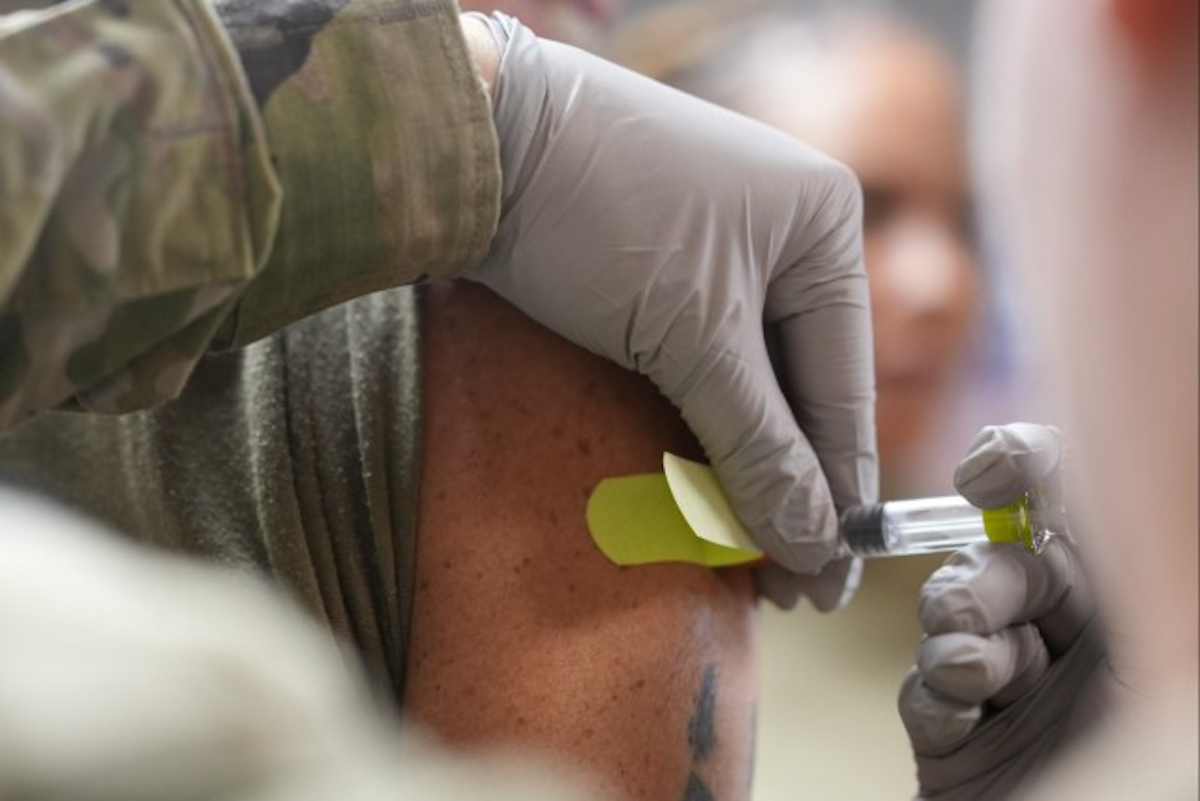
In the first week of May 2026, as China’s People’s Liberation Army (PLA) carried forward its long-standing annual routine of large-scale immunization drills with little public fanfare, U.S. Defense Secretary Pete Hegseth made a landmark policy announcement: American service members would no longer face a mandatory requirement to receive the seasonal influenza vaccine. This shift ends a policy that had remained almost continuously in place across the U.S. military since 1945.
On the surface, this change appears to be nothing more than a narrow adjustment to military administrative rules. But when contrasted with the PLA’s consistent approach to force health protection, the decision reveals a far deeper ideological split over the boundary between an individual service member’s personal autonomy and the collective requirements of national military power.
Formally signed into effect on April 21, the new U.S. policy reclassifies seasonal flu vaccination as a voluntary choice for all active-duty personnel, reserve troops, and civilian employees working for the Department of Defense. Mandatory vaccine requirements remain in place for other illnesses including measles, mumps, and polio. The Biden administration’s official justifications for the change center on expanding individual medical autonomy and upholding religious freedom for service members.
In sharp contrast, the PLA frames routine universal immunization as a standard, unremarkable component of force readiness protection. For Chinese military planners, immunization follows the same logic as mandatory physical fitness testing: it is a core operational requirement, not a personal medical decision left to individual preference.
This contrast is not a simple case of a democratic vs. authoritarian divide, as the original analysis points out. Multiple Western-aligned militaries around the world, from the Singapore Armed Forces to the Israel Defense Forces and the British Armed Forces, maintain non-negotiable mandatory vaccine schedules without being labeled illiberal or anti-democratic.
What makes the new U.S. stance unprecedented among modern great power defense policies is its core framing: it treats a service member’s immune system as, by default, an individual’s private sphere, separate from military operational requirements.
Setting aside the ideological debate, all military institutions must confront one unavoidable practical question: can a contagious respiratory virus, which spreads rapidly in the close-quarters environments shared barracks, berthing areas on warships, and military training camps, be effectively managed if prevention is left to individual personal choice?
History offers an unforgiving answer to this question. During World War I, approximately 45,000 U.S. military personnel died from influenza complications. For the vast majority of modern military history, infectious disease has killed more service members than direct combat engagement. Among new military recruits, who live in extremely dense group quarters, flu hospitalization rates are roughly 10 times higher than rates among the broader military population. A flu outbreak on a submarine deployed at sea or at a remote forward operating base is far more than a personal inconvenience: it is a direct threat to the unit’s ability to complete its assigned mission.
Chinese military planners, whose force is increasingly oriented toward expeditionary operations and long-duration naval deployments far from home ports, have fully internalized this historical lesson with no ambivalence. The United States, which originally helped develop the modern global playbook for military force health protection, is now conducting a live, real-world experiment to test whether voluntary vaccine uptake can achieve the same high levels of coverage that mandatory mandates have long delivered.
Public health researchers have long warned that mandatory requirements are the most reliable tool to reach the herd immunity thresholds needed to stop outbreaks in closed, congregate populations like military bases. If voluntary uptake leads to a meaningful drop in flu vaccination rates among U.S. service members, the PLA will gain a small but measurable advantage in operational readiness during peak respiratory virus seasons — an advantage gained without any military confrontation or public diplomatic statement.
Beyond operational readiness, the policy shift carries a less obvious cultural cost for the U.S. military. When top Pentagon leadership frames a decades-old preventive public health measure as “overly broad and not rational,” it signals to the entire force that readiness-focused medical policy is open to negotiation and shaped by ideological conflict. This ripple effect will not stay limited to influenza vaccination. Commanders preparing for potential exposure to anthrax, new pandemic virus variants, or engineered biological weapons will now operate in a changed environment, where troops can reasonably question why one vaccine is mandatory when a different routine vaccine was made voluntary just a year earlier. Adversaries that invest in biological warfare capabilities closely track these kinds of cultural shifts in military policy.
The PLA’s approach faces its own set of tradeoffs, the analysis notes. Its culture of rigid compliance guarantees high vaccination coverage, but it gives up the legitimacy dividend that comes from persuading service members of the value of immunization, rather than simply ordering it. Troops who accept vaccination because they understand how it protects both themselves and their unit are more resilient partners during long-term campaigns than troops who only comply because refusal is not permitted. A military that cannot distinguish between informed consent and blind obedience will struggle to improvise during high-stress operations, particularly in joint missions with allied forces that expect troops to participate with full, informed understanding of operational requirements.
Neither the U.S. nor the Chinese model is clearly optimal, the author argues. Instead of caricaturing one another’s approaches, defense establishments on both sides could gain useful insights from each other’s frameworks. A more effective, mission-aligned vaccine doctrine would start with one single question for every immunization requirement: does this vaccine directly protect operational deployability and reduce preventable disruption to military missions?
If the answer is yes, the policy should be defended as a core readiness measure, not pulled into broader cultural and ideological political battles. Under this targeted doctrine, influenza vaccination would remain mandatory in settings where the operational case for it is strongest: recruit training camps, warships, submarines, aviation units, military medical facilities, rapid-deployment response forces, and troops assigned to overseas missions. In lower-risk settings, vaccination could be strongly encouraged without being universally mandated. Medical exemptions would still be available, but they would be tied to operational risk assessments rather than ideological or identity-based claims.
This balanced approach would preserve the PLA’s strength in operational discipline while integrating the Western insight that institutional legitimacy itself acts as a force multiplier for military readiness. It would also pull the U.S. policy debate out of the unproductive binary choice between universal mandatory mandates and unrestricted individual opt-outs modeled on consumer choice.
A single flu shot is a routine, low-stakes medical procedure. But the policy that governs it carries profound meaning. It encodes how a nation-state understands the fundamental relationship between the individual service member and the collective military mission, between personal conscience and unit cohesion, between individual freedom and the requirements of national defense.
Today, China and the United States are conducting parallel, contrasting experiments on how to balance these core priorities. The results of these experiments will not show up in official press releases or diplomatic statements. They will appear in sick call rosters, delayed deployment timelines, and the quiet, unpublicized metrics that measure military readiness. Military planners have relearned the same lesson in every generation since the 1918 influenza pandemic: infectious disease does not stop being an operational threat just because policy chooses to frame it as a personal matter. Whichever military remembers this lesson most clearly, and translates it into a doctrine that its own troops actually believe in, will gain a strategic advantage that no amount of defense procurement spending can buy.