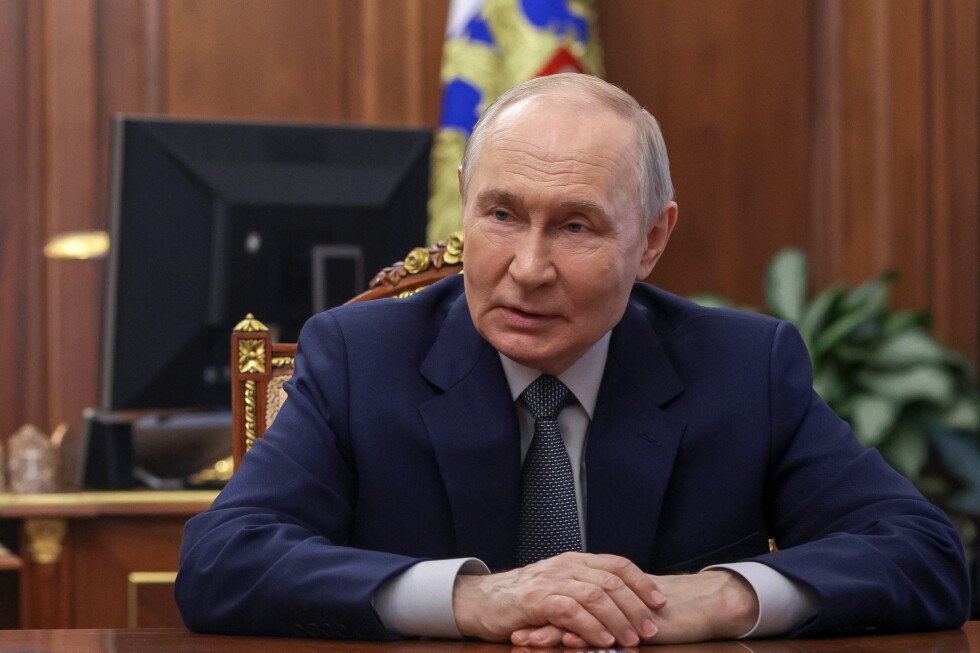
Russia’s Defense Ministry has announced a unilateral ceasefire that will be in effect across Ukraine on Friday and Saturday, timed to coincide with the 81st anniversary of Nazi Germany’s defeat in World War II, while issuing a stark warning that it will respond with force if Kyiv attempts to undermine Russia’s Victory Day commemorations.
In an official statement released Monday, the ministry expressed hope that Ukrainian leadership would match the ceasefire announcement for Russia’s most meaningful national secular holiday. As of Tuesday morning, Ukrainian officials had not issued any public response to Russia’s proposal.
The announcement comes one week after Russian authorities confirmed they would drastically scale back the traditional annual Victory Day military parade on Moscow’s iconic Red Square, a decision directly tied to growing security fears over potential cross-border attacks from Ukraine. Since Russia launched its full-scale invasion more than four years ago, Ukraine has carried out a growing number of deep-strike drone attacks targeting locations inside Russian territory as part of its counter-offensive operations.
Russia’s Defense Ministry went on to issue an explicit threat: if Ukraine carries out any action to disrupt Saturday’s Victory Day celebrations, Russian forces will launch a massive missile strike against central Kyiv. The statement also included a formal warning to civilian residents of the Ukrainian capital and staff working at foreign diplomatic missions, urging them to evacuate the city immediately to avoid harm.
The ceasefire discussion was first raised last week during a phone call between Russian President Vladimir Putin and former U.S. President Donald Trump, where Putin first floated the idea of a truce to mark the national holiday.
For decades, the Kremlin has leaned on the elaborate, spectacle-driven Victory Day parade as a platform to display Russia’s military power and diplomatic standing on the global stage, and the holiday has long served as a unifying source of national patriotic pride for the Russian public. This year, however, the Moscow parade will proceed without the traditional display of tanks, ballistic missiles, and other heavy military equipment for the first time in almost 20 years. Many smaller regional parades held across Russia’s vast territory have also been cut back or canceled entirely due to persistent security concerns.
World War II holds a unique, unifying role in modern Russian national memory. For the Soviet Union, the conflict—referred to domestically as the Great Patriotic War (1941–1945)—cost 27 million lives, a staggering national loss that remains etched into the collective Russian psyche decades later, standing as one of the few shared historical touchstones across Russia’s turbulent modern political history.
Over his 25-plus years in power, Putin has elevated Victory Day into a core ideological pillar of his presidency, frequently framing the ongoing conflict in Ukraine through the lens of the World War II anti-Nazi struggle to justify the invasion. Last year’s 80th anniversary commemoration drew the largest gathering of global heads of state to Moscow in a decade, with high-profile international guests including Chinese President Xi Jinping, Brazilian President Luiz Inácio Lula da Silva, and Slovak Prime Minister Robert Fico in attendance. For that 2024 event, Putin declared a 72-hour unilateral ceasefire starting May 7, and authorities shut down cellular internet access across Moscow for multiple days to reduce the risk of Ukrainian drone attacks.