分类: politics

  • Suspect due in court over shooting at Trump gala

    Suspect due in court over shooting at Trump gala

    In the latest episode of escalating political violence rocking a deeply polarized United States, a 31-year-old California man accused of attempting to assassinate former President Donald Trump at a high-profile Washington DC gala is scheduled to make his first federal court appearance on Monday, marking the third alleged plot on the former president’s life in just two years.

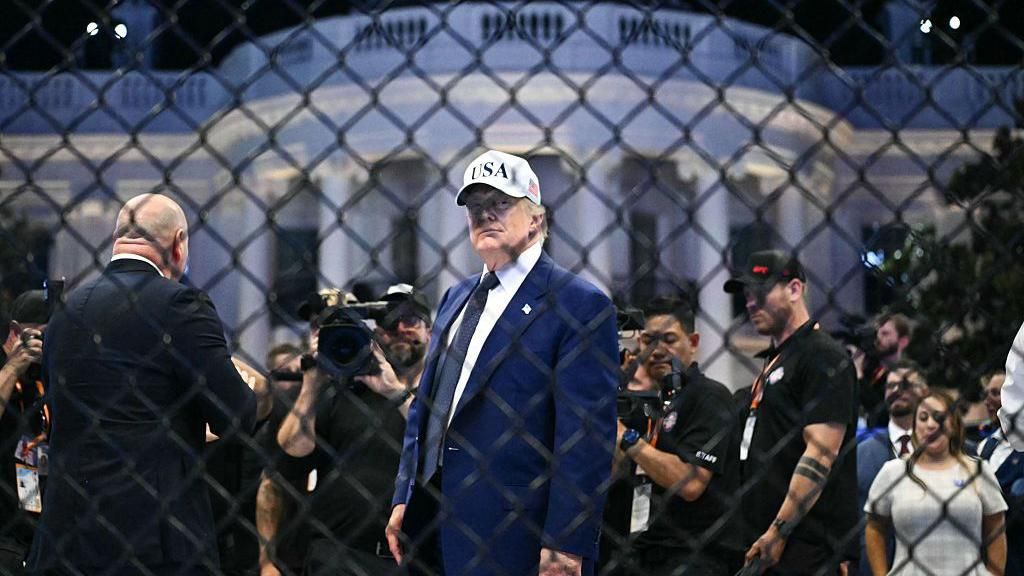
    The alleged attack unfolded Saturday night at the Washington Hilton, the iconic venue that has hosted the annual White House Correspondents’ Dinner for decades without security incident. Saturday’s gathering marked the first time Trump, who was in attendance alongside First Lady Melania Trump, Vice President JD Vance, multiple cabinet members, top congressional leaders, and hundreds of political and media guests, had accepted the WHCA’s invitation to attend the annual black-tie event.

    According to administration officials, the suspect, identified as Cole Allen, came to the venue with the explicit goal of killing Trump and other senior officials attending the media dinner. Allen was a registered guest at the hotel, and arrived armed with a shotgun, a handgun, and multiple knives. The New York Post reported that, shortly before launching his alleged attack, Allen sent a message to his family noting that his planned targets would be “prioritized from highest-ranking to lowest.”

    Camera footage shared by Trump online shows the suspect sprinting past a security checkpoint on the floor directly above the gala ballroom. After a short exchange of gunfire between Allen and Secret Service agents, the suspect was taken into custody at the scene. No fatalities were reported in the incident. The moment gunfire erupted, Secret Service agents immediately swarmed the ballroom to protect the former president, triggering chaotic scenes as dozens of attendees dove under tables for cover.

    Trump was quickly evacuated from the venue by his Secret Service detail. Speaking to reporters at a hastily convened late-night press briefing at the White House, Trump recalled that he initially mistook the sound of gunfire for a dropped serving tray before recognizing the danger. He told CBS News in an interview Sunday evening that he did not fear for casualties amid the chaos, saying, “I wasn’t worried. I understand life. We live in a crazy world.”

    Allen is expected to face initial charges of assault on a federal officer and use of a firearm during a violent felony during his 1 pm ET (1700 GMT) court appearance Monday. Legal officials note that additional charges are likely to be filed in the coming days as the investigation progresses. The incident has renewed public scrutiny of presidential security protocols, after Trump noted that the Washington Hilton venue was “not a particularly secure” facility. The former president also said he hopes the dinner can be rescheduled within the next month.

    Saturday’s alleged plot is the third known attempt on Trump’s life since 2024. During a 2024 campaign rally in Butler, Pennsylvania, a gunman opened fire on the crowd, killing one attendee and wounding Trump lightly in the ear. Just months later, a second man was arrested after a Secret Service agent spotted a rifle barrel protruding from bushes along the perimeter of a West Palm Beach golf course where Trump was playing a round of golf.

  • Argentina’s leader bars journalists from government HQ, raising concerns about press freedom

    Argentina’s leader bars journalists from government HQ, raising concerns about press freedom

    BUENOS AIRES, Argentina — In a move that has sent shockwaves through Argentina’s democratic landscape, President Javier Milei has barred the entire corps of accredited reporters from entering the Casa Rosada, the country’s iconic presidential headquarters, capping off a months-long pattern of aggressive hostility toward independent journalism that mirrors the anti-media rhetoric of his ideological ally, former U.S. President Donald Trump.

    The unprecedented ban, implemented last week, followed a dispute over unauthorized footage filmed inside the presidential complex by reporters from Argentina’s Todo Noticias network. According to presidential spokesperson Javier Lanari, the move was implemented as a “preventative measure” after the outlet aired footage captured with hidden smart glasses, which the government frames as illegal espionage. But the network’s journalists push back against this characterization, noting they notified administration press officials of their filming plans in advance, and the footage only captured publicly accessible areas of the building that have been featured on national television before.

    Rather than limiting criticism of his administration, the ban has sparked unified condemnation from across Argentina’s political spectrum, press freedom organizations, and watchdog groups. For a nation that has celebrated a vibrant, independent press since the end of its military dictatorship in 1983, observers say the full exclusion of the press from the presidential seat marks the most severe attack on press freedom in four decades.

    “It’s the culmination of the government’s contempt for journalism and its value in a democracy,” explained Fernando Stanich, president of the Argentine Journalism Forum, a leading professional press association.

    Cristina Zahar, Latin America coordinator for the New York-based Committee to Protect Journalists, framed the administration’s actions as a clear sign of authoritarian drift, even as Argentina remains formally democratic. “An autocrat who tries to curtail press freedoms, who tries to prevent journalists from reporting and keeping society informed about public interest matters,” Zahar said.

    Milei, a radical libertarian outsider who rose to the presidency in 2023 on a platform of slashing government spending and upending Argentina’s established political order, has never moderated his provocative, anti-establishment rhetoric since taking office. An avid daily user of the social platform X, the president has leaned increasingly heavily into anti-media attacks in recent months. An analysis of Milei’s X feed conducted by leading Argentine daily *La Nación* between April 2 and 5 found that Milei published 86 original posts taunting and insulting journalists over just four days, and reshared an additional 874 similar attacks. Many of these posts repeated his signature slogan, “We don’t hate journalists enough,” repeated his false claim that 95% of Argentine journalists are active criminals, and included crude sexual innuendo or targeted insults directed at individual reporters critical of his administration.

    Hours after the press ban was implemented, Milei published an angry all-caps post attacking reporters as “disgusting scum,” adding “how about you try stopping the lies? Oh I forgot, you lot are corrupt junkies hooked on advertising bucks and bribes.” He also shared an AI-generated deepfake image that depicted a prominent Argentine television reporter wearing an orange prison jumpsuit, a clear threat of political prosecution against critical journalists.

    Long before the full ban on press access, Milei had restructured how his administration communicates with the public, sidelining traditional journalistic institutions in favor of unmediated social media outreach, a strategy also honed by Trump. Milei has never held a formal presidential press conference in his tenure, rarely grants interviews to established national outlets, and instead pushes his messaging through viral slogans and AI-generated memes. He frequently appears on right-wing influencer radio programs, and has hired prominent social media provocateurs for senior administration roles, a move that has emboldened his base to adopt stigmatizing, hostile language toward working journalists.

    Following Trump’s playbook of using legal action to harass critical outlets, Milei has filed defamation lawsuits against at least eight independent journalists over the past 12 months, and encouraged his political allies to do the same. Alejandro Alfie, a media reporter for Argentina’s largest newspaper *Clarin* who has investigated networks of anonymous pro-Milei troll accounts, currently faces four defamation lawsuits from Milei’s close allies that seek millions of pesos in damages. Alfie says he has faced ongoing threats of violence, doxxing, and harassment from Milei’s supporters, demonstrating that the president’s rhetoric carries tangible, dangerous real-world consequences.

    “People say, ‘Oh, it’s not real. It’s just social media.’ But when you have someone telling you on Instagram every day that they will kill your children, it is something else entirely,” Alfie said.

    Milei has also taken systemic steps to weaken press access beyond personal attacks and lawsuits. In 2024, he shut down Telam, Argentina’s long-running state news agency, which he accused of operating as a propaganda outlet for left-wing opposition parties — a move echoing Trump’s push to cut federal funding for U.S. public media outlets PBS and NPR over claims of biased coverage. Telam has since been restructured into a state-run advertising agency. Milei also signed changes to Argentina’s open records law that drastically reduced the volume of government information available to the public and reporters.

    Many correspondents who were barred from the Casa Rosada last week say the full ban did not come as a surprise. Over the past year, the administration has incrementally restricted press movement inside the building, closing off entire wings to reporters and capping attendance at official press briefings. Earlier this month, six accredited outlets were already barred from both the Casa Rosada and Argentina’s lower congressional chamber over unsubstantiated claims that their reporters were involved in Kremlin-backed disinformation, claims the outlets have emphatically denied.

    The Todo Noticias smart glasses incident, observers say, was merely a convenient pretext to extend existing restrictions to the entire press corps. “It was the perfect excuse to extend the punishment to the entire press corps,” said Jaime Rosemberg, a political correspondent for *La Nación* who was among the 60 blocked reporters.

    The backlash to the ban has been swift: an opposition lawmaker has already filed a lawsuit against the administration over the order, and a cross-party group of a dozen legislators has called for an urgent meeting with senior government officials to address what they call an “institutional undermining of freedom of expression.”

    The anti-press campaign comes as Milei faces growing political and economic headwinds: recent polling from AtlasIntel shows the president’s public approval rating has fallen to the lowest point of his presidency. His signature campaign promise to eliminate Argentina’s decades-long chronic inflation has stalled, unemployment has risen, and the national economy has contracted. Adding to his troubles, close ally and chief of staff Manuel Adorni is currently under investigation for misuse of public funds, a corruption scandal that echoes the elite misconduct Milei campaigned against.

    Many political analysts and journalists draw a direct line between the administration’s mounting challenges and its escalating attacks on the media, which have long served as a convenient scapegoat for unpopular outcomes. “It’s a very bad moment for the president,” Rosemberg said. “And often the easiest thing to do in that moment, what you have closest at hand, is to blame the press for everything.”

  • Congo creates a paramilitary mining guard backed by US and UAE funding

    Congo creates a paramilitary mining guard backed by US and UAE funding

    KINSHASA, DRC – The Democratic Republic of Congo officially announced the establishment of a specialized paramilitary mining guard on Monday, a $100 million security initiative backed by the United States and the United Arab Emirates. The move comes as Washington works to shore up alternative access to critical battery and tech minerals, amid a fragile peace process in Congo’s conflict-plagued eastern region.

    Per an official statement released by the country’s General Inspectorate of Mines, the new security unit will be rolled out in phased deployments. An initial contingent of 2,500 to 3,000 personnel is scheduled to complete six months of joint military training and enter active service by December this year. By the end of 2028, the force is planned to expand to more than 20,000 members, with a presence across all 22 of Congo’s mining-producing provinces.

    Core goals of the new force include strengthening state regulatory oversight of the $1 trillion-plus mining sector, cutting down on rampant illegal mineral smuggling, and rebuilding confidence among international investors looking to access Congo’s vast untapped mineral reserves. The $100 million price tag for the program is covered through partnership agreements with the U.S. and UAE, according to the statement.

    As a top global supplier of coltan, the ore that holds tantalum – a critical component used in everything from consumer smartphones and laptops to commercial aircraft engines – Congo holds enormous strategic importance for global tech and clean energy supply chains. For decades, however, the country has grappled with systemic illicit mineral trafficking and persistent insecurity, particularly in its eastern provinces. There, ongoing clashes between Congolese government forces and Rwanda-backed rebel groups have killed thousands of people and displaced hundreds of thousands more, leaving large swathes of key mining territory outside of state control.

    Rafael Kabengele, Inspector General of Mines, noted in the statement that Congolese President Félix Tshisekedi has made overhauling the mining sector a core policy priority, aiming to “clean up the entire mining sector, by eliminating practices that run counter to good governance, transparency and the traceability of minerals.”

    The new paramilitary guard will take over all mining security responsibilities currently handled by regular conventional military units. Its formal mandate covers protecting active mine sites, escorting mineral cargo from extraction sites to processing facilities and national border crossings, and safeguarding foreign direct investment in the sector.

    The initiative is a key part of Washington’s broader strategy to reduce China’s current dominance over global critical mineral supply chains, as demand for these resources surges amid the global transition to renewable energy and electric vehicle production. Last year, Congo and the U.S. signed a bilateral minerals partnership, which has already led to American firm Virtus Minerals acquiring a controlling stake in major copper-cobalt producer Chemaf. Multiple other Western companies have also expressed interest in developing new mining projects in the country, including for assets located in currently rebel-held territory.

    U.S. Geological Survey data shows that Congo produced roughly 40% of the world’s total coltan output in 2023. More than 15% of the global supply of tantalum originates from the Rubaya mining region in eastern Congo, which remains largely under the control of armed rebel groups.

    Eastern Congo has cycled between open conflict and fragile ceasefires for nearly three decades, with more than 120 active armed groups operating across the region. Last year, the Congolese and Rwandan governments signed a U.S.-brokered peace agreement, which was paired with the bilateral critical minerals deal that opened new access for U.S. firms and government stakeholders. While peace negotiations between the Congolese government and M23, the main Rwanda-backed rebel group, remain ongoing, active clashes have continued across multiple frontlines in the east, keeping the region in a state of persistent instability.

  • Germany suspects Russia is behind Signal phishing that targeted top officials

    Germany suspects Russia is behind Signal phishing that targeted top officials

    BERLIN — Tensions between Germany and Russia have taken a new turn following revelations that German federal authorities have identified Russia as the suspected perpetrator behind a coordinated phishing campaign that compromised hundreds of Signal accounts belonging to high-profile German figures, including senior government ministers, military personnel, and leading journalists. A German government spokesperson confirmed the official suspicion in statements to reporters, marking a rare public attribution of state-backed cyber malicious activity ahead of a formal legal investigation conclusion.

    The German Federal Public Prosecutor General’s office confirmed Saturday that it launched an initial preliminary probe into the cyber intrusions targeting private Signal accounts back in mid-February 2026. A spokesperson for the prosecutor’s office noted that the investigation is centered on initial allegations of espionage, though the office declined to publicly name the suspected state actor at this stage of the inquiry, and the German government has not yet issued a formal formal attribution of the attacks to Russia.

    Since Russia launched its full-scale invasion of Ukraine in February 2022, Germany and other European Union member states have faced a sharp rise in state-linked cyberattacks and other disruptive malicious activity attributed to Russia by Western security officials, creating a persistent threat to European political and governmental infrastructure.

    According to reporting from German weekly magazine Der Spiegel, which cited unnamed government sources, the campaign compromised roughly 300 Signal accounts held by individuals active in German political circles. No official list of affected individuals or confirmation of victim identities has been released to the public to date.

    Der Spiegel detailed the modus operandi of the phishing operation: targeted users received deceptive messages purporting to originate from Signal’s official security chatbot. The messages falsely claimed the user’s account had shown signs of suspicious activity, and urged immediate action to secure the account. Users who followed the embedded instructions — which included entering their account PIN and scanning a fraudulent QR code — unknowingly granted hackers access to link their accounts to an external device controlled by the threat actors.

    Once access was obtained, attackers were able to access the full archive of historical chat messages, monitor real-time ongoing conversations, and view stored user data including contact address books linked to the compromised accounts.

    As early as February 2026, Germany’s domestic intelligence agency, the Bundesamt für Verfassungsschutz (BfV), and the federal cybersecurity authority, the Bundesamt für Sicherheit in der Informationstechnik (BSI), issued a public warning about this specific style of phishing campaign, stating that the activity was “likely being carried out by a state-controlled cyber actor.” German news agency DPA also confirmed that German security officials personally contacted at-risk politicians to alert them that their accounts may have already been compromised by the operation.

    The German findings align with earlier warnings from neighboring European security services. In March 2026, Dutch intelligence and security agencies issued a public alert confirming that Russian state hackers were running a large-scale global phishing campaign targeting Signal and WhatsApp accounts belonging to international dignitaries, military personnel, and civil servants. Dutch authorities noted that domestic government employees were among the confirmed targets, and that journalists were also considered potential victims of the campaign.

    The Associated Press requested comment from the Russian embassy in Berlin regarding the allegations, but received no response. The Russian government has repeatedly and consistently denied accusations that it conducts state-sponsored espionage operations against foreign countries and their political leaders.

    In a separate development coinciding with the revelations, German Ambassador to Russia Alexander Graf Lambsdorff was summoned to meet with Russia’s Foreign Ministry on Monday morning, in connection with Russian accusations of improper contacts between German politicians and terrorist organizations. DPA reported that there is no established link between the summons and the newly publicized phishing attack revelations.

    Speaking ahead of the meeting, Lambsdorff stated, “I will, of course, comply with the summons. I consider it unlikely that the Russian side will be able to substantiate its accusations.” Relations between Germany and Russia have remained consistently strained for years, with tensions escalating dramatically following the 2022 full-scale invasion of Ukraine.

    This report was contributed by Ciobanu, reporting from Warsaw, Poland.

  • Performer describes locking eyes with Trump as they ducked for cover during shooting

    Performer describes locking eyes with Trump as they ducked for cover during shooting

    The 2026 White House Correspondents’ Association annual dinner, a staple gathering for Washington’s political and media elite held at the Washington Hilton hotel, descended into chaos Saturday night when gunshots rang out, leaving attendees and the public shaken by a brazen attempted attack targeting former U.S. President Donald Trump. In the aftermath of the incident, the performer on stage at the time of the shooting has shared a gripping first-hand account of the split-second terror that unfolded just feet from the former president.

    Oz Pearlman, a well-known mentalist who was mid-act when the shots erupted, told the BBC that he was interacting directly with Trump, First Lady Melania Trump, and White House Press Secretary Karoline Leavitt when the attack began. At that exact moment, Pearlman was in the middle of a signature mind-reading trick: he had just written his guess for the name of Leavitt’s upcoming baby on a slip of paper, preparing to reveal it to the audience. In an instant, the festive atmosphere shattered at the sound of gunfire.

    “I went down very quickly. And then the Secret Service brought President Trump down: I would say very effectively – but quite violently,” Pearlman recalled. The performer, who ended up mere centimeters from Trump on the venue floor, described the surreal, terrifying moment the pair locked eyes as shots continued to ring out. “We were about half-a-metre apart… face-to-face looking at each other on the ground, when I’m hearing shots and thinking to myself, ‘We’re about to die,’” he said.

    Pearlman added that the initial rush of Secret Service agents initially led him to believe an explosive device was set to detonate, rather than an active shooter situation. “It didn’t feel like they were looking for a shooter. It felt like they were looking to stop something from happening,” he explained. Within just two seconds of taking cover, agents evacuated Trump from the venue, while Pearlman and other nearby attendees crawled to safety on their own.

    In a post-incident interview with CBS’s *60 Minutes* Sunday, Trump downplayed the danger he faced, saying he “wasn’t worried” during the ordeal. “I understand life. We live in a crazy world,” the former president commented. He confirmed that both he and the First Lady followed security instructions to take cover on the floor before being evacuated.

    Law enforcement officials have identified the suspect as 31-year-old Cole Tomas Allen, a California resident who was arrested immediately after the shooting. According to two sources familiar with the investigation who spoke to CBS, the BBC’s U.S. news partner, Allen told authorities after his detention that he specifically intended to target current and former officials from the Trump administration. The shooting exchange occurred on a floor directly above the dinner ballroom, where Trump and hundreds of other attendees were gathered. Allen is scheduled to be arraigned at a Washington, D.C. court hearing Monday, where formal charges will be filed against him.

  • AG: Gunman believed to target Trump

    AG: Gunman believed to target Trump

    On the evening of April 26, 2026, a chaotic shooting incident unfolded at the annual White House Correspondents’ Association (WHCA) dinner held at Washington Hilton, leaving the United States confronting another stark reminder of its growing crisis of politically motivated violence. The 31-year-old suspect, Cole Tomas Allen, a resident of Torrance, California, was taken into custody by law enforcement before he could reach the ballroom where former and current President Donald Trump, First Lady Melania Trump, Vice President JD Vance, and multiple senior cabinet members were gathered.

    According to statements from senior US law enforcement and acting Attorney General Todd Blanche, early investigations into the suspect’s electronic devices and interviews with his acquaintances confirm that Allen planned to target senior members of the Trump administration, with President Trump as his primary target. “It does appear that he did in fact have set out to target folks that work in the administration, likely including the president,” Blanche told reporters.

    Authorities have recovered a 1,000-word manifesto reportedly written by Allen, which was sent to the suspect’s family members minutes before he launched his attack. The document outlines a premeditated mass shooting plan that prioritized targets from the highest-ranking administration officials down to lower-ranking staff. Allen wrote, “I would still go through most everyone here to get to the targets if it were absolutely necessary,” while adding that he “really hope it doesn’t come to that”. The manifesto also explicitly rails against Trump administration policies, and Allen refers to himself as a “Friendly Federal Assassin” in the writings, confirming the attack was politically motivated. Investigators have also uncovered dozens of anti-Trump social media posts linked to Allen, and the manifesto includes critical commentary on political oppression that frames inaction against perceived injustice as complicity.

    Interim Washington Police Chief Jeffery Carroll confirmed that when Allen was apprehended in the hotel outside the WHCA dinner venue, he was carrying a shotgun, a handgun, and multiple bladed weapons. Investigators have secured a hotel room booked under Allen’s name and are conducting a forensic search to recover additional evidence. Allen is scheduled to appear at a federal court hearing in Washington, DC on Monday, and faces two severe federal charges: weapons possession during a violent felony, and assault of a federal officer with a dangerous weapon.

    One Secret Service agent was wounded in the incident after being struck by gunfire, but the agent survived thanks to the protection of a ballistic vest. Footage of the incident released to the public shows Allen opening fire as he advanced toward a security checkpoint, before being taken into custody by law enforcement out of public view, well before he could access the main ballroom.

    In comments made the day after the incident, President Trump stated that the suspect’s manifesto held anti-Christian beliefs and that the suspect “had a lot of hatred in his heart.” Trump, who had previously boycotted the WHCA media gala, noted after the attack that even amid the violence, the dinner had fulfilled its core purpose: “This was an event dedicated to freedom of speech that was supposed to bring together members of both parties with members of the press. And in a certain way, it did, because the fact that they just unified, I saw a room that was just totally unified.” Trump has also called for the event to be rescheduled amid the ongoing investigation, with the WHCA set to make a final decision on next steps. The incident has also bolstered Trump’s ongoing push to build a new dedicated event ballroom at the White House, as he criticized the Washington Hilton – located roughly a 10-minute drive from the White House and the site of the 1981 assassination attempt on President Ronald Reagan – for lacking adequate security. “It’s not particularly a secure building,” Trump said of the venue.

    This incident marks at least the third apparent plot against Trump in less than two years: he survived an assassination attempt at a 2024 campaign rally in Pennsylvania, and just months after that, another man was arrested for pointing a rifle at Trump during a golf trip in Florida.

    Saturday’s attack has also thrown a harsh spotlight on the systemic security gaps at the high-profile event. While all 2,600 dinner attendees were required to pass through metal detectors to access the basement ballroom, the hotel itself remained open to the general public, and anyone holding a ticket could enter the building without additional screening. Despite deploying hundreds of Secret Service agents to secure the event, Allen was still able to bring multiple firearms onto the same floor as the ballroom, where hundreds of senior lawmakers, cabinet officials, and public figures were gathered.

    Multiple commentators and news outlets have framed the incident as the latest proof of the accelerating trend of political violence across the United States. Just months before this attack, conservative activist Charlie Kirk was shot and killed at a public rally, and before that, Democratic Minnesota State Representative Melissa Hortman and her husband were murdered, with a state senator also wounded in the attack. A recent Reuters/Ipsos poll conducted after Kirk’s killing found that a large majority of US voters agree that increasingly inflammatory partisan political rhetoric is directly fueling the rise in violent attacks across the country.

  • East meets West in music event held at Chinese Embassy

    East meets West in music event held at Chinese Embassy

    On a recent Friday evening, the Chinese Embassy in Washington DC opened its doors for a one-of-a-kind cross-cultural gathering, “Tea for Harmony: East Meets West in Music”, turning the diplomatic venue into an immersive space where ancient Chinese traditions and Western artistic expressions converged. More than 200 invited guests from political, business, cultural and academic circles gathered to experience China’s traditional “Four Arts of Life” — tea ceremony, incense appreciation, floral arrangement and scroll painting display — before enjoying an innovative musical performance that wove Eastern and Western creative traditions together.

    The evening kicked off with interactive cultural experience zones, where attendees had the chance to sample rare tea varietals and watch master practitioners demonstrate gongfu cha, the time-honored skilled method of preparing tea. Rooted in centuries of Chinese cultural philosophy, these rituals prioritize mindfulness, tranquility and harmony between people and the natural world. Expanded for this special event, these hands-on segments allowed guests to engage directly with the understated, refined aesthetics of traditional Chinese lifestyle long before the main concert began.

    In a keynote address titled “A green leaf that spans the ages, A cup of tea shared with friends”, Chinese Ambassador to the US Xie Feng framed the event around the traditional Chinese solar term Guyu, or Grain Rain, tying the gathering to seasonal rhythms that have shaped Chinese agricultural and cultural life for millennia. He described tea as a core, enduring cultural symbol of Chinese civilization, breaking down the Chinese character for tea (茶) to illustrate its inherent representation of harmony between humanity and nature.

    “In sipping tea and savoring its taste, one needs to seek refinement and cultivate a noble character,” Xie noted in his address. “And in serving tea to others, one needs to show respect, sincerity and courtesy. So each small tea leaf is a gateway to profound Chinese philosophy.”

    Beyond its cultural meaning, Xie highlighted the modern dynamism of China’s tea sector, revealing that the country’s entire tea industry chain exceeded 1 trillion yuan (equivalent to roughly $146 billion) in total value last year. He positioned the evolving tea economy as a striking example of China’s new quality productive forces, pointing to innovations ranging from smart, tech-integrated tea gardens to the launch of the world’s first national digital platform for tracking tea carbon footprints. He also noted that innovative Chinese tea drink brands such as Heytea and Chagee have earned widespread popularity among American consumers in recent years.

    Shifting focus to China-US bilateral relations, Ambassador Xie traced the long historical ties between the two nations through the lens of tea, from the 18th-century voyage of the Empress of China, the first American ship to sail to China for trade, to the iconic tea gifts exchanged during US President Richard Nixon and National Security Advisor Henry Kissinger’s landmark visits to China in the 1970s that normalized bilateral relations.

    “Tea and coffee are not incompatible; when brought together, they can blend into creative drinks that take the world by storm,” Xie remarked. “It takes time to truly appreciate the fragrance of tea. Likewise, states need patience and steady resolve when engaging with one another.”

    He emphasized that while it is unrealistic for either China or the United States to remold the other in their own image, the two countries can still carve out a shared path to mutual prosperity. “As long as we follow the strategic guidance of our presidents, show mutual respect, stick to the bottom line of peaceful coexistence, and strive for the vision of win-win cooperation, we can gradually find a path leading to respective success and shared prosperity,” he concluded.

    The concert that followed the address brought Ambassador Xie’s message of cross-cultural fusion to life. China’s Juntianyunhe Ensemble shared the stage with American cellist Jacques-Pierre Malan and violinist Vadim Tchijik, crafting a program that paired the nearly 3,000-year-old traditional Chinese guqin, a seven-string zither, with Western string instruments. In pieces such as *Wandering Mind*, the improvisational back-and-forth between guqin and cello blended Eastern lyrical sensibilities with Western compositional structures, drawing loud, enthusiastic applause from the assembled audience.

    One of the evening’s most memorable performances, *A Galloping Steed*, used the Mongolian traditional horsehead fiddle (morin khuur) and rhythmic percussion to capture the untamed energy of the Central Asian grasslands. The closing number, *Fusion*, brought every musician and instrument together on stage for a one-of-a-kind artistic dialogue that crossed cultural divides purely through sound.

    Greg Bland, founder of local events platform ThingsToDoDC and co-organizer of the event alongside the Embassy Series, spoke to China Daily about the unique power of people-to-people cultural exchange. “Regardless of where we get along politically or historically right now … Chinese culture still brings us together,” Bland said. “Learning about it is like learning about a different person and learning about different people, and it helps build personal friendships.”

    Diego Uffel, a senior economist at the World Bank who attended the event alongside his artist wife, shared a similarly positive impression. “It was beautiful, the combination of different activities starting with the tea … and then a very welcome reception by the ambassador, which was a touching speech,” Uffel remarked. “In general, there are a lot of economic studies showing that the more we get to know each other, the more we find similarities, and then we get to understand each other better.”

  • Coalition puts forward an $800m plan to double fuel reserves and provide more storage

    Coalition puts forward an $800m plan to double fuel reserves and provide more storage

    Against the backdrop of escalating global market disruption stemming from the ongoing Middle East conflict, Australia’s opposition Coalition has launched a targeted $800 million initiative to drastically strengthen the nation’s fuel resilience, expanding strategic reserves and adding 1 billion litres of new domestic storage capacity. The proposal, framed as a critical response to growing global energy supply uncertainty, calls for a sweeping overhaul of Australia’s existing fuel stockholding rules, with a specific focus on shoring up supplies of diesel, the fuel that powers most of the country’s freight, agriculture and regional sectors. At the core of the plan is a move to more than double the current Minimum Stockholding Obligation (MSO), requiring suppliers to maintain enough reserve fuel to cover 60 days of national demand — representing a more than 50% jump in total minimum reserves and a nearly 25% increase in critical stockholdings. The Coalition is also proposing the creation of a dedicated Australian Fuel Security Facility, backed by the full $800 million in government funding, that will support the construction of at least 1 billion litres of new onshore storage infrastructure, again prioritizing diesel storage to meet the needs of key domestic industries. Opposition leader Angus Taylor has urged Prime Minister Anthony Albanese’s government to adopt the plan immediately, warning that any delay leaves Australia exposed to catastrophic supply disruptions. “If fuel stops, Australia stops. It’s that simple. Trucks don’t move, supermarkets don’t stock, businesses shut their doors,” Taylor said in remarks announcing the policy. “We are putting forward a practical plan to make sure that never happens. More fuel in reserve, more storage on the ground, and a country that can stand on its own two feet. This is about protecting Australians’ way of life and restoring their standard of living. You don’t do that with talk. You do it with action.” The plan has received strong backing from the Nationals, the junior coalition partner that represents regional and rural Australia, where reliance on diesel for farming, freight and everyday transport is far higher than in major urban centers. Nationals leader Matt Canavan emphasized that increasing domestic stockpiles reduces Australia’s dangerous overreliance on vulnerable overseas supply chains that can be disrupted by global conflict or geopolitical tension almost overnight. “People in the regions know how serious this is. If the diesel doesn’t turn up, the farm doesn’t run and the shelves go empty,” Canavan said. “This plan is just common sense. Keep more fuel here in Australia so we are not relying on overseas supply lines that can be cut overnight. We cannot keep hoping for the best. We need to be ready, and this plan gets us there.” Under the current regulatory framework, fuel suppliers are already required to hold minimum reserve stocks, with the associated costs passed through to consumers at the fuel pump. The Coalition’s plan would require suppliers to build new storage capacity and acquire additional inventory, with government financial support offsetting much of the upfront cost. The opposition estimates that expanding the MSO would add only around 1 cent per litre to retail fuel prices, a modest increase that it argues is well worth the cost of enhanced national energy security. Shadow Energy Minister Dan Tehan added that the proposal offers a clear, actionable path to strengthening the country’s entire fuel supply chain against unforeseen global shocks. “This is a practical, achievable plan that strengthens our fuel supply chain and backs Australian industry,” Tehan said. “It works with industry, builds storage where it is needed, and makes sure we have the buffer to withstand global shocks.” The Coalition has committed that if the government adopts the plan immediately, it would deliver the full 60-day fuel security target by 2030, putting Australia in a far stronger position to weather ongoing global energy volatility linked to the Middle East conflict and other geopolitical risks.

  • Trump says King will be ‘very safe’ during US visit after security talks

    Trump says King will be ‘very safe’ during US visit after security talks

    Four days of high-stakes diplomatic pageantry are set to kick off Monday in Washington D.C., as King Charles III and Queen Camilla arrive for their first state visit to the United States under the second Trump administration. The trip remains on track almost entirely in its original form, despite heightened security jitters following a weekend security breach at a Trump event that left a Secret Service agent with minor injuries.

  • US shooting bares security vulnerabilities

    US shooting bares security vulnerabilities

    On a Saturday night in Washington D.C., a brazen shooting attack at the annual White House Correspondents’ Association dinner has sent shockwaves across the nation’s capital, reopening long-simmering debates about gaps in U.S. security protocols amid a documented surge in political violence. The incident left one Secret Service agent injured, and remarkably, former and current U.S. President Donald Trump escaped without harm, though the attack has underscored just how vulnerable even the most heavily protected senior political figures remain.\n\nThe attack unfolded when an armed suspect stormed the lobby of the Washington Hilton, the venue hosting the high-profile gathering, before opening fire. Armed with a shotgun, a handgun, and multiple knives, the suspect managed to advance to a floor directly above the basement ballroom where Trump and dozens of the nation’s most senior government leaders were dining. This was Trump’s first appearance at the annual dinner since returning to the presidency, and hundreds of law enforcement officers from multiple federal and local agencies had been assigned to secure the event.\n\nIn addition to the president, Vice President JD Vance, Secretary of State Marco Rubio, Defense Secretary Pete Hegseth, Treasury Secretary Scott Bessent, and a roster of top congressional leaders, cabinet officials, and A-list celebrities were all in attendance at the event, which draws roughly 2,600 attendees annually.\n\nAuthorities have since identified the suspect as 31-year-old Cole Allen, a resident of Torrance, California. Washington’s police chief confirmed Allen was a registered guest at the Hilton hotel where the dinner was held, a venue with a fraught history: it was the site of the 1981 assassination attempt on former President Ronald Reagan, just a 10-minute drive from the White House.\n\nShortly after the incident, Trump shared an image of the subdued suspect, bound and lying on the ground, on his Truth Social platform. During a late-night White House press briefing, Trump confirmed law enforcement had raided Allen’s California apartment, and said preliminary investigations indicate the attacker acted as a lone wolf. When pressed on whether the attack could be tied to ongoing tensions related to the U.S.’s war with Iran, Trump noted, “I don’t think so. But you never know.”\n\nThe security breakdown that allowed an armed suspect to reach the upper floors of the venue has already raised urgent questions about protocol failures. While all dinner attendees were required to pass through metal detectors to access the basement ballroom, the hotel itself remained open to the general public, with anyone holding an event ticket allowed entry without additional screening. On the night of the attack, large crowds of protesters gathered outside the venue’s entrance demonstrating against the Trump administration’s Iran war, contributing to rushed entry screenings for guests, sources confirmed.\n\nFootage from inside the ballroom captured chaos as gunshots were reported, with attendees scrambling under tables and taking cover as security agents rushed Trump and other senior officials to secure evacuation routes. In a joint press conference following the attack, Washington D.C. Mayor Muriel Bowser confirmed all attendees had been accounted for and were unharmed beyond the injured Secret Service agent. U.S. Attorney for the District of Columbia Jeanine Pirro announced the suspect faces multiple felony charges, including use of a firearm during a violent crime and assault on a federal officer with a dangerous weapon. Trump later confirmed Allen is in official custody.\n\nInternational leaders have already spoken out to condemn the act of political violence. Canadian Prime Minister Mark Carney wrote on X, “Political violence has no place in any democracy and my thoughts are with all those who have been shaken by this disturbing event.”\n\nThis incident comes less than two years after two separate assassination attempts targeting Trump during the 2024 presidential campaign, the most high-profile of which was the July 2024 attack in Butler, Pennsylvania, where Trump narrowly escaped injury. Political violence has become increasingly frequent across the United States in recent years, and Saturday’s attack has confirmed what many security analysts have warned for months: even the nation’s most robust, well-funded protective detail for the president and senior leadership is not immune to critical vulnerabilities. Reuters notes it remains too early to draw definitive conclusions about whether law enforcement failures or communication gaps contributed to the security lapse, but the incident has already spurred renewed calls for sweeping reviews of security protocols for high-level political events.