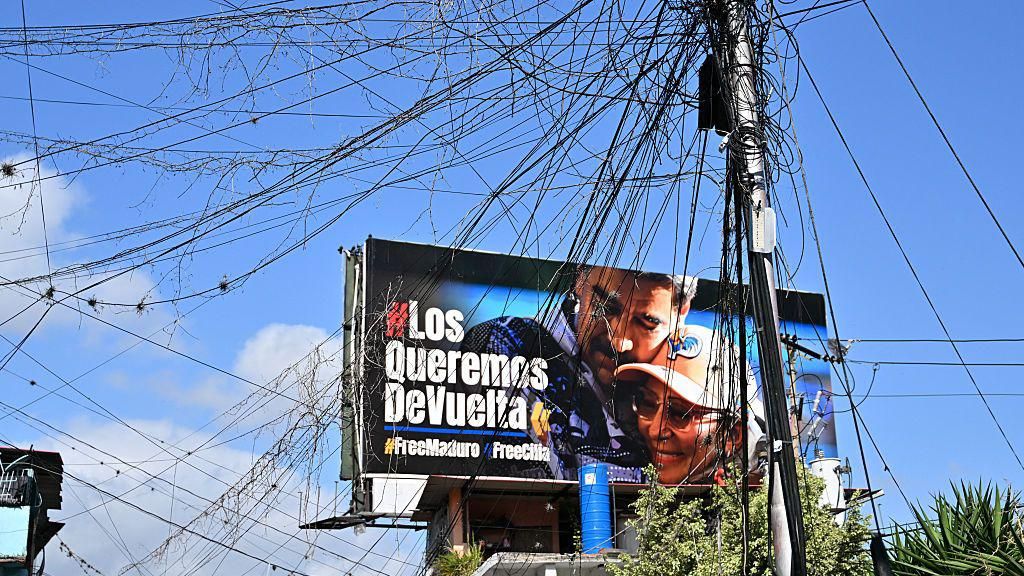
Venezuela’s crumbling national electricity infrastructure, a long-running drag on the country’s stagnant economy and quality of life for millions, is set to receive a major foreign-led overhaul after the nation’s interim government signed a cooperation agreement with U.S. energy giant General Electric’s local subsidiary, General Electric Vernova.
Interim President Delcy Rodríguez, who took office shortly after U.S. military operations detained longtime Venezuelan leader Nicolás Maduro in January, made the announcement public during a televised address from the presidential palace on Monday. The deal marks the most high-profile step yet in Rodríguez’s administration’s push to open Venezuela’s previously closed-off economy to American investment and corporate participation, a notable shift for a leader who was publicly critical of U.S. policy before Maduro’s removal from power.
For well over a decade, Venezuela has been plagued by crippling, lengthy power outages that disrupt daily life across the country, including in the capital Caracas. Many outages stretch on for 10 hours or more, leaving businesses shuttered, hospitals operating on backup generators, and residents without access to basic services. The national power grid was first nationalized in 2007 under the late Hugo Chávez, Maduro’s political mentor, and decades of underinvestment and poor maintenance have left the system on the brink of total failure.
The Maduro administration repeatedly blamed severe drought for the widespread outages, pointing to reduced water levels at the Guri Dam, the country’s largest single source of hydroelectric power, as the core cause of the energy deficit. Independent energy analysts have long pushed back on that narrative, however, arguing that chronic underinvestment in grid upgrades, delayed maintenance, and unmanaged high energy consumption combined to create the ongoing crisis. The energy sector’s collapse has been widely cited as one of the single largest barriers to any meaningful economic recovery for the oil-rich South American nation.
The agreement was negotiated under the direction of Venezuela’s new Energy Minister Rolando Alcalá, an experienced electrical engineer appointed by Rodríguez three months ago. Alcalá’s appointment has already been hailed as a positive shift by many observers, after six years of military leadership at the energy ministry that failed to reverse the grid’s steady decline. In her remarks Monday, Rodríguez framed the GE partnership as a turning point for the country, calling it “a historic step for Venezuela” that will allow the nation to rebuild this essential public service.
The power grid deal comes amid a broader shift in bilateral relations between Caracas and Washington, with Rodríguez’s administration already cooperating closely with the U.S. on multiple security and policy priorities. Just last week, U.S. forces conducted a targeted military strike that killed the leader of the Tren de Aragua, one of Latin America’s most powerful transnational criminal gangs. U.S. Secretary of Defense Pete Hegseth confirmed the operation was carried out “in full co-operation with Venezuelan security forces” — a level of coordination that would have been unthinkable during Maduro’s years in power.
Despite the progress on energy and security, Rodríguez’s interim administration faces growing scrutiny from domestic critics and U.S. officials over the slow pace of democratic reform. Opposition leaders in Venezuela point out that very few changes have been made to the country’s legislative, executive, and judicial branches since Maduro’s ouster, and the national electoral council remains dominated by political loyalists to the former regime.
U.S. Secretary of State Marco Rubio recently addressed the issue during testimony before Congress, emphasizing that “ultimately the answer in Venezuela is a free and fair democratic election because it’s not just the right thing, it’s also necessary for them to attract the kind of investment that they want.” Rubio noted that critical preconditions must be put in place before elections can be held, including independent and open media, guaranteed space for political parties to organize and campaign, and the restructuring of the electoral council to remove Maduro loyalists. While Rubio confirmed “all that work is ongoing,” he declined to provide a specific timeline for when democratic elections might be held.
Critics of the interim government also warn that even as Rodríguez moves to loosen state control over key economic sectors like energy, the country’s core governing institutions remain firmly under the control of her political party, leaving questions about the long-term trajectory of the country’s transition.