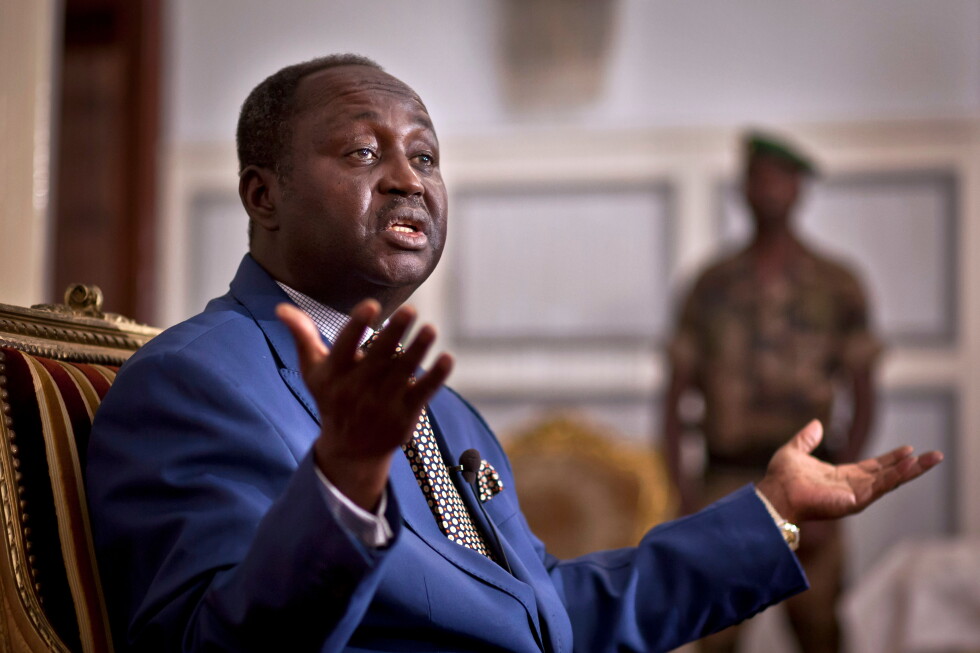
BANGUI, Central African Republic — A landmark trial for one of the Central African Republic’s (CAR) most divisive former leaders has gotten underway this week, as a United Nations-supported tribunal opens proceedings against ex-President François Bozizé on charges of crimes against humanity. The accusations stem from widespread atrocities carried out by state security forces between 2009 and 2013, the final years of Bozizé’s decade-long rule.
The proceeding is the sixth trial conducted by the Special Criminal Court, a hybrid tribunal established in 2015 with UN backing to address the mass atrocities committed during decades of internal conflict in the CAR. Unlike international courts that operate outside national judicial frameworks, the tribunal is integrated into CAR’s domestic legal system, designed to build long-term accountability capacity in the country.
Prosecutors have centered their case on systematic abuses that occurred at two high-security facilities: a prison and a military training camp in Bossembélé, a town located roughly 150 kilometers northwest of the CAR capital Bangui. As head of state and supreme commander of the country’s armed forces, Bozizé is held legally responsible for atrocities committed by his presidential guard and other loyal security units. The charges against him include a roster of grave offenses: murder, enforced disappearance, torture, sexual violence, and other crimes against humanity.
At 79 years old, Bozizé is being tried in absentia. Since 2023, the former leader has lived in exile in Guinea-Bissau, which has repeatedly rejected the tribunal’s 2024 international arrest warrant and refused to extradite him to face judgment in his home country. Three of Bozizé’s former close military associates — Eugène Barret Ngaïkosset, Vianney Semndiro, and Firmin Junior Danboy — are also named as co-defendants in the case and are scheduled to appear in person for the duration of the trial.
Bozizé first rose to power in 2003, when he seized control of the country via a military coup. He remained in office until 2013, when his government was toppled by the Seleka, a mostly Muslim rebel coalition. His ouster set off a wave of sectarian bloodshed that has convulsed the country for more than a decade: fighting between Seleka fighters and predominantly Christian Anti-balaka militias killed thousands of civilians and displaced millions more.
While a formal peace agreement was reached between the government and major armed factions in 2019, more than a third of the groups that signed the deal have since withdrawn their support. Low-intensity violence between state forces, allied militias, and rebel factions continues to destabilize large swathes of the country to this day.
For survivors of the Bossembélé abuses, the absence of the former president has cast a shadow over the historic proceeding. Maximin Lin Crozon Cazin, who was detained and tortured at the Bossembélé site during Bozizé’s rule, spoke to reporters about his disappointment that the ex-leader would not appear to answer for the alleged crimes. “It is unfortunate that François Bozizé does not have the courage to face justice in his own country,” Cazin said. “I expect this trial to establish the truth and provide reparations” for victims and their families, he added.
Marie Edith Douzima-Lawson, the lead defense lawyer for Bozizé, declined to give detailed comments on the case ahead of opening arguments, noting only that the defense team has prepared “solid arguments” to rebut the prosecution’s claims.
Beyond the legal and political implications of the trial, the proceedings shine a renewed spotlight on the long-running crises facing the CAR. One of the poorest nations on Earth, the country holds vast untapped mineral reserves including gold, yet nearly one in three Central African citizens lives on less than $2 USD per day. The CAR also has been a key early hub for the Russian mercenary network Wagner, which currently provides security support to current President Faustin-Archange Touadéra and leads counter-rebel operations across large parts of the country.