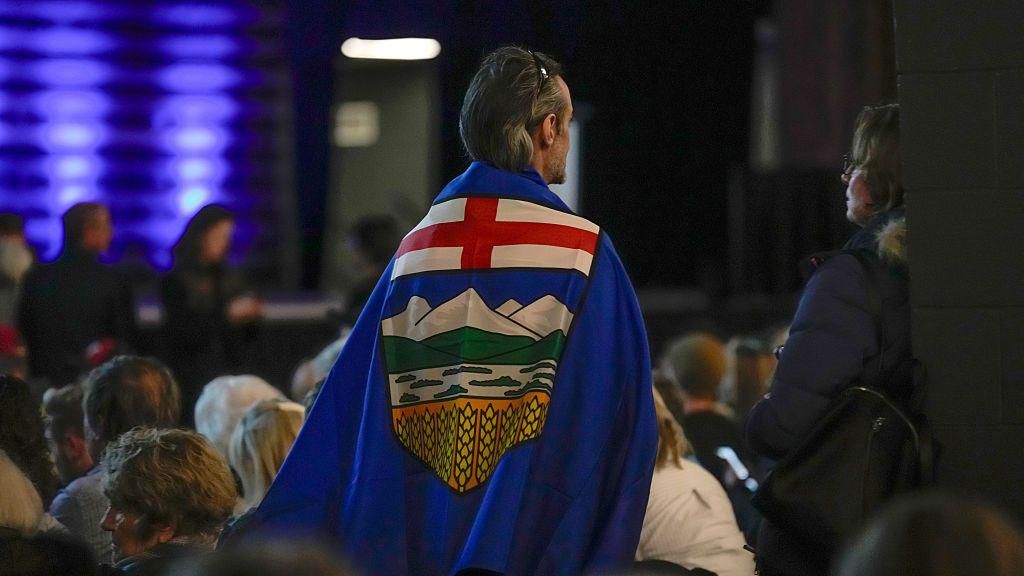
A years-long movement pushing for Alberta’s separation from Canada reached a pivotal milestone this week, as organizers of the citizen-led initiative formally submitted a petition calling for a fall independence referendum — only to see their progress halted by a court challenge from Indigenous First Nations groups.
Led by the grassroots group Stay Free Alberta, the petition drive required a minimum of 178,000 signatures, equal to 10% of the province’s eligible voters, to qualify for a public vote. In a press conference outside Edmonton’s election office Monday, group leader Mitch Sylvestre announced organizers had collected more than 300,000 signatures, far exceeding the threshold. Calling the moment a historic turning point for the separatist cause, Sylvestre framed the campaign’s progress as advancing to the final stage of a high-stakes political process, comparing it to reaching the championship round of the Stanley Cup hockey tournament.
The separatist movement in Alberta draws its core support from long-held grievances of western alienation, a sentiment shared by many residents who argue the province’s economic and political interests are consistently sidelined by federal decision-makers in Ottawa. Frustration has boiled over in recent years particularly over federal climate policy, which many Albertans blame for restricting growth of the province’s lucrative oil and gas industry, especially under the current Liberal federal government. Once relegated to the political fringe, the movement has gained traction over the past 12 months, pushing the once-remote possibility of a national unity crisis into the mainstream of Canadian political discourse.
Despite the milestone for pro-separation organizers, their path forward is now blocked by a legal challenge launched by multiple First Nations communities, including the Athabasca Chipewyan First Nation, who argue that an independent Alberta would violate the constitutionally protected treaty rights their communities signed with the British Crown more than a century before the formation of modern Canada. According to Kevin Hille, legal counsel for the First Nation group, an international border created by separation would fundamentally alter treaty access and the community’s traditional way of life, and full independence would effectively sever the binding treaty agreements between Indigenous communities and the Canadian state.
Hille pointed to a December 2025 ruling by an Alberta court that already found an independence referendum would be unlawful because it infringes on First Nations constitutional rights. Since that ruling, the provincial government has amended local laws to remove the requirement that citizen-initiated referendums align with the Canadian constitution, and allowed the petition process to move forward. The current court case will decide whether the original December ruling still stands despite the legislative change. A final decision on the challenge is expected by the end of May. If the First Nations challenge succeeds, only a referendum proposed directly by the provincial government could move forward, effectively ending the current citizen-led initiative. A court has already paused the official signature verification process while it considers the case.
If the petition is ultimately approved and signatures verified, Albertans will head to the polls as early as October 19 to vote on the question: “Do you agree that the Province of Alberta should cease to be part of Canada to become an independent state?”
Public opinion polling suggests separation still lacks majority support among Albertans. A February 2026 survey by Canadian polling firm Abacus Data found that roughly 25% of residents support independence, while a majority remain opposed to splitting from Canada. A counter-petition organized by anti-separation activists calling “Forever Canadian” has already collected more than 450,000 signatures, and is currently under review by a provincial legislative committee to qualify for a separate public vote.
Proponents of separation argue that independence would allow Alberta to unlock the full economic potential of its vast natural resource reserves and keep all revenue generated by the province’s energy sector. The movement has also drawn international attention: organizers confirmed earlier this year that they held meetings with officials from the U.S. Trump administration to discuss a feasibility study for a potential $500 billion line of credit in the event of separation, though they stressed they have not requested direct funding from the U.S. government.