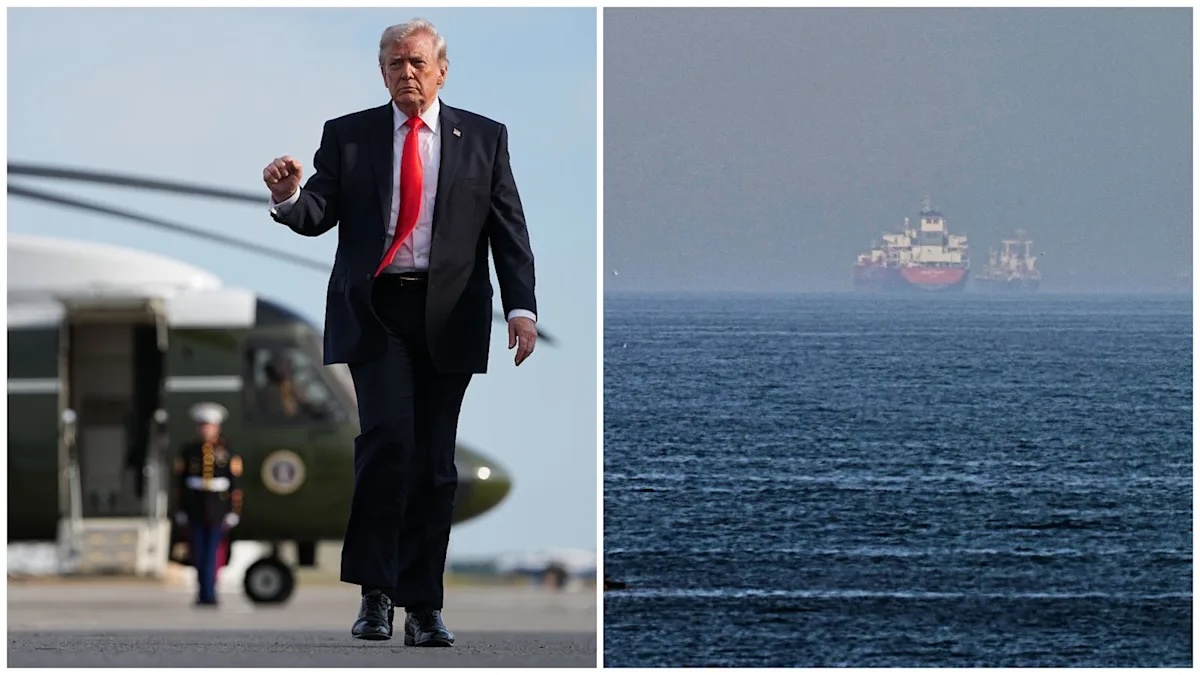
Tensions between the United States and Iran have spiked dramatically this week after Iranian state media claimed Tehran’s forces struck a U.S. Navy warship entering the Strait of Hormuz without authorization, a claim immediately and categorically rejected by the Trump administration.
The standoff traces back to an announcement over the weekend from former President Donald Trump, who unveiled what the U.S. calls “Project Freedom” – an initiative under which the U.S. Navy would provide armed escort for commercial vessels transiting the strategic waterway. Iranian officials swiftly pushed back against the move, framing it as a deliberate provocation designed to draw Tehran into retaliatory action that would justify further escalation. Iranian military leaders pledged that any vessel attempting to pass through the strait without explicit Iranian approval would be intercepted immediately.
On Monday morning, Iran’s Fars News Agency, an outlet closely tied to the Islamic Revolutionary Guard Corps (IRGC), reported that such an interception had already escalated to an attack. Citing unnamed local sources, the agency said two missiles had struck a U.S. Navy frigate that had violated transit security protocols off the coast of Jask, after the vessel ignored repeated warnings from the Iranian Navy. The report claimed the strike disabled the warship, forcing it to retreat from the area and abandon its attempt to traverse the strait.
A senior Iranian official later told Reuters that it remained unclear how much damage the vessel had sustained, if any. Separately, Iran’s Tasnim News Agency released a statement from the Iranian army’s public affairs division claiming that Iranian naval forces had successfully prevented “enemy American-Zionist destroyers” from entering the Strait of Hormuz region through swift, decisive action.
U.S. Central Command (CENTCOM) moved within hours to debunk the Iranian claims, publishing an official fact-check across its social media channels. The command explicitly refuted the assertion that the IRGC had struck a U.S. warship with two missiles, stating flatly: “No U.S. Navy ships have been struck.” CENTCOM added that U.S. forces continue to operate in support of Project Freedom and uphold an existing naval blockade on Iranian ports, noting that U.S. guided-missile destroyers recently transited the Strait of Hormuz to operate in the Persian Gulf, and are actively facilitating safe passage for commercial shipping. As an initial milestone, the command said two U.S.-flagged merchant vessels had already successfully transited the waterway and are continuing their voyages safely.
The strategic Strait of Hormuz, which carries roughly 20 percent of the world’s seaborne oil shipments, has been the focal point of a high-stakes standoff between Iran and the U.S.-led bloc since Iran moved to restrict access for unauthorized vessels in retaliation for a U.S.-Israeli military campaign launched in late February. The restrictions have already roiled global energy markets, pushing global oil prices sharply higher, driving average U.S. gasoline prices above $4 per gallon, and adding new inflationary pressure to economies worldwide.
Independent verification of both sides’ competing claims remains elusive. Open-source marine tracking analysts have noted that public tracking data does not show the two U.S.-flagged merchant vessels transiting the strait on Monday, though the vessels could have disabled their tracking systems to conceal their movement.
Critics have called into question the credibility of the Trump administration’s denial, pointing to a pattern of misleading statements from past U.S. military encounters in the region. Matt Duss, a former foreign policy advisor to U.S. Senator Bernie Sanders, warned the public to approach the administration’s claims with deep skepticism, citing a repeated pattern of immediate denials that are later walked back as damaging information emerges slowly over time, after public attention has shifted.
As a prominent example, Duss noted that after the first Trump administration assassinated IRGC General Qassem Soleimani in 2020, Trump initially claimed Iranian retaliatory strikes on Iraq’s Al Asad Air Base, a U.S. military installation, caused zero American casualties. In the weeks that followed, declassified Pentagon information confirmed more than 100 U.S. troops had suffered traumatic brain injuries from the attacks. More recently, Duss added, CENTCOM initially denied Iranian claims to have shot down a U.S. fighter jet in early April, claiming “all aircraft are accounted for” – even as one aircraft had indeed been downed, requiring a multi-day covert operation to rescue two pilots from Iranian territory.