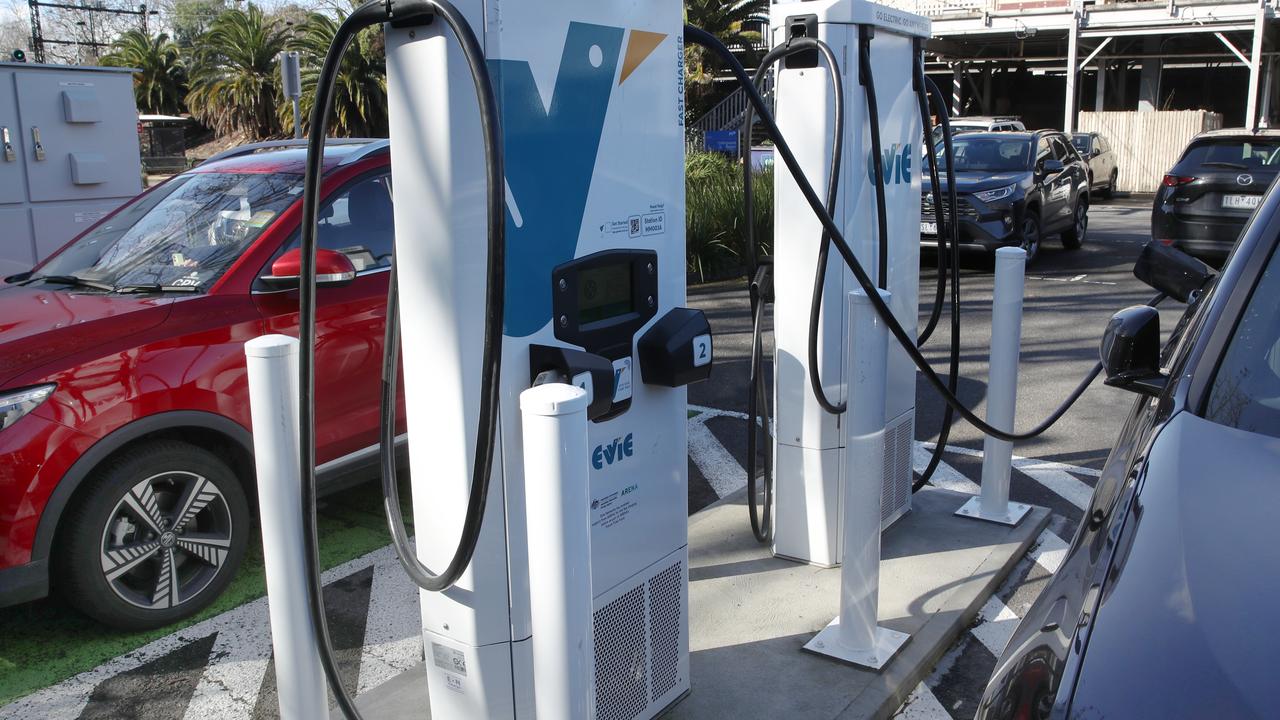
Australia’s electric vehicle market is seeing its fastest growth driven by middle-income families on the outskirts of the country’s largest cities, and a new progressive policy proposal aims to overhaul the nation’s road taxation system to replace the decades-old fuel excise, delivering thousands of dollars in annual savings for low-income motorists.
Data from a new report released by progressive think tank the McKell Institute, backed by the Electric Vehicles Council, highlights a surprising trend in Australian EV adoption: outer suburban regions have posted explosive growth in new registrations, outpacing uptake among high-income households. Since 2021, annual EV registrations have jumped 119% in western Sydney, and grown an even more dramatic 125% in Melbourne’s west. Contrary to common assumptions that EV uptake is led exclusively by wealthy buyers, the report confirms middle-income earners are accelerating adoption faster than the top income brackets.
To address the growing gap in road tax revenue as more drivers switch to EVs, which currently do not contribute to fuel excise that funds road maintenance, the McKell Institute has put forward a bold long-term plan to phase out the fuel excise entirely and replace it with a national, progressive road user charging system tied directly to driver income.
Under the proposed model, the per-kilometre charge would be adjusted across four income bands to protect lower-earning road users. Drivers in the lowest income bracket would pay just 3.74 cents per kilometre, working out to an average annual road tax bill of roughly $444. By comparison, highest-income earners would pay 12.88 cents per kilometre, totaling an average of $1,531 per year. Lower-income motorists and concession card holders would be automatically enrolled in the reduced rate, with charge adjustments handled through existing individual tax return systems to avoid administrative complexity.
McKell Institute chief executive Edward Cavanough explained that the plan relies on built-in road usage tracking technology that will become standard in new vehicles over time, particularly as EV adoption grows. Once EVs make up 30% of Australia’s national light vehicle fleet, they would be integrated into the new charging system, creating a path to fully eliminate the fuel excise over the coming decades.
“Over time, if our model is adopted, more and more vehicles will include this tracking technology and fall under this taxation framework,” Cavanough said. “This transition will eventually allow us to phase out the fuel excise entirely.” Cavanough noted that full elimination of the fuel excise, which stood at 48.2 cents per litre before a temporary cut during the 2022 global fuel crisis, would likely take around 20 years to complete. In the interim, the new system would protect vulnerable motorists from the wild price volatility that has shaken global fuel markets in recent years, he added.
“Lower-income earners are the most exposed to swings in petrol prices,” Cavanough said. “We want to move away from a system that exposes everyday drivers to this kind of unpredictable pricing at the bowser. This model creates a far more predictable tax revenue stream for governments, and gives drivers clear visibility into exactly how much road tax they are paying each year, based on how much they actually drive.”
The think tank has also proposed an alternative simpler model, which would introduce a flat $600 annual charge for all light vehicles regardless of fuel type starting in 2031, a policy that McKell estimates would generate roughly $12 billion in annual revenue for road maintenance.
The proposal comes as state governments have begun rolling out their own standalone EV road user charging policies, a move the McKell Institute and Electric Vehicles Council have criticized as disjointed and counterproductive to Australia’s EV transition targets. New South Wales has already legislated to introduce an EV road user charge starting July 1, 2027 – or when EV uptake hits 30% of the state’s fleet – which will set a flat rate of 2.97 cents per kilometre for EV drivers. Cavanough argues that this state-by-state approach creates a messy patchwork of tax rules, and that a coordinated national system is the only sustainable long-term solution.
“This is not the best path forward,” Cavanough said of the NSW plan. “State governments are correct to identify declining fuel excise revenue from growing EV uptake as a major fiscal problem, but we need a coordinated national approach to build a universal system, not a hodgepodge of inconsistent state tax rules.”
Electric Vehicles Council chief executive Julie Delvecchio added that the flat NSW EV charge risks discouraging the outer suburban working families who are currently driving EV growth from making the switch, trapping them in higher ongoing petrol costs. “Working households in outer Sydney who are switching to EVs are doing so to cut their monthly household costs after seeing how much they spend on petrol,” Delvecchio said. “This EV-specific tax will shut the door on those families in Parramatta and Penrith who are trying to reduce their cost of living.”
NSW Premier Chris Minns has defended the state’s policy, framing it as an unavoidable step toward long-term tax reform to protect funding for critical road infrastructure. “I know this is a difficult truth, but as EV use continues to grow – and it will only grow, not decline – falling fuel excise revenue will put enormous pressure on our ability to fund road repairs,” Minns said. “Anyone who drives around Sydney right now can see our roads are full of potholes that need fixing, and we have relied on fuel excise to fund that maintenance for generations. We need a new source of revenue to keep our road network in good repair.”